When does debate cross the line to hate?
The next episode of the public-affairs program “Sanctuary” – which airs at 11:30 a.m. Sunday, Nov. 30, on ABC7-Channel 7 – probes the rising tide of anti-Israel activism on college campuses, and how legitimate protest is morphing into anti-Semitic taunts and overt attacks.
Students from several Chicago-area campuses are featured, along with local and national educators and analysts. Cindy Sher hosts.
Starting Monday, Dec. 1, the program will be available for viewing on the Jewish United Fund website, www.juf.org/interactive.
“Sanctuary” is a joint production of the Jewish Federation of Metropolitan Chicago and the Chicago Board of Rabbis, in cooperation with ABC7-Channel 7.
Other stories
-
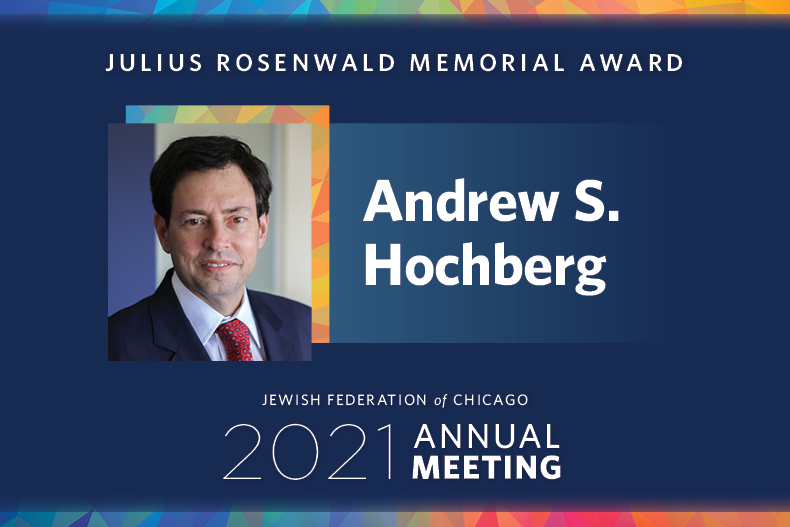
Meet Andrew S. Hochberg, 2021 Julius Rosenwald Memorial Award recipient
Celebrate Andy Hochberg at the virtual Annual Meeting on Sept. 14
Read more -
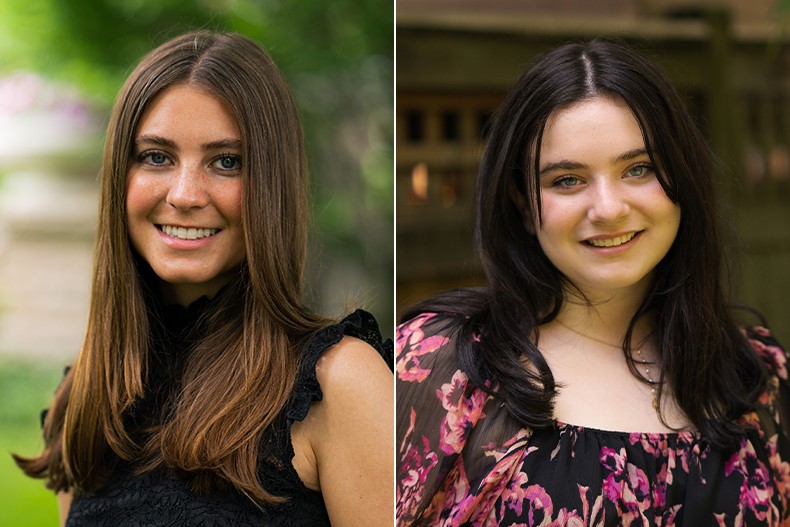
Two local teens win national recognition
Recipients of the annual Diller Teen Tikkun Olam Awards
Read more -
Celebrating six young award winners cultivating the community
Introducing young adult award winners
Read more
Help The ARK provide Chanukah gifts to more than a thousand Jewish community members in need
Chanukah Gift Wishes is a program through which members of the community provide Chanukah gifts to ARK clients who are unable to afford basic necessities, let alone gifts for their families. Last year, a record-breaking 1000 clients received gifts through this program, and this year, The ARK anticipates 1,300 recipients. You can help by donating a gift or gift card. Visit http://www.arkchicago.org/cgw for more information and to sign up.
Other stories
-
Meet Andrew S. Hochberg, 2021 Julius Rosenwald Memorial Award recipient
Celebrate Andy Hochberg at the virtual Annual Meeting on Sept. 14
Read more -
Two local teens win national recognition
Recipients of the annual Diller Teen Tikkun Olam Awards
Read more -
Celebrating six young award winners cultivating the community
Introducing young adult award winners
Read more

To make the joy of Jewish preschool available to even more families, the Jewish United Fund’s JUF Right Start program has expanded to include children as young as 6 weeks of age who are the first in their family to enroll in a Jewish early childhood program.
For a child attending five days a week, that’s up to $2,000 to help with tuition. Gifts of $500, $1,000 or $1,500 are available for children attending two, three or four days a week.
That’s especially good news right now, when many families are sorting through the options of where to send their young child next fall.
“Jewish preschools offer all the wonder and discovery of early childhood education, infused with the love and nurturing of Jewish life, values and ritual,” said JUF President Steven B. Nasatir. “We want every Jewish child, and their family, to have that experience, and to feel welcomed and supported by the Jewish community.”
JUF Right Start vouchers are available to any Jewish family in the Chicago area that, for the first time, enrolls a child in one of the dozens of participating Jewish preschool programs. The child must be the first sibling in the family to attend Jewish preschool.
The program, created in Chicago, has become a model for similar efforts around the country.
To find out more and see a list of participating schools, visit www.juf.org/rightstartor call 312-357-4513.
JUF Right Start is made possible by grants from the Jewish United Fund/Jewish Federation of Metropolitan Chicago, the Steven B. Nasatir New Directions Fund, and an anonymous donor.
Other stories
-
Meet Andrew S. Hochberg, 2021 Julius Rosenwald Memorial Award recipient
Celebrate Andy Hochberg at the virtual Annual Meeting on Sept. 14
Read more -
Two local teens win national recognition
Recipients of the annual Diller Teen Tikkun Olam Awards
Read more -
Celebrating six young award winners cultivating the community
Introducing young adult award winners
Read more
Collection of Holocaust stories from Hamburg Jews who settled in Chicago premieres at Northwestern
The Memory Archives, an international project that shows the generational effect of the Holocaust through the personal recollections of those who experienced it, will premier Thursday at the McCormick Foundation Center at Northwestern University.
The Memory Archives was produced by 10 teams of two students each from Northwestern’s Medill School of Journalism and the International Media Center at the University of Hamburg. The project was sponsored by the University of Hamburg and the city of Hamburg in recognition of the Sister City relationship between Chicago and Hamburg, Germany.
“What we hoped to achieve with the Memory Archives was more than an account of the Holocaust from survivors, but to show how something as traumatic as the Holocaust doesn’t just stop with the person who experienced it,” said Stephan Garnett, the faculty member who headed the project for Medill. “It carries on, generation after generation.”
Starting in mid-March, after the 20 students were selected through applications, they began researching the families of Holocaust survivors or refugees who had lived in Hamburg and eventually immigrated to the United States and settled in the Chicago area.
Each student team in Chicago then interviewed individual Holocaust survivors or the families of deceased survivors or refugees, and produced stories about their experiences and recollections. All the stories were produced on the campus of the University of Hamburg. The student teams produced five written stories, four short video documentaries and two 14-minutes audio recollections, all of which will be on display at the premiere.
“I think bringing all these different perspective together will help to get a more holistic view on the history of journalism,” said Dr. Steffen Burkhardt, director of the International Media Center at the University of Hamburg, who launched the project.
While in Germany, all the students were treated to numerous educational experiencers sponsored by the city of Hamburg or the University of Hamburg, such as a visit to Neuengamme, a World War II concentration camp just outside the city limits.
On the Medill side, the project is an extension of the schools Global Program, which seeks to provide Medill students with work and research experience outside the United States.
“We hope to empower students to be great communicators and journalists in an international market, but to give them experiences that are life-changing, that make them better global citizens,” said Mei-Ling Hopgood, director of Global Initiatives and Evaluations. “The Memory Archives project is an amazing opportunity for everyone involved. We are very proud to be part of it.”
For the students in particular, the Memory Archives provided more than a visit to another country. They learned about a seminal historical event from an intensely personal perspective, and had to opportunity to form work relationships and friendships with students from another nation.
“These stories need to be told and this was a unique opportunity to not only do some of the most meaningful reporting in my life,” said James Arkin, a student in Medill’s graduate program, “but to do it in partnership with an excellent group of German students.”
“It was so impressive to listen to survivors in order to keep their stories forever,” said Lena Janz, a University Hamburg graduate student. “I do have the feeling that we did do an important step in the struggle against forgetting.”
The Memory Archives will kick off with a formal premiere at 7 p.m. Thursday, Nov. 20, at the McCormick Foundation Center, 1870 Campus Drive.
Other stories
-
Meet Andrew S. Hochberg, 2021 Julius Rosenwald Memorial Award recipient
Celebrate Andy Hochberg at the virtual Annual Meeting on Sept. 14
Read more -
Two local teens win national recognition
Recipients of the annual Diller Teen Tikkun Olam Awards
Read more -
Celebrating six young award winners cultivating the community
Introducing young adult award winners
Read more
There was the vice president of the United States, two Supreme Court justices, and an Academy Award-winning actress with a compelling Jewish story. There were Jewish professionals, lay leaders, clergy and recent college graduates. The West Point cadets’ Jewish choir performed. The Israeli prime minister appeared via satellite from Jerusalem.
Part pep rally, part training and part family reunion, this week’s annual General Assembly (GA) of the Jewish Federations of North America drew some 3,000 people to a conference center outside Washington, National Harbor, Md., to cheer federations’ philanthropic work, listen to presentations ranging from European anti-Semitism to crowdfunding, and to schmooze.
As usual, much of the talk at the General Assembly was how to bolster North America’s 153 Jewish federations.
“We can go beyond exchanging ideas to actually exchanging services,” Jewish Federations CEO Jerry Silverman said in a speech at the closing plenary. “JFNA expanded the resources of our consulting and community development department, but what if we also leverage and share the resident expertise in this room and across our federations?”
The federation movement faces an uphill battle at a time when studies show younger American Jews are less affiliated than previous generations with Jewish institutional life and less likely to give to Jewish causes. Last year’s Pew Research Center survey of U.S. Jews found that 43 percent of non-Orthodox Jews ages 30-49 donate to Jewish causes — in contrast to their counterparts ages 50–69, some 60 percent of whom give Jewishly.
At the conference, the answer to these trends was twofold. One, organizers showcased dozens of federation programs that are piloting new models for programming and outreach. Billed by organizers as “fedovations” — a mashup of the words “federation” and “innovation”—they included case studies in reaching younger donors, providing services to the elderly, planning profitable events, and finding ways to engage and excite unaffiliated community members. Jewish Federations plans to share these success stories in a federation-wide online database to be deployed in the coming weeks.
The second answer was for federation leaders—and some of the plenary speakers from outside federation, including the actress Marlee Matlin—to drive home the message of the importance of collective action in the Jewish world.
“We do have the intellectual and financial potential to effectuate substantive change, but only if we work together,” Jewish Federations board chairman Michael Siegal said in a plenary address at the conference. “Federations must lead this charge and convene the necessary organizations and thought leaders because, simply, we have the reach that others do not.”
Vice President Joe Biden affirmed the Obama administration’s “ironclad” commitment to Israel’s security and talked about his experience taking each of his kids to the site of the Dachau concentration camp when they were 15 to teach them about the “incredible resilience and indomitable nature of the human spirit.”
Biden also called Israeli Prime Minister Benjamin Netanyahu a “really great friend.” Netanyahu, speaking to the assembly at the conference by video link, focused on Iran.
“Iran is not part of the solution, it’s a huge part of the problem,” Netanyahu said, referring to reports that the United States may be coordinating with Iran in their shared battle to crush the ISIS jihadist group in Iraq and Syria. “The Islamic state of Iran is not a partner of America, it is an enemy of America and it should be treated as an enemy.”
Natan Sharansky, the chairman of the Jewish Agency for Israel and the most famous Soviet refusnik, helped close out the GA with rousing remarks.
In another plenary, NPR correspondent Nina Totenberg got U.S. Supreme Court Justice Stephen Breyer to discuss the Jewish values that drive his work (tzedakah) and Justice Elena Kagan, who grew up Jewish on the Upper West Side, to reveal that she has become a duck hunter since joining the nation’s highest court.
Rabbi Jonathan Sacks, Britain’s former chief rabbi, gave a rousing plenary address about the importance of Jews’ commitment to each other despite their differences.
“I don’t need you to agree with each other; I need you to care about one another,” he said.
For the first time, the American Jewish Press Association’s annual meeting was merged with the GA. Seventy journalists in Jewish media attended both the GA and a separate track of editorial and business sessions during the two days of the larger conference. The journalism meeting included sessions on Jewish ethics in journalism, a discussion on the role of Jewish newspapers in today’s world, and the Israel and Palestinian conflict featuring remarks by the Washington Institute’s David Makovsky, a former advisor to Sec. of State John Kerry.
Journalists also attended the 33rd Annual Simon Rockower Awards for Excellent in Jewish Journalism, where Chicago’s JUF News/Communications department won first place in the large circulation category for Outstanding Digital Outreach on “Double Chai in the Chi: 36 Under 36.”
The Windy City goes to Washington
Some 40 Chicagoans, both professional and lay leaders in the Jewish community, traveled to the GA, where Chicagoans sat on many panels at conference breakout sessions.
”The GA, as always, provided a special opportunity to help advance the critical work done by our national federation system, a place where Chicago often takes the lead. It was also wonderful to spend time with our fellow Chicagoans and to renew our ties with friends from around the country,” said Andrea and Alan Solow, the Chicago GA chairs.
Dr. Rebecca Schorsch, director of Jewish Studies at Chicagoland Jewish High School in Deerfield, was one of three recipients honored with The Covenant Foundation’s 2014 Covenant Award, and recognized at the GA’s 2014 Covenant Awards Gala. At CJHS, Schorsch oversaw the merger of the school’s Bible, Talmud, and Jewish Thought departments. “Every day I feel blessed to do what I love, something at once meaningful and critical to building the world that we wish to inhabit,” she said.
The Covenant Foundation is a program of the Crown Family Philanthropies and members of the Crown family—including Keating Crown, Renée Crown, and Lester Crown—presented the award to the three recipients, Schorsch, Alison Kur, of Wellesley, Mass., and Rabbi Yisroel Boruch Sufrin, of Beverly Hills, Calif.. Each of the 2014 recipients received $36,000, and each of their institutions, $5,000.
Rabbi Jordan Bendat-Appell, of Chicago, was also one of five people to receive The Covenant Foundation’s 2014 Pomegranate Prize honoring emerging Jewish educators. Bendat-Appell is co-founder and director of the Center for Jewish Mindfulness in Chicago and co-founder of Orot: Center for New Jewish Learning in Chicago.
Jimmy Sarnoff and David Goldenberg (not in attendance at the GA) — who received the 50th annual Davis, Gidwitz, and Glasser Young Leadership Award at the Chicago Federation’s Annual Meeting in September for demonstrating exemplary dedication to the Chicago Jewish community — were honored alongside other young leaders at the National Young Leadership Award’s Reception.
“Where else can you impact virtually every corner and facet of Jewish life? Where else can you collectively build and strengthen our community? Where else can you have so many diverse experiences like me, yet a common thread and contributor throughout?” Goldenberg said in his acceptance speech. “ …JUF’s commitment to building a Jewish community is second to none.”
“It was such an honor to be recognized along with all of the other young leadership award winners throughout the country,” Sarnoff said about the GA reception. “I left Washington D.C. inspired by the amazing impact that our generation is having on the future of our people.”
Visit here for more on the JFNA General Assembly.
Cindy Sher contributed to this report.
Other stories
-
Meet Andrew S. Hochberg, 2021 Julius Rosenwald Memorial Award recipient
Celebrate Andy Hochberg at the virtual Annual Meeting on Sept. 14
Read more -
Two local teens win national recognition
Recipients of the annual Diller Teen Tikkun Olam Awards
Read more -
Celebrating six young award winners cultivating the community
Introducing young adult award winners
Read more

Chicago Police Department Superintendent Garry McCarthy addresses Israel’s third International Homeland Security Conference.
Chicago Police Superintendent Garry McCarthy led a delegation of senior local law enforcement officials participating in Israel’s third International Homeland Security Conference. Held in Tel Aviv Nov. 9-12, over 60 nations from every continent sent over 700 delegates to share best practices and learn about Israel’s cutting-edge policing strategies and technologies. Areas of focus included cyber security, critical infrastructure protection (ports, trains, airports, oil/gas rigs and pipelines), emergency preparedness and counter terrorism.
McCarthy was invited to be an official guest of the State of Israel by Roey Gilad, Consul General of Israel to the Midwest, whose consulate, and the Economic Mission of Israel to the Midwest, organized the visit’s agenda.
American officials in attendance represented federal, state, county and city agencies. Accompanying McCarthy were Cook County’s Executive Director of Homeland Security and Emergency Management Michael Masters and the Chicago Police Department’s Chief of Staff (and former SWAT Commander) James Roussell. Also joining the Chicago delegation were Ari Rokni, business and trade development director at the Israeli Economic Mission, Atlanta Police Department Deputy Chief Shawn Jones and Chief of Police for the San Francisco/Bay Area Rapid Transit System Kenton Rainey. Representing JUF were Executive Vice President Jay Tcath and Reis Kayser, executive director of Federation’s Facilities Corporation.
McCarthy and Masters spoke at plenary sessions on management before and during emergencies, and cybercrime, respectively. During a simultaneous International Police Commissioners Conference, McCarthy was part of a panel discussion on “police leadership during crisis.” He used the opportunity to talk about both his experience as NYPD’s Chief of Operations during 9-11 and Chicago’s successful 2012 hosting of a NATO Summit.
Many of Israel’s leading law enforcement and security officials participated in the conferences, including Minister of Public Security Yitzhak Aharonovitch, Police Commissioner Yohanan Danino and several former Shin Bet/Israel Security Agency commanders.
Beyond the conference, the Chicago delegation visited the Israeli Police Air Unit, the police headquarters for Jerusalem’s Old City, Magen David Adom’s command center, the national railway security operations center and the Home Front Command’s Civil and Military Training Center. There was also time – but not much – for the group to do some more traditional sightseeing in the Jewish State.
Reflecting on the week, McCarthy observed that “the two international law enforcement conferences in Israel this week were invaluable experiences to both share what we in Chicago have learned, often the hard way, as well as to learn from our Israeli partners on ways to better serve and protect our own community. CPD is a large and highly skilled police force, but we must strive to learn whatever we can, from whomever, wherever we can.
“In addition to engaging dozens of Israelis, I also learned much from my fellow Chiefs of Police from Portugal, Cyprus, the Philippines and Los Angeles,” he continued. “While always supportive of collaboration between police forces, it is clearer than ever that such cooperation must increasingly happen on the international level, particularly when combating the threat of terrorism while guaranteeing the civil rights of our citizens. Being In Israel during a week of deadly terrorist stabbings and car attacks added a somber dimension to this special experience. The resiliency of Israeli institutions and the Israeli people is really something to see. It was a meaningful experience. I’m grateful to those who put it together and made it possible for several of us from Chicago to participate.”
Masters said the safety and security of Chicago and Cook County has already improved because of this experience.
“As security professionals around the world increasingly work to address similar threats – from cyber breaches to terrorist attacks – the opportunity to share best practices is critical,” he said. “We will now bring the lessons home; our community should feel secure knowing that the relationships in Chicago and Cook County between homeland security, law enforcement, emergency management and JUF is a testament to the strong relationships, common interests and shared concerns of everyone.”
The participation of the Chicago law enforcement leaders was made possible by the Shafton Israel Institute, a JUF Centennial Campaign endowment that sends elected officials, law enforcement officers, Catholic educators, non-Jewish civic leaders and clergy as well as local cultural groups (River North Chicago Dance Company, Jesse White Tumblers and the Deerfield High School Orchestra) on educational trips to Israel.
Tcath said, “this is JUF’s third mission to Israel for Chicago’s senior law enforcement officers. Helping connect and thereby improve the work of both Israeli and Chicago police is a natural role for JUF, committed as we are to the safety of the entire Chicago community and the Jewish State. From advising us on ways to enhance the physical security of our Jewish community’s institutions to helping us ensure the safety of JUF events – everything from dinners to pro-Israel rallies – we are grateful for the extraordinary commitment of CPD, Cook County’s Homeland Security and Emergency Management and our other public law enforcement partners. These missions to Israel both reflect and help deepen these valued relationships.”
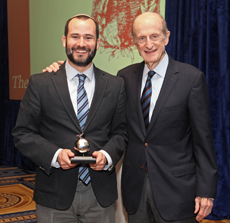
Representing a range of educational venues and approaches, recipients are: Rabbi Jordan Bendat-Appell, Founder and Director of the Center for Jewish Mindfulness in Chicago, and Program Director for the Institute for Jewish Spirituality in New York; Rabbi Michael Bitton, Director of Educational Technology and Judaic Studies teacher at Magen David Yeshivah High School in Brooklyn, New York; Talya S. Gillman, a Jewish educator and social justice advocate pursuing her M.A. in Transformational Leadership in Seattle; Oren J. Massey, Executive Director of Edah in Berkeley, California; and Rabbi Yigal Sklarin, a Talmud and Jewish History educator at The Ramaz Upper School in New York.
The Pomegranate Prize was established in 2011 and recognizes emerging leaders in Jewish education – those in the field for 10 years or less. The Prize stands next to The Covenant Award, which since 1991 has honored three exemplary Jewish educators each year for their records of innovation and impact across Jewish education settings.
“We know that encouragement early on in a person’s career can make all the difference in their success,” said James Crown, President of Henry Crown and Company and a member of the Foundation’s founding family. He introduced the Pomegranate Award recipients to Jewish lay, communal and educational leaders gathered at the Foundation’s annual award ceremony here today.
“Our goal with this Prize is to provide the means for these already remarkable educators to further develop their skills and interests, and have the chance to get to know others who, like themselves, are bringing fresh new ideas and abundant energy to the field of Jewish education,” he said.
The Covenant Foundation is creating a growing network of Pomegranate Prize recipients and providing a laboratory and platform for them as they immerse themselves in foundation-supported professional development and leadership programs, peer-to-peer gatherings, mentorships and other educator initiatives. Counting the 2014 group, there are now 20 Pomegranate Prize recipients, each of whom receives $15,000 to fuel educational projects and their development as change agents in their communities and in Jewish education.
Recipients have the opportunity to connect with thought leaders and extraordinary educators from across the spectrum of Jewish life through events sponsored by the Foundation over a three-year period, and five new educators will join the cohort each year.
“The Pomegranate Prize nurtures the seeds of emerging talent and publicly recognizes potential to contribute to a more promising future for Jewish education,” said Eli N. Evans, Chairman of the Board.
Harlene Winnick Appelman, Executive Director of The Covenant Foundation, added, “A teacher’s passion can spark the interest of a generation and encourage positive social growth. The Pomegranate Prize is a unique and powerful tool to support that passion, not only by identifying new levels of excellence and by encouraging specific innovations, but also by creating a community of problem-solvers, building theskills of individuals, and mobilizing new talent.”
Rabbi Jordan Bendat-Appell is co-founder and director of the Center for Jewish Mindfulness in Chicago, Director of Regional Programing at the Institute for Jewish Spirituality in New York, and Co-Founder of Orot: Center for New Jewish Learning in Chicago. At the Center for Jewish Mindfulness, he created the first community-based Jewish meditation center in the Midwest, and teaches, organizes, and administers trans-denominational programs throughout the Chicago area. At the Institute for Jewish Spirituality, he directs and teaches trainings in Jewish mindfulness practice both regionally and nationally. He was ordained by the Reconstructionist Rabbinical College and served as rabbi at Aitz Hayim Center for Jewish Living in Glencoe, IL. Prior to pursuing his rabbinical studies, he studied Conservation Biology at the University of Wisconsin, Madison, spent several months at Zen centers in California and France, and studied Jewish text at the Conservative Yeshiva and Machon Pardes in Jerusalem. In 2012, he was named on the Jewish United Fund/Jewish Federation of Metropolitan Chicago 36 Under 36 list of influential young Jews.
The Covenant Foundation is a program of the Crown Family Philanthropies.
Other stories
-
Meet Andrew S. Hochberg, 2021 Julius Rosenwald Memorial Award recipient
Celebrate Andy Hochberg at the virtual Annual Meeting on Sept. 14
Read more -
Two local teens win national recognition
Recipients of the annual Diller Teen Tikkun Olam Awards
Read more -
Celebrating six young award winners cultivating the community
Introducing young adult award winners
Read more
Over 500 Ida Crown Jewish Academy supporters, including many students and alumni, gathered at the school’s new site in Skokie last Sunday to celebrate the groundbreaking. The state-of-the-art facility, located at 8255 N. Central Ave., is set to be finished in January 2016.
Gathering for the historic occasion on Sunday’s sunny, crisp day were dignitaries, including: Skokie’s Mayor George Van Dusen-who offered welcoming words to the ICJA community, State Representative Lou Lang and Michael Lorge, Corporate Council for the Village of Skokie.
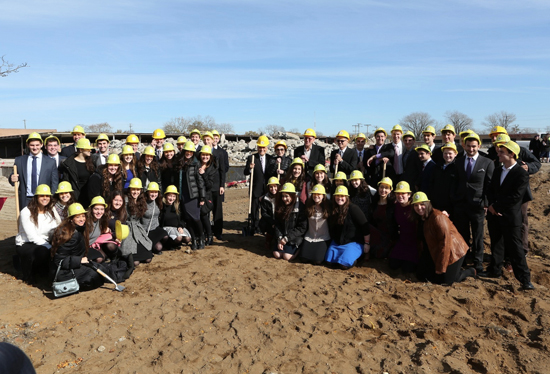
Ida Crown Jewish Academy and Jewish Federation leaders along with the ICJA senior class at the groundbreaking ceremony for the school’s future building on Nov. 2.
Lead donor Lester Crown spoke to a standing-room-only crowd on behalf of the Crown and Goodman family. He mentioned how proud Col. Henry Crown and Irving Crown — Lester Crown’s father and Charles H. Goodman’s father-in-law — would have been. He also said, “Education is the most important thing we can do as far as our future is concerned.”
“What the Academy has done in crowded corridors and insufficient space is academically and athletically incredible,” Crown said
Lead gifts for the project were provided by the Crown and Goodman Family and Rabbi Morris Esformes through the Jewish Federation of Metropolitan Chicago’s Centennial Campaign.
Jewish United Fund/Jewish Federation President Dr. Steven B. Nasatir also spoke, offering a historic perspective to the occasion. “It’s a great day for the entire Jewish people,” he said.
Steven Landes, chairman of the Associated Talmud Torahs, recalled the rich history of ICJA, dating back to 1942 and then the groundbreaking of the building at Pratt Blvd. in 1966. He also recognized the Jewish Federation’s dedication to Jewish education, saying, “no Federation in the entire Jewish world has done more to embrace and sustain Jewish education.”
Senior student Anat Berday-Sacks, who comes from Indianapolis, spoke on choosing to attend the Academy from out of town. (Read her speech.)
Rabbi Leonard Matanky, dean of ICJA, recalled his memories of the Pratt Blvd. groundbreaking, offered words of Torah and thanks to the dedicated leaders who helped ICJA reach the groundbreaking occasion. (Read his speech.)
Finally, Rabbi Gedalia Dov Schwartz, head of the rabbinical court for the Chicago Rabbincal Council and the rabbinical court of America, offered words of blessing for the occasion. Following the ceremony, community leaders, alumni, staff, students and families all gathered at the construction site for digging, complete with ceremonial shovels and hardhats.
ICJA thanks the donors who have made its dream a reality, the lay leaders who worked tirelessly for a campaign that unexpectedly spanned a decade and to the staff who worked so hard to make the groundbreaking so meaningful. View photos of the event here.
Other stories
-
Meet Andrew S. Hochberg, 2021 Julius Rosenwald Memorial Award recipient
Celebrate Andy Hochberg at the virtual Annual Meeting on Sept. 14
Read more -
Two local teens win national recognition
Recipients of the annual Diller Teen Tikkun Olam Awards
Read more -
Celebrating six young award winners cultivating the community
Introducing young adult award winners
Read more
On Sept. 9, students involved with the campus group Students for Justice in Palestine attempted to disrupt promotion of the free 10-day Taglit Birthright Israel trip on Loyola University’s campus.
SJP is categorized by the Anti-Defamation League as one of 2013’s top ten anti-Israel groups in America and is responsible for the majority of anti-Israel activity that happens on campuses across the country. SJP uses guerilla tactics such as disruptions, mock eviction notices, die-ins and vitriol on social media not to promote solidarity with Palestinians, but to lob accusations like apartheid and ethnic cleansing against Israel and Israelis in order to delegitimize her. Most recently, chapters at Temple University, Rutgers University, Florida Atlantic University and Northeastern University were investigated for violations of campus rules but Loyola University has taken decisive disciplinary action against this SJP chapter.
One of the Jewish students staffing the Loyola Birthright table said, “the tone that many of these (SJP) students adopted was harsh, interrogative, overwhelming, and, quite frankly, verbally abusive.” A full investigation was launched by Loyola’s administration after Jewish students filed a complaint. Hillel was also investigated for an administrative oversight.
At the conclusion of the investigation, both campus groups were asked to attend a hearing to review the charges. SJP Loyola was investigated for violations including failure to adhere to Loyola’s free expression and demonstration policy and approval process, failure to submit a demonstration and fixed exhibit proposal, bias-motivated misconduct, harassment and bullying and disruptive and disorderly conduct. SJP Loyola was “found responsible” for not adhering to the free expression and demonstration policy and the consequences include probation for the rest of the academic year and intergroup dialogue training. SJP filed an appeal on Monday Nov. 3.
Hillel was cited for failure to obtain one of the proper permits for the table. In its investigation, Loyola acknowledged that many student groups fail to properly register events on campus. At the hearing, Hillel requested clarification on proper administrative procedure to be able to recruit for trips to Israel. For Hillel’s violation, its officers must help to provide training and information to other student organizations about the proper procedures for registering tables and events.
Loyola Hillel President Brian Stone said, “We believe that the university came to a fair decision that promotes open and respectful dialogue on campus. The administrators spent a lot of time listening to students and made a decision that benefits the university and community as a whole. Thank you to the students and Hillel staff who represented Hillel at the hearing.”
Loyola Hillel, part of Metro Chicago Hillel, plans to continue its agenda of positive and educational Israel programming and experiences including sending students on Birthright this Winter, attending the Chicago Festival of Israeli Cinema and hosting Alex Cicelsky of Kibbutz Lotan, who will enumerate Israel’s environmental science contributions to the world, amongst others.
Other stories
-
Local campus administrators convene on hate speech, bias
JUF and ADL brought together 17 student safety, diversity and inclusion and student affairs administrators and Hillel representatives from various Illinois campuses to discusses issues of hate speech and bias.
Read more -
Engaging students about Israel on campus
Too often we hear about difficulties facing Jewish college students on Illinois campus, but to focus solely on the politics gives only one piece of the complex narrative that is Jewish life on campus.
Read more -
Hillel International launches fellowship initiative to train young Jewish professionals
The Springboard Fellowship will train cohorts of young Jewish professionals in highly-valued skillsets and place them at local Hillel campuses for two years.
Read more
Everyone’s charitable giving holds significant personal meaning and giving is best accomplished with a thoughtful, knowledgeable plan. If your New Year’s resolutions will include becoming more philanthropic in a way that is both financially sound and personally rewarding, a donor advised fund is a great tool to help you accomplish those goals.
A donor advised fund is a philanthropic giving account that will be professionally managed by our staff, allowing you to support numerous charities in a convenient, personally-named account. The ease of a donor advised fund also allows you to make tax-deductible donations at any time and then recommend charitable gifts at your discretion. As year-end approaches and you look ahead to 2015, a donor advised fund will allow you to plan and maximize the tax benefits of gifts of appreciated stock or cash, as you receive an immediate tax deduction on any money put into the fund.
Often times, individuals are passionate about charitable giving, specifically wanting to support causes close to their hearts, such as Zionism, environmental advocacy, cancer research, and many more, but find it overwhelming to decide where to give their money to. Our staff can help advise you on excellent organizations doing work in the fields you care about. Additionally, we are diligent in ensuring that all grant distributions go to financially sound organizations, assuring you that funds are distributed wisely.
As the ideal choice for the well-informed charitable giver, a donor advised fund seamlessly integrates mitzvot into a hectic lifestyle. Our staff provides support for both the logistical and financial aspects of your charitable giving. Making a grant recommendation simply consists of filling out a short form through mail, fax, or online, and our staff takes care of the rest. Giving to charities that you care deeply about is simplified with a donor advised fund.
As 2015 approaches, resolutions for the New Year are often made not only for ourselves, but also for our families. Charitable giving is a value often passed down l’dor v’dor, from one generation to the next, and a donor advised fund can be an optimal way to demonstrate that virtue. Many choose to open a fund in honor of their children’s b’nai mitzvah, allowing friends and family to contribute gifts to each child’s tzedakah. Furthermore, a fund can have multiple advisers, allowing for an entire family to be involved in making grant recommendations and engaging in meaningful conversations about charitable giving. A donor advised fund is the perfect way to further continue a culture of giving in your family as we begin a new year.
As the fastest growing segment of giving in the United States, donor advised funds contributions increased by more than 77 percent over the last year. Donors at all levels, throughout Chicago and the U.S., have discovered how valuable these funds are for their tax planning and how easy and convenient donor advised funds make their charitable giving. In 2013 alone, over $28.6 million was distributed to worthy charities in the United States and around the world from 834 donor advised funds housed at the Federation.
As we begin 2015, consider using a donor advised fund as an extremely helpful vehicle to accomplish your philanthropic resolutions. A donor advised fund is a tool that can help you and your family streamline and simplify your charitable giving, allowing you to focus on the important part of tzedakah-making the world a better place.
If you have any questions or are seeking more information about opening a fund, contact Amy Saltzman at (312) 357-4917 or [email protected].
Amy Saltzman is the endowment associate for the Donor Advised Programs at the Jewish United Fund/Jewish Federation of Metropolitan Chicago.
Other stories
-
Meet Andrew S. Hochberg, 2021 Julius Rosenwald Memorial Award recipient
Celebrate Andy Hochberg at the virtual Annual Meeting on Sept. 14
Read more -
Two local teens win national recognition
Recipients of the annual Diller Teen Tikkun Olam Awards
Read more -
Celebrating six young award winners cultivating the community
Introducing young adult award winners
Read more