
Archimedes, the renowned Greek mathematician, was asked by the king to determine whether a particular gold crown was made of pure gold but, in order to do so, he needed to know the crown’s volume. Unfortunately, he could not measure the crown because its shape was irregular. Frustrated, the mathematician put the problem aside and took a bath. As he lowered himself into the tub, it occurred to him that the water being displaced by his body must be exactly the same as the volume of his body. He realized that to solve his dilemma, he only needed to drop the crown into a tank of water and measure the water’s displacement. According to legend, he was so elated by his discovery that he sprang out of the tub and ran naked through the streets shouting, “Eureka!” (I have found it!).
Beginning in the 20th century, researchers examining creativity theory have begun to focus on the relationship between a break period such as that taken by Archimedes and increased human creativity. This research focuses not only on the passive role of a break period in relieving fatigue, but also on ways in which a break period can actively contribute to heightened levels of creativity. In other words, science is now demonstrating the wisdom of Shabbat.
The opening sections of Genesis recount that God created the world in six days, including the creation of man “in His image” on the sixth day. Rabbi Joseph Soloveitchik has explained that the Torah chose to relate this narrative so that man could derive the law that humans are obligated to create. The biblical narrative also states that God rested on the seventh day. Man is commanded to mirror God’s pattern by creating, and then refraining from creating on the seventh day.
A reference to Shabbat appears numerous times throughout the Written Torah, including the Fourth Commandment in the two recitations of the Decalogue in Exodus and Deuteronomy. In fact, observance of Shabbat is the only ritual included in the Decalogue. Some of the Torah’s passages about Shabbat also make explicit reference to the cycle of work, followed by rest. Interestingly, in the Torah’s discussion of the construction of the Tabernacle in Exodus, God commanded the Israelites to observe Shabbat immediately following the delineation of all everything that needed to be crafted for the service of God. Further, the text continues with the following reminder: “For in six days the Lord made heaven and earth, and on the seventh day He ceased from work and was refreshed” (Exodus 31:17). This sequencing furnishes another reminder of the need for human rejuvenation following work, and of the command for humans to mirror God by resting after a creative period.
Although the Torah generally prohibits performing “labor” on Shabbat and even specifies certain prohibited activities, the particulars of Shabbat observance derive from the Oral tradition. The Mishnah details 39 specifically prohibited tasks, known in Hebrew as avot m’lakhah, and the Talmudic sages added a long list of derivations from these prohibitions. Further, the Sages enacted additional prohibitions called sh’vut that are designed to prevent people from committing inadvertent violations of the Shabbat rules. In practical terms, any type of affirmative creativity resulting in a tangible expression is prohibited on Shabbat.
Beginning in the early 20th century, scientists began exploring the relationship between a break period, known as the incubation phase, and human creativity. Although the initial research focused on how incubation enhances creativity by providing a break from fatigue, recent studies focus on the more active role incubation plays in fostering human creativity. Specifically, the research demonstrates that incubation facilitates a person’s ability to actively generate and identify more creative ideas. Studies also substantiate that mind wandering can be linked to greater creativity in certain situations.
Research also has focused on the optimal duration for incubation. One study found that optimal creativity occurs when the incubation phase is of moderate duration rather than too short or too long. Another interesting theme in the psychological literature concerns the sequencing of incubation and demonstrates the superiority of incubation when it is preceded, and followed, by conscious deliberation or activity.
The Jewish tradition has embraced the spiritual, physical, and emotional benefits of Shabbat for 3,000 years. Jewish law requires that on Shabbat, one must refrain from using computers and other forms of electronic writing as well as other technological and traditional forms of communication and creation. In short, Shabbat is a mandated weekly period of incubation. As current research suggests, modern science seems to be catching up to religion!
Roberta Rosenthal Kwall is the Raymond P. Niro Professor at DePaul University College of Law and the Founding Director of the DePaul University College of Law Center for Intellectual Property Law & Information Technology.
Other stories
-
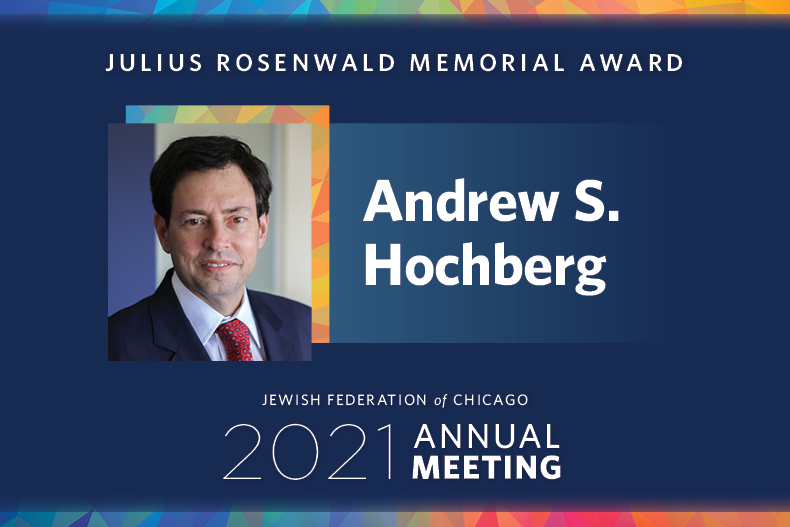
Meet Andrew S. Hochberg, 2021 Julius Rosenwald Memorial Award recipient
Celebrate Andy Hochberg at the virtual Annual Meeting on Sept. 14
Read more -

Two local teens win national recognition
Recipients of the annual Diller Teen Tikkun Olam Awards
Read more -
Celebrating six young award winners cultivating the community
Introducing young adult award winners
Read more

Sheldon Patinkin, a landmark figure of Chicago’s theater scene and one of those who fashioned it into a national force, died of a heart attack in September. He was 79.
Patinkin-a cousin of actor Mandy Patinkin-served as chair of the theater department of Columbia College for nearly 30 years. He also was artistic director of the Getz Theater of Columbia College, co-director of the Steppenwolf Theatre Summer Ensemble Workshops, and artistic consultant at both Steppenwolf Theatre and The Second City.
Patinkin had been a director and cast member of Second City-both in Chicago in and Toronto, where he worked behind the scenes on SCTV. In fact, an early theater troupe he founded at The University of Chicago in the 1950s is considered a precursor to Second City itself. He even wrote the book on Second City, literally- it’s titled Second City: Backstage at the World’s Greatest Comedy Theater– and also a history of the American musical.
Over the decades, Patinkin directed such classics as The Glass Menagerie, Uncle Vanya, Long Day’s Journey into Night and Death of a Salesman, as well as the musical South Pacific and opera scenes for the Lyric Opera at the Grant Park and Ravinia. He provided additional dialogue for an adaptation of an IB Singer novel and even translated a Brecht play. At the time of his death, he was directing Sondheim’s Into the Woods.
Patinkin received two Joseph Jefferson Awards, popularly known as “Jeff Awards”-one for directing the Irving Berlin revue Puttin’ on the Ritz and a special one for his overall contribution to Chicago theater. He also received the Illinois Association’s 1992 Outstanding Contribution Award.
Sheldon Patinkin was the devoted brother of Ida (the late Rabbi Daniel) Goldberger and Norman (Jacqueline) Patinkin, the cherished uncle of Lynn, Karen (Peter Landon) and Phillip (Suzanne) Patinkin, Debbie (David) Beren, Rabbi Menachem (Bracha), and the late David (Helle) and Joel (Marsha) Goldberger, and a great-uncle to many.
Services were held at Shalom Memorial Funeral Home in Arlington Heights, with interment at Shalom Memorial Park. In lieu of flowers, donations may be made to The Sheldon Patinkin Scholarship Fund at Columbia College Chicago.
Other stories
-
Meet Andrew S. Hochberg, 2021 Julius Rosenwald Memorial Award recipient
Celebrate Andy Hochberg at the virtual Annual Meeting on Sept. 14
Read more -
Two local teens win national recognition
Recipients of the annual Diller Teen Tikkun Olam Awards
Read more -
Celebrating six young award winners cultivating the community
Introducing young adult award winners
Read more
Most Jews have never heard of, let alone ever met, Ralph I. Goldman.
But for countless numbers of us throughout the world, Ralph-a former chief executive of the American Jewish Joint Distribution Committee (JDC)-played a role in our freedom, our positive Jewish identity, our dedication to the neediest among us. He was also instrumental in the State of Israel’s birth, its growth and success, its cultural and educational institutions, and its strong social fabric.
Indeed, he was one of the greatest advocates for the Jewish people and Israel, their constant companion in times of need, and their warmest compatriot in times of elation.
They just didn’t know it.
Why?
Because this 100-year old man, who passed away in Jerusalem on Oct. 7, was more focused on our well-being, on creating opportunities for us to embrace our Jewish identity and on Israel’s bright future than on bolstering his own reputation.
And his life’s work and ongoing legacy are reasons to pause, and celebrate, even as we mourn his passing.
Ralph, who was born in Ukraine in 1914, was an early builder of the State of Israel – a brave and deliberate Jewish leader who cracked open communist Europe to revive Jewish life in places where the Soviets strived so very hard to eradicate it.
He also worked with a full heart to strengthen ancient Jewish communities in places from Morocco to Mumbai. Goldman, who at the time of his death remained an honorary executive vice president of JDC, was the living embodiment of the Talmudic precept that “all Jews are responsible for one another.”
He was a trusted adviser and friend to Israeli leaders, including David Ben-Gurion, Shimon Peres and Teddy Kollek. He encouraged, trained and guided hundreds of Jewish leaders who have taken leading roles in their communities from America to Ukraine to Hungary.
Ralph also was a mentor to many young Jewish innovators. He took delight in forming strong bonds with the distinguished cohort of Ralph I. Goldman Fellows-people working in Jewish communities around the globe to better lives and influence our collective Jewish future. And I was personally privileged to have Ralph as a mentor for the last two decades.
He was a father, a husband, a grandparent, a dear friend, and in his iconic bowtie the consummate gentleman.
We live in a world today where giants of Ralph’s stature are few and very far between. He possessed a quiet determination that put action and deed before rhetoric and people ahead of propaganda.
Nowhere can that been seen more poignantly than in a legendary photograph of Ralph and Ben-Gurion that for decades has delighted all who see it. It shows Ralph, a close adviser to the first Israeli prime minister, humbly helping him into his jacket before attending a meeting in New York in the 1950s.
Today that gesture seems foreign and perhaps even a little old-fashioned, but it was Ralph to the core. He was always there behind the scenes, pushing forward to ensure the best interests of a people and a state that were central to his being.
I urge us all to take a moment to remember the man who provided shelter, joy, and encouragement to so many, even if they never knew his name. We are his legacy, an everlasting monument to his boundless devotion.
Thank you, Ralph.
Alan H. Gill is CEO of the American Jewish Joint Distribution Committee.
Other stories
-
Meet Andrew S. Hochberg, 2021 Julius Rosenwald Memorial Award recipient
Celebrate Andy Hochberg at the virtual Annual Meeting on Sept. 14
Read more -
Two local teens win national recognition
Recipients of the annual Diller Teen Tikkun Olam Awards
Read more -
Celebrating six young award winners cultivating the community
Introducing young adult award winners
Read more
Mildred Shlensky Kaufmann began her service to the Jewish community back in the 1930s, when she served as President of the Jewish Big Sisters. She later became active in the then-Jewish Family and Community Service (today Jewish Child and Family Services), ultimately serving as the agency’s president from 1973-74.
From 1967-1976, Mildred served on the JUF Board of Directors and as president of the JUF Women’s Division. In 1979, she became one of the first people to transition from lay to professional leadership when she became the Women’s Division’s executive director.
“Mildred was a warm, loving and gracious woman who devoted her life to the Jewish community,” said Bill Silverstein, chairman of the JUF/Federation Board of Directors. “She was an intelligent, soft-spoken, caring, and gracious woman who was loved and respected by all who knew her.”
Mildred was the beloved wife of Harold Shlensky and the late Lester Kaufmann. She was the dear mother of William (the late Barbara) Shlensky, Carol (Dr. David) Robbins, and Bert (Judith) Shlensky and the fond sister of the late Relba (the late Carl) Immerman. She also was the loving grandmother of Susan and Todd Aronoff, Wendy Shlensky, Frank and Amy Shlensky, Matthew Robbins, Claudia Rose and Missy Robbins, and the great-grandmother of 10.
Services were held at The Piser Chapel in Skokie, with interment at Jewish Waldheim. In lieu of flowers, the family respectfully requests that memorials may be made to the Mildred Shlensky Foundation
c/o JUF.
Other stories
-
Meet Andrew S. Hochberg, 2021 Julius Rosenwald Memorial Award recipient
Celebrate Andy Hochberg at the virtual Annual Meeting on Sept. 14
Read more -
Two local teens win national recognition
Recipients of the annual Diller Teen Tikkun Olam Awards
Read more -
Celebrating six young award winners cultivating the community
Introducing young adult award winners
Read more
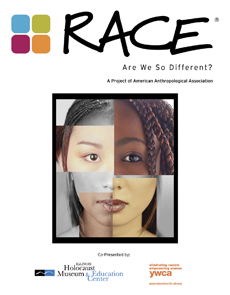
The Illinois Holocaust Museum & Education Center is among select museums in the country to confront the issue of race and racism in the United States with the new exhibit RACE: Are We So Different? running now through Jan. 25.
Developed by the American Anthropological Association in collaboration with the Science Museum of Minnesota, this is the first national exhibition to tell the stories of race from the biological, cultural, and historical points of view.
Today, scientists are beginning to challenge “racial” differences, and even question the very concept of race. The exhibit presents the reality—and unreality—of race using interactive components, multimedia presentations, and attractive graphic displays to offer visitors an eye-opening look at its important subject matter.
“The idea of ‘race’ has been used historically to justify mistreatment of people and even genocide,” said Susan Abrams, CEO at the Illinois Holocaust Museum. “The promotion of human rights is a vital part of the mission of the Illinois Holocaust Museum, and so, we are thrilled to host RACE, an exhibition that challenges visitors of all ages and backgrounds to discover how race operates in their lives.”
Amplifying this exhibition is a calendar of more than two-dozen public programs-Scholar Series, discussions, performances-to engage the public in examining race through various lenses.
To learn more, visit www.il
holocaustmuseum.org/events or call (847) 967-4800.
RACE: Are We So Different? is funded by Ford Foundation and National Science Foundation. The exhibition at the Illinois Holocaust Museum is made possible by Presenting Sponsor Allstate Insurance Company and Co-Sponsor Walgreens. Additional support is being provided by Participating Sponsor Northwestern University, Bank of America, BMO Harris Bank, Evanston Community Foundation and Loyola University Chicago. The Golder Family Foundation is lead sponsor for all Illinois Holocaust Museum special exhibitions.
Other stories
-
Meet Andrew S. Hochberg, 2021 Julius Rosenwald Memorial Award recipient
Celebrate Andy Hochberg at the virtual Annual Meeting on Sept. 14
Read more -
Two local teens win national recognition
Recipients of the annual Diller Teen Tikkun Olam Awards
Read more -
Celebrating six young award winners cultivating the community
Introducing young adult award winners
Read more
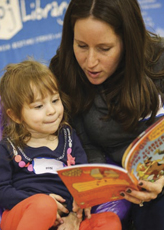
PJ Library Chicago celebrates 5th birthday with Joanie Leeds kiddie concert
JESSICA LEVING
When Yom Kippur rolled around last month, it was easy for the Handmaker family to explain the holiday to their two sons, Cameron, 5, and Max, 4.
At bedtime, they simply pulled out their copy of Sammy Spider’s First Yom Kippur—a free book they received courtesy of PJ Library Chicago, a program of the Jewish United Fund/Jewish Federation of Metropolitan Chicago that proudly celebrates its fifth birthday this year.
Part of the Harold Grinspoon Foundation’s worldwide initiative to promote Jewish literacy among children and their families, PJ Library (the “PJ” stands for pajamas) is an international program that mails free monthly Jewish-themed books and music to children six months through 8 years old.
Chicago’s PJ Library program is the largest in the country, boasting approximately 6,000 participating families. Since its inception five years ago, the program has mailed more than 317,000 books and CDs to close to 9,000 area households.
“It’s so great to have books like these that we can come back to year after year to teach our kids about Jewish traditions,” said Pam Handmaker, Cameron and Max’s mom. “They can really relate in a way that they just can’t with books about superheroes. It’s like, ‘Look, they built a sukkah! We built a sukkah!’ Plus they get so excited when they see that a new book came in the mail. It’s always the first book I have to read to them that night!”
To celebrate five years of enriching Jewish learning, PJ Library Chicago will rock out at a party on Nov. 16 featuring chart-topping Jewish children’s singer-songwriter Joanie Leeds.
“We are so excited to celebrate with all our PJ families,” said Rachel Rapoport, program director for PJ Library Chicago. “We couldn’t be more pumped to have Joanie joining us for our birthday bash. It’s going to be a great event!”
The party will take place Sunday, Nov. 16 from 3-5 p.m. at Café Brauer at Lincoln Park Zoo. In addition to a special musical performance by Joanie Leeds, the event will feature arts and crafts, face-painting, a photo booth, and of course, birthday treats! Additional details are available online at juf.org/bdaybash.
PJ Library is a program of JUF Young Families, charged with reaching out and engaging families with young children in Jewish life. Thanks to additional generous funding from the Harold Grinspoon Foundation, The Crown Family, Iris and Steve Podolsky, the Anschel-Eilian Family Charitable Foundation and other local donors, all participants like the Handmakers receive all PJ Library books and music completely free of charge.
Last September, the Chicago program expanded its offerings for children aged 9 to 11 with the addition of PJ Our Way, which allows older kids to choose the books they receive. They can also write reviews, upload their own video trailers, and share ideas on the PJ Our Way web site.
For more information about The Birthday Bash, or to sign up to receive PJ Library books and music, please visit juf.org/pjlibrary or contact Rachel Rapoport at [email protected] or (312) 357-4831.
Other stories
-
Meet Andrew S. Hochberg, 2021 Julius Rosenwald Memorial Award recipient
Celebrate Andy Hochberg at the virtual Annual Meeting on Sept. 14
Read more -
Two local teens win national recognition
Recipients of the annual Diller Teen Tikkun Olam Awards
Read more -
Celebrating six young award winners cultivating the community
Introducing young adult award winners
Read more
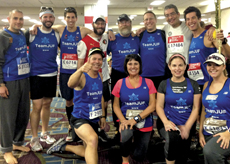
At the 2014 Bank of America Chicago Marathon on Oct. 12, 28 runners not only crossed the finish line—they went the distance to help thousands of people throughout Chicago and around the world by running as a part of TeamJUF.
JUF’s second-ever marathon team, chaired by Jason Friedman, has raised over $81,000 from over 680 donors.
Friedman, a JUF/Federation board member and longtime supporter who has run marathons in the past, wanted to run this year for something bigger than himself. The Chicago Marathon’s motto, “Life’s better when we’re connected” resonated with him and with TeamJUF’s mission.
“For a lot of the young people on [TeamJUF], it was their first ever touch-point with JUF or with being actively involved in fundraising and the Jewish community,” Friedman said. “I think they all walked away with not only a positive feeling of doing something good for the community but a positive sense of self. It’s a huge accomplishment for anybody.”
Adam Reinherz, a Buffalo Grove native who lives in Pittsburgh, returned to his hometown to run his ninth marathon with TeamJUF.
“It’s a privilege to run with TeamJUF,” he said. “Not only was I able to join such an inspiring group of people, but the opportunity to run 26.2 miles across Chicago in a shirt emblazoned with the letters JUF served as further reminder that our actions are much larger than ourselves.”
Ryan Schraier, of Lincoln Park, ran his first marathon with TeamJUF.
“The training, leading up to the race, taught me the true definition of commitment,” he said. “Completing my first marathon was by far one of the most rewarding experiences in my life. Overcoming the ‘wall’ that you hit at the 20 mile mark is such a mental and physical challenge but crossing the finish line makes it all worth it.”
Another member of TeamJUF, Naftali Garber, of Lakeview, made headlines by running the entire marathon barefoot. The team also included a father-daughter duo, Israel’s Consul General to the Midwest Roey Gilad who hosted a pre-race dinner for the team, and former JUF chairman David T. Brown who ran his 11th and final marathon this year.
Adrienne Kriezelman, of Winnetka—an active contributor and volunteer with JUF for the past 35 years, serving on the JUF Women’s Board, Federation Board and as the current Congregations chair—completed her first marathon this year, in honor of her 65th birthday.
“As I approached my 65th birthday I decided to test myself, telling myself that age is just a number and that you are never too old to try something new, to create new challenges for yourself,” she said. “I trained for six months for the marathon and ran 533 miles in that time. This was a challenge I undertook as a birthday present to myself, to accomplish this goal and at the same time raise money for JUF as I have been active and totally involved as a volunteer of the Jewish United Fund for my entire adult life.”
“I’m really proud of everybody and I hope [we inspire] more of our Jewish community to run next year for TeamJUF,” Friedman said. “We’re a great team, we’re a great charity and we have a lot of fun with our team. All you have to do is put in the time and do the training-TeamJUF will get you to the starting line and the rest is up
to you.”
For more information about TeamJUF, visit www.JUF.org/Marathon.
Other stories
-
Meet Andrew S. Hochberg, 2021 Julius Rosenwald Memorial Award recipient
Celebrate Andy Hochberg at the virtual Annual Meeting on Sept. 14
Read more -
Two local teens win national recognition
Recipients of the annual Diller Teen Tikkun Olam Awards
Read more -
Celebrating six young award winners cultivating the community
Introducing young adult award winners
Read more

New BeTween program focuses on issues significant to young Jewish girls
CHRISTINE SIEROCKI LUPELLA
Growing up can be a challenge, especially for ‘tweens’—kids ages 9 through 13. Girls in this age group have their own unique needs as they face situations like social isolation, bullying, and obsession with body image.
Tracey Kite, a HealthCare Guide with Jewish Child & Family Services (JCFS), said, “We have come to understand and recognize the barriers to helping girls develop self-esteem,” she said. “We thought, ‘How can we be active in shifting those barriers?'”
A new program, BeTween: Growing Healthy Jewish Girls, seeks to address young girls’ concerns, using a Jewish lens. This comprehensive model program will provide Jewish girls with knowledge and skills for leadership, health, and identity. The Jewish Women’s Foundation of Metropolitan Chicago (JWF) provided an initial grant for a one-year collaborative planning process, in which groups from across the spectrum of the Chicago Jewish community, that included the Jewish Federation of Metropolitan Chicago, JWF, JCFS, Jewish Community Center (JCC) Chicago, Response, Moving Traditions: Rosh Hodesh-It’s a Girl Thing!, Chicago area synagogues, concerned parents-and the girls themselves.
“It’s been a collaborative process form the beginning. That’s part of what makes it so exciting. That also tells us that this is important to a lot of people,” said Ann Luban, JCFS Program Specialist.
The surveys, research, and focused discussions “opened all of our eyes to the little things that we need to pay attention to, in order to help our girls,” Luban said.
“We talked to girls in grades three through six, and we talked to their moms,” Kite said. “We also talked to high school girls and their parents, and asked them to look back and tell us what would have been helpful. We envisioned what I think is an amazing program that will focus on fun, healthy role modeling, teaching skills to help girls grow emotionally and physically, and keep them connected Jewishly.”
The BeTween program includes professional and paraprofessional training.
The Mayer Kaplan JCC will pilot the program, starting with a kickoff event, “Just BeTween Us: A Celebration of Jewish Girls and the Women in their Lives,” on Sunday, Nov. 23, from 1:15-5 p.m. The event features Caroline Rothstein, a motivational speaker, performer, and host of the YouTube series, “Body Empowerment.” Rothstein is a Chicago native currently based in New York City.
Breakout sessions include spoken word poetry with Rothstein, a mother-daughter book club, Art Fun: Getting to Know Myself on the Inside and Outside, BBYO: “I’m Not Bossy, I’m the Boss,” Rosh Hodesh-It’s a Girl Thing!, and Smarty Pants Yoga. Adult sessions focus on parenting challenges such as social media and girl drama. The event will close with Pound Fit, an aerobics program with drumming.
Additional BeTween programs will be added later, including a girls’ running program that starts next month, Kite said.
Parent Stacy Saef said her daughter is excited about the event. “I left the BeTween Us postcard in my car, awaiting my daughter’s keen eye. She spotted it and read through the material and within minutes, she was sold, especially when she found out that Smarty Pants Yoga is coming.”
Luban said high school girls will attend the event, to be positive Jewish role models for younger girls. “Girls like to be with older girls. The older girls said it was important to them when they were younger to have older girls around who would understand them in ways they felt adults didn’t.”
The BeTween website is scheduled to launch sometime this month. It will include not only events and activities, but will serve as an informational hub for parents and girls, with links to partner organizations.
Kite said materials developed for BeTween will be available for use throughout the community at no cost. “We really want this to be community based,” she said. “One synagogue is restarting its mother-daughter book club, using our materials.”
“BeTween is so important,” Luban said. “We have an opportunity to move the Jewish community forward in this, taking a whole cohort of girls and helping them experience
things differently.”
For registration information, visit http://bit.ly/BeTweenForm or call the Mayer Kaplan JCC at (847) 763-3500.
Other stories
-
Meet Andrew S. Hochberg, 2021 Julius Rosenwald Memorial Award recipient
Celebrate Andy Hochberg at the virtual Annual Meeting on Sept. 14
Read more -
Two local teens win national recognition
Recipients of the annual Diller Teen Tikkun Olam Awards
Read more -
Celebrating six young award winners cultivating the community
Introducing young adult award winners
Read more
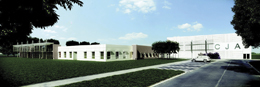
Ida Crown Jewish Academy to break ground on new facility Nov. 2
CHRISTINE SIEROCKI LUPELLA
Ida Crown Jewish Academy—Modern Orthodox co-educational Jewish college preparatory high school that has served the Chicago Jewish community for over 70 years—will break ground on a new, state-of-the-art facility at 8255 Central Park Ave., Skokie. This facility will also house the headquarters for the Associated Talmud Torahs, the governing body for Orthodox schools and the Keshet high school, a program for students with developmental delays. It will stand on the site of the former Rand McNally corporate headquarters.
The groundbreaking ceremony is on Sunday, Nov. 2 at 10:30 a.m. The public is invited to attend.
The new facility is expected to open January 2016. In addition to more classrooms, the facility will have: up-to-date science and technology facilities; expanded cultural arts, library, sports and extracurricular activities spaces; a large auditorium; student and faculty lounges; and a central worship space to accommodate all students.
“This dream would not be a reality without the support and vision of the Crown and Goodman Family, the Jewish Federation and the strong support of Ida Crown donors,” said Rabbi Dr. Leonard Matanky, dean of ICJA. “Many thanks to all those involved in this tremendous effort.”
Lester Crown said, “The quality education that ICJA has provided throughout its 72-year history has been first rate. To ensure that it has the capacity to maintain these high standards, the new facility will have the latest academic teaching tools. It will be able to keep pace with the Chicago area’s finest high schools, a must in our competitive world.”
Lead gifts for the project were provided by the Crown and Goodman Family and Rabbi Morris Esformes through the Jewish Federation of Metropolitan Chicago’s Centennial Campaign.
Dr. Steven B. Nasatir, president of the Jewish United Fund/Jewish Federation said, “Our Jewish Federation has partnered with Ida Crown every step of the way. ICJA is the flagship institution of the modern Orthodox community, and it is essential that this institution flourish to ensure the future of Chicago’s modern Orthodox community, which contributes so much to Jewish life. This project was facilitated through the Jewish Federation’s Centennial Campaign-a campaign to ensure a vibrant Jewish community for our next 100 years of service.”
David Strulowitz, who co-chaired the project’s capital campaign with Jacques Gliksberg, said, “We are excited that generations of Ida Crown students will have the opportunity to grow and thrive in this state-of-the art facility.”
Other stories
-
Meet Andrew S. Hochberg, 2021 Julius Rosenwald Memorial Award recipient
Celebrate Andy Hochberg at the virtual Annual Meeting on Sept. 14
Read more -
Two local teens win national recognition
Recipients of the annual Diller Teen Tikkun Olam Awards
Read more -
Celebrating six young award winners cultivating the community
Introducing young adult award winners
Read more
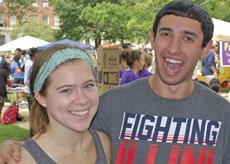
Jewish life was a big part of my life when I was a kid, but it went away after my bar mitzvah. I have missed Shabbat dinners and the traditions I used to hold dear. Now as a young adult, with more things to do than there is time to do them, it’s even harder to define what it means for me to be Jewish.
That’s when I found Illini Hillel.
I know that my personal experience is only one entry point to Hillel. Some come to learn about Israel advocacy—since the beginning of this school year, Israel has been front and center on campus. Others come to do social justice work—whether it is “Challah for Hunger” or an “Alternative Spring Break.” Some simply come for free food, and the hopes that a new circle of friends will be waiting there for them.
When people ask what Hillel is and someone responds “the center of Jewish life on campus,” I’m not sure they know what that means. We are basically one large family. To me, the biggest part of religion is that community aspect. I mean, sure, we offer Shabbat and High Holiday services, kosher food, and Jewish learning sessions, but all of those just tie back to everyone coming together and being with one another.
It’s the Jewish life I remembered when I was young and with my family. All of us get a safe environment for us to be ourselves, but this friendship idea is the one that stands out to me the most.
Of course that happens in other places too, but it just feels different with Hillel. People seem to genuinely care more about you, and also how you got to where you are now. The staff wants to learn about you. They will meet you on the quad with apples and honey for Rosh Hashanah, or at your dorm with soup or your fraternity or sorority with bagels and cream cheese. They are there to hear from you and they have all the time in the world for it. More than that, they want you to succeed in your own path.
This is why I got involved with engagement in the first place, to make sure no one missed out on this wonderful experience I’ve had. If I bring an idea to Hillel, I know that the question is going to be “How can we help make this happen?” This is how the group First Year Students at Hillel developed last year-when someone suggested a “big brother” program between upper and lower classmen. This year the program is bigger than last year, but most importantly, it is still run by students. It’s Hillel gone Greek life, in some regards. But that only proves the point: we are building one giant family, we are one house-we are one people. Our large Hillel family is continuing to grow day by day; I’m constantly meeting new and exciting people.
So I guess I haven’t really lost my definition of being Jewish. Being Jewish is more than what I do; it’s about who I share it with. Being Jewish means being part of a whole, and whether I’m celebrating it through Shabbat at school, being a listening ear, or encouraging someone to try Hillel for the first time, I’m not only making myself stronger, but continuing to build our Jewish community.
UIUC Hillel | Margie K. and Louis N. Cohen Center for Jewish Life is an integral part of the Hillels of Illinois, a partner in serving our community, supported by the Jewish United Fund/Jewish Federation of Metropolitan Chicago; the Champaign-Urbana Jewish Federation; an accredited campus foundation of Hillel: The Foundation for Jewish Campus Life.
Evan Frank is a junior in Accounting at University of Illinois at Urbana-Champaign and student Vice president for Engagement at the Illini Hillel.
Other stories
-
Local campus administrators convene on hate speech, bias
JUF and ADL brought together 17 student safety, diversity and inclusion and student affairs administrators and Hillel representatives from various Illinois campuses to discusses issues of hate speech and bias.
Read more -
Engaging students about Israel on campus
Too often we hear about difficulties facing Jewish college students on Illinois campus, but to focus solely on the politics gives only one piece of the complex narrative that is Jewish life on campus.
Read more -
Hillel International launches fellowship initiative to train young Jewish professionals
The Springboard Fellowship will train cohorts of young Jewish professionals in highly-valued skillsets and place them at local Hillel campuses for two years.
Read more