Foundation for Jewish Camp launches program to help match families with camp at affordable price
The Foundation for Jewish Camp (FJC) has launched BunkConnectTM (BunkConnect.org), a new, national program that matches eligible families with high-quality nonprofit Jewish summer camps at a more affordable price.
After income-eligible families of all Jewish backgrounds supply some basic, confidential information into the new online tool, BunkConnect matches them with available camp sessions at low introductory rates (40 percent-60 percent off list prices). This initiative is modeled after the success of FJC’s One Happy Camper program-a need-blind grant initiative for first-time campers.
BunkConnect launched in November with 75 participating camps, representing various movements and denominations. The program is for first-time campers, basing eligibility on a family’s adjusted gross income, number of dependent children, and place of legal residency. For example, through BunkConnect, a family with two children living in Illinois with a maximum adjusted gross income of $145,000 can realize the dream of Jewish camp. Jewish day school families are welcome.
BunkConnect is a program of Foundation for Jewish Camp with The Center for Entrepreneurial Jewish Philanthropy (CEJP), made possible by generous funding from The AVI CHAI Foundation, The Leader Family Foundation, The Michael and Andrea Leven Family Foundation, and The Jack and Goldie Wolfe Miller Fund with additional support from Eileen and Jerry Lieberman.
For more information, or to determine eligibility, please visit www.BunkConnect.org.
Other stories
-
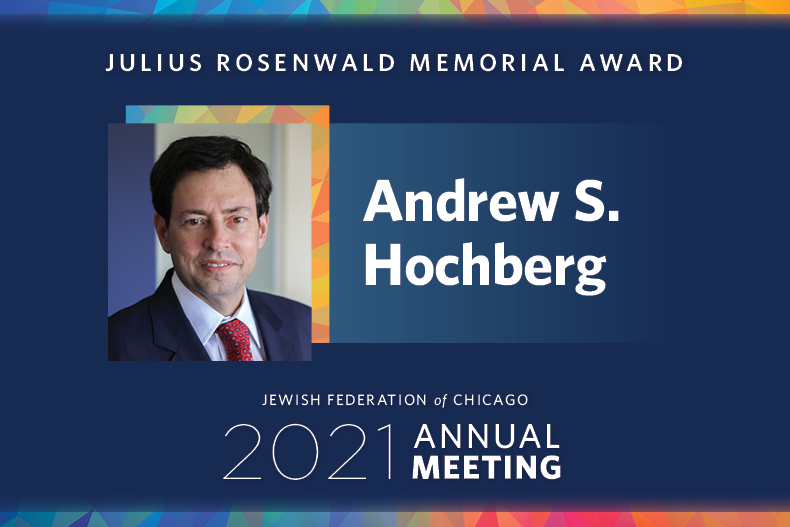
Meet Andrew S. Hochberg, 2021 Julius Rosenwald Memorial Award recipient
Celebrate Andy Hochberg at the virtual Annual Meeting on Sept. 14
Read more -
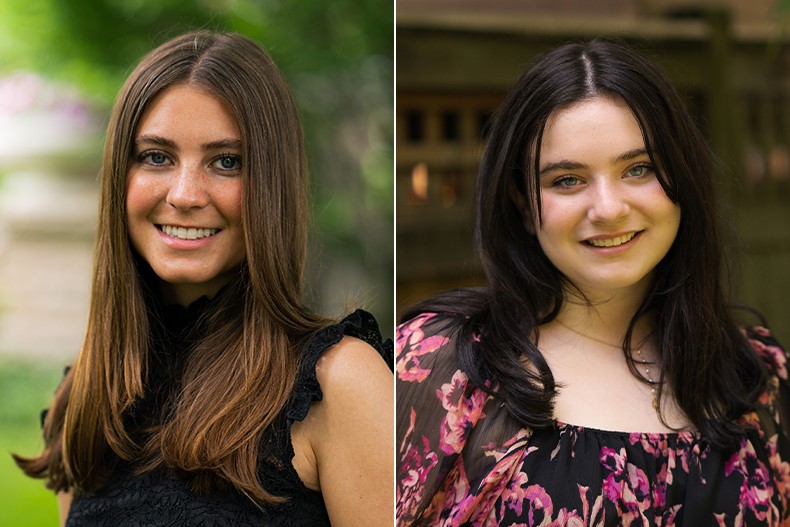
Two local teens win national recognition
Recipients of the annual Diller Teen Tikkun Olam Awards
Read more -
Celebrating six young award winners cultivating the community
Introducing young adult award winners
Read more
Walter Sobel, architect of synagogues, courthouses, and private homes, died June 11, 2014. He was 100.
Synagogues in the area which Sobel designed include Oak Park Temple; Ezra-Habonim, the Niles Township Jewish Congregation; the sanctuary of Beth Emet The Free Synagogue in Evanston; and the chapel at KAM in Hyde Park. Sobel also designed synagogues in Springfield and Champaign; Cedar Rapids, Iowa; and Benton Harbor, Michigan. During the recent High Holidays, all of these congregations mentioned Sobel during their Yizkor memorial services.
In addition, Sobel contributed to, or consulted, on the designs of some 250 courthouses in the US, Canada, and the Virgin Islands- as well as moot courtrooms and law libraries- and edited books on courthouse design. He also designed high schools, stores, and individual houses, infused with his love of Frank Lloyd Wright’s vision.
Sobel, born in 1913, was raised on Chicago’s North Side. Fascinated with the discipline since childhood, he began studying architecture at Senn High School, then at Armour Institute, and later IIT. Eventually, he would teach architecture there for 40 years, starting in 1946.
Sobel served in the Navy during WWII, as a lieutenant, and was wounded in battle in the Philippines. After the war, he moved with his wife into a Frank Lloyd Wright home in Wilmette, where they lived the rest of their lives. Aside from architecture, Sobel loved literature and classical music.
Sobel was preceded in death by his wife, Betty. They are survived by their children- Richard, Nancy, Steven and Robert Sobel and Sue Kaufman- as well as six grandchildren and two great-grandchildren. Services were held in the Beth Emet sanctuary he designed.
Other stories
-
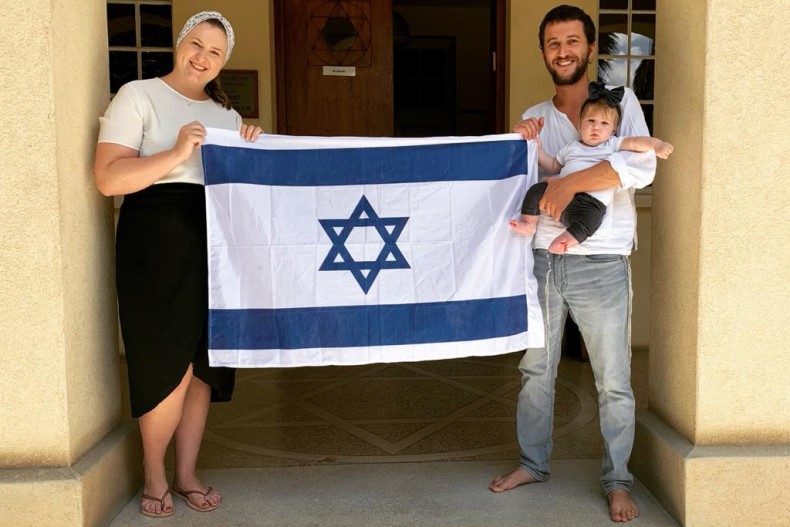
Chicago to Israel to Kenya
A family’s story of living Jewishly on three continents Michelle Cohen World May 28, 2021 Avital, Tzofia, and Netanel Kaszovitz outside their home in Nairobi on Yom HaAtzmaut. When Avital Kaszovitz prepared to be a Modern Orthodox shlicha (emissary) to the Jewish community in Ke
Read more -
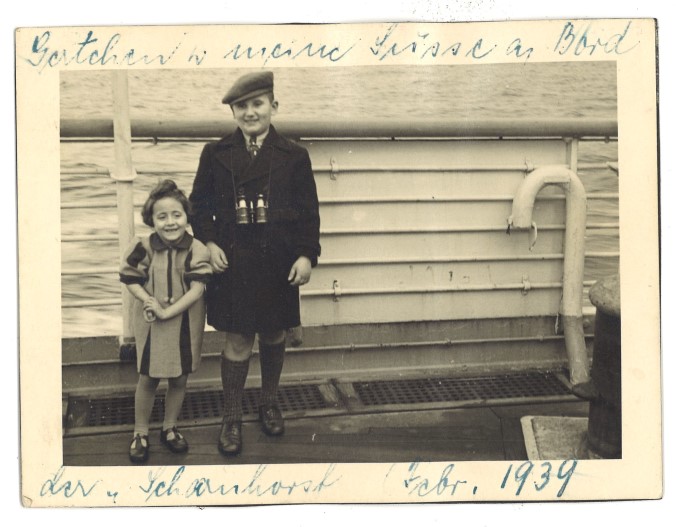
New exhibit spotlights the experience of ‘Shanghai Jews’
Explore a new Illinois Holocaust Museum and Education Center exhibit
Read more -
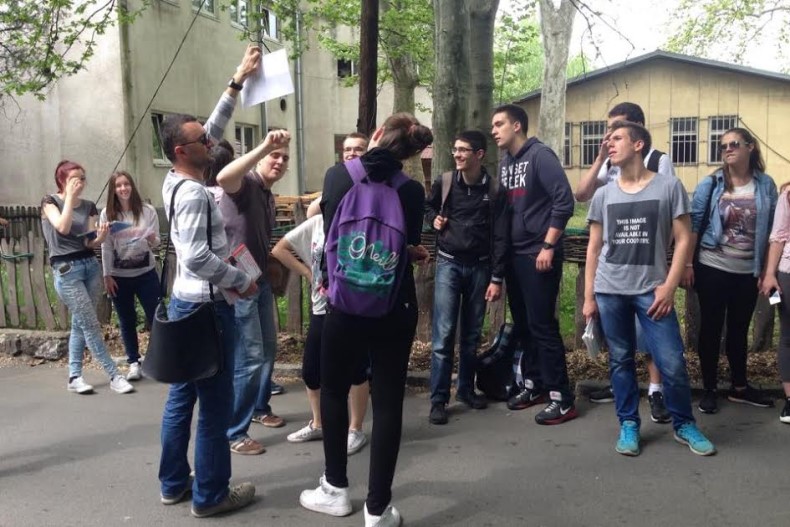
Europe’s brave new teachers of the Holocaust
Teaching the Holocaust in the modern era has its difficulties and rewards.
Read more
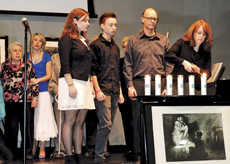
October was a special month for survivors of the Holocaust, their loved ones, and those who wanted to learn more about the Holocaust’s impact on the Russian-speaking Jewish community.
Chicago Connect, Reklama Media, the Illinois Holocaust Museum and Education Center, Holocaust Community Services of Jewish Child and Family Services, CJE Senior Life, and HIAS Chicago marked the 73 anniversary since the mass destruction of Soviet Jewry had begun.
At the dawn of World War II, more than 4.5 million Jews lived on the Soviet Union territory. Of these, a little bit more than three million ended up under Nazi occupation. Many were able to flee to unoccupied regions or served in the Soviet military. During the war, Hitler murdered nearly all of those under occupation. Only about 120,000 survived.
All of the Jewish shtetls were destroyed, and the Yiddish language and Jewish culture ceased to exist. The survivors found themselves under a Stalinist regime which suppressed all discussions of the Jewish people’s suffering. No monuments were erected to the victims. No information about their fate was published. It was only after the Soviet Union collapsed that the true horrors endured by the Soviet Jews became known.
Practically every Russian-speaking Jewish family in the Chicago area lost loved ones in the Holocaust. On Oct. 5, about 200 memorial candles were lit in their memory at the Illinois Holocaust Museum and Educational Center.
Russian Newspaper Reklama has been collecting and publishing materials dedicated to the victims of the Holocaust in the Russian-speaking Jewish community of Chicago for more than 20 years. Three “Never Forget” photo albums in Russian and English telling the stories of survival and heroism were already published, and Reklama, with the help of community members and sponsors, intends to publish more. There are still many stories of Soviet Jews that have never been told.
Matus Stolov, from Evanston, was 13 when he ended up in the Minsk ghetto. When he was about to be transported, to places unknown, and felt he could not leave his mother alone at the empty train station in Minsk, he jumped out of the moving train to be with her. For the next two years, Matus helped his mother and her friends serving with the Underground to bring people from the ghetto to the partisans in the forest.
The Minsk ghetto was one of the largest ghettos in Europe, second only to the Lvov ghetto in the Ukraine. Only about 8,000 people survived in the Minsk ghetto. By the end of 1942, Nazi and local collaborators killed more than 90,000 Jews in the Minsk ghetto, including thousands of German Jews from Hamburg, Berlin, and other cities.
Distinguished Jewish artist, Lazar Ran, a Minsk native, was also represented at the Soviet Holocaust story commemoration, in the presentation of his unique etchings. Ran, who lost his family, including two children, in the Minsk ghetto, created his collection “The Minsk Ghetto,” as a chronicle of life in the ghetto during the Holocaust, and a tribute to Jewish people executed by the Nazis and their collaborators. The presentation was made possible by Boris Tsinman and family, of Arlington Heights, who purchased the collection from Ran’s heirs and has generously made these works available for viewing.
May 2015 will mark the 70th anniversary since Victory Day-marking the end of World War II-and many Holocaust survivors and World War II veterans feel that it might be their last big celebration. Holocaust Community Services of Jewish Child and Family Services, CJE Senior Life, the Russian Jewish Division of JUF, the Illinois Holocaust Museum and Education Center, and Reklama Media have planned a year-long calendar of events to share the Soviet Holocaust story-which has been untold for far too long.
Maya Gumirov is a clinician for Jewish Child & Family Services, a partner in serving our community supported by the Jewish United Fund/Jewish Federation of Metropolitan Chicago.
Other stories
-
Chicago to Israel to Kenya
A family’s story of living Jewishly on three continents Michelle Cohen World May 28, 2021 Avital, Tzofia, and Netanel Kaszovitz outside their home in Nairobi on Yom HaAtzmaut. When Avital Kaszovitz prepared to be a Modern Orthodox shlicha (emissary) to the Jewish community in Ke
Read more -
New exhibit spotlights the experience of ‘Shanghai Jews’
Explore a new Illinois Holocaust Museum and Education Center exhibit
Read more -
Europe’s brave new teachers of the Holocaust
Teaching the Holocaust in the modern era has its difficulties and rewards.
Read more
Other stories
-
Local campus administrators convene on hate speech, bias
JUF and ADL brought together 17 student safety, diversity and inclusion and student affairs administrators and Hillel representatives from various Illinois campuses to discusses issues of hate speech and bias.
Read more -
Engaging students about Israel on campus
Too often we hear about difficulties facing Jewish college students on Illinois campus, but to focus solely on the politics gives only one piece of the complex narrative that is Jewish life on campus.
Read more -
Hillel International launches fellowship initiative to train young Jewish professionals
The Springboard Fellowship will train cohorts of young Jewish professionals in highly-valued skillsets and place them at local Hillel campuses for two years.
Read more
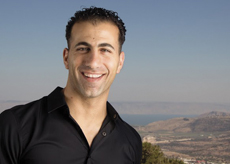
Dr. Thaier Kizel is an Israeli teacher who specializes-and innovates-in the teaching of Modern Hebrew. He is a winner, in fact, of Israel’s Outstanding Teacher award. And he has served in the Israel Defense Forces. But he’s not Jewish. He’s a member of the Druze community, one of some approximately130,000 living in Israel today.
Like his parents and grandparents, Kizel was born in Maghar, a town near Tiberias. “It’s a mini-Israel,” Kizel joked, referring to its mixture of Jewish, Christian, Muslim, and Druze inhabitants. Today, he lives and teaches in Haifa.
Recently, Kizel visited Chicago and New York to share what he has learned, and to learn more about how Hebrew is taught in America. Here, he met with ambassadors of the Jewish Agency for Israel, Friends of the IDF, and parents of the Diller Teen Program. He also met with students of all ages, from Hillel Torah Day School and Chicago Jewish Day School, Chicagoland Jewish High School and Niles North High School, and even a JCC “Say It in
Hebrew” ulpan.
“Everyone in Israel speaks Hebrew,” Kizel explained, adding that this gives minorities a sense of belonging. Even in his own village, which is largely Druze, he prefers to speak Hebrew. In Israel, Kizel adds, there is a high motivation for learning Modern Hebrew, while in America, “you need a reason.”
Aside from Hebrew, Arabic, and English, Kizel can also get by in German and can read Aramaic. He learned Dutch to read a book for his doctorate, which he received from the University of Haifa, on the Arabic influences on the poetry of Abraham ibn Ezra.
Today, Kizel teaches Hebrew to future teachers, and also does work for Israel’s Ministry of Education. He was nominated for Outstanding Teacher by his students, and was one of six winners out of a field of 2,000. The award, now in its sixth year, is given by the Outstanding Teacher Project, run by El Al Airlines, the Yediot Achronot newspaper, and the Jewish Agency for Israel, which receives support from JUF. Winners are chosen by a panel of high-ranking public officials.
Kizel is a pioneer of Hebrew-language teaching. He teaches in “immersive” style, using only Hebrew while class is in session. His goal is to make the language useful for students, so his lessons involve music videos and popular TV shows; Kizel also encourages students to use their smart phones. For homework, Kizel may assign the students to read and report on a Hebrew website. He only turns to books for advanced students.
But the tone of the lessons are important, too, Kizel continued; he often thinks about his own education and what he enjoyed about it. He feels that a sense of humor is important, and does not issue tests for the first four months of the school year. Empowering the students, he allows them to choose the topics of their oral presentations and give feedback to each other. He focuses on speaking skills first, then reading, then writing, as he feels that “students should experience success” early and often.
As to why he chose to dedicate himself to teaching Hebrew, he said, “Language has the power to change something within us.” And-he would no doubt agree-between us.
Other stories
-
Meet Andrew S. Hochberg, 2021 Julius Rosenwald Memorial Award recipient
Celebrate Andy Hochberg at the virtual Annual Meeting on Sept. 14
Read more -
Two local teens win national recognition
Recipients of the annual Diller Teen Tikkun Olam Awards
Read more -
Celebrating six young award winners cultivating the community
Introducing young adult award winners
Read more
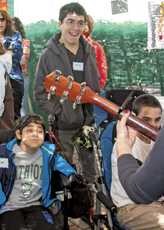
For some families, being able to attend services would be an incredible Chanukah gift. And, while congregations attempt to be as inclusive as possible in addressing the needs of people who would like to worship, some families need extra accommodations.
This year, a program called Encompass (formerly Supported Community Living Initiative), administered by Jewish Child & Family Services, is partnering with five Conservative congregations through a program called HUGS: Healthy Understanding and Growing Space, to offer free synagogue worship services to families who have members with special needs. This year’s Chanukah event is being held on December 21 at Congregation B’nai Tikvah in Deerfield.
HUGS was envisioned by Cantor Steven Stoehr, of Congregation Beth Shalom in Northbrook, to provide a welcoming environment for Judaic observance, specifically for families who have a loved one with a disability. This year, HUGS has expanded its embrace to Moriah Congregation and Congregation B’nai Tikvah in Deerfield, Am Yisrael Conservative Congregation in Northfield, and North Suburban Synagogue Beth El in Highland Park. Membership in these congregations is not required, and in some cases the HUGS service joins the rest of the congregation.
By working with Encompass, the HUGS program also embraces adults with disabilities. “We are thrilled about this partnership, and look forward to a great year of programming that will enrich Judaic experience for people with disabilities and their families,” said Jodi Newmark, director of Encompass.
Encompass also joins with Reform congregations to offer rotating Shabbat observances for families and adults with disabilities, including musical ones, throughout the year. Several participating congregations host HUGS observances for the High Holidays, Succot, Simchat Torah, Purim and Shavuot, and even a chocolate Seder for Passover. There also will be HUGS events at congregations during February, for Jewish Disability Awareness Month. While the worship services are free, for Shabbat dinners there may be a request for donations based on the family’s ability to contribute.
Encompass explores a sustainable, community-integrated future for people with developmental and/or intellectual disabilities. Encompass provides and facilitates Jewish community-based services and supports for adults across the spectrum of intellectual and/or developmental disabilities, and across all socioeconomic levels and levels of observance.
Encompass is administered by Jewish Child & Family Services, a partner in serving our community, supported by the Jewish United Fund/Jewish Federation of Metropolitan Chicago. The full calendar for HUGS services is at: juf.org/pdf/shalom_baby/HUGS_Event_Schedule.pdf. For more information about HUGS or Encompass, contact Jodi Newmark at 773-467-3923 or [email protected].
Other stories
-
Meet Andrew S. Hochberg, 2021 Julius Rosenwald Memorial Award recipient
Celebrate Andy Hochberg at the virtual Annual Meeting on Sept. 14
Read more -
Two local teens win national recognition
Recipients of the annual Diller Teen Tikkun Olam Awards
Read more -
Celebrating six young award winners cultivating the community
Introducing young adult award winners
Read more

This isn’t the Jewish learning you did in Hebrew school.
With sessions ranging from “Love in the Hebrew Bible” to “Drumming as a Spiritual Practice” to “Did Moses Study Qigong?”, the 5th annual Limmud Chicago was a dynamic exploration of Jewish life across the spectrum. A combination festival and conference, the event brought together more than 400 Jews from a wide range of communities for a weekend of peer-to-peer exchange Nov. 15 and 16 at the Skokie Doubletree Hilton.
“Limmud isn’t anything or anyone in particular; Limmud is who shows up, making it unique in the calendar of Jewish events throughout the year,” said Shoshana Waskow, Limmud Chicago Board chair, in program materials. “Quite simply, Limmud has changed the way Jews gather to learn.”
The core principles of Limmud center on diversity, empowerment, mutual respect, volunteerism, and participation. Anyone who would like to propose an idea for a session is welcome to do so, and presenters are asked to stay for the entire program as active members of the Limmud community.
“Limmud is klal yisrael (the entire Jewish people) in the purest sense that we can make it,” said Stacey Robinson, one of the program chairs. “The underlying principle is that we are all learners, and we are all teachers. All those who are teaching formally also participate in the entire experience.”
Chicago is one of more than 60 cities around the world now hosting annual Limmud events, following a unique model launched in the UK more than 30 years ago. In keeping with Limmud International tradition, Limmud Chicago was a completely volunteer-run event, with speakers from a variety of Jewish backgrounds reflecting an intentional cross-communal partnership.
“The concept is awesome because you have a lot of different voices and topics,” said Sasha Gutfraind, a Limmud participant. “Judaism is this inexhaustible ocean of wisdom… there’s a tremendous amount
to learn.”
For more information, visit www.limmudchicago.org.
Other stories
-
Meet Andrew S. Hochberg, 2021 Julius Rosenwald Memorial Award recipient
Celebrate Andy Hochberg at the virtual Annual Meeting on Sept. 14
Read more -
Two local teens win national recognition
Recipients of the annual Diller Teen Tikkun Olam Awards
Read more -
Celebrating six young award winners cultivating the community
Introducing young adult award winners
Read more
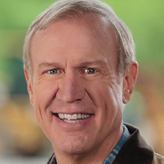
On Nov. 4, Bruce Rauner was elected governor, the first Republican governor Illinois has had in 12 years. He will be sworn into office on Jan. 12, 2015, bringing new ideas and new people to Springfield. Already he and his transition team are hard at work. How will the dynamic between a Republican Governor and a Democratic State legislature play out?
Prior to the election, members of the Jewish United Fund/Jewish Federation of Metropolitan Chicago Board of Directors and staff met with then-candidate Bruce Rauner. “During the discussion, Mr. Rauner expressed that he shares our desire for a State government that cares for the most vulnerable through innovative, effective health and human service programs provided in a cost efficient manner. We now look forward to developing a strong partnership with him, as we had with the Quinn administration,” said David Golder, Chair of JUF’s Government Affairs Committee, “and working to ensure that the important health and human services provided by our network continue to be priorities for State government.”
Competing demands and challenges will surely set the tone for Governor-elect Rauner’s first several months in office. To date, there has been much discussion around the fiscal problems of the State of Illinois, including pension issues and the return of the personal income tax rate to 3.75 percent on Jan. 1.
One of the first tasks for a governor is to recruit his Cabinet. Many people are interested including legislators from both parties who view Cabinet positions as a good step in their careers. The new Cabinet will begin by drafting the State’s FY 16 budget. They will be facing a budget in which most budget lines have been determined by a history of political favors, court orders, or federal matching dollars. As a result, the budget hasn’t changed much from year to year. Will this Governor take a new approach and carve out funding for innovative programming?
Realistically, there may not be time to dig into questions of impact and innovation in developing the Budget. It is usually presented the third Wednesday in February, quickly followed by the legislative committees’ cross-examination of the department heads. The State Legislature has the option of ignoring the Governor’s proposed budget and submitting their proposed budget at the end of May, but that rarely happens.
One of the most pressing issues facing the new Governor will be taxes. On Jan. 1, the personal income tax will be reduced from 5 percent to 3.75 percent. Will this be adequate to fund necessary State programs?
On another front, there is much concern among the Jewish Federation’s agencies about the State’s ambitious transformation of the healthcare and human service delivery system. Jewish Child and Family Services (JCFS), Sinai Health Systems, CJE Senior Life, and Government Affairs staff members have been appointed to statewide committees to help design the a unified new system. But, in spite of having input, there is worry that years of building up effective programs will be compromised by this effort. Another concern is the shift to Medicaid Managed Care.
Massive system changes such as the two described above, depend heavily on professional staff and technology. The State is short on both resources. Professional staff levels have been reduced, leading to some serious shortages. Technology is woefully outdated. Will the new governor slow down the implementation to get it right?
And finally, tensions remain about the closing of State facilities and how best to help frail older adults and people with disabilities live safely and engaged in the community. JCFS, CJE Senior Life, and members of the Jewish community are eager to help build a new system, stronger than the current system which traditionally has relied heavily on institutional care.
These are some of the healthcare and human service challenges facing the new governor. Leaders in other areas-education, economic development, and transportation-are closely watching their issues to see how Governor-elect Rauner approaches his first 90 days in office. There is a wave of curiosity and cautious optimism that a new Administration with fresh eyes and business skills can do wonders in solving some very difficult problems. We will be watching, influencing, and reporting back.
Suzanne Strassberger is associate vice president of Government and Community Partnerships, and director of the JUF Springfield Office.
Other stories
-
Meet Andrew S. Hochberg, 2021 Julius Rosenwald Memorial Award recipient
Celebrate Andy Hochberg at the virtual Annual Meeting on Sept. 14
Read more -
Two local teens win national recognition
Recipients of the annual Diller Teen Tikkun Olam Awards
Read more -
Celebrating six young award winners cultivating the community
Introducing young adult award winners
Read more
Chicago Pastor Chris Harris offers words of support following Jerusalem attack
PASTOR CHRIS HARRIS, SR.
Psalm 122:6 Pray for the peace of Jerusalem: they shall prosper that love thee.
What do you say when your friends are hurting? At least ‘say something!’ Dr. Martin Luther King said “Our lives begin to end the day we become silent about things that matter.” When I read of the recent tragedy in Israel, I immediately thought of you and wanted you to know that “Israel Matters To Me, My Family & Community.”
Over the past few years, my knowledge, love and concern for Israel and those closely connected to it has increased significantly. This feeling of connection and compassion is now spreading through my congregation/community in amazing and tangible ways. Our communities are talking together, working together and in times like these should be standing together with one voice against all vicious and barbaric acts of violence. Terrorism in any form should not be tolerated anywhere and the voice of the international community should be heard in solidarity when perpetrators choose to commit such atrocities.
In my opinion, saying something is good but doing something is even better. My community stands poised and ready to do whatever we can do to send a strong message that ‘you are not alone.’ We look to you to educate us on how we can best be of service to heal the wounds and know that our thoughts and prayers are with you and those (directly/indirectly) affected by this recent tragedy.
Other stories
-
Meet Andrew S. Hochberg, 2021 Julius Rosenwald Memorial Award recipient
Celebrate Andy Hochberg at the virtual Annual Meeting on Sept. 14
Read more -
Two local teens win national recognition
Recipients of the annual Diller Teen Tikkun Olam Awards
Read more -
Celebrating six young award winners cultivating the community
Introducing young adult award winners
Read more
Crain's writer debriefs election results with Federation's Governtment Affairs Committee, JCRC
MARA RUFF
Hinz began by quoting Mayor Richard M. Daley: “It all comes down to why the other guy got more votes.” Focusing on the Illinois state gubernatorial race, Hinz spoke about Governor-elect Bruce Rauner’s strategy and the shift in Chicago voting trends that contributed to Rauner’s victory over Governor Pat Quinn. Quinn’s attempt to reach the populist appeal in order to gain the liberalist vote did not work, he said, and his plan was enough to win in Cook County, but not enough reach voters in nearby suburban counties and gain votes in the rest of the state. Rauner, on the other hand, stayed away from the hot-button issues, such as gun control, and centered his campaign strategy in and around voters’ pocketbooks.
Rauner’s approach proved to be successful, especially amongst the lakefront liberals in the City of Chicago. Although Chicago is known for its long-standing Democratic roots, Hinz highlighted the shift of voting trends in the 41st, 42nd and 43rd Wards from Democratic to Republican. Rauner won in these wards because their residents, Hinz said, are liberal on social policy issues, but conservative about economic issues. Hinz also noted the new 2nd Ward that encompasses parts of downtown, including Jewish Federation headquarters, was not too far off a Republican win.
With a newly elected Republican governor, the first since Jim Edgar, Hinz speculated on what is next, saying it is unclear if Rauner will continue “his tough, new sheriff attitude or wheel and deal with leadership,” which he is very capable of doing. Rauner, however, has not yet said how he will work with a primarily democratic Illinois General Assembly.
On the political agenda this session, Rauner will be faced with tough issues and some decisions will need to be made quickly. In January, the temporary individual income tax is scheduled to sunset, leaving a $4 billion hole in the state budget; government employees are working with a $100 billion underfunded pension system; and attempts to introduce the idea of service tax to supplement for the loss of the temporary income tax.
At risk, Hinz said, Medicaid expansion and social service funding cuts are most likely to be the first on the chopping block.
Other stories
-
Meet Andrew S. Hochberg, 2021 Julius Rosenwald Memorial Award recipient
Celebrate Andy Hochberg at the virtual Annual Meeting on Sept. 14
Read more -
Two local teens win national recognition
Recipients of the annual Diller Teen Tikkun Olam Awards
Read more -
Celebrating six young award winners cultivating the community
Introducing young adult award winners
Read more