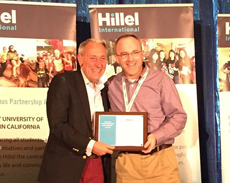
Michael Simon, Executive Director of Northwestern University Hillel, was awarded the Richard M. Joel Exemplar of Excellence Award at Hillel International’s Global Assembly in Orlando on Dec. 10. The Exemplar of Excellence award is Hillel International’s highest professional honor for Hillel professionals around the world who exemplify an outstanding commitment to their campus Hillels.
“On behalf of Northwestern Hillel, I am deeply honored, thrilled, and humbled to receive this recognition,” Simon said. “This award would not have been possible without the amazing work of our lay leadership and our campus and community partners, the fantastic efforts of our talented and tireless staff, and the creativity and passion and energy of our wonderful students. I look forward to building on this honor toward even greater achievements of excellence for our students, our campus, and for the Jewish people in the months and years to come.”
“I have been associated with Hillel for many years and I have been impressed by how we are so often blessed with remarkable campus leaders,” said Northwestern University President Morton Schapiro. “Michael Simon is as good as it gets. He is entrepreneurial, personable, and tireless in both fostering a welcoming Jewish community, and in his outreach outside that community. He is at every campus event and represents us beautifully. He is unflappable, forward-thinking, and inspiring. What a perfect candidate for an award named for the magnificent Richard Joel.”
Simon, who lives with his family in Evanston, joined the Northwestern Hillel staff in July 2010, after seven years as the associate director of Harvard Hillel, where he worked to connect Harvard undergraduates, graduate students, faculty members, and local community members to Torah, Israel, tikun olam (repairing the world), and one another. As Executive Director of Northwestern Hillel, Michael works with students, staff colleagues, and community members toward achieving Hillel’s mission of inspiring every Jewish student at Northwestern to make a meaningful and enduring commitment to Jewish life.
He grew up in Long Beach, Calif., and completed a bachelor’s degree in American Studies at Stanford University. He spent three years teaching elementary school for Teach for America corps, and then attended the Kennedy School of Government at Harvard, where he completed a master’s degree in Public Policy.
Simon traveled to Israel for the first time in 2000 as a participant on Livnot U’lehibanot, and returned the following year as a Dorot Fellow. While in Israel from 2001 to 2003, Michael studied Torah intensively at the Pardes Institute for Jewish Studies and worked as a madrich (counselor) with The Nesiya Institute’s summer program in Israel for American and Israeli teens.
“I am so grateful to Hillel for offering me a space where I could explore my own leadership, spiritual identity, and look to each of the amazing staff members as role models to help me do these things,” said Ariella Hoffman Peterson, current Northwestern student and president of Zooz, Hillel’s Service Learning Group. “Michael, especially, has been an incredible person to learn from. He has showed me through his command of balancing all the moving parts, what leadership should look like. His passion for Jewish learning and community building has deeply influenced me and reminded me how important it is to me to be active in the Jewish community. And his investment and the encouragement of me and my fellow Hillel-goers’s initiatives and personal growth has truly empowered me and helped to shape my college experience.”
Fiedler Hillel is a division of The Hillels of Illinois, a partner in serving our community, supported by the Jewish United Fund.
Other stories
-
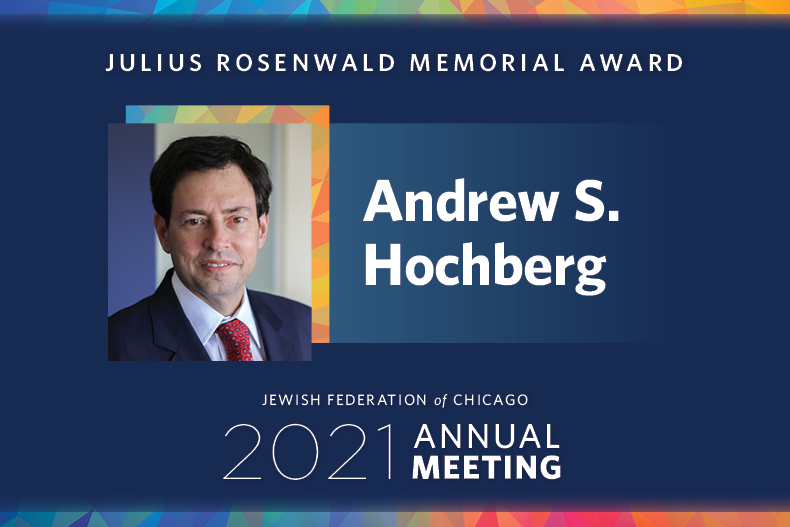
Meet Andrew S. Hochberg, 2021 Julius Rosenwald Memorial Award recipient
Celebrate Andy Hochberg at the virtual Annual Meeting on Sept. 14
Read more -
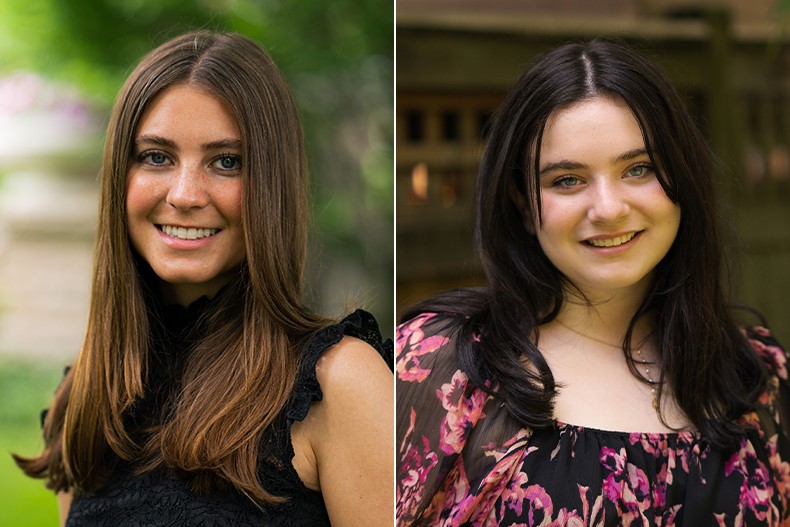
Two local teens win national recognition
Recipients of the annual Diller Teen Tikkun Olam Awards
Read more -
Celebrating six young award winners cultivating the community
Introducing young adult award winners
Read more

A teenager in miniskirts when the Iranian Revolution broke out in 1979, Jacqueline Saper remembers the chaos and the overwhelming surge of anti-Semitism.
“Jews felt threatened. Anyone who could were desperate to leave,” said Saper, now a faculty member at Oakton Community College. She spoke at a commemoration Dec. 14 to honor the 850,000 Jewish refugees displaced from Arab countries and Iran in the 20th century.
“Judaism was legal, Zionism was a crime,” she said. Eight years later, she was finally able to leave Iran with her husband and two small children. Only able to bring two suitcases, the family were forced to leave everything else behind.
Hundreds of Sephardic and Mizrachi Jews-Jews descended from Middle Eastern Jewish communities-attended the commemoration at Anshe Emet Synagogue in Chicago, which was sponsored by the Israeli Consulate to the Midwest.
“We’re here to make amends for two historical mistakes,” said Roey Gilad, Israeli Consul General to the Midwest. It took Israel more than 60 years to acknowledge the difficult plight of Mizrachi Jews when they first came to Israel-a source of frustration to the community.
And the second mistake, Gilad said, was that their flight from Arab countries and Iran has never been acknowledged by the world.
In 1948, nearly a million Jews lived in Arab countries and Iran, which is ethnically Persian, not Arab. After the State of Israel was declared in 1948, a wave of anti-Zionism crested through Arab states, leading to the oppression of the Jews residents and the destruction of multi-thousand year Jewish communities. Although it differs from country to country, Jews were massacred, arrested, and stigmatized. Their possessions were expropriated and stolen. Most fled or were expelled.
They were never compensated for the property that was stolen from them or what they were forced to leave behind, Gilad said. There has never been any sort of apology for the violent riots and murders. In the United Nations, there have been scores of resolutions about the Palestinian refugees who fled Israel, but not a single resolution regarding Jews who fled Arab and Iranian lands.
They too were refugees who lost everything, Gilad said, although the world does not recognize it.
In June, Israel’s Knesset designated Nov. 30 as the national day of commemoration for the Jewish refugees from Arab countries and Iran. In the resolution, the Knesset, Israel’s parliament, specifically said that their history must be taught in Israeli schools.
Today, Arab countries and Iran claim that the Jews left voluntarily, that they were not refugees, said Isaac Cohen, whose family fled Egypt.
“An injustice was done,” said a retired professor at Northwestern University. “But this day, [Israel’s] light is shining brighter than ever.”
In 1929, Cohen’s grandfather, the chief Sephardic rabbi of Hebron, was assassinated in the Hebron massacre. The family fled to Egypt, where they were expelled in the late 1950s. The Egyptian authorities knew they had family in Israel, which was enough for his father to be blacklisted and arrested as a traitor. Today, there are only a handful of Jews in Egypt. The community, which dates back more than 1,000 years, is practically extinct, he said. The best way to commemorate its rich history-as well as the fate-is to teach it to young people, he said.
Cohen led the crowd in reciting the Shehechiyanu (Hebrew prayer to commemorate a special occasion) for letting them see this day.
During the program, Guy Sagy, a student at the Skokie Yeshiva and the descendent of a long line of Sephardic rabbis, sang Shabechi Yerushalayim, a Sephardic song based on Psalm 147. Israelis Hadar Noiberg and Amos Hoffman accompanied him. The program also included a screening of the film documentary “The Forgotten Refugees,” a message from Chicago Mayor Rahm Emanuel, and an address by Rabbi Yona Reiss, the head of the Beth Din (rabbinical court) of the Chicago Rabbinical Council.
Lisa Pevtzow is a freelance writer living in the Chicago area.
Other stories
-
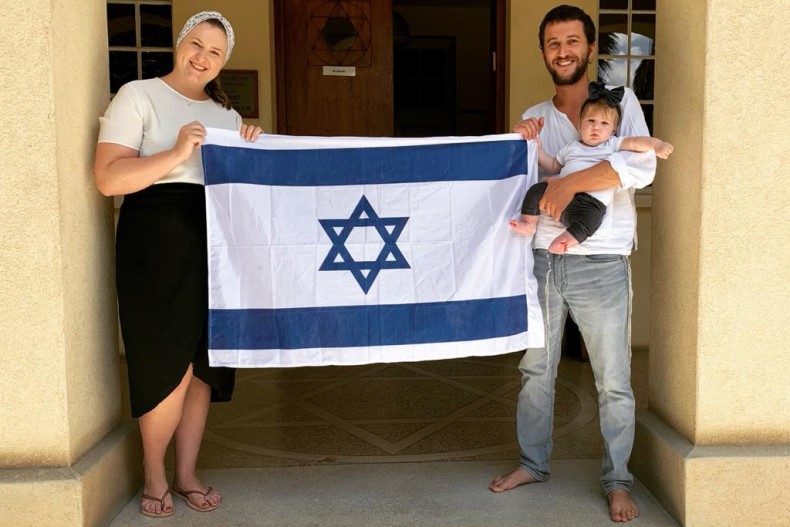
Chicago to Israel to Kenya
A family’s story of living Jewishly on three continents Michelle Cohen World May 28, 2021 Avital, Tzofia, and Netanel Kaszovitz outside their home in Nairobi on Yom HaAtzmaut. When Avital Kaszovitz prepared to be a Modern Orthodox shlicha (emissary) to the Jewish community in Ke
Read more -
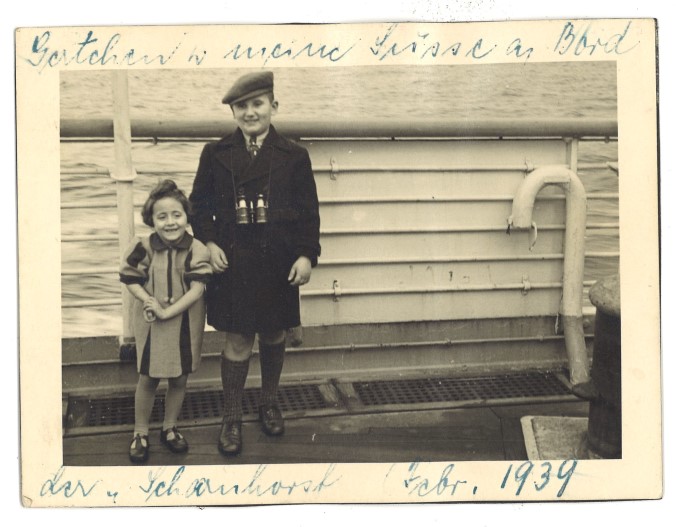
New exhibit spotlights the experience of ‘Shanghai Jews’
Explore a new Illinois Holocaust Museum and Education Center exhibit
Read more -
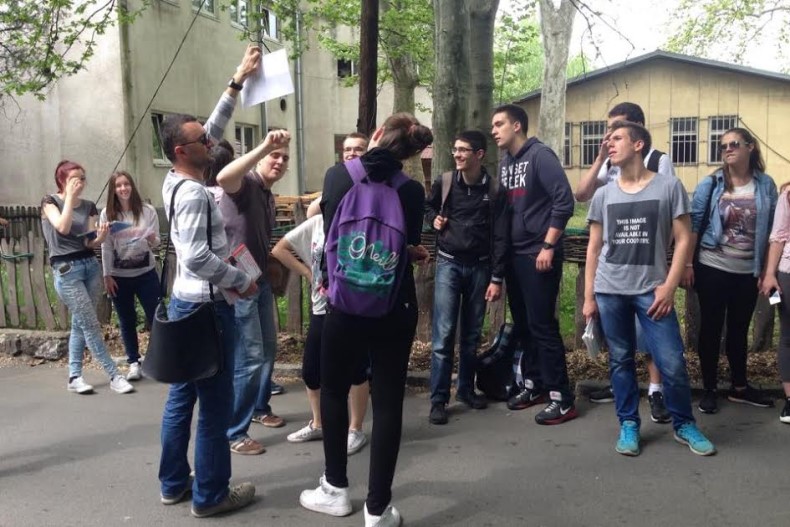
Europe’s brave new teachers of the Holocaust
Teaching the Holocaust in the modern era has its difficulties and rewards.
Read more
The Jewish United Fund of Metropolitan Chicago issued the following statement in reaction to the anti-Semitic vandalism at a Rogers Park synagogue and several homes over the weekend.
Today, Chicago’s Jewish community stands together with people of good conscience everywhere to strongly condemn the hateful acts of bigotry which took place in the city’s far north side over the weekend. The vandals who sprayed anti-Semitic graffiti on a neighborhood synagogue and private homes not only defaced buildings, but also our city’s spirit of openness and diversity.
Hateful, anti-Semitic messages were painted on the rear of Congregation Atereth Yehoshua in Rogers Park, along with several garages nearby, according to reports.
It is always a tragedy when any religious or ethnic group is targeted. At a time of heightened turmoil in the Middle East and mounting anti-Semitic violence around the world, we are deeply saddened by this reminder that sometimes we face hate right here in our own backyard.
Despite this disheartening incident, we also remember in times like these how grateful we are to live in an open society where people of all faiths and ethnicities are free to celebrate their traditions and cultures. We applaud the diligence of the Chicago Police Department in investigating crimes such as this, deeply appreciate our longstanding relationship with the department, and will continue to work closely with all levels of law enforcement to ensure the security of Jewish institutions throughout the City of Chicago and suburbs.
As Chicagoans, we are proud to live in a city that has zero tolerance for hate crimes against any minority group, values the safety and security of all its citizens, and works diligently to see that those who violate that security are swiftly brought to justice.
Other stories
-
Meet Andrew S. Hochberg, 2021 Julius Rosenwald Memorial Award recipient
Celebrate Andy Hochberg at the virtual Annual Meeting on Sept. 14
Read more -
Two local teens win national recognition
Recipients of the annual Diller Teen Tikkun Olam Awards
Read more -
Celebrating six young award winners cultivating the community
Introducing young adult award winners
Read more
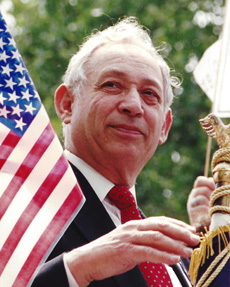
The late Alderman Berny Stone strived to improve the daily lives of his constituents. For instance, back when the now-defunct Dominick’s Grocery Store moved further away in his district from the condominium Winston Towers—home of many CJE SeniorLife clients—Stone offered to help pay for transportation to the grocery store so residents could buy their groceries.
Jewish longtime Chicago Ald. Stone, known for his bold and colorful personality, died at age 87 on Monday, Dec. 22. The cause of death was complications from pneumonia and kidney failure after a fall two days prior.
A World War II veteran, Stone, who lived in West Rogers Park, served as Chicago’s vice mayor for 11 years under the late Richard M. Daley.
The alderman spent 59 years in politics, nearly 38 of them in the formerly largely Jewish 50th Ward in the Chicago City Council, until he lost his seat in 2011 to Ald Debra Silverstein. Age 83 at the time, Stone was the oldest member of the Chicago City Council, and the second longest-serving alderman after Ald. Ed. Burke (14th). Stone ran unsuccessfully for Chicago mayor twice, in 1987 and 1989.
Stone was a Golden Giver member of the Jewish United Fund and a longtime supporter of the Jewish United Fund/Jewish Federation and its agencies. He supported such community capital projects as the 1 South Franklin Building, the Spertus Institute of Jewish Studies, the Bernard Horwich Jewish Community Centers, the Jewish Children’s Bureau’s Irene H. Cummings Group Home, the Joy F. Knapp Children’s Center, the Johanna and Herman H. Newberger Hillel at the University of Chicago, and Migdal Oaz, the first residential facility serving adults with disabilities.
“Berny was an elected official of strong opinion and a deep sense of service to others,” said Dr. Steven B. Nasatir, JUF President. “ He cared about his constituents, his city and his Jewish community.”
He was a congregant and board member of Congregation Ezras Israel in West Rogers Park, and served on the Board of Directors for the Bernard Horwich Jewish Community Center, the Associated Talmud Torahs, and the Jewish National Fund.
Throughout his years in office, Stone would help ease tensions in incidents involving racism, bigotry, and discrimination, including organizing—alongside other Jewish as well as African-American leaders—a series of meetings between Chicago African-Americans and Jews back in 1988.
Then, in 2005, Stone joined a chorus of voices denouncing London Mayor Ken Livingstone for several controversial remarks the London mayor made comparing a Jewish journalist to a Nazi guard and Israeli Prime Minister Ariel Sharon to a war criminal. Stone, along with Alds. Burke and Burton F. Natarus, introduced a resolution demanding that Livingstone issue a formal apology.
“Berny was a vivacious, larger than life figure, always committed to serving his constituents, and with a special place in his heart for the Jewish community,” said Jay Tcath, JUF Executive Vice President. “He always sought to leverage his good offices for the benefit of Israel, the Jewish community, and our Federation, especially in matters involving zoning for our significant facility presence in his ward.”
Bernard L. Stone is survived by his son, Jay (Paula) Stone, his daughters Ilana (Steven) Feketitsch and Lori (John) Schlossberg; his grandchildren Holly Rose, Felecia, Tanya, Max, Daniel, Jake, and Jessica; and his sister, Delores Barth. He is preceded in death by his late wife, Lois Stone; and daughters, Holly Ellen Stone and Robin Stone, who died in November of multiple sclerosis. His funeral was held Dec. 23 at Chicago Jewish Funerals’ Skokie Chapel. Interment: Waldheim. Memorials in his memory may be made to multiple sclerosis charities, or other non-profits.
Other stories
-
Meet Andrew S. Hochberg, 2021 Julius Rosenwald Memorial Award recipient
Celebrate Andy Hochberg at the virtual Annual Meeting on Sept. 14
Read more -
Two local teens win national recognition
Recipients of the annual Diller Teen Tikkun Olam Awards
Read more -
Celebrating six young award winners cultivating the community
Introducing young adult award winners
Read more
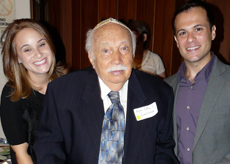
The smell of fresh brew and the sounds of friendly conversation fill a Chicago coffeehouse. There, I meet Benjamin Lachman, who drinking a steaming cup, gives me the following instructions: One: give him a thumb’s up if I need him to raise his voice. Two: he will write down words I cannot understand.
“The primary challenge for a deaf individual is to open communication pathways,” Lachman, who was born deaf, wrote in an e-mail.
Following the diagnosis of Lachman’s deafness when he was 1 years old, his parents, Ronald and Mary Ann, attempted to learn sign language. They found the process disappointing. First, sign language is a separate language from English, which makes it more difficult for children who are deaf to learn how to read in English. While Lachman was learning sign language, he was more than a year behind in language and the reading level of his classmates, who were not deaf. Second, his parents had trouble learning sign language altogether. If Lachman was curious about the moon, they’d have to pull out a textbook to look up the sign for “Moon.” Since their sign language vocabulary was limited, so was his.
After an unsuccessful six months of learning sign language, Lachman’s parents decided to try Cued Speech, an enhanced version of lip reading that uses eight hand shapes that represent consonants. There are four designated sections around the mouth that create vowels. By speaking and placing hand shapes along the mouth, words are created. Not only does Cued Speech work with the English language, it can be used for other languages, including Hebrew. Today, some 3,000 individuals use Cued Speech around the world, but in the 1980s, Lachman and his family were the first family in Illinois using it.
One of the 2014 honorees of Oy!Chicago’s 36 Under 36, Lachman wanted to share his passion for Cued Speech by creating Cue Everything, a website that aggregates creative video content about Cued Speech. The name Cue Everything stems from the inclusivity of learning Cued Speech. Lachman’s message to children who are deaf and parents of those children is to use Cued Speech because it’s simple and quick to learn; it takes just two weeks to master.
“The major impact [of Cued Speech] has been my capacity for communicating with anybody who I may come across in my life,” Lachman said.
One of the world’s fastest rappers, for example. Lachman and other members of the cue community collaborated with Twista to create a music video to his song, “Go.” In the video, Lachman is cuing along to Twista’s rapid rap, while sending the message to the deaf community: “Go for it-try Cued Speech,” Lachman said.
Lachman, an alum of Alexander Graham Bell Montessori School (AGBMS) and Solomon Schechter Day School of Metropolitan Chicago, and his father are both board members of AGBMS. The Montessori school was founded under the philosophy of academic equality among students who are deaf and hearing. Lachman is passionate about the school because every teacher uses Cued Speech, while teaching material, so the children who are hearing or deaf can learn together.
Later this month, Lachman can be found on the dance floor of Castle Chicago at the annual Matzo Bash, the Jewish Christmas Eve party for young Jewish Chicagoans to enjoy a night of schmoozing, noshing, drinking, and dancing.
Dancing and music have always been passions for Lachman. “When I was a very young child, my mom often turned the bass up and danced with me,” Lachman said. The vibrations of the music allow Lachman to enjoy the rhythm of his favorite music, like R&B. But he was unable to truly enjoy music in its entirety, unless someone was cuing the words or there were captions along with the music video.
“In order to get the word out,” he said, “we as adult deaf cuers need to provide a visible example of the results of Cued Speech.”
Carly Gerber is a freelance writer who writes about Jewish life, fashion, arts, and culture in Chicago.
Other stories
-
Meet Andrew S. Hochberg, 2021 Julius Rosenwald Memorial Award recipient
Celebrate Andy Hochberg at the virtual Annual Meeting on Sept. 14
Read more -
Two local teens win national recognition
Recipients of the annual Diller Teen Tikkun Olam Awards
Read more -
Celebrating six young award winners cultivating the community
Introducing young adult award winners
Read more
Sex trafficking is a form of modern day slavery that exists throughout the US and globally. The International Labor Organization estimates that there currently are 4.5 million people trapped in forced sexual exploitation worldwide.
On Sunday, Jan. 11, a number of local Jewish organizations will come together to present a special program designed to bring the issue of Sex Trafficking to the attention of our community. The program will be held at 2 p.m. at Spertus Institute for Jewish Learning and Leadership, 610 South Michigan Avenue.
Titled Fighting Sex Trafficking: The Jewish Community Takes a Stand, the program is presented by Spertus in partnership with the National Council of Jewish Women (NCJW) Chicago North Shore Section and the newly formed Jewish Coalition Against Sex Trafficking (JCAST). To date, JCAST members include American Jewish World Service Chicago, Anshe Emet Synaogogue, Apna Ghar, the Sisterhood of Congregation Rodfei Zedek, DePaul University’s Department of Women and Gender Studies, Dreamcatcher Foundation, Hadassah, Heartland Alliance, HIAS Chicago, Illinois Certified Domestic Violence Professionals (ICDVP), JCARES, Jewish Child & Family Services (JCFS), Jewish Reconstructionist Congregation (JRC), the Jewish United Fund/Jewish Federation of Metropolitan Chicago, Jewish Women’s Foundation, NA’AMAT, the National Council of Jewish Women, Prevent Child Abuse America, SHALVA, Spertus Institute for Jewish Learning and Leadership, Temple Judea Mizpah, and the YWCA.
Kaethe Morris Hoffer, executive director of the Chicago Alliance Against Sexual Exploitation (CAASE), will moderate a panel of those on the front lines of this issue. Panelists will include Rabbi Rachel Bregman, CAASE Educator Caleb Probst, and a member of the Cook County Sheriff’s Police Department.
As part of this program, the film Demand will be shown. This documentary—made in conjunction with an investigation by Shared Hope International of the commercial sex trade in the US, Japan, and Jamaica—reveals the impact of buyer demand on sex trafficking. It captures the hard reality of the women and children victimized by the sex trade.
Spertus Institute for Jewish Learning and Leadership is a partner in serving our community, supported by the JUF/Jewish Federation of Metropolitan Chicago.
Other stories
-
Meet Andrew S. Hochberg, 2021 Julius Rosenwald Memorial Award recipient
Celebrate Andy Hochberg at the virtual Annual Meeting on Sept. 14
Read more -
Two local teens win national recognition
Recipients of the annual Diller Teen Tikkun Olam Awards
Read more -
Celebrating six young award winners cultivating the community
Introducing young adult award winners
Read more
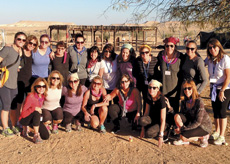
In October 2013 I participated on the Tiferet Mission to Poland and Israel, my first experience on a JUF Women’s Mission. I didn’t know any of the participants before the trip, and I was fortunate to return with seven close friends, including Kim Shwachman, a dedicated and enthusiastic mission participant (and chair of the Missions Committee.)
Six months after Tiferet I, Kim presented me with the opportunity to co-lead JUF’s Tiferet II Mission to Israel alongside her. Due to the events in Israel this past summer, the group decided to accelerate the trip from its originally scheduled spring 2015 date, to send a strong message of support to Israel. Within three months, 15 women were ready to embark on this journey. I knew this experience would be unlike any of my other visits to Israel.
Kim and I worked closely with the JUF Missions Department to create an itinerary that would present a broad perspective on life in Israel from the vantage point of many different groups. Our visit began with a meeting with three heroic women, proudly married to soldiers who fought on the front lines during Operation Protective Edge. They spoke of the challenges of caring for their children alone and maintaining a normal household during the war, not knowing where their husbands were stationed and whether or not they were safe, unharmed or even alive. Their emotional stories were difficult for us to hear as they were for the women to share. When we asked how we could support them, their response was that coming to Israel, listening to their story, and sharing in their experience was more than they could have asked for.
We heard from another hero, Micha Feldmann, Chief Architect of Operation Solomon. We cooked a traditional Ethiopian lunch with members of the Ethiopian community, as they told us their own personal stories of rescue and aliyah (immigration to Israel). One of the men told of the many brothers and sisters he lost during his journey, and expressed that he wouldn’t be here and alive today if it wasn’t for our community’s support and solidarity.
We traveled to Mitzpe Ramon and marveled at the beauty of the Ramon Crater, a stunning place with breathtaking views. We met with Michal Barkai who founded the “Alma Derech Eretz Mechina,” a program to prepare disadvantaged and disenfranchised girls for military service. The program teaches them skills and self-esteem, maximizing their potential to serve in meaningful positions in the army, and to grow into productive and successful members of Israeli society. Against all odds, Michal is has built up this program and is slowly but surely saving young women’s lives and in the process, strengthening the army. It was clear that Michal was a true hero to the girls in her program. They finally had someone that believed in them when no one else did.
I could share many more stories about our encounters with Israeli heroes, and programs with impressive speakers, all of whom we were honored to be with in Israel. Everyone we met welcomed us warmly and expressed great appreciation for our presence and support. We all felt as if we were truly at home.
We are so fortunate to have access to the JUF Missions Department, with the experience and creativity to create trips like this that are meaningful, fun, unique and form everlasting friendships and memories.
Barbie Taylor, of Northbrook, co-chaired the Tiferet II mission, along withKim Shwachman. Taylor chairs the JUF King David Society with her husband, Bruce.
For more information on the JUF Missions Department, call (312) 357-4885.
Other stories
-
Chicago to Israel to Kenya
A family’s story of living Jewishly on three continents Michelle Cohen World May 28, 2021 Avital, Tzofia, and Netanel Kaszovitz outside their home in Nairobi on Yom HaAtzmaut. When Avital Kaszovitz prepared to be a Modern Orthodox shlicha (emissary) to the Jewish community in Ke
Read more -
New exhibit spotlights the experience of ‘Shanghai Jews’
Explore a new Illinois Holocaust Museum and Education Center exhibit
Read more -
Europe’s brave new teachers of the Holocaust
Teaching the Holocaust in the modern era has its difficulties and rewards.
Read more
The United Nations General Assembly has designated Jan. 27, 2015-which is also the 70th anniversary of the liberation of Auschwitz-Birkenau-as International Holocaust Remembrance Day. On this annual day of commemoration, the UN urges every member state to honor the victims of the Nazi era and to develop educational programs to help prevent future genocides.
In the reflections that follow, Nitza Gilad pays tribute to her late brave mother, a Holocaust survivor, who passed away in September at age 89.
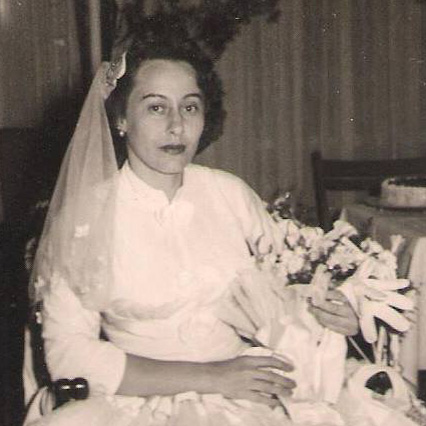
My mother Shulamit (Shula) and Aunt Tova, two sisters and two brothers, Mendi and Simcha, a happy family, were born and lived in the city of Mukacheve, a city located today in southwestern Ukraine.
From 1920, Muncatz (as it was called in Hungarian) was part of Czechoslovakia and from 1938 part of Hungary. Muncatz was then the only town in Hungary with a Jewish majority until 1944, when all the Jews were deported to Auschwitz. The Hungarian Jewish community was the last Jewish community in Europe to be sent to the concentration camps.
Shula studied at the Hebrew high school in town, where she learned Hebrew. Shula was a great at sports-a great runner.
In 1944, her life changed. Her parents vanished with the finger of Mengele, her brothers disappeared; Shula and Tova left (luckily) together, two blond, blue-eyed, beautiful girls.
Shula and Tova were liberated from Bergen-Belsen and returned to Muncatz to find their brothers and found a note at the Jewish Community Center: “Mendi and Simcha looking for Shula and Tova, our sisters.” You can’t imagine how joyous their reunion was.
After liberation, they spent one year in a camp in Austria with their brothers; followed by a year in Cyprus waiting for the British to allow them to enter pre-state Israel.
In 1947, they moved to Kibbutz Alumot, then in 1948 to Tel Aviv where she met and married my late father, Arie. Their friends used to say that Arie married a survivor and Shula married someone with a car.
Arie was lucky in that he emigrated from Russia to Israel at the age of 5, and settled in Tel Aviv next to the beach. But he also joined the Haganah and became an officer in the Israeli army.
In 1957, my sister Gilat was born, followed by me.
My father worked in his father’s metal factory. Shula never worked but devoted herself to the family and was an
expert tailor.
Arie became “Israeli”: dark from the sun, always wearing shorts and sandals, and loved the beaches of Tel Aviv.
Shula was fair skinned, and stayed “European”-she couldn’t stand the heat and humidity. She hated the beach because ‘it’s dirty” as she used to say.
Arie loved animals but Shula, for obvious reasons, hated dogs.
Shula didn’t say a word about her Holocaust time. It was a black hole.
She and her sister Tova used to whisper; it was not to be talked about in front of the kids.
When Tova, who was more talkative, used to tell some stories about home in Europe, mom was angry with her and switched to the Hungarian language and say, ‘Why do they need it? Shhh!’
Everything I know today-I know from Tova, her sisters, and my dear husband. Roey (Roey Gilad is the Consul General of Israel to the Midwest) was more successful at interviewing her than me.
Shula came back from the “black hole” of the Holocaust weak and fragile, and wanted to be an overprotective mother, shielding her children from hearing about what she went through.
I only had to say “I have a headache” and the next minute I was at the doctor’s.
Holocaust Day? The TV was turned off. For her there should be no such a day to remember.
When I said I want to visit Auschwitz, she said why do you need it? Waste
of money.
My visit to Auschwitz was strange. I was a passive observer as if there was no connection to me. I was wrong of course.
Shula never really got used to Israel, but also never left after she moved to Israel in 1947.
Shula passed away Sept. 5, 2014 and was buried in Tel Aviv. I miss her so much. May she sleep in peace.
Nitza Gilad-the wife of Roey Gilad, Consul General of Israel to the Midwest-works in the Programs department at the Consulate General of Israel to the Midwest.
In Conversation with…Survivors of Auschwitz
In recognition of the International Day of Holocaust Remembrance and the 70th anniversary of the liberation of Auschwitz, the Illinois Holocaust Museum & Education Center-in partnership with the Jewish United Fund/Jewish Federation, the American Jewish Committee, the Anti-Defamation League, and the U.S. Holocaust Memorial Museum-will host a discussion with Holocaust survivors of Auschwitz moderated by Prof. Benjamin Frommer, of the Northwestern University Department of History. Sunday, January 25, 2015, 1:30 – 3:00 p.m., 9603 Woods Drive, Skokie.
For more information, visit www.ilholocaustmuseum.org.
Other stories
-
Chicago to Israel to Kenya
A family’s story of living Jewishly on three continents Michelle Cohen World May 28, 2021 Avital, Tzofia, and Netanel Kaszovitz outside their home in Nairobi on Yom HaAtzmaut. When Avital Kaszovitz prepared to be a Modern Orthodox shlicha (emissary) to the Jewish community in Ke
Read more -
New exhibit spotlights the experience of ‘Shanghai Jews’
Explore a new Illinois Holocaust Museum and Education Center exhibit
Read more -
Europe’s brave new teachers of the Holocaust
Teaching the Holocaust in the modern era has its difficulties and rewards.
Read more
The Jewish Women’s Foundation of Metropolitan Chicago has awarded $349,890 to 21 unique projects that improve the lives of Jewish women and girls locally and around the world.
The grants focus on projects that promote social change at the individual, community and institutional levels. The total includes the foundation’s second multiyear grant and grants from The Ellie Fund.
“The Jewish Women’s Foundation trustees seek to expand and improve opportunities in all aspects of Jewish women’s and girls’ lives through strategic and effective grant making,” said JWF Chair Gerri Kahnweiler. “Each of the 2014 grantees advances the quality of life for Jewish women and girls by investing in their security, well-being and overall potential.” The foundation is an independent project of the Jewish United Fund/Jewish Federation of Metropolitan Chicago.
JWF awarded the largest grant in its history to SHALVA’s Legal LiaisonProgram. The $75,000 grant – $25,000 a year over three years – is JWF’s second multiyear impact initiative. The Legal Liaison Program integrates an attorney into the victim’s support process. When SHALVA’s clinical staff identifies a need, clients are referred to a legal liaison, who explains legal documents and procedures, facilitates communication with the victim’s attorney, and addresses issues such as child custody, bankruptcy and orders of protection. The liaison also is responsible for recruiting attorneys to provide pro bono or affordable legal representation to SHALVA’s clients, as well as promoting awareness and education on the legal needs of domestic violence victims within the community.
In the past, SHALVA has addressed clients’ legal needs through referrals, education and support services. With the addition of the legal liaison, SHALVA’s staff will be able to address a wider spectrum of client needs. Legal issues are the fastest-growing need facing SHALVA’s clients. “The issue of violence against women and girls in the Chicago Jewish community is a priority for our foundation, and we are thrilled to support this all-encompassing program,” Kahnweiler said.
From a pool of over $2.5 million in grant requests this year, JWF trustees identified and selected those projects that best reflect the foundation’s mission. The process included detailed reviews of grant proposals and budgets, conference calls with program staff, and site visits.
“Our trustees are an intelligent and thoughtful group of women,” said JWF Grants Chair Shari Slavin. “They carefully consider which programs would most benefit Jewish women and girls today and in the years to come. Our model works extremely well and is proven each year with the quality of our grants docket.”
In addition to SHALVA’s Legal Liaison Program, new grantees this year include ATZUM: Task Force on Human Trafficking; Adva Center: Community Empowerment to Improve the Lives of Women and Girls; Beit Morasha: Women’s Halakha Program for Senior Scholars; Jewish Women International: Sexual Assault Prevention Program; National Council of Jewish Women Chicago North Shore Section: Jewish Community Against Sex Trafficking Coalition Chicago; Roger Baldwin Foundation of ACLU, Inc.: Reproductive Rights Project; Shalom Bait, Asociacion Civil de Prevencion de la Violencia Familiar: Pursuing Justice, the Law as a Tool of Change; and TrueChild: Improving Health, Economic Empowerment and Leadership Among Jewish Tweens by Addressing Feminine Gender Norms.
JWF also renewed grants to AVODAH: The Jewish Service Corps; Chicago Alliance Against Sexual Exploitation: End Demand Illinois Campaign; Center for the Advancement of Women in the Public Sphere at the Van Leer Jerusalem Institute: The Gender Index: Monitoring and Promoting the Status of Women in Israel; Center for Women’s Justice Public Interest Litigation Project; Eden Center: Crisis and Health Intervention Training for Israeli Mikvah Attendants; Jewish Community Center: BeTween: A Jewish Community Planning Initiative; Jewish United Fund/Jewish Federation of Metropolitan Chicago: Ma’yan Research Training Internship.
Additionally, JWF’s Ellie Fund, established by founding JWF Trustee Ellen Block, awarded seven grants to organizations working to help girls and women reach their full potential. These include:
Chicago Alliance Against Sexual Exploitation: Empowering Young Men to End Sexual Exploitation Program; JUF/Jewish Federation: Ma’yan Research Training Internship; Mavoi Satum: Justice and Support for All – Legal Representation and Social Support for Mesoravot Get; NATAL-Israel Trauma Center for Victims of Terror and War: Empowering Women: Training Early Childhood Teachers to Become Leaders, Influencers, and Important Community; and The Voices and Faces Project: The Stories We Tell; Women Moving Millions.
Overall, JWF increased the support of local projects to nine and seven international. The foundation increased the number of new grants to 10 and renewed six others.
A detailed list of this year’s grantees is as follows:
Economic Security/Legal Reform for Women & Girls
ATZUM: Task Force on Human Trafficking (TFHT): Working on the grassroots level with other NGOs, TFHT engages the public, government, and law enforcement agencies to confront and eradicate sex trafficking in Israel. This project combines a multi-pronged approach which includes lobbying for reform in the areas of prevention, border closure, services for victims, and prosecution of traffickers, pimps, and johns. TFHT is at the forefront of efforts to ensure that the currently seated Knesset legislate a Nordic Model law, designed to criminalize the purchase of sexual services and protect the prostituted person. Grant amount: $5,000
Center for the Advancement of Women in the Public Sphere (WIPS) at the Van Leer Jerusalem Institute: The Gender Index: Monitoring and Promoting the Status of Women in Israel: Launched in 2012, the Gender Index measures the rates and trends of gender inequality in Israel across a variety of issues including but not limited to, income, political representation, educational attainment, and rates of violence. This multidimensional tool monitors changes over time, and can be used to create a snapshot of the depth and breadth of gender inequality throughout the country. By raising awareness among data generating organizations, women’s groups, and policy makers this project demonstrates how gender specific data can and should be used to inform policy recommendations. Renewal Grant amount: $15,000
Center for Women’s Justice (CWJ): The Public Interest Litigation Project: This project promotes women’s rights by filing precedent setting lawsuits in civil courts across Israel to address discriminatory decisions and policies decided by Israel’s rabbinic courts. Get refusal and extortion (husbands who refuse to grant their wives a divorce) are among the top priorities of these lawsuits. Through litigation and public awareness activities, CWJ challenges unfair rulings and wins monetary damages for wives who were denied a get, thereby deterring husbands from using the get as a tool for extortion. By promoting legal reform in the Israeli civil court system, this project secures justice and fair treatment for women throughout the country. Renewal Grant amount: $15,000
Chicago Alliance Against Sexual Exploitation (CAASE): End Demand Illinois (EDI) Campaign: This organizing and advocacy campaign is dedicated to transforming Illinois’ response to prostitution and sex trafficking through pioneering legislative and policy reform. EDI is grounded in the belief that the sexual exploitation of women and girls through prostitution and sex trafficking will never end until our community refocuses its resources on holding those who create and support the demand for the domestic sex trade (i.e. pimps, johns and traffickers) accountable. CAASE recognizes that systemic change can emerge through faith communities, and is committed to engaging the Jewish community in this important effort. Not only is this initiative based in Chicago, but it continues to produce groundbreaking reform for Illinois that can be replicated throughout the United States. Renewal Grant amount: $10,000
Roger Baldwin Foundation of ACLU, Inc.: Reproductive Rights Project: This project seeks to ensure that women in Illinois can access the reproductive health care and information they need regardless of the religious beliefs of their employers and health care providers. Using the full force of the ACLU’s integrated advocacy efforts, the project will aim to secure legal and public policy victories that will prohibit the use of religion to deny essential medical care and justify discrimination. Among other things, this project will simultaneously undertake a public awareness campaign, sharpening litigation, and develop legal and public health strategies to advance legislative efforts. Grant amount: $18,000
TrueChild: Improving Health, Economic Empowerment and Leadership Among Jewish Tweens by Addressing Feminine Gender Norms: This project recognizes that many programs aimed at girls and young women fail to fully take into account how the cultural influence of rigid gender norms can impact behavior. Grounded in the understanding that doing work with a “gender lens” requires conducting a full gender analysis, this project will help create best practice models for gender-based programming in Chicago’s Jewish community. Engaging both parents and professionals who work with girls, TrueChild will also create new resources that can be used to inform and teach Jewish girls how to think critically about harmful and rigid feminine norms. Grant amount: $15,000
Education/Leadership Development for Women & Girls
Adva Center: Community Empowerment to Improve the Lives of Women and Girls: This grassroots community organizing project is designed to give Israeli women the tools they need to become politically active in both formal and informal settings throughout their community. The program aims to increase women’s political and economic power by providing them with knowledge about their economy and society and about the inner workings of their local and national governments. Through education, women in communities throughout Israel will become empowered to effect change in their local municipalities. Grant amount: $11,700
AVODAH: The Jewish Service Corps: AVODAH engages Jews in their 20s and 30s in a year-long service learning program to combat poverty and promote social justice. The program consists of work placements at Chicagoland anti-poverty agencies; communal living of corps members; mentoring; and educational sessions that include social activist training, education on the dynamics of urban poverty, and Jewish study. JWF funding supports the incorporation of gender-specific education into the corps members’ regular trainings. By increasing corps members’ connection to social activism, civic engagement, and Jewish values, this program is developing the next generation of young female Jewish leaders and activists who are committed to social justice and gender equality. Renewal Grant amount: $8,500
Beit Morasha: Women’s Halakha Program for Senior Scholars: The Women’s Halakha Program at Beit Morasha trains women senior Torah scholars to qualify for rabbinic exams and serve as religious scholarly and educational leaders. These women have the opportunity to study and take examinations parallel to the requirements for male rabbinical candidates in Israel. For the first time in Jewish history, women Torah scholars have become the educational core of advanced Torah study for women and girls in Modern Orthodox society. The program also aspires to encourage inclusion of women in senior Jewish scholarly leadership positions such as rabbinic organizations, conferences, and leadership of Jewish centers of higher learning, shifting community and individual behavior. Grant amount: $10,000
Jewish Community Centers (JCC): BeTween: A Jewish Community Planning Initiative:
A two year grant from JWF (2013-2014) enabled JCFS and partnering agencies to complete the needs assessment and finalize recommendations for BeTween implementation. BeTween aims to enhance the social, mental, spiritual, physical and emotional health of pre-teen Jewish girls in the Chicago area, and ensure that parents and other adults in their lives have the awareness and skills to support them. To reach this goal, JCC will launch three programs in 2015, which emerged as the most promising practices: Girl Scouts, Girls on the Run, and Smarty Pants Yoga. BeTween will also continue to serve as an ongoing vehicle for incubating, hosting, expanding and generating referrals for other community programming targeting pre-teen girls. Drawing from input received from parents, service providers and teen girls, this project promotes a coordinated, sustainable initiative that cuts across community settings and nurtures all parts of a Jewish tween girl as she is becoming a woman. Renewal Grant amount: $13,700
Jewish United Fund/Jewish Federation of Metropolitan Chicago: Ma’yan Research Training Internship: This 15-month internship program provides a girls only space where participants engage in serious inquiry about the topics that matter most to them. This project helps girls develop critical thinking and research skills and allows teens to engage in feminist discussions through bi-monthly meetings. RTI achieves a secondary goal of producing new, well-researched evidence of the needs and experiences of Jewish teen girls, which can be used by community professionals to improve existing programs. This project is a partnership between the New York-based Ma’yan, the Jewish Federation of Metropolitan Chicago and DePaul University’s Beck Research Initiative for Women, Gender and Community. Grant amount: $15,150
National Council of Jewish Women Chicago North Shore Section (NCJW): Jewish Community Against Sex Trafficking Coalition Chicago (JCAST Chicago): JCAST Chicago works to eradicate sex trafficking in the Chicagoland area through public awareness, community engagement, and advocacy at local, state and national levels. Inspired by Jewish values, JCAST partners with interfaith and human rights groups, non-profit organizations, government officials, and law enforcement agencies. By serving as the Jewish voice against sex trafficking in Chicago, JCAST seeks to ensure that the Jewish community understands how sex trafficking affects our community, and recognize how we as Jews, have a moral imperative to advocate for policies, services for victims, and greater awareness. Grant amount: $16,000
Health & Well-Being for Women & Girls
Eden Center: Crisis and Health Intervention Training for Israeli Mikvah Attendants: This project seeks to change the objective of mikvah (ritual bath) attendants from performance of the mikvah ritual to working towards becoming an advocate for women’s health and well-being. Through a series of educational programs, Israeli mikvah attendants will address pressing issues such as domestic violence, post-partum depression, and breast health. This project seeks to shift individual and community behavior by educating and empowering mikvah attendants to recognize, inform, and advocate for the myriad of women with whom they interface on a regular basis. Renewal Grant amount: $20,000
Jewish Women International (JWI): Sexual Assault Prevention Program: Through this program, JWI seeks to address misconceptions and change the way college students perceive and respond to the critical issue of sexual assault on campus. Working with the Hillels at Northwestern University and the University of Chicago, JWI will develop and implement workshops on sexual assault for Jewish students that covers key issues including statistics and facts, tips for bystander intervention, ways to assess consent from a partner, and strategies for supporting victims. This co-ed program will emphasize the need for personal and community responsibility, and provide realistic tools for men and women to use as they step in as active bystanders and seek to change the culture on college campuses. Grant amount: $24,000
Shalom Bait, Asociacion Civil de Prevencion de la Violencia Familiar: Pursuing Justice, the Law as a Tool of Change: Shalom Bait is the only Jewish organization working directly to meet the needs of Jewish victims of domestic violence in Argentina. Located in Buenos Aires, Shalom Bait provides Jewish victims of domestic violence with legal counseling and representation as they engage in legal battles against their abusers. Shalom Bait staff also work to increase public awareness, train professionals in the community on how to intervene in cases involving domestic violence, and engage in advocacy efforts to enforce and strengthen the domestic violence laws in Argentina. This project works to break the silence surrounding domestic violence and promotes and protects the rights of victims. Grant amount: $18,000
Multiyear Grant to Prevent Violence Against Women and Girls in the Chicago Jewish Community – Year 1
SHALVA: Legal Liaison Program: SHALVA, the oldest independent Jewish domestic violence agency in the United States, works to address domestic abuse in Chicago Jewish homes and families through counseling and education. To better assist clients, SHALVA’s Legal Liaison Program will hire attorneys to provide legal information and support to women who are engaged in lengthy legal battles with the men who abused them. The program will also educate divorce attorneys and judges on the differences between and the complexities of a divorce where there has been abuse versus a contentious divorce. The program seeks to create awareness of how abusers use the legal system to further the abuse, reassert control and wear down their partners. The Legal Liaison helps SHALVA’s clients better understand the complicated legal process and facilitates communication with their attorneys. Additionally, the Legal Liaison works to identify and recruit attorneys who will provide pro bono legal representation for SHALVA’s clients. By providing crucial post-separation assistance, this project promotes the long-term safety of Jewish women impacted by domestic abuse. Grant amount: $25,000 per year for three years for a total of $75,000 – first installment
The Ellie Fund of the Jewish Women’s Foundation of Metropolitan Chicago
Chicago Alliance Against Sexual Exploitation (CAASE): Empowering Young Men to End Sexual Exploitation Program: This school-based prevention program engages young men in high school as allies in efforts to address and prevent sexual violence and exploitation. Through a series of workshops, young men learn about the exploitative dynamics and violence that exists in the sex trade in order to deter their involvement in this industry as consumers as well as facilitate a more personal understanding of how sexual violence and exploitation affects them and their communities. Companion sessions are also held with high school aged young women. Learning about sexual exploitation not only deters men from purchasing sex, but it also has the possibility to affect change in young men’s relationships with women and empower them to become part of the solution to end sexual exploitation and violence. Renewal Grant amount: $12,000
Jewish United Fund/Jewish Federation of Metropolitan Chicago: Ma’yan Research Training Internship:See above description. The grant will support the first cohort of interns. Grant amount $20,000
Mavoi Satum: Justice and Support for All – Legal Representation and Social Support for Mesoravot Get: Working in Israel, this project provides social and legal support to agunot, women whose husbands refuse to give them a religious divorce (get). For many women, the process of securing a get can take many years, and ongoing legal and social support is crucial to ensure that women’s rights are protected. Through this project women receive individual legal consultation and representation in both civil and religious courts as well as social support to help them address feelings of powerlessness and rebuild their lives. Renewal Grant amount: $20,000
NATAL-Israel Trauma Center for Victims of Terror and War: Empowering Women: Training Early Childhood Teachers to Become Leaders, Influencers, and Important Community Resources: This program provides trauma awareness and leadership training to early childhood teachers, enabling them to become strong public advocates in NATAL’s nation-wide campaign to raise awareness of war and terror-related trauma as it affects children and families. With teachers as advocates, children will be able to get the vital help they need to reverse the impact of trauma and prevent the development of life-long debilitating symptoms. As strong public advocates, teachers will play an important role in ensuring the future health and well-being of the next generation of Israelis- and thus of Israel. Grant amount: $22,840
The Voices and Faces Project: The Stories We Tell: This award-winning, Chicago-based storytelling initiative looks at how public testimony can be used as a tool for social change, and will bring the testimonies of Jewish survivors of sexual violence to the attention of the public. Believing that survivors can make political and cultural changes in our society, this project will provide survivors with an opportunity to give voice to their experiences and reflect how those experiences place an explicit demand on the standards of justice in our culture. By sharing the testimony of those who have lived through or witnessed gender related violence, the project seeks to challenge the public responses to violence against women. Grant amount: $25,000
Women Moving Millions (WMM): WMM is a community of individuals who have made gifts and pledges of one million or more to organizations and initiatives promoting the advancement and empowerment of women and girls. This community believes that women and girls are the single best investment towards creating healthy societies, economic growth, and global stabilization. WMM is committed to funding systemic change and building a peaceful and equitable world. These funds will be used to increase awareness of the need to invest philanthropic resources in projects aimed at helping women and girls. Grant amount: $10,000
For more information on grants awarded or the Foundation, contact Sara Kalish, Senior Program Officer, at (312) 444-2846 or email [email protected].
Other stories
-
Meet Andrew S. Hochberg, 2021 Julius Rosenwald Memorial Award recipient
Celebrate Andy Hochberg at the virtual Annual Meeting on Sept. 14
Read more -
Two local teens win national recognition
Recipients of the annual Diller Teen Tikkun Olam Awards
Read more -
Celebrating six young award winners cultivating the community
Introducing young adult award winners
Read more
IRA charitable rollover reinstated for 2014; distributions can be made through Dec. 31
Congress has passed the Tax Increase Prevention Act of 2014, which reinstates the IRA charitable rollover for 2014. Expected to be signed into law by the president shortly, this provision allows individuals at least 70 years and six months old to transfer up to $100,000, tax-free, from their Individual Retirement Account to a qualified charity by December 31, 2014.
With time running out, JUF recommends determining if this provision will benefit you.
The legislation is retroactive to the beginning of the calendar year. Any qualified charitable distribution (directly from the IRA trustee payable to the charity from IRAs of those at least 70 years and six months) that has already taken place this calendar year will qualify for IRA Charitable Rollover treatment.
Requirements are as follows:
- Distributions can only be made to a qualified charitable organization such as the JUF or Jewish Federation;
- Distributions must be made directly to the charitable organization through the plan administrator; and
- Distributions may not be made to a philanthropic fund, supporting foundation, split interest trust or charitable gift annuity.
Qualified distributions can be used to make a gift to the JUF Annual Campaign or The Centennial Campaign and receive the following benefits:
- The distribution will not be treated as a taxable distribution to you (but you would not receive a charitable deduction for the distribution amount)
- Taxable assets will be removed from your estate
- Gifts qualify for IRA required minimum distributions
To learn more about how distributions from your IRA may fit into your charitable giving, contact Legacies and Endowments at (312) 357-4853 or email [email protected].
Other stories
-
Meet Andrew S. Hochberg, 2021 Julius Rosenwald Memorial Award recipient
Celebrate Andy Hochberg at the virtual Annual Meeting on Sept. 14
Read more -
Two local teens win national recognition
Recipients of the annual Diller Teen Tikkun Olam Awards
Read more -
Celebrating six young award winners cultivating the community
Introducing young adult award winners
Read more