The Sidney & Frances Avner Torah Learning Center of Northbrook (TLC) and Keshet will jointly present a panel discussion with Q&A on special needs services in the Jewish community, immediately followed by a resource fair. The program, the fifth annual Jack Ogron Memorial Program, will commence with a panel discussion and will be followed by a comprehensive resource fair, with dozens of local organizations and professionals, including therapists, attorneys, financial planners, camps and others who will be present to provide information and direction to families with special needs children, including adult children.
The program will take place at 1 p.m. on Sunday, Feb. 8 at The Torah Learning Center of Northbrook, 2548 Jasper Court, Northbrook, (Northbrook Community Synagogue Building).This is a free program and is open to the community, although reservations are appreciated.
For more information on attending, securing a table for your business or organization at the fair, or helping to sponsor the event, contact Ali Rosenthal at (847) 272-7255 or [email protected]. For more information, visit www.torahlearningcenter.com.
Other stories
-
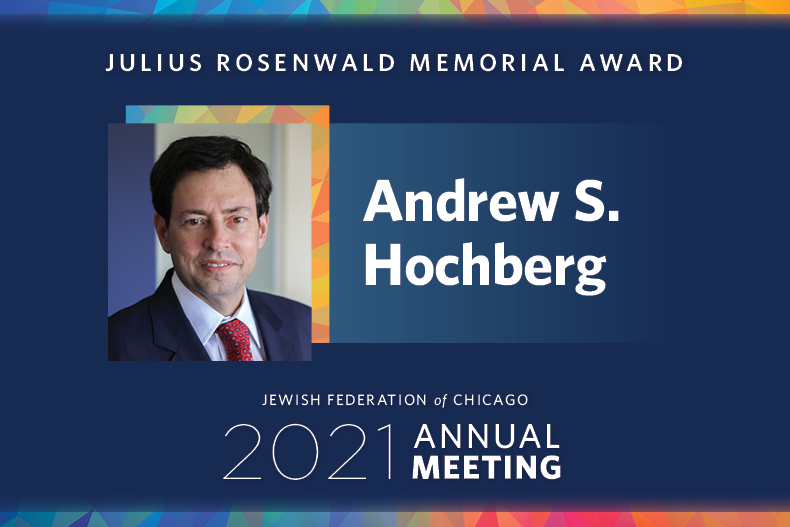
Meet Andrew S. Hochberg, 2021 Julius Rosenwald Memorial Award recipient
Celebrate Andy Hochberg at the virtual Annual Meeting on Sept. 14
Read more -
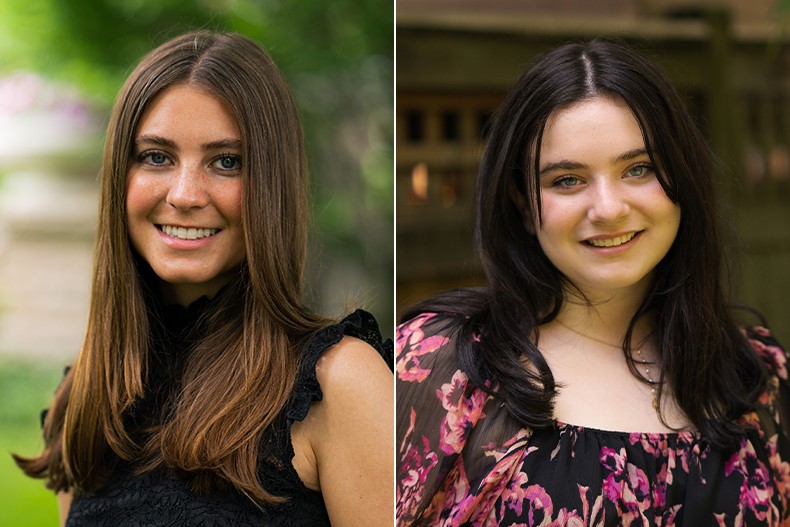
Two local teens win national recognition
Recipients of the annual Diller Teen Tikkun Olam Awards
Read more -

Celebrating six young award winners cultivating the community
Introducing young adult award winners
Read more
JUF provides emergency cash for rabbis to assist needy community members
LINDA S. HAASE
The Jewish United Fund will once again partner with local synagogues in 2015 to provide emergency financial assistance to individuals and families in need, and is now inviting congregational rabbis to apply for funding.
The JUF Rabbinic Discretionary Fund Program (formerly J-HELP) enhances, and in some instances creates, a pool of discretionary resources for rabbis to assist community members in crisis who turn to them for help. Since 2008, $414,500 has been made available through this program to 2,200 individuals to prevent homelessness and hunger, to ensure seniors have needed medications, to cover funeral expenses, to provide respite care, and for car repairs that ensure people’s transportation to work.
In 2012, the program was expanded to enable rabbis to support synagogue programming designed to help community members regain stability, such as helping to stock the synagogue’s food pantry and providing on-site financial literacy and employment workshops.
Funding determinations will be made based on congregational size and a consideration of community need as identified in the 2010 Jewish Population Study. Larger congregations and congregational rabbis serving communities with a higher proportion of residents falling under 200 percent of the Federal Poverty Line, or reporting “”difficulty in accessing services” will receive larger allocations. Higher need communities include City North, and the South, West, and Near North Suburbs.
Since the program began, 70 local congregations have participated in this initiative. Participating congregations reflect the full spectrum of the synagogue streams—36 percent Orthodox, 33 percent Reform, 20 percent Conservative, 7 percent Unaffiliated/Other and 4 percent Traditional. The locations of participating congregations cover the Chicago metropolitan area, from North Suburban Vernon Hills to West Suburban Naperville to South Suburban Olympia Fields and Joliet.
“The financial assistance provided through this program serves as a critical safety net,” said Rabbi Michael Weinberg, co-chair of JUF’s Rabbinic Action Committee. “Rabbis report they provide a family with emergency funds to meet many needs. For 86 percent of households assisted, funds were utilized in part to address basic human needs—housing, food, and medicines or medical treatment.”
Other funds often support critical transportation needs and Jewish life cycle events, such as funeral and burial costs, Israel and Jewish school or camp scholarships, and bar/bat mitzvah or wedding commemorations. Funds are not used to support membership fees at a synagogue, unrelated synagogue expenses, or a synagogues’ own grant-making efforts.
Participating rabbis will be able to request additional funds once their initial allocation is exhausted and reporting requirements are met. Requests for additional funding are awarded on a first come, first serve basis until all funds are expended.
“Synagogues are the foundation of Jewish life within the Jewish community. JUF is proud to partner with our congregational rabbis,” said Dr. Steven B. Nasatir, president of the Jewish United Fund of Metropolitan Chicago. “We want to ensure that, whichever communal door an individual or family in crisis walks through, they are able to access the assistance and support necessary to regain stability in their lives.
“Beyond serving as a force for good, we are delighted that the JUF Rabbinic Discretionary Program has deepened the relationship between JUF and local synagogues, as well as between synagogues and our JUF partner agencies, who serve as resources for assisting community members in need.”
Other stories
-
Meet Andrew S. Hochberg, 2021 Julius Rosenwald Memorial Award recipient
Celebrate Andy Hochberg at the virtual Annual Meeting on Sept. 14
Read more -
Two local teens win national recognition
Recipients of the annual Diller Teen Tikkun Olam Awards
Read more -
Celebrating six young award winners cultivating the community
Introducing young adult award winners
Read more
For 25 years, Rabbi Debra Newman Kamin has grown with the congregation and it has grown with her. She has bar- and bat-mitzvahed generations of Am Yisrael children. As they grew older, she married them and now names their own babies. She has become an international leader of the Conservative movement, and is credited with creating a more vibrant, joyous, and youthful spirit at the Northfield congregation.
“I cannot convey how grateful I am to Am Yisrael,” said Newman Kamin, one of the country’s first Conservative women rabbis. “I feel like they’ve given me more than I’ve given them. They have given me love and support as I learned how to become their rabbi.”
Am Yisrael, she said simply, feels like her beshert.
On Sunday, Feb. 8, Am Yisrael in Northfield will celebrate Newman Kamin’s 25 years with the congregation and the anniversary of her ordination. The festivities will include an afternoon concert.
Rabbi Kamin is my rabbi, my friend, and my colleague, said Dr. Steven Nasatir, president of Jewish United Fund-Jewish Federation of Metropolitan Chicago. “Her leadership at Am Yisrael and throughout the community has been uplifting and enlightened. The rabbi’s work is a source of pride to all who know her.
When Newman Kamin was a child, women did not become rabbis. It wasn’t until her early teens that the Reform Movement began ordaining women. For Newman Kamin, who grew up Conservative and was always deeply interested in Judaism, becoming a rabbi was not within her world.
In college at the University of Michigan, she majored in Jewish studies. The first female rabbi she met—coincidentally, Rabbi Ellen Dreyfus, another Chicago-area rabbi—suggested she become a rabbi. “It was an eye-opening moment,” she said. Serendipitously, the Conservative Movement’s Jewish Theological Seminary had just begun accepting women.
“Many male rabbis had no problem telling me to my face that they opposed women becoming rabbis,” said Newman Kamin. Now, she said, Chicago is the only Jewish community in the country with women rabbis in senior positions at five congregations, three Reform and two Conservative.
After graduation, in 1999, Am Yisrael hired her as the assistant rabbi. For the first several years, it was easy. She was the assistant of Rabbi William Frankel, the beloved founding rabbi of the congregation, and worked with young families and children. The big challenge for her came when he retired. Many in the congregation, who liked her as the assistant rabbi, were completely opposed to a woman replacing him.
“When Rabbi Frankel retired, I sought out Dr. Steven Nasatir and went to him for advice,” she said. Nasatir is also a long-time member of Am Yisrael. He told her, “Sometimes you just know that a certain position is meant to be yours.”
“Dr. Nasatir told me I should persevere.” Following a yearlong search, the board voted to make her senior rabbi.
The fallout was immediate. Many left the congregation. “People watched Dr. Nasatir to see what he would do,” she said. Nasatir and his family stayed.
Complicating that was the fact that she had three children. Her oldest son, in fact, is getting married in September and she is performing the wedding.
“I am very proud, as a working mother, who I am happy to say, raised three mensch-y children who care about Judaism and humanity,” she said.
“At first I was uncomfortable speaking about it too publically,” said Newman Kamin. “I didn’t’ want people to think I couldn’t do my job because I’m a mother.”
It was a question in the early years she heard a lot. When she was on maternity leave, a mentor whom she loved and respected told her that a working mother couldn’t do the job of a congregation rabbi. “It was very painful at the time, devastatingly painful,” she said.
It took until 1999, when she spearheaded an onsite religious school building, that she became widely accepted as the rabbi.
“A lot has changed in 25 years, but we have a long way to go,” she said.
Female rabbis still have a harder time getting jobs than their male colleagues, she said. Likewise, the Conservative movement is still not fully egalitarian.
Newman Kamin is the treasurer of the International Rabbinical Assembly of Conservative rabbis and is in line to become its president. She has been invited by President Barack Obama to the White House three times, twice to discuss policy and the last time to attend the White House Chanukah party.
“Each time it’s really emotional,” she said. “I wish I could tell my grandparents, who have passed away. How could they possibly believe that their granddaughter went to the White House and went as a rabbi!”
Lisa Pevtzow is a freelance writer living in the Chicago area.
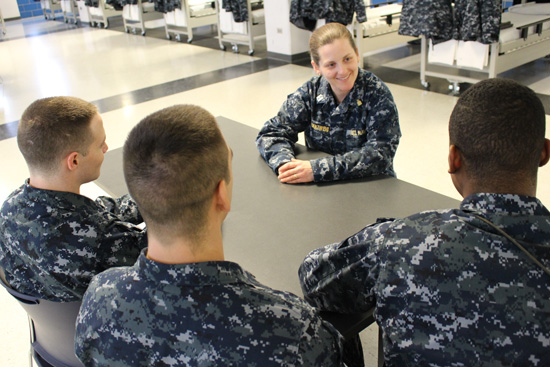
Lieutenant Emily Rosenzweig knew she wanted to be a rabbi from a young age growing up in Mount Vernon, N.Y.
After her rabbinical ordination, she headed out to Columbus, Oh., where she served as an assistant rabbi and director of education at a Reform congregation for five years.
As much as she loved the congregants, she felt like the business of what it takes to run a modern synagogue consumed her time. Her world grew smaller, and she felt isolated from the non-Jewish world that she had always connected to in the past.
She was yearning for something different—but she didn’t quite know what. Then, a series of events in her life converged, leading her to change her course.
First, she was paying close attention to the war abroad. “All the news coming out of Iraq and Afghanistan, as well as the news on the home front about what war was doing to our men and women, tugged at my soul,” she said.
Around that time, she saw a TV movie called Taking Chance, based on a true story. Rabbi Rosenzweig related to the main character, a Marine Corps officer, played by Kevin Bacon, who felt unfulfilled pushing papers back home, so he accompanies the body of a fallen marine home for burial.
At the same time, Rosenzweig noticed a blurb in a Jewish newsletter with a call out for new Jewish chaplains.
So she answered the call and joined the military—choosing the U.S. Navy.
When she joined, she was asked how she’d feel about taking orders. “Taking orders from people? I worked with the [synagogue’s] sisterhood, so that’s no problem,” joked Rosenzweig, who resides in Evanston with her husband.
In 2012, she completed basic training in Rhode Island followed by Navy chaplaincy training in South Carolina.
The chaplains she trained with represented 12 branches of various religions, 20 people total, including three women. Rosenzweig says although she recognizes a different leadership style exhibited by male versus female colleagues-similar to the differences she saw between the genders in the rabbinate-she has felt very little gender discrimination as a chaplain.
In April of 2012, she was stationed at Naval Station Great Lakes, the U.S. Navy’s only boot camp, located in North Chicago. There are some 300 Jewish recruits at Great Lakes, out of approximately 36,000 total recruits.
A chaplain’s chief role centers around caring for the recruits. She or he focuses less on the daily activities of the military, and more on the spiritual needs and comfort of the men and women serving in uniform.
The challenge lies in meeting the spiritual needs of all recruits-no matter what religion they identify with. She must, somehow, make the spiritual component universal enough that everyone feels their spiritual needs are met, but particular enough that the person delivering the prayer is comfortable with it.
No matter what one believes, comfort is a universal concept. “I can’t pretend to be the Muslim chaplain because I’m not a Muslim chaplain,” Rosenzweig said. “I’m the Jewish chaplain who can speak with a Muslim sailor about the death of a loved one because compassion is compassion is compassion.”
Rabbi David Bauman, an Orthodox rabbi, is the only other Jewish chaplain stationed at Great Lakes. He and Rosenzweig work closely with one another and offer options for two different religious services, coordinated by the Chicago Board of Rabbis, out of the same space, and they chant from the same prayer book.
Rosenzweig’s tour at Great Lakes ends in July; up next, she’ll be stationed in Hawaii, where she’ll work with a marine battalion.
She wants to dispel the myth that Jews don’t serve in the military. In fact, 1 percent of the U.S. armed forces is Jewish, some practicing Jews, while others not. “Jews have served in every major conflict in American history,” she said. “The history of Jews in the military is as long as the military.”
Her true callings she says, is to share the lessons of the Torah-whether it’s to congregants from a pulpit or to sailors in need of spiritual sustenance. “To see somebody find meaning or relevance in the Jewish tradition, whether or not it’s their tradition,” she said, “is what I was meant to do.”
Other stories
-
Meet Andrew S. Hochberg, 2021 Julius Rosenwald Memorial Award recipient
Celebrate Andy Hochberg at the virtual Annual Meeting on Sept. 14
Read more -
Two local teens win national recognition
Recipients of the annual Diller Teen Tikkun Olam Awards
Read more -
Celebrating six young award winners cultivating the community
Introducing young adult award winners
Read more
Holocaust Community Services transitions to CJE SeniorLife to continue care for local survivors
The consequences of advanced aging—compounded by the physical and emotional horrors endured during the war—are taking their toll on Chicago’s Holocaust survivor community. The average age of a survivor is 79, with nearly a quarter 85 or older, and the number of Holocaust survivors turning to community agencies has increased.
“There’s a major misconception that the needs of the survivor community are dwindling, but in actuality, the reverse is true. The Holocaust Community Services (HCS) received nearly 300 new requests for services in the past year,” said Yonit Hoffman, Ph.D., HCS Program Director.
Since 1999, Holocaust Community Services (HCS), a collaborative effort of Jewish Child and Family Services (JCFS), CJE SeniorLife and the Jewish Federation of Metropolitan Chicago, in partnership with HIAS Chicago, has helped ensure that the Chicago Holocaust survivor community and their families can continue to live independently and with dignity.
With the greater potential for survivors to benefit from the eldercare resources available through CJE SeniorLife’s continuum of care, the administration of Holocaust Community Services has transitioned from JCFS to CJE. Through this shift, HCS can focus its efforts on serving survivors and their families in alignment with CJE’s mission to enhance the lives of older adults.
“The complex needs of many survivors in our community-related to their traumatic histories as well as deteriorating physical, social and economic factors-are just beginning to emerge. Our survivor community has also been affected by reductions in public benefits for older adults, so a particular focus is on assisting the neediest and most vulnerable survivors who may not have other means of support,” Hoffman said.
HCS serves approximately 800 Holocaust survivors and their families annually, offering support groups, socialization programs, and assistance with various Holocaust reparations and compensation programs. About half that number receives ongoing financial help with food, medication, home care, or emergency needs.
The transition to CJE will enable survivors to benefit from CJE’s expertise in counseling, support and referral services for older adults. HCS case managers will also facilitate in-home support, including personal care and housekeeping services, kosher food delivery, and transportation services. In addition, training for professionals who work with survivors and their families is provided to address the growing needs of aging survivors.
CJE will also focus on the strategic development of HCS to address the significant increase in survivor requests for assistance. HCS is supported by social welfare grants from the Conference on Jewish Material Claims Against Germany, Inc., and other generous foundations and donors. Approximately 75 percent of the total funding is from the Claims Conference, which recently increased its worldwide allocations by 21 percent for 2015, for a total of $365 million. Though a small portion of this additional funding will be allocated to local agencies, it will be spread across social service organizations serving Jewish Holocaust survivors in 47 countries, to provide home care, hunger relief, medical care and transportation.
Steve N. Miller, HCS Committee Chair and JUF Board member believes it’s important to provide for the survivors in our community. “These people have suffered so much in their lives-it’s imperative that we provide for them and let them age with dignity.”
For more information on Holocaust Community Services at CJE SeniorLife, call (773) 508-1004.
Other stories
-
Meet Andrew S. Hochberg, 2021 Julius Rosenwald Memorial Award recipient
Celebrate Andy Hochberg at the virtual Annual Meeting on Sept. 14
Read more -
Two local teens win national recognition
Recipients of the annual Diller Teen Tikkun Olam Awards
Read more -
Celebrating six young award winners cultivating the community
Introducing young adult award winners
Read more
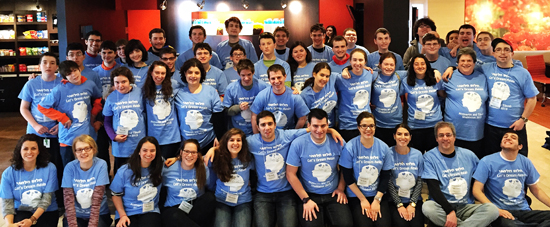
In January, 21 campers in the Camp Ramah in Wisconsin Tikvah program and 12 Atzmayim vocational participants traveled to a hotel in suburban Chicago to celebrate Shabbat together. They came from 15 cities in the U.S. and Canada to join their counselors and 11 grade friends for a wonderful camp reunion.
Tikvah, a division of Camp Ramah in Wisconsin developed in 1973, provides inclusion opportunities for children with learning, social, and communication difficulties, including those who are higher functioning on the autism spectrum. This camp reunion was a chance to reconnect and continue the learning and growing that happens every summer.
“For most kids, getting together with your camp friends during the winter is expected. But for kids in Tikvah and Atzmayim, it doesn’t happen so easily,” said Joseph Eskin, a Chicagoland Jewish High School teacher and the Tikvah division head. “A reunion like this one provides an important part of the camp experience-reconnecting with your friends during the year. This Shabbaton builds on the work we do at camp by normalizing the camp experience for kids with special needs.”
Taking place over Martin Luther King Day weekend, the program theme, “Let’s Dream Again,” provided a framework to look at dreams of liberation. Discussions connected the Torah reading from the book of Exodus with the civil rights movement and the Americans with Disabilities Act. Campers and staff members talked about their own personal challenges and dreams for making life more equal for everyone. “Reunion participants felt comfortable with their camp friends talking about the challenges they encounter on a daily basis,” Eskin said.
The college-aged counselors were energized by the reunion. “Our entire staff was so proud to see participants take active roles in Shabbat services. It’s an amazing sight to see teens and young adults with a variety of social and learning issues connect to Jewish ritual in this supportive and non-judgmental community,” said Ralph Schwartz, director of Ramah Wisconsin’s Special Needs Programs. “At the Shabbat morning service, a 16-year old boy who never had a bar mitzvah due to his own anxiety agreed at the last minute to take an aliyah (honor) to the Torah. Upon completion of the aliyah, his self-confident smile was visible for miles and we were all so happy for him.”
“When you see the kids talking and laughing at meals and participating in study group discussions—as other kids do—you appreciate the necessity and the value of our Tikvah programs,” said Dr. Margaret Silberman, Special Needs Program Chair.
Evan, a Tikvah camper who flew in from Florida for the weekend, was asked if he enjoyed the Shabbaton. “I feel so lucky and happy to be here with all my friends,” he replied. “My favorite part of the weekend was bowling on Saturday night. I got three strikes! I love this camp and can’t wait to come back.”
For more information on the Tikvah camper program and Atzmayim vocational program of Camp Ramah in Wisconsin, visit www.ramahwisconsin.com or contact Alicia at [email protected] or at (312) 606-9316. ext. 221.
Linda Hoffenberg is director of Institutional Advancement for Camp Ramah in Wisconsin.
Other stories
-
Meet Andrew S. Hochberg, 2021 Julius Rosenwald Memorial Award recipient
Celebrate Andy Hochberg at the virtual Annual Meeting on Sept. 14
Read more -
Two local teens win national recognition
Recipients of the annual Diller Teen Tikkun Olam Awards
Read more -
Celebrating six young award winners cultivating the community
Introducing young adult award winners
Read more
Pro-Israel students around the country are fighting a coordinated and sophisticated campaign mounted by Israel’s detractors. Four divestment campaigns were introduced in the last week alone.
DePaul students experienced a major victory against the BDS Movement this week when a divestment proposal was rejected by DePaul’s Fair Business Practices Committee. Metro Chicago Hillel and JUF Israel Education Center interns said, “We urge DePaul – and all other universities – to uphold the principles of nondiscrimination that are at the core of university life. We will continue to work with DePaul to promote the understanding that Israel is invested in peace, continues to work towards peaceful compromise and works to promote educational and economic opportunities for all of its citizens and residents.”
Ten miles north, in yet another attempt to call Israel’s legitimacy into question, Northwestern University’s chapter of Students for Justice in Palestine announced their intention to introduce a divestment resolution in the university’s Student Government. A resolution calling on the university to divest from companies that do business with Israel and a petition are circulating online; the resolution has not yet been introduced.
In response to this campaign, a group of Northwestern students, advised by JUF’s Israel Education Center, Hillel and other pro-Israel organizations, formed the Northwestern Coalition for Peace, which is actively working against NU Divest. During a program featuring New York Times best-selling author Ari Shavit this week, Shavit thanked a group of student leaders for their dedication to fighting the Boycott Divestment and Sanctions movement.
The developments of the last two weeks have been both challenging and inspiring to Chicago’s Israel activists on campus. JUF’s Israel Education Center and Hillel continue to stand strongly with students as they stand up for Israel. For more information please contact JUF’s Israel Education Center.
Other stories
-
Local campus administrators convene on hate speech, bias
JUF and ADL brought together 17 student safety, diversity and inclusion and student affairs administrators and Hillel representatives from various Illinois campuses to discusses issues of hate speech and bias.
Read more -
Engaging students about Israel on campus
Too often we hear about difficulties facing Jewish college students on Illinois campus, but to focus solely on the politics gives only one piece of the complex narrative that is Jewish life on campus.
Read more -
Hillel International launches fellowship initiative to train young Jewish professionals
The Springboard Fellowship will train cohorts of young Jewish professionals in highly-valued skillsets and place them at local Hillel campuses for two years.
Read more
Center for Jewish Genetics recommends genetic counseling for anyone considering BRCA testing
In the fall of 2014, studies published in The Journal of the American Medical Association, the Proceedings of the National Academy of Sciences of the United States of America and The Journal of the National Cancer Institute recommended that women over the age of 30 get tested for mutations in the BRCA1 and BRCA2 genes.
Mutations to these two genes increase the risk of contracting female breast and ovarian cancer, as well as other types of cancer. Further, these three studies recommended testing regardless of family history of breast or ovarian cancer.
It is well-documented that Ashkenazi Jews have a much greater risk for carrying mutations in the BRCA1 and BRCA2 genes. In fact, one in 40 individuals of Ashkenazi descent is a carrier of a BRCA mutation compared to one in 400 individuals in the general population.
Whether you have decided to get BRCA testing or are just thinking about it, the first step is to “do your homework.” You should know what to expect and what’s involved in the testing process to make an informed decision about what’s right for you.
The Center for Jewish Genetics, along with other nationally renowned institutions such as the National Society of Genetic Counselors, recommends that you:
- Meet with a genetic counselor, or with a physician or health care provider involved with cancer treatment and prevention.
- Discuss with that professional your family history of breast and ovarian (and other) cancer, what testing results can and cannot reveal, and the health management options that exist in the event you are tested and it reveals you are a carrier of a BRCA mutation.
The Center for Jewish Genetics can help you get started. While the Center has screening and education programs for 19 Ashkenazi Jewish genetic disorders, it does not offer genetic testing for BRCA. However, the Center will help identify centers near you so that you may receive the appropriate testing.
Other stories
-
Meet Andrew S. Hochberg, 2021 Julius Rosenwald Memorial Award recipient
Celebrate Andy Hochberg at the virtual Annual Meeting on Sept. 14
Read more -
Two local teens win national recognition
Recipients of the annual Diller Teen Tikkun Olam Awards
Read more -
Celebrating six young award winners cultivating the community
Introducing young adult award winners
Read more
On Jan. 27, the Jewish Federation’s Government Affairs Committee met to discuss the new congressional climate, Federation’s federal policy agenda and state budget predictions.
Opening the meeting, David Goldenberg, member of the Government Affairs Committee and Federal vice-chair laid out the Federal agenda, which covers a vast set of issues including funding for health and human services that benefit the elderly, disabled, refugees, and children and families; tax policies regulating charitable giving; Homeland Security grants; Israel, and issues affecting Jews throughout the world.
Next, Laurel Harbridge, assistant Political Science professor at Northwestern University, presented on the history of partisanship in Congress over the last 40 years and concluded with her predictions of which general topics would most likely gain bipartisan support this congressional session: infrastructure improvements, authorization of military force against ISIS, support for Veterans, health care, including minor changes to the Sustainable Growth Rate and initiatives to reduce health care spending, and cyber security.
From the Washington D.C. office, Senior Legislative Associate Eric Goode reported on specific line items that the Federation will be closely watching and advocating for, pending the release of the President’s Budget on Feb. 2. These items include a possible increase to the Non-Profit Security Grant line item; the reauthorization of the Older Americans Act that provides funding to our adult care programs; and the reallocation of funds to Social Security Disability Insurance money, which currently only has enough funds to cover 80 percent of participants as of late 2016. These are important income sources for those served at Federation agencies CJE SeniorLife, Keshet, JCFS, and JVS.
Closing the lunch hour, Associate Vice President of Government and Community Partnerships Suzanne Strassberger brought the conversation back to Illinois, and spoke on the tough realities of the state budget this legislative session.“Regardless of who is in government, Illinois is facing significant, tough issues with no magic solution,” she said.
With the state budget scheduled for release on Feb. 18, state leaders will be considering changes to revenues, mostly through tax reform, and spending reductions. Recipients of state funds can expect 13-15 percent cuts across the board and rate cuts in everything, including Medicaid.
Other stories
-
Meet Andrew S. Hochberg, 2021 Julius Rosenwald Memorial Award recipient
Celebrate Andy Hochberg at the virtual Annual Meeting on Sept. 14
Read more -
Two local teens win national recognition
Recipients of the annual Diller Teen Tikkun Olam Awards
Read more -
Celebrating six young award winners cultivating the community
Introducing young adult award winners
Read more
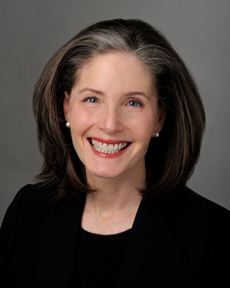
Ellen B. Carmell has been named Executive Director of the Jewish Women’s Foundation of Metropolitan Chicago, one of the largest and oldest philanthropic bodies of its kind.
The foundation is an independent program of the Jewish United Fund of Metropolitan Chicago.
“Ellen is a wonderful match for JWF, which has grown into one of the preeminent Jewish women’s foundations in the country,” said foundation board chair Gerri Kahnweiler. “She has a long commitment to a wide range of Jewish communal efforts, and a strong focus on advocacy to further social change and strengthen families and communities. She is a recognized leader, both locally and nationally, and is skilled at working collaboratively to accomplish programmatic goals.”
Prior to joining the women’s foundation, Carmell headed the American Jewish Committee’s Bridging America Project, a Ford Foundation-funded national initiative to strengthen Latino-Jewish relations and advance immigration reform. She also has served for many years as a lay leader at Facing History and Ourselves, an international organization that uses study of the Holocaust to engage students of diverse backgrounds in an examination of racism, prejudice and anti-Semitism. She currently serves on the program’s Board of Directors, Committee on Governance, and Chicago Advisory Board.
Previously, Carmell was a lay leader at Temple Beth-El in Northbrook, and has worked at various museums in Chicago, Evanston and Dallas. She received her Bachelor’s in Art History and Psychology from Smith College, her Master’s in Museum Education from George Washington University, and studied nonprofit board governance at the Center for Nonprofit Management at Kellogg.
“I’m thrilled about this opportunity,” Carmell said, “because the mission of the Jewish Women’s Foundation resonates with me on many levels, both personally and professionally. I’m particularly drawn to this unique model of social-change philanthropy as a means to positively impact the lives of Jewish women and girls. And I couldn’t be more delighted about working with the JWF Trustees, a truly extraordinary group of women, to achieve that goal.”
Carmell takes over from Emily Muskovitz Sweet, who is the new Executive Director of JUF’s Jewish Community Relations Council and Government Affairs. Carmell and her husband, David, live in Chicago’s Streeterville neighborhood. They have two adult children and one grandchild.
“Chicago’s Jewish Women’s Foundation was a pioneer,” said JUF President Steven Nasatir. “From the start, it has provided a forum for women to express themselves and their values through their philanthropy, to highlight critical issues impacting Jewish women and girls, and to mentor women as leaders in the philanthropic world. The foundation has earned its outstanding national reputation in these areas, and Ellen Carmell will continue to grow and define that tradition.”
Since its founding in 1997, the foundation has raised a pledged endowment of over $8.6 million, and awarded more than $2.6 million to 134 projects.
Last month, it announced grants totaling nearly $350,000 to support 21 unique projects that improve the lives of Jewish women and girls locally, in Israel and around the world. Efforts focus on securing women’s health and safety, growing strong and self-assured girls, increasing women’s economic power, and promoting Jewish women’s education and leadership.
Chicago’s foundation also is a founding member of the Jewish Women’s Collaborative International Fund, a coalition of 17 Jewish women’s funds – 14 in the U.S., three in Israel – that has awarded a collaborative grant to Shutafot (Partnership), a newly created partnership of seven prominent women’s organizations in Israel.
Other stories
-
Meet Andrew S. Hochberg, 2021 Julius Rosenwald Memorial Award recipient
Celebrate Andy Hochberg at the virtual Annual Meeting on Sept. 14
Read more -
Two local teens win national recognition
Recipients of the annual Diller Teen Tikkun Olam Awards
Read more -
Celebrating six young award winners cultivating the community
Introducing young adult award winners
Read more