Leaders of Ukrainian Jewry reacted with cautious optimism to news that Russia and Ukraine worked out an agreement designed to bring about a cease-fire along their border.
Yaakov Dov Bleich, a chief rabbi of Ukraine, said he was “hoping for the best while remaining prepared for the worst” following statements by Russian President Vladimir Putin on Thursday morning that he and his Ukrainian counterpart, Petro Poroshenko, had worked out an agreement for ending hostilities between Ukrainian government forces and Russian-backed separatists in enclaves along the border.
According to Putin’s statement following 16 hours of talks in Minsk with Poroshenko and his delegation to peace talks in the Belarussian capital, the cease-fire would become effective on Sunday and entail the withdrawal of heavy weapons from the conflict areas, where 5,000 people have been killed in fighting that erupted last year.
But Bleich said that “the most effective way to end this war is to shut down the border to Russia because then all parties would come to the table and work out terms for a lasting peace,” an element absent from a cease-fire draft presented by the delegations. Bleich added that separatists, whom he called terrorists, were feeling emboldened by “the flow of arms and personnel from Russia.” As long as the border remains open, he said, conflagrations of violence are likely to recur.
Several attempts at reaching a negotiated cease-fire between rebels and government forces have failed in recent months.
Bleich, a harsh critic of Russia’s actions in Ukraine, also warned against “trying to appease those terrorists because this has been proven to be a failed strategy.”
Vadim Rabinovich, a Jewish Ukrainian lawmaker who chairs the Ukrainian parliament’s subcommittee on human rights and founded the All-Ukrainian Jewish Congress, struck a more optimistic note. In a Facebook post on Thursday about the agreement, he wrote, “I spoke with the guys in Minsk. People, there is hope for the world. Today, the main thing is to stop the war.”
Other stories
-
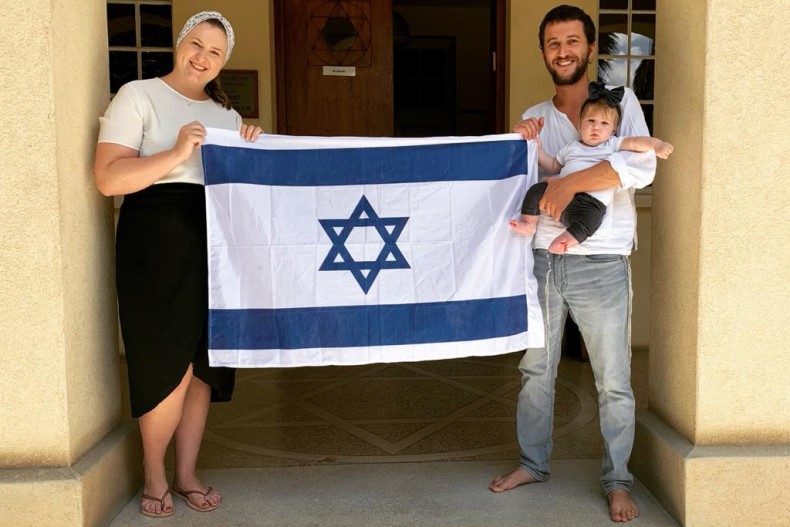
Chicago to Israel to Kenya
A family’s story of living Jewishly on three continents Michelle Cohen World May 28, 2021 Avital, Tzofia, and Netanel Kaszovitz outside their home in Nairobi on Yom HaAtzmaut. When Avital Kaszovitz prepared to be a Modern Orthodox shlicha (emissary) to the Jewish community in Ke
Read more -
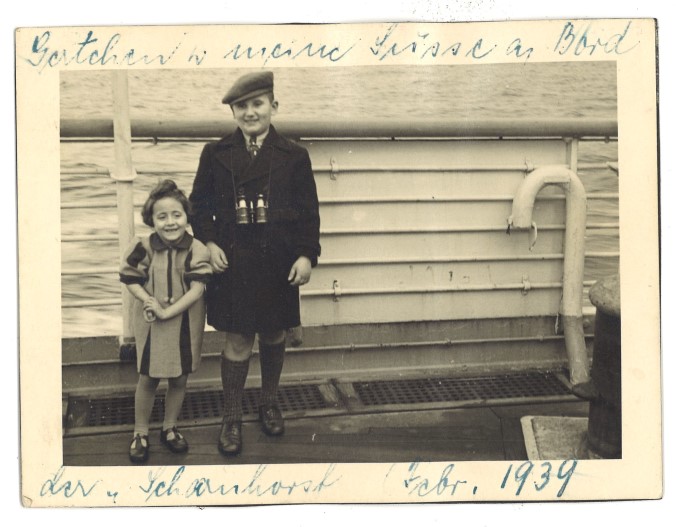
New exhibit spotlights the experience of ‘Shanghai Jews’
Explore a new Illinois Holocaust Museum and Education Center exhibit
Read more -
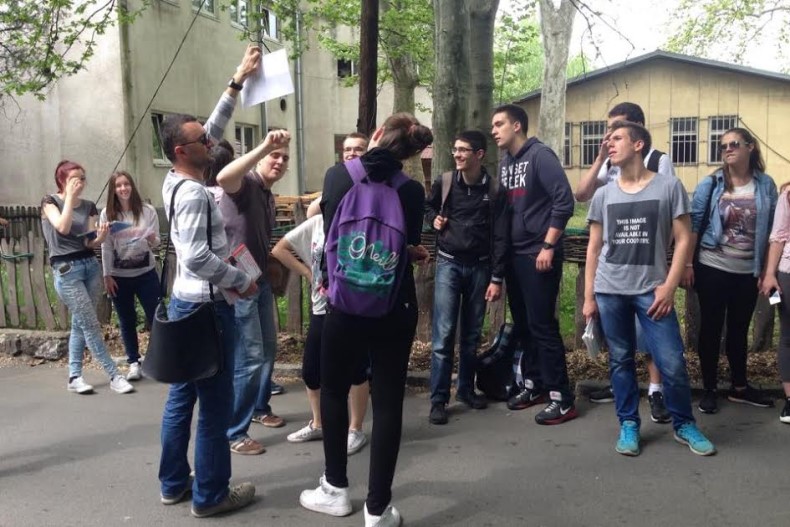
Europe’s brave new teachers of the Holocaust
Teaching the Holocaust in the modern era has its difficulties and rewards.
Read more
The University of Chicago Newberger Hillel has announced the addition of two students to its Advisory Board, Joshua Benadiva and Danielle Plung.
Benadiva hails from Connecticut and is a second year student currently studying business and economics. He is very active in the Alpha Epsilon Pi fraternity and frequently attends Hillel programs. He traveled to Israel through Taglit-Birthright Israel on a trip led by UChicago Hillel professionals this past summer. Josh also joined fellow UChicago students for the JUF Vanguard event featuring Shimon Peres last October.
Plung is a second-year student from Philadelphia. She regularly attends Hillel programs and Shabbat services and is particularly active in Hillel’s Egalitarian Minyan and J Street U. She is interested in the Reconstructionist movement after an affirming experience at a Reconstructionist summer camp. Dani is currently studying English and is interested in pursuing a career in education.
UChicago Hillel Board members require an understanding and commitment to Hillel’s vision of “inspiring each student to make an enduring commitment to Jewish life, learning and Israel” and its mission of “enriching the lives of Jewish students at the University of Chicago so that they may enrich the Jewish people and the world.”
UChicago Newberger Hillel Board President Ben Sher said he is, “thrilled to have Josh and Dani join the Advisory Board. We look forward to having their unique perspectives and learning about what it’s like to be a Jewish leader on campus today.”
UChicago Hillel values a pluralistic and inclusive environment that fosters student growth and empowerment, advances social justice, and provides Jewish learning and spirituality.
To learn more about UChicago Hillel, please contact Amy Berger at [email protected].
Other stories
-
Local campus administrators convene on hate speech, bias
JUF and ADL brought together 17 student safety, diversity and inclusion and student affairs administrators and Hillel representatives from various Illinois campuses to discusses issues of hate speech and bias.
Read more -
Engaging students about Israel on campus
Too often we hear about difficulties facing Jewish college students on Illinois campus, but to focus solely on the politics gives only one piece of the complex narrative that is Jewish life on campus.
Read more -
Hillel International launches fellowship initiative to train young Jewish professionals
The Springboard Fellowship will train cohorts of young Jewish professionals in highly-valued skillsets and place them at local Hillel campuses for two years.
Read more
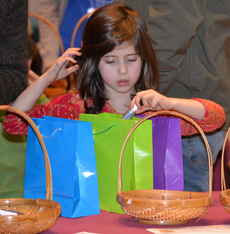
JUF Young Families hosts all-new Purim program Feb. 22 for Jewish Disabilities Awareness Month
When her son Danny was younger, Jodi Newmark remembers even the simple act of going to synagogue could be nerve-wracking.
How is he going to behave? She would worry. How will people react?
Concerns like these might ring true for the parent of any young child – especially at long programs with lots of sitting still. But for Jodi, whose son has autism, the struggle was heightened, and often events specifically aimed at children still presented hurdles.
“You might have a wonderful community Hannukah event where most kids would enjoy the dancing and the songs,” she said. “But for kids like Danny, that sensory stimulation might be too much.”
That’s why today, Jodi, whose son is now a young adult, works tirelessly to build support for families of kids with disabilities in the Jewish community. As the director of the Encompass program at Jewish Child and Family Services, she played a key role in bringing about the first-ever PJ Library Chicago program geared specifically at families with children with intellectual/developmental disabilities.
The event, “PJ Shares: Helping Our Community,” scheduled for Feb. 22 at the Takiff Center in Glencoe, invites families of children ages 2-8 with intellectual/developmental disabilities to give back to the community through a hands-on volunteer experience making mishloach manot (Purim gift packages), tzedakah boxes, and more.
As part of Jewish Disability Awareness Month, this special program is a partnership of Encompass, Keshet, Jewish Child and Family Services (JCFS), and JUF’s Tikkun Olam Volunteer (TOV) Network – and reflects a renewed commitment to expand the menu of programming available to families within the Jewish community.
“Our hope is that this event will be the first of many others like it,” said Deborah Shub, Senior Program Associate of Young Family Engagement at JUF. “We are committed to creating meaningful, welcoming Jewish experiences for all families in our community.”
The Feb. 22 PJ Gives Back event will feature a host of activities aimed at children with intellectual/developmental disabilities, as well as siblings of all ages. The National Lekotek Center will facilitate sensory story time and adaptive play.
“PJ Library has impacted the lives of so many,” said Abbie Weisberg, CEO/Director of Keshet. “This opportunity geared toward our young special needs community is a gift. Thank you to JUF for bringing this to Chicago!”
The event will take place Sunday, Feb. 22 from 4-5:30 p.m. at the Takiff Center in Glencoe. Cost is $10 per family to offset supply costs. For more information or to register, visit www.juf.org/pjshares.
Other stories
-
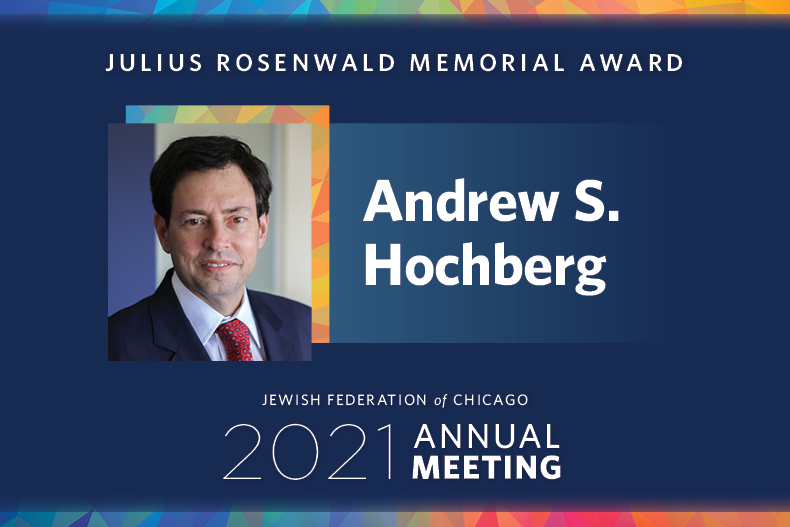
Meet Andrew S. Hochberg, 2021 Julius Rosenwald Memorial Award recipient
Celebrate Andy Hochberg at the virtual Annual Meeting on Sept. 14
Read more -
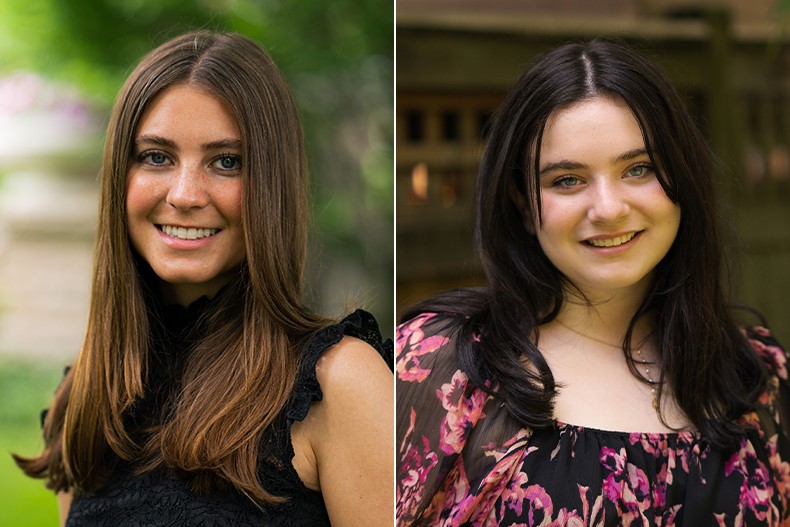
Two local teens win national recognition
Recipients of the annual Diller Teen Tikkun Olam Awards
Read more -
Celebrating six young award winners cultivating the community
Introducing young adult award winners
Read more
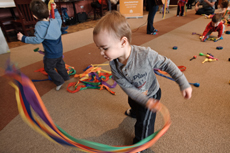
jBaby Chicago, the Jewish United Fund’s outreach arm to new and expectant families, has officially hit the suburbs. The expansion kicked off on Sunday, Feb. 8 with a launch party attended by over 200 families at new Evanston kids’ spot Little Beans Cafe.
“We are thrilled to broaden our Jewish, family-focused programming to the suburbs of Chicago,” said Deborah Cooper, JUF assistant vice president of young family engagement. “Our city programs have been so successful; we are excited to engage Jewish and interfaith suburban families as well.”
jBaby Chicago connects families with children under the age of two to other Jewish and interfaith families. These connections can help develop a community where new families can share valuable parenting resources and advice on topics such as preschools, raising children, local events and activities, how to incorporate Judaism into daily life, and much more.
“I think it’s wonderful that jBaby Chicago will give families with very young kids an instant network and a Jewish community to enjoy throughout their childhood,” said Glencoe parent Heather Jagher.
jBaby Chicago is a program of the Jewish United Fund of Metropolitan Chicago and is supported, in part, by the Crown Family and other local donors. For more information, please visit http://www.juf.org/jbabychicago.
Other stories
-
Meet Andrew S. Hochberg, 2021 Julius Rosenwald Memorial Award recipient
Celebrate Andy Hochberg at the virtual Annual Meeting on Sept. 14
Read more -
Two local teens win national recognition
Recipients of the annual Diller Teen Tikkun Olam Awards
Read more -
Celebrating six young award winners cultivating the community
Introducing young adult award winners
Read more
For much of the past century, Jews and African-Americans shared a strong and supportive relationship, based on common histories and driven by a thirst for social justice. Then came what some call a hiatus. Now, growing efforts are afoot to restore that bond and build on it.
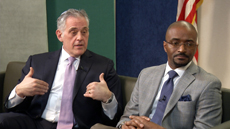
The next episode of the public-affairs program “Sanctuary” – which airs at 11:30 a.m. Sunday, Feb. 15, on ABC7-Channel 7 – explores the state of the relationship – past, present and future – through the eyes of a rabbi and a black pastor who have made reinvigorating relations between their communities a personal mission.
Featured are Rabbi Michael Siegel of Anshe Emet Synagogue in Lakeview and Pastor Chris Harris of Bright Star Church of God in Christ in Bronzeville. The program also will visit a West Side Baptist church, housed in a former synagogue that once served a thriving Jewish community, for highlights of a joint celebration of Martin Luther King Jr.’s life and legacy. Cindy Sher hosts.
Starting Monday, Feb. 16, the program will be available for viewing on the Jewish United Fund website, www.juf.org/interactive.
“Sanctuary” is a joint production of the Jewish Federation of Metropolitan Chicago and the Chicago Board of Rabbis, in cooperation with ABC7-Channel 7.
Other stories
-
Meet Andrew S. Hochberg, 2021 Julius Rosenwald Memorial Award recipient
Celebrate Andy Hochberg at the virtual Annual Meeting on Sept. 14
Read more -
Two local teens win national recognition
Recipients of the annual Diller Teen Tikkun Olam Awards
Read more -
Celebrating six young award winners cultivating the community
Introducing young adult award winners
Read more
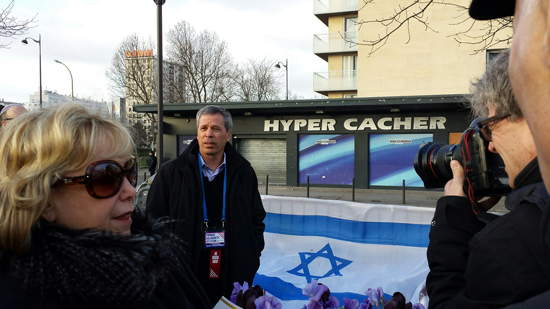
Former JUF Chairman of the Board David T. Brown, leader of the national France solidarity mission, stands in front of the Hyper Cacher supermarket, where four French Jews were killed in a terrorist attack Jan. 9.
A group of Jewish leaders representing 18 communities throughout North America, including nine from Chicago, traveled to Paris on a solidarity mission organized by the Jewish Federations of North America on Feb. 8.
On Sunday, participants visited the historic Victoire Synagogue and the Hyper Cacher Market, met with France’s Chief Rabbi and received briefings from security experts and the French Jewish community leadership. They also met with two survivors of the Hyper Cacher attack.
VIEW MORE JUF VIDEOS
On Monday, the last day of the two-day mission, they met with civic and government leaders to share their concerns about the rise in violent attacks against Jews.
VIEW MORE JUF VIDEOS
There are between 500,000 and 600,000 Jews living in France, 2,000 of who live in the suburbs of Paris, in close proximity to some of France’s most radical Muslims. France has the largest population of Jews in Europe as well as the largest population of Muslims in Europe. The rise in French anti-Semitism and terrorism has led to thousands of French Jews leaving the country. Immigration rates to Israel, for example, were a record high in 2014, with 7,000 French Jews making aliyah. Those numbers are expected to rise in 2015.
Former Jewish United Fund of Metropolitan Chicago Chairman of the Board David T. Brown, who currently serves as chair of Jewish Federations of North America’s global operations: Israel and overseas council, led the mission.
“Am Echad—we are one people with one destiny,” Brown said. “Jews need to take care of other Jews and support them wherever they may be.”
Chicago participants in the mission included JUF Board members Caryn Adelman, Brown and Bill Silverstein (current JUF Board Chairman); community members Gita Berk, Richard Biller, Marc Sacks and Brad Schneider; and JUF Executive Vice President Jay Tcath.
Schneider, a former Illinois congressman, wrote a personal reflection on his experience for The Times of Israel.
Other stories
-
Chicago to Israel to Kenya
A family’s story of living Jewishly on three continents Michelle Cohen World May 28, 2021 Avital, Tzofia, and Netanel Kaszovitz outside their home in Nairobi on Yom HaAtzmaut. When Avital Kaszovitz prepared to be a Modern Orthodox shlicha (emissary) to the Jewish community in Ke
Read more -
New exhibit spotlights the experience of ‘Shanghai Jews’
Explore a new Illinois Holocaust Museum and Education Center exhibit
Read more -
Europe’s brave new teachers of the Holocaust
Teaching the Holocaust in the modern era has its difficulties and rewards.
Read more
The spiritual leader of the African Hebrew Israelites, a group of African-Americans living in Israel who believed they were descendants of the biblical tribe of Judah, has died.
Ben Ammi Ben-Israel, born Ben Carter in Chicago, died Jan. 5 in the Negev town of Dimona, The Associated Press reported. He was 75; the cause of death was not announced.
Ben-Israel believed that some African-Americans were descended from the Judah tribe who migrated to West Africa and were sold as slaves in the United States. In 1966, he and a few hundred followers settled in Liberia before moving three years later to Dimona, in southern Israel.
Before forming the movement, Ben-Israel dropped out of high school and joined the U.S. Army. He also worked as a metallurgist. In 1966, he claimed that the angel Gabriel told him to “return to the Holy Land” by the way in which he came.
The approximately 3,000 remaining African Hebrew Israelites, also known as Black Hebrews, make their own clothes, practice polygamy, and follow a vegan diet. They have established craft and tailoring businesses and vegan restaurants.
The Black Hebrews did not officially convert to Judaism and the Chief Rabbinate in Israel does not consider them Jewish. They were granted permanent residency in Israel in 2003.
Ben-Israel is survived by four wives and over 20 children.
~JTA
Other stories
-
Meet Andrew S. Hochberg, 2021 Julius Rosenwald Memorial Award recipient
Celebrate Andy Hochberg at the virtual Annual Meeting on Sept. 14
Read more -
Two local teens win national recognition
Recipients of the annual Diller Teen Tikkun Olam Awards
Read more -
Celebrating six young award winners cultivating the community
Introducing young adult award winners
Read more
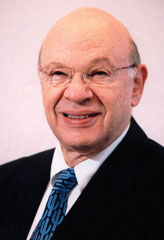
Marshall S. Yablon, former JUF Board member, has passed away. He was 72.
Yablon served on the JUF Board of Directors from 2007-2009 and on many of its committees, including Audit, Administration and Government Affairs; he was vice chairman of the Contributor Account Relations Committee as well. Over three decades of JUF leadership, he co-chaired its King David Society and Vanguard Event, and served as chairman of JUF’s Trades, Industries, and Professionals Division and its Medical Professionals Division. For many years, he participated in JUF Snowbird events in Phoenix and was a longtime member of JUF’s Silver Circle.
He was an ardent Zionist and supporter of Israel, travelling on many JUF Missions there. He was one of the original committee members of Partnership 2000-today called Partnership Together-and had recently rejoined the committee, participating in two of the last site visits.
A leader at JUF-supported agencies as well, Yablon served as Chairman of the Board of CJE SeniorLife, where he was Life Member of its board. He also was Vice President of the Board of the Jewish Community Centers of Chicago after serving as president of both the Heller and Horwich JCCs.
“He was a kind and thoughtful man who was deeply committed to the Jewish community, here in Chicago and around the world, and someone who believed strongly in the importance of Jewish continuity and education,” said JUF President Dr. Steven B. Nasatir.
“When Marshall discussed ideas with you and became your friend, he paid you the highest compliment,” said Rabbi Yehiel E. Poupko, JUF Judaic Scholar, in his eulogy. “To the needs of the Jewish people, he leant passion, commitment, and deep reasoning grounded in learning. Today, he is our teacher.”
Yablon received his BA from New York University and his MBA in Health Care Administration from The George Washington University, which later gave him its Distinguished Alumni Award. He served as a preceptor for the University of Chicago and Northwestern University MBA programs in hospital administration.
He moved to Chicago from New York 45 years ago. He had been a hospital administrator Brooklyn’s Maimonides Medical Center, then moved to Michael Reese Hospital and Medical Center in Chicago, where he advanced to become Associate Director and Chief Operating Officer.
Thirty-five years ago, he co-founded Diversified Health Resources, Inc. Principal and Chairman of this firm, he consulted in healthcare planning, marketing, and executive search for a broad range of healthcare institutions including community hospitals, multi-hospital systems, nursing homes, and retirement facilities. Yablon was a longtime member of the American College of Healthcare Executives and a Life Member of the American Hospital Association.
Yablon was a member of the Standard and Caxton Clubs, and served on the Aspen Music Festival’s National Council. After Diversified, Yablon- a longtime collector of antique books and supporter of the Newberry Library- co-founded, and served as president of, Apple Tree Publishing. Through the JCCs, he helped support events featuring major Jewish authors including Cynthia Ozick, Saul Bellow, and I.B. Singer.
The funeral was held on Jan. 7 at Anshe Emet Synagogue; Yablon was a longtime member and had served on its Endowment Committee. Senior Rabbi Michael Siegal and Hazzan Alberto Mizrahi officiated. “Marshall wanted to make sure that the community served each individual from the youngest to the most senior,” Siegal said in his eulogy. “Marshall gave his all to the Jewish community, and he made a significant difference.”
Services were followed by interment will be at Westlawn Cemetery. Arrangements were made by The Goldman Funeral Group.
Yablon was the husband of Andrea R. Yablon (nee Rice), a JUF Board member and Chair of the JUF Overall Planning and Allocations Committee, and the father of Alexis (David Seidman) Yablon. He was the grandfather of Leah Y. and Lincoln Y. Seidman and brother of Steven (Jana) Yablon and Ronald (Marla) Yablon. The son of the late Irving and Sadie Yablon, he was the son-in-law of Vivian E. and late Robert W. Rice, and brother-in-law of Sara (David) Baron. The nephew of Arthur S. (Rochelle) Elstein, he was an uncle, cousin and friend of many.
In lieu of flowers, memorials to JUF or CJE Senior Life would be welcomed.
Other stories
-
Meet Andrew S. Hochberg, 2021 Julius Rosenwald Memorial Award recipient
Celebrate Andy Hochberg at the virtual Annual Meeting on Sept. 14
Read more -
Two local teens win national recognition
Recipients of the annual Diller Teen Tikkun Olam Awards
Read more -
Celebrating six young award winners cultivating the community
Introducing young adult award winners
Read more
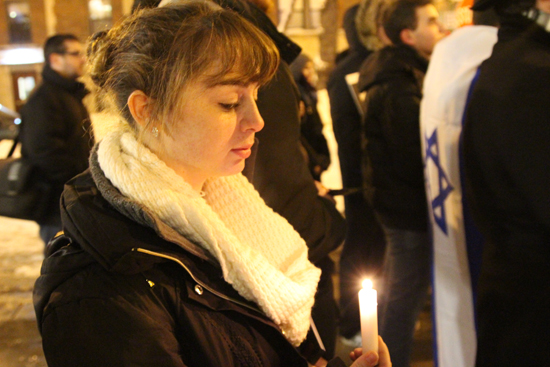
DePaul students gather on campus to remember the victims of a 1969 terrorist bombing in Jerusalem.
In response to a fundraising event at their school to benefit a convicted terrorist, Pro-Israel students at DePaul University staged a vigil Tuesday night for the victims of the terrorist’s attack. Under the leadership of Metro Chicago Hillel Executive Director Rabbi Seth Winberg, the vigil honored two Hebrew University students, Edward Joffe and Leon Kanner, who were murdered in a terrorist bombing in Jerusalem in 1969.
The story garnered national attention; Winberg published an op-ed piece about it on Monday in the Chicago Sun-Times online and was invited to discuss the situation on Fox News Tuesday morning (watch the segment).
Winberg and students convened the vigil to protest a concurrent event at the university held by anti-Israel group Students for Justice and Palestine, which is raising funds for the legal defense of Rasmieh Odeh, the terrorist convicted of the 1969 bombing.
Odeh, who came to the U.S. following her release from Israeli detention in a prisoner exchange, was convicted last year of immigration fraud by a U.S. Federal court. She and her supporters are appealing that conviction.
Anti-Israel activity on local campuses continues to escalate, but through the efforts of JUF’s Israel Education Center and Hillel, including leaders such as Winberg and Metro Chicago Hillel Board President Josh Rinkov, Jewish students have been prepared to respond. Last week, DePaul students experienced a victory against the Boycott, Divestment and Sanctions Movement when a divestment proposal was rejected by DePaul’s Fair Business Practices Committee.
Other stories
-
Local campus administrators convene on hate speech, bias
JUF and ADL brought together 17 student safety, diversity and inclusion and student affairs administrators and Hillel representatives from various Illinois campuses to discusses issues of hate speech and bias.
Read more -
Engaging students about Israel on campus
Too often we hear about difficulties facing Jewish college students on Illinois campus, but to focus solely on the politics gives only one piece of the complex narrative that is Jewish life on campus.
Read more -
Hillel International launches fellowship initiative to train young Jewish professionals
The Springboard Fellowship will train cohorts of young Jewish professionals in highly-valued skillsets and place them at local Hillel campuses for two years.
Read more

Like many couples thinking about an engagement, Karen and Josh understood that they were weighing a commitment far greater than choosing flowers or signing a catering contract. They were preparing for a marriage, a family, and a future. This planning—much more critical than questions about place settings and cake layers—led them to seek education and screening from the Center for Jewish Genetics.
The Centerfor Jewish Genetics offers counseling and screening services appropriate both for persons of Jewish decent and for interfaith couples. The Center’s current test panel screens for 80-plus conditions and offers the highest detection rates for individuals of all backgrounds and ethnicities. All participants receive personal follow-up from the on-staff genetic counselor. The current test is non-invasive, using gene-sequencing on a saliva sample that participants collect at home and mail to the lab after completing a live webinar. Participants use their results to inform important decisions about their family planning.
Karen wanted as much information as possible to protect the health of her future family. Knowing her options well in advance made more sense to her than waiting until pregnancy. The Center’s accessible, affordable, and education-oriented program allowed her and Josh to go through the process together. They found that having a genetic counselor available for information and support made the process feel less clinical, and more like a natural part of the pre-engagement process.
Nothing in Karen and Josh’s results affected their plans, and today they are married with a healthy 15-month-old baby boy. Both are grateful that the Center’s program allowed them to make wise parenting choices even prior to the birth of their first child. For those with different screening results, the Center emphasizes that nothing in the panel means an end to family planning—only a beginning to more informed family planning.
Karen said she advises others to use the Center’s services. “If your vision of a future family includes children, then the Center for Jewish Genetics is a valuable resource for you and those you care about most,” she said.
Karen and Josh have advice for couples who are preparing to go through the education and screening process.
• Talk with your partner about how you envision your future family and the information that you’ll need before making that commitment.
• Take advantage of the accessible and affordable education and screening options offered by the Center. Share the education and screening experience with your partner.
• Going through the Center’s program together makes the experience more meaningful and opens the door for other conversations about family health issues that might affect you as a couple in the long term.
For additional information regarding the Center’s education and screening program, contact Leah Steinberg at [email protected] or (312) 357-4994.