Governor Bruce Rauner today announced the appointment of members to the Illinois Holocaust and Genocide Commission. The commission provides guidance on Holocaust and genocide education and commemoration across the state. The governor will continue to make appointments to this commission in the coming days.
Michael Bauer (Co-Chair)
Michael Bauer is an experienced lawyer and political activist who has spent his life advocating for the Jewish, gay and women’s communities. He served as the co-chair of fundraisers for the New Israel Fund and the American Jewish Committee. He also served as chair of the first gay and lesbian mission to Israel, as well as the first and only gay and lesbian mission to the United States Holocaust Museum.
As the son of two Holocaust survivors, Bauer has a deep understanding of the need for genocide education and commemoration. Bauer has been honored by the American Civil Liberties Union with its John R. Hammell Award, by CitiPAC with its Scoop Jackson Pro-Israel Advocacy Award in 2003, and by the Anti-Defamation League with its Abraham Lincoln Marovitz Civil Rights Award.
Keith Shapiro (Co-Chair)
Keith J. Shapiro currently serves on the Jewish United Fund board and as Chairman of the Lawyer’s Division. He is a Vice Chairman of the Anti-Defamation League (ADL) of Greater Chicago and a member of its Development Committee, Executive Committee and Regional Board, in addition to serving as an ADL National Commissioner. Shapiro is also a member of the Board of Trustees of the Jewish Theological Seminary (JTS).
Shapiro serves on advisory boards for DePaul University College of Law’s Center for Jewish Law & Judaic Studies, List College of the Jewish Theological Seminary and the St. John’s University School of Law Bankruptcy L.L.M. Program. He previously served on the Board of Directors of Chicagoland Jewish High School and was the Founding Chair of the Law and Justice Committee of the United States Holocaust Memorial Museum. He is a past recipient of the Simon H. Rifkind Award from the JTS and has served as a co-chair of the JTS’ annual dinners in Chicago.
Goldie Langer
Goldie Langer was born to two Holocaust survivors in Feldafing DP Camp in Germany. Her mother was the only survivor of her family, and her father’s first wife and four of his six children were killed in concentration camps. Langer was a teacher for a number of years before joining the AJC, a global Jewish advocacy organization. Its mission is to advance human rights and democratic values for all people. Langer worked at AJC for nearly 20 years as the Assistant Director of Development and Donor Relations.
Kelley Szany
Kelley Szany currently serves as the Director of Education at the Illinois Holocaust Museum and Education Center. She is a leading Holocaust and contemporary genocide educator, speaking to audiences on the Holocaust; the genocides of Armenia, Cambodia, Bosnia, Rwanda and Darfur; and the atrocities in the Democratic Republic of the Congo, Central America and South America. She also speaks and educates on the power of social change and youth activism. Szany was recently awarded with the 2014 Carl Wilkens Fellowship, a year-long program where she will work alongside national leaders to create and strengthen a permanent anti-genocide constituency through both advocacy work and influence of U.S. policy. She serves on the Board of Directors for the Unsilence Project and Educators Institute for Human Rights.
Fritzie Fritzshall
Fritzie Fritzshall currently serves on the Illinois Holocaust and Genocide Commission and is the Illinois Holocaust Museum and Education Center President. She is also a Holocaust survivor, and her husband served the United States on the Pacific front in WWII. Fritzshall has dedicated her life to teaching lessons of the Holocaust.
Alison Pure-Slovin
Alison Pure-Slovin currently serves on the Illinois Holocaust and Genocide Commission and is the Midwest Director of the Simon Wiesenthal Center. She was also the first woman to become President of the Standard Club. Pure-Slovin is formally the Midwest Regional Director for Shaare Zedek Medical Center in Jerusalem. She also worked for the Simon Wisenthal Center, which is a global Jewish human rights organization. Pure-Slovin began her career as a non-news producer at WMAQ in Chicago and later formed her own video production company.
Susan Abrams
Susan Abrams is currently a member of the Illinois Holocaust and Genocide Commission and serves as the Chief Executive Officer of the Illinois Holocaust Museum and Education Center. Prior to joining the Museum, Abrams served as the COO for JCC Chicago. She has also served as Director of Program Review at Northwestern University and as Vice President of the Chicago Children’s Museum.
Daniel Cohen
Danny Cohen currently serves on the Illinois Holocaust and Genocide Commission and is an assistant professor at Northwestern University where he specializes in the design of Holocaust and human rights education. He teaches undergraduate courses on education and program design, including “The Holocaust and Education,” “Holocaust Memory, Memorials, and Museums,” and “Program Design and Implementation.” Cohen’s research focuses on best practices for teaching about the Holocaust and genocide. He is also a fiction writer whose debut novel Train is set in 1943 Berlin. The book is accompanied by new educational programming that supports educators to integrate Roma, disabled, homosexual, and other victim narratives within and alongside the Jewish Holocaust narrative. Cohen is also the founder of Unsilence Project, a Chicago-based non-profit that creates and delivers compelling learning experiences that address hidden, marginalized, and taboo narratives of the Holocaust, atrocity, and human rights.
Richard Hirschhaut
Rick Hirschhaut is currently a member of the Illinois Holocaust and Genocide Commission and has been a human rights advocate for more than three decades. He currently serves as Executive Director of Strategic Initiatives for the American Jewish Joint Distribution Committee, a leading global humanitarian organization. Hirschhaut was the founding Executive Director of the Illinois Holocaust Museum and Education Center. He has also served as a consultant to Aegis Trust, which is dedicated to the prevention of crimes against humanity. As Director of International Outreach for Kwibuka20, he focused on building support for the 20th Commemoration of the Genocide against the Tutsi in Rwanda. Spending more than two decades with the Anti-Defamation League, including ten years as its Midwest Director, Rick built bridges between Jewish and African-American communities and worked closely with law enforcement on issues of anti-Semitism and extremism.
Sanja Drnovsek
Sanja Seferovic Drnovsek currently serves on the Illinois Holocaust and Genocide Commission and is the Director of the Bosnian-American Genocide Institute and Education Center (BAGI). That organization is the American branch of the Institute for Research of Crimes Against Humanity and International Law at the University of Sarajevo. Drnovsek is dedicated to raising awareness about the Holocaust and other genocides because of its underrepresentation or misrepresentation in media, education and among the public. She is an educator at Aspira Haugan Middle School in Chicago and at Triton College.
Sean Tenner
Sean Tenner is currently a member of the Illinois Holocaust and Genocide Commission and is the President of KNI Communications. He has worked closely with Sudanese refugees in the Chicagoland area since 2007. He helped establish the first office of the Sudanese Community Association of Illinois and pass groundbreaking divestment legislation to fight the genocide in Darfur. He is the Executive Director of the Hotel Rwanda Rusesabagina Foundation, created by Paul Rusesabagina – the hero of the Rwandan genocide who was portrayed in the acclaimed film “Hotel Rwanda.” Along with escaped former slaves from the West African nation of Mauritania, he helped create the Abolition Institute, dedicated to helping hundreds of thousands still trapped in descent based slavery.
Maria Korkatsch-Groszko
Maria Korkatsch-Groszko currently serves as a member of the Illinois Holocaust and Genocide Commission and is Professor Emerita of Northeastern Illinois University (1975-2013). She also serves on the Ukrainian Genocide Famine Foundation – USA, Inc., is a member of multiple Executive Boards in the Ukrainian community of Chicago and suburbs, and serves on the National Education Council of Ukrainian Schools in U.S.A.
Other stories
-
Meet Andrew S. Hochberg, 2021 Julius Rosenwald Memorial Award recipient
Celebrate Andy Hochberg at the virtual Annual Meeting on Sept. 14
Read more -
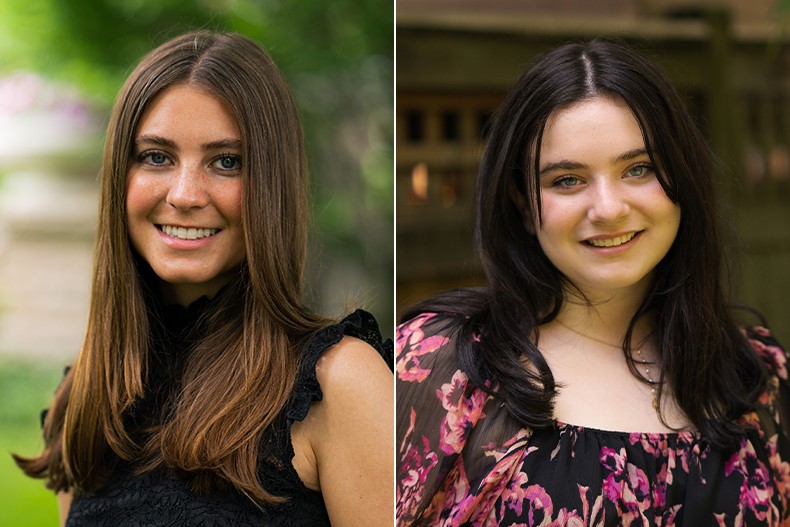
Two local teens win national recognition
Recipients of the annual Diller Teen Tikkun Olam Awards
Read more -

Celebrating six young award winners cultivating the community
Introducing young adult award winners
Read more
The following statement was issued by Rabbi Seth Winberg, executive director of Metro Chicago Hillel, and Nicole Constantine, Loyola student and JUF’s Israel Education Center intern.
On Sunday, March 8, students at Loyola University announced a new BDS campaign, demanding the university divest from companies that do business with Israel. Since last year’s similar campaign, tensions have run high at Loyola.
BDS is on the agenda of Loyola’s student government because the student government includes a number of BDS activists. This same student government spent thousands of dollars to support the legal defense of Rasmea Odeh, a terrorist convicted in the US and Israel who was responsible for the murder of two Israeli college students in 1969.
BDS supporters are today’s radicals; the students most likely to run and vote in student government elections. They use student government to gain a voice, but their BDS agenda still lacks institutional support. The president of Loyola University, Father Michael Garanzini, has made it clear that “[Loyola] would not be interested in taking up this issue” because the BDS movement “is one-sided, it is focused on one party in a complex multinational situation.” We are confident that regardless of how the student government votes, Loyola is not going to divest from Israel. Loyola further stands out as one of the only universities in the country to put the pro-BDS group Students for Justice in Palestine (SJP) on probation (after they disrupted a Hillel event).
We are vigorously fighting this campaign through education and dialogue on campus. We also believe that “winning” and “beating” a BDS campaign is about much more than student government votes. We win when we strengthen students’ connections to Israel and their Jewish identities. This is where Hillel excels. We are registering students to go on Birthright, to study, and to intern in Israel. Starting next fall we will be taking a special group of Chicago student leaders — Jews and non-Jews — to visit Israel.
The BDS proposal was announced hours before Loyola Hillel’s first “Jewish Awareness Week.” Loyola Jewish students, who are few in number, decided not to let BDS derail their week of rich educational and cultural events. We are proud of their leadership.
BDS campaigns are increasing and frequent; if it doesn’t pass this year, it’s likely to rear its head next year. This is why we are committed to increasing programming that inspires students and makes them feel proud to be Jewish and committed to Israel.
Other stories
-
Local campus administrators convene on hate speech, bias
JUF and ADL brought together 17 student safety, diversity and inclusion and student affairs administrators and Hillel representatives from various Illinois campuses to discusses issues of hate speech and bias.
Read more -
Engaging students about Israel on campus
Too often we hear about difficulties facing Jewish college students on Illinois campus, but to focus solely on the politics gives only one piece of the complex narrative that is Jewish life on campus.
Read more -
Hillel International launches fellowship initiative to train young Jewish professionals
The Springboard Fellowship will train cohorts of young Jewish professionals in highly-valued skillsets and place them at local Hillel campuses for two years.
Read more
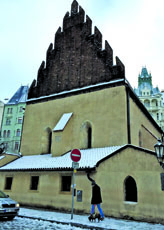
This winter, my family and I visited Prague, home to the 16th century legend about the Golem, a mythical figure who protects the Jewish community. Like other major East European cities, Prague faced, in a cruel historic irony on the Golem legend, the twin evils of the 20th century: both Nazism and Communism. The anti-Semitic and murderous totalitarian regimes of Germany and the Soviet Union wreaked havoc on the Jewish communities of Eastern Europe, leaving “a hole in the heart of the world,” as chronicled by Jonathan Kaufman in his riveting book about the Jewish experience in those countries before and after the war.
The unspeakable crimes of the Nazis was brought home to us, in vivid and shocking display, when on a bitterly cold and dreary winter day, we toured Theresienstadt, a Nazi labor camp 40 kilometers north of Prague, where approximately 70,000 Jews brutally died either because of the horrendous conditions in the camp or because they were eventually transported to Auschwitz, where they met their ultimate demise.
Not only were an unimaginable number of Jewish lives tragically lost, but also in the aftermath of the Nazi (and subsequent Communist) takeover of Czechoslovakia, the country’s vibrant Jewish religious and cultural life was almost completely wiped out, with many synagogues either abandoned or destroyed.
However, while touring the old Jewish quarter of Prague, which has become a popular tourist attraction since the Velvet Revolution and downfall of Communism, I happened upon a fascinating and inspiring story, with a Chicago connection. In defiance of the Nazis’ nefarious plan to extinguish Jewish life throughout Europe, I learned that in 1942, a group of dedicated Prague Jews helped save approximately 1,600 Torah scrolls from synagogues in Prague and the surrounding Jewish communities by bringing them to the Central Jewish Museum (and later housing them in the Michle Synagogue outside of Prague), where they were cared for, so it was hoped they could be used again after the war.
Tragically, all but two of the curators of the museum, who repaired and carefully documented where each scroll had originally come from, died in the Holocaust, meaning that their sacred work could no longer continue. But in another miraculous twist of fate, in 1963, Rabbi Harold Reinhart of London’s Westminster Synagogue, with the help of a number of prominent British philanthropists, purchased the scrolls from the Communist Czechoslovakian government and brought them to London, where they have been preserved. The full story about the Prague scrolls is told in Philippa Bernard’s powerful book, Out of the Midst of Fire.
Today, through the Czech Memorial Scrolls Trust, many of the scrolls are on permanent loan throughout the world. Besides making them available to Jewish communities around the globe, in 2008, the Trust opened a museum in the Westminster complex containing a poignant exhibit about the rescue of the scrolls.
When I returned home, I discovered that 20 synagogues in the Chicago area are using them for religious and/or educational purposes. I was especially delighted to hear that one of the scrolls, originally from Prossnitz, located east of Prague, where a number of leading Jewish intellectuals had lived, is at my own synagogue, North Suburban Synagogue Beth El in Highland Park. They are also being used at both Camp Ramah and Olin-Sang-Ruby Union Institute. There is also one on display at the Illinois Holocaust Museum and Education Center in Skokie.
Besides their religious, educational, and cultural significance, the saved Torah scrolls help celebrate the revival of Jewish life in Prague, albeit on a dramatically smaller scale than before the war, as well as help enrich our own community by connecting us to our past and giving us hope for the future. This remarkable achievement also gives concrete expression to the renowned Jewish philosopher Emil Fackenheim’s famous dictum of not providing any posthumous victories to Hitler. Indeed, this uplifting tale, while not new, is today a positive antidote to the latest troubling developments in Europe, particularly in France, where extremism and anti-Semitism have reared their ugly heads again.
Richard D. Zelin, Ph.D. was Associate Director of the Jewish Community Relations Council of the Jewish United Fund and Director of the Chicago Conference on Soviet Jewry.
Other stories
-
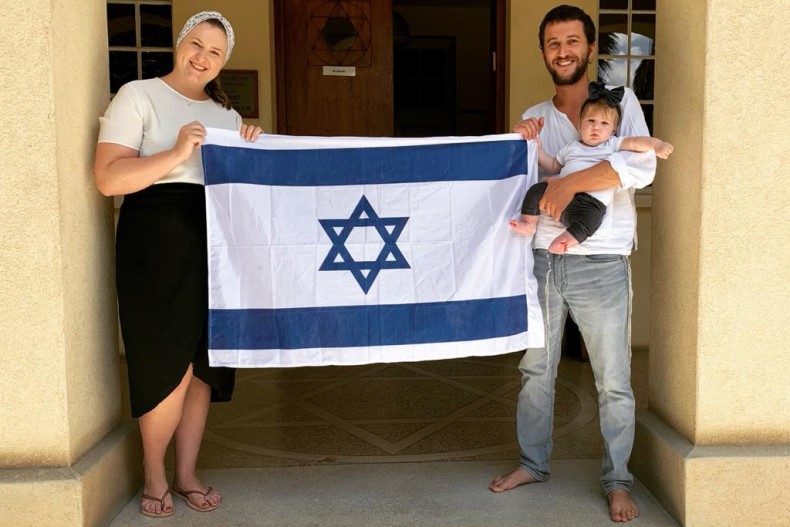
Chicago to Israel to Kenya
A family’s story of living Jewishly on three continents Michelle Cohen World May 28, 2021 Avital, Tzofia, and Netanel Kaszovitz outside their home in Nairobi on Yom HaAtzmaut. When Avital Kaszovitz prepared to be a Modern Orthodox shlicha (emissary) to the Jewish community in Ke
Read more -
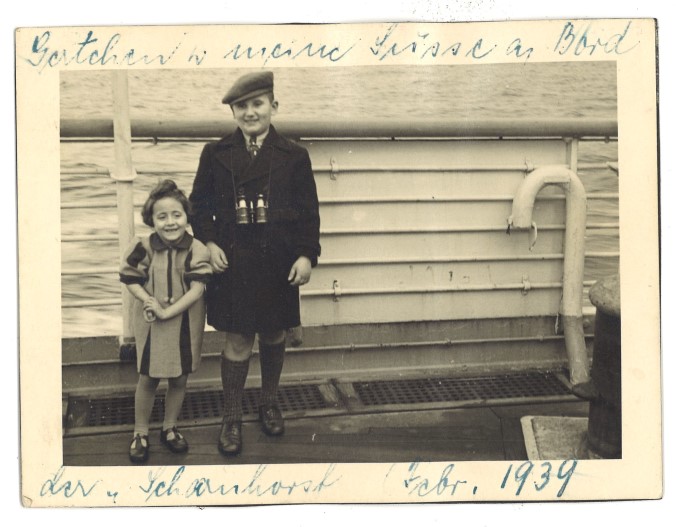
New exhibit spotlights the experience of ‘Shanghai Jews’
Explore a new Illinois Holocaust Museum and Education Center exhibit
Read more -
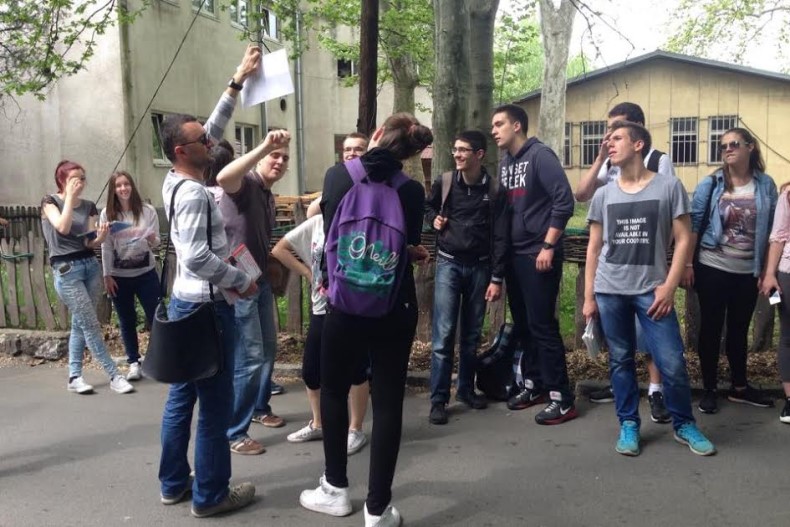
Europe’s brave new teachers of the Holocaust
Teaching the Holocaust in the modern era has its difficulties and rewards.
Read more

This year, to celebrate Israel’s 67th anniversary, the community will once again come together for one big, festive event filled with music, family fun, and Israeli spirit! This year’s celebration is co-chaired by Jennifer and Joshua Herz.
JUF’s 2015 Israel Solidarity Day will be held Sunday, May 3 from 12 p.m. to 4 p.m.* at Ravinia Festival, 200 Ravinia Park Road in Highland Park.
Event highlights include:
• The Walk with Israel – a three mile demonstration of community solidarity
• Exciting all-day entertainment featuring The Jamman Drum Circle, The Maccabeats and Hadag Nachash;
• Food for purchase and activities for all ages
Dollars raised at this year’s Israel Solidarity Day will support Israel Children’s Zone, a program that provides services to some of Israel’s most vulnerable children. Located in JUF’s Partnership Region, Israel Children’s Zone engages disadvantaged students in educational, psychological, and social intervention programs that enrich their lives and provide them the support they need
to succeed.
Volunteers are needed for a variety of important positions to make the event run smoothly. All Israel Solidarity Day volunteers will receive a complimentary TOV T-shirt. For more information on volunteer roles, shift times or to sign up to volunteer, call the JUF TOV Volunteer Network at (312) 444-2850 or visit www.juf.org/ISD.
The day’s main programming will take place in the afternoon to accommodate congregational schools. Register online to participate, volunteer and/or donate at www.juf.org/ISD.
Registration will open at 10:30 a.m. for a young family (children ages 5 and under) concert featuring Rick Recht at 11 a.m.
Other stories
-
Meet Andrew S. Hochberg, 2021 Julius Rosenwald Memorial Award recipient
Celebrate Andy Hochberg at the virtual Annual Meeting on Sept. 14
Read more -
Two local teens win national recognition
Recipients of the annual Diller Teen Tikkun Olam Awards
Read more -
Celebrating six young award winners cultivating the community
Introducing young adult award winners
Read more
Goltz will be teaching the new Certificate in Entrepreneurial Leadership: Lessons in Small Business Development, offered by Spertus Institute for Jewish Learning and Leadership as part of its newly launched Center for Jewish Leadership.
During the nine sessions, Goltz will be challenging participants to understand the elements essential to business success and to assess their own abilities to determine if they have what it takes to be an entrepreneur. He is the author of The Street Smart Entrepreneur: 133 Tough Lessons I Learned the Hard Way (now translated into three languages).Sessions meet Monday evenings from 6 to 8 p.m. at Spertus Institute. The cost is $2,500 for the nine sessions including all materials. Scholarships are available for professionals working at nonprofit institutions. Enrollment is limited. To apply or for more information, those interested should visit spertus.edu/entrepreneur or contact Tal Rosen, director of the Center for Jewish Leadership, at [email protected].
Spertus Institute for Jewish Learning and Leadership is a partner in serving our community, supported by the JUF/Jewish Federation of Metropolitan Chicago.The Center for Jewish Leadership is supported by generous grants from the Crown Family and an anonymous foundation. We are grateful for their support.
Other stories
-
Meet Andrew S. Hochberg, 2021 Julius Rosenwald Memorial Award recipient
Celebrate Andy Hochberg at the virtual Annual Meeting on Sept. 14
Read more -
Two local teens win national recognition
Recipients of the annual Diller Teen Tikkun Olam Awards
Read more -
Celebrating six young award winners cultivating the community
Introducing young adult award winners
Read more
Illinoisans were horrified late last year by a Chicago Tribune exposé about abuses in state-funded residential treatment centers.
Moving beyond outrage to education and advocacy, Jewish Child and Family Services (JCFS) CEO Howard Sitron invited the state legislators quoted in the news accounts to dine with teens and young adults in a state-funded JCFS group home, one not featured by the Tribune . The purpose was to show a group home that is effective in serving those in need and, through its successes, saves the state additional costs in the future.
Legislators usually learn about social issues and state programs through committee hearings organized around presentations from experts. But confidentiality rules limit what can be shared. Encouraging frank dialogue over sharing a meal is the approach which JCFS uses in orienting its new board members. Steve Ballis, a JCFS Board member and past chair, remembers when he participated in a mock Seder with residents. It was only at the JCFS home , said one of the residents, that I learned I could make a mistake and not be beaten . Ballis realized then that there is much to be learned by directly engaging with the teens in the safety of their own JFCS group home.
That’s why in January, State Sens. Julie Morrison (Deerfield) and Heather Steans (Chicago) and State Representative Sara Feigenholtz (Chicago) had dinner, each at a different JCFS group home.
They were briefed first about the five JCFS homes which provide a 24 hour supportive environment to girls and boys, aged 12-21. All of the residents have a history of abuse, neglect, or chronic family conflict and are wards of the State of Illinois. JCFS uses the Sanctuary Model, a well-documented program of positive outcomes for residential programs for children with emotional, behavioral, and psychiatric disorders which prevent them from successfully living within a foster care family. Within a stable, secure environment, the residents learn that their voices are valued and how to express value for the voices of others; something that most other children learn growing up within their families.
Those at dinner with Sen. Steans talked openly about “running” when they get angry because that has always been their response to trouble. At JCFS, the focus is on helping residents develop alternative skills for dealing with negative feelings. There is discussion in Springfield about an alternative approach which would give agencies permission to lock up children and young adults at night to prevent run-aways. While locked doors may be appropriate in some limited situations, Margaret Vimont, COO of JCFS and experienced child welfare professional, feels that progress is measured by the girls expressing their feelings through talking with a friend or staff or exercising or other adaptive coping skills, not by reducing the runaway rate through physical barriers. Most of the residents successfully graduate from the JCFS group homes to foster homes, back to their families or to independent living.
“I was moved by the bond between staff and boys,” said Morrison, recently appointed Chair of the Senate Subcommittee on the Department of Children and Family Services, “It was a place of security where together staff and residents create a home.”
In the debriefing session with the legislators that followed dinner, Ballis linked our commitment as Jews to repairing the world to the work done in transforming the lives of these young people. But, he cautioned, this success is only made possible because of the generosity of the Jewish community and because of the dedication of our staff. Many other agencies, which relied solely on governmental funding to cover all costs, are now scrambling, in the face of shrinking revenues, to maintain quality of service.
Governor Rauner has nominated George Sheldon to become the next DCFS director. Sheldon is highly respected as a strong reformer who turned around Florida’s Children and Families Department. JCFS looks forward to partnering with Director Sheldon and plans to extend a dinner invitation at the group homes to him as soon as he is appointed.
“We are very encouraged that Governor Rauner has nominated George Sheldon to become the next DCFS director, “said Emily Muskovitz Sweet, executive director of JUF’s Jewish Community Relations Council and Government Affairs. ” Mr. Sheldon is highly respected as a strong reformer who turned around Florida’s Children and Families Department. JCFS looks forward to partnering with Director Sheldon and plans to extend a dinner invitation at the group homes to him as soon as he is appointed.”
Suzanne Strassberger is Associate Vice President of Government & Community Partnerships for the Jewish United Fund of Metropolitan Chicago.
Other stories
-
Meet Andrew S. Hochberg, 2021 Julius Rosenwald Memorial Award recipient
Celebrate Andy Hochberg at the virtual Annual Meeting on Sept. 14
Read more -
Two local teens win national recognition
Recipients of the annual Diller Teen Tikkun Olam Awards
Read more -
Celebrating six young award winners cultivating the community
Introducing young adult award winners
Read more
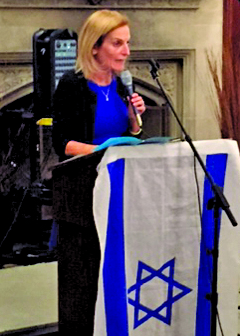
ETHS students.
Other stories
-
Meet Andrew S. Hochberg, 2021 Julius Rosenwald Memorial Award recipient
Celebrate Andy Hochberg at the virtual Annual Meeting on Sept. 14
Read more -
Two local teens win national recognition
Recipients of the annual Diller Teen Tikkun Olam Awards
Read more -
Celebrating six young award winners cultivating the community
Introducing young adult award winners
Read more
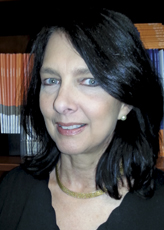
Lisa Shuger Hublitz has been hired to lead JUF’s Washington, D.C. Office.
“After conducting an extensive national search, we are thrilled that this critical JUF senior position is being filled by a professional of Lisa’s talents” said David Golder, chair of the Jewish Federation’s Government Affairs Committee.
From funding human services to tax policies impacting charitable giving from Homeland Security grants to legislation affecting the US-Israel relationship and Iran sanctions, JUF’s national policy agenda impacts Jewish lives here and overseas.
“The Jewish Federation’s government affairs agenda is an institutional priority, and JUF’s Washington, D.C. office plays an essential role in this work,” said Emily Sweet, JUF’s Executive Director of JCRC and Government Affairs. Established in 1980, the office is dedicated to strengthening relationships with federal elected and appointed officials, organizing annual missions-this year April 28-29-and ensuring that the interests of not only Chicago’s Federation, but all seven Jewish Federations in Illinois are protected and advanced.
A longtime resident of the Washington, D.C. area, Shuger Hublitz has held several prominent positions including serving as the Director of Public Policy for the National Campaign to Prevent Teen and Unplanned Pregnancy, the Washington Director for Hebrew Immigrant Aid Society (HIAS), the Deputy Director of the Washington Office for the City of New York under Mayor Giuliani, and the Associate Director of the Washington, D.C. Office for the Council of Jewish Federations (now JFNA).
“In all of these positions, Lisa demonstrated her subject matter expertise on pressing issues and established a proven track record in advocating on behalf of the interests of nonprofits,” said David Goldenberg, Federal Vice Chair of the Government Affairs Committee.
“These are challenging times and the JUF has an important role to play in the national discourse around these critical issues,” Shuger Hublitz said. “I look forward to partnering with such a talented group of volunteer leaders and agency professionals and build upon the many successes of the Washington D.C. office.”
Other stories
-
Meet Andrew S. Hochberg, 2021 Julius Rosenwald Memorial Award recipient
Celebrate Andy Hochberg at the virtual Annual Meeting on Sept. 14
Read more -
Two local teens win national recognition
Recipients of the annual Diller Teen Tikkun Olam Awards
Read more -
Celebrating six young award winners cultivating the community
Introducing young adult award winners
Read more
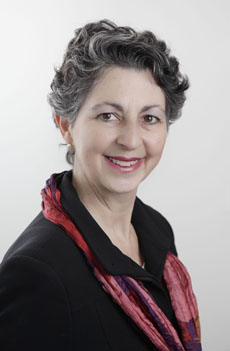
In response to the intensification of antisemitic violence in Europe, Spertus Institute for Jewish Learning and Leadership will host Deidre Berger, Director of the Berlin office of the American Jewish Committee (AJC), for a talk titled The Upsurge of Antisemitism and The Future of Jewish Life in Europe. Berger will speak at 7 p.m. Sunday, March 15 about the challenges, concerns, and future options for Jews living in Europe today.
Deidre Berger is a frequent lecturer on European security affairs and issues of extremism. Prior to joining AJC Berlin’s Ramer Institute for German-Jewish Relations, Ms. Berger was a foreign correspondent who reported on European affairs for NPR, Deutsche Welle (the German international radio and television service), the Jewish Telegraphic Agency, and the Christian Science Monitor.
Ms. Berger’s Chicago talk comes after deadly attacks in Paris in January and Copenhagen in February. These attacks follow a year marked by an escalation of violent antisemitism, including killings in May at the Jewish Museum in Brussels. The situation is fueling deep concern within Jewish communities, particularly amongst young people, about their future in Europe.
Despite condemnations by top leaders, there has been little political action taken in response to the rise in antisemitic violence. In a recent post for The Times of Israel, Deidre Berger, in talking about security for Jews in Germany and all of Europe, said, “Neither the German parliament nor the European Parliament has launched a discussion of the situation of Jews in the wake of traumatizing terror attacks on Jewish citizens in the heart of Europe. There have been no action plans or task forces constituted to develop comprehensive security plans to ensure the vitality and permanence of Jewish life in Europe.”
“A democracy is only as strong as the weakest of its links, and European Jewry at the moment is vulnerable,” she continued. “It is time for coordinated measures to fight anti-Semitism to be placed at the top of the political agenda, and for civil society to do all in its power to ensure that Jewish life is not in danger.”
Tickets for the March 15 talk are $18 for the public and $8 for students. Tickets can be purchased online at spertus.edu or by phone at 312.322.1773. Spertus Institute is located at 610 S. Michigan Avenue. Discount parking is available for $11 at the Essex Inn (two blocks south).
Other stories
-
Meet Andrew S. Hochberg, 2021 Julius Rosenwald Memorial Award recipient
Celebrate Andy Hochberg at the virtual Annual Meeting on Sept. 14
Read more -
Two local teens win national recognition
Recipients of the annual Diller Teen Tikkun Olam Awards
Read more -
Celebrating six young award winners cultivating the community
Introducing young adult award winners
Read more
Government Affairs Committee introduces State Sen. Chris Nybo and State Rep. Will Guzzardi
MARA RUFF
With a new governor comes adjustment and transition. As seasoned legislators adapt to the new administration and state agencies undergo transformation, newly seated General Assembly members are also transitioning into their new roles.
On Feb.17, the day before Governor Bruce Rauner announced his proposed budget, State Sen. Chris Nybo and State Rep. Will Guzzardi joined the Jewish Federation’s Government Affairs Committee to talk about their first few weeks in office, priorities for this legislative session, and overall goals while in office.
Laura Prohov, vice president of community services at CJE SeniorLife, also spoke to members on what the impact on agency employees would be if the Illinois Department of Human Services were to run out of child care funds this March.
On the eve of the state budget reveal, Nybo said this year legislators will be forced to make very tough choices. “It is important to keep in mind that this is a process and not just a snapshot in time,” he said
Although in his first full Senate term, Nybo is not brand new to Springfield. He previously served a brief time in the Illinois House from 2011-2013. As part of the process, Nybo encouraged advocates and concerned community members to communicate with him on proposed legislation to better advance their positions. “These are as much our problems as they are yours,” he said.
This year, Nybo views creating new revenue as the biggest challenge facing the General Assembly. The question, he says, will be how much authority legislators will allow the governor to shift revenue streams in order to close the gaps on others.
Sworn in just a few weeks ago, Guzzardi, 28, is not only the youngest member of the General Assembly, but also the newest member of the Jewish caucus. He talked about what ought to happen and the responsibilities of the Jewish community given the current climate.
Knowing it will be a much different budget when it passes, Guzzardi spoke about the community’s responsibility to shape the state budget as an outwardly looking value, mentioning the biblical phrase “Justice, Justice you shall pursue.” He said it is time to get serious about revenue.
Closing the discussion, Prohov spoke on the impending lack of funding for child care needs and its potential effect on health and human agencies. CJE SeniorLife serves 2,300 older adults each year and provides services for 1,500 elders in the community. The issue of state child care funding, she said, is a very relevant issue to the daily function of CJE, even though CJE is not in the business of providing child care.
To qualify for funding, a person needs to make 185 percent of the poverty level or $29,000 a year. At CJE, 452 employees fit that profile. If people cannot come to work because they can no longer afford child care, it paralyzes the work force.
The state needs to find $1.5 billion to sustain the child care program. Nybo and Guzzardi both support the program, but suggest different approaches to closing the gap. Nybo mentioned moving money from specialized funds to the DHS, while Guzzardi would like to see the program saved through other means, rather than taking money from other needed services such as mental health.
Other stories
-
Meet Andrew S. Hochberg, 2021 Julius Rosenwald Memorial Award recipient
Celebrate Andy Hochberg at the virtual Annual Meeting on Sept. 14
Read more -
Two local teens win national recognition
Recipients of the annual Diller Teen Tikkun Olam Awards
Read more -
Celebrating six young award winners cultivating the community
Introducing young adult award winners
Read more