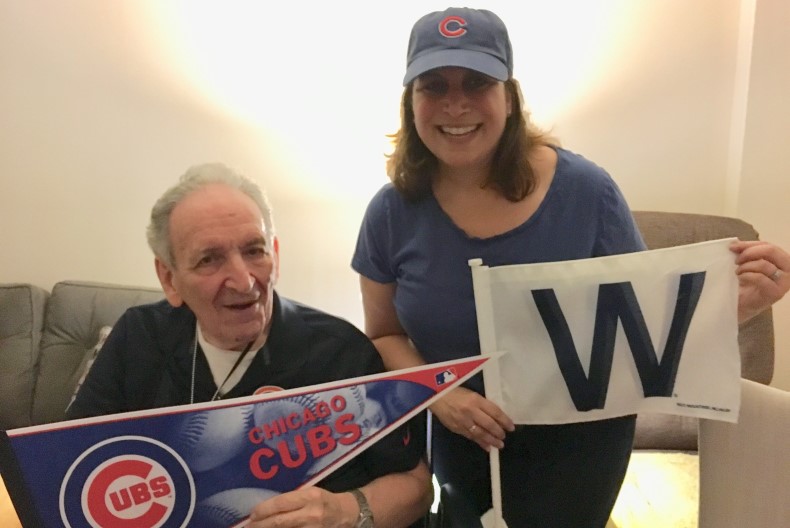
The nursing home was dark and quiet, its yellow-gold hallways empty. It was 9 p.m. on a Wednesday, and the residents were already in bed. But a light from the TV glowed out of my dad Lou’s room. He sat in front of it in his wheelchair, his eyes fixated on the screen.
Tonight was Game 7 of the 2016 World Series, and the Cubs were poised to win it all for the first time in 108 years. As much as I didn’t want to spend this historic night in a quiet suburban nursing home, my sister Caryn and I couldn’t let Dad watch alone — or worse, not realize the game was even on.
Lou’s dementia had worsened in recent years. Once a busy and beloved pharmacist, he was now 30 pounds lighter, white-haired, frail, and unable to even stand without two aides lifting him out of his wheelchair. But his mind was even more far gone. Sometimes he’d forget our names or where he was, roaming the nursing home halls late at night, telling the staff he needed to get to the drugstore.
Yet, Lou was happy. Everyone, including his caregivers, describe him as “so nice,” and he is. He rarely gets mad or complains, even when we were obnoxious teenagers, and never asks for much. Two of his greatest joys in life are his family and the Cubs.
All his life, Lou has been a die-hard Cubs fan. He raised us to love the team, too, insisting we cheer for them even during the years they were truly terrible. He took us to games at Wrigley Field, teaching us the nuances of baseball and showing us how to keep score on the paper game cards. We chomped on peanuts and threw the shells on the ground, feeling rebellious.
By the time the Cubs made it to the World Series in 2016, Lou’s dementia prevented him from following the team’s incredible season. Occasionally, he’d mention the name of a current player or display his Rain Man-like ability to recite Cubs stats. But most of the time, when we’d watch a game together, he seemed confused by what he was watching. He recognized the Cubs and Wrigley Field, but it’s as if he was thinking, where is Ron Santo? Or Rick Reuschel? Or Andre Dawson?
Caryn and I left our husbands and kids somewhat resentfully that night, wanting to watch the game in the comfort of our living rooms, and wondering if Dad would even remember that we were there.
It turned out to be the best decision we’ve ever made, and a night we’ll cherish for the rest of our lives.
As baseball fans know, Game 7 of the 2016 World Series was a thrilling, edge-of-your-seat game with multiple lead changes, extra innings and quirky plays.
After midnight, when the Cubs finally clinched, Caryn and I screamed loud enough to wake the whole nursing home. We formed a little circle around Lou’s wheelchair, locked arms, and jumped up and down in a long, celebratory group hug. All we said for the next 20 minutes was, “THE CUBS WON THE WORLD SERIES! I CAN’T BELIEVE IT! OH MY GOD!!” At some point, I dropped to my knees in disbelief.
I’m not sure Lou 100 percent grasped what had just happened. But when I looked over at him, the look on his face was something I’ll never forget. He had a huge smile, eyes full of tears, and he was holding his little white “W” victory flag we gave him. Maybe for just a few minutes, or maybe just for a few seconds, Lou understood that his beloved Cubs were the champions. He knew that his daughters were there celebrating with him.
That scene of pure joy is something I will carry with me always.
What I’ve learned from going through this dementia journey with my dad is that it’s no longer about experiences — it’s about moments. We can’t really do much with him these days, because of his physical and mental limitations. But glimpses of the pre-dementia Lou will sometimes appear.
He’ll sing a line from an old song and smile, or tell a dumb joke and laugh at his own humor. To our astonishment, he can still recite every word to the Hebrew prayers and songs he learned as an Orthodox boy growing up on Chicago’s West Side. At my son’s bar mitzvah last year, Lou proudly handed him the tallit (prayer shawl) he wore during his own bar mitzvah 67 years earlier.
Dementia has stolen so much from Lou, including his ability to follow the Cubs. Still, whenever he sees the Cubs on TV, he fixates on the screen just like he did on that fateful night in 2016. And somewhere inside his disappearing mind, I know the joy resurfaces.
Jamie Bartosch is an award-winning journalist and freelance writer who lives in Arlington Heights. See more of her stories at JamieBartosch.com.
Other stories
-
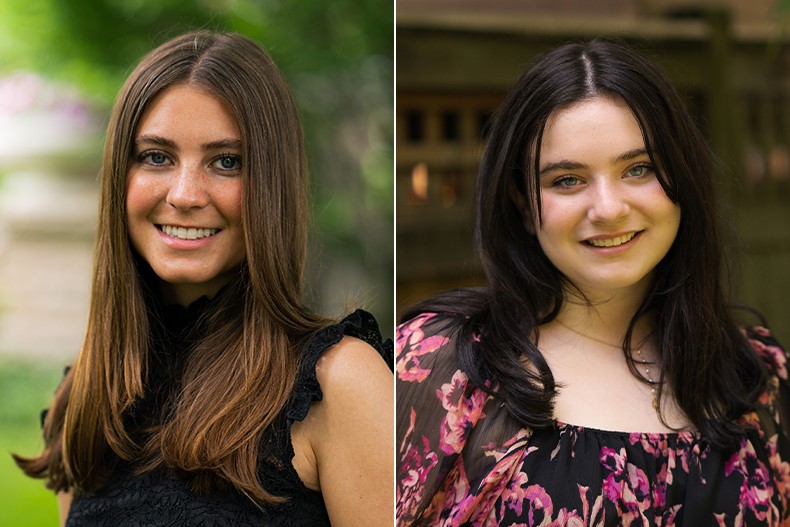
Two local teens win national recognition
Recipients of the annual Diller Teen Tikkun Olam Awards
Read more -
Celebrating six young award winners cultivating the community
Introducing young adult award winners
Read more -
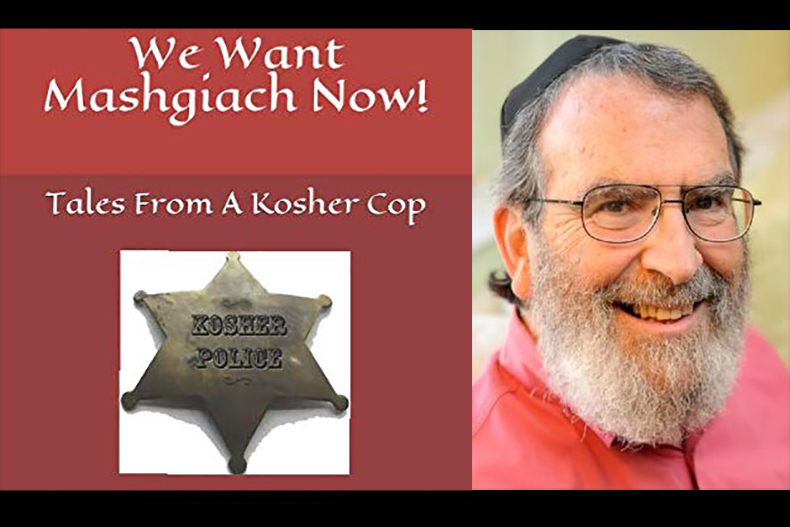
A “mashgiach” is an expert consultant in all things kosher, who patrols kitchens to ensure that Jewish dietary laws are observed. Or, as mashgiach Allan Lieberman calls himself: a “kosher cop.”
His new book about his experiences, We Want Mashgiach Now!, reveals just what this work involves; as the tone of the title implies, he finds the funny in every situation. The Chicago native moved to Florida in 2008, where he began his mashgiach work in 2012.
Many of his kitchen co-workers mistake him for a rabbi, and it is often difficult for him to convince them otherwise. In one case, he was escorted to the head chef by one of the cooks. “Why’d you bring him over?” the chef asked.
“You said to get the rabbi!” the cook answered.
“No,” laughed the chef, “I said to get the ribeye!”
Lieberman’s first work in the kosher world came by selling ads for the publications of the Chicago Rabbinical Council, which provides kosher certification. He later became a sales manager for a kosher pizza place. But, when his sleuthing caught a caterer fudging the rules, he found his new calling.
While reality shows set in kitchens can made the work seem glamorous, much of his time is spent, he says, “looking for bugs, or parts of them, in lettuce.”
As an Orthodox Jew, Lieberman was familiar with many of the laws of kashrut, as the field is known. But he still needed a two-week crash course to be certified as a mashgiach .
Since then, he says, he has worked in some 35 kitchens-in restaurants, catering companies, grade schools, and nursing homes.
His family friendly new book is not his first foray into the arts, either. For decades, Lieberman was a novelty songwriter and singer. His many albums of Jewish musical humor include the award-winning children’s Chanukah album titled It’s the Miracle . Lieberman’s songs have been included in compilations alongside those of Mickey Katz and Allan Sherman.
While touring with his music, Lieberman began to write down “actual events, and what I learned from them. I turned them into short stories, but I wanted each one to have a lesson.”
He kept journaling as he transitioned into his kosher certification career, ultimately collecting these anecdotes for his new memoir. “These stories are all based on true events,” he said, but insists this volume is “not an exposé.”
Occasionally, this kosher cop has had to police not just the kitchen staff but party-goers themselves. One guest brought a non-kosher bottle of champagne to a wedding at a synagogue. She insisted it be opened, but Lieberman was able to get her to compromise.
“I found some plastic cups,” he said. “They had their toast, but in the shul’s parking lot.”
‘We Want Mashgiach Now! Tales from a Kosher Cop’can be ordered from www.koshercop.net and Amazon.
Other stories
-
Two local teens win national recognition
Recipients of the annual Diller Teen Tikkun Olam Awards
Read more -
Celebrating six young award winners cultivating the community
Introducing young adult award winners
Read more -
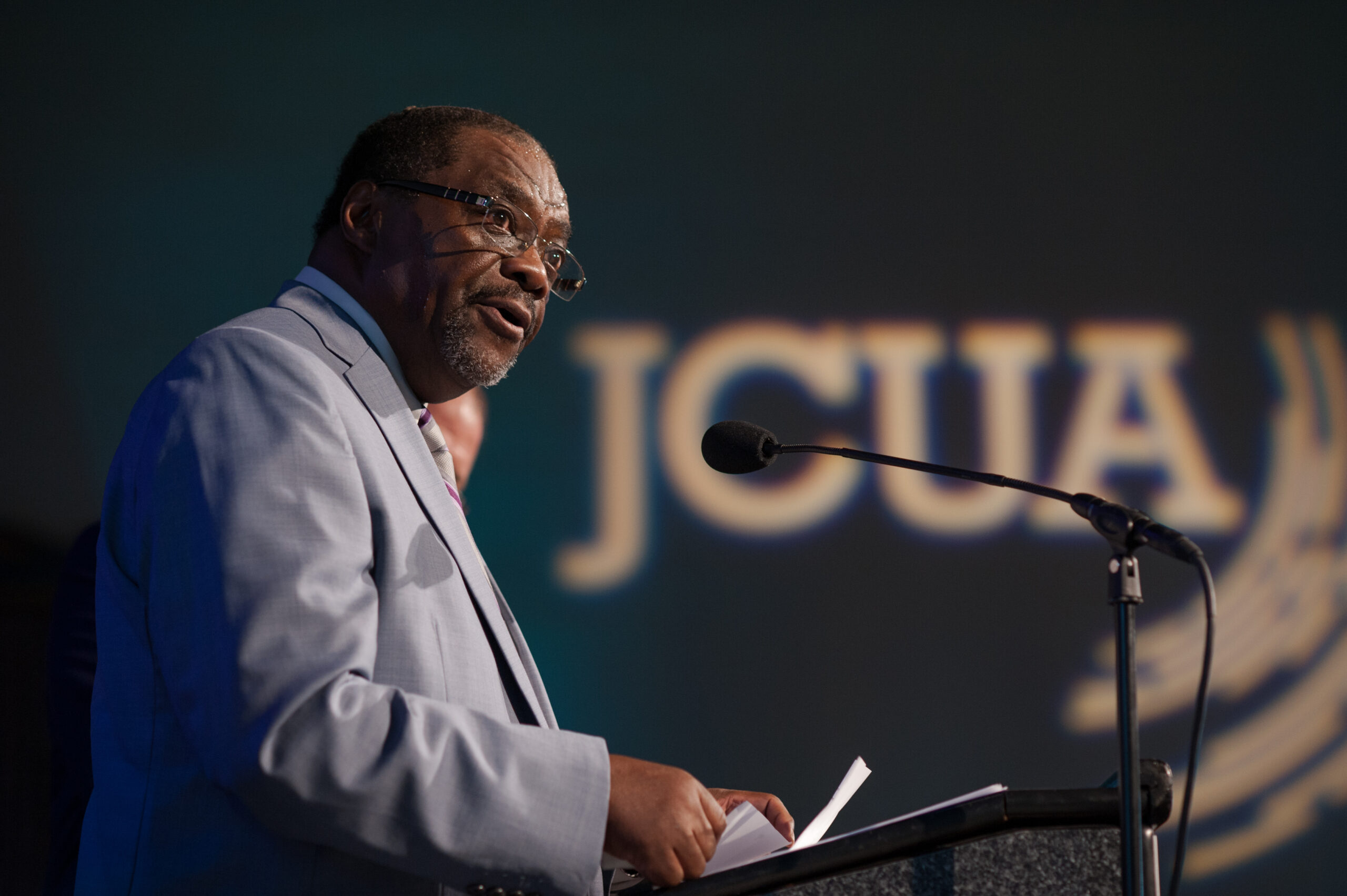
“Rabbi Capers Funnye is a force of personality and a force of spirit. He has worked tirelessly to dispel the notion that all Jews look the same.”
These are the words of Judy Levey, executive director of the Jewish Council on Urban Affairs (JCUA). The organization is honoring Funnye for his “inspiring leadership and lifelong dedication to social justice” at its 2019 Acts of Change Dinner on June 13.
Funnye has served for 38 years as the rabbi for Chicago’s Beth Shalom B’nai Zaken Ethiopian Hebrew Congregation. He is the first African American rabbi to participate in JUF’s Chicago Board of Rabbis.
In the 1990s, Funnye joined the JCUA staff as a director of administration; by 1995, he joined the JCUA board, serving as its president from 2016-2018.
One success, of which Funnye said he was “most proud,” was “partnering with community organizations [like JCUA] to bring Level 1 Trauma Center back to the University of Chicago, in the spring of 2018.”
“For over four decades, Rabbi Capers Funnye has worked to promote a vibrant and equitable Jewish community,” Levey said. “Through this work, he lives out the prophetic calling to pursue justice. He has dedicated his life to building bridges within, and beyond, the Jewish community.”
In 2015, Funnye was installed as the Chief Rabbi of the International Israelite Board of Rabbis, which serves Jewish communities in the U.S., the Caribbean, and five African nations. Funnye also has been active in both Be’Chol Lashon and Kulanu, two organizations that promote awareness of less-connected Jewish communities across the world.
In his early work with JCUA, Funnye helped the organization become more inclusive of African American Jews, working with Rabbi Herman Schaalman. “There became an awareness within the Jewish community of Jewish African Americans who sought to be part of the Jewish people,” Funnye said.
Funnye has worked to prove how diverse the Jewish community really is; he was instrumental in creating JCUA’s Jewish People of Color Caucus.
Funnye noted that Jews are uniquely situated to community work. “Jews are an interstitial people,” he said. “We pass between the parts but connect them. This work leads to understanding, to being able to talk, and reason together.”
About the recent attack at the Chabad Synagogue in Poway and the rise in antisemitism, Funnye said, “We felt it. If it happens to any Jewish community, it affects us. Our response should be to fill the synagogues…We can never let racism, antisemitism, Islamophobia escape whenever they appear. We stand up, as Jews, against any individual or force.”
Regarding his latest honor, Funnye said he is “extremely humbled, to the utmost. I am just trying to do my part, my duty, as a Jew.”
To register for the Acts of Change Dinner, to be held at Galleria Marchetti, 825 W. Erie Street, visit jcua.org . For ticket or sponsorship information, contact Jill Katz, Director of Development , at (312) 663-0960 or [email protected].
Other stories
-
Two local teens win national recognition
Recipients of the annual Diller Teen Tikkun Olam Awards
Read more -
Celebrating six young award winners cultivating the community
Introducing young adult award winners
Read more -
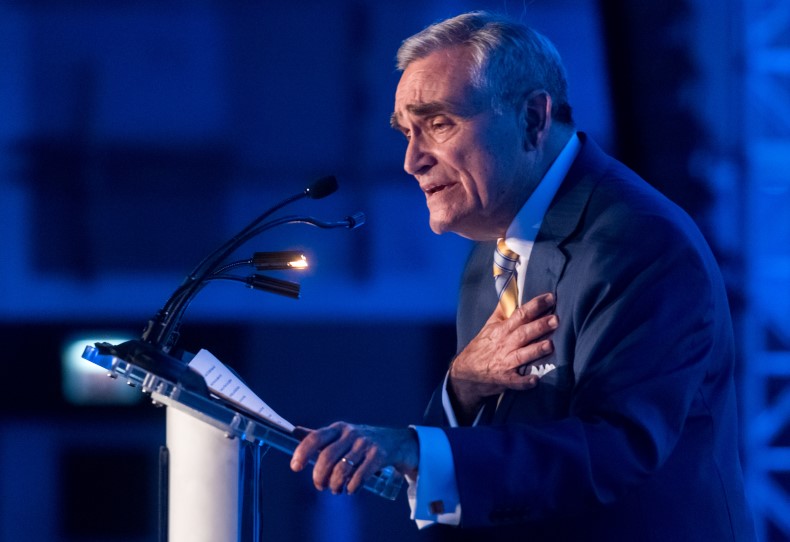
Chicago pays homage to Dr. Steven B. Nasatir for almost 50 years of service
His wife Carolyn Rosenberg described her husband best: “The weight of the Jewish world was and is on your shoulders,” she said, “and you embraced that.”
That’s why on Wednesday evening, more than 1,300 people paid tribute to her husband — Dr. Steven B. Nasatir — at a special community event in his honor. Lester Crown served as Honorary Event Chair, while Michael H. Zaransky was Event Chair of the gathering.
Nasatir has served as the President of the Jewish United Fund/Jewish Federation of Chicago for a remarkable four decades and first came to work for JUF almost 50 years ago.
Dignitaries, elected officials, friends, and family spoke at the celebration.
New Chicago Mayor Lori Lightfoot equated the good work of Nasatir and JUF with her vision for the City of Chicago. “Dr. Nasatir’s life and his work personify what it means to give back, to be a public servant, to understand the importance of community, and to reach out to those most in need, she said. “Dr. Nasatir’s incredible work on behalf of the Jewish community worldwide really exemplifies the importance of that common thread that runs through all religions — that we must be our brother’s keepers.”
Since Nasatir has been President, more than eight billion dollars has been raised to help people in need, to strengthen community connections, and to create Jewish experiences in Chicago, in Israel, and around the world.
One such family helped by Nasatir’s work is violinist David Lisker, who was born in Russia and moved to Chicago at age 4 with his family through the assistance of JUF and HIAS Chicago. He and his father, pianist Art Lisker, wowed the crowd with a father/son musical interlude during the gathering.
On July 1, Nasatir will step into the new role of Executive Vice Chairman, where he will devote significant attention to the Fund for the Future, helping to accelerate Jewish Chicago’s investment in Next generation outreach and engagement. To date, $52.6 million dollars has been raised for the Fund for the Future, chaired by Bill Silverstein.
“For thousands of years, Jews have been worrying about passing on our Torah, our traditions, and values to the next generation. Despite all the pain, dislocation, change, and loss, here we are ,” Nasatir said. “Does anyone doubt we are an eternal people — and the inheritors of a rich tradition? It is our responsibility to do all that we can, to work as hard as we can with families, young parents, synagogues, schools, centers, and camps so as to provide outstanding Jewish learning experiences for life within the setting of the greater American society we live in. I’m optimistic we will succeed.”
In a palpable display of l’dor vador — from generation to generation — Nasatir’s two young granddaughters led the crowd in Hamotzi .
Nasatir’s tenure has been a testament to the power of the collective responsibility of the Jewish people even though, as he said, individuality over the collective seems to be more en vogue these days. “Jewish history teaches us when the people are divided and weak and without power, great harm can occur. But when we are united and strong, there are no challenges too large; no evil we cannot defeat. There isn’t anything the Jewish people can’t do if we are together. Together for good. Together forever.”
For Nasatir’s full remarks, click here .
Other stories
-
Two local teens win national recognition
Recipients of the annual Diller Teen Tikkun Olam Awards
Read more -
Celebrating six young award winners cultivating the community
Introducing young adult award winners
Read more -
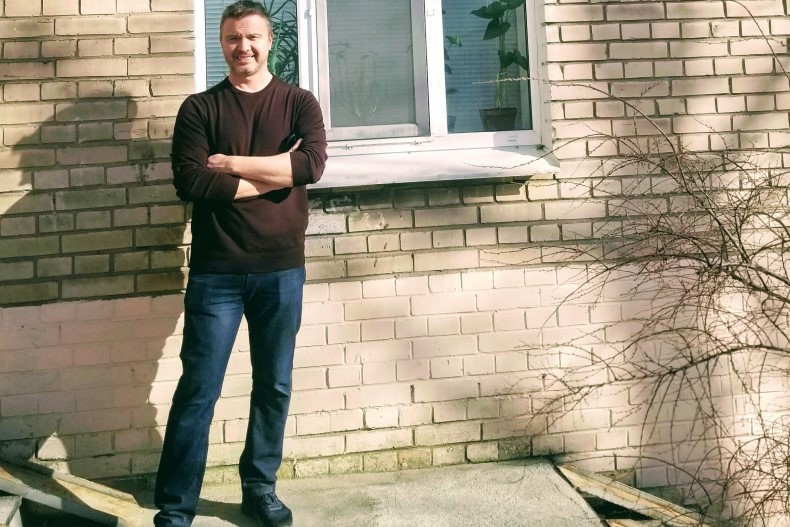
In April, I came back to my hometown of St. Petersburg, Russia–a place my parents fled 30 years ago as Jewish refugees. A place I never imagined returning to, especially as part of a Jewish philanthropic organization like the Jewish Federations of North America (JFNA).
My family left the Soviet Union as the communist leviathan was convulsing in its death throes. I was 11, and all I remembered were the long lines at stores, glum people, and never-ending greyness outside.
My last memory was of a Soviet immigration officer at the airport who checked our belongings for illegal contraband, muttering through his teeth “get out, traitors!”
We moved to Israel, where the kids ironically referred to me and my brother, Nikita, as “the Russian kids.” We became bronzed Sabras within a few years, and had nothing but vague memories about our Russian past. We graduated the tihon (high school) and served in the Israel Defense Forces.
After that, we came to Chicago to complete our academic studies. I got married, founded a business, and started a family. As my kids grew and their friends started asking why their Dad didn’t speak like an American, they told them that Papa was an immigrant from Israel. I didn’t feel I had to correct them. After all, I never considered Russia to be anything more than the place of my birth.
However, when the JFNA Young Leadership Cabinet announced that its 2019 Mission would be to St. Petersburg and Tbilisi, capital of the former Soviet state of Georgia, I had to go. I don’t know why, I just had to.
So right before Passover, we landed in St. Petersburg. As I passed through Pulkovo Airport, memories flashed before my eyes. Family of four, leaving all our relatives and familiar surroundings, all our possessions in four suitcases, hastily heading for a strange country we saw only on postcards. Our own personal Exodus.
En route to our hotel, I recognized spots from my childhood–Nevskii Avenue, where we shopped for holiday presents; the Hermitage Museum, where I spent so many hours at my mom’s insistence; and St. Isaac’s Cathedral, where my brother, Nik, and I fed the pigeons.
On our last day, I invited my Cabinet fellow, Sam Fisch, to accompany me to my childhood neighborhood. We got off the subway and made the short walk to the building where I grew up.
I slowed down and looked around. Memories flooded me. Here was the ice cream shop, now a KFC. The library where I checked out my first book, now a supermarket. The park where I skated, now a parking lot. The bike shop, now a bank.
I remembered the small boy, Sasha, who played on these streets 30 years ago. I looked at my hands to make sure these still were the hands of a grown-up. They were; they were just shaking a bit.
As I saw the doorway of my building, I felt a lump in my throat. I looked at Sam. He understood where I was emotionally and just nodded.
Someone walked out and held the door for us to come in. I entered and saw the elevator. Without a second of hesitation, I hit the button for the 8th floor and took a deep breath as we slowly clattered upward. I walked right down the hallway that led to our apartment. Should I knock? Who lives there now? What does the apartment look like now?
I looked at Sam, shrugging my shoulders for guidance. He nodded again. With sweaty palms and a lump in my throat, I knocked. No answer. I knocked again–harder this time. No answer. Harder. No answer. Harder again.
I finally stopped. I was panting hard as tears rolled down my cheeks. Maybe it’s better that way. Some doors are better off never opened…
On our way back to the hotel, I thought of this Russian Jewish boy’s full circle. I left my hometown as a refugee. American Jewish organizations (HIAS, the American Jewish Joint Distribution Committee, and JFNA) helped settle us in Israel. Now, 30 years later, I was back with JFNA, checking on the well-being and Yiddishkeit of my Jewish brethren.
It felt like a perfect fulfillment of Torah’s principle that has guided Jews around the world to help other Jews– Am Yisrael arevim ze la ze , all the people of Israel are responsible for one another.
Alex Turik is a JUF Board Member, founder of JUF’s Russian Jewish Division, and member of the JFNA Young Leadership Cabinet.
Other stories
-
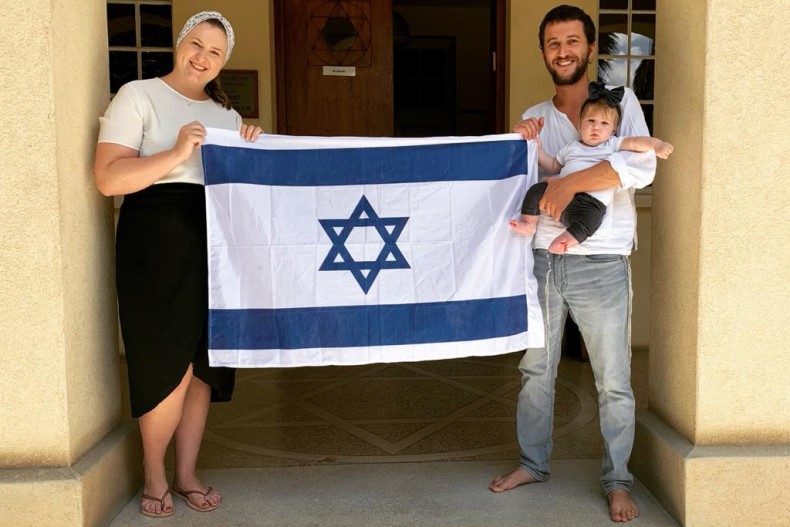
Chicago to Israel to Kenya
A family’s story of living Jewishly on three continents Michelle Cohen World May 28, 2021 Avital, Tzofia, and Netanel Kaszovitz outside their home in Nairobi on Yom HaAtzmaut. When Avital Kaszovitz prepared to be a Modern Orthodox shlicha (emissary) to the Jewish community in Ke
Read more -
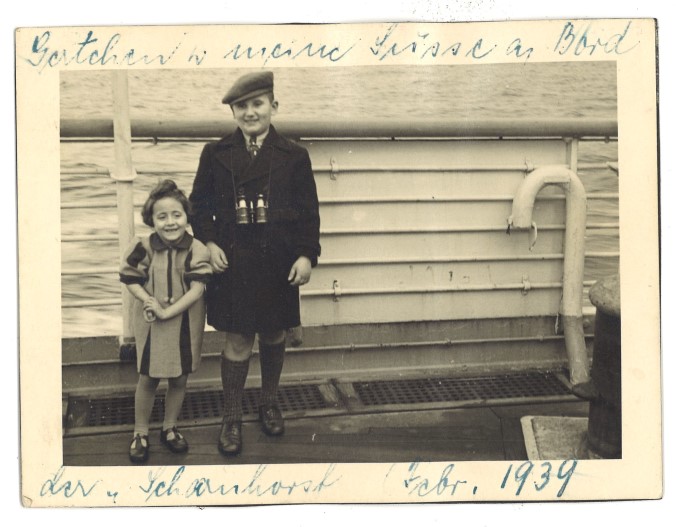
New exhibit spotlights the experience of ‘Shanghai Jews’
Explore a new Illinois Holocaust Museum and Education Center exhibit
Read more -
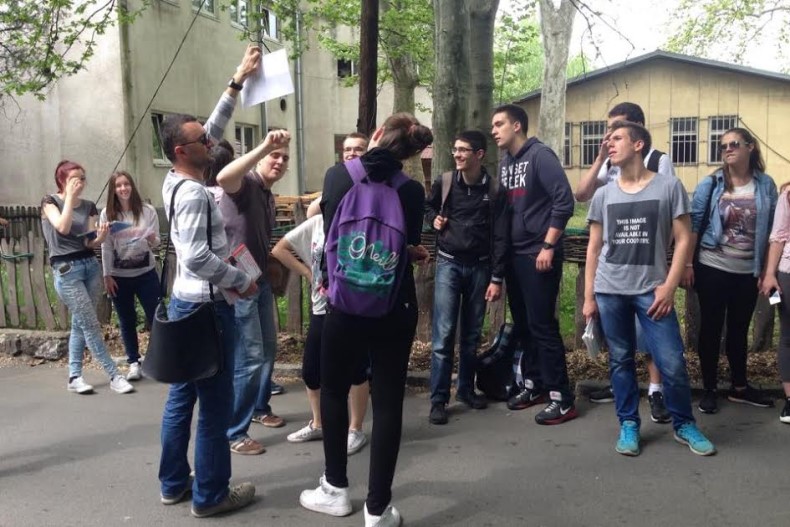
Europe’s brave new teachers of the Holocaust
Teaching the Holocaust in the modern era has its difficulties and rewards.
Read more

Idina Menzel joins local women in raising their voices at Spring Event
Michelle Cohen
“Why is there a separate Women’s Division?” asked Shari Greco Reiches, a JUF Women’s Board member and one of the chairs of JUF Women’s Division Spring Event 2019. “Women get the job done,” she answered, “and Jewish women really get the job done!”
Greco Reiches and her fellow chair–Brooke Kauf, representing JUF Young Women’s Board, along with co-chairs Shelley Radner, representing the JUF Women’s City Council, and Lauren Grossman, representing the JUF Young Women’s City Council–brought together a crowd of 1,000 women in May to celebrate the power of women’s voices.
“It is our voices coming together as a community that make a difference,” Greco Reiches concluded before passing the microphone to Deborah Schrayer Karmin, JUF Women’s Board Vice President, Campaign, and sister of the event moderator, Liz Schrayer.
“You share your voice by performing actions of deed and generosity,” Karmin said, describing how the philanthropy of the women in the room influenced the world. From assisting Holocaust survivors in Europe to supporting Pittsburgh and Poway after recent antisemitic attacks, the event attendees were instrumental in providing JUF with the means to help thousands of people in need.
Karmin, who led the JUF Spring Event campaign with Amy Yeager Hausman and Liz Kulakofsky from the JUF Young Women’s Board, described how “our voices can change the world.”
Then, she introduced Hannah Goldwin, a high school freshman faced with a dilemma when a close friend told a racist and antisemitic joke. As she told her story, there was an audible gasp from the audience. Goldwin thanked her parents and JUF for helping her find her voice to educate her friend.
Attendees enjoyed lunch followed by a “frozen” dessert celebrating guest of honor Idina Menzel’s role as Queen Elsa in Disney’s Frozen . Then, Menzel took the stage along with moderator Liz Schrayer for a conversation about life, Judaism, and womanhood.
Their conversation started at the beginning of Menzel’s illustrious singing and acting career–as a 15-year-old, she sang at weddings and bar and bat mitzvahs. During this time, she began to learn about the power of her voice: “You can sing someone else’s song, but what you bring to it”–a connection Menzel called her “vocal identity”–helped her discover the strength of her passion and a path forward in the musical world.
Her voice also serves as a crucial part of her identity. “Ever since I was a little girl, I knew I had a voice, and I have a hard time identifying who I am if I’m not singing,” said Menzel, who also spoke of her life as a wife and mother of a 9-year-old son.
Menzel, who described herself as a “Jewish girl from Long Island,” said her Jewish connection is “something I wrestle with all the time.” Although she did not have a bat mitzvah as a teenager, she found a part of the Tanakh that held special meaning for her–the story of Deborah–and chanted these verses in flawless Haftorah trope.
Menzel enjoys the stories of powerful female characters like Deborah as well as Elphaba from Wicked and Elsa from Frozen , who she has portrayed during her career. “The characters teach me about myself,” she said, especially in their journeys to find a way to express their voices. “Isn’t that what we all struggle with?” She wondered aloud. “How big, loud, and ferocious can we be?”
She also described this power in the bonds between women, including the “supportive and generous” women in her life. The force of women “standing behind each other, lifting each other up” was visible in the banquet hall captivated by her words before she launched into a gorgeous rendition of “For Good,” a song from Wicked .
The final words she sang encapsulated the meaning of the event: “Because I knew you, I have been changed for good.”
Other stories
-
Two local teens win national recognition
Recipients of the annual Diller Teen Tikkun Olam Awards
Read more -
Celebrating six young award winners cultivating the community
Introducing young adult award winners
Read more -
Jewish grandparents survey turns a lens on passing on Judaism to the next generation
Michelle Cohen
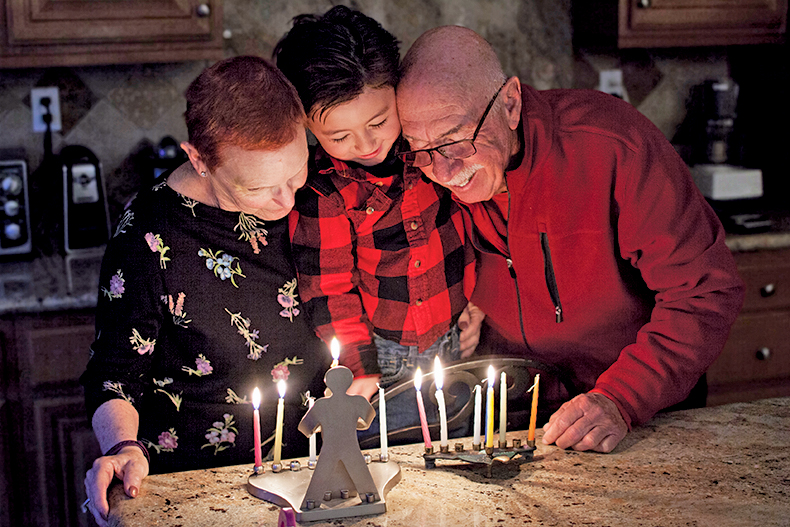
“The happiest role I have ever had is being a Jewish grandmother,” said one participant in the Jewish Grandparents Network’s new national survey, but the role is far from simple. While some grandparents described celebrating religious holidays and observances together, others focused more on secular occasions. Still others told of the “excruciatingly painful” separation from their grandchildren for a wide range of reasons.
With such a varied range of relationships between grandparents and grandchildren, how can local organizations meet the needs of Jewish grandparents?
By conducting the “first-ever, large-scale quantitative study of Jewish grandparents,” the Jewish Grandparents Network aimed to understand the motivations of American Jewish grandparents age 55-80 and find ways to help them pass on traditions in whatever ways they choose.
The survey, which was conducted this past winter, included 7,802 participants, including 557 grandparents living in the JUF service area. After providing basic demographic information, the grandparents answered questions about their beliefs and attitudes towards passing down religion and their relationship with their grandchildren. Through multivariate segmentation, a statistical process that creates distinct groups of people, five types of Jewish grandparents emerged.
The first type, Joyful Transmitters , believe that grandparenting is a joyful experience-“one of the highlights of my life,” according to one participant-and enjoy transmitting Jewish values and traditions to their grandchildren. In their personal lives, they are more likely to be synagogue-goers and attend adult learning classes. 20 percent of grandparents in the national study fell into this group, while in the JUF catchment area, 40 percent were classified as Joyful Transmitters.
The next type, Faithful Transmitters , encourage their grandchildren to have a strong connection to Judaism and marry Jews. “Our goal is to give our grandson as much exposure to Judaism and Jewish life as possible… we are planting a seed,” one participant said. Like the Joyful Transmitters, they are likely to be synagogue-goers and attend adult learning classes, and their children are more likely to be in-married. This group encompassed 16 percent of the national sample and 36 percent of the JUF sample.
Engaged Secularists , who represent 23 percent of the national sample and 10 percent of the JUF sample, are very engaged in their grandchildren’s lives. They feel respected as grandparents and enjoy time together, but do not model Jewish faith and practice for their grandchildren. “While I hope that my granddaughter will choose a life connected to Judaism,” said one participant, “it is most important to me that she be a mensch, moral and happy and contributing to society, rather than pursue any particular religious tradition.”
Wistful Outsiders are grandparents who want to be more involved in their grandchildren’s lives but are unable due to distance or complications within the family. “I live on the opposite coast from my grandchildren and don’t see them very often. This hurts me deeply,” said one participant. This group represents 20 percent of the national sample and 10 percent of the JUF sample.
Finally, Non-Transmitters , who represent 20 percent of the national sample and 3 percent of the JUF sample, are the least likely to want to transmit Jewish values and traditions to their grandchildren. Many feel that being Jewish is not an important part of their lives. This group is the most likely to have intermarried children, and over a quarter are intermarried themselves. One participant spoke of her grandchildren: “Though the children are being raised Christian, I have no problem with that as they are being raised with excellent ethics and we have great relationships.”
Most grandparents are interested in passing on Jewish values such as leading an ethical life, giving tzedakah , learning about the Holocaust and their family’s story, and doing tikkun olam. Specific traditions tend to be most important to Joyful Transmitters and Faithful Transmitters, including teaching Jewish customs and traditions, celebrating holidays, learning the story of the Jewish people, experiencing art and culture, reading Hebrew, experiencing a connection to Israel, and eating Jewish foods.
Joyful Transmitters and Faithful Transmitters are also likeliest to have participated in holiday rituals, including celebrating Chanukah and Passover, eating High Holiday meals, and attending services together, and also secular activities like celebrating national holidays and traveling on family vacations.
While the Transmitter types share more religious occasions like Shabbat and Passover with their grandchildren, Engaged Secularists and Wistful Outsiders often share less religious holidays. All of the grandparent segments enjoy secular activities like spending time together on birthdays, national holidays, and everyday occasions like sharing a book together.
In consideration of the differences between these grandparent groups, the survey concludes that there are three meaningful ways to enhance the connections they are looking for. For Joyful and Faithful Transmitters, creative new ways to celebrate Jewish traditions, including Jewish programming at synagogues and JCCs are optimal. Engaged Secularists could benefit from learning how to infuse Jewish values into everyday activities and celebrations of secular holidays. Wistful Outsiders are in need of tools to help them navigate family dynamics and technology to help them communicate with their grandchildren from a distance.
In the coming months, JUF will use the survey information to learn, ask more questions, and provide more opportunities for grandparents and grandchildren.
Other stories
-
Two local teens win national recognition
Recipients of the annual Diller Teen Tikkun Olam Awards
Read more -
Celebrating six young award winners cultivating the community
Introducing young adult award winners
Read more -
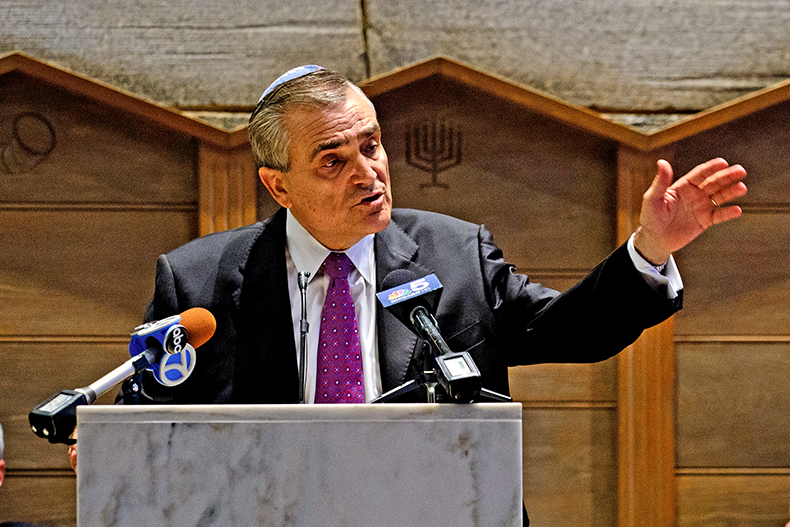
As Jewish Chicago celebrates Steve’s 40-year tenure as President of the Jewish United Fund/Jewish Federation of Chicago, JUF News took the opportunity to speak with Steve about some of the extraordinary moments in modern Jewish history to which he has born witness-and in which he often played a pivotal role.
In the 1980s and 1990s, Steve played a critical part in galvanizing Chicago’s Jewish community-and federations nationwide-in the fight to free Soviet Jewry. He believes this was a defining moment for the U.S. Jewish community, which he holds as one of the highlights of his life’s work:
I remember Freedom Sunday, that day in November 1987, when hundreds of thousands of us rallied on the National Mall to demand freedom for Soviet Jews. Gorbachev was meeting with Reagan. It was an extraordinary moment of peoplehood; of solidarity. Then, of course, the gates came swinging open, followed by the Operation Exodus program and the resettlement of more than a million Jews in Israel, which really transformed Israeli society. And we resettled over 30,000 in Chicago, which was an extraordinary thing.
This is perhaps the most significant event since the establishment of the State of Israel. For 20 years or more, we’ve been talking about freeing Soviet Jewry and moving Soviet Jewry, and suddenly the opportunity really is now.
None of us who were participants in that were heroes; we had a U.S. passport. We could leave any time we wanted. The heroes were the people we visited-God, they were such heroes!-Slepak and Lerner and Yosef Begun and Ida Nudel, the Sharanskys, and many more. These were the former Jews of silence taking on the mighty and evil empire.
If you don’t think we’re an eternal people, take a half a step back and think about this period of 50 years and what was achieved!
Steve also was a key architect of Operation Moses in 1984, which rescued 8,000 Ethiopian Jews to Israel, and of Operation Solomon in 1991, the dramatic aliyah of some 14,000 Ethiopian Jews in 18 hours. His first fact-finding mission to Ethiopia was eye-opening:
We’re in Gondar and we go to our first village. And they had a Torah and they were very proud of that Torah. I go to look at the Torah and I glance and-of course-it’s exactly at the point that I left off [in shul] three days ago. That was my first kind of “aha” moment. It grabbed me in a pretty significant, visceral way: These really are our brothers and sisters.
And in one such village, I had my second “aha” moment. A young man came up to me and spoke in English, good English actually. After the introductions, he very quickly asked me: “Is it safe for me to go?” So I’m in Gondar, and this-I don’t know, 20-year-old person, maybe?-is asking me a question and my answer, actually, may make a difference in terms of the life and death of this individual. I never had had a moment like that, ever. It was kind of searing in terms of the importance of the work that we all do. We say we’re all brothers and sisters and Klal Yisrael Arevim Zeh b’Zeh , but there’s true reality to it. In this case, it was very personal.
Throughout his 40-year tenure, Steve has been driven by an unwavering belief that the American Jewish community must remain committed to collective responsibility-and that the Jewish Federation system at its best is the ultimate vehicle for collective action:
Chicago by itself doesn’t make a Soviet Jewry Movement. Chicago by itself doesn’t move 120,000 Ethiopian Jews. We have to do that with all of Israel. This Federation has to be that table where all Jews feel comfortable-Reform, Orthodox, right wing, left wing, in the middle-we all must be a part of this. If we, God forbid, were to lose a piece of that big table, we’d be losing a lot. It’s important to have that kind of diversity, that kind of engagement together. So I’d like to think that that concept of collective activity, of doing things together, of doing on behalf of a collective, is deeply rooted in the Chicago experience.
An ardent Zionist, Steve believes the identity and destiny of the Jewish people worldwide is inextricably linked to Israel-and he strives to ensure that younger generations do not take Israel for granted:
I never get over the wonder of having a Jewish country, the Land of Israel-and what an extraordinary place it is. What a source of pride, in terms of the achievements that they’ve made-and made while grappling with challenges that no country in the world really has faced, much less with the sense of democracy and ethics that Israel has.
I also understand that for people of generations behind me, who have never known a time where there wasn’t an Israel, that maybe to a certain extent, Israel is taken for granted. I think it’s very, very dangerous to ever take the existence of Israel for granted. Very, very dangerous. And I think it’s incumbent upon us to teach our children that it’s okay to disagree-you know, you don’t have to be in agreement on everything; are you in agreement with everything that our government does? Of course not. And that’s why it’s a democracy and there’s a free flow of ideas-but don’t take it for granted. And do understand how unique and privileged we are to live at this time and how important it is for the future of the Jewish people for Israel to always be strong and secure. I think those are key lessons and that’s why we do spend all this time, effort, and money in helping young people get to Israel at an early age.
Looking to the future, Steve is excited about the opportunities that lie at the intersection of Jewish life and American life:
This concept of normative American activities, as being a vehicle for holding tight to our Jewish particularism, is an important one. I think in America, it’s normative for children to go to preschool before they begin formal education. So, for the Jewish community, how do we make sure that preschool is a Jewish preschool? I think it’s normative in America for young people to go to day camp and overnight camp; so okay, then the community has to help make that experience a Jewish experience. Go to Jewish day camp. Go to Jewish overnight camp.
It’s normative to study a language. Spanish and French and German and Chinese, they’re all wonderful languages and they should be studied. Hebrew is a really good language, too. And we need to do more in terms of the study of Hebrew language.
It’s normative for kids in college during break to go off with each other to exotic places. The Birthright concept is genius in terms of taking that period of time and making sure that that place that they go to is the land of Israel.
Throughout his tenure, Nasatir has pioneered outreach opportunities that meet community members where they are, literally and figuratively, to engage them in Jewish life and strengthen Jewish identity in the Next Generation:
Our engagement platform starts when the baby is born and JUF reaches out through JBaby Chicago, really welcoming in the young couple into a Jewish community. I’m proud of our PJ Library program, which is a national program, and I’m delighted to say we’re the largest in the country. The JUF Right Start program that offers gift vouchers for Jewish preschool, the Ta’am Israel program that sends 8th-graders on peer trips to Israel-these are pioneering outreach efforts.
Our 19 Jewish Day Schools play a key role, as do our informal education programs-Birthright and MASA and Onward Israel and Jewish day camp and Jewish overnight camp.
We’re a unique Federation, in that we are responsible for the Hillels of Illinois. Those are our buildings. Those are our professional colleagues that run them. We thought that Jewish life on college campus was so important that we wanted to be fully in control of doing all that we could do to make that fulfilling. The new concept of Base Hillel, of people coming together with rabbinic leadership to engage Jewish life-to come to a welcoming house for Shabbat and learning and studying-we’ve had great success with all of these engagement concepts and many more. We’re going to be doing even more in these areas.
We needed to shift our thinking so the issue isn’t what do we have to do in order for the young person to do something Jewish? It should be just the opposite. That Jewish life is so rich, so open, that why wouldn’t every Jewish child take advantage of these extraordinary opportunities?
At a time when some Jews lament the challenges of change, Steve Nasatir is optimistic. He continues to see America as a land of opportunity for Jewish renaissance:
You can tell from the way I’m talking, I continue to be really excited about outreach to the next generation because I think this is the future. It’ll be different, but it’ll be good. It’s going to be very good. If we fulfill our obligations and responsibilities now, there will continue to be a vibrant, strong, and engaging Jewish community in Chicago.
Other stories
-
Two local teens win national recognition
Recipients of the annual Diller Teen Tikkun Olam Awards
Read more -
Celebrating six young award winners cultivating the community
Introducing young adult award winners
Read more -
Northwestern’s Symposium on Water in Israel and the Middle East Encourages Cross-Campus Partnerships
Eden Lichterman
For people in many parts of the world, accessing water is as simple as switching on the kitchen faucet or adjusting the shower temperature. Yet, for the four billion people worldwide who live in water-scarce regions for at least one month of the year, drought remains a pressing issue threatening prosperity. Reduced access to water brings health dilemmas, an unstable economy, environmental and social injustices and, most prevalently, international conflict.
As hotbeds of political disagreement with limited water reservoirs, the nations of the Middle East use water shortage as “a tool of oppression, a tool of control,” says Sera Young, assistant professor of anthropology and global health at Northwestern University. Seeking to further explore these issues, Professor Young, along with Aaron Packman, the director of the Northwestern Center for Water Research, and Elie Rekhess, associate director for Israel Studies at the Crown Family Center for Jewish and Israel Studies, hosted the fourth annual Symposium on Water in Israel and the Middle East at Northwestern’s Evanston campus in early May.
The day-long event included remarks from Yaakov Garb, a senior lecturer at Ben Gurion University, Yochanan Kushnir, a research professor at Columbia University’s Earth observatory, Jim Yoon, a water security and resilience scientist, and Giora Shaham, the director of The Government Authority for Water and Sewage, Israel. Discussing both the severity of water insecurity and potential solutions, these speakers shed light on the importance of working toward reform in regulating transboundary bodies of water.
“Policymakers have recognized that [water] will end up being as important as questions about Jerusalem or refugees or borders of security,” says Sara Hirschhorn, visiting assistant professor in Israel Studies at Northwestern. “It’s definitely part of this whole matrix of what a peace process or two-state solution might look.” In contrast to the political debate focused on current situations, those working on water policy imagine solutions jetting 50 years into the future.
While water scarcity pits nations against each other, Rekhess hopes to transform the limited resource into a force of unity. “We are continuously looking for ways to see how water can bring together the people rather than divide,” he says.
To instill that sense of camaraderie, in 2016, the Northwestern Center for Water Research and the Crown Family Center for Jewish and Israel Studies partnered to create a class exploring water in Israel and the Middle East. “The Israel Studies Group … has been trying for the last four years to expand the traditional definition of the Israel Studies discipline and go beyond the classic teaching of history, politics [and] conflict,” Rekhess says, adding, “We therefore stretched our interests to technology and science.” Riding the success of the class, the two departments expanded the partnership to include a trip where 12 Northwestern students travel to Israel and learn about both ancient water systems and current technology.
As a historian seeking to learn more about the technical aspects of Israel studies, Hirschhorn adds that this collaboration shows “the relevance of the country the size of New Jersey to larger debates that are happening on campus, major trends in all of our disciplines and trying to integrate Israel into that conversation.”
Within Northwestern’s community, the symposium, class and annual Israel trip emphasize the importance of creating relationships across academic fields and expose students to global issues. “[The conversation] touches upon one of the most urgent global environmental crises that the world faces today, namely water scarcity,” Rekhess says.
Other stories
-
Two local teens win national recognition
Recipients of the annual Diller Teen Tikkun Olam Awards
Read more -
Celebrating six young award winners cultivating the community
Introducing young adult award winners
Read more -
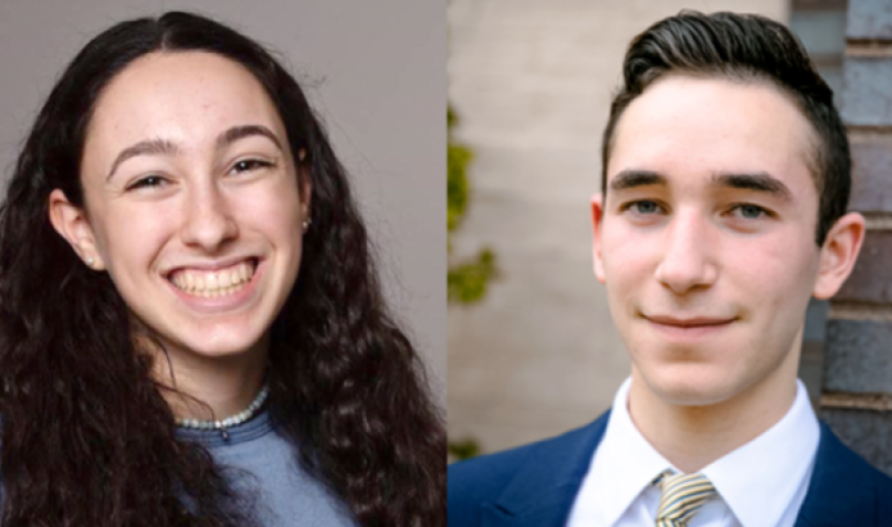
Two Chicago-area students — Elitsa Reinglass Sklar and Jacob Miller — are among the 26 high school juniors from across North America named to this year’s cohort of Bronfman Fellows .
The program includes five weeks of study and travel in Israel, followed by a year of programming centered around pluralism, social responsibility and Jewish texts.
Sklar, a Rochelle Zell Jewish High School student who attended Solomon Schechter and Hillel Torah North Suburban day schools, is a leader in the Rochelle Zell Student Council, Israel Club, math team, and varsity basketball squad. She is part of JUF’s Write On for Israel advocacy training program; was involved in Voices, JUF’s teen foundation; and recently was named to Springboard’s 18 Under 18 list of outstanding Chicago-area teens. She also is a member of Skokie Valley Agudath Jacob Synagogue and the Kol Sasson partnership minyan.
Miller, of Ida Crown Jewish Academy and, previously, Hillel Torah North Suburban, has published several research papers on particle physics in collaboration with other high school students and the U.S. Department of Energy; edits Ida Crown’s school newspaper; is on the Mathletes and cross country teams; and recently spoke on a panel at AIPAC’s Policy Conference. He also is in JUF’s Write On for Israel program. In eighth grade, he won the International Diaspora Bible Competition.
Other stories
-
Two local teens win national recognition
Recipients of the annual Diller Teen Tikkun Olam Awards
Read more -
Celebrating six young award winners cultivating the community
Introducing young adult award winners
Read more -