When the JUF Community Legal Clinic (JCLS) began nearly a decade ago, Miles Cohen signed up to become one of its first volunteer attorneys. Cohen had a special family connection to the clinic, as his father had volunteered for an earlier iteration of the organization, then called the American Jewish Congress Legal Clinic.
Cohen will be honored for his work with JCLS on May 30. An associate at Scott and Kraus, he will receive the Distinguished Service award from Chicago Volunteer Legal Services at its fundraiser, their annual comedian-emceed “Law & Disorder” event.
JCLS provides individuals and families in need of legal services with access to free legal representation. JCLS is staffed entirely by volunteer attorneys who generously donate their time each year to provide pro bono legal assistance in civil matters.
“I knew that I had a special volunteer who would do whatever he could for our clients-and he has proven me right,” said Sima Blue, JCLS’ program coordinator.
“To sense that you are helping ease a volunteer client’s burden or helping put what has felt like an overwhelming problem into perspective is very fulfilling,” said Cohen who also chaired JCLS’ legal clinic for two years. “Volunteering helps keep me in touch with ‘justice for all.’ I’m also inspired by those who give their time and energy to help others, without seeking [recognition].”
“Miles fights doggedly for those who are aggrieved and have been treated unfairly,” added Blue. “He is thorough, thoughtful, and exceedingly kind. His clients trust him implicitly and speak very fondly of him, even years later. Many still keep in touch for his sage advice.”
The JUF Lawyers’ Division is recruiting attorneys of all practice areas to volunteer for JCLS. For more information, contact JUF Community Legal Services at (847) 568-1525 or [email protected].
Other stories
-
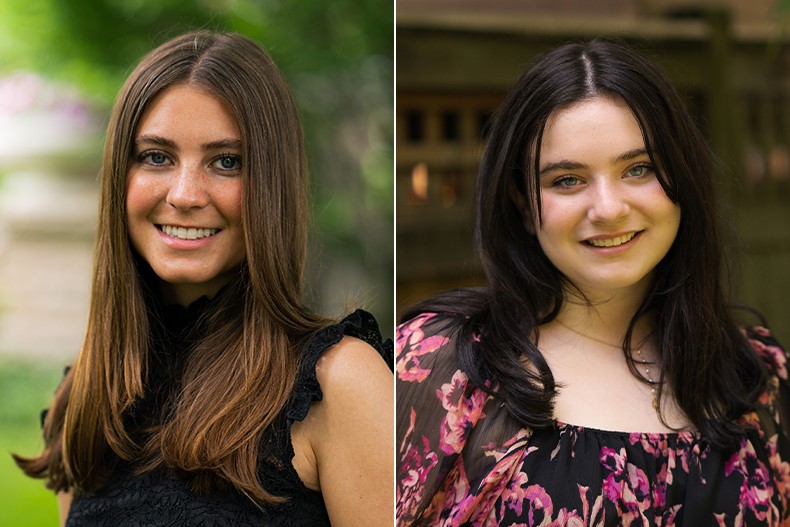
Two local teens win national recognition
Recipients of the annual Diller Teen Tikkun Olam Awards
Read more -

Celebrating six young award winners cultivating the community
Introducing young adult award winners
Read more -
Chicago Jewish community stands against hate in wake of Poway synagogue attack
Yvette Alt Miller
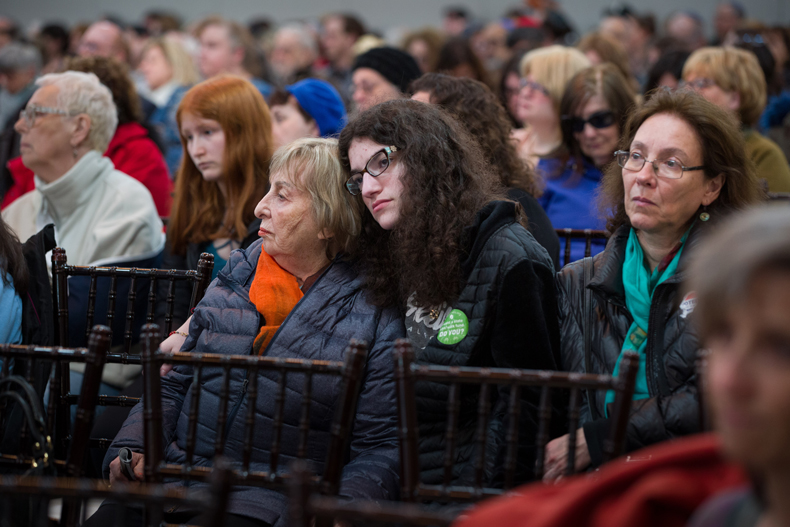
Two days after the deadly shooting in a California synagogue claimed the life of one worshipper and wounded three others, Chicago’s Jewish community took a stand against hate on Monday evening, coming together for an “Evening of Jewish Unity, Solidarity, and Prayer” that united Jews from across the region.
“When I saw Rabbi Goldstein” — the rabbi of the congregation who was wounded in the attack — “declaring from his hospital bed ‘ Am Yisrael Chai ,’ the people of Israel lives, I realized we can’t just stand by and do nothing — we had to stand with our brothers and sisters in solidarity,” said Rabbi Avraham Kagan, co-director of Chabad of River North and Fulton Market. Kagan helped plan the event, which was sponsored by Lubavitch Chabad of Illinois in cooperation with the Jewish United Fund and other local organizations.
Despite the last-minute preparations, 1,000 people packed the ballroom of the Holiday Inn North Shore in Skokie for the rally, including local elected officials and rabbis and congregants from across the Chicago area.
Consul General of Israel to the Midwest Aviv Ezra attended with his sixth-grade daughter. “She’s the next generation, and I want her to see and learn how the Jewish community takes a stand against antisemitism,” he said.
Jews spanning a range of communities across the Chicago area joined together, united by tragedy and determined to bring light and goodness into the world. Many quoted the late Lubavitcher Rebbe, who said “A little light dispels much darkness.” This was Chicago’s way of providing that light.
Rabbi Yosef Moscowitz, co-director of Chabad of Bucktown, lit a memorial candle for Lori Gilbert Kaye, the woman murdered in the California attack. Rally participants joined together reciting Psalms, watching a video of the injured Rabbi Yisroel Goldstein from his hospital bed in California, and singing the words that he urged every Jew never to forget: Am Yisrael Chai .
“We stand here tonight in grief, but also in solidarity — in reaffirmation of Jewish unity — and in affirmation of the words of Rabbi Yisroel Goldstein: ‘We are strong. We are united. They cannot break us,'” JUF President Dr. Steven B. Nasatir declared to sustained applause and a standing ovation. He pointed out the “last-minute” nature of the event and marveled at the high turnout from all sectors of the community.
Many participants shared the feeling that despite the short notice and stormy weather, they had to do whatever it took to stand together with their Jewish brothers and sisters. “What a beautiful show of unity,” said Rabbi Zvi Engel of Congregation Or Torah in Skokie. “It’s unfortunate it is under such sad circumstances.”
Rabbi Meir Moscowitz, regional director of Lubavitch Chabad of Illinois, noted the unifying nature of the rally: “There are times when we come together as a people, there are times when we come together as a community, and there are times when we come together as a family — this is a family event.”
Moscowitz urged the crowd to find a way to counter the darkness of hatred and violence with the light of good deeds and mitzvot. All who attended were offered free Shabbat candles to help bring that light.
“This Shabbat, whatever you are doing, stop and come to shul,” he said. To close, he challenged everyone to be kinder, better people and echoed the call of Am Yisrael Chai.
Other stories
-
Two local teens win national recognition
Recipients of the annual Diller Teen Tikkun Olam Awards
Read more -
Celebrating six young award winners cultivating the community
Introducing young adult award winners
Read more -
We offer our deepest condolences to the family and friends of Lori Kaye, murdered by the Poway Chabad attacker while trying to protect her rabbi. We pray as well for a refua shleima for Rabbi Yisroel Goldstein, Almog Peretz and Noya Dahan who were wounded by the assailant’s attack. We are also eternally thankful for the first-responders and those community members who reportedly intervened to prevent this from becoming an even larger tragedy.
Once again we find ourselves looking for words to express our heartbreak and anger as a Jewish institution is deliberately and brazenly attacked on Shabbat. What makes this attack even more painful is that it occurred during the Yizkor service on the last day of Passover, when family members gather to pray for and remember lost relatives. This sacred day of solemnity, a day meant to recall deceased loved ones, was shattered by a white supremacist’s Jewish-specific hate-fueled attack, forever altering how the members of Chabad of Poway and Jews everywhere will think about the last day of Passover.
It is also not lost on anyone that this antisemitic attack occurred on the six-month anniversary of the murderous attack on the Tree of Life*Or L’Simcha Congregation in Pittsburgh. Reports indicate that the attacker was heavily armed and specifically motivated to target and kill Jews, and but for the actions of several congregants and security personnel, the human toll would have been much greater.
Now that the terrorist is in custody, we urge all relevant authorities to prosecute him to the fullest extent of the law and work to ensure that his actions and words do not inspire others.
Locally we greatly appreciate every level of law enforcement, from the FBI and Homeland Security to our first responders and local police departments, from whom our community continues to receive such invaluable support.
In response to the October 27 attack on the Tree of Life*Or L’Simcha Congregation we said the following:
For all Americans, this deadly assault-committed on Shabbat, at a synagogue-is a terrible reminder of the persistence and lethal danger of anti-Semitism. We join together with our fellow Americans across faith communities in condemning the rising tide of anti-Semitism, white nationalism, racism and hatred directed at Jews and other vulnerable minorities. An attack on one community is an attack on all Americans, and the ideals for which our diverse nation stands. We call upon our elected officials and all people of good will to have zero tolerance for anti-Semitism-and all forms of hatred-denouncing it and calling it out whenever and wherever it takes place.
This attack should reaffirm for all that the underlying problem of an alarming increase in antisemitism at home and abroad has not been sufficiently addressed. From antisemitic attacks in Pittsburgh and Poway, to recent public displays of antisemitism in Belgium and Poland, to the casual use of antisemitic tropes by politicians and major newspapers, it is clear that we are facing a significant problem, a problem that can have real and devastating consequences. This is why in April, JUF began circulating a set of principles to help guide our community in defining, combatting and defeating antisemitism. JUF’s Jewish Community Relations Council staff is meeting with local Jewish organizations to obtain agreement on these principles as a means to together battle this abhorrent increase in antisemitic activity.
JUF stands ready to aid the Poway community and our own community in the following ways.
- We encourage people to attend Monday’s Evening of Jewish Unity, Solidarity and Prayer in response to the tragedy in Poway. This program is being sponsored by Lubovitch Chabad of Illinois, in cooperation with Jewish United Fund/Jewish Federation of Metropolitan Chicago, and other local Jewish organizations.
- We encourage people to attend Shabbat services on May 3-4 to send a message that we will not permit our traditions to be taken from us.
- When the Poway community determines what it needs from others to help it move forward, JUF will respond generously and swiftly.
Following the attack on Tree of Life*Or L’Simcha Congregation in Pittsburgh, JUF reaffirmed its commitment to helping our community’s Jewish institutions provide safe and secure environments for all who use them. To that end:
- JUF reaffirmed our close working relationship with local, state and federal law enforcement and first response agencies;
- We hosted a Security Summit for local Jewish organizations to meet with security and facilities specialists and first responders;
- Continue to help local Jewish organizations apply for federal security funding through the Non-Profit Security Grant Program, which we also lobby on in Washington to ensure full funding of; and
- Over the last 2 years, JUF has given out $1.6 million in security grants that supported $4 million in physical security enhancements at more than 85 community organizations/sites, including 54 synagogues, 12 agencies, 17 day schools or preschools, 3 camps and 2 colleges.
Facing attacks because of who we are is unfortunately not new for the Jewish community, and it doesn’t appear that this will change any time soon. Therefore, it is incumbent upon all of us speak openly and publicly about the scourge of antisemitism and its often-deadly ramifications. At the same time, we must also reach out to targets of such attacks, like in Poway, CA, and offer whatever hope and help they need to move forward. JUF is doing both, and we implore all people of goodwill to join us.
Andrew S. Hochberg, Chair
Dr. Steven B. Nasatir, President
Other stories
-
Two local teens win national recognition
Recipients of the annual Diller Teen Tikkun Olam Awards
Read more -
Celebrating six young award winners cultivating the community
Introducing young adult award winners
Read more -
The Chicago area’s annual collective Holocaust memorial observance, traditionally the largest gathering of Holocaust survivors in the Midwest and one of the largest in the United States, will have a new home this year. And a new partnership. And a message that has endured for nearly three-quarters of a century.
The service, sponsored by Sheerit Hapleitah of Metropolitan Chicago, the umbrella organization for local Holocaust survivor groups, will be held at 1:30 p.m. Sunday, May 5, at Congregation Beth Hillel B’nai Emunah, 3220 Big Tree Lane in Wilmette. The Jewish United Fund co-sponsors the event.
The move from the service’s traditional home in Skokie is to accommodate a larger turnout, expected because this year’s program is being conducted jointly with the Illinois Holocaust Museum and Education Center, which is marking the 10 th anniversary of its opening.
Since April 2009, the museum has served more than one million visitors through world-class exhibitions, education and public programming.
Leaders of the museum and Sheerit Hapleitah decided a joint program would underscore the service’s critical themes of remembrance, recognition of survivors, and education to stem the rising tide of antisemitism.
A poignant moment in each year’s service is the candle lighting ceremony honoring the six million martyrs, including one and a half million innocent children, who were murdered only because they were Jews. Each candle is lit by survivors or their children and grandchildren, who represent the failure of the Nazis’ ultimate goal of exterminating the Jewish people.
“We are living in a time when antisemitism yet again is on rise in the whole world,” said Henry Jelen, president of Sheerit Hapleitah. “74 years after the liberation of the concentration camps, the world appears to have forgotten the history of what hatred can do. Sheerit Hapleitah was founded by survivors who have horrendous histories or stories of survival to tell. The mantra we must forever reinforce is “NEVER AGAIN.”
This year, the memorial service – which has been held annually since the camps were liberated in 1945 – will feature remarks from Fritzie Fritzshall, president of the Illinois Holocaust Museum and Education Center, and a performance by violinist David Lisker.
Other scheduled speakers include Israel’s Consul General to the Midwest, Aviv Ezra; Consul General of Germany, Herbert Quelle; Jewish United Fund Board Chair Andrew S. Hochberg; Skokie Mayor George Van Dusen; and Henry Jelen.
As part of the ceremony, Dr. Eric Silberman, grandson of four survivors, will share what the legacy of his grandparents means to him and other descendants of Holocaust survivors, and will reinforce his commitment to carry on their stories and lessons to future generations.
Other stories
-
Two local teens win national recognition
Recipients of the annual Diller Teen Tikkun Olam Awards
Read more -
Celebrating six young award winners cultivating the community
Introducing young adult award winners
Read more -
Masquerades, dramas, and costumes are well-known in TaNaKh , the Bible. Our ancestor Jacob dresses up as his brother Esau to deceive his father Isaac. Jacob gives Joseph a coat of many colors so that he can portray himself as the favored son and heir apparent. Joseph masquerades as an Egyptian vizier in the royal clothing given to him by Pharaoh.
The grandest of all masquerades is the Royal Ball organized by King Achashverosh to choose his next queen, and Esther emerges as the winner of the competition with only her natural beauty to commend her to the king. Out of this emerges the classic Purim Play, which turns everything sacred on its head, just for one day a year. Actors in costume and masquerade poke good fun at all that is sacred.
Thus, it should come as no surprise to us that many Jews turn to theater and then to film to grapple with and understand the clash between traditional Jewish life and modernity. This impulse drove many Jews to Hollywood more than a century ago. The same impulse enchanted many a young Jewish man or woman to seek the silver screen or the theatrical stage. These media became the ways in which Jewish outsiders critiqued their new host culture. These media became the ways in which many young Jewish men and women sought to meld Jewish society and community and enter popular culture.
Enter Marjorie Morningstar, a.k.a. Morgenstern. She was born in 1916 in the Bronx, the child or grandchild of Jewish immigrants from Eastern Europe. Her family came to America as part of the wave of nearly 2.5 million Jews fleeing oppression and poverty from the Polish-Lithuanian Commonwealth and Austro-Hungarian Empire. Their aspiration was to become Americans. They succeeded, and marvelously so.
The Jewish immigration was not that much different than its sister immigrations of Irish, Italians, Poles, et cetera. Those with the most to lose by staying, and the most to gain by coming, were the first wave of immigration. In but a generation or two, the children and grandchildren of these East European Jewish immigrants climbed from the lowest rungs of the socio-economic ladder to the highest rungs of entrepreneurial, professional, and educational achievement.
In the process of Americanization, this generation came to be known by American Jewish sociologists as the “Lost Generation.” Jewish identity and affiliation declined. It was to this generation that the post-World War II Conservative, Reform, and Orthodox movements devoted their genius in presenting Jewishness and Americanness as compatible.
Marjorie Morningstar is the main character and the title of a novel by Herman Wouk (his first book, The Caine Mutiny , was a sensation). Her family, after achieving moderate success, moves from the Bronx to Manhattan’s Upper West Side, a veritable Garden of Eden for Jews in the outer boroughs of New York. She changes her name from Morgenstern to Morningstar because she wants to become an actress and needs a non-Jewish-sounding name. The character of Marjorie is consistent with the trend during that era for children and grandchildren of immigrants to shed their old-world identities and lives.
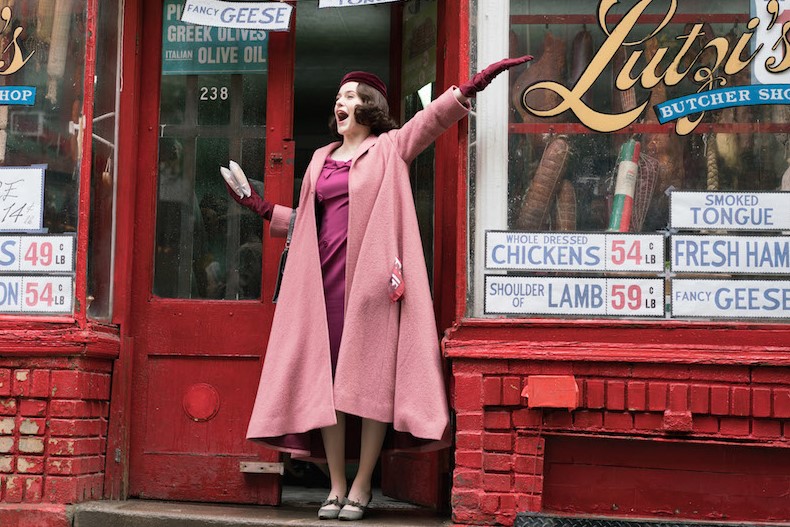
Now, let’s consider another famous 1950s-era Jewish character also trying to make it as a star. Midge, a.k.a. Miriam Maisel, is portrayed on the current smash TV show The Marvelous Mrs. Maisel , created by Amy Sherman Palladino. Midge, meet Marjorie Morningstar, who preceded you by many a decade, in the imagination of a great American Jewish writer.
Herman Wouk wrote Marjorie Morningstar to hold a mirror up to the face of American Jewry, many of whom were going the way of Marjorie Morningstar-changing their names, seeking to trade in their Jewish identity for all the goods that come from being a full-fledged American.
In response to this, Herman Wouk wrote the book This is My God, which, in its time in the 1950s, was one of the greatest books about Judaism written for Americans. The book, a manifesto for traditional Judaism, became a bestseller in both the Jewish and broader society. It was written in an American idiom. It was such a sensation that it made the cover of Time Magazine, September 5, 1955. Herman Wouk wrote this book because he understood who the grandchildren of Marjorie Morningstar and Miriam Maisel were going to become.
Sherman Palladino and Wouk present one story with two different purposes. Sherman Palladino is engaged in nostalgia, which in German is translated into heimweh, quite literally, homesickness. There is a good deal of homesickness today in some segments of the American Jewish community. Wouk, on the other hand, wrote Marjorie Morningstar to alert the American Jewish community to the consequences of superficial ethnic identity and its willingness to pay a high price for American acceptance.
Happily, large segments of the American Jewish community have moved way beyond Marjorie Morningstar and Miriam “Midge” Maisel, both of whom are emblematic of a period of serious decline in American Jewish life. The Marvelous Mrs. Maisel is a period piece that takes us back to the lost generation. It comes as a timely alert to take a look at the author of a similar book with a very different purpose, and to possibly re-read Herman Wouk’s, This is My God.
Rabbi Yehiel E. Poupko is Rabbinical Scholar of the Jewish United Fund.
Other stories
-
Two local teens win national recognition
Recipients of the annual Diller Teen Tikkun Olam Awards
Read more -
Celebrating six young award winners cultivating the community
Introducing young adult award winners
Read more -
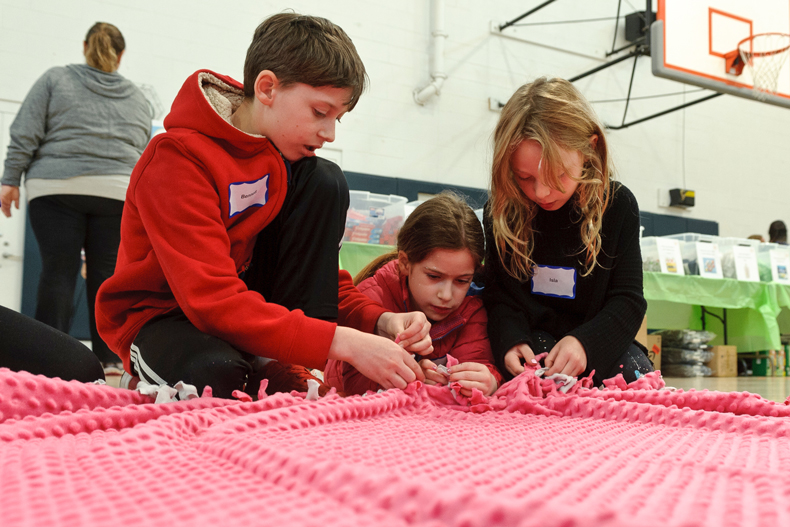
On Sunday, April 7, over 1,000 volunteers completed 50 service projects in 23 locations throughout the Chicago metropolitan area as part of JUF’s Good Deeds Day, a global day of service born in Israel. The Chicago effort was coordinated by JUF’s TOV Network, the organization’s volunteer network that aims to help repair the world.
The day featured open houses at local community centers, synagogues, and non-profit agencies where volunteers of all ages could stop by to participate in hands-on service projects. The projects included making pet toys for shelter animals, writing letters to those affected by a natural disaster, making fleece blankets for the homeless, decorating flower pots for senior citizens, and more.
“Good Deeds Day is an incredible opportunity for volunteers of all ages to come together and make an impact in so many meaningful ways all over the Chicagoland area,” said Rachel Stein, event chair. “Knowing that Good Deeds Day is happening worldwide is an inspiration to all who take part in it and highlights the important value of Tikkun Olam– repairing the world–in Chicago, in Israel, and around the world.”
“It is incredibly powerful to be part of a global movement happening in 100 countries around the world,” said Marissa Comin, TOV’s Assistant Director of Volunteer Services. “I love seeing people’s excitement in collectively doing good. Despite what may be going on in the world, this event reminds us that we can work together to make the world a better place, one good deed at a time.”
Good Deeds Day first launched in Chicago in 2015 as a pilot program with the support of TOV and JUF’s Israel Education Center, as well as six local Hillels. In 2016, the movement gained even more momentum with the support of JUF’s Breakthrough Fund, a grant given to innovative programs in the Jewish community, as well as the sign-on of the Jewish Teen Alliance of Chicago and BBYO.
TOV serves as JUF’s connection point for people who want to give back through hands-on volunteering. In accordance with tikkun olam, the Jewish concept of repairing the world, TOV connects members of the Jewish community with rewarding volunteer opportunities that best meet their interests and needs.
For more information on TOV opportunities throughout the year, visit juf.org/tov.
Chicago’s Good Deeds Day is made possible by JUF, The Wagner Foundation, BBYO, and JTAC.
Other stories
-
Two local teens win national recognition
Recipients of the annual Diller Teen Tikkun Olam Awards
Read more -
Celebrating six young award winners cultivating the community
Introducing young adult award winners
Read more -
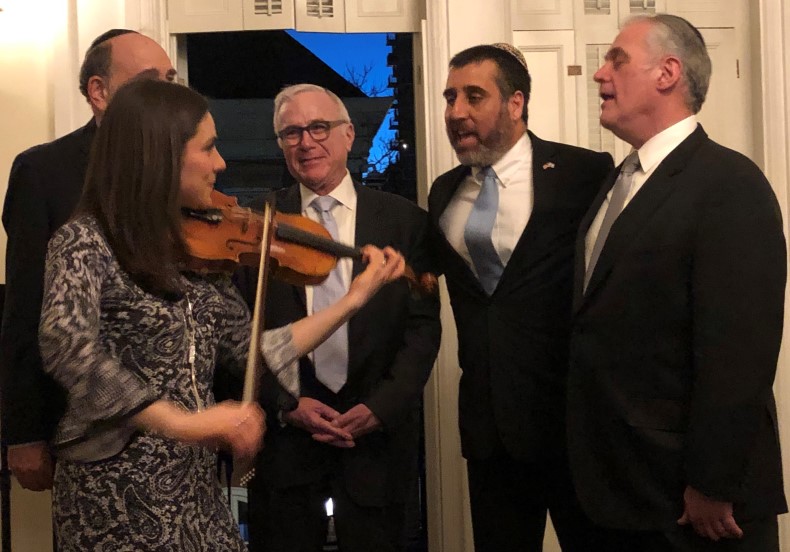
An Illinois first: A Jewish governor hosts model Seder in Governor’s Mansion
For the first time in Illinois history, a Jewish governor hosted a model Passover Seder in the Governor’s Mansion in Springfield.
On Monday, some 100 people – Jewish lawmakers, rabbis and community leaders, Jewish members of the governor’s staff, and others – joined Gov. JB Pritzker and first lady MK for the event.
“Passover is a time for family and friends to come together to commemorate the history of our people and celebrate our faith,” the governor said. “In that spirit, MK and I were delighted to be surrounded by so many friends and leaders in our community for our first model Seder at the governor’s mansion. We’re looking forward to many more celebrations with the Jewish community in the years to come and we wish all who are celebrating a Chag Sameach.”
Among those attending were the Pritzker’s’ rabbi, Seth Limmer, from Temple Sinai in Chicago, who led the service; JUF Board Chair Andy Hochberg and his wife, Dr. Laurie Hochberg; Counsel General of Israel to the Midwest Aviv Ezra and his wife, Einat; Northwestern University President Morton Schapiro; Lt. Gov. Juliana Stratton; and Deputy Gov. Jesse Ruiz and his wife, Michelle.
Hochberg thanked his friends the Pritzkers, saying “they brought together a fabulous group of Jewish and non-Jewish leaders from across the state and hosted a haimish and meaningful model Seder shortly before we celebrate the real thing. Amid all the major issues playing out in Springfield and on the eve of Israel’s elections, it was inspiring to gather together, to see the beautifully restored Governor’s Mansion – to which Pritzker and his predecessor, Bruce Rauner, both donated generously. As we revisited the ancient story of our people’s redemption, we did so with an eye to applying its many lessons for our national and communal dreams.”
JUF Executive Vice President Jay Tcath added that “it’s always an extra treat of these gubernatorial model Seders to visit with our Federation colleagues from Rockford, Springfield, Southern Illinois, Urbana-Champaign, Peoria and the Quad Cities, as well as our friends in the General Assembly’s Jewish caucus: Sen. Laura Fine and Reps. Jonathan Carroll, Kelly Cassidy, Dan Didech, Sara Feigenholtz, Robyn Gabel, Will Guzzardi, Jennifer Gong-Gershowitz, Rabbi Yehiel Kalish and Bob Morgan.”
Other stories
-
Two local teens win national recognition
Recipients of the annual Diller Teen Tikkun Olam Awards
Read more -
Celebrating six young award winners cultivating the community
Introducing young adult award winners
Read more -

“Every person in every generation must regard themselves as having been personally freed from Egypt” (Talmud, Pesachim 10.5). Each Jewish community has its own unique ways to make Passover feel special: here are a few global traditions, many recounted by Israelis living in JUF’s Partnership Together region in Israel’s Negev, which you can try in your own family too.
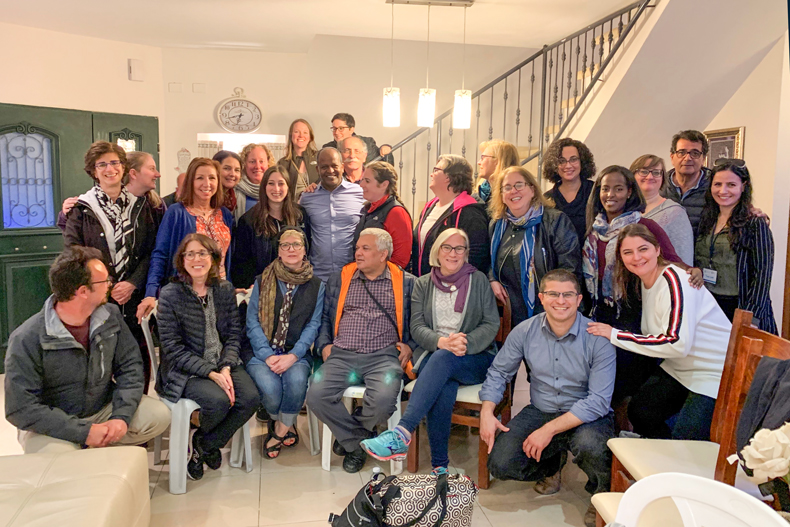
Ethiopian-born Kiryat Gat resident David Maharat, with JUF staff on a mission to Israel this past winter. Photo credit: Elissa Polan.
Ethiopia
Ethiopian Jews traditionally celebrated Passover with some extreme spring cleaning: washing and painting the walls of their homes. Many Ethiopian families even acquire brand new sets of dishes each year. “We had new clothing, new dishes — everything felt fresh, and we felt renewed,” explained Ethiopian-born Bizu Riki Mullu. (1)
David Maharat, an Ethiopian-born resident of the Israeli town of Kiryat Gat, part of JUF’s Partnership Together region, recalls that his entire town would come together and watch their Kes (the spiritual leader of Ethiopian Jews) prepare a pre-Seder feast: “I remember that on the Seder eve we would go to our synagogue and eat… The entire community would gather, the Kes would do a special blessing and everyone would eat. Afterwards we would go to our house and hold the Seder meal, which consisted of homemade matzahs and a flax seed and sesame sauce.”
Morocco
Moroccan Jews mark the end of Passover with a special new celebration, Mimouna. Moroccan Jews decorate their tables with white tablecloths and place symbols of luck and prosperity on them: fish swimming in bowls (symbolizing life and fertility), bowls of flour and other foods (representing abundance), and coins (for wealth). Because Nissan, the month of Passover, is the first month of the Hebrew calendar, Moroccan Jews also eat sweet foods at Mimouna to represent a sweet new year.
Mimouna has become a popular holiday in Israel, celebrated by Jews with origins all over the world. Israelis visit friends and relatives, stopping by to sample delicious sweets and to wish each other Tarbakhu uts’adu, “May you have success and good luck.”
In Tangier, fewer than 10 elderly Jews remain of what was once a thriving Jewish community: most live in a home called Residence Laredo. Chicago-area students visited these elderly Jews through KAHAL: Your Jewish Home Abroad, a JUF Breakthrough Fund grant recipient, and documented a beautiful local tradition that has all but died out elsewhere: Charoset is made using local edible flowers, then served inside flowers, creating a beautiful spring feeling on the residents’ Seder table.
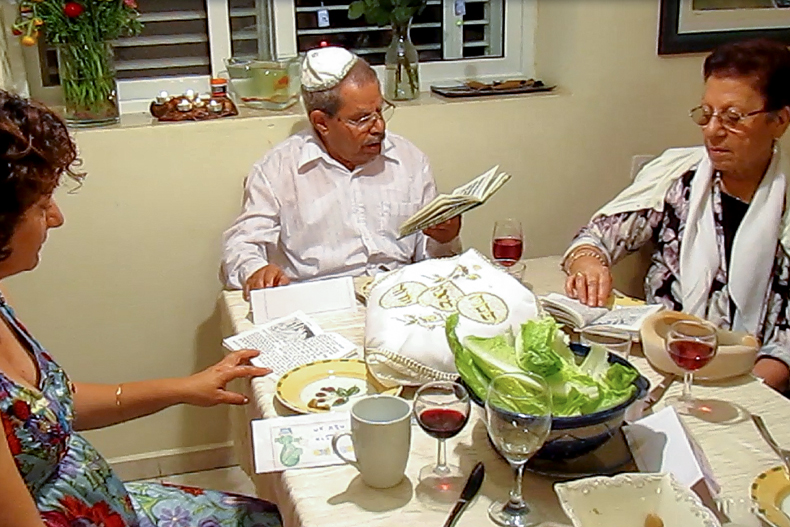
Merav Lipik’s sister Orna Beharav and grandparents Ilana and Eliyahoo Nakar at their Iraqi Jewish-inspired Seder in Kiryat Gat.
Iraq
At Iraqi Jewish Seders, instead of hiding the afikomen for children to find, families put it in a sack and give it to the youngest child present to place on his back. This way kids can recreate the Passover story and feel like Israelites, fleeing Egypt with their few possessions.
“All the kids go out” of the room recalls Merav Lipik, a resident of Kiryat Gat in Israel and a member of JUF’s Partnership Steering Committee, whose family moved to Israel from Iraq. The kids return “like a group of b’nai Yisrael (children of Israel) and then the Seder leader asks them all kinds of questions: Where do you come from? Where are you going? etc. That way they tell the story (of the Exodus from Egypt).”
Syria
Jews from the Syrian city of Aleppo maintain the custom of saving a small part of the afikomen for a pregnant woman to eat after she delivers her child. This recalls Pharaoh’s decree that all Jewish baby boys be killed “Lest they multiply” (Exodus 1:10). For Syrian Jews, this custom is a way of answering: “They shall multiply.” (2)
Iran
While singing Dayenu in the Passover Seder, Persian Jews have the custom of hitting each other with leeks. It makes for a fun diversion, but it recalls something somber: the lash of the whips of the Egyptians our ancient ancestors suffered.
Israel
As Israel welcomes Jews from the four corners of the world, some Israelis are forging new Passover traditions too. That’s the case in Eliav, a 15-year-old moshav (cooperative community) in the Lachish area, part of JUF’s Partnership Together region in Israel’s Negev, that’s host to a special Passover tradition each year.
Each year, the entire moshav community of over 200 comes together for a pre-Seder re-enactment of the Exodus. “The idea is to create a performance of the Exodus that includes everybody,” resident Yossi Schellas, one of the founders of the custom, explained. Children play the role of the Israelites, making sand castles, while adults dress up as Egyptian officials and bellow through loudspeakers that the Israelites should work harder.
The whole community acts out the story, from Moses’ birth all the way through the plagues, the Jews’ midnight flight from Egypt, and the giving of the Torah at Mount Sinai. Atmospheric music, costumes, and special effects make the event, which can last four or five hours, memorable. Children carry bags and walking sticks, re-enacting the flight their ancestors once took out of Egypt. “Every year we say this is the last one,” Yossi joked, but each year the residents of Eliav put on another show — forging a brand new Passover ritual in the Jewish state.
1. Quoted in Too Good to Passover by Jennifer Felecia Abadi, 2018.
2. From Aromas of Aleppo by Poopa Dwek, 2007.
Yvette Alt Miller, Ph.D. lives with her family in the northern suburbs of Chicago.
Special thanks to Maya Abarbnel, Programs Manager, JUF Israel Office.
Other stories
-
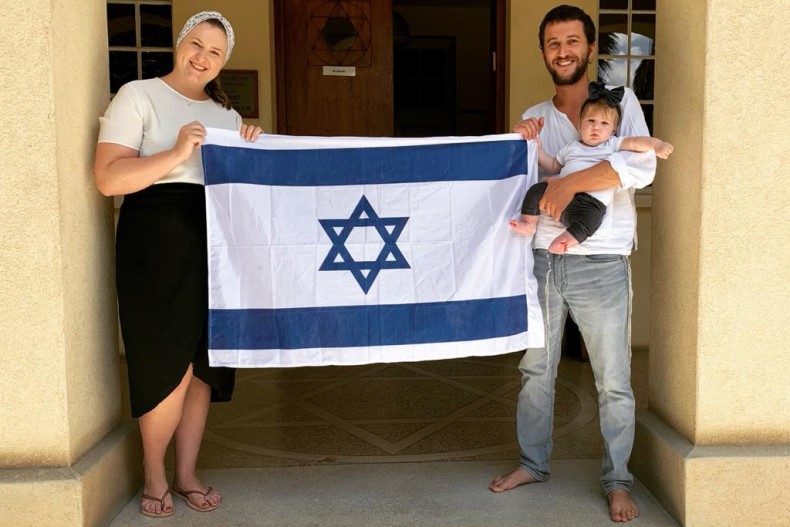
Chicago to Israel to Kenya
A family’s story of living Jewishly on three continents Michelle Cohen World May 28, 2021 Avital, Tzofia, and Netanel Kaszovitz outside their home in Nairobi on Yom HaAtzmaut. When Avital Kaszovitz prepared to be a Modern Orthodox shlicha (emissary) to the Jewish community in Ke
Read more -
New exhibit spotlights the experience of ‘Shanghai Jews’
Explore a new Illinois Holocaust Museum and Education Center exhibit
Read more -
Europe’s brave new teachers of the Holocaust
Teaching the Holocaust in the modern era has its difficulties and rewards.
Read more

Jewish Brewers star Ryan Braun—the rival Cubs fans love to hate
Steve Greenberg
What else can Ryan Braun say? He loves playing at Wrigley Field.
That’s true even though Braun, a longtime star for the rival Milwaukee Brewers, is approximately as welcome there as a fungal disease in the iconic ivy that adorns the outfield walls.
Cubs fans love to boo the 35-year-old Braun, the foremost reason being that he has made Wrigley Field his personal playpen. Braun — the most prominent Jewish player in the major leagues — has more hits (205), doubles (48), and runs driven in (125) against the North Siders than he has against any other opponent.
“I’ve always enjoyed playing here,” he told reporters last August after belting two home runs in a 7-0 Brewers victory. “As a competitor, there’s no more enjoyable atmosphere to play in than this.”
And then he added this whopper: “The more hostile the environment, the more enjoyable it is.”
He said those things, of course, before the Brewers got wickedly hot and caught — and, arguably, crushed — the National League Central rival Cubs down the stretch of the 2018 season. The Cubs won eight of the first nine games between the teams in 2018, but the Brewers roared back to win eight of the last 11. The capper was the division tiebreaker — Game 163 — at Wrigley, in which Braun’s eighth-inning single put the visitors ahead 3-1 in a game they’d win by that same score.
The Cubs lost the N.L. wild-card game to the Colorado Rockies a day later, leaving Chicago fans in a bewildered stupor.
Braun, a Los Angeles native, was on an upward trajectory from the very start of his baseball days. He starred as a high schooler and at the University of Miami before becoming the Brewers’ first-round pick in the 2005 draft. He was the N.L. Rookie of the Year in 2007 and reached his peak in 2011, as the league’s Most Valuable Player. Braun has six All-Star Games on his considerable resumé.
In 2013, though, Braun’s career was tarnished — some Cubs fans would say permanently — by a 65-game suspension for violating baseball’s policy against performance-enhancing drugs. It’s a turn-of-events he pays for to this day in the forms of boos and heckles, nowhere more so than at Wrigley.
“I can take it,” he said last season. “It’s not about me, anyway. To me, it’s all about my team.”
As the 2019 season gets rolling, Braun’s Brewers are locked into — along with the Cubs and the St. Louis Cardinals — what baseball insiders expect to be as rough-and-tumble and gnarly a division race as there is in the game. The stakes will be as high as ever for an aging outfielder (and sometimes first baseman) who still likes to push his arms out to his sides and “fly” into the infield after victories.
Yes, that particular gesture is meant to tweak the sensibilities of whichever team the Brewers have just beaten. If it’s the Cubs, all the better.
Braun’s father, Joe, was born in Tel Aviv. His mother, Diane, is Catholic. Braun never attended a temple regularly, nor did he have a bar mitzvah. But he told USA Today several years into his career that his Jewish identity was important.
“It’s a touchy subject because I don’t want to offend anybody, and I don’t want groups claiming me now because I’m having success,” he said. “But I do consider myself definitely Jewish. And I’m extremely proud to be a role model for young Jewish kids.”
Some might question the role-model value of the T-shirts the Brewers wore at Wrigley Field for a 2017 series against the Cubs. The Brewers’ shirts declared their team the “un-blank-withables.” Only the shirts didn’t say “blank.” Brewers players clearly loved those shirts, Braun included.
“We’re not here to make the other [team] happy,” he said.
Braun is the Brewers’ all-time leader in home runs, with 322. It only seems like most of those have come against the Cubs. He’s old enough to be on the downside of his career, but that won’t stop Cubs fans from jeering his every non-superstar-like moment. What else is anyone to say? Braun loves playing at Wrigley, and the feeling most definitely isn’t mutual.
Other stories
-
Two local teens win national recognition
Recipients of the annual Diller Teen Tikkun Olam Awards
Read more -
Celebrating six young award winners cultivating the community
Introducing young adult award winners
Read more -
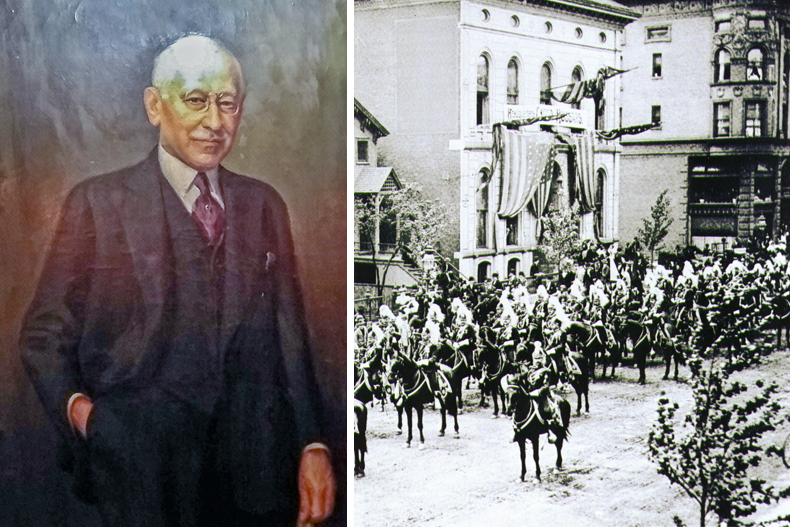
“Sesquicentennial” is not a word that gets trotted out of the dictionary very often, but then an institution celebrating its 150th anniversary is a rare and fine thing. Like The Standard Club itself.
It was on April 5, 1869 when 69 leaders of the Chicago Jewish community founded the Club. Among them were architect Dankmar Adler; Philip Stein, future Illinois Appellate Court judge; and Henry Greenebaum, Chicago’s first Jewish alderman and the first president of the United Hebrew Relief Association, the earliest iteration of what would become JUF.
Many of Chicago’s academic and cultural institutions-including the Jewish United Fund-exist today as the result of the generosity of its members. Early member Julius Rosenwald, president and chairman of the board of Sears, Roebuck & Co., was one of the founders and leaders of JUF’s predecessor institutions, as well as the Museum of Science and Industry; JUF’s highest honor bears his name.
For its work, the Club has received many honors itself. Most recently, Mayor Rahm Emanuel declared April 5, 2019 “The Standard Club Day.” The proclamation states that this honor is given “in recognition of the indelible contributions made by The Standard Club and its members for the betterment of Chicago” throughout its history.
A shared vision
Standard Club members Henry Merens, Alison Pure-Slovin, and Bart Lazar are co-chairing the anniversary celebration committee. “My involvement in The Standard Club and JUF feed closely related aspects of my identity as a Jew in Chicago. Through JUF, I am able to provide support for a wide network of worthy causes and I can trust JUF to make wise choices for those in need,” Lazar said. “The Standard Club nourishes my mind, body, and spirit, playing basketball, sharing meals, and enjoying experiences and events with friends who are like family.”
The Standard Club and JUF have been partners since their early days. Club founders had a vision to cultivate a membership who would share the type of values that are exemplified through the support of JUF’s Annual Campaign. Every year, JUF holds a Standard Club event for Club members and their guests. This year’s event, featuring journalist Nora O’Donnell, will be held on April 11.
“My grandparents, parents, aunts, and uncles were members of the Club,” said longtime JUF leader Skip Schrayer, “and my family celebrated many lifecycle events there. I attended my first JUF event at the Club, and I learned about being part of a strong, caring community, and about being a leader.”
For its centennial, the Club commissioned a book about its history. An entire page lists nothing but the names of leaders of JUF, its predecessors, and its agencies. It states that, “Every President of the Jewish Federation and its predecessor organizations during the past 100 years (1869-1969) has been a Standard Club member. In addition, each year hundreds of Standard Club members have served as officers and board members of the Jewish Federation and its… family of social welfare agencies.”
“Jimmy Sarnoff, my friend at the Club, introduced me to JUF through the Young Leadership Division, and it transformed my development and growth,” said JUF Board Member Lindsey Paige Markus. “The values of The Standard Club and JUF go hand in hand, as members and donors are dedicated to tikun olam .”
Doing well, doing good
From its birth in the late 1800s, Standard Club members were titans of business, including clothiers Hart, Schaffner & Marx, Jim Beam’s Everett Kovler, Brunswick’s Moses Bensinger, and Sara Lee’s Nathan Cummings.
Others include Daniel J. Edelman, considered the father of modern public relations, and Joseph Regenstein, inventor of the window envelope.
Members of the government have been members as well, including Judge Richard Posner, and the late Judge Abraham Lincoln Marovitz. Illinois Governor Henry Horner was a member, as is his newly elected successor, J.B. Pritzker.
Through the years, the Club’s members have been contributors-financially and as leaders-to many of Chicago’s major civic institutions such as the Chicago Historical Society, the Adler Planetarium, the Michael Reese and Mount Sinai hospitals, and Spertus Institute.
While a Chicago institution, the Club has attracted national attention. They have received visits and correspondence from U.S. presidents from Franklin Delano Roosevelt up through Barack Obama. Israel’s first president, Chaim Weizmann, also visited the Club in 1940.
Still raising the standard
Today, The Standard Club is attracting a new generation of leaders who value the relationships and inspiration the Club encourages. Today’s members continue the tradition of business achievement married to communal involvement from Chicago Bulls and White Sox owner Jerry Reinsdorf to philanthropists Tom and
Margot Pritzker.
While times have changed, The Standard Club’s commitment to excellence and philanthropy have remained solid. Its mission statement says that, by the word “standard,” the club meant “model, example, or criterion.” And, 150 years later, The Standard Club is still that.
Other stories
-
Two local teens win national recognition
Recipients of the annual Diller Teen Tikkun Olam Awards
Read more -
Celebrating six young award winners cultivating the community
Introducing young adult award winners
Read more -