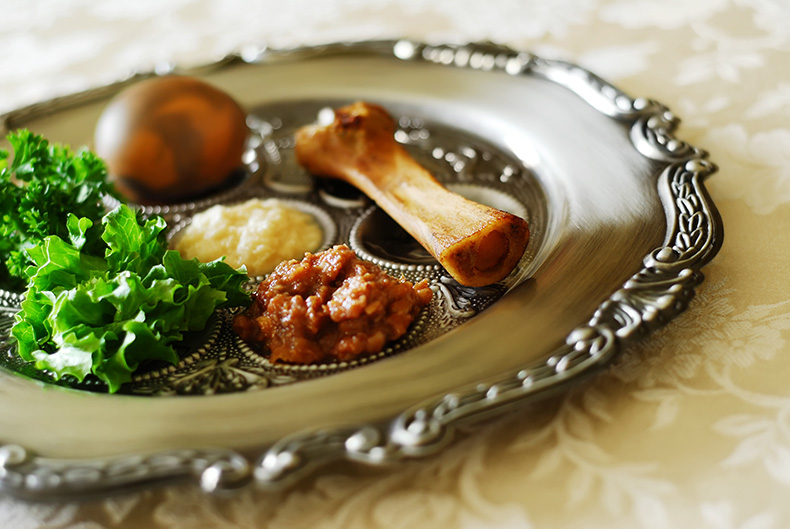
Jews throughout the metropolitan Chicago area are preparing to celebrate Passover. With a plethora of options in Chicago and the suburbs, there are plenty of ways to join the local Jewish community for a meaningful holiday. Chag Sameach !
Looking for a seder?
Silverstein Base Hillel will be hosting Seders for students in the Chicago area. For students studying abroad, KAHAL: Your Jewish Home Abroad sets up students at Seders with communities and host families around the world. Last year, students attended over 1,000 Seders in 55 countries and 110 cities, and this year, students will have even more options to choose from. metrochicagohillel.org/base ; kahalabroad.org
The ARK hosts Seders on the first two nights of Passover in partnership with Congregation Bnai Ruven in West Rogers Park. Their food pantry will also be kosher for Passover starting one week before the holiday, and in addition to the usual food offerings, roasts will be available to enhance clients’ seder meals. arkchicago.org
North Shore Congregation Israel’s Community Recovery Seder is an alcohol-free seder experience for people in recovery from addiction, their loved ones, and allies. nsci.org/communityrecoveryseder
CJE SeniorLife’s Holocaust Community Services is hosting their 4th Annual Intergenerational Passover Seder at the Illinois Holocaust Museum and Education Center. “A Seder to Remember” is an intergenerational program linking the themes of freedom, redemption, and remembrance as they connect to the Holocaust and Passover. This will be a bilingual program in English and Russian. cje.net
For older adults in residential communities, Rabbi Suzanne Griffel will be conducting model Seders in the week leading up to Passover at Bethany Retirement Community in Chicago and Atria at River Trail in Bolingbrook. Rabbi Eliezer Dimarsky will be doing a Russian Model Seder for the Russian residents of Lieberman Center for Health and Rehabilitation in Skokie, and several English Seders will follow. Gidwitz Place will host Seders both nights as well as “Mini Seders” for Friend Center for Memory Care residents. Maot Chitim will also host a Seder for the Jewish residents of Misericordia, and CJE Adult Day Services will host a model Seder courtesy of CJE SeniorLife’s Rabbi Michelle Stern.
Chabad is hosting public Seders on both nights, at 7 p.m., at both Chabad of Lakeview, (773-495-7127) and the Bnei Ruven congregation, (773-743-5434).
Looking for a learning opportunity?
JUF’s Young Leadership Division (YLD) is hosting “Beyond the Passover Basics,” an event focusing on new perspectives of the Seder table and Passover in general. While enjoying dinner with friends from YLD and Silverstein Base Hillel: Loop, learn how to establish your own Passover traditions. juf.org/passover
Weinberg Community for Senior Living in Deerfield, in conjunction with CJE SeniorLife, will host its annual “Taste of Passover” event where the community can sample Passover dishes and learn recipes to cook for this year’s Seder. cje.net/weinberg-community-senior-living
Residents of Robineau Residence in Skokie will learn about Passover in a class from CJE SeniorLife’s Rabbi Michelle Stern.
Looking for a way to help others?
Maot Chitim is offering two types of volunteer opportunities in the Chicago area. First, 150 volunteers are needed to help unload and unpack Passover box deliveries and package the items for delivery to clients. Then, 400-500 volunteers are needed to deliver 5,000 Passover food packages to those in need. Volunteers ages 12 and up are welcome. maotchitim.org/
Open your home to young adults around the Chicago area by hosting a Seder or Passover-themed Shabbat dinner with OneTable. Or, check out the options on offer, and be a guest at a new friend’s home. onetable.org/chicago-hub
Preschoolers from Moriah Early Childhood Center and high school students from Rochelle Zell Jewish High School will visit Weinberg Community for Senior Living to celebrate Passover with programming and chocolate-covered matzah making.
Volunteers will join Robineau Residence to lead Seders for older adults.
Looking for a fun Passover experience?
Moishe Houses around the city and beyond will be hosting a variety of events during Passover. Want to build a matzah pizza and then enjoy a “carbfest” once the eight nights are over? Each Moishe House will feature its own fun schedule of programming for young adults. Moishehouse.org
Students at Chicago Jewish Day School and JCC Chicago will experience plenty of Passover fun with a variety of programs. From Passover plays and matzah making to toddler re-enactments, mock Seders, scavenger hunts, and more, these programs will help young Jews discover the fun side of their heritage.
Other stories
-
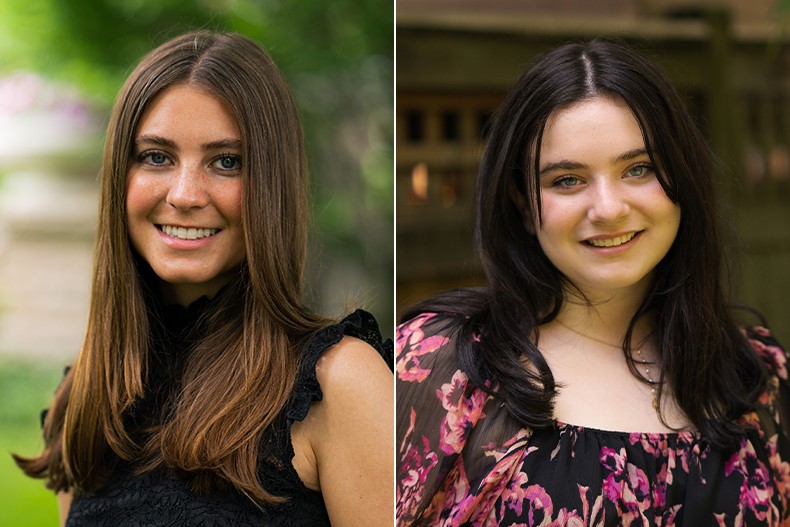
Two local teens win national recognition
Recipients of the annual Diller Teen Tikkun Olam Awards
Read more -

Celebrating six young award winners cultivating the community
Introducing young adult award winners
Read more -
While the Nazis stormed through the Czech Republic in World War II, they collected thousands of Jewish artifacts to create a “museum of an extinct race.” However, historians believe it was actually the Jewish curators in Bohemia and Moravia who planted the idea of a museum, and cataloged thousands of gold and silver treasures, liturgical books, and historic archives. They hoped these collections would survive, when they knew they would not.
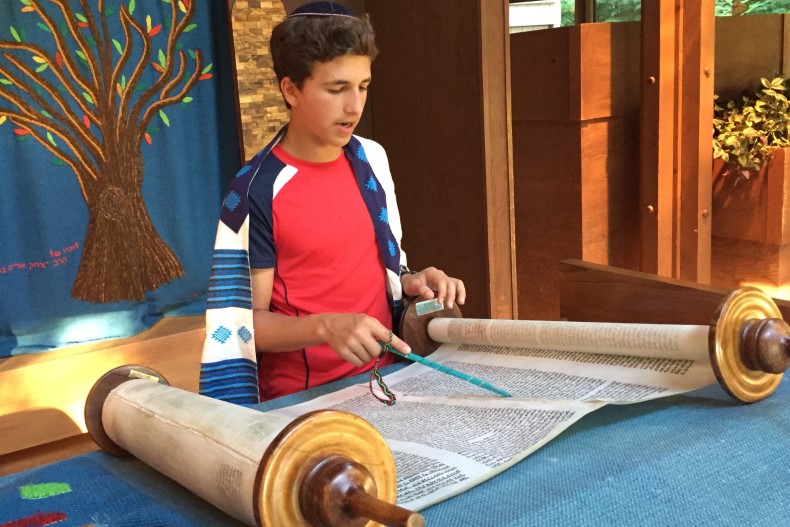
After the war, more than a thousand Torah scrolls were found in a damp warehouse that had once been the Michle Synagogue in Prague. Most of the scrolls were burned, broken, and blood-stained. Somewhere wrapped in tallitot (prayer shawls). British philanthropist Ralph Yablon agreed to purchase the collection for shipment to London.
In 1964, 1,564 scrolls, representing hundreds of Jewish communities that had been destroyed, traveled across Europe in trucks. From there, they were loaded onto a ferry at Dover and reverently transferred to their temporary home in Westminster Synagogue.
Since then, the Memorial Scrolls Trust has been distributing scrolls on permanent loan to religious institutions throughout the world as well as to Yad Vashem , Westminster Abbey, and Windsor Castle. There are more than 50 honored scrolls at synagogues, schools, and camps in Chicago, which continue to educate and inspire.
A teaching tool-Illinois Holocaust Museum and Education Center
The Skokie museum has two Torah scrolls and a portion of a Torah scroll saved after Kristallnacht. “Torah Scroll #1253 from Ivancice 1860 is on display in the Karkomi Holocaust Exhibition,” said Arielle Weininger, chief curator of Collections and Exhibitions. “Docents point it out and tell its story on museum tours. The scroll is also a stop on our new audio guide.” Many of their visitors have never seen a Torah scroll before.
The second scroll came from Rabbi Morris Fishman, rabbi of the now-closed Am Chai Synagogue in Roselle. Rabbi Fishman carried it out of Poland at the end of World War II from Holocaust survivors who had hidden it.
Congregation B’nai Jehoshua Beth Elohim goes a step beyond
Congregation BJBE in Deerfield has two scrolls in their collection to inspire youth groups and connect b’nai mitzvah families to their living tradition.
Scroll #1484 is from Kolin, about 45 minutes outside of Prague. Though a synagogue building still proudly stands in the city, it’s now a community center and museum. “At BJBE, this scroll is one of the seven in the synagogue. B’nai mitzvah celebrants read from it on Shabbat and we dance with it on Simchat Torah,” said Missy Bell, director of education.
Since 1998, the BJBE Senior Youth Group has journeyed to the Czech Republic every three years to visit the synagogue and also to help restore the Jewish cemetery. “In June 2018, we took 22 high school students to the Czech Republic for three days,” Bell said. “We visited Theresienstadt, Prague’s Jewish Museum, and held a memorial service at the synagogue. It was a very meaningful experience.”
Camp Ramah celebrates with its scroll
Scroll #790 at Camp Ramah in Conover, Wisc. has been a part of the camp since 1971. “We are honored to have this scroll and it is kept in our most beautiful ark at camp,” said Linda Hoffenberg, director of Institutional Advancement. The oldest campers read from this scroll during the week and on Shabbat. “The Torah is regularly repaired by a sofer (Torah scribe) to ensure [that] it’s [kosher], funded partially by campers making contributions in honor of their b’nai mitzvah celebrations,” added Hoffenberg.
North Suburban Synagogue Beth El displays the Torah from Prostejov
Torah Scroll #44 has been one of North Suburban Synagogue Beth El in Highland Park’s most treasured artifacts since 1980, when it was hand-carried to Beth El by Judith and Roger Leff. Written in the 1800s, the scroll came from the second largest Jewish community in Moravia. Beth El is currently building a new display case for the scroll, which will be opened to Parsha Ki-Teze in Devarim (Deuteronomy): “Remember what Amalek has done to you…do not forget…” Having endured torn parchment and smeared script, their scroll serves as a reminder to always remember.
“I felt like I was carrying history in my hands,” said Harold Hymen when bringing a Scroll to Temple Beth Shalom, Sarasota. “It’s my duty to assure it will teach that the lessons within are not only good, but everlasting.”
For more information on the Memorial Scrolls Trust, visit memorialscrollstrust.org .
Mira Temkin is a Highland Park-based journalist who writes primarily about travel and theater. Follow her at miratemkintravel.com .
Other stories
-
Two local teens win national recognition
Recipients of the annual Diller Teen Tikkun Olam Awards
Read more -
Celebrating six young award winners cultivating the community
Introducing young adult award winners
Read more -
Gone are the days of weekly visits to bubbe’s beauty parlor. Now, across the nation, women in the know flock to Drybar for regular blowouts to manage their manes and indulge in affordable modern luxury.
Alli Webb, the founder of Drybar, the nation’s premier blowout franchise, recently shared the story of her booming hair care business with a room full of Jewish women leaders.
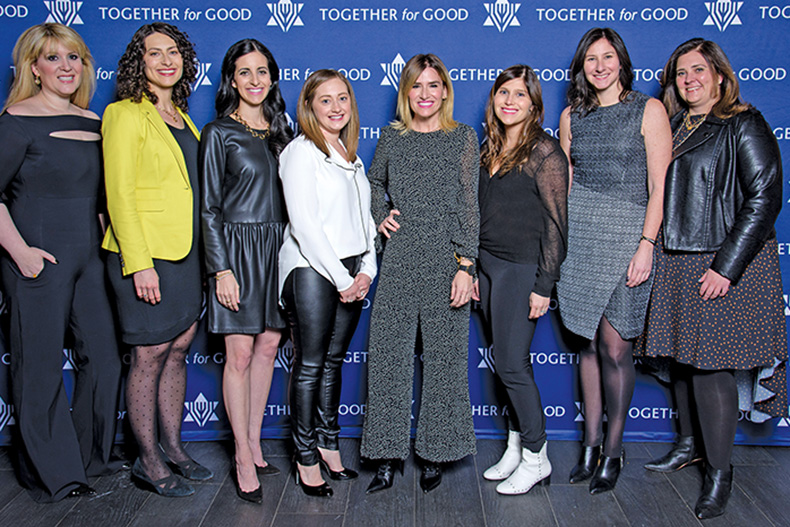
Empower, a new networking event sponsored by the JUF Professionals Network and JUF’s Young Women’s City Council, brought together 70 women to listen, connect, and be inspired at The Dalcy in Chicago’s West Loop in March.
Amy Beth Green, Jen Leemis, Lindsey Paige Markus, and Revi Pearl co-chaired the event. Leemis welcomed everyone to the event. “Tonight is about celebrating the common goal-women connecting and showing strength through empowering each other,” she said.
Aleeza Lubin, Young Women’s City Council Campaign Chair and Advisor, spoke to the strengths and diversity of Chicago Jewish women and the difference they make through JUF.
“We are unique, multi-faceted individuals with wide-ranging interests, friends, and talents,” Lubin said. “When we join forces, make no mistake, we are a powerful community of women, strong and vibrant and critical to the strength and success of everything JUF seeks to achieve.”
Then Webb-joined by Markus, who did a Q and A with the speaker-chronicled her journey from a stay-at-home mom with a side hustle to a leading business woman disrupting the hair industry.
In 2008, after taking a break from working in a full-service hair salon to care for her two young sons, Webb felt the itch to return to work. She recognized the confidence and happiness born from a good hair day and sought to bring that experience to other women with a mobile blowout service. Eventually, she turned the idea into a multimillion-dollar platform with the creation of Drybar in 2010.
Webb explained that maintaining her strong vision for the company from the outset helped Drybar create and fill a niche in the hair care industry.
The first Drybar, which opened in Los Angeles, was an overnight sensation. Drybar has since expanded to more than 100 locations nationwide, including three in the Chicago area. Webb remains active in the business as the Chief Creative Officer, overseeing the hiring and training of more than 3,000 stylists across the country and leading the development of Drybar’s line of styling products and tools.
Webb acknowledged the importance of having a strong support network. As the daughter of entrepreneurs, she cited her parents as role models who taught her “by osmosis” to have the confidence to start her own business.
Now, Webb and her team hope to continue their successful formula as they expand their business with a new massage chain called Squeeze.
Without a doubt, Webb innately understands her customers and works diligently to give them what they want. Through her story of determination and innovation, she inspired the next generation of Jewish leading women at Empower to continue working hard and trust
their instincts.
Webb said, “I credit sticking to my resolve and having this very strong vision for my business, and it worked.”
Leslie Hill Hirschfeld is a freelance writer living in the northern suburbs of Chicago.
Other stories
-
Two local teens win national recognition
Recipients of the annual Diller Teen Tikkun Olam Awards
Read more -
Celebrating six young award winners cultivating the community
Introducing young adult award winners
Read more -
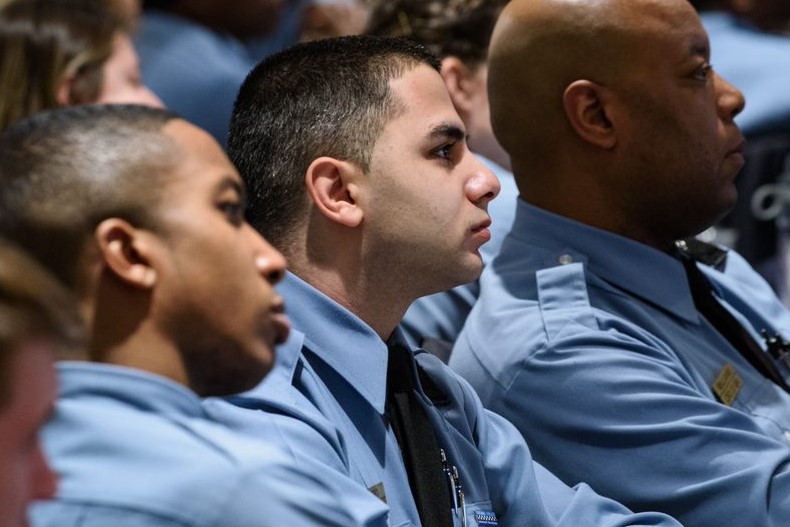
Looking back on the first decade of the Illinois Holocaust Museum and Education Center
Yvette Alt Miller
As Holocaust Remembrance Day approaches on May 2, the Illinois Holocaust Museum and Education Center is marking 10 years in its state-of-the-art 65,000-square-foot Skokie home. The nation’s second-largest Holocaust museum–and the world’s third-largest–features groundbreaking exhibits and education programs.
One recent addition: Museum-goers can interact with holograms of Holocaust surviviors. Other exhibits, including the “Take a Stand” Center and Harvey L. Miller Family Youth Exhibition, help visitors think about how to apply the museum’s lessons in their own lives.
“We’re leading globally, moving from education to challenge and inspiration in a museum setting,” explains CEO Susan Abrams. “The quality of our programs is remarkable and they help visitors look at our world in a different way.” Here are five people who have been impacted by the museum.
Sgt. Diane Shaw (Ret.)
When Chicago Police Sgt. Diane Shaw first heard the museum was offering police training, she wondered what the Holocaust could teach police officers today. After meeting survivors, she realized Holocaust education is a vital way to help officers rethink the purpose of their work.
“As a police officer, you put your uniform on every day, you go to your beat, and you just do your job,” Shaw explains; it can be hard to feel you’re making a difference sometimes. Learning at the museum helps recruits see their jobs in a broader way. “We talk about how Hitler used police officers to do horrendous things,” Sgt. Shaw said. Recruits then discuss ways they can “use the power of the [police] badge to help change society for the best” instead.
In her retirement, Shaw now works as a police training consultant, facilitating the Brill LEAD (Law Enforcement Action in Democracy) Program at the museum, helping train over 1,400 officers annually to better fight hate crimes and bias, safeguard against abuses of authority, and police with compassion.
Magda Brown
“People could not comprehend the Holocaust,” recalls Holocaust survivor Magda Brown of the years when she first arrived in the U.S. Born in Miskolc, Hungary, Brown survived Auschwitz and moved to Chicago in 1946. For years, she spoke about her experiences primarily to her children and close friends. Then the museum gave Brown a platform from which she can share her story with the whole community.
A member of the museum’s Speakers’ Bureau, Brown has shared her experiences with thousands of groups. She keeps meticulous records of every audience she addresses, and relishes the feedback that her powerful speeches evoke.
Brown recalls one student who summed up the importance of learning from survivors; he’d read about the Holocaust in school, but explained “Now I have a face to go with the story.”
Immaculee Mukantaganira
“I wanted to get involved in an organization that cared about the education and prevention of genocide,” explains Immaculee Mukantaganira, a survivor of Rwanda’s 1994 genocide. Mukantaganira called the museum with a request: “I wanted to speak at the events so I can talk about the genocide and how it can be prevented.”
Mukataganira has talked about her experiences at the museum, and donated items related to the genocide, in which her daughter and husband were murdered. The museum has helped her heal: “For me, it has been a relief to talk to people who really care, and to see that there are other people who are fully committed to preventing another genocide, another Holocaust…When you see someone crying for you and for what you experienced, that helps.”
Henry Cervantes
An activist and educator, Henry Cervantes teaches classes on nonviolence and peacemaking for prisoners at Cook County Jail. He credits the museum for changing the way he works-and transforming his own life as well.
“Before, I would lead big marches, events, demonstrations… I was always caught up in ‘how many numbers,’ ‘how much noise’ can we make.” When he met survivors at the museum, Cervantes saw that they too were committed to educating, but did it with love: “I saw peace and tranquility,” Cervantes recalled. “I started speaking from love and care, rather than anger.”
“What I’ve discovered is if you want to effect change in a community and make an impact, you have to reach people one person, one mind, at a time,” Cervantes said.
Keisha Rembert
Middle school teacher Keisha Rembert created the Holocaust curriculum in her western suburban school district, but it wasn’t until she took her students to the museum that they truly appreciated the lessons: hearing from survivors “brought the curriculum I’d written to life.”
Students are entranced by the exhibits and meetings with survivors: “It touches their hearts and makes it more real for them, and it makes them better people,” Rembert explains. Learning about the Holocaust is more important now than ever, too, she notes, as ignorance and rising rates of Holocaust denial mean that many people lack basic knowledge it.
Rembert now serves on the museum’s Education Advisory Committee, noting of the museum: “We’re lucky to have this world-class experience on our doorstep.”
The Museum is holding 10 celebration events over 10 months, including an anniversary celebration on April 4. For more information, visit ilholocaustmuseum.org/illinois-holocaust-museum-10th-anniversary/.
The Illinois Holocaust Museum and Education Center is a special grantee of JUF.
Yvette Alt Miller, Ph.D. lives with her family in the northern suburbs of Chicago.
Other stories
-
Two local teens win national recognition
Recipients of the annual Diller Teen Tikkun Olam Awards
Read more -
Celebrating six young award winners cultivating the community
Introducing young adult award winners
Read more -
Pulitzer-winning columnist Bret Stephens is the featured speaker at JUF’s Medical Professionals and Educators dinner on Sunday evening, May 19. Stephens is an op-ed columnist and associate editor for The New York Times .
Previously, he served as deputy editor of The Wall Street Journal’s editorial page, and a member of its editorial board. In 2013, he won a Pulitzer Prize for his foreign-affairs column “Global View” in that publication.
At only 28, Stephens became editor-in-chief of the Jerusalem Post . He is also author of the book America in Retreat: The New Isolationism and the Coming Global Disorder.
Stephens recently spoke with JUF News about the delegitimization of Israel, elections in the U.S. and Israel, and the future of his embattled profession:
JUF News : What can we do to combat the onslaught of anti-Israel sentiment we’re constantly witnessing these days?
Bret Stephens: We can stand against legitimizing anti-Zionism. To be “anti-Zionist” is not to be critical of Israeli policy, but to be a detractor of the concept of Jewish statehood. We have to draw a line between criticism of Israeli policy and the belief that Israel has no right to exist.
Anti-Zionism and anti-Semitism overlap. You can be an anti-Zionist who is not an anti-Semite, but the two have a way of coinciding.
What message will win the next U.S. presidential election?
The winning candidate is going to exude a sense of optimism about the U.S., sobriety about our politics, respect for institutions, and for some of the most distinctive aspects of American life-a thriving capitalist economy that respects private property and admires ambition, achievement, and success.
Speaking of elections, what factors do you see at play in Israel’s upcoming elections?
The good news is that Israeli institutions work. Here is a country where the rule of law operates. There is hardly better proof of that than an indictment of a sitting prime minister.
Israel now has a viable political alternative. In the combination of [Yair] Lapid and [Benny] Gantz… you have a robust, serious opposition that average Israelis can feel confident will not dangerously gamble their security. It’s proof of the success of the Israeli system.
Would you advise a student to pursue journalism today?
In my case, it’s turned out to be a wonderfully rewarding and meaningful career. You have a chance to fight for what you believe is right and serve the cause of the truth as you see it. That makes it precious.
No matter what happens to certain kinds of technologies, there is always going to be a need for accurate news and thoughtful analysis. What we’re experiencing now is a technological transition that puts stress on the business. But the idea that the business is ever going to vanish, I think is false. Journalism has a future. We haven’t quite figured out what it’s going to look like technologically, but there is no question that American society is going to be well-served by the Fourth Estate for many generations.
For really intelligent, capable, and literary-minded young people who want a career that provides not only constant interest but deep meaning, it is something to pursue.
Other stories
-
Two local teens win national recognition
Recipients of the annual Diller Teen Tikkun Olam Awards
Read more -
Celebrating six young award winners cultivating the community
Introducing young adult award winners
Read more -
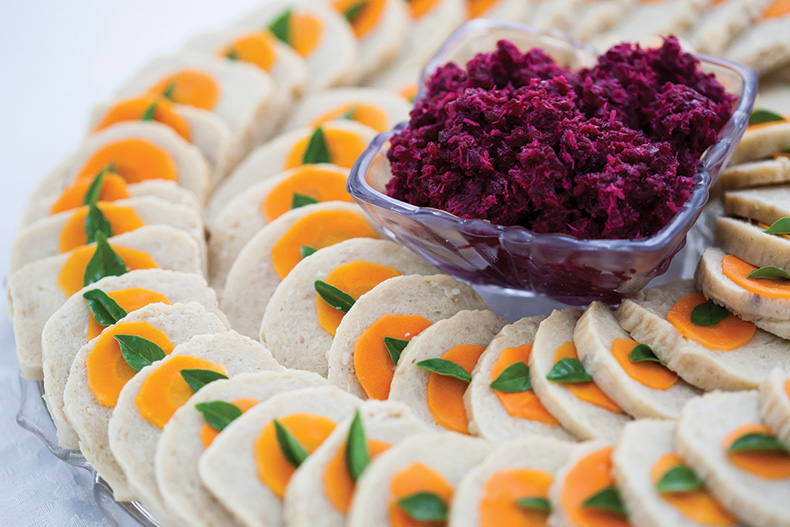
Someone needs to make a feature film about a family’s Passover Seder. I’ll bet Steven Spielberg could make a rollicking Indiana Jones-style adventure simply based on the search for the afikomen. We reached out to some prominent Chicagoans who consider Passover to be the most wonderful time of the Jewish year and asked them to share a favorite holiday memory or tradition.
Scott Turow, author:
“Passover is the one Jewish holiday I have enjoyed without reservation since childhood. I love everything about it-the story of the Exodus, whether or not it’s historically accurate, celebrates the yearning for freedom among all peoples. I’ve always thought it was wonderful that a religious ceremony of significance is celebrated at home. And I love the food–leaving aside gefilte fish.
I remember one year when I was about 10, we were invited to celebrate with beloved neighbors, the Feinbergs. Our hostess’s mother, Mrs. Kaplan, was making her famous gefilte fish and before we left for the Seder, my mother told me, no matter how much I hated it, I was eating a piece. When the course came out, I cut the fish ball into four large pieces and swallowed each one of them whole; no chewing. At that point, Mrs. Kaplan came by. “Oy, you loved the fish,” she said, and promptly slapped another huge piece down on my plate.”
Andy Hochberg, Chairman of the JUF Board of Directors:
“I had an Aunt Rose on my father’s side, who I believe was a performer. At Seders when I was very young, she would sing ‘ Dayenu ‘ with memorable passion. My Uncle Av, on my mother’s side, would sing ‘ Chad Gadya .’ We didn’t really see this part of the family more than once or twice a year. To this day, we still try to replicate their renditions of those songs.”
Larry Rand, folk musician and journalist:
“I used to attend Seders with friends in Rockford. It often would be 34 degrees in lakeside Chicago and 72 in Rockford, 90 miles away. Two years in a row, when the time came to open the door for Elijah, there was a person standing there! In both cases, the people at the door were gentiles who just happened to have a reason to knock on the door at that particular time and wondered how we knew they were there before they rang the bell. They probably didn’t get the joke even after our lengthy explanations. The first time it happened it was funny, but the second year, it was hysterical!”
Nell Minow, writer and film reviewer:
“I’ve been lucky enough to attend and even occasionally host many perfect Seders, one with nearly 100 people, one with just two (because he is seven months younger than I am, my husband had to ask the four questions). But the ones I remember even more fondly are the ones where things went wrong. There was the time I rashly agreed to host even though we had moved just two weeks prior. Because some of our things did not arrive in time, I had just one pot and one pan.
But my favorite memory was when my sisters and I were little, and my mother gave us some pointers so we would know what to expect because she wanted us to impress the relatives with our understanding of the holiday. One of my sisters found the afikomen and was very excited. She ran over to my mother yelling, “I found the pizza!” One of the deepest joys of Passover is that in celebrating the traditions of our people, we create and celebrate the traditions of our families.”
Stacey Ballis, author :
“As a writer of culinary fiction, the intersection of storytelling and food is right in my sweet spot. I have hosted our family Passover celebrations since I was in my 20s, and I look forward to doing it every year. A cherished memory is of the Passover when my husband’s family, who are not Jewish, flew up to join us for our Seder. If you have a chance to get a Southern preacher at your Passover table, I highly recommend it. My father-in-love [sic], a retired Methodist minister, gave some of the most mellifluous readings of any Seder we have ever had! One of the things I love most about being Jewish is this sense of continual growth, exploration, and openness to the new while celebrating the ancient.”
Emma Pope, Second City cast member:
“I must’ve been around 9 or 10 years old and my parents were holding the Seder at our house (not a regular event). We had been cooking for days, and had family coming in from different parts of the East Coast. Unbeknownst to me, the main course of dinner was also making the trip. My grandmother flew from West Palm Beach, Fla., to Washington D.C. holding an entire cooked brisket in her lap. She showed up at our door with an enormous pot and a huge grin. She knew no one else could’ve done the meat justice. It makes me laugh to think about trying to get that thing through security these days, I’m fairly certain it was over 3 ounces.”
Rabbi Shaanan Gelman,Kehilat Chovevei Tzion:
“The Passover Seder reanimates us. My grandfather-Dr. Abraham Gelman-was king of the castle; the head of the family, running the Seder despite the fact that he suffered for many years with Parkinson’s disease. As the disease progressed, he was not physically capable of leading the Seder, but we would place him at the front of the table out of respect. My grandmother dressed him up in regal clothing and finely polished shoes. One time toward the end of his life, he couldn’t move or stand up on his own at the Seder table. We began singing the words ” V’nomar le’fanav shira chadasha ” (and we will recite a new song before You) with great fervor.
Suddenly my grandfather opened his eyes and rocked himself back and forth. Struggling, he stood up. We continued singing in ecstatic joy as my grandfather slowly made his way around the Seder table. It took about 10 minutes, and then he collapsed into his seat, immobile once again. This is the magic of Seder night; we transition from slavery to freedom. Not only the Jews of ancient Egypt but we, even those who are imprisoned in body or in spirit-are released on Passover.”
Donald Liebenson is a Chicago writer who writes for VanityFair.com , LA Times , Chicago Tribune , and other outlets.
Other stories
-
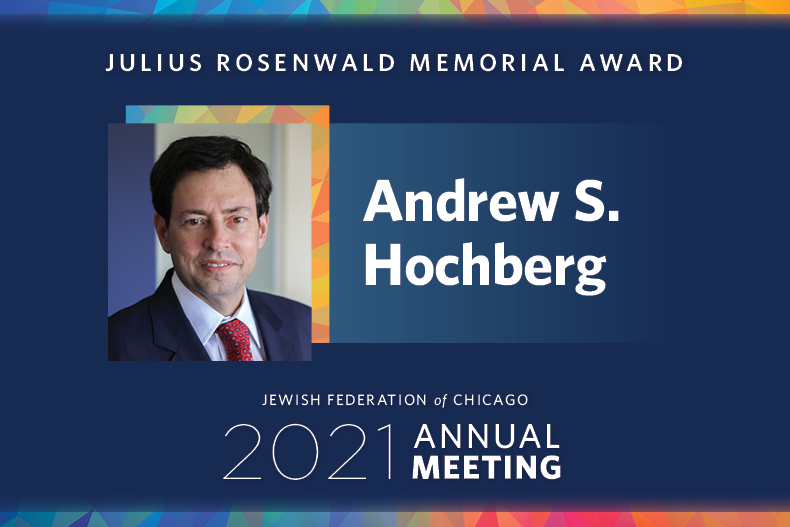
Meet Andrew S. Hochberg, 2021 Julius Rosenwald Memorial Award recipient
Celebrate Andy Hochberg at the virtual Annual Meeting on Sept. 14
Read more -
Two local teens win national recognition
Recipients of the annual Diller Teen Tikkun Olam Awards
Read more -
Celebrating six young award winners cultivating the community
Introducing young adult award winners
Read more
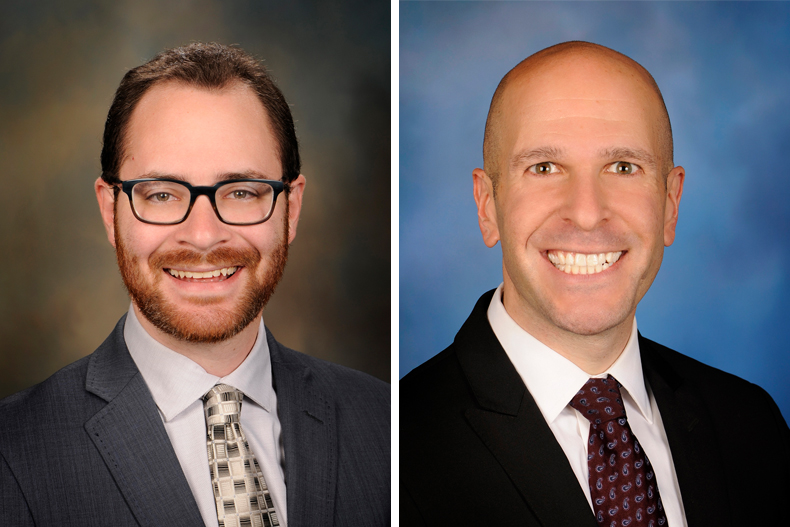
Joining the large freshmen class — 33 of the 118 Illinois State Representatives — are four Jewish representatives: Dan Didech (59-D), Jennifer Gong-Gershowitz (17-D), Rabbi Yehiel Kalish (16-D), and Bob Morgan (58-D). They join seven other members of the Jewish Caucus.
All four representatives spoke at JUF’s Government Affairs Committee meeting in January.
Didech is an attorney specializing in local government. He has represented villages, school districts, community colleges, and park districts. While Vernon Township Supervisor, he expanded senior services, summer camp programs, and an after-school STEM program, and modernized the food pantry, while reducing property taxes. His bill, H.B. 887, concerns the denial and revocation of Firearms Owners Identification Cards for people convicted of stalking in which firearms were used. Didech grew up, and now lives with his wife in Buffalo Grove. His district includes Vernon Hills and parts of Wheeling, Buffalo Grove, Mundelein, and Libertyville.
As director of the immigration program at the Highland Park/Highwood Legal Aid Clinic, Gong-Gershowitz had a front-row seat to seeing where the gaps are in laws pertaining to domestic violence survivors, the Dreamers, and low-income members of the community. Now, she hopes to have a different kind of impact, by using her legal background to create effective laws. In her new role, Gong-Gershowitz draws on her personal experience — as the granddaughter of Chinese immigrants who fought deportation — and on her work with the Glenview Education Foundation and the Social Justice Committee at Temple Jeremiah. She lives with her husband and three children in Glenview; her district includes parts of Northbrook, Morton Grove, and Skokie.
“I am really excited about the opportunity to help people through government.” Kalish said. “I threw my hat in the ring because, though I have a successful business, I realized how important this seat is to our community.”
Kalish is the first rabbi to serve in the Illinois legislature, and the first Orthodox Rabbi to serve in any state legislature — but not the first member of his family to become a legislator, as his sister serves in the Colorado state legislature. Kalish brings government affairs experience from working for Agudath Israel of America as a lobbyist. He is a co-founder of S4 group, which advises nonprofit organizations, healthcare facilities, educational entities, and companies. He belongs to Yehisvas Brisk, Adas Yehsururn, and Shaarei Tzedeck Mishkan Yair. Kalish lives with his wife and six children in West Rogers Park, and his district includes Skokie.
Morgan is experienced in the ways of Springfield, having served as lead healthcare attorney for the state of Illinois. He became well-known for his leadership in implementing the Illinois Medical Cannabis Program, a project which received accolades from both Democrats and Republicans. Now a partner specializing in health care, regulations, and policy at Benesch Law, Morgan is active as a Board member of the Anti-Defamation League, a Trustee of Equip for Equality, and a member of Congregation B’nai Jehoshua Beth Elohim.
“I am looking forward to pushing for a state budget that supports our human service agencies and public education, while ensuring that we live within our financial means,” he said. “We have seen the devasting impact of not having a state budget, and I will be drawing from my healthcare and human services background to help turn the state of Illinois around for those that need it most.” He lives with his wife and two children in Deerfield; his district includes Northbrook.
State Sen. Ram Villivalam also spoke at the meeting. Though not Jewish, he is committed to serving the Jewish community; having worked for U.S. Congressman Brad Schneider, Villivalam has a good grounding in issues of importance to the Jewish community.
Suzanne Strassberger is the associate vice president, Government and Community Partnerships, of JUF/Jewish Federation.
Other stories
-
Two local teens win national recognition
Recipients of the annual Diller Teen Tikkun Olam Awards
Read more -
Celebrating six young award winners cultivating the community
Introducing young adult award winners
Read more -
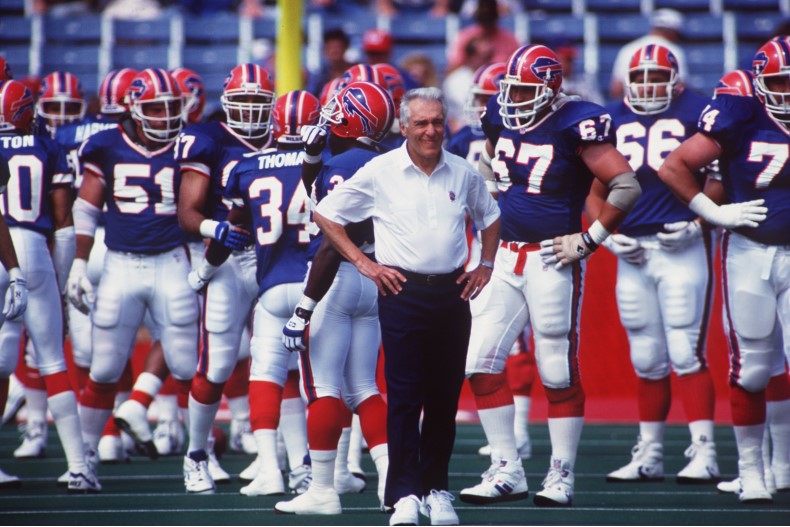
The caller to Marv Levy’s weekly radio show in Buffalo, N.Y., had a simple request. Come to think of it, it was more of a plaintive wail.
“Coach, don’t go back to the Super Bowl,” the man said. “I can’t stand it. It’s just awful.”
Levy’s Bills, the juggernaut of the early 1990s in the NFL’s American Football Conference (AFC), had made it to three straight Super Bowls and lost them all, first to the New York Giants, then to the Washington Redskins, and then to the Dallas Cowboys. Excruciating? Of course. Too much for Levy to bear? Not a chance.
“Sir, I understand your anguish,” Levy replied. “I’ve shared it. But I’m glad you’re not on my team.”
It was 1993. The Bills would, in fact, make it back to the big game. And they would lose it, to the Cowboys, again. If Levy, who was inducted into the Pro Football Hall of Fame in 2001, is known widely for one thing, it’s belonging to the only team to suffer the indignity of four consecutive Super Bowl defeats.
It’s a shame on many fronts, not the least of which is a grand mischaracterization: The Bills winning four straight AFC crowns wasn’t an annual prelude to disappointment, but rather one of the greatest achievements in NFL history. Levy today calls the whole experience a “wonderful pleasure, believe it or not.”
Levy knows a thing or two about staying power. The native of Chicago’s South Shore neighborhood is 93 years young. Many a football fan in the city has encountered Levy on one of his daily walks near his Lincoln Park home, or as he bounds about Northwestern’s downtown campus. He takes classes there in the humanities — history, mostly — this lifelong learner, with a master’s degree in English history from Harvard.
About Harvard: Levy was a law student there in the 1940s, when the head football coach offered him a position on the Crimson staff. Torts and contracts were replaced by X’s and O’s — and history.
“I don’t regret it at all,” he said.
Levy’s mother, Ida, came to America from Russia at age four. Father Sam, born in England, arrived young, too. Sam Levy earned a Purple Heart at the Battle of Bellau Wood in France during World War I. What did he know from football? Not much, but he trusted the inclinations of his son, who’d served in the Air Force, though not in combat, during World War II.
It was in the service where Levy experienced what he describes as one of the only anti-Semitic events of his life. A soldier from Levy’s unit called him a “kike,” and the two men had a fistfight.
“When it was over,” Levy recalled, “the rest of the guys in the unit came up and apologized.”
Broadly told, the narrative about Levy — those Super Bowl losses — utterly misses the mark. His intelligence, open-mindedness, and keen sense of fairness that made him revered as a coach were present in his early years in South Shore, where his friends and classmates — Greeks, Germans, Irish, Scandinavians — were, by and large, sons and daughters of immigrants as he was. Levy was elected president of his class at South Shore High School. He also became student body president as an undergraduate at Coe College in Cedar Rapids, Iowa.
“I’m not real observant,” he said, “but I believe in God. I respect all religions as long as they’re not trying to tear apart others. My father was one of 13 kids, some very religious, some not at all. But we always respected everybody.
“My religion wasn’t a big thing I dealt with in football, but I always wanted good people around me who accepted others. I have respect for people who are very religiously oriented — and some of my players were — so long as it’s not prejudicial toward other well-meaning people.”
Levy means well. His dalliances with the Super Bowl are a quarter-century old, and what he has engaged in since arguably is even more relevant. He learns. He walks (and sometimes runs). He’s pondering a fifth book. With wife Fran, he still travels. They thaw out for a while every winter in the California desert, which he calls “wimping out.”
We should all be so wimpy.
Steve Greenberg is a sports columnist for the Chicago Sun-Times.
Other stories
-
Two local teens win national recognition
Recipients of the annual Diller Teen Tikkun Olam Awards
Read more -
Celebrating six young award winners cultivating the community
Introducing young adult award winners
Read more -
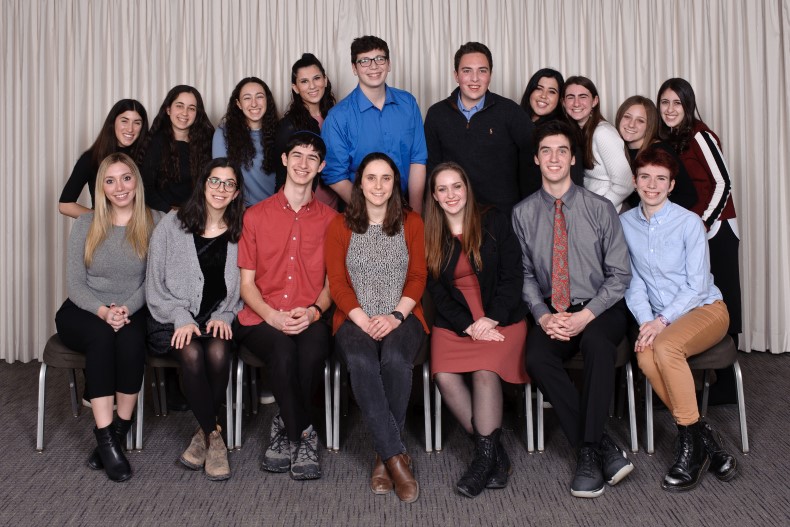
Springboard, the Jewish Teen Alliance of Chicago, and JUF have announced the third cohort of 18 Under 18 honorees. In February, the group came together for the 18 Under 18 Leadership Event, where they learned from a panel of Jewish leaders and began work on their signature projects, which they will present at 18 Under 18: A Celebration of Jewish Teens on April 10.
Mazel Tov to the honorees:
Dina Barrish , a junior at Rochelle Zell Jewish High School, currently serves as Moriah Congregation’s USY Chapter president and is a Diller Teen Fellow.
Sarah Bloom , a senior at Evanston Township High School, has served as a Hebrew in the High Ambassador since her sophomore year and is a Project Teen-Seed613 Fellow.
Ella Brown , a junior at Oak Park River Forest High School, serves as the NFTY CAR Membership vice president and is on her school’s Jewish Student Connection leadership team.
Raquel Cohen , a senior at Walter Payton College Prep, is a Write On For Israel fellow; she previously participated in Voices: The Chicago Jewish Teen Foundation.
Sophie Draluck , a junior at Highland Park High School, is a former Diller Teen fellow and is the founder and managing director of Cycle Forward, which helps women in need access hygiene products.
Sophie Frankenthal , a senior at Hanna Sacks Bais Yaakov High School, is a member of the Yachad Chicago High School Board and leads several Yachad programs.
Joshua Zach Glucksman , a junior at New Trier High School, is the president of the Am Shalom Temple Youth Group and is also involved with NFTY-CAR and OSRUI.
ShulamitHorton , a senior at Deerfield High School, is the chair of the United States Holocaust Memorial Museum Teen Board and the president of the Deerfield High School Student Council.
Ariana Handelman , a junior at Rochelle Zell Jewish High School, is the vice president of the Anshe Emet USY chapter; she also serves as a leader in her CHUSY region and is a current Diller Teen fellow.
Rebecca Jacobson, a senior at Glenbrook South High School, serves as the Congregation Beth Shalom USY Chapter President and participated in AJC’s Leaders for Tomorrow.
Maxine Kalika , a senior at Stevenson High School, is the regional president of NCSY and co-president on the chapter board; she is also currently an intern with StandWithUs.
Marc Luban , a junior at Rochelle Zell Jewish High School, currently serves on the CHUSY Regional Executive Board as the Religion/Education vice president.
Emma Rosenberg-Rappin , a senior at Deerfield High School, has been actively involved with OSRUI and Congregation BJBE, serving as vice president of the youth group.
Andrew Scott , a junior at Stevenson High School, currently serves as the B’nai Tikvah USY Chapter president and is involved with USY on a regional and national level.
Brian Silverstein , a senior at Rochelle Zell Jewish High School, has served in several leadership positions in his school and is currently president of the student body.
Elitsa Mairav Reinglass Sklar , a junior at Rochelle Zell Jewish High School, currently serves as her school’s Israel Club president and is a Write on for Israel fellow.
Jason Tothy , a junior at the University of Chicago Lab School, is president of his Temple Youth Group at Chicago Sinai Congregation and is a NFTY CAR Cabinet Board Member.
Randy Wilk , a senior at Deerfield High School, has worked at the Keshet Sunday School since 2012 and is the president of Warrior Buddies, an inclusion club for students with special needs.
For more information and for tickets 18 Under 18: A Celebration of Jewish Teens, visit www.juf.org/springboard/18-Under-18
Other stories
-
Two local teens win national recognition
Recipients of the annual Diller Teen Tikkun Olam Awards
Read more -
Celebrating six young award winners cultivating the community
Introducing young adult award winners
Read more -

Marie Kondo is all about getting rid of stuff, which is good. But some stuff is useful. And, just as important as sparking joy is avoiding the bad kind of spark, the kind that inflames irritation and kindles annoyance. Some handy housewares can smooth the friction of living with someone you (otherwise) love– so that you aren’t griping and sniping all the time. One trip to the store, or a half-hour online with a credit card, can help you kick a lot of entirely preventable bickering.
1) Hang a dry-erase calendar in the kitchen.
Everyone can write on it. Use different colors for different kinds of events. This way, you each know each other’s schedule at a glance and won’t double-book yourselves. Reserve it mostly for major one-off events, not weekly or daily ones. It’s especially useful for tracking short-term medications. Keep the markers right next to the calendar. Velcro them to the wall, even.
2) Hang a dry-erase board on the fridge.
When you run out of something- food, but not only– write it down on this. Then take a picture of the list with your phone, and take that with you to the store. Boom: a self-generating shopping list.
3) Get a bowl, basket, or hook-rack for keys.
Put it by the door. It can be any small bowl or tray you are not using. You might want one for each entrance, depending on which keys you use where. You can theme the hooks to your décor, or to which keys go on them. You also might want to tag or color-code the keys.
4) Get a caddy for the remotes.
Use a desk organizer, designed for pencils and such, for your many remotes. When TV time is done, put all the remotes back in the caddy. Then you will know where they are for your next binge-watching session.
5) Get a mat, rug, and tray for shoes.
When it’s not rainy or snowy, it’s dirty outside. So, one rugged mat goes outside the door for scraping shoes, another absorbent one inside for wiping-and then the shoes go on the tray indoors. There are even schmancy shoe trays for the front-door area. No more traipsing in dirt, searching for shoes, or having them block the doors.
6) Put security lights on a timer .
Then there’s no more worrying if they are on or off at the wrong time, or who left them that way. Or getting back out of bed once you remember. Or worrying if they are on when you are out of the house. There are apps for this now, too.
7) Set aside a marker for labeling food .
If there is something you need to eat, for whatever diet or restrictions you are on, label it, or expect it to not be there when you need it. Also, if you are saving something for an occasion, label it as such. You can also label produce– on a bag– as to when it was bought.
8) Make labels for shelves.
Remember Dymo labelers? They sort of look like sci-fi guns and spit out tape with words you stamp on them. You can use those– the tape even comes in different colors– or make labels on your computer and print them out. Label medicine cabinet shelves especially. But you can also label the shelves in the kitchen (especially for you kosher types), linen closet, and office-supply area. Then, you are not spending half your life yelling, “Where are the scissors?”
9) Have enough towel racks.
Few things cause as many arguments as wet towels left on the floor. If there is no more wall space in the bathroom, you can hang some racks on the back of the door, or even two on the back of your bedroom door. You might also just leave a laundry basket in the bathroom. Speaking of which…
10) Get multiple laundry baskets.
Ditch the hamper (or repurpose it for toys). Put three or four laundry baskets on the floor of your bedroom closet and sort your dirty clothes as you take them off. When a basket gets full, wash it. If you don’t have to navigate stairs to get to the laundry room, you can use a sorting cart. They even come with sections. Now, no more sorting clothes as they go into the washing machine-you sorted them already.
Bonus: Designate a device-charging area.
Take one surge-protected power strip, put all the charger plugs in it, and charge stuff with it every night-phones, tablets, whatever. The next morning, your gizmos will be all ready, willing, and able-and right where you left them.
We have the technology, as they say, to end a great deal of common household bickering. Nothing on this list should break your bank, but it should save wear and tear on your nerves– and your relationship. And, they will leave more time for the joyful kinds of sparks.
Other stories
-
Two local teens win national recognition
Recipients of the annual Diller Teen Tikkun Olam Awards
Read more -
Celebrating six young award winners cultivating the community
Introducing young adult award winners
Read more -