In a move to accelerate the community’s investment in Jewish engagement in the next generation, the Jewish Federation of Metropolitan Chicago has launched the Fund for the Future.
Seeking to raise tens of millions of dollars, the Fund for the Future will quickly infuse needed capital into gateway experiences for young Jews over the next five years, with plans for sustainability of critical Next Generation programs in the years that follow. Initial gifts totaling over $11 million have already been raised.
“This is not an initiative born out of crisis, this is an initiative born of opportunity,” said Bill Silverstein, Fund for the Future Chair. “Over the last decade, we have invested heavily in new ways to connect young Jews to Israel, to Jewish life, and to one another. Every year, we and our community partners engage more children, more teens, more college students, more young adults, and more young families in Jewish life.
“We have developed the experience and expertise to take Jewish engagement to a transformational level in Chicago and we are ready to create many, many more exciting opportunities for Jewish involvement across our community,” Silverstein said. “But we need additional support to do that.”
All gifts to the Fund for the Future will be recognized as gifts to the Jewish Federation Centennial Campaign-and also will be highlighted at a special May 29, 2019 community event honoring Steven B. Nasatir’s 40 years as President of the Jewish Federation of Metropolitan Chicago.
Commitment to Jewish continuity has been a hallmark of Nasatir’s tenure, and he has long held that Chicago’s Jewish community needs to send more children to Jewish pre-schools, Jewish camps, and Jewish day schools; bring more teens and college students to Israel; and ensure that more young adults and young families are building Jewish homes and connecting to community.
To that end, the Jewish United Fund/Jewish Federation of Metropolitan Chicago has pioneered and supported wide-ranging programs to make Jewish life more accessible and affordable, from JUF Right Start preschool gift vouchers and free monthly PJ Library books for young families; to scholarships for Jewish summer camp and Jewish Day Schools; to the Ta’am Yisrael 8th grade Israel Trip and Springboard alternative spring breaks; to Hillels of Illinois, JUF Birthright Israel trips, and longer duration Israel Experiences like MASA and Onward Israel for young adults.
Other stories
-
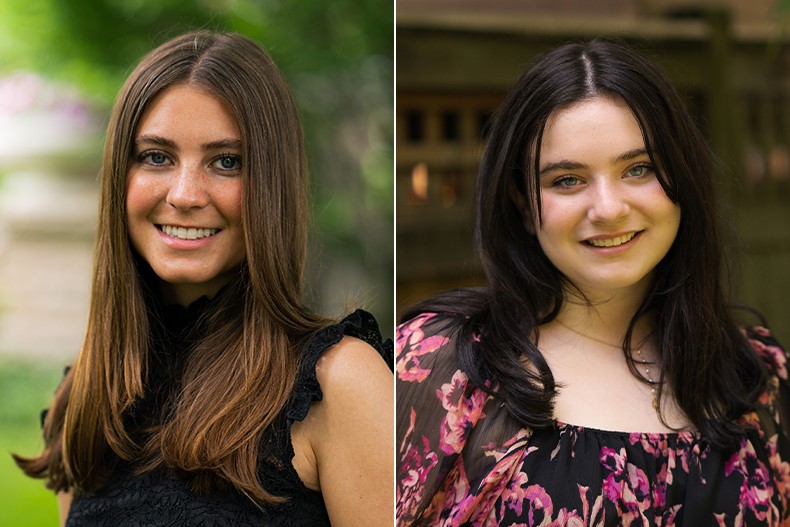
Two local teens win national recognition
Recipients of the annual Diller Teen Tikkun Olam Awards
Read more -

Celebrating six young award winners cultivating the community
Introducing young adult award winners
Read more -
Community to honor Steven B. Nasatir’s era of service to Jewish people at gala event in May
CINDY SHER
Save the date for a celebration five decades in the making.
On Wednesday, May 29, the Chicago Jewish community will honor Dr. Steven B. Nasatir’s 40-year tenure as President of Jewish United Fund/Jewish Federation of Metropolitan Chicago. With Nasatir at the helm, JUF has grown to be one of the largest and most efficient charitable organizations in the country, and Chicago has become renowned as one of the nation’s strongest and most vibrant Jewish communities.
Longtime JUF leader Michael H. Zaransky will chair the gala celebration, to be held at 5:30 p.m. at the Hyatt Regency Chicago. Lester Crown is the honorary chair of the event.
Nasatir-the longest-serving Jewish federation chief executive in North America-has transformed the Jewish United Fund from a traditional fundraising organization into an innovative, multi-faceted philanthropic, programmatic, and advocacy enterprise. Under his leadership the Chicago federation has conceived, funded, and implemented initiatives that serve an ever more diverse, dispersed, and changing community, including half a million Jews and non-Jews in Chicago and millions around the world.
Nasatir has led the community through every pivotal moment in the last 40 years of modern Jewish history. He has been a tireless advocate for Israel’s security, for the rescue and resettlement of Jews from hostile lands, for providing for the needy and safeguarding the community, and for inspiring the next generation of Jews.
“In May, we will celebrate and thank Steve, chronicle his career, and mark our collective achievements under his leadership,” Zaransky said. “The true essence of Steve’s contributions are his vision and integrity; energy and drive; relentless pursuit of ambitious goals; love of Israel and the Jewish people; passion for our national and international systems; and pride in his Jewish and American DNA. These are the qualities that define Steve, and which account for his remarkable legacy as a transformational leader.”
The gala will also spotlight the newly-launched Fund for the Future, an initiative dedicated to accelerating community investment in Next Generation programming. The Fund, chaired by Bill Silverstein, will seek to raise tens of millions to ensure a bright Jewish future.
Nasatir will transition to the new role of JUF Executive Vice Chairman on July 1.
Other stories
-
Two local teens win national recognition
Recipients of the annual Diller Teen Tikkun Olam Awards
Read more -
Celebrating six young award winners cultivating the community
Introducing young adult award winners
Read more -
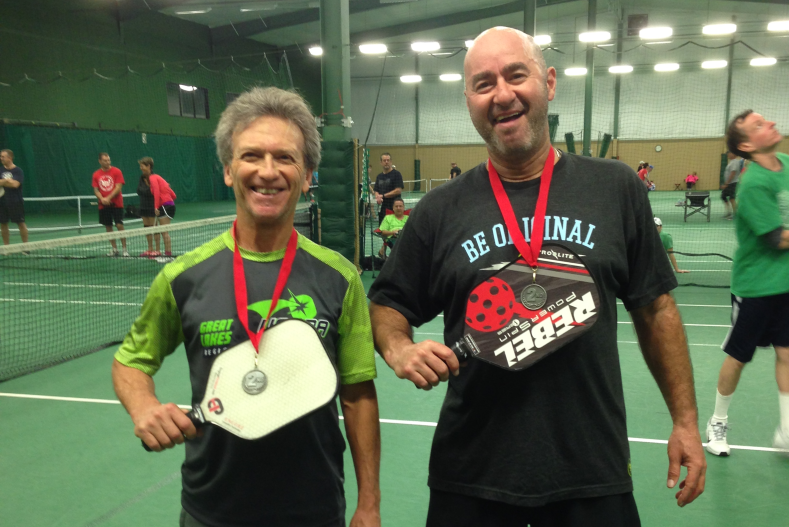
When Seymour Rifkind was 16 years old, he built parallel bars in the backyard of his Skokie home so he could practice more. As the concrete dried, he had the idea — or some might say the chutzpah — to etch into the cement that in two years’ time, he would become the 1969 parallel bars and all-around state champion.
“Little did I know how much of an impact that would have on the rest of my life,” Rifkind said. “Because when you write your goals down and you share them with others, that gives you additional motivation to do whatever you have to do in order to attain them.”
Finishing high school as a state champion set a tone for many other future accomplishments for Rifkind. He won a gold and bronze at the 1969 Maccabiah Games; he coached over 40 all-Americans and a handful of Olympians; he finished the Chicago, New York, and Boston marathons. Today, he’s one of the world’s biggest advocates of pickleball, the fast-growing paddle sport that combines elements of tennis, badminton, and table tennis.
“I never really thought I’d find anything that gave me that same kind of thrill (as gymnastics) where I just was just totally 100 percent immersed in it,” Rifkind said, “and here, in my senior years, I find pickleball.”
Rifkind has always been an athletic thrill-seeker. He’s a black belt and instructor in Tae Kwon Do and has completed an Ironman triathlon, 50K ultra-marathon and the Badwater 135-mile solo ultra-marathon (about which he made a documentary). Now in his 60s, he has become an international medal-winning pickleball player and instructor.
As for where he gets his hard-working, never-give-up attitude, he attributes much of it to being the son of a Holocaust survivor.
Albert Rifkind was one of few survivors in his family. He lost his older and younger brother — the smarter, better, nicer brothers, Albert used to say — and that racked him with guilt. Making his father proud naturally became a huge motivator for Seymour. His father told him many stories of survival, and the primary takeaway was that it wasn’t usually the physically strongest who survived.
“I always prided myself on being mentally the strongest person out there, being able to focus, and being able to deal with pressure and things of that sort,” Rifkind said.
Looking back, Rifkind also sees a common thread in his successes: strategic planning. For example, writing one’s goals in cement.
“I recognized (being successful at gymnastics) wasn’t going to happen accidentally — you needed to plan,” he said.
Rifkind said he practiced as much as three times a day and competed even while ill. “My attitude was you never make an excuse, you find a solution.”
Rifkind has spent much of his life transmitting these values through coaching, and nowadays, he’s coaching the coaches. In 2015, he founded the International Pickleball Teaching Professional Association (IPTPA) and travels all over the world creating professional standards for pickleball instruction.
Oddly enough, Rifkind’s lifelong support for the Chicago Bears led him to pickleball. Four years ago, he was traveling to see the Bears play at different stadiums across the country when some friends introduced him to the sport.
“Five minutes on the court and I was hooked,” he said.
Rifkind said he played for as many as five hours a day at first, but in wanting to learn more and improve his game, he discovered there were no coaches.
At the 2015 pickleball nationals, Rifkind convened the game’s top players and formed the IPTPA. The idea is to teach teachers properly to expand the number of athletes all over the world and eventually get pickleball recognized by the International Olympic Committee. Rifkind, ever the strategic planner, says pickleball is about 12 years away from the Olympics.
Rifkind finds his new purpose rather fitting. “Life, for me, made a big circle,” he said.
When he’s not traveling the globe, Rifkind calls Riverwoods home, but you’re more likely to find him at the River Trails Tennis Center in Arlington Heights, home of the Chicago area’s premier pickleball program — which, of course, he started.
Other stories
-
Two local teens win national recognition
Recipients of the annual Diller Teen Tikkun Olam Awards
Read more -
Celebrating six young award winners cultivating the community
Introducing young adult award winners
Read more -

When my husband and I started dating a decade ago, I pretended to like dogs and he pretended to like sushi.
This continued until one evening at dinner (sushi), out of the blue, I casually said: “You know, the lifespan of pugs is 12 to 15 years. How old are Pugi and Mac? Just curious.”
Vic paused, and then said, “They’re three.” My eyes widened in horror. He noticed. I finally admitted that I never liked dogs, which was very inconvenient given that he had two young ones.
Vic, sad but sincere, offered to find another home for the pugs. I said, thank you, but no, that’s not fair. Negotiations yielded the following: I agreed that the dogs could live out their lives until their natural end, but when they died, we had to be dog-free for a yet-to-be-determined period of time (“forever” sounded good to me, but I had years before I needed to fight that fight).
He agreed, with the caveat that I not hasten the dogs’ death by letting them play in the street. Also, as an addendum, he was done with sushi. Deal complete.
Until March 2010, just before Passover. Friends asked us to dog-sit their standard poodle while they were out of town. Enter Aspen, who was coming from a house with four poodles where two of them attacked her regularly. She didn’t make any eye contact and was very skinny. After a week with us, she gained weight and started hugging us with her eyes.
As we prepared for her to go home, I felt — sad. Was it possible that I loved this dog? I looked at this beautiful, elegant lovebug and didn’t want her to leave. Upon hearing this, my mom looked at me and asked slowly, “Who are you and what have you done with Polly?”
The connection was real, because when it came time for Aspen to return home, she wouldn’t go back into her house. She stuck by Vic’s side and wouldn’t budge.
Vic told her owners that we knew they were having problems with the dogs fighting, so if it would help them, we’d be happy to keep Aspen. They agreed.
So now we had three dogs: Cuddle-bug Mac, evil princess Pugi, and my sweet girl, Aspen.
Then, in 2014, Mac died. Yes, from natural causes. And after a few weeks, the following words tumbled out of my mouth: “I feel like we’re a three-dog house with only two dogs.”
Vic tried to hide his smile as this new reality washed over me: I was officially a dog person. And then he said what he’d said after we took in Apsen: “You don’t find the dog. The dog finds you.”
In April 2016, again just before Passover, one of Vic’s acquaintances asked us to dog-sit. Enter Bruiser. I think he’s an American bulldog. Vic thinks he’s an Old English bulldog. But what was undeniable was that Bruiser was totally different than our now-elderly dog Pugi, who would give us the finger if she could, and our elegant lady, Aspen.
Bruiser loved squeaky toys, barked, and would charge at you, sometimes knocking you over — without guilt or regret — to give you a hug.
After Bruiser was with us for a few weeks, his original owner didn’t seem to be in a hurry to take Bruiser back. One day, Bruiser peed on our bed, and I was furious. Vic said he’d call the owner and tell him to pick up Bruiser.
Panicked, I yelled, “But I love him! I’m mad, but I don’t want him to go!” Vic is right. The dog finds you.
Conveniently, the owner decided he didn’t want Bruiser back. We were back to having three dogs, all with completely different personalities, and all made us laugh every day.
At age 13, Pugi got sick, and after we did all we could, we put her down last year.
According to the deal we made when we first started dating, this should have been the beginning of our dog-free period of time. But here we are with two dogs who can drive me crazy, but I love them so much. I am officially a dog person.
Polly Levinson is a freelance writer living the northern suburbs of Chicago.
Other stories
-
Two local teens win national recognition
Recipients of the annual Diller Teen Tikkun Olam Awards
Read more -
Celebrating six young award winners cultivating the community
Introducing young adult award winners
Read more -
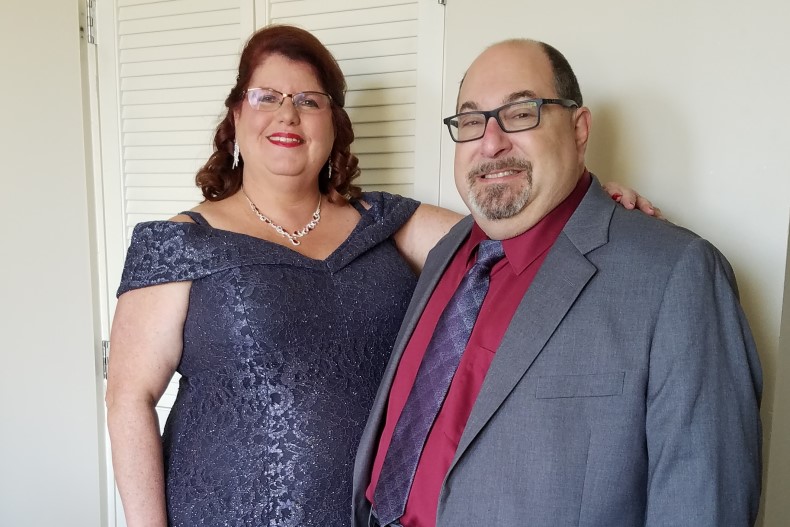
New Jewish marriage workshop to help repair strained marriages
Michelle Cohen
For some couples, initial romance, unfortunately, can turn into disillusionment and even misery. For Jewish couples in these situations, a new local resource strives to provide hope and a way forward towards a happier, healthier relationship.
Tikkun HaBriet (“repairing the covenant”) is a new marriage support program based on Jewish faith values created by Phil and Helen Kornick, of Mount Prospect, whose own marital journey inspired them to help others, with the spiritual and scholarly guidance by Rabbi Steven Peskind.
Twelve years ago, when the Kornicks were experiencing a series of crises that over time had damaged their marriage, Helen looked for a marriage support program within the Jewish community, only to find a lack of options. They eventually got involved with a Catholic group, and soon discovered how the values could translate to Jewish belief. Inspired by their own successful journey as well as the program’s more than 75 percent overall success rate (where success is defined as staying married), the Kornicks began volunteering at the program’s weekends before asking for permission to start a Jewish group based on the Catholic version.
As part of the Tikkun HaBriet program, each couple progresses through three steps. First, they attend a weekend experience, where they hear from a Jewish clergy member and three other couples who have gone through the program. These presentations focus on a variety of themes including forgiveness, healing, thoughts and feelings, emotional intelligence, and more-all through a Jewish lens. Rather than sharing their personal problems with the larger group, couples retreat to their rooms to work on the exercises, to ensure their privacy.
The next step is a series of six weekly workshop programs where couples practice communication tools and continue the marital renewal begun on the weekend. Finally, couples attend a monthly support meeting called Continuing Our R’fuah (healing) Experience, or CORE, which allows couples to form bonds with other couples going through similar experiences. This “no-judgment zone” provides a “safe space” for healing, said Phil, Helen’s husband of 34 years.
Helen described the process as akin to recovering from a serious injury: “If your marriage is in critical condition, you’re going to go into ICU for a period of time… at the end of the weekend, the goal is that there’s a slight hope that there’s an opportunity for healing,” she said. “The workshops are then your outpatient physical therapy where you are in the real world all week long, and then once a week, you’re coming in for a tune-up.”
After their journey through the program, the Kornicks were able to resume their happily married life and even weather crises like the terminal illness and death of their daughter Heather.
The Tikkun HaBriet program is designed to treat a variety of marital problems including infidelity, child loss, addiction issues, and verbal abuse issues. The only requirements for participating are committing to the process and ending any extra-marital affairs. They also caution that marital partners suffering from emotional or physical abuse are referred to seek immediate professional care.
As a result of the program, “we’ve had couples attend who got divorced and remarried, and even people who have been on their way to get divorced the week after and called it off,” Phil said. Some couples who intended to learn how to speak civilly to each other during the divorce process invited the Kornicks to their renewal vows.
“If you’ve fallen out of love, or feel like your situation is beyond hope,” Helen said, “this program will offer you the tools and strategies and a new mindset to rediscover why you married the love of your life in the first place.”
Chicago’s first Tikkun HaBriet program will begin on the weekend of March 15-17 at the Deerfield Marriott Suites, and will be accompanied by workshops the following six Sundays.
For more information, contact Phil and Helen Kornick at 847-290-1880 or [email protected] , or visit TikkunHaBriet.org .
Other stories
-
Two local teens win national recognition
Recipients of the annual Diller Teen Tikkun Olam Awards
Read more -
Celebrating six young award winners cultivating the community
Introducing young adult award winners
Read more -
Synagogues and agencies commit to inclusivity this month and beyond
Michelle Cohen
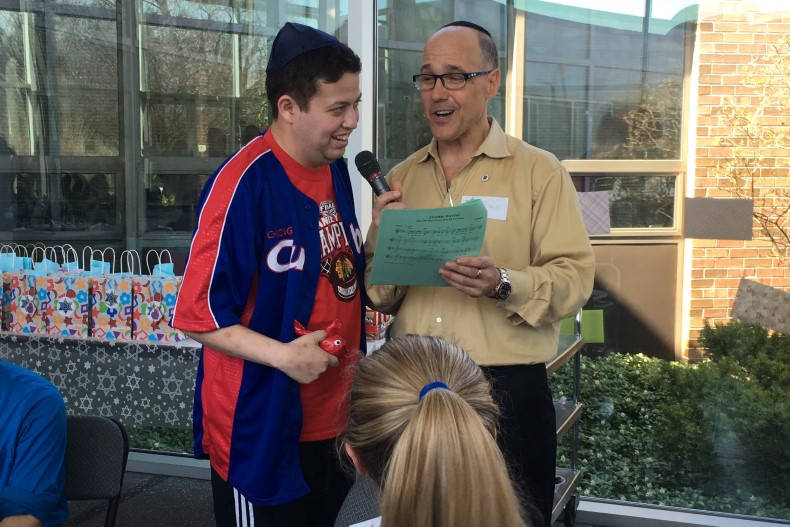
This year, for Jewish Disability Awareness and Inclusion Month, Chicago-area synagogues and organizations are coming together to build an inclusive community for people of all abilities.
Creating an inclusive space involves more than simply having people with disabilities in the room. Many physical, communicative, and attitudinal obstacles can stand between people with disabilities and full inclusion, which “makes it possible for all people to participate, rejoice, worship, learn, find comfort, and solace in times of need, and contribute to the community,” according to Shelly Christensen’s new book From Longing to Belonging .
This book was provided to synagogues as part of a three-year commitment to advance synagogue inclusion throughout the Chicago area. Synagogues and agencies have worked with Encompass, administered by JUF, to learn about the issues at hand, and create a practical plan going forward. These efforts were co-led by Encompass and JUF’s Synagogue Federation Commission and funded by a JUF Breakthrough grant. Encompass works on behalf of agency partners including Jewish Child and Family Services (which includes JVS Chicago), Keshet, Libenu, Yachad, and JCC Chicago, to expand Jewish community-based services available to adults with intellectual/developmental disabilities.
“Our work in the first year was dedicated to research and engagement so that we could better understand barriers to inclusion,” including congregational and community surveys and focus groups, said Encompass Director Jodi Newmark. The second year built upon lessons learned from the research and focused on continued engagement and education, including workshops and a cohort to share ideas, resources, and areas to improve.
Now, in the third year, synagogues are putting their lessons to work through a series of projects designed to improve inclusion in a concrete way. Fourteen congregations representing each denomination and from various geographical areas received mini-grants from JUF to implement these projects. The proposals were reviewed by a committee of professionals and lay leaders. “This process has been incredibly rewarding, as it affirms that community efforts to advance disabilities inclusion and accessibility at Chicagoland synagogues over the past three years have been effective and fruitful,” said Tracy More, Vice President of JUF’s Community Outreach & Engagement department.
The efforts include physical accommodations like ramps and chair lifts; training for staff, teachers, volunteers, and ushers; “inclusion carts” filled with supplies to help people with various disabilities participate in synagogue life; adapted worship and spiritual programming like sensory-friendly services; and more.
In addition to the grants, Newmark said, “JUF and Encompass have launched an endowment fund to meet the social service needs of Jewish adults with disabilities, and we are continuing our efforts to enhance inclusion in area synagogues and congregations, enabling and inspiring our houses of worship to be more welcoming for people with disabilities and any others who have felt left out or isolated.”
Along with the longer-term projects, organizations around Chicago are planning events during February to educate local Chicagoans about inclusion. These include Keshet webinars and workshops for professionals, awareness activities for students and families, and much more. Some students will even attend Jewish Disability Advocacy Day, where professionals and lay leaders gather in Washington, D.C. to educate lawmakers about issues important to the disability community.
All of these efforts are working towards a common goal. “Inclusion is about striving to see what is possible and discovering and learning what might allow each person to contribute,” Newmark said. “In doing so, we create the opportunity for relationships that are based on mutual respect. We honor each person’s civil right to participate and contribute, and we see every person made in the divine image of God.”
“Through this work,” she added, “we not only enhance the lives of people living with disabilities, we enrich and strengthen our Jewish community.”
For more information about Jewish Disability Awareness and Inclusion Month programming in Chicago, contact Jodi Newmark at [email protected] or your local synagogue.
Other stories
-
Two local teens win national recognition
Recipients of the annual Diller Teen Tikkun Olam Awards
Read more -
Celebrating six young award winners cultivating the community
Introducing young adult award winners
Read more -
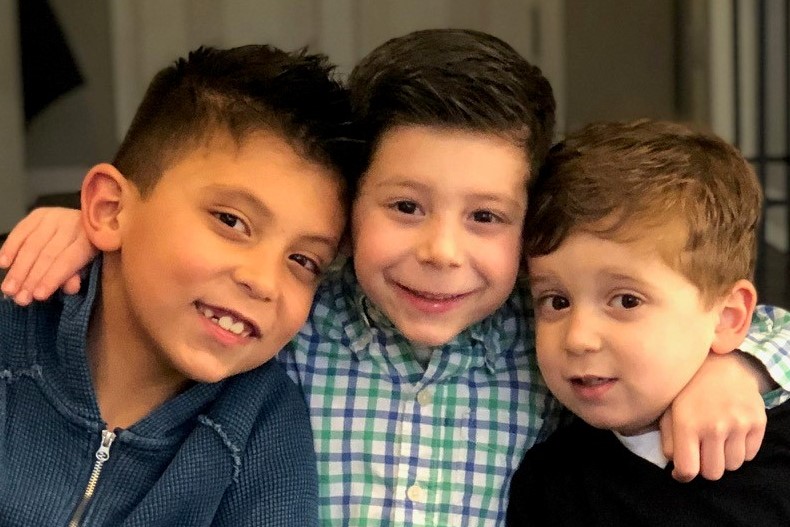
I have three young sons. Wherever they go, they bring a whirlwind of energy and crumbs.
We recently attended an event for families at our local botanic garden. My sons, of course, raced through the exhibit to reach the cookies and entertainment at the end. The boys were drawn to a set of giant foam blocks in a corner and set out building a child-size wall they enthusiastically destroyed and rebuilt. Over and over. For kids, half the fun of stacking a tower of blocks is the satisfying chaos that ensues when they collapse (or get knocked down by one brother body-slamming another into them). This game went on for half an hour.
I stood nearby monitoring the shouts and laughter, ready to pounce like any seasoned parent should their play become too wild. Activities like this often end with someone in tears over an injury or injustice, but the kids seemed engrossed and had even pulled several others into their game. A father of one of the other children watched for a moment. He asked if all three of the boys were mine and inquired about their ages.
He stood quiet, mouth slightly agape in mock shock, after I told him, “Yes. They’re mine, all two years apart.” I’m accustomed to strangers reacting with this way. My husband and I often receive comments about our family from well-meaning strangers at the grocery store, the mall, the airport. Our boys, so close in age, so energetic, often bouncing around us like puppies, draw attention from older people and fellow parents alike. This dad looked at me, eyes gleaming, chuckled, and asked me, “So, what’s bedtime like at your house?”
I knew exactly what he envisioned. It had to be difficult rounding up these three little boys, so gleefully hurling each other about. Most children resist bedtime on a good day, but these three must form a revolution against their parents, barricading themselves in their rooms armed with toothbrushes and pillows.
He couldn’t be more wrong. Truthfully, bedtime brings us a respite from the day, a moment of peace that we love in our house. It consists of routines that bring down the crazy, and ends with the ritual of reciting the Shema . After showers and pajamas, books and blankies, we quietly say this treasured prayer with each boy. Though we are not traditionally observant in our household, we have incorporated the daily recitation of the Shema with our children each night, along with a few other religious practices that fit our family. This is our way of infusing our busy, secular lives with meaning and providing a framework for our children to form their own Jewish identities.
Our Shema ritual started several years ago, when my oldest son, then in preschool, experienced some anxiety at nighttime. Frightened of bad dreams, he took a long time to settle down for bed. To bring him some comfort, I suggested we sing the Shema together, and in the darkness of his little blue bedroom, a beautiful family tradition was born.
Now, to hear my youngest son, just three years old, sing the Shema by himself in his sweet sleepy voice is often the most treasured moment of my day. ” Shema, Yisrael: Adonai Eloheinu, Adonai echad. Hear, O Israel: The Lord is our God, The Lord is one,” he says from memory and leans over to plant a wet kiss on my cheek. I used to say the prayer for him, to him, but now he recites it himself, just like his older brothers and his parents. For me, this passing down of a religious tradition, however small, represents what it means to raise a Jewish family.
Bedtime fills us up with love at the end of our long days and compels us to slow down and be mindful of God in those last moments before sleep. All day, we are pulled by so many external commitments, school and work, sports and business. The constant pinging of cell phones and iPads creates a soundtrack to the already frenetic pace of our lives. But at night, sharing the Shema with each of my boys reminds me of my commitment as a Jewish parent. These little boys end the day with a bit of Torah on their lips because of what I do, how I help guide them. Their hearts and minds calmed before sleep sharing in this brief spiritual moment.
So, looking back, I should have told that dad at the botanic gardens that no, bedtime at our house looks nothing like the foam block bedlam before him. Instead, it is a treasured time between parents and children, sharing love for each other and Jewish ritual.
Leslie Hill Hirschfeld is a freelance writer living in the northern suburbs of Chicago.
Other stories
-
Two local teens win national recognition
Recipients of the annual Diller Teen Tikkun Olam Awards
Read more -
Celebrating six young award winners cultivating the community
Introducing young adult award winners
Read more -
More than 650 students at seven suburban high schools – Deerfield, Niles North, Evanston Township, New Trier, Highland Park, Glenbrook and Stevenson – and two middle schools in Deerfield – Caruso and Shepard – study Hebrew as a world language.
Enrollment for 2019-2020 classes is taking place now.
Students learn both the language and culture of Israel, and typically have an edge in applying for college by differentiating themselves from the vast majority of students who study other languages. Several shared their thoughts.
“Hebrew, specifically at my high school, is a community that I wouldn’t necessarily get in a different language. In a big public school, it is nice to have a place where I can find that Jewish community.” 0-Gillian Rosenberg, Evanston Township High School
“Hebrew is a class that I always look forward to attending because of the connection I have with my classmates. The Hebrew language has brought a sense of community to my classroom that is lacking in other classes.” -Caroline Cotler, Glenbrook North High School
“Right off the bat, I devoted my extra time to help promote the Hebrew program, and worked closely with our amazing teacher, Anna Gorbikoff, to make sure our status as a program was known in our community.” -Abby Lapins, Stevenson High School
“After traveling to Israel in eighth grade with Ta’am Yisrael, I realized how modern and fast-paced Israel truly is. This made me forge an even deeper connection with the Hebrew language. It is not only the language of the Torah, but it is vibrant, modern and cool!” -Stephanie Kallish, Highland Park High School
“Hopefully, through Hebrew in the High, more people can foster the same love I have for Israel and the same desire to share it with others.” -Noam Zetouni; Deerfield High School
“Choosing to take Hebrew has impacted my high school experience immensely and has helped me become more involved in my school and outside community. Looking back, I cannot imagine how different my high school experience would be, had I not chosen to take Hebrew.” -Mia Strubel Iram; Niles North High School
The Jewish Federation promotes Hebrew in public schools through the SAFA (Hebrew word for language) Foundation, which it established for this purpose. If you have questions, email [email protected] .
Other stories
-
Two local teens win national recognition
Recipients of the annual Diller Teen Tikkun Olam Awards
Read more -
Celebrating six young award winners cultivating the community
Introducing young adult award winners
Read more -
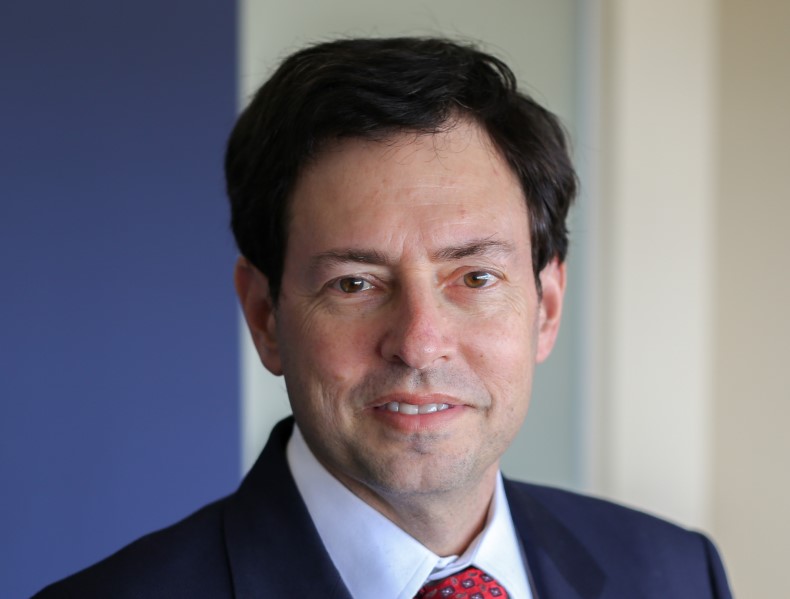
For new JUF-Federation Chairman Andy Hochberg, engaging in the community is a family business
JOEL SCHATZ
“I’m sort of a lifer,” Andrew S. Hochberg says of his involvement with the Jewish United Fund/Jewish Federation of Metropolitan Chicago and Chicago’s Jewish community. And life, of course, is filled with change and challenge.
As the new JUF/Federation Chairman of the Board, Hochberg is the lead volunteer of one of the largest charitable and social service networks in the country, an organization that each year touches the lives of more than 500,000 Chicagoans of all faiths, and millions of Jews in Israel and around the world.
It also is a 119-year-old organization that is constantly evolving, adapting to massive generational, social, and attitudinal shifts that mirror those throughout society.
And it is an organization that, on his watch, will be getting its first new chief executive in four decades.
“JUF and the Federation have an unparalleled record of caring for those in need and of strengthening our diverse community,” Hochberg said. “Our task today, or at least a vital part of it, is to continue finding ways to champion the historic values that define us, while welcoming and embracing new generations with new ideas, perspectives, and styles.”
One way to do that, he says, is to “continuously deepen JUF’s relationship with each generation of the families that are its core. Another is to actively engage board members in the work JUF and the Federation do, to reinforce their personal connection to helping those its affiliated agencies serve. A third is to rethink the ways the community provides services, such as Jewish education, to reflect the rapid institutional and lifestyle changes that are occurring.”
Some of those approaches mirror both the path and evolution of Hochberg’s own life. His parents, Barbara z”l and Larry, always were deeply involved with JUF/Federation. His father chaired the Annual Campaign in 1981. His mother did the same in 1990, and seven years later became the first woman to chair the Board-the same position Andy holds today, albeit in a very different technological, cultural, and political era.
Hochberg, now 56, was involved from an early age, as well. He recalls that when he was 9 or so, he participated in JUF’s Walk With Israel. No one thought he could walk very far, so they made large pledges for each mile he went. When he was finished, he was one of the top fundraisers of the event.
But in his 20s, he began to ask why he was doing what he was doing. After several trips to Israel and campus Jewish leadership positions, he started to explore his Judaism more, and Jewish life became a larger part of his personal life.
He became more religious. He studied on a regular basis. And as he and his soon-to-be wife, Laurie, began to build their life together, they decided to have a kosher wedding and to keep a traditional home. Andy’s sister and brother-in-law, Amy and John Lowenstein, provided inspiration and influence by sending their children to Solomon Schechter Day School, a decision that Andy and Laurie followed.
Andy and Laurie find that embracing Jewish values in their families, along with sharing traditions with their extended families, leads to warm, close relationships that foster lifelong memories and support not only for each other, but for the community, as well.
As time went on, Andy became even more active in JUF and the Federation, joining the Board and taking on key roles. In 2008, he chaired the Annual Campaign, which raised a then-record $83.8 million. As Chair of the Overall Planning and Allocations Committee last year, he played a central role in the distribution of $182.3 million to aid those in need and strengthen the community.
He also has headed the Real Estate and Government Affairs committees, helped spearhead the innovative Jewish Day School Guaranty Trust Fund, and has received the Federation’s Davis, Gidwitz & Glasser Young Leadership and Shofar awards.
Beyond JUF, Hochberg cofounded CityPac, a bipartisan political action committee dedicated to strengthening the U.S.-Israel relationship, and has received its Henry Jackson Pro-Israel Advocacy Award. He also served on the U.S. Holocaust Memorial Commission and the Friends of the Israel Defense Forces board.
Professionally, Hochberg is CEO of Next Realty LLC, an investment and management firm he founded 20 years ago. That was his “next” step after serving as CEO of Sportmart, the 70-store sports retailer his family sold in 1998.
He holds an economics degree from the University of Pennsylvania Wharton School of Business, and a law degree from Northwestern University.
Hochberg and his wife, a pediatrician, live in Highland Park and are members of North Suburban Synagogue Beth El. All four of their children have been active in a variety of organizations, including Hillel, Keshet, AIPAC, and JUF. They also have participated in the Lewis Summer Intern Program and Write On for Israel.
The big idea of engaging all generations of a family clearly reflects personal experience.
Other stories
-
Two local teens win national recognition
Recipients of the annual Diller Teen Tikkun Olam Awards
Read more -
Celebrating six young award winners cultivating the community
Introducing young adult award winners
Read more -
A cohort of promising local Jewish early childhood educators will expand their knowledge through a new initiative using online instruction and in-person seminars to elevate their current practice in the classroom.
The Jewish United Fund (JUF) and Erikson Institute are proud to partner for the first time to offer this ground-breaking model for working education professionals. The selected participants will embark on Erikson’s 20-month Online Master of Science in Early Childhood Education program in August 2019. JUF will work with Chicago’s 38 Jewish early childhood centers to recruit ten teachers, who are early in their careers and looking to gain more practice and experience while they complete the degree.
Sharing a commitment to high-quality early childhood education, the collaboration between JUF and Erikson Institute will enable the cohort to continue working in their classrooms while taking classes in the online hybrid program.
Through the support of The Crown Family, tuition will be fully funded. Participating educators are asked to commit at least two additional years to the field following completion of the degree. The initiative will also pay retention bonuses to teachers who stay in the field for each of the two years following that commitment.
“In keeping with our strategic goal to strengthen the early childhood workforce, Erikson Institute is eager to welcome this new cohort of teachers to our Online MSECE program this August,” said Erikson President and CEO Geoffrey A. Nagle, PhD. “We are grateful to The Crown Family for supporting this partnership between Erikson and JUF, an organization that shares our mission to help all children achieve their optimal educational, social, emotional and physical well-being.”
The partnership with Erikson is one in a series of recent JUF initiatives designed to further strengthen Jewish early childhood education in Chicago.
“Our Chicago Jewish community has long believed in early childhood education as a gateway toward engagement for families,” says JUF Director of Early Childhood Excellence Anna Hartman. “This trajectory begins with JUF Right Start, which increases accessibility through financial vouchers toward a child’s first year in preschool and continues with the pioneering work of JUF Young Families, with its jBaby and PJ Library portfolios. These programs are enhanced by JUF’s Early Childhood Collaborative, a network of educators and community members devoted to retaining, developing, and recruiting the incredible faculty that make Jewish preschool so transformative.”
Erikson’s innovative Online MSECE program provides students with a deep understanding of how children age 8 and younger grow and learn, and how their families, communities, culture, and the broader early childhood systems affect their development and success. The Online MSECE program is flexible and accessible, allowing working professionals, like the teachers in the local Jewish community, access to courses anywhere and at any time.
Like all Erikson programs, the Online MSECE creates and supports a genuine community of learners. The JUF cohort will participate in a customized hybrid online and in-person integrative seminar designed to provide interaction between each student and a cohort advisor from Erikson.
Applications will open in January 2019. For more information, please contact Anna Hartman at [email protected] or [email protected]
Other stories
-
Two local teens win national recognition
Recipients of the annual Diller Teen Tikkun Olam Awards
Read more -
Celebrating six young award winners cultivating the community
Introducing young adult award winners
Read more -