Dr. Martin Luther King Jr.’s teachings about “bending the moral arc of the universe toward justice” remain as relevant today as they were 50 years ago, community leaders asserted at the JUF’s annual King Day observance.
Nearly 200 people attended the commemoration organized by JUF’s Jewish Community Relations Council in partnership with Stone Temple Baptist Church and the North Lawndale Historical and Cultural Society.
The attendees recommitted to action-whether smaller, as in getting to know a person from another community, or something larger, like working to revitalize North Lawndale-to help build momentum for justice.
JCRC Vice Chair and JUF board member Bruce Taylor opened the program by highlighting the work done by the Jewish Black Business Alliance in bringing the Jewish and African-American communities together.
“Come to know one another,” said Rabbi Wendi Geffen, of North Shore Congregation Israel in Glencoe, who delivered the invocation for the sixth annual observance. “Because that’s the type of fabric that can’t be torn apart by any politician, by any moment in time.”
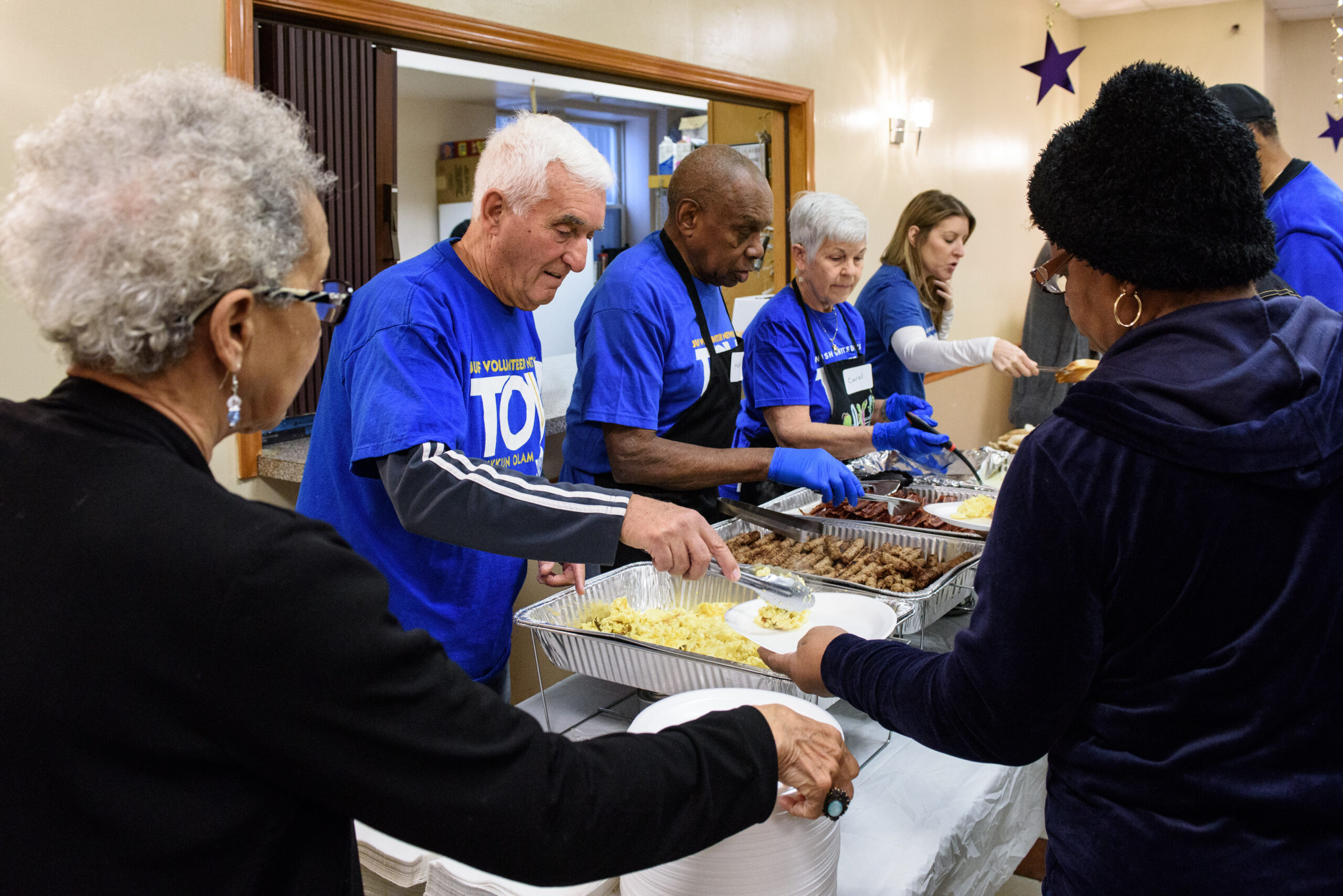
Taking the call to action to heart, JUF’s TOV Volunteer Network organized volunteers from both the African-American and Jewish communities to come to Stone Baptist Temple Church to cook and serve breakfast to those in need earlier in the day. In addition, students from the University of Illinois at Chicago painted and cleaned the first floor of the church.
“The worst evil is not the evil of hatred, it’s the evil of indifference,” said Bishop Derrick Fitzpatrick, referencing a quote from Rabbi Abraham Joshua Heschel, who marched alongside King. Fitzpatrick, who pastors Stone Temple and served as Master of Ceremonies at the observance, restated the concept during his closing remarks, saying “we’ve got to make sure that we don’t get complacent; that we are not indifferent; and that we don’t accept injustice.”
The keynote messages showcased youth advocacy and activism using King’s philosophy of nonviolence. Ariel Walton, a journalist and aspiring filmmaker from North Lawndale, shared her vision for her neighborhood where she inspires young people to follow the path of nonviolence. “We are the midwives of North Lawndale,” she said. “She needs our help to live its fullest potential.”
North Lawndale, which celebrates the 150th anniversary of its incorporation in 2019, is a historically special place to Chicagoans of many faiths, including a large Jewish community until the middle of the 20th Century. King preached at Stone Temple in 1966, while Fitzpatrick’s grandfather was a pastor there.
Jake Chernoff is a program associate for the Public Affairs department of the Jewish United Fund.
Other stories
-
Two local teens win national recognition
Recipients of the annual Diller Teen Tikkun Olam Awards
Read more -
Celebrating six young award winners cultivating the community
Introducing young adult award winners
Read more -
The difference is you.
The difference in whether a family in need has enough to eat, a place to stay, and warmth in the winter.
The difference in whether a young family finds a welcoming connection to Jewish life, a college student is prepared for a sometimes hostile campus, and a teen learns how to change the world.
You, through your donation to the 2018 Jewish United Fund Annual Campaign, made all of that possible. And so much more.
Together, you and tens of thousands of others – including nearly 4,000 new donors – contributed $88,885,238 to the 2018 Campaign – a record total, nearly $2 million more than last year and the ninth year of growth in a row. That makes all the difference to more than 500,000 Chicagoans of all faiths, and millions of Jews in Israel and around the world.
Those funds, along with supplemental grants from foundations and a wide array of other sources, helped care for the elderly, feed the hungry, treat the sick, counsel the unemployed, provide respite for caregivers, aid Jewish schoolchildren and campers, resettle immigrants in Israel, and protect the vulnerable in war-torn lands.
All told, $377,692,707 was raised from all sources, including additions to the Centennial Campaign and the endowment, which further strengthen the foundation upon which future generations of Chicago’s Jewish community will build.
That’s quite a difference you made.
“It has been 119 years since the institution that became JUF was created, and the incredible support, energy and engagement of Chicago’s Jewish community continues to amaze,” said King Harris, who chaired the 2018 Campaign. “This is a community that, by caring for those most in need, has continuously defined and strengthened itself. Together we make a tremendous difference, because individually we each make a difference.”
“JUF is the heart of a powerful network of agencies and programs that every day addresses our community’s most pressing needs,” said Board Chair Andrew Hochberg. “But none of that happens without the tremendous support of our donors.”
“The incredible response of this community flows directly from the committed efforts of the volunteers and lay leaders who make the Annual Campaign possible,” said JUF President Steven B. Nasatir. “King Harris was a spectacular campaign chair who helped energize the community and continued the tradition of unparalleled partnership with all of my JUF professional colleagues.”
Other stories
-
Two local teens win national recognition
Recipients of the annual Diller Teen Tikkun Olam Awards
Read more -
Celebrating six young award winners cultivating the community
Introducing young adult award winners
Read more -
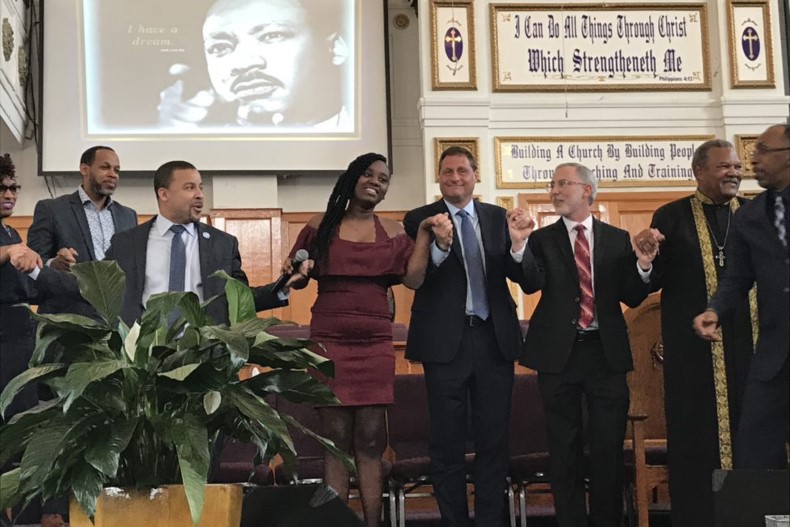
Jewish, African-American communities to honor King’s legacy Jan. 21 at annual event
Jane Charney
For the sixth year in a row, JUF’s Jewish Community Relations Council will partner with Stone Temple Baptist Church and the North Lawndale Historical & Cultural Society to hold an observance of Dr. Martin Luther King Jr. Day. The program will take place at 10:30 a.m. Monday, Jan. 21 at Stone Temple, 3622 W. Douglas Boulevard.
“The Fierce Urgency of Now: Turning Dark Yesterdays into Bright Tomorrows” will focus on how activists are translating King’s legacy and philosophy of non-violence into prevention and education programs in Chicago.
Invited speakers include activists from North Lawndale’s Peace Warriors, a group of teens who educate their peers about King’s nonviolence principles, provide support, and create opportunities for conflict resolution. Musicians from the Jewish and African-American communities also will participate.
“As every year, we will reflect on Dr. King’s legacy and life,” said JCRC Chair Bill Silverstein. “We will reaffirm the deep connection between Jews and African-Americans and our pledge to stand up for each other.”
As in past years, volunteers from JUF’s TOV Volunteer Network will join Stone Temple members for a special service project, preparing and serving a hot breakfast to the North Lawndale community earlier in the day.
The location of the event bears witness to King’s legacy. Stone Temple, whose building was once a synagogue, was one of the few churches to host King for a series of sermons in the summer of 1966, even as city administrators threatened to cut off funding from daycare and school programs for letting him speak there.
To learn more about the program and to register to attend, visit www.juf.org/MLK2019 or contact Jane Charney at [email protected]..
Jane Charney is the director of Domestic Affairs for JUF’s Jewish Community Relations Council.
Other stories
-
Two local teens win national recognition
Recipients of the annual Diller Teen Tikkun Olam Awards
Read more -
Celebrating six young award winners cultivating the community
Introducing young adult award winners
Read more -
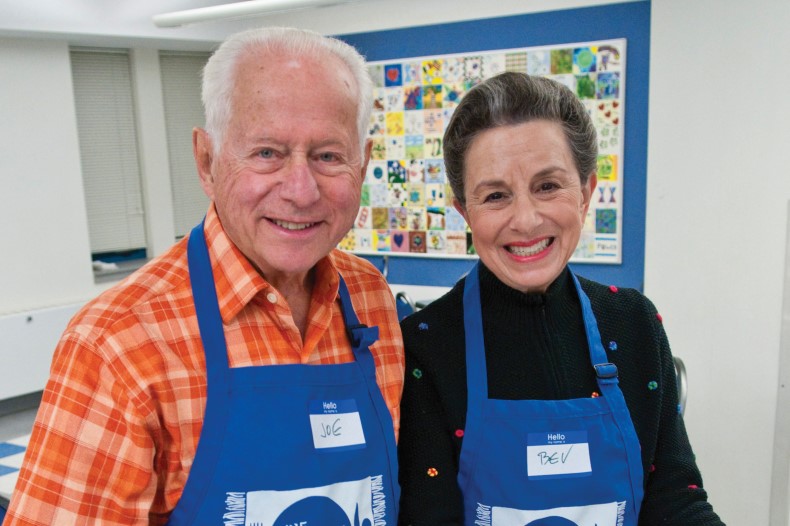
Joseph J. Cohen, one of the founders of the JUF Uptown Cafe, a longtime board member of CJE SeniorLife and former board member of the Jewish United Fund/Jewish Federation of Metropolitan Chicago, has died at age 91.
Joe and his wife Beverly played an instrumental role in founding JUF’s TOV Volunteer Network and the JUF Uptown Cafe in 1998. From its opening day forward, for many years, the couple volunteered at the cafe every Monday night-always together.
Joe exemplified what it meant to serve up dignity along with supper. Cafe clients often remarked that he made them feel like valued guests, taking their coats and holding out the chair for them to be seated before serving them their meals. Joe reviewed clients’ resumes and coached them in how to how to successfully interview for a job. He also mentored younger clients, helping them with their schoolwork after supper.
“After 66 years of marriage, the Cohens were obviously still very much in love. Every time you saw them, they were holding hands,” said Anita Denes-Meador, JCC Regional Vice President, City. “Perhaps it’s that great love that fueled Joe’s great generosity of spirit.”
Other stories
-
Two local teens win national recognition
Recipients of the annual Diller Teen Tikkun Olam Awards
Read more -
Celebrating six young award winners cultivating the community
Introducing young adult award winners
Read more -
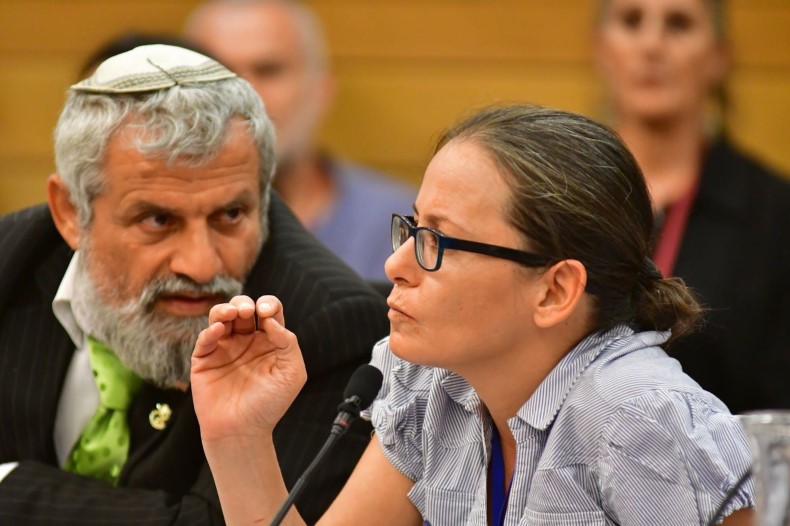
For Jewish Women’s Foundation, grants are path to changing the world
Joel Schatz
Numbers tell only part of the story. The lives they touch, and the impact they have, are what it’s really about.
Each year for the past two decades, the Jewish Women’s Foundation of Metropolitan Chicago (JWF), an independent project of JUF, has awarded grants to meticulously screened programs scattered across the city and around the globe.
All told, there have been 373 of those grants over 20 years. More than $4.2 million, in total. All of it raised by women. Awarded by women. All of it to transform the lives of Jewish women and girls. To give them voice. To seek justice. To redefine their role in the world.
So, what was the result?
Riki is part of Shatil, one of the programs JWF funded. She grew up in Israel’s housing projects. Got out. Got married. But then, was sorely abused and wound up back in the projects — as a single mom.
Ironically, that meant she beat the odds. For most impoverished women, particularly those fleeing an abusive relationship, public housing is their only option. But there aren’t nearly enough units. Those who earn too much don’t qualify. And women with fewer than three children aren’t eligible.
That creates an incentive not to work, or to have more children, making it even more difficult to get out of poverty.
Shatil, a social and economic justice project, worked with Riki — and 300 other women — to help them tell their story — and change their world. They led demonstrations, social actions, and worked the halls of the Knesset.
And they were heard. Big time. Together, they played a major role in passing Israel’s Gallant Plan, a major policy shift that changes eligibility rules and calls for making an additional 7,200 housing units available each year — seven times the current level. 5,500 of those will help relieve the dire shortage for single mothers.
Riki has spent most of her life in a system that did not meet the needs of thousands of impoverished women. Now, she is part of the force changing that system forever.
Another JWF grant went to jGirls. It’s an online magazine and community for Jewish teen girls. A place where they can explore and express themselves. Hone their ideas and communication skills. All of it run by women. All of it written, edited, and overseen by teens.
jGirls has been online for a year, taking on topics ranging from Jewish identity and immigration to gun violence and relationships. In that time, 15,000 people have visited the site. Three hundred articles have been submitted by young Jewish women from 26 states and eight countries — women of just about every imaginable family background, race, ethnicity, sexual orientation, gender, and income level.
And despite its young age, jGirls already has been included in Slingshot, a guide for young philanthropists that identifies the most innovative, effective projects in North America.
On the other side of the globe, spanning nine time zones, JWF-grant recipient Project Kesher’s Next Gen initiative is training a generation of women and girls to lead the Jewish community throughout the Russian-speaking world.
Alyona, who is 30, had been providing social services to the elderly and sick at a JCC in Ukraine for about five years when Project Kesher saw her potential. Through Next Gen, she was trained in Jewish studies and values, grassroots organizing, social activism, feminism, and women’s health.
In the past year, Alyona has led 11 meetings on women’s health in the Jewish community and the community at large. “Women who attended made the decision to consult doctors and were diagnosed with illnesses at early enough stages to be healed,” she said. “Project Kesher taught me to think big, not just fulfill the task at hand, but to think of the future.”
This year’s awards
In December, the Jewish Women’s Foundation of Metropolitan Chicago (JWF) announced its latest round of grants — $377,000 for 25 different projects in Chicago, Israel, and around the world.
Six grants were made through the Ellie Fund, established by JWF founding lifetime trustee Ellen H. Block. Notable among those was a $25,000 contribution to the Chicago Foundation for Women’s Family and Interpersonal Resilience and Safety Transformation (FIRST) Fund, a collaborative effort of several of the city’s major foundations to support innovative solutions to domestic and intimate partner violence.
JWF’s first-ever Frame the Future Pop-Up Giving Circle last spring raised and awarded $50,000 to Sacred Spaces to help Chicago-area Jewish institutions address issues surrounding sexual abuse.
JWF’s other grantees in the latest round are:
Economic Security/Legal Reform for Women & Girls
ACLU:Roger Baldwin Foundation: Women’s Reproductive Rights Project
ATZUM: Task Force on Human Trafficking
College of Law and Business, Israel: Assimilating Gender Perspective and Awareness into Insolvency Law and Economic Rehabilitation
The college’s clinic is working to ensure that new insolvency regulations in Israel are fair to domestic violence victims and other women on the social or economic periphery.
JobKatif: Achotenu – Academic Nursing Program for Ethiopian-Israelis
Mavoi Satum: Supreme Court Appeals Department: Advancing Change in the Realm of Personal Status in the State of Israel
The department provides direct support to women and works on legislative, media, and other grassroots fronts to curb incidents of husbands refusing to grant religious divorces.
Shatil-New Israel Fund Initiative for Social Change: Advancing Women’s Rights in Public Housing
WePower: Atidot – Young Women Future Leaders
The Center for Advancement of Women in the Public Sphere at the Van Leer Institute: The Gender Index
WIPS’s Gender Index tracks gender inequality in Israel to provide quantitative data for policy and decision makers seeking to catalyze social change for women and girls.
Women of the Wall: Claiming What’s Ours
YEDID: Women’s Voices: Why Nutrition Matters
Women’s Voices will train low socioeconomic Israeli women impacted by food and health insecurity.
Education/Leadership Development for Women & Girls
jGirls Magazine: General Operating Support
Ohr Torah Stone: Susi Bradfield Women’s Institute of Halakhic Leadership
Project Kesher: Next Gen: If Not Now, When?
Next Gen equips women in the Former Soviet Union with leadership skills and strong Jewish identity so they can lead systemwide social justice initiatives in their communities in Russia, Ukraine, and Belarus.
Sisterhood of Salaam Shalom: Responding to Hate: Chicago Regional Training Muslim and Jewish Women in Spiritual Activism (faith-based activism)
Health & Well-Being for Women & Girls
Lada’at – Choose Well: “Swimming Upstream”: Promoting Women and Girls’ Reproductive Health and Rights Through National & HMO Policy Change and Training Health & Psychosocial Professionals.
No Shame On U: Capacity Building for an additional part-time staff member
No Shame On U aims to change the stigma of mental health within Chicago’s Jewish community.
Shalom Bait, Asociacion Civil de Prevencion de la Violencia Familiar: Pursuing Justice, the Law as a Tool for Change
Pursuing Justice, the Law as a Tool for Change, provides legal assistance to Jewish women in Argentina who are victims of domestic violence.
Tahel – Crisis Center for Religious Women and Children: Victim Advocacy Program
The program will train female community leaders in Ultra-Orthodox low socio-economic communities in Israel to recognize, support, and advocate for victims of domestic violence and sexual abuse.
Ellie Fund Grants
Chicago Foundation for Women: Family and Interpersonal Resilience and Safety Transformation (FIRST) Fund
GirlForward: Mentoring for Refugee Girls in Chicago
Hillel – The Right to Choose: Legal Aid for Single Mothers
Midwest Access Project: General Operating Support
MAP restores reproductive health care options in Illinois and elsewhere in the Midwest by training health care professionals willing to provide the vital services their patients need.
NCJW Chicago North Shore: Jewish Community Against Sex Trafficking
Organization for the Resolution of Agunot: Planning Grant for the Agunah Prevention Initiative
Other stories
-
Two local teens win national recognition
Recipients of the annual Diller Teen Tikkun Olam Awards
Read more -
Celebrating six young award winners cultivating the community
Introducing young adult award winners
Read more -

Success is par for the course for Elizabeth Szokol.
She finished fourth in the 2018 Symetra Tour, earning her advancement to the Ladies Professional Golf Association (LPGA). She won a tournament, taking the IOA Invitational in May in Milton, Ga. by a single stroke.
A Winnetka native, Szokol received her LPGA card in a ceremony on the final course in Daytona Beach, Fla. Then she joined in a ritual shared by other new LPGA inductees — jumping into a swimming pool.
Szokol is not the only Jewish woman in the LPGA, but it’s a small club. “I am proud to be one of the few Jewish golfers playing professionally,” she said. “There were two other Jewish women on tour with me these last two years, and we had a great time going to synagogue together when holidays overlapped with tournaments. We always felt welcomed by the Jewish communities, no matter where in the country we traveled.”
Szokol started golf relatively late — at the ripe age of 14. She had always been athletic, playing a little softball, and a lot of tennis, alongside her older sister and younger brother. But a knee injury prompted her to switch to golf.
In high school at New Trier, Szokol was a four-year letter-winner and both an all-state and all-conference honoree. She posted top-10 finishes at the Illinois State High School Championships during her junior and senior year.
It wasn’t until college — two years at Northwestern and two at the University of Virginia — that she contemplated a pro-golf career. In 2016, as a UVA senior, she was awarded honorable mention All-American by the Women’s Golf Coaches Association (WGCA) and was named to WGCA All-Region Team. She placed 20th at NCAA Championships, posting top-10 finishes in her last three outings before the NCAAs. She finished her academic career ranked No. 34 by Golfstat and No. 51 by Golfweek.
Asked if she based her style of play on those of her golf idols, Szokol said that, in her experience, each player cultivates his or her own style. One of her favorite aspects of the sport is that golfers of different skill levels can play together at the same time.
Tiger Woods is her favorite player to watch in action. “I have always loved watching Tiger play,” she said. “He brings so much passion to the game. And he, like me, has overcome many injuries.”
Looking ahead, she has set her sights on qualifying for the US and British opens, as well as other international competitions. She’ll compete in her first game of the new season in Australia in February. She someday hopes to return to Israel — where she has visited three times so far with her family — to play on the country’s two golf courses.
In the meantime, she practices on a course just outside Palm Springs, Calif.
While the sport is competitive, Szokol has found friendship in many of her fellow golfers. “On the course, you are professional, and you play the best you can,” she said, but off the course, they are dear friends.
“I’m so excited to have finally achieved the dream of playing on the LPGA,” Szokol said. “Professional golf has been a career with many ups and downs, and to finally be able to earn my card on the LPGA means so much to me. I can’t wait to travel with some of my best friends and compete with some of the best in the world.”
Other stories
-
Two local teens win national recognition
Recipients of the annual Diller Teen Tikkun Olam Awards
Read more -
Celebrating six young award winners cultivating the community
Introducing young adult award winners
Read more -
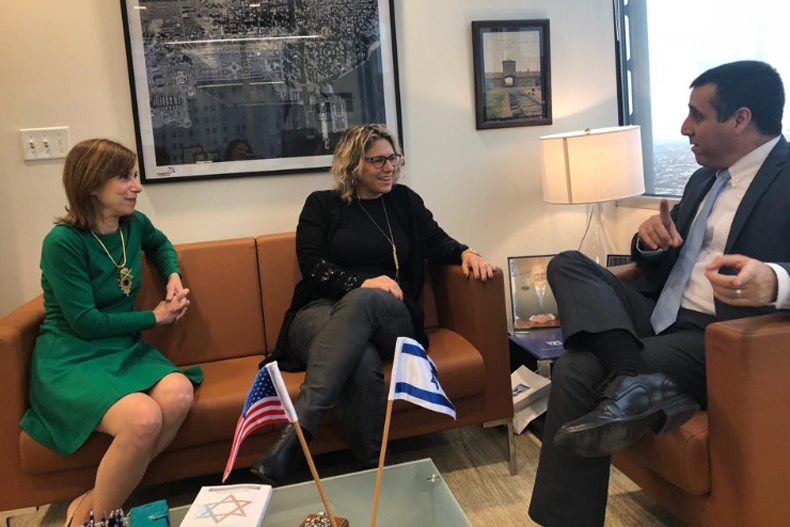
Chicago’s Sinai Health System celebrates its centennial in 2019; the Yitzhak Shamir Medical Center outside Tel Aviv marked its own milestone last year, turning 70. Now, thanks to the efforts of the Consulate General of Israel to the Midwest, these major medical institutions are looking forward to teaming up for the health of their communities in the years to come.
The two hospitals are collaborating in three areas–direct care to patients, community-wide public health efforts, and enhancing the infrastructure that makes these services possible.
Dr. Osnat Levtzion-Korach, general director and CEO of Shamir, recently visited Chicago, where she met with Karen Teitelbaum, Sinai Health System’s president and CEO, and toured Sinai’s facilities.
“It was an inspirational visit,” Levtzion-Korach said. “I was inspired by the passion of the staff and amazed by the challenges they face, many of which are in my bailiwick. The work they do is absolutely critical.”
Shamir, named after the seventh Israeli prime minister, is the fourth-largest government hospital in Israel, and growing. The hospital will double in size–making it the largest hospital in Israel in the coming years–adding facilities that specialize in geriatrics, mental health, forensic medicine, women’s health, and public health. Shamir boasts the leading orthopedic department in Israel and leads the way in thoracic surgery.
Following Levtzion-Korach’s Chicago visit, Sinai staff, led by Teitelbaum, will visit the Israeli hospital in the spring for the start of bilateral fellowships and training.
Shamir has much to glean from Sinai, said Levtzion-Korach, especially in the areas of trauma treatment, chronic illness, and public health. Given that the Israeli hospital will soon open a major psychiatric facility, the Israeli medical staff are particularly eager to learn from Sinai about best practices in mental and behavioral health, as Sinai is a leader in that field.
Both hospitals believe in helping at-risk populations. “Our hospitals have a lot of similarities, especially with regards to treating trauma and serving vulnerable communities,” Teitelbaum said.
Making connections is a major part of the work of the Consulate General of Israel to the Midwest. From academic exchanges to cultural partnerships, the Consulate routinely brings the best of Israel to the Midwest and vice versa. “We are constantly thinking about what Israel can bring to the table,” said Aviv Ezra, Israel’s Consul General to the Midwest, who made the shiduch (match) between Shamir and Sinai.
Whether in Israel or Chicago, a hospital has one goal, according to Teitelbaum. “Sinai is Jewish at the roots, and therefore has an ethos of helping all in need,” she said. “Our job is to keep people out of the hospital-and healthy in their communities.”
Sinai Health System is a partner with the Jewish United Fund in serving our community.
Other stories
-
Two local teens win national recognition
Recipients of the annual Diller Teen Tikkun Olam Awards
Read more -
Celebrating six young award winners cultivating the community
Introducing young adult award winners
Read more -
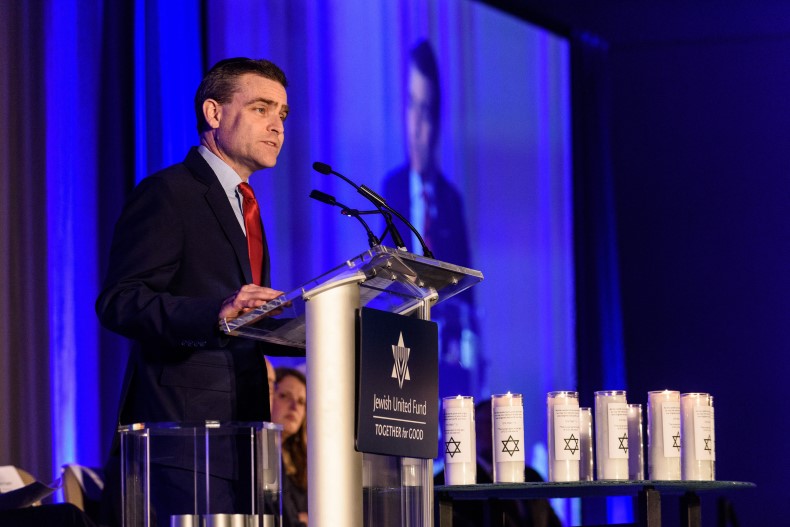
In a pivotal moment for Chicago’s Jewish community, Lonnie Nasatir has been named as President-Elect of the Jewish United Fund/Jewish Federation of Metropolitan Chicago.
He will assume the role of President on July 1, 2019.
Nasatir has served as the Anti-Defamation League’s Regional Director of the Greater Chicago/Upper Midwest area since 2005. As ADL Regional Director, Nasatir has overseen the six-state Upper Midwest region, which is dedicated to fighting anti-Semitism and all forms of bigotry.
“We are absolutely delighted with the stellar qualifications Lonnie brings to this role,” said Michael H. Zaransky, JUF/Federation’s Immediate Past Chairman of the Board, who chaired the search committee. “With an exceptional track record as a community leader, Lonnie will bring extraordinary vision, energy and commitment to bear in leading this Federation and our Chicago Jewish community.”
Nasatir began his career as a prosecutor for the Cook County State’s Attorney’s Office, where he quickly became a lead attorney and a supervisor. Beginning in 1998, he next served as Deputy Administrator for the Illinois Department of Public Aid, Division of Child Support Enforcement. In 2003, Nasatir was appointed by the governor as the Administrator for the Division of Child Support Enforcement. As Administrator, he managed a budget of $225 million and led a Division of over 1,000 staff to record high collection and performance numbers.
The son of longtime JUF/Federation President Dr. Steven B. Nasatir, Lonnie Nasatir is a graduate of the University of Wisconsin-Madison and received his law degree from IIT Chicago-Kent College of Law.
“To lead this singular institution that impacts the lives of so many is a privilege and a once in a lifetime opportunity,” said Lonnie Nasatir. “I count myself as extremely fortunate to join a group of professional and lay leaders that is unrivaled throughout the country.”
In June 2018, the JUF/Federation board appointed a volunteer-only search committee, chaired by Zaransky and comprised of every former chairman of the board, and other community leadership including longtime community leader Lester Crown. Representation from JUF’s Women’s Division and Young Leadership Division ensured a broad spectrum of perspectives. That search committee launched an intense and extensive national search for the new president.
“We interviewed dozens of exceptional candidates, and were thrilled with the caliber of leadership represented,” Crown said. “Lonnie was simply the best of the best.”
Andrew S. Hochberg, JUF/Federation Chairman of the Board, added: “A hallmark of Lonnie’s leadership is his focus on engaging the next generation.”
As Nasatir assumes the helm, the institution is in a position of strength and stability.
In partnership with volunteer leaders, Steven Nasatir has grown JUF/Federation into the hub of one of the largest humanitarian networks in the nation, serving over 500,000 Chicagoans of all faiths and millions of Jews around the world. His advocacy for Israel and the Jewish people have been the hallmarks of his Presidency.
“It is almost impossible to overstate the impact of Steve Nasatir’s legacy,” Crown said. “Just the fourth chief executive in the institution’s 118-year history, he has guided our Chicago Jewish community through four decades of change, challenge, crisis and triumph. His leadership has been instrumental to building Jewish Chicago and putting this community in a position of unparalleled strength.”
“We are just thrilled that Lonnie Nasatir will continue this proud legacy, ensuring that JUF continues to serve as a beacon of hope in Chicago, in Israel and around the world.”
Additional information about the transition to a new president will be shared in the coming months.
Other stories
-
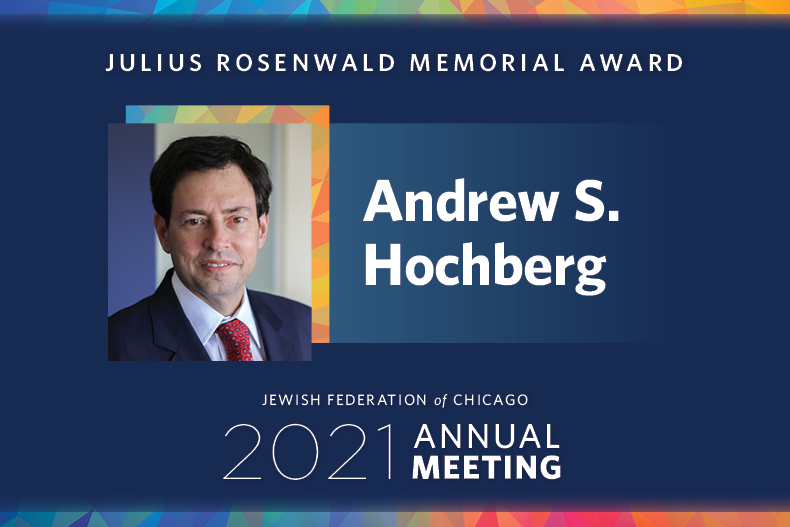
Meet Andrew S. Hochberg, 2021 Julius Rosenwald Memorial Award recipient
Celebrate Andy Hochberg at the virtual Annual Meeting on Sept. 14
Read more -
Two local teens win national recognition
Recipients of the annual Diller Teen Tikkun Olam Awards
Read more -
Celebrating six young award winners cultivating the community
Introducing young adult award winners
Read more
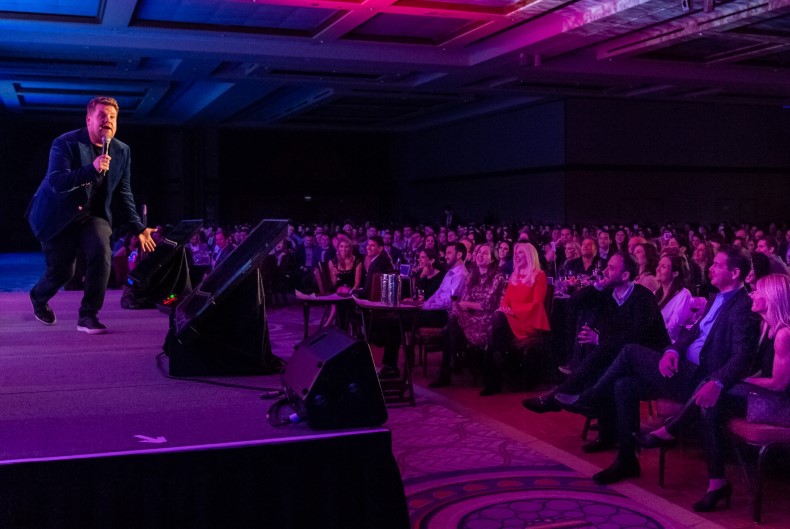
YLD’s Big Event Fundraiser—headlined by comedian James Corden—demonstrates commitment of Jewish Chicago's next generation
They came together for laughs. They came together for community. They came together for good.
And they came together at one of the largest gatherings of young Jews in the country. This year, close to 1,500 people attended the 11th annual JUF Young Leadership Division’s (YLD) Big Event Fundraiser featuring late night talk show host James Corden, held Saturday night, Dec. 15, at the Sheraton Chicago Hotel.
“Whether it’s communities around the world in crisis, 500,000 Chicagoans of all faiths who need assistance overcoming life’s challenges, or people like you and me who want to connect with our community through engaging programs and experiences — JUF is there,” 2019 YLD Campaign Chair Alex Entratter told the crowd.
The evening kicked off the 2019 JUF Annual Campaign for the next generation of Jewish Chicagoans. New this year, Entratter announced, you can donate to JUF through your Alexa-enabled devices.
Chicago singing group “Deep Dish A Capella” — featuring YLD Board President Mike Schwartz — warmed up the guests with a YLD-style rendition of the Bruno Mars hit “Just the Way You Are.”
Then, it was on to the funny.
The crowd erupted when Corden came to the stage to perform standup. “I feel like I’m watching JDate live,” he said.
“You are the next generation,” he told the audience. “You are the people who are going to create the best society and help solve the world’s problems. You are our future leaders, scientists, and educators. The world needs every single one of you.”
A multi-talented British comedian, Corden is a Broadway, film, and TV star — host of The Late Late Show with James Corden .
Though not Jewish himself, he expressed a deep affinity for the Jewish people, culture, and values. “I love the Jewish community because it’s bred on hard work and it’s good at its core,” he said.
He first encountered Jewish life while residing in a heavily Jewish neighborhood of London. In Los Angeles, where he now lives, he has a close circle of Jewish friends and colleagues.
He lauded, in particular, the ritual of Shabbat dinner. “It’s an incredible thing to make sure you have dinner with your kids on Friday,” he said.
Then, he sat down for an interview with Chicago comedian Pat McGann, who quizzed him on rapid-fire Jewish-themed questions. He asked Corden everything from his favorite Jewish phrase (“I’m kvelling!) to his favorite Jewish Broadway star (Ben Platt) to his favorite Jewish food ( not gefilte fish).
Later, they discussed Corden’s hugely popular viral “Carpool Karaoke” sketch series, which depicts Corden driving in his car, alongside celebrity musicians in the passenger seat, belting out tunes through the streets of Los Angeles. The idea, he explained, was borne out of a sketch created for a British charity event, in which he harmonized Wham! hits with his first-ever Karaoke passenger, the late British singer George Michael.
Corden broached with the audience that he’d been scheduled to headline last year’s YLD’s Big Event Fundraiser, but canceled last minute when his wife went into early labor with their third child. “If I hadn’t stayed [with her], I would have received an entirely non-Jewish circumcision,” he said.
Then, he told the crowd, “If we’d had a boy, we would have named him ‘Juf.'”
Thankfully, his wife gave birth to a healthy baby girl and named her Charlotte.
To check out more photos, visit YLD’s Facebook page.
A special thank you to YLD’s Big Event Fundraiser Lead Sponsor: Eleven City Diner; Platinum Sponsors: Celebrity Cruises, The Cohn Weisskopf Oxman Group at Morgan Stanley, and Lettuce Entertain You Restaurants; Event Sponsor: HFF; Event Supporters: AV Chicago, Sheraton Grand Hotel; and DineAmic Group; and After-After Party Sponsor: Joy District.
Other stories
-
Two local teens win national recognition
Recipients of the annual Diller Teen Tikkun Olam Awards
Read more -
Celebrating six young award winners cultivating the community
Introducing young adult award winners
Read more -
On December 11, JUF’s Government Affairs Committee hosted a panel of speakers who illustrated the intersection between data collection and crafting smart and effective social justice policy.
All three speakers – Cook County’s State’s Attorney Kim Foxx, Cook County State’s Attorney’s Chief Data Officer Mathew Saniie, and Dr. Amanda Lewis, director of UIC’s Institute of Race and Public Policy – were both skilled researchers and master storytellers.
Chairing the meeting was Steve Victor, Local Vice-Chair of the JUF Government Affairs Committee, who introduced the topic, saying “real, concrete, plentiful numbers can tell a different story, outside one’s own experience and opinion.”
Setting the stage, Lewis provided an overview of the historical context of social justice policies and their impact on ethnic and racial groups in Chicago, using UIC’s most recent reports under ” The State of Racial Justice Project” as a guide. The report focuses on social justice policies in the areas of housing, economics, education, justice and health, connecting it to data about the current needs of Chicago’s communities
“We discover again and again that present-day challenges we face stem in part from our failure to address the long-term consequences of decades of formal and widespread private and public discrimination, along with continuing forms of institutional and interpersonal forms of discrimination. The best way to change the future,” Lewis said, “is to step beyond the competing public narratives about Chicago to assess-in evidence-based, concrete terms-what the challenges and opportunities are for residents today.”
Linking Lewis’ research to practice, State’s Attorney Foxx, with the assistance of Saniie, reflected on the transformation of the state’s attorney’s office policies based on the power of data. When first elected in 2016, Foxx said she realized that, “Driven by fear, to keep people in jail, policies were being created in Springfield without a true analysis of why a person was involved in the criminal justice system.”
She began to change the public narrative by using data as an important tool that reflects the real needs of individuals cycling through the criminal justice system. Foxx pushed for a data transparency agenda that shifted the office’s relationship with the public, asking Cook County residents to hold her office, the second largest prosecutor’s office in the country, accountable for policy decisions made based on data.
To lead that effort, Foxx hired Saniie as the office’s first chief data officer. With over a decade of experience using data and analytics to inform and lead organizations striving to change for the better, both in the public and private sector, Saniie had a clear vision.
“By publishing actual data and allowing the public to see the data, people can come to their own conclusions and, in turn, build more trust with our office,” he said. He began to put this into action by first publishing the last seven years’ worth of felony review data and then creating a training program for public users on interpretation and utilization of the data.
Attendees at the first training spanned a diverse audience, from community advocates to family members of incarcerated individuals to law enforcement.
Reflecting on the meeting, Laura Prohov, of CJE SenorLife, a JUF-affiliate agency, said, “The use of data to objectively identify an issue and then evaluate the success of the implemented changes is so powerful. Even for those of us not directly involved with the justice system, this work exemplifies what we need to be doing in whatever arena we work in.”
To access the Cook County State’s Attorney’s Data Portal, clickhere .
Other stories
-
Two local teens win national recognition
Recipients of the annual Diller Teen Tikkun Olam Awards
Read more -
Celebrating six young award winners cultivating the community
Introducing young adult award winners
Read more -