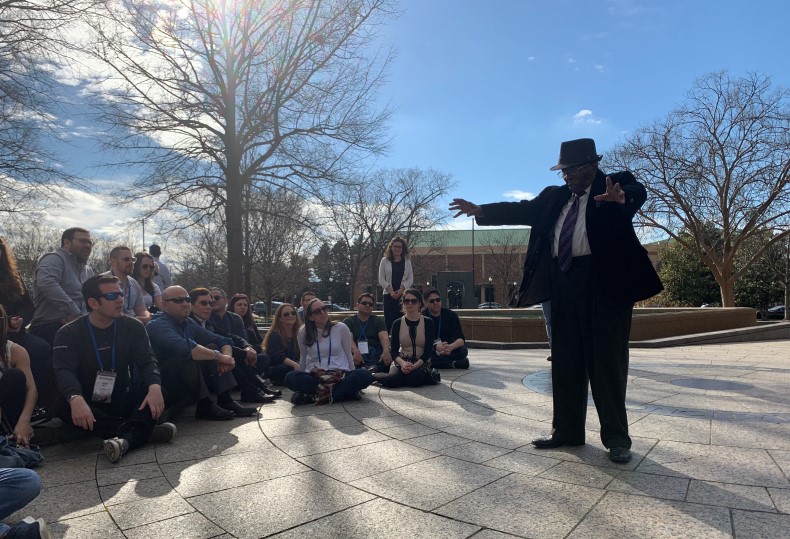
National Young Leadership Cabinet members attend Civil Rights mission
Michelle Cohen
Six Chicagoans joined members of 27 other Federations on JFNA’s National Young Leadership Cabinet civil rights mission this winter. Arranged by Atlanta-based organization Etgar 36, the tour traveled to many places of interest throughout Alabama to learn about Southern Jewish involvement in the Civil Rights Movement.
“Civil rights and voting rights legislation is only 55 years old, and many challenges still exist,” said Mike Teplitsky, 2018-19 Co-Chair of the National Young Leadership Cabinet.
The travelers first visited Montgomery, where they learned about the Leo Frank lynching and the Temple bombing in Atlanta. Next came Selma, the site of the Selma to Montgomery March for voting rights and the horrific “Bloody Sunday.” Finally, they visited various places in Birmingham, including the 16th Street Baptist Church, which was the site of a 1963 bombing, and the Birmingham Civil Rights Institute.
Along with the sites, attendees got to listen to people who were involved in the activities of the time, including both African-American and Jewish activists. One woman who they met attended the Selma to Montgomery March as a child and experienced the violence of “Bloody Sunday;” another speaker was a Jewish civil rights lawyer who moved to Alabama to address issues of injustice.
“Today, both Jews and blacks are targets of hate. We must work together to fight injustice,” Teplitsky added.
“We must form powerful coalitions such as the spiritual bond formed by Martin Luther King, Jr. and Rabbi Abraham Joshua Heschel in the 1960s. In order to bring change to the world-to achieve our highest ideals-we must live our Jewish values and partner with those who share our vision for a more just and equitable society.”
The group’s next mission will travel to Tbilisi, Georgia and St. Petersburg, Russia in early April.
For more information about National Young Leadership Cabinet, contact Sally Preminger at [email protected] .
Other stories
-
Two local teens win national recognition
Recipients of the annual Diller Teen Tikkun Olam Awards
Read more -
Celebrating six young award winners cultivating the community
Introducing young adult award winners
Read more -
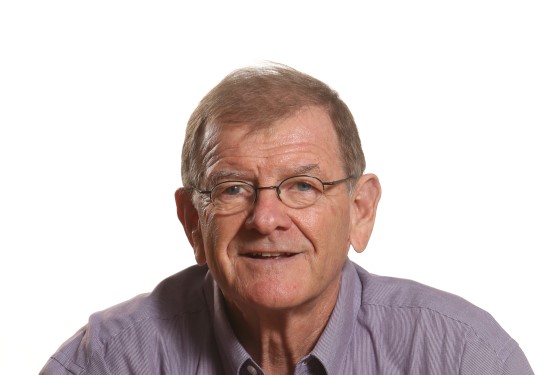
JCRC meeting features talks on upcoming Israeli elections, dire situation for Venezuelan Jews
Jake Chernoff
Israeli expert Dr. Meir Elran, Ph.D., predicts the upcoming Israeli elections could have significant ramifications on the unresolved conflict with the Palestinians, as well as with the relationship between the Israeli government and the Diaspora communities around the world.
A veteran in the Israel Defense Forces, primarily in the Military Intelligence Directorate, Elran spoke at JUF’s Jewish Community Relations Council (JCRC) meeting–held in February at JUF–to discuss the upcoming elections in Israel.
Elran is a senior research fellow and head of the Homeland Security Program, co-head of the Institute for National Security Studies at Tel Aviv University, and currently serves as a visiting professor with the University of Chicago.
He lauded Israel’s vibrant democracy, and then outlined the general structure of Israel’s parliamentary system that is based upon proportional representation, as opposed to the American two-party system and its electoral college for the presidency. Unheard of in the United States, an election with over 30 parties running for office in Israel is commonplace.
Elran explained that a single party has never won a simple majority of seats (61 out of 120) in the Knesset, Israel’s parliament, so in order to form a government, parties create coalitions.
Peace and security have always been a major concern for Israeli voters, and this upcoming election will be no different, said Elran. The parties in the center tend not to be ideologically driven, and therefore are the most willing to join a governing coalition.
The newest of these center parties, led by Former IDF Chief of General Staff Benny Gantz, is the Israel Resilience Party. (A few hours after Dr. Elran spoke, Israel Resilience announced a coalition with the Yesh Atid party, led by Yair Lapid, Moshe Ya’alon and Gabi Ashkenazi, both former IDF Chiefs of Staff, like Gantz. Israeli media are calling this the strongest challenge yet to Prime Minister Netanyahu.)
While recent polls indicate current Prime Minister Netanyahu will most likely be re-elected, he faces several corruption charges. If Netanyahu is indicted and steps down, there is the question of who will take over, according to Elran.
JUF Board Member Gita Berk also gave an update at the meeting on the dire situation of Venezuela’s Jewish community. Born in Venezuela the daughter of Holocaust survivors, Berk keeps in touch with members of the Jewish community in Caracas, communicating daily with former classmates and friends.
She noted how the livelihood of Venezuelan Jews, who were once welcomed as refugees fleeing persecution, grew increasingly dangerous during the presidency of Hugo Chavez-known by many for his hateful rhetoric against Jews and others-and now during Nicolas Maduro’s presidency, called out by most as elected fraudulently.
Now, the combination of rampant economic strife and hunger, coupled with an environment already extremely hostile towards Jews, has created a perfect storm in Venezuela.
JUF’s overseas arms–the Jewish Agency for Israel and the American Jewish Joint Distribution Committee–have delivered needed food and medicine to the people of Venezuela, which Berk said has helped alleviate the situation a bit.
For more information on the upcoming Israeli elections, visit Israel Democracy Institute’s 2019 election guide .
Jake Chernoff is a Program Associate for JUF/Federation’s Public Affairs.
Other stories
-
Two local teens win national recognition
Recipients of the annual Diller Teen Tikkun Olam Awards
Read more -
Celebrating six young award winners cultivating the community
Introducing young adult award winners
Read more -
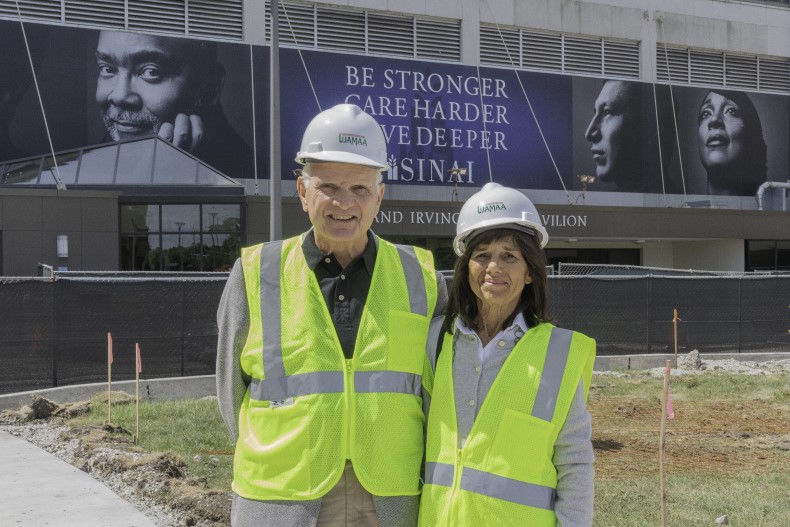
Finding a place to process complicated medical news or take a break from visiting a loved one in the hospital can be difficult. But thanks to Sinai Health System, a new garden will be completed this spring to create such a space at Mount Sinai Hospital in southwestern Chicago.
Susan’s Garden, named by donor Harry J. Seigle to honor his wife of 45 years, will be designed to “tap nature’s restorative power for the benefit of our patients, families, and caregivers,” said Karen Teitelbaum, president of Sinai Health System, which celebrates its centennial this year and is a partner of the Jewish United Fund.
The garden, which will sit in front of the hospital’s entrance, will feature curved paths for walking, benches to sit and relax, and fountains, sculptures, and a variety of indigenous trees and plants to admire. It will serve as a calming environment for entering and exiting the hospital and also will provide areas to seek companionship and other areas for quiet reflection. It will be designed as a welcoming place for the over 175,000 people who enter Mount Sinai Hospital’s front doors each year.
“City hospitals can be cold, even threatening places-the Garden will welcome all to Sinai,” Seigle said. “It provides a campus-like setting for the inpatient and outpatient entries as well as a place of reflection and respite for patients, families, and staff.”
As the newest addition to the Sinai Health System, the garden will follow a proud tradition of a century of healthcare at Mount Sinai Hospital. The hospital, which originally began as a place for Jewish doctors to work and the Jewish community to find healing, has expanded into two comprehensive medical campuses with four hospitals and 14 clinics.
Seigle became involved with Mount Sinai Hospital years ago, when he visited and felt an “obvious and personally compelling” need to help with the creation of what is now called the Seigle Outpatient Center. Now, he is proud to help the community in another way and dedicate the nearly one-acre garden to his wife.
“Susan is a modest woman; recognition is not her thing,” Seigle said. “However, she values being associated with Sinai’s mission and sees the garden as ‘healing’ to the community.”
This healing began with a meeting of patients, caregivers, individuals from the disability community, and garden enthusiasts to brainstorm ideas, and will conclude in the upcoming months with the planting of some spring trees and the construction of boulders honoring donors.
In Susan’s Garden, patients and hospital employees will reap the benefits of stress reduction, lessened fear and anger, increased social support, and more. Research shows that these benefits can be helpful for patient outcomes.
“Susan’s Garden will signal loudly and beautifully to the underserved communities on Chicago’s west and southwest sides that Sinai Health System, and the broader philanthropic community, are committed to their health and wellbeing,” Teitelbaum said.
Sinai Health System is a partner with the Jewish United Fund in serving our community.
Other stories
-
Two local teens win national recognition
Recipients of the annual Diller Teen Tikkun Olam Awards
Read more -
Celebrating six young award winners cultivating the community
Introducing young adult award winners
Read more -
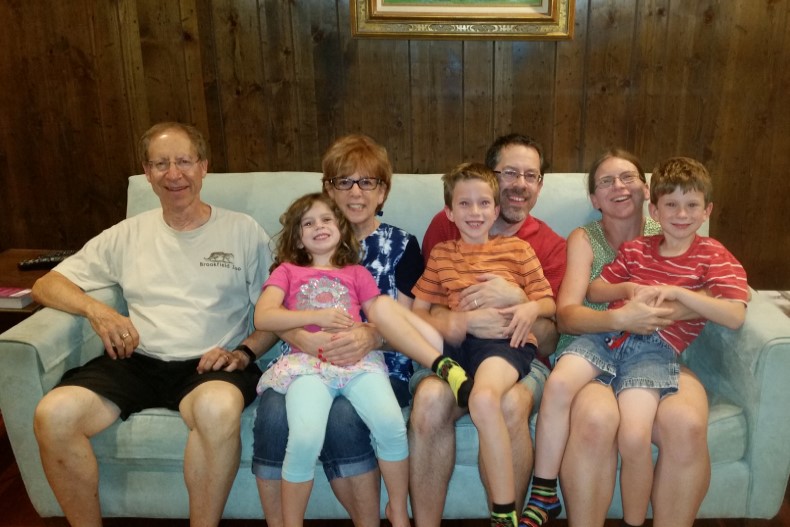
Celebrating Alene Rutzky, the face of JUF in the Southern Suburbs for more than two decades
Jenna Cohen
It’s been a year of simchas and milestones for Alene Rutzky, JUF’s outgoing Southern Suburbs Coordinator. In late 2018, she celebrated both her 70th birthday and 50 years of marriage to her husband Ronald. And this winter, she celebrated her retirement after more than 23 years at JUF representing and serving the extended south suburban Jewish community.
In her role as South Suburban Coordinator, Rutzky’s days were devoted to identifying and filling service gaps within the local Jewish community. Over the course of her nearly 24 years of service, she wore innumerable hats. Rutzky, who retired in February, helped organize everything from college fairs for Jewish high school students to adult education programs, to a south suburban Maot Chitim chapter and emergency financial assistance supports. She also helped establish, launch, and manage JUF’s Mini-Grant Kehillah program, which provides small grants to bring additional Jewish programming to the region.
But one of the projects she’s most proud of is the south suburban transportation program. Chicago’s sprawling southern suburbs (i.e., Olympia Fields, Park Forest, Homewood, Flossmoor, Hazelcrest, and Glenwood) have train lines connecting to the city proper, but little in terms of local public transit. As such, those without access to a car, particularly the region’s older and aging residents, often struggle with mobility, making outings like a trip to the grocery store or to the doctor challenging. Rutzky identified this barrier in the mid-1990s, and promptly got to work leveraging local resources to improve the lives of her neighbors. Out of this project came the first Shalom bus system in the southern suburbs.
Today, the transportation program includes a partnership with the ride-share platform GoGoGrandparent. Those needing a ride do not need access to a smartphone or computer. Instead, they can call a phone number and order a ride much like one would a taxi. JUF helps subsidize the cost of service, so users pay a minimal fee.
It brings Rutzky great satisfaction to help provide such critical services for her neighbors. This Jewish community, she explained, is incredibly close: “It’s like living in a small town. We all know each other…when somebody is in trouble, everyone responds.” JUF, likewise, “has always been very responsive” to the needs of the community, she said. “I’ve gotten a tremendous amount of support from everybody downtown…and I know JUF will continue to serve the community.”
“Alene is an incredibly knowledgeable resource for both the Jewish and general community,” said Karen Galin, assistant vice president of Health and Human Services at JUF. “We will miss her perspective, thoughtful, and diligent advocacy, and rich sense of history.”
In her retirement, Rutzky looks forward to spending more time with her grandchildren Moira, Naphtali, and Raphael, and going on a long-awaited trip to Europe with Ronald. She plans to remain heavily involved in the local Jewish community and to continue serving in leadership roles on several social service/homeless prevention-related provider networks in the region.
“We are staying in the community because we love it,” Rutzky said. “I’ve enjoyed [my role] so much…it’s been a very big part of my life.” Now, “I look forward to what comes next.”
Jenna Cohen serves as Grants and Planning Associate for Jewish Child & Family Services and is a freelance writer living in the Chicago area.
Other stories
-
Two local teens win national recognition
Recipients of the annual Diller Teen Tikkun Olam Awards
Read more -
Celebrating six young award winners cultivating the community
Introducing young adult award winners
Read more -
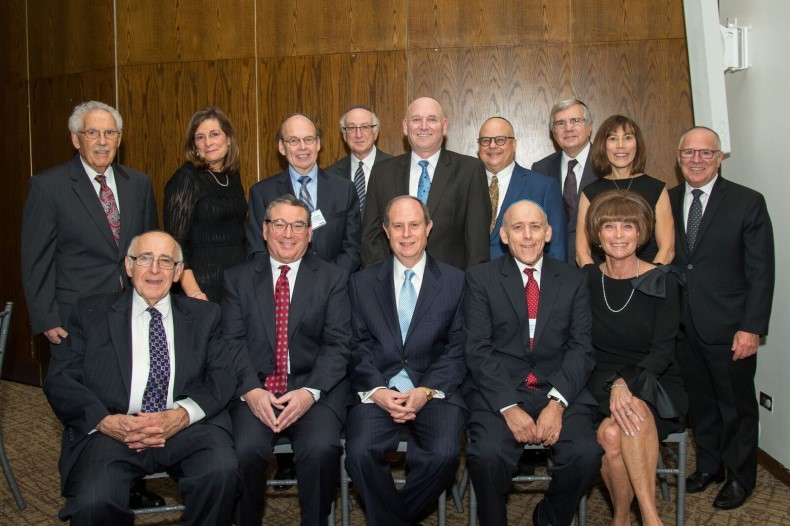
North Suburban Synagogue Beth El’s story 70 years in the making
Donald Liebenson
On March 19, 1944, Benjamin and Gertrude Harris of Glencoe hosted a meeting in their home to discuss the founding of a conservative congregation on Chicago’s North Shore. At the time, there was no such congregation between Chicago and Waukegan.
“I was very young, and I can remember my parents took us to a [local] congregation for Friday night service,” recalled Morton M. Steinberg. “My brother and I put on our kippot, and the usher came and asked us to take them off.”
Steinberg would become the 19th president of North Suburban Synagogue Beth El (NSSBE), which grew out of those initial meetings in the Harris’ observant home. His parents were among the congregation’s founding families. “I have been here since the beginning,” he states, and so he was the obvious choice to become the synagogue’s biographer on the occasion of NSSBE’s 70th anniversary.
The new book, Tradition by the Lake: A Historical Outline of North Suburban Synagogue Beth El , published by the synagogue, charts NSSBE’s story that is at once unique and universal in charting the life of a congregation. It is “a story of dedication, persistence and commitment, of love and devotion, to Judaism and the Jewish people,” Steinberg writes.
It began with the Harrises, who gathered families that had moved from Chicago to the North Shore “and brought with them their traditions,” Steinberg said in a recent interview. “They wanted a traditional [Conservative] synagogue.”
In 1946, as the fledgling congregation found its footing, services were held in various members’ homes. The first High Holiday observances were held at the Winnetka Women’s Club. In July 1947, the State of Illinois issued them a charter as a not-for-profit organization for NSSBE. The following year, the synagogue found its permanent location in Highland Park in a 22-room estate on seven acres on Sheridan Road.
“When the synagogue bought the mansion it was furnished,” Steinberg recalled. “It became a second home with lots of places to run around. We had a great time. The upstairs bedrooms became classrooms. The living room became the library. The dining room is now a children’s reading room. The various additions-the school, the auditorium, the sanctuary-came later. NSSBE grew because [the founders] had certain principles and people wanted to pass on their Jewish heritage and traditions to their children.”
In NSSBE’s first annual report, issued in 1949, Rabbi Maurice Kliers shared his goals for the new congregation: “To build an American Jewish community that is vital, dynamic, rich, and meaningful…to generate the highest ideals of Judaism with the best ideals in Americanism…to enable our children to share Jewish experiences with a sense of joy, appreciation, and creativeness.”
That vision endures into the 21th century, noted the recently-retired Vernon Kurtz, who with more than 30 years in the position is NSSBE’s longest tenured rabbi. “We are the only Conservative congregation in Highland Park,” he said in a phone interview. “We have updated our facilities and grown our programming, but still maintained our original vision-to be a traditional congregation espousing love for the state of Israel, work on behalf of our own community, the Chicago Jewish community and the world Jewish community-and we’ve tried to educate our children and the families in that manner.”
Community is the watchword at a time when incidents of anti-Semitism are on the rise. This makes institutions such as Beth El vital, Kurtz stated. “What we learned after [the shooting in] Pittsburgh is that Jews wanted to be together,” he reflected. “In every community, Solidarity Shabbats in the aftermath of the tragedy united hundreds and thousands of people who found solace in being together. Without these institutions, that just can’t happen.”
Kurtz’s tenure at NSSBE is a testament to continuity. “I [recently] had a baby naming,” he said. “I had named the mother, officiated at her bar mitzvah, and at her wedding. That’s a ‘wow!'”
Keeping the Beth El community engaged and vital is one of the challenges facing incoming Rabbi Michael Schwab. “I hope to extend [Beth El’s] great legacy as a vibrant and dynamic center for living and teaching Judaism,” he said. “We are extremely excited about the future of Jewish life on the North Shore and Beth El’s role in engaging Jews of all ages in the beauty, relevance, and meaning of our tradition.”
Donald Liebenson is a Chicago-based writer who writes about arts & entertainment and popular culture for The Chicago Tribune and other outlets.
Other stories
-
Two local teens win national recognition
Recipients of the annual Diller Teen Tikkun Olam Awards
Read more -
Celebrating six young award winners cultivating the community
Introducing young adult award winners
Read more -

It All Started in Pinsk: The origins of a magical Chicago garden
Robert Nagler Miller
Diana Leifer’s garden is no secret, at least to her fellow community members in Bowmanville — a small neighborhood on Chicago’s North Side between Ravenswood and Western avenues, and Foster and Bryn Mawr.
But Leifer’s garden, which has taken first prize over the years during the annual Bowmanville Garden Walk, does call to mind The Secret Garden , the charming Frances Hodgson Burnett novel adapted for stage and screen.
Hidden behind Leifer’s late-19th-to-early-20th-century two-story clapboard home lies an enchanted world, an efflorescence of perennials that run their course for at least half the year: tulips, crocuses, daffodils, and hellebores in early spring; irises, hydrangeas and azaleas during the height of the season; peonies, lilies of the valley, Virginia bluebells, and pansies in late spring; clematis and honeysuckle in early summer; alliums, miscanthus, phlox, hosta, and larkspur during mid-summer; Annabelle hydrangeas and Chinese astilbe late in the season; and asters in the early fall.
Visitors to Leifer’s garden marvel at the bursts of color-particularly the oranges, purples, and chartreuses that Leifer favors-that pop up on her little plot of heaven.
“I always like to say that the garden was the first room I remodeled,” said Leifer, a retired Chicago Public Schools and City Colleges teacher, who bought her home with her late husband, William “Les” Brown- founder of the Chicago Coalition for the Homeless-in 1993.
At that time, Leifer noted, the garden consisted of “one peony, a flowering plum shrub, a row of yews, and grass.”
Following the advice of a friend, an editor at a garden magazine who proclaimed that gardens with “straight lines were boring,” Leifer took a garden hose and created a configuration that she found pleasing-all loops, curves, and semicircles, nary a straight line.
Leifer no longer inventories the flora in her garden, but “at one point, I had 75 perennials, a progression of blooms from spring to late fall.”
A passion for the urban outdoors inspires her avocation, but she credits her success to a much more pragmatic and, well, pungent source: dried-up horse manure.
“If you have horse poop, it’s the best,” Leifer said. “You will have wonderful results, an explosion of flowers. But the manure must be composted. Otherwise, it’s going to be full of weed seeds, and you’ll have weeds all over your garden.”
For centuries, the most magical of gardens have often been ascribed to the English and the Japanese, famous for their green thumbs and eye for landscape architecture. But Leifer attributes her horticultural stirrings to her Jewish grandmother from the Belarusian city of Pinsk, Clara Siperstein Gelbard, “who had an old-fashioned garden of hollyhocks, pink dahlias, and roses,” at her two-flat in the Lakewood-Balmoral section of Chicago’s Edgewater neighborhood, she said.
Her grandmother and grandfather, who had moved to the North Side from the then heavily Jewish West Side of the city, lived on one story of the building. Leifer, her brother, and her parents, Abba and Eleanor Gelbard Leifer, who made their livings as music educators and synagogue accompanists, lived on the other. Leifer would watch her grandmother lovingly tend her garden. As soon as she went away to college in Wisconsin, she asked her landlord, Jean Holtz, whose family ran a farm, for a small patch of dirt on which to plant a nascent garden. So commenced her lifelong passion for all variety of flora.
Leifer no longer competes in the Bowmanville Garden Walk, though she would clearly take home first prize year after year. “I feel that everyone [who enters the contest] should feel the joy” of earning a blue ribbon, she said.
But she does open her garden during the event so that her friends and neighbors can feast Their eyes on her botanical cornucopia. It also allows her to indulge in another passion, cooking, as she whips up a multi-course gourmet-style meal for the garden walk’s judges.
“Gardening is a celebration of the beauty of nature in its grand diversity,” Leifer enthused. “It is a lens on the seasons, a wonderful way to live along with the progression of the year … and it sure beats concrete!”
Robert Nagler Miller is a journalist and editor who writes frequently about arts- and Jewish-related topics from his home in Chicago.
Other stories
-
Two local teens win national recognition
Recipients of the annual Diller Teen Tikkun Olam Awards
Read more -
Celebrating six young award winners cultivating the community
Introducing young adult award winners
Read more -
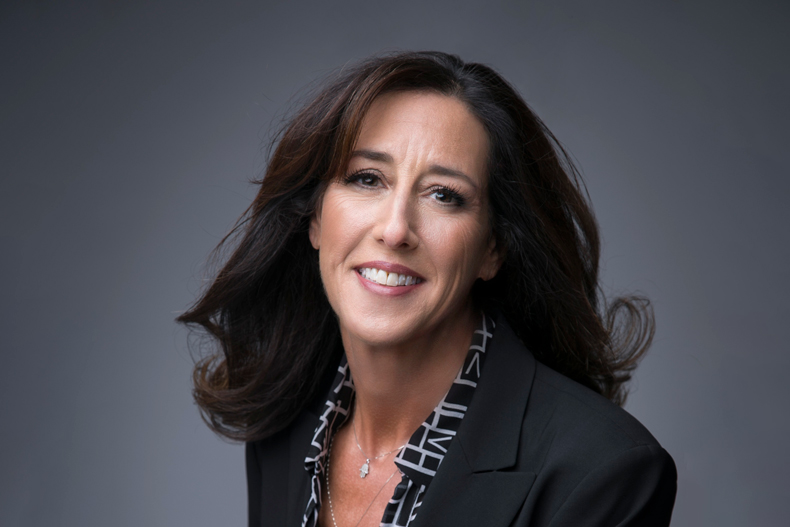
For Wendy Berger, heading JUF’s 2019 Annual Campaign is a mission of compassion, purpose, and meaning
Joel Schatz
She is a serial entrepreneur, heads an industrial real estate development firm, spent a decade as a commercial banker, has completed more than 30 Olympic-distance triathlons, and has won wide acclaim for her TED Talk.
In 2019, Wendy Berger is taking on yet another role, as Chair of the Jewish United Fund Annual Campaign, one of the largest such fundraising efforts in the nation.
The Campaign, which last year raised nearly $89 million, fuels a wide-ranging network of agencies and programs that feed, clothe, house, counsel, care for, and educate more than 500,000 Chicagoans of all faiths, and millions of Jews in Israel and around the world.
For Berger, heading JUF’s 2019 Annual Campaign is a mission of compassion that emerged following the sudden deaths of both her husband and brother.
“It took me a long time to regain my strength and begin to repair my broken world,” she said. “As I did, the Jewish concept of tikkun olam , of repairing the world around me, took on a very personal meaning.
“I’ve thought a lot about living a joyful life, one filled with meaning and purpose,” Berger said. “And guiding the Annual Campaign is an extremely meaningful way to do that.
“JUF touches the lives of so many people in so many ways, and I want to carry that message not just to our existing donors, but to the next generation of activists and philanthropists. The best way to do that is through innovative thinking about how we reach them. And by listening, listening, listening.”
“Wendy Berger is a remarkable leader,” JUF President Steven B. Nasatir said, “a woman whose enviable achievements in the professional world are surpassed only by the incredible strength she has demonstrated in the wake of personal tragedy. As Campaign Chair, she is once again committing her unique talents to strengthening our community.”
Berger has held leadership positions with JUF and its affiliated agencies for more than two decades, and has served on the JUF Board for more than 15 years, often as an officer. She was a member of the Hillel Governing Commission and the United Jewish Communities National Young Leadership Cabinet, helped develop the first classes of the Jewish Leaders Institute, and graduated the Wexner Heritage Program.
She was in the 2011 class of Leadership Greater Chicago, and has been a volunteer for a wide range of Chicago organizations, including the Chicago Public Library Foundation, TimeLine Theater, The Marwen Foundation, Chicago Run, and the JUF Uptown Cafe.
Three years ago, when Berger walked into her first JUF Board meeting after the death of her husband, she says she felt “embraced by the community. It was like coming home to a place where meaning and purpose come to life every day.
“The people there helped me rise up in my time of need,” she said. “And I proudly and thankfully embrace my responsibility to do the same, for all who are in need throughout our community.”
Other stories
-
Two local teens win national recognition
Recipients of the annual Diller Teen Tikkun Olam Awards
Read more -
Celebrating six young award winners cultivating the community
Introducing young adult award winners
Read more -
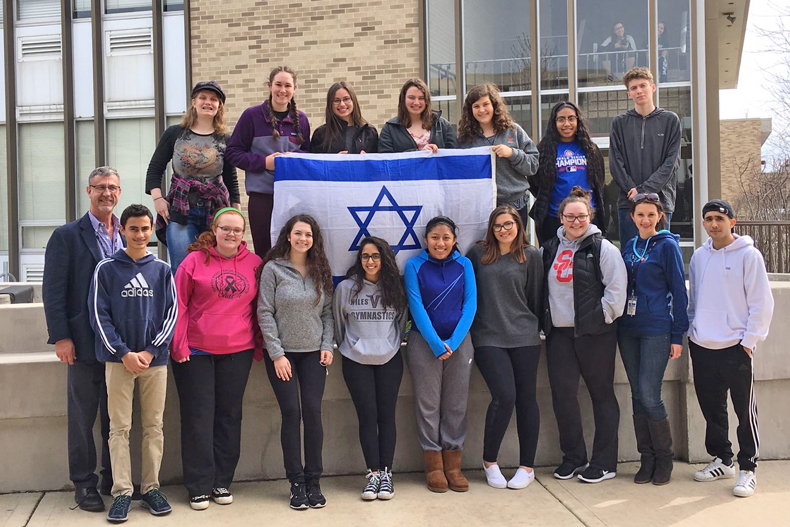
Abigail Lapins relocated to the Chicago area for high school from Kenosha, Wisconsin, where she had been one of the few Jewish students in her school.
At her new public schools–Stevenson in Lincolnshire–she was delighted to find many more Jewish students and Jewish-themed options.
When modern Hebrew as a foreign language became available to her as a sophomore, she jumped at the chance to take it. “I take pride in taking Hebrew because it’s something really unique,” said Lapins, now a senior. “A lot of people say they take Spanish, but not a lot of people can say they take Hebrew.”
Glenbrook North junior *Leslie Rosenberg studied Spanish in middle school but switched to Hebrew her freshman year of high school. “I love learning the language,” she said. “Our class feels like a community.”
Lapins and Rosenberg are in good company in their love for modern Hebrew, spoken by nearly nine million people worldwide.
Modern Hebrew in the public schools has had a long history in Chicago. The language was first taught in Chicago public schools through the 1950s, and then moved to suburban Chicago schools in the early 1970s, launching in Highland Park and Evanston, and later others.
Over the decades, student interest has steadily grown. This academic year, more than 600 Jewish and non-Jewish students in the Chicago area are learning Hebrew in seven public high schools–Deerfield, Evanston Township, Glenbrook North, Highland Park, New Trier, Niles North, and Stevenson. Evanston currently offers independent-study and online classes in Hebrew: the school hasn’t been able to recruit a qualified replacement following the retirement of its veteran Hebrew teacher.
The Chicago area boasts more public schools teaching Hebrew than any other community in the country, thanks in part to local families’ and students’ passion for Hebrew, along with efforts by JUF’s SAFA Foundation, who value the global importance of Hebrew literacy. Proponents of studying Hebrew in public schools note that the majority of Jewish students attend public schools where they can become proficient in the language through daily study.
“Continued Jewish identity building during adolescence is a high priority,” said JUF President Steven B. Nasatir. “Almost all American teens study a language during high school. The fact that Hebrew can be studied at a number of Chicago-area public schools provides a huge identity boost. Studying Hebrew and learning about Israeli culture leads to many new connections, more often than not to a high school summer in Israel program, and lots more.”
SAFA: The Foundation for Promotion of Hebrew Language and Israel Culture in Public Schools, a JUF-supported foundation, aims to maximize the number of students taking Hebrew in the public school system. SAFA, which means “language” in Hebrew, teams up with organizations such as the iCenter to promote school programs.
Hebrew enthusiasts say Hebrew study extends beyond the mechanics of learning the language, and stress that it’s vital to expose students to Israeli culture too. Hebrew teachers incorporate Israeli current events, arts, and food into their curriculum, and some schools offer Israeli extra-curricular clubs open to all students. At Deerfield High School, veteran Hebrew teacher Yaffa Berman and her students plan a day devoted to Israeli culture, with Israeli music and dancing in the hallways, and falafel and hummus served in the cafeteria.
“My philosophy is that the language has to be relevant and touch the lives of the students,” said Berman, who has been instrumental in growing the number of students studying Hebrew in Chicago-area public schools. “It has to be tied to the people and the land of Israel. When we learn Hebrew, we learn through the communication, the culture, the people, the food, the arts, the music–through all the senses. It’s not just about the classroom.”
Indeed, Hebrew learning reaches way beyond the classroom, and there’s no substitute for visiting Eretz Yisrael (the land of Israel) itself. That’s why, over spring break, Niles North High School Hebrew teacher Anna Raiber will escort her students to her hometown of Karmiel, in northern Israel. Then, in the fall, Israeli students will visit Chicago. Niles North is the only public school in the country that currently offers such an exchange program to Israel, now in its third year.
A cohort of passionate Hebrew students have the opportunity to spread the word about their love for Hebrew study. Students like Lapins and Rosenberg, along with nine other Chicago Jewish students, participate in Hebrew in the High, run jointly by JUF and Springboard, the Chicago Jewish Teen Engagement Initiative. Through this program, teens act as ambassadors to their high school Hebrew programs. “As ambassadors, these students are recognized leaders of their Hebrew program, and go out into the community to share their personal Hebrew story and the opportunity to take Hebrew,” said Sam Grobart, Springboard Teen Engagement Specialist.
There is a push to offer Hebrew in area middle schools too, as child developmental research shows that the earlier a child starts a language, the easier it is to pick up. Right now, only one school district in Illinois–Deerfield 109–offers Hebrew at the middle school level, launching its Hebrew program at two Deerfield middle schools, Caruso and Shepard, in the 2018/2019 school year.
Osnat Lichtenfeld teaches Hebrew at both middle schools and at Deerfield High School. She said middle school language instruction lays the groundwork for high school language study. But for Hebrew, in particular, there is added benefit to middle school study because the tween years, for most Jewish students, coincide with bar and bat mitzvah preparation-and the learning in one setting reinforces the other.
“Middle school is the age that starts their Hebrew journey,” Lichtenfeld said. “Learning to speak, read, and write the modern spoken language, alongside learning the language of the Torah, is beneficial to students and they see a lot of connections between the two.”
For more information about Hebrew in public schools, visit juf.org/teens and click on the “Community” section.
If you know someone interested in becoming a Hebrew in the High ambassador, contact Samuel Grobart at [email protected] or (312) 357-4982.
*Name changed to protect privacy.
Other stories
-
Two local teens win national recognition
Recipients of the annual Diller Teen Tikkun Olam Awards
Read more -
Celebrating six young award winners cultivating the community
Introducing young adult award winners
Read more -
The third cohort of JUF’s Jewish Leaders Institute, an intense, six-month curriculum focused on Jewish learning and leadership, has been announced.
Participants, who will graduate in June, include Miriam Ament, Joel Bennett, J.R. Berger, Hannah Bloom-Hirschberg, Carey Davidson, Stacey Dembo, Simon A. Fleischmann, Matthew Gaines, Lori Goldberg, Danielle Goodman, Danny Gutman, Mark Hartman, Steven Levine, Jeremy Liss, Emily Pevnick, Lori Silverman, Alissa Simon, Kyle Stone, Brad Weiner, Matthew Wolfson and Eteri Zaslavsky. This cohort is chaired by JUF Board member David Goldenberg.
The institute is an outgrowth of the Chicago Jewish community’s rich tradition of volunteer leadership and commitment to global Jewish peoplehood. The Jewish United Fund/Jewish Federation of Chicago has maintained a deep dedication to leadership development programming for volunteer leaders for many years. In order to maintain that commitment while adapting to a continually changing Jewish landscape, JUF launched the Jewish Leaders Institute in 2010 with a commitment to educate and prepare a new generation of leadership to take on the complex issues facing our community.
The purpose of JLI is to educate Jewish communal leaders in the history, thought, traditions and contemporary challenges of the Jewish people. The program will expand the leadership vision of its participants, deepen their Jewish values, and bring a Jewish language of discourse to their policy and decision-making in the community.
The goal of JLI is to develop a cadre of leaders who will be able to translate and adapt Jewish learning to the realities and needs of the future. JLI is for volunteers with a potential for long-term leadership within JUF, and participants are selected by invitation only.
Other stories
-
Two local teens win national recognition
Recipients of the annual Diller Teen Tikkun Olam Awards
Read more -
Celebrating six young award winners cultivating the community
Introducing young adult award winners
Read more -
Teaching the next generation about doing good; Social action in action for grandparents
Mira Temkin
When Lily wanted to celebrate her ninth birthday, she decided to volunteer at Bernie’s Book Bank in Lake Bluff and bring her friends along. Instead of presents, Lily asked her friends to bring new books to donate. Lily’s extended family had their own table, put stickers in the books, and packed boxes.
“Watching her and her friends doing such a mitzvah was just wonderful,” said June Gross, Lily’s grandmother. “Lily told me it was more fun than a skating party and how she enjoyed helping others. Everyone there also signed up to be future volunteers at Bernie’s. It warmed my heart.”
Today’s grandparents carry tremendous influence over their grandchildren, passing on generations-old traditions of serving those less fortunate. “As teachers and role models, grandparents can encourage the next generation to perform acts of tikkun olam (repairing the world),” said Sharon Morton, the Deerfield-based founder and executive director of Grandparents for Social Action.
Morton, a Jewish retired religious educator with decades of experience in social-action training, said the organization teaches grandparents how to pass along their values of tikkun olam through intergenerational social-action programs and a free monthly e-newsletter.
“I believe we all want to leave a legacy,” said Morton. “As our grandparents taught us, so must we teach our grandchildren that together we can change the world; that each individual child can make a difference.” More importantly, volunteering together can build strong, lifelong bonds and shared memories between grandparents and grandchildren.
Doris Lazarus, an active volunteer with the Holocaust survivor community, has taken her granddaughter, Talia, age 10, to help set up for the annual ‘Café Europa’ Chanukah party, sponsored by JUF’s Holocaust Community Services. She said Talia felt it was a very meaningful experience. “As the great-granddaughter of survivors, she wanted to do something special for them,” said Lazarus. “For me, it was an opportunity to share this experience with her, do something together and pass on my values of volunteering- l’dor v’dor -from generation to generation.
Where to look for ideas
JUF’s TOV Volunteer Network connects the Jewish community with volunteer opportunities that best meet their needs.
“TOV offers many intergenerational volunteer projects, ranging from pet visits at nursing homes to organizing food pantries, to serving a meal at the JUF Uptown Cafe (for ages 12 and older), and more. If you’re looking for a special project to do just with your family, our Volunteer Concierge can work with you to plan the perfect mitzvah opportunity,” said Marissa Comin, assistant director of Volunteer Services at TOV. She also recommends volunteering on Good Deeds Day, April 7, an international day of service around the world. TOV coordinates the local efforts and offers a variety of hands-on volunteer projects across Chicagoland.
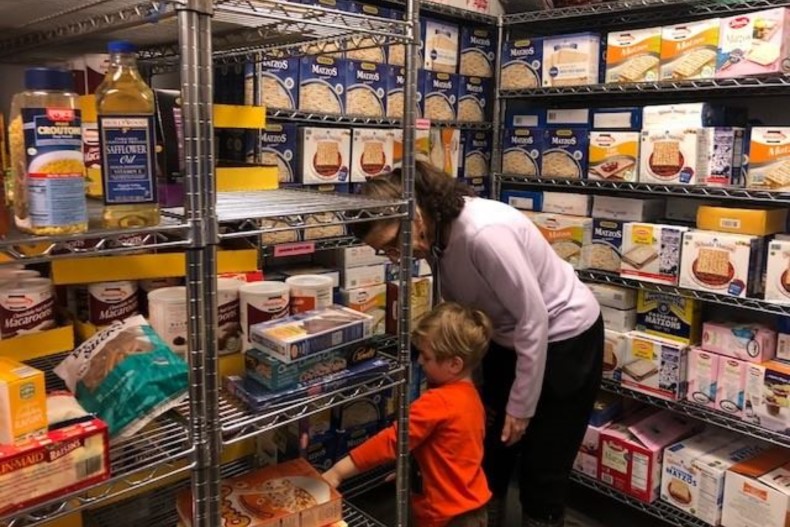
Maot Chitim of Greater Chicago welcomes grandparents and grandchildren for holiday food distribution at Passover and Rosh Hashanah. “Everyone can help with delivering the kosher food packages,” said Joellyn Stoliar, executive director of Maot Chitim. Volunteers from age 12 can work putting the packages together in the warehouse, and those ages 7 and up can help stuff materials for the packages.
“Volunteering with multi-generations creates a family tradition that kids will always remember,” said Stoliar. “It’s a beautiful gift they can share together and continue to do with their own children.”
“When our children were young, we did family mitzvah projects together,” added Gross. “Now this has been passed down to another generation. What more could grandparents ask for?”
For more on Grandparents for Social Action, visit grandparentsforsocialaction.org.
For more on TOV, visit JUF.org/TOV and for more on Good Deeds Day, visit juf.org/tov/gooddeedsday.aspx.
For more on Maot Chitim, visit Maotchitim.org.
Mira Temkin is a Highland Park-based journalist who writes about travel, theater, and lifestyle. Follow her at miratemkintravel.com.
Other stories
-
Two local teens win national recognition
Recipients of the annual Diller Teen Tikkun Olam Awards
Read more -
Celebrating six young award winners cultivating the community
Introducing young adult award winners
Read more -