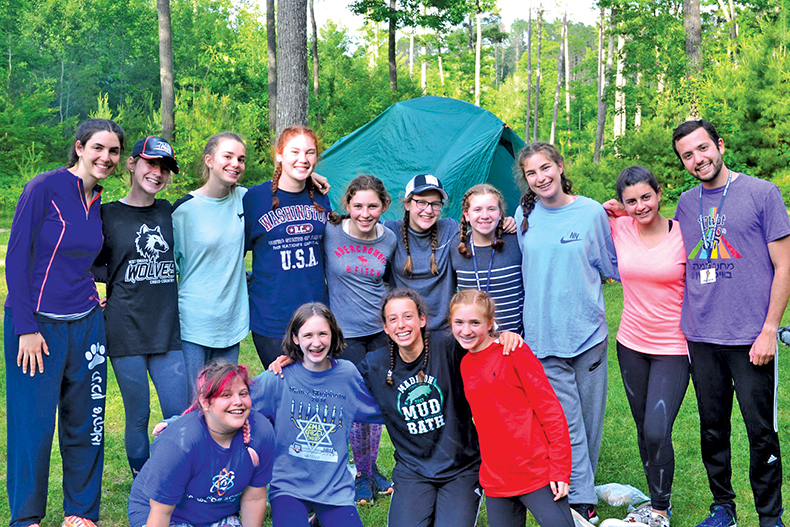
During a recent purge of papers transferred from my childhood home in Omaha, Nebraska, to my bedroom floor in Chicago, I came across a poignant eighth grade essay titled “My Favorite Place.”
As a 13-year-old in the late ’80s, my favorite spot in all the world was the kikar , the huge grassy plaza at the physical center of Camp Ramah in Wisconsin. On the kikar , as my essay describes, my friends and I would Israeli dance, relax after a canoe trip, snap pre-Shabbat photos, and bask in our togetherness for eight glorious weeks. Bonding with my Jewish friends at camp was the best, irreplaceable feeling-one that I counted down to from the moment I arrived back in my Omaha routine.
My first summer at Ramah was shaped by many people, including my counselor, Diane Kushnir (now Halivni). Oh, how Diane seemed so much older than me-a college sophomore! Those handful of years between us shrank in perceived magnitude as we became full-fledged adults, reconnecting in Chicago in the 2000s. Diane and I became peers, colleagues, and friends-that Ramah bond unbroken.
My sister, Holly, was another influence on my Ramah experience. She and her husband are raising their beautiful family in Omaha, and anyone who has met me for five seconds knows that their kids-my niece, Julia, and nephew, Levi-mean the world to me. My heart hurts from missing them in between visits and swells with pride as they grow into kind, compassionate, ambitious young people.
And so, one can imagine my intense kvelling as I watched Julia via livestream perform in her first Ramah play, the Hebrew version of Wizard of Oz- the very same show in which I was a munchkin during my first Ramah summer 28 years prior.
Julia, like her mom and aunt, has found her happy place and incomparable friendships at Ramah. “Ramah relationships are way different than any other relationship,” Julia says. “When you are together nonstop for eight weeks, you can imagine that you share a close bond. Some of my tightest friendships are so many miles away from me, in Deerfield, Illinois.”
One of those besties from Deerfield? Diane’s daughter Eliana.
Eliana echoes Julia’s assessment of camp relationships, adding “We also share similar values, and it creates for long-lasting friendships.”
Julia, Eliana, and their other friends text and FaceTime almost every day. They post photos on Instagram and receive immediate likes and comments on GIFs and memes, a far cry from my generation anxiously awaiting handwritten letters packed with juicy updates. Although advances in technology “maybe also helped us oldies stay in touch once email and Facebook and group chats began,” Diane admits.
Despite constant communication, the kids find no replacement for in-person visits-which is a total win for this doting auntie. Carpooling with parents or flying solo across the Midwest for b’nai mitzvahs has been common for their chevre (close-knit group) this year. “Whenever I think of Chicago,” my niece says, “I think of friends and family, and that makes me think of camp, which makes me even happier.”
My sister advocates for her children, whose Hebrew school classmates can be counted on two hands, to embrace the same opportunity she had to expand her Jewish network. “Camp has made the love of Judaism very strong for Julia,” she says. Diane and her husband, Shai, a Ramah Berkshires alum, ensure their kids “appreciate being the next generation.” While there may be the occasional eye roll from their teenagers, Diane believes “they like that we have deep roots in Ramah, and it helps them see the big picture about the benefits of living in community, and with others who share their Jewish identity.”
Such cultivation of Ramah spirit is not lost on these young adults. “I love telling my mom and aunt about my camp experiences,” says Julia, “and they share stories from their Ramah careers that are similar and that I’ll always remember.”
Both Julia and Eliana note how cool it is to find their family members’ names on cabin plaques-such as the 1989 plaque featuring my name together with Diane’s. “I realize how many generations have been living in these same cabins,” Julia says. “I’m the next generation in my family and hopefully someday my children will get to see my name on these walls.”
Caren Friedman is a communications consultant and freelance writer living in Chicago.
Other stories
-
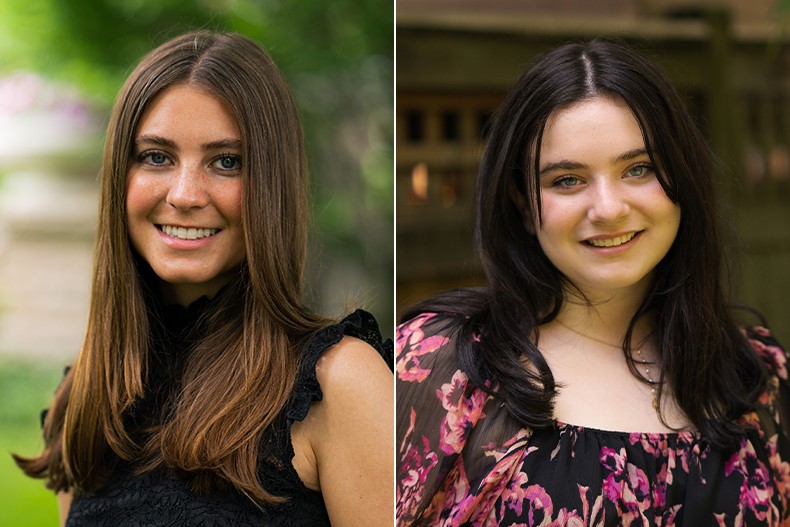
Two local teens win national recognition
Recipients of the annual Diller Teen Tikkun Olam Awards
Read more -
Celebrating six young award winners cultivating the community
Introducing young adult award winners
Read more -
Summer at Apachi J Camps has always been about swimming, sports, dance, Shabbat celebrations, and making new friends. But now-Apachi J Camps is about tech too.
Last summer, the camp added a program called #BIG IDEA, a tech innovation camp with a twist. At #BIGIDEA, design, coding, cyber security, music, robotics, and 3D modeling are combined with unplugged time for campers. Last summer, over 175 campers experienced this program, staffed by a combination of Israeli and local counselors. Campers were challenged each day to expand their thinking, use their creativity, and, of course, still get outside and enjoy the sunshine with their fellow campers.
“I’d like to think I’m a creative, weird, and funny kid,” said a #BIGIDEA camper. “I’m a firm believer that video games are an art form. [Video games are] an interactive movie, and being able to live in virtual reality is so stupendous! When we play video games, sometimes we think, ‘I wish this was a little different.’ At #BIGIDEA, we can literally make that difference.”
This summer, the tech camp will be offered again in Northbrook and expand to the Lincoln Park neighborhood of in Chicago as well. In addition, Apachi J Camp is expanding #BIGIDEA for preschoolers.
For more information, or to register, visit here .
JCC is a partner with the Jewish United Fund in serving our community.
Ilana Carp is the manager of Program Marketing for JCC Chicago and is a proud former Apachi and Camp Chi camper.
Other stories
-
Two local teens win national recognition
Recipients of the annual Diller Teen Tikkun Olam Awards
Read more -
Celebrating six young award winners cultivating the community
Introducing young adult award winners
Read more -
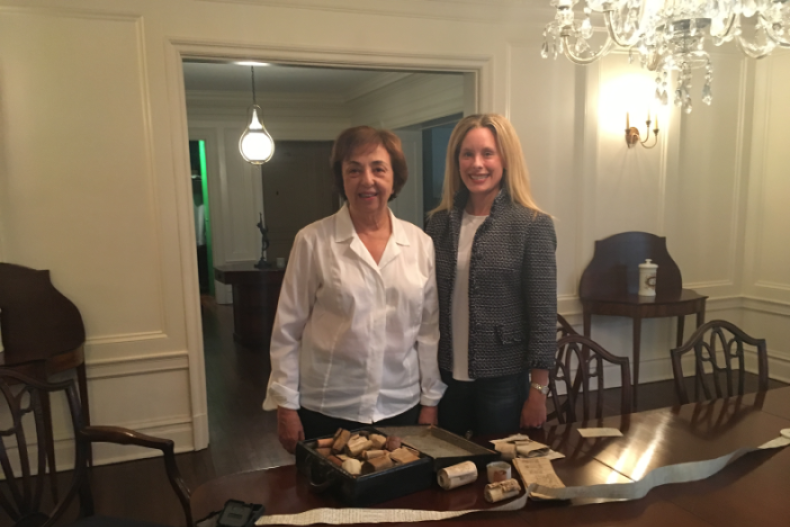
The suitcase itself took decades to cross continents and oceans. But its contents-85 centuries-old Kabbalistic scrolls from throughout North Africa-took an even longer, stranger trip.
Stacy Derby, a family biographer from Chicago, was writing the life story of Dr. Fred Coe, a Chicago nephrologist. While she was at their home, his wife, Eleanor, a psychologist, showed Derby a small, black suitcase that had belonged to her father, Dr. Max Leopold Brodney.
“When I saw what was inside, my jaw dropped,” said Derby. It was a large collection of scrolls, that were “obviously Kabbalistic.”
In the summer of 1959, Eleanor explained, Brodney-a Jewish urologist from Chicago-stepped behind the Iron Curtain with a medical delegation to tour Soviet hospitals. While in Moscow, Brodney went to Friday night services, where he was taken aside by the synagogue’s rabbi. The rabbi gave him the suitcase, showed him its contents, and begged him to smuggle it out of the country before it was discovered by the Communist authorities.
Eleanor first saw the suitcase when he returned; she was 17. Her father never did learn how the Moscow rabbi came to have the suitcase, she said.
When Brodney died in 1979, his daughter attempted to research the scrolls, but to no avail. The suitcase took up another decades-long residence in her cabinet, until she showed it to Derby this year.
Derby sent photos of the scrolls to a former professor of hers at Oxford. He referred her to The National Library of Israel, who sent her to the collection to Dr. Yoel Finkelman, curator of its Chaim and Hannah Solomon Jewish Collection.
Finkelman’s staff began to unravel the scrolls-and their mysteries.
They counted 85 scrolls-one of the largest such collections ever discovered-and a guidebook for writing such scrolls.
They determined that the scrolls were, in fact, Kabbalistic in nature, handwritten from the end of the 19th Century and the beginning of the 20th. Based on the names mentioned and the writing styles, they determined that some were created in Israel, some in Russia, and some in places throughout North Africa, while the origins of the rest remain unknown.
Asked to speculate how Middle Eastern scrolls came into the possession of a Moscow rabbi, Finkelman imagined that a Russian anthropologist had investigated the Jewish communities in North Africa.
Prof. Shalom Tzabar-an expert on folklore, art, and mysticism, at the Hebrew University-instead hypothesizes that the collection likely had belonged to a Chabad rabbi, as such clergy were active in North Africa at the time, he noted.
Some of the scrolls were pocket-sized and some a yard long. Their contents were as varied as their lengths. They are written in Hebrew, Aramaic, and Arabic-Jewish. Some only bear text, while other bloom with colorful calligraphy, artwork, and diagrams.
Some of the scrolls summon angels, others protect their holders-including new mothers and their babies-from dangers natural and supernatural. Still others include prescriptions for various ailments. One seems to contain a method of identifying a thief. Many were tailored to the specific needs of their bearers.
Eleanor donated the collection to the library in her father’s memory; once it is cataloged, it will be scanned and uploaded to the Internet. She also expressed gratitude at finally being able to fulfill her father’s 60-year-old promise to a rabbi he once met, half a world away.
The scrolls themselves have at last found a proper, permanent home. Not a closet in a Russian synagogue or a cabinet in an American house, but an archive in an Israeli library where their art, history, and indelible Jewishness can be thoroughly studied and fully appreciated.
“This is where they belong,” Derby said.
Other stories
-
Two local teens win national recognition
Recipients of the annual Diller Teen Tikkun Olam Awards
Read more -
Celebrating six young award winners cultivating the community
Introducing young adult award winners
Read more -
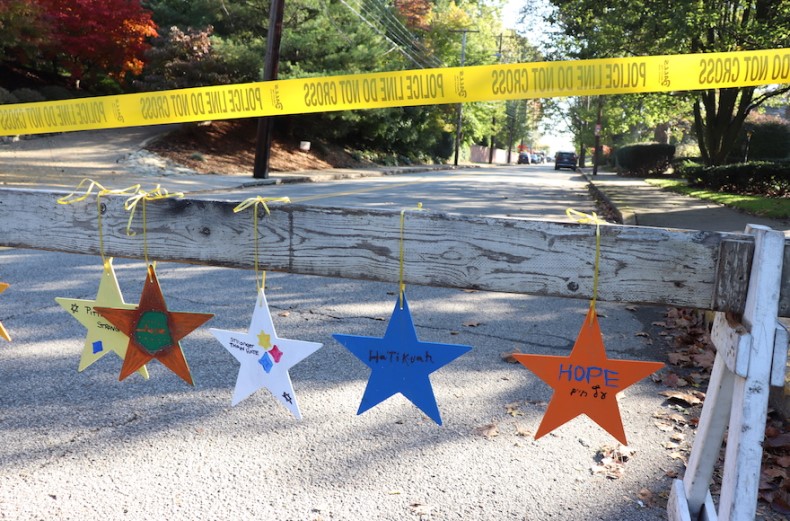
Jewish communities were left reeling after the massacre at the Tree of Life Synagogue in Pittsburgh. The overwhelming feeling, that the peace of Shabbat had been broken and the security of synagogue had been stolen, remained through the week.
By the following weekend, however, Jews in Chicago, across the country, and around the world were gathering together in synagogues once more for a Solidarity Shabbat, coordinated nationally by the Jewish Federations of North America and American Jewish Committee, and initiated as a local effort by JUF’s Rabbinic Action Committee and the Chicago Board of Rabbis.
Solidarity Shabbat was designed to reclaim the spaces and the holy day as a sign of togetherness and resilience.
“We have a lot of members connected to Pittsburgh, people who grew up there and have family there,” said Rabbi Ari Hart of Skokie Valley Agudath Jacob (SVAJ), an Orthodox synagogue. On Saturday morning, SVAJ was decorated in Pittsburgh colors, and Hart welcomed leadership from the Skokie police department before guiding the congregation in a “special prayer of gratitude and protection for police officers in Pittsburgh and around the country who protect us,” Hart added. Before singing Etz Chaim Hi , a traditional melody whose name corresponds to the name of the Pittsburgh synagogue, the congregation paused to recite the names of the victims.
In addition to these efforts from the synagogue’s members, SVAJ also hosted students from the Catholic Theological Union in Hyde Park, who joined the Jewish community in solidarity.
Rabbi Shoshanah Conover of Temple Sholom, a Reform synagogue, also experienced a positive response from the interfaith community. Upon returning from leading her congregation in prayer on the morning of the attack, Conover received text messages from clergy members of different religions, including Islam and several sects of Christianity.
“The interfaith community was immediately reaching out to us to say, ‘We’re with you,’ ‘We’re heartbroken,’ ‘We’ll show up for you anywhere,’ and ‘We want you to know that we’re standing with you in this moment,'” she said, and these messages brought her both consolation and inspiration.
As a parent, she was also encouraged by what her sons were learning from these messages: “For my children to experience that, it’s the message that they take away from this. Not only the message that anti-Semitism is alive and real and dangerous in our country and needs to be called out and spoken up against, but they also were seeing that we are not alone, and people care and are going to stand with us, and in the face of tragedy, there is always humanity.”
Conover was also heartened by the attendance at services–on Friday night, her congregation which usually averages 175 attendees, saw over 600. In a survey of Chicago synagogues, including Temple Sholom, the results were staggering: on Friday night services the week after the attack, there was a 438 percent increase in attendance, followed by a 95 percent increase on Saturday morning.
Even with other events like b’nai mitzvahs, baby namings, and more, these synagogues focused on remembering the 11 lives lost in the worst attack on Jews on American soil. At Anshe Emet Synagogue, a Conservative congregation, Rabbi Michael Siegel led 700 service attendees through a meaningful experience.
“Our sense was that we wanted to create an opportunity for people to remember those who were murdered in a way that really reflected their love of Shabbat and the Jewish tradition,” said Siegel, “so we consciously chose not to talk about anti-Semitism or politics. We focused on remembering them in a prayerful, thoughtful, meaningful way that reflected the best of Shabbat.”
Meaningful opportunities were also available that weekend for people unaffiliated with a synagogue. OneTable, a national organization providing Shabbat dinner experiences for people of all backgrounds in their 20s and 30s, hosted 25 dinners, at least 10 of which used their Together At The Table programming. This optional program guides participants through a conversation about recent events, including connections to historical and Biblical texts and options for steps to take going forward. Sixteen percent of these dinners were listed as open, meaning that the hosts welcomed all guests at their doors. In total, 269 young singles in Chicago gathered around the table for conversation and connection.
As a conclusion to a week of mourning, Solidarity Shabbat events in Chicago brought the city together to reflect on the past and look ahead to the future.
Other stories
-
Two local teens win national recognition
Recipients of the annual Diller Teen Tikkun Olam Awards
Read more -
Celebrating six young award winners cultivating the community
Introducing young adult award winners
Read more -
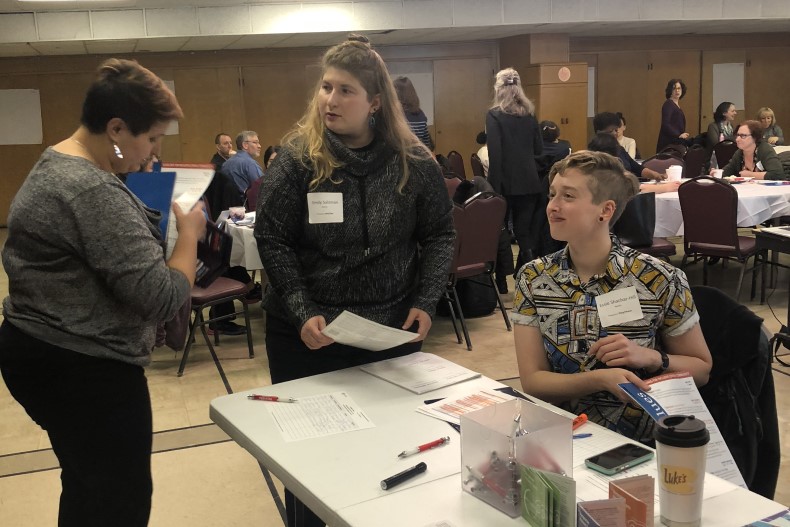
Chicago Jewish organizations gather for LGBTQ Inclusion Summit
MICHELLE COHEN
Clergy, staff, and lay leaders from 21 local Jewish organizations gathered at a LGBTQ Inclusion Summit in November at Evanston’s Beth Emet Synagogue. Keshet, a national organization working for LGBTQ equality and inclusion in Jewish life, hosted the summit to teach Chicago-area organizations how to create more inclusive and welcoming spaces for LGBTQ Jews. (This organization is not affiliated with the local JUF agency named Keshet, which provides programs for children and adults with disabilities.)
The day was split into two parts: In the morning, organizers focused on key terms and concepts relating to the LGBTQ community; later, the participants worked with trainers to develop a framework for inclusivity in their synagogues and agencies regarding programming, policy, and culture.
These frameworks are what Essie Shachar-Hill, Keshet’s Chicago Education & Training Manager, finds critical. “I think it’s particularly important for religious institutions to take these steps because, historically, not all religious institutions have been welcoming, and religious values have often been weaponized against queer and trans people,” said Shachar-Hill. “It’s important for religious organizations to be inclusive, to not only be tolerant and welcoming, but also actively inclusive for LGBTQ community members.”
This inclusivity starts with basic knowledge. The summit participants worked through a packet of exercises on gender-neutral pronouns–including he/him/his, they/them/their and xie/hir/hir–in sentences.
“Inclusion is an important value of our congregation, and we like to think that we’ve made a lot of progress in this area, including reaching out to this community, but I’m sure there are things that we don’t even know we don’t know yet,” said Rabbi Adam Chalom of Kol Hadash Humanistic Congregation in Linconshire.
During recent services, for example, Chalom noticed language in the Torah referring to the male/female gender binary, and knew “that’s not the appropriate language anymore,” but had questions about how to help his synagogue “become a welcoming Jewish home for people who identify” outside of the binary.
After learning the basic terminology, the meeting split up into groups, during which some of the clergy discussed religious imagery that can be used at synagogues. Elizabeth Berke, a cantor at Anshe Emet Synagogue in Chicago, brought up the Abrahamic image of “opening our tents” for the LGBTQ community. Keshet provided blessings for gender transitioning which focus on the Hebrew word ma’avir , which means “crossing over” and is also the root word of Ivrim , or Hebrews, the Biblical term for Jews.
Lay leaders–including Wendy Kahn and Ellen Robinson-Krumbein from North Suburban Synagogue Beth El in Highland Park, who both have LGBTQ family members–offered a different perspective on organizations’ current efforts to welcome LGBTQ community members. “We have not embraced them, and it’s time to do so. We need to educate ourselves on how to do it,” said Robinson-Krumbein.
During the afternoon discussion sessions, Keshet focused on resources to bring change to congregations going forward. “Over the course of the year, we support them by having one of our staff members check in every two months to support them, answer any questions, respond to feedback or pushback, brainstorm policy, and offer more resources,” said Daniel Bahner, Keshet’s national director of education and training.
These resources can help organizations move along the “continuum of inclusion” ranging from hostile to embracing, with steps to ensure that people feel increasingly welcome. Each organization left with action plans to meet these benchmarks.
“We’re very excited to be part of this,” said Judy Rosen, president of Temple Beth-El in Northbrook. “We knew there was a next level, but we didn’t know how to get there on our own, and being able to have the resources makes such a difference.
“We’ve had the conversation like, ‘We hung the rainbow flag, what’s the next step?’ And for us, we feel we’re warm and welcoming, but until we really answer the hard questions, we don’t know what we are,” Rosen said. “We do things for people who need physical inclusivity, intermarried couples, Jews of different colors, and this is the next level for us.”
For more information, visit keshetonline.org .
Other stories
-
Two local teens win national recognition
Recipients of the annual Diller Teen Tikkun Olam Awards
Read more -
Celebrating six young award winners cultivating the community
Introducing young adult award winners
Read more -

New opportunity for teen campers to practice Hebrew, connect to Israel
MICHELLE COHEN
For campers at the Chalutzim program of the Olin-Sang-Ruby Union Institute (OSRUI), who spend seven weeks of their summer in Oconomowoc, Wisc. studying Hebrew and fostering a connection to Israel, the question often comes at the end of the session: What comes next?
Until recently, OSRUI has recommended students visit Israel on an unaffiliated trip. But in the summer of 2019, OSRUI will host the first North American teen Hebrew immersion trip to Israel–called Chalutzim Ba’aretz–designed to build on existing knowledge of Israel and Hebrew and to foster a relationship between the participants and the Jewish homeland
“OSRUI has a long tradition and history of commitment to the Hebrew language,” said OSRUI Director Solly Kane. “We believe that Hebrew is the key to understanding Jewish past and Jewish history, but more than that, it is the key to engaging with Israel and being a part [of] what Israel is today and will be in the future. When our campers learn Hebrew, it strengthens their connection to Israel and their heritage,” which is a major goal of the new program.
“This summer we will listen, speak, and write as much Hebrew as is possible,” declares the four-week itinerary featuring traditional attractions from recreational trips–climbing Masada, praying at the Kotel (Western Wall), sleeping in a Bedouin tent, and floating in the Dead Sea–as well as opportunities to form personal connections with Israelis and get an intimate look at daily life for Jews, Arabs, Bedoiuns, and others who call Israel home.
To Kane, this program is a natural progression from Chalutzim in Wisconsin, where incoming 10th graders who have passed a Hebrew competency test spend their summer speaking only in Hebrew. “This new program is a chance to continue that commitment to Hebrew learning and immersion, and take the Hebrew learned at camp and bring it to Israel,” as well as making friends with newcomers to OSRUI programs and Israeli teens who join the trip along the way.
While “experiencing Israel in Hebrew, building connections with Israelis, and seeing sites in Israel while learning Hebrew,” Kane said, the campers will get a chance to put a face to the country they have studied for years, and form a deep connection that will last even when they return home.
To learn more about Chalutzim Ba’aretz, visit www.nftyisrael.org/osrui .
Other stories
-
Two local teens win national recognition
Recipients of the annual Diller Teen Tikkun Olam Awards
Read more -
Celebrating six young award winners cultivating the community
Introducing young adult award winners
Read more -
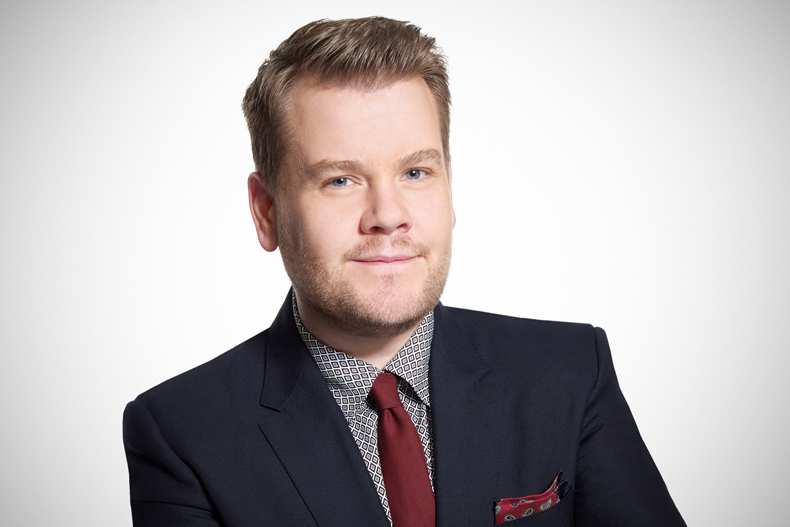
Comedian James Corden to headline JUF Young Leadership Division Big Event Fundraiser Dec. 15
If you’re ever in a bad mood, pull up one of comedian James Corden’s viral videos of Carpool Karaoke –and you’re bound to feel better.
The hugely popular Carpool Karaoke segments from Corden’s talk show are like a happiness drug. They depict him driving his celebrity guests–among them Miley Cyrus, Harry Styles, Pink, and most recently Barbra Streisand–through the streets of Hollywood, belting out hit songs in harmony.
Young Jewish Chicagoans will get to experience the joy of Corden live at the 11th annual JUF Young Leadership Division Big Event Fundraiser at the Sheraton Chicago Hotel on Saturday, Dec. 15.
The Big Event Fundraiser will help the Young Leadership Division kick off the 2019 JUF Annual Campaign. “For more than 10 years, Big Event has become the night for the entire young Chicago Jewish community to get together for a great cause,” said Mike Schwartz, 2018-19 YLD Board President. “We socialize, we laugh, and most importantly, we raise money for Jews and non-Jews in Chicago and around the globe who need it.”
The evening will feature Corden in a short standup set, followed by an interview with the comedian conducted by Chicago comedian
Pat McGann .
Corden–the uber-talented British comedian, talk show host-Broadway, TV, and film star–burst onto the British entertainment scene in the early 2000s, appearing in the hit British play and film, The History Boys; the play One Man, Two Guvnors ; and in his own TV sitcom Gavin & Stacey .
In the past decade, the performer has become a huge star on this side of the pond as well. Just over three years ago, he took over as host of CBS’ The Late Late Show With James Corden . His show has generated many viral videos–many with more than a million online views.
Past Big Event Fundraisers have featured comedians from Jimmy Fallon to Amy Schumer to Key & Peele with big huge crowds in attendance.
“There is something to be said about the strength of our young Jewish community here in Chicago, said Alex Entratter, 2019 Young Leadership Division Campaign Chair. “The Big Event Fundraiser continues to bring together 2,000 young professionals in support of the essential work that JUF does here in Chicago and around the globe. Our community of young Jews is a driving force and continues to show their dedication around ensuring a bright future for the Jewish people.”
Register online here . For more information, contact (312) 357-4880 or y [email protected] .
What you to need to know about the *Big* night….
Tickets to the Big Event Fundraiser are $110. If you are a first-time donor, your attendance requires a minimum gift of $25 to the 2019 JUF Annual Campaign, which is included in your ticket price. Current donors will be asked to match or increase your previous JUF gift, which you will have the opportunity to do during the program. Twenty-five dollars of your ticket price will go towards payment of your 2019 pledge.
This year’s festivities will include the following: First, wine, beer, and snacks, then the fundraiser and comedy show, followed by an after-party with late night food and open bar. Dietary laws observed. Ages 21 and over only.
Other stories
-
Two local teens win national recognition
Recipients of the annual Diller Teen Tikkun Olam Awards
Read more -
Celebrating six young award winners cultivating the community
Introducing young adult award winners
Read more -
“We are thrilled to welcome more than 75 Jewish community and organizational leaders to the Nov. 13 JUF joint Government Affairs Committee / Jewish Community Relations Council (JCRC) meeting to learn more about the results of the 2018 midterm elections,” said Judy Smith, CJE SeniorLife Representative to JUF’s Board and Government Affairs Committee Vice Chair for Federal Affairs.
The program featured Lynn Sweet, Washington Bureau Chief for the Chicago Sun-Times, and Suzanne Strassberger, JUF Associate Vice President for Government and Community Partnerships and Director of the Springfield Office. Sweet broke down some of the most important takeaways from the congressional races and provided insights for what may be ahead in the 116 th Congress. Strassberger ran through some of the key wins and losses in Springfield, with an eye toward what impact the new legislature and governorship will have on JUF’s agenda.
One of the big stories of the election, Sweet noted, was that the Democrats won control of the U.S. House of Representatives for the first time since 2011. Republicans maintained a slim majority in the Senate. There still are several House and Senate races still too close to call, but we do know there will be a few more Jewish members in Congress beginning in 2019: an increase from 23 to 28 in the House and from eight to nine in the Senate. She also noted that with a new generation of progressives coming in who are likely to move the Democratic Party more to the left, and a shrinking moderate Republican voice and more conservatives moving the Republican Party more to the right, such polarization could lead to more gridlock. Sweet also noted there will be more than 100 women in the 116 th Congress.
Strassberger provided an overview of wins and losses in Springfield, with an eye toward what impact the new legislature will have on JUF’s policy agenda. Although many have heralded the 2018 elections as the “year of the woman,” Strassberger said that at the Illinois state level the number of seats held by women in 2019 would only increase by one.
The election also ushered in a new governor. J.B. Pritzker, a Democrat, who defeated Republican Gov. Bruce Rauner. In an effort to predict what will be on Governor-Elect Pritzker’s agenda during the first 100 days, Strassberger anticipates there will be considerable focus on the state’s fiscal problems; passing a capital bill; a possible Medicaid buy-in program that the governor-elect supports for those who don’t qualify for Medicaid; and possibly education-related issues. Attendees also had a chance to hear a lot about what the state elections may mean for JUF’s agenda, particularly related to reimbursement rates and payments to providers for health care and human services.
Ofer Bavly, Director General of JUF’s Israel Office, called in to the meeting to provide a real-time update from Tel Aviv on the status of Hamas’ recent rocket attacks on Israel from Gaza. Bavly reported that 460 rockets had been fired over 36 hours.
Other stories
-
Two local teens win national recognition
Recipients of the annual Diller Teen Tikkun Olam Awards
Read more -
Celebrating six young award winners cultivating the community
Introducing young adult award winners
Read more -

Dozens have died, thousands have fled, and countless homes and businesses have been destroyed in the most devastating and lethal fires California has ever experienced. Blazes continue to rage in both the north and south of the state.
Within the Los Angeles area’s Jewish community, evacuees need immediate housing, large portions of three summer camps have burned to the ground, and a day school has been destroyed. To the north, the synagogue, Chabad house and tiny Jewish community of Chico appear untouched, but are on high alert as the massive conflagration continues to grow just miles away.
The Jewish Federation of Metropolitan Chicago is responding to crisis once again, raising funds to aid in the massive recovery.
Donations to the Jewish Federation California Fires Relief Fund can be made at juf.org/DisasterRelief, by calling (312) 444-2869, or by sending a check to 30 S. Wells Street, #3017, Chicago, IL 60606. Donations may be earmarked specifically for California Fires Relief, or for any of the several other natural disasters that have occurred in recent months.
As always, Federation will work hand in hand with local Federations and agencies, and will absorb all administrative costs so that 100 percent of funds collected will provide relief for the those impacted by this disaster.
Other stories
-
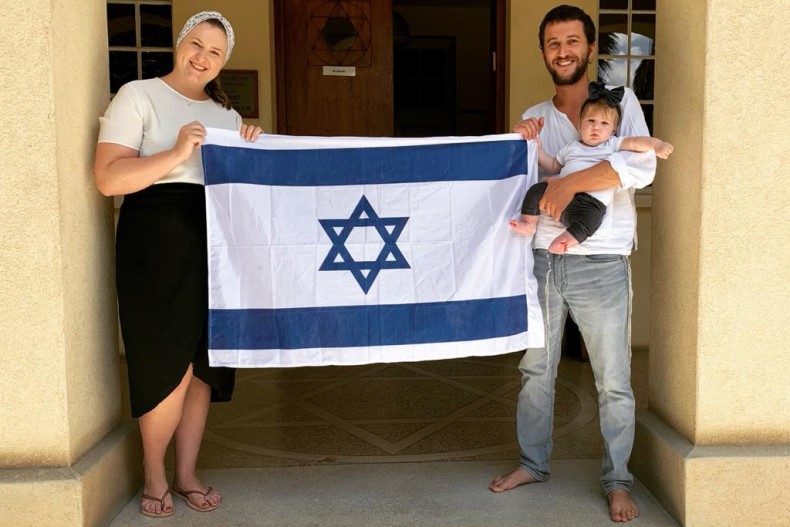
Chicago to Israel to Kenya
A family’s story of living Jewishly on three continents Michelle Cohen World May 28, 2021 Avital, Tzofia, and Netanel Kaszovitz outside their home in Nairobi on Yom HaAtzmaut. When Avital Kaszovitz prepared to be a Modern Orthodox shlicha (emissary) to the Jewish community in Ke
Read more -
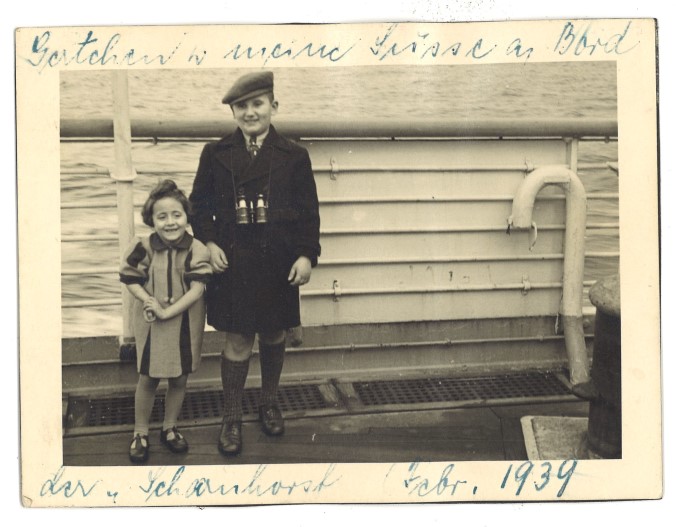
New exhibit spotlights the experience of ‘Shanghai Jews’
Explore a new Illinois Holocaust Museum and Education Center exhibit
Read more -
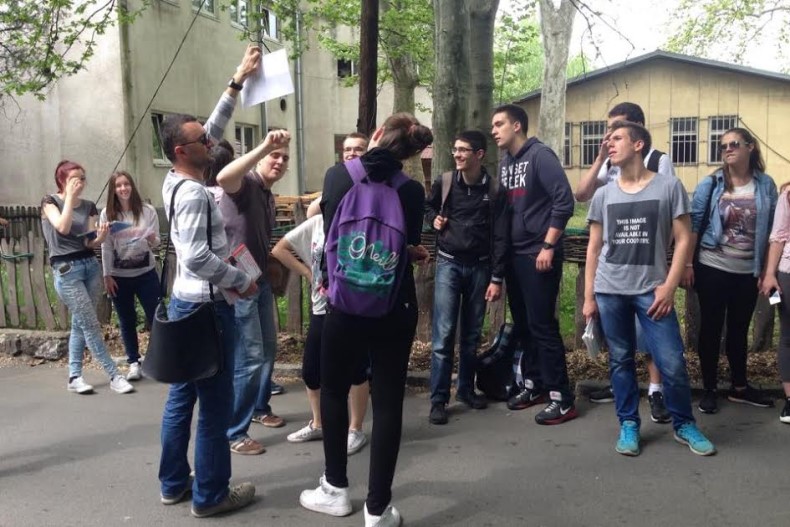
Europe’s brave new teachers of the Holocaust
Teaching the Holocaust in the modern era has its difficulties and rewards.
Read more
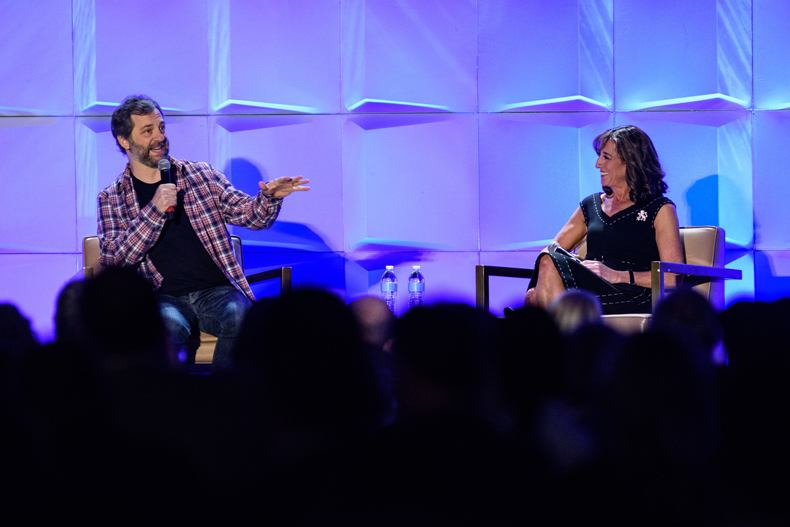
JUF’s 2019 Vanguard Dinner with Judd Apatow reaffirms Jewish endurance, resilience, and even humor
After one of the most painful weeks in modern American Jewish history, JUF’s Vanguard Dinner — which kicked off the 2019 JUF Annual Campaign — demonstrated the resilience of the Jewish people.
Held Monday, Nov. 5, just nine days after the Pittsburgh Shabbat massacre, the dinner reaffirmed the Chicago Jewish community’s longstanding commitment to nurturing Jewish life, building community, and caring for those in need — and reminded us that the Jewish spirit can never be crushed.
“Last week our hearts were broken — but our resolve was not,” said 2019 JUF General Campaign Chair Wendy A. Berger. “Tonight, we ‘choose life,’ even in the face of tragedy. Tonight, we refuse to give in to fear. We will not be deterred in coming together for good, to do good, as a Jewish community. Tonight, we reaffirm our commitment to healing a broken world.”
Nearly 650 people attended the Vanguard dinner, headlined by comedian Judd Apatow and held at the Sheraton Grand Chicago. Vanguard is JUF’s giving society for those making a minimum gift of $5,000 to the JUF Annual Campaign.
Guests were invited to bring their young adult children to the event, as an expression of inspiring future generations. One such young woman who attended the dinner with her parents was Kayla Schwartz, daughter of Vanguard dinner co-chairs Jamie Diamond Schwartz and David Schwartz. Jamie and David have modeled the importance of Jewish involvement to Kayla and her two brothers. “We have always taught our kids that they have a responsibility to their community, and the Jewish people are their people, their identity, and their history,” Jamie said.
The Schwartzes’ first involvement with JUF dates back to the 1980s when they attended a singles mission to Israel together as recent college grads. At the end of the mission, on the top of Mount. Herzl, the participants had a chance to share their impressions about the trip and announce their philanthropic commitment to the Jewish community. They were blown away by people’s dedication. One guy pledged $25,000.
“I was flabbergasted,” David said. “I really had no money to pledge, but I did have an old, fire engine red 1964 MGB. I decided on the spot that I could sell my car — and so I pledged $500. When I got home, I did sell the car to fulfill that pledge.”
David and Jamie have been leaders in the Chicago Jewish community ever since.
‘Do we really ever root for the handsome, strong guy?’
Through the Jewish people’s long history of tears, part of Jewish resilience has always centered around the healing power of laughter. With that in mind, Vanguard attendees enjoyed entertainment from Jewish writer, director, producer, and comedian Judd Apatow, who has created some of the most iconic comedies of the last two decades on the big screen and small.
Apatow performed a short stand-up set for the audience, followed by a sit-down Q & A with Berger.
His latest projects, both on HBO, are Crashing , chronicling a stand-up comic; and his documentary The Zen Diaries of Garry Shandling , which recently earned him an Emmy nomination for best director.
Apatow, who wrote for Shandling’s 1990s sitcom The Larry Sanders Show , told the crowd he considered the late comedian one of his most influential mentors. “He taught me about writing from a truthful place,” he said.
Maybe that place of truth is what draws Apatow to depicting stories about the underdog. In Apatow’s movies like Trainwreck , Knocked Up , Bridesmaids , and The 40 Year Old Virgin , he portrays lovable — albeit sometimes awkward — protagonists, who you’re rooting for, ultimately, to succeed at life.
“Do we really ever root for the handsome, strong guy?” he said. “I’d like [the movie] The Bourne Identity better if it starred Norm from Cheers .”
It’s no coincidence that those same underdog characters are often Jewish. “For me, I like writing warm-hearted and strong characters… [that exemplify] Jewish values,” he said. “Those values are what I try to instill in everything. I’m not super religious, but I really do believe that all that matters in life is being kind… I like to write about people who try to love better, learn something, and move closer together.”
They say you should write what you know — and Apatow knows the Jews. “People talk about writing diversity in the movies. But I don’t know if I can write anyone but the Jews,” he joked. “I’m Sephardic — I can’t even write [about] an Ashkenazi Jew.”
During his time on stage, he talked about his wife of 23 years, actress Leslie Mann, and their two daughters, ages 16 and 21.
Their elder daughter recently told her parents she wanted to quit college. Apatow tried to talk her out of it, but he felt like a hypocrite since he, himself, had only attended college for 1.5 years — and yet his career trajectory hasn’t been too shabby.
He said he couldn’t imagine scolding her with, “Do you want to end up like me — sitting in a room all day with your friends, telling jokes, and meeting Rihanna?”
Apatow works with Mann and casts his daughters in his movies frequently, but it’s another woman in his family — his mom — who indirectly helped him launch his career in comedy.
After his parents divorced when he was a kid, his mother got a job as a hostess at a comedy club, which was Apatow’s first foray into the comedy world. Stemming from her connections at the club, he was able to interview for his Long Island high school radio show comedy legends like Jay Leno and Jerry Seinfeld.
“I feel like, on some level,” he said, “my mom unconsciously took that job for me because it was my destiny to be around comedy.”
Other stories
-
Two local teens win national recognition
Recipients of the annual Diller Teen Tikkun Olam Awards
Read more -
Celebrating six young award winners cultivating the community
Introducing young adult award winners
Read more -