Many pundits have already designated 2018 “the year of the woman.”
After all, a record number of women are running for the Senate and the House in November.
And outside of the political sphere, women everywhere are demonstrating their might, demanding their voices be heard, speaking truth to power, and ultimately, changing the world.
We need look no further than the pages of this magazine each month to see extraordinary women repairing the world. And this month is no different. In fact, this particular issue is chock-full of stories of Jewish women making a difference in our own community and beyond.
While, in the pages that follow, you’ll read profiles of many extraordinary women, you’ll see no section devoted to women — and that’s intentional. A retired JUF News editor and a sage mentor of mine used to say she hated the notion of devoting one chunk of the magazine to women. You see, back in the day, publications would publish inserts just for women — often called something generic like “Women’s News.” My mentor thought it patronizing to restrict half the human population to one space or section.
Indeed, we women are too powerful, too influential, and too ubiquitous to be contained.
So, in adherence to her wisdom, JUF News doesn’t have a “Just for Women” section. Instead, this month we focus on “Jewish Travel,” a theme relevant to women and men alike.
But, maybe it’s not pure coincidence that so many of the stories throughout this issue, focusing on global themes, in fact, do chronicle extraordinary women often journeying across the world to make change.
This month, you’ll read about some of these courageous and dedicated women repairing our broken world abroad — as well as right here in our own backyard.
Women like Chicago Jewish treasure Andrea R. Yablon, winner of this year’s Julius Rosenwald Memorial Award, Federation’s highest honor bestowed each year at the Annual Meeting. Longtime leaders in the community, Yablon and her late husband, Marshall, dedicated themselves to the welfare of the Jewish people here at home, in Israel, in Ukraine, and elsewhere. President of the healthcare consulting firm she founded with Marshall nearly 40 years ago, Yablon was a pioneer for her time in both the secular and Jewish world, even having a bat mitzvah, something few girls of her generation did.
Yablon’s acceptance speech resonated with me — a woman of a younger generation, faced with fewer glass ceilings to break than she had. “My commitment to tzedakah as well as to Jewish communal activity,” she said, “gives meaning to my life and is my responsibility as part of the Jewish people.”
There’s no doubt that Yablon, who cares deeply about transmitting Jewish values to the next generation — l’dor v’dor — would certainly be impressed with Sophie Draluck, our youngest trailblazer — just 16 — featured in these pages.
Not too long ago, Draluck was shocked to learn that many women and girls in Africa lack access to sanitary products. Draluck — a Diller Teen Fellow — further discovered that many impoverished women and girls right here in Chicago can’t afford sanitary supplies either. So, she transformed her outrage into action, raising funds and collecting supplies for those in need.
We profile powerhouse Ruth Messinger, the former longtime CEO of the American Jewish World Service and a champion of human rights in the developing world. Named by The Jerusalem Post as the sixth most influential Jew in the world, Messinger will impart leadership lessons to an audience at Spertus this month.
We also share the story of Lara Logan, a CBS News reporter who spoke at this year’s JUF Lion Luncheon. The award-winning war correspondent, most famous for her coverage of the Arab Spring, recounted the traumatic events leading up to her brutal rape in Cairo’s Tahrir Square. Though she herself is not Jewish, Logan’s story of resilience struck a chord with the women at the Lion Luncheon. She considers her story “a gift,” she told them, if it can help others find healing in their own lives.
And, you’ll meet Ariella Rada, a diplomat and former commander in the Israel Defense Forces, who recently joined the Chicago team of the Consulate General of Israel to the Midwest. As a little girl, Rada and her family fled war-torn Ethiopia and made aliyah, finding better Jewish lives for themselves in the land of Israel.
So, after reading about all these incredible women, maybe we’ll call the newly-minted Jewish year — 5779 — the “Year of the Woman” too.
Then again, as my mentor would remind us, we can’t be confined to just one year.
Because isn’t every year our year?
Other stories
-

Mother’s Day, Father’s Day, and the Jewish way
Let us pause and consider what it means for us to truly honor our parents
Read more -
Each time we study Torah, we experience the revelation
The mystical tradition of Judaism that lifts up the number 600,000 from the Exodus
Read more -
Reflecting on the legacy of retiring Chicago leader Rabbi Vernon Kurtz
Robert Nagler Miller
Rabbi Vernon Kurtz is a giant in the Chicago Jewish communal world and beyond.
He has spent the last 30 years leading Highland Park’s North Suburban Synagogue Beth El–an anchoring institution in the Chicago Jewish community and one of the largest Conservative congregations in the metropolitan area. Throughout his time at the helm, Kurtz has also served as a leader in the larger Chicago Jewish community, the Conservative movement, and the national and international Jewish community.
But soon, he will be ready to embark on a new adventure-stepping down from his role as Beth El’s head rabbi in the spring of 2019, and moving with his wife to their beloved Israel.
Kurtz’s illustrious Jewish communal resume include tenures as president of the following organizations: the Chicago Board of Rabbis, the Rabbinical Assembly, the International Association of Conservative Rabbis, the Council of Religious Leaders of Metropolitan Chicago, MERCAZ USA, MERCAZ Olami, and the American Zionist Movement. He is also a past chairman of the Cabinet of the United Jewish Appeal, now called Jewish Federations of North America.
Kurtz plays an active role at JUF, where he has served for 24 years as a member of its JUF/Federation Board of Directors. He is a member of the Board of Governors of the Jewish Agency for Israel, one of JUF’s primary overseas arms.
Deeply committed to the importance of strengthening and sustaining synagogue life, Kurtz has served the broader community in many important ways, said JUF President Steven B. Nasatir. “With a vision of the importance of a unified community and a dedication to the principles of Torat Yisrael , Eretz Yisrael , and Medinat Yisrael , his is a model we should all do well to emulate,” said Nasatir of his friend and colleague. “His strong sense of community, of service, and of the responsibilities of leadership are exemplary. These traits–and more–were recognized in 2010 when Rabbi Kurtz received the Rosenwald Award, our community’s highest honor.”
“That [award] has been one of my proudest moments,” said Kurtz, waxing nostalgic on his more than four decades in the rabbinate in Chicago.
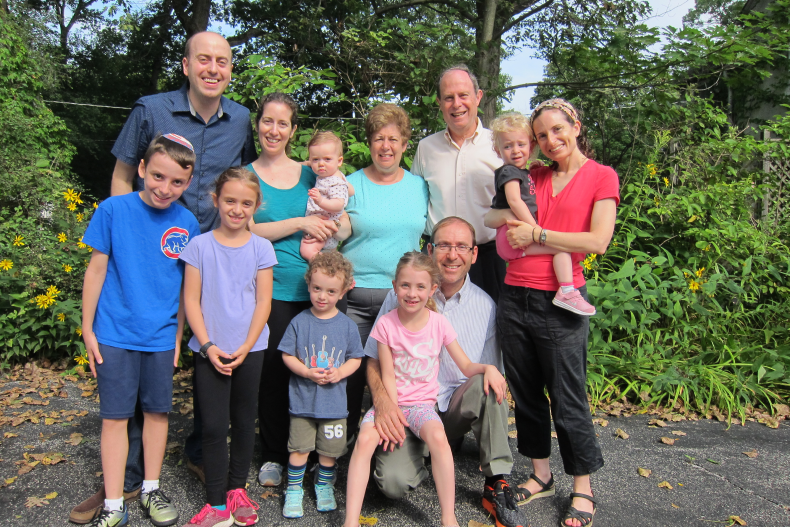
He will make aliyah with his wife of 45 years, Bryna, an accountant and former Jewish educator. They plan to make a home in Jerusalem, where they will be closer to one of their two daughters, Hadassa, who lives in Israel with her family and works for the Mandel Foundation. Their other daughter, Shira, a neuropsychologist, lives in Boston with her family. The rabbi and his wife have six grandchildren-four in Israel and two in Boston.
Current Beth El Rabbi Michael Schwab will take over as spiritual leader of the congregation when Kurtz exits. “Rabbi Kurtz is a dedicated and talented rabbi who has given so much to Beth El and to the worldwide Jewish community,” Schwab said. “I am privileged to succeed him and to continue to be able to learn from his leadership. We all owe him a great debt of gratitude for everything he has done for our synagogue and for the Jewish people.”
Indeed, the Jewish people have always been central to Kurtz. He grew up in an observant home in Toronto’s predominantly Jewish Bathurst Manor neighborhood. His father was active in Toronto’s UJA Federation; his mother, in Hadassah. A product of the city’s Jewish day schools, Kurtz earned his undergraduate degree in political science at Toronto’s York University, where he took part in Hillel. During summers, he served as a Camp Ramah staffer. He and Bryna have known each other since they were teenagers.
Kurtz had been accepted to law school in Canada, but instead opted for a year at Hebrew University in Jerusalem, and at what was later to become the Schechter Institute of Jewish Studies. Returning home, he nixed law school altogether and began studying for the rabbinate at the Jewish Theological Seminary.
Soon after ordination in 1976, he and Bryna, whom he married during rabbinical school, moved to Chicago, where he served as assistant rabbi at Hyde Park’s Congregation Rodfei Zedek for 12 years before moving to Beth El.
Over three decades, Kurtz, who earned a doctor of divinity degree from the Chicago Theological Seminary in 1981, has overseen the spiritual and pastoral needs of a congregation whose membership numbers of 1,000 to 1,100 families have wavered little during his tenure. This year, Beth El celebrates its 70 th anniversary, coinciding with the birth of the state of Israel.
Kurtz attributes the synagogue’s continued success to its members’ respect for each other and the sense that they are participating in a holy enterprise. “We may have many services going on over the course of Shabbat,” he said, “but we all come together to celebrate with one kiddush -there is a common sense of mission and vision.”
Rabbinical colleagues alike applaud the rabbi.
“Rabbi Kurtz has seen his rabbinate as encompassing not only his congregants, whom he has served with devotion and love, but also the broader Chicago and international Jewish community,” said Rabbi Michael Balinsky, the executive vice president of the Chicago Board of Rabbis. “He has been a tireless servant of the Jewish people.”
Over the years, Kurtz has balanced his synagogue commitments with teaching duties as adjunct Professor of Rabbinics at the Spertus Institute for Jewish Learning and Leadership.
To celebrate the 70 th anniversary of both the synagogue and Israel and to honor the rabbi and his wife, the synagogue is holding a special weekend Nov. 2-4 that will culminate in a Sunday evening gala dinner to benefit Beth El. Rabbi David Golinkin, president of The Schechter Institutes, Inc., is guest speaker. Attendees will receive a just-published history book of Beth El, penned by Morton Steinberg.
Kurtz says he and Bryna’s departure from Chicago is bittersweet. “We are excited about a new chapter in our lives,” Kurtz said. “[But Chicago] has been home for more than 40 years. It has been good to us, and we will miss the community.”
To learn more about the special weekend events or reserve tickets to the gala, call (847) 432-0703.
Robert Nagler Miller is a journalist and editor who writes frequently about arts- and Jewish-related topics from his home in Chicago.
Other stories
-
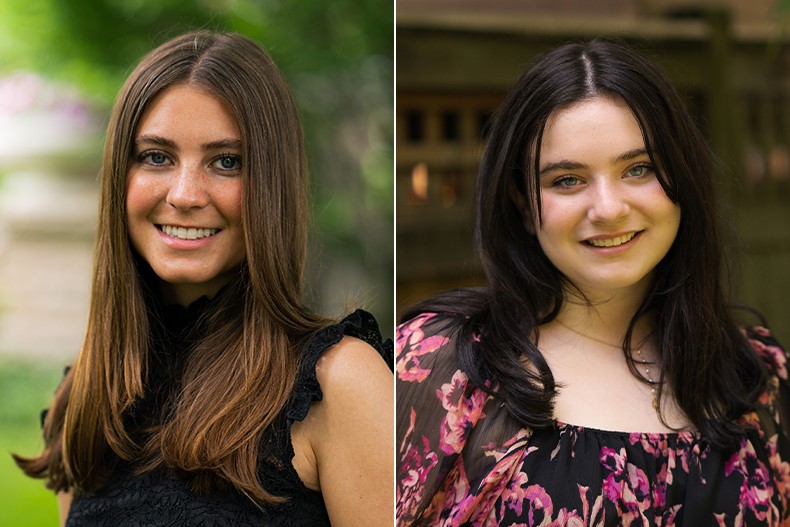
Two local teens win national recognition
Recipients of the annual Diller Teen Tikkun Olam Awards
Read more -
Celebrating six young award winners cultivating the community
Introducing young adult award winners
Read more -
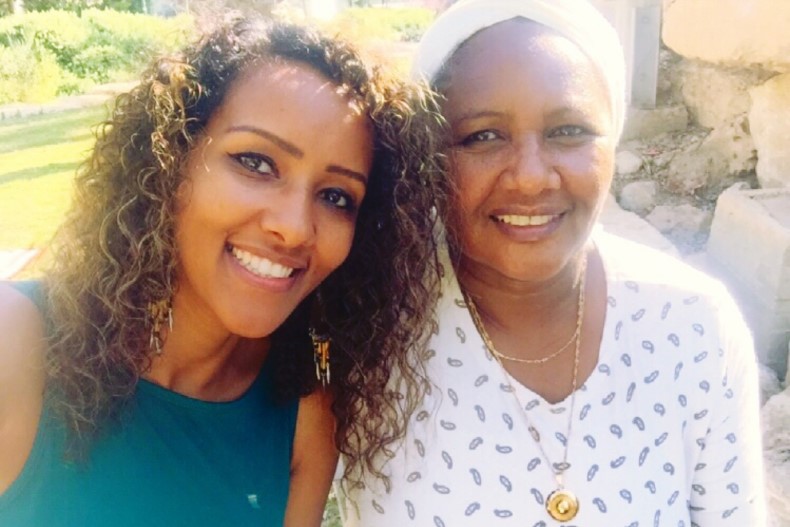
In August, the Consulate General of Israel to the Midwest welcomed Ariella Rada as Israel’s Consul for Academic and Community Affairs .
In addition to years of diplomatic experience, Rada brings to her new position a powerful and familiar story: the Jewish Exodus, the story of a refugee escaping anti-Semitism, surviving against all the odds, and finding new hope and purpose in Israel. “My past is a story of yearning, suffering, and redemption,” said Rada. “My future is a story of unity, shared values, and shared destiny.”
Rada was born in a village outside Gondar, Ethiopia, at a turbulent time in the country’s history. From 1974 to 1991, Ethiopia was torn apart by civil war. In the midst of the upheaval, the warring political parties found a mutual enemy in the Jewish people. By the time Rada was born, Jews were legally forbidden from learning Hebrew and from studying Torah by the government and scorned by their neighbors as “Christ-killers.” To further complicate matters, it was illegal for Jews to leave Ethiopia and the expressed desire to do so marked one as a traitor and as an enemy to their country.
In 1984, when Rada was three years old, famine made the situation in Ethiopia unbearable, and her family made the decision to flee. Driven by the dream of a place where it was safe to be Jewish, Rada, her mother, uncle, and two sisters left the only home they had ever known, hoping, but not knowing if the Land of Milk and Honey was really out there.
The moment they left home, her family became refugees and fugitives. If caught, the Ethiopian government would show no mercy. For three weeks, Rada’s family walked through the desert, crossing hundreds of miles, hoping to find shelter in Sudan and, ultimately, a new home in The Promised Land. Despite all the reasons they had to be afraid, “we held onto the little spark of hope towards our future in Israel,” recounted Rada.
Not long after arriving at a Sudanese refugee camp, she and her family were part of one of the many covert operations that airlifted Ethiopian Jews out from Sudan and brought them to Israel. They were finally going home.
After making aliyah, Rada’s family settled in Kiryat Arba, where they were joined by her father. A few years later, the whole family moved to Be’er Sheva, where there was a vibrant Ethiopian Jewish community. Fifteen years after her family was rescued by the Israeli Defense Forces (IDF), Rada graduated from high school and became an IDF commander charged with training new recruits. After completing her service and a few years of living in Eilat, she enrolled in university, getting first a bachelor’s degree in Government, Diplomacy & Strategy and then a master’s in Conflict Resolution from Interdisciplinary Center (IDC) Herzliya.
The focus of her studies, she explained, was motivated by her experiences as a refugee and as an Ethiopian Israeli. “My mother always used that famous phrase, ‘a person who does not know his past, will have an uncertain future,'” recalled Rada. “She was right… [my] past made me the woman I am today.”
After school, Rada applied to become a member of the Israeli Ministry of Foreign Affairs and became the Vice Ambassador of the Embassy of Israel in Lima, Peru. She knew little Spanish when she arrived in Peru, but picked it up quickly through her work with the country’s small but mighty Jewish community. In her role, she enhanced Israel’s relationship with the Peruvian government through collaborative projects designed to improve the well-being and industry in Peru.
In her new role as Israel’s Consul for Academic and Community Affairs in Chicago, Rada’s next project will be working with local universities to assess and develop programming that addresses community needs as well as to help “balance” Israel’s image and “present the different aspects of Israel that you don’t always see in the media.”
With the growing presence of the Boycott, Divestment, and Sanctions (BDS) movement on local college campuses, she wants to help temper the situation by facilitating meaningful discussions and building positive relationships between Israel and American students. “My goal is to strengthen the relationship between Israel and the United States,” she said.
Here in Chicago, Rada said she hopes to start a new chapter in its Jewish story. “I appreciate the opportunity to be a voice for the State of Israel and the Jewish world,” she affirmed. By “representing my country… I am fulfilling the dream of my ancestors.”
Jenna Cohen serves as Grants and Planning Associate for Jewish Child & Family Services and is a freelance writer living in Chicago.
Other stories
-
Two local teens win national recognition
Recipients of the annual Diller Teen Tikkun Olam Awards
Read more -
Celebrating six young award winners cultivating the community
Introducing young adult award winners
Read more -
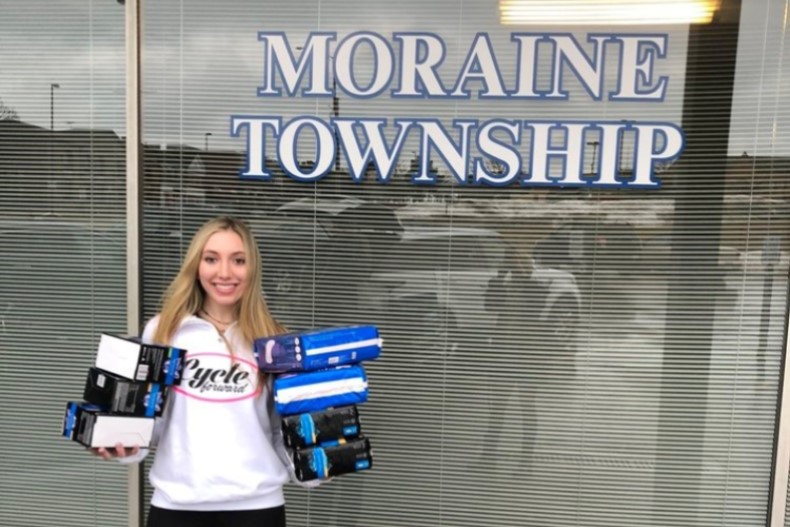
Starting a ‘cycle’ of care: Teen helps girls and women in need
Rochelle Rubinoff
Sophie Draluck is only 16 years old and a junior in high school. But, in that short time, this Diller Teen Fellow has already accomplished more than many do in a lifetime.
Last year, while researching the need for feminine hygiene products in developing countries, Draluck came across a fact that made her stop in her tracks. “I read an article in the Chicago Tribune about the lack of access to menstrual products in African countries and that this is one of the leading reasons for school absenteeism among teens,” she recalled. “I was so moved about the unfairness of this that I actually felt really moved to do something about it.”
Her next discovery is what shocked her even more: “It didn’t take long to discover that this isn’t just a problem in Africa. The stigmatization of menstruation, and the inequity surrounding the lack of access to sanitary products, are a problem all over the U.S.-even in my hometown of Highland Park.”
That’s when she founded Cycle Forward. “As I started to research access to sanitary products locally, the pantries and shelters reported to me that menstrual products, like tampons and pads, are some of the most requested-yet least donated-products. My research also showed that these products are very pricey- impossibly expensive for many women-which means they are effectively inaccessible to portions of the population,” Sophie said.
Cycle Forward accepts donations of tampons and sanitary pads-and cash, which Sophie uses to buy these products in bulk. She then donates them to the Moraine Township food pantry in Highland Park, PADS of Lake County, and I Support The Girls, which distributes feminine products and bras to homeless girls and women in Chicago.
At about the same time that she founded Cycle Forward, Draluck became a Diller Teen Fellow. The Diller Teen Fellows Program is a prestigious, yearlong fellowship for high school students interested in exploring topics in leadership, Jewish identity, social justice, and Israel. The program operates in 32 communities worldwide: 16 in Israel paired with 16 diaspora communities around the globe. JUF launched its first cohort in 2013 in partnership with JUF’s Partnership Together region in Israel (Kiryat Gat, Lachish, and Shafir).
“I applied to be a Diller Teen because I wanted to become more involved in the Jewish community,” Draluck said. The three weeks she spent in Israel, as the culminating experience of the fellowship, were life-changing. “Diller really helped me grow my leadership skills; it made me feel more confident to go up to these Jewish teens I never met before, tell them about my project and ask for their help. And through Diller, I’m now part of this global network of teens making a difference in the world,” she said.
For Draluck, one of the pillars of the program with which she connected most deeply is tikkun olam, repairing the world: “This was the driving force in my project because [my project] empowers women to go and live their lives to the fullest, healing a portion of the world.”
Draluck has been recognized by StreetWise-a nonprofit that empowers, and provides resources for, homeless and at-risk populations throughout Chicago-as one of the 20 most inspiring Chicagoans making the city a better place to live and work.
Her mother, Suzie Draluck, couldn’t be prouder. “I wish I could take credit for this,” she said, “and I hope I’ve modeled being a good person, but, really, Sophie has been a really empathetic person since she was a child.”
To learn more about Cycle Forward, visit cycleforwardnow.org or email [email protected].
Rochelle Newman Rubinoff is a freelance writer living in the northern suburbs of Chicago.
Other stories
-
Two local teens win national recognition
Recipients of the annual Diller Teen Tikkun Olam Awards
Read more -
Celebrating six young award winners cultivating the community
Introducing young adult award winners
Read more -
Two legal scholars and a political scientist discussed Israel’s status as the nation-state of the Jewish people and a democracy at the Sept. 26 meeting of JUF’s Jewish Community Relations Council.
Israel’s Nation State law, which was adopted by the Knesset July 19 following months of negotiations, has sparked vigorous debate both within and outside Israel. The law for the first time enshrines Israel as “the national home of the Jewish people.” It is known as one of the Basic Laws, which guide Israel’s legal system and are more difficult to repeal than regular laws.
“We fully support Israel as the nation-state of the Jewish People,” said JCRC Chair Bill Silverstein. “We also desire to see the State reflect the highest Jewish and democratic ideals of fairness, equality, and compassion for all its citizens as reflected in Israel’s Declaration of Independence and other laws.”
Dr. Eugene Kontorovich, law professor at Scalia Law School at George Mason University, joined the meeting via Skype from Israel. He argued that the law as adopted does not “reduce, remit or change individual rights of Israeli citizens.” Kontorovich compared Israel’s democratic structure to other nation-states, such as many European countries, which fulfill the self-determination of specific majorities.
Dr. Mohammed Wattad, dean of the law school at Zefat Academic College, views the Nation State law through a legal system prism. In fact, he believes that all provisions in the new legislation already exist in other basic laws or in documents given constitutional status by the Israeli Supreme Court, such as the Declaration of Independence.
“This law is not about Arabic or Hebrew or the Arab-Jewish relationship in Israel,” he said. “It is about the tension between the Supreme Court and the Knesset.”
The questions of equality and human dignity for Israel’s minority communities are foremost on the mind of Dr. Meir Elran, a political scientist at the Institute for National Security Studies at Tel Aviv University. He believes that the new Nation State law is a result of the growth in nationalist sentiments among Israel’s Jewish population.
“The [new] basic law is not just a symbolic manifesto,” he said. “It is an identification card for the State of Israel and says what and who we are and are not.”
Other stories
-
Two local teens win national recognition
Recipients of the annual Diller Teen Tikkun Olam Awards
Read more -
Celebrating six young award winners cultivating the community
Introducing young adult award winners
Read more -
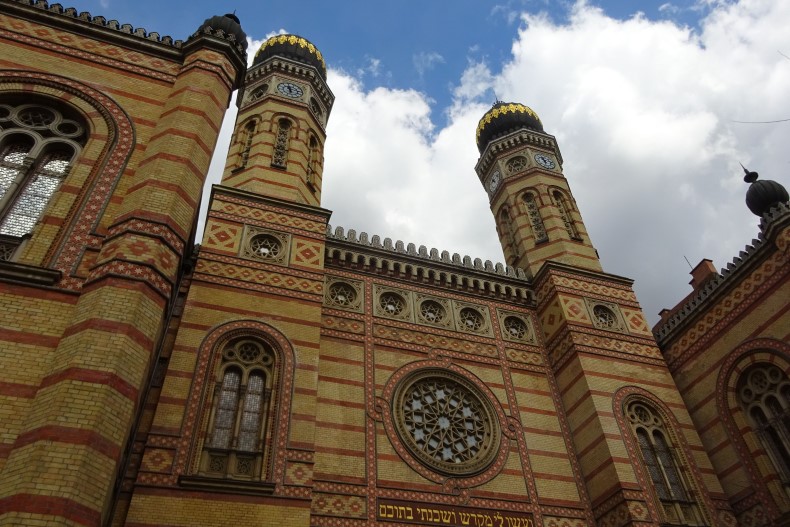
Jewish life in Europe dates back thousands of years. Today, capital cities like Budapest, Prague, and Vienna are rich with Jewish history, architecture, and culture. If you’re planning to visit, here’s a guide to help you discover the vast world of European Jewry and enrich your travel experiences.
Find the largest synagogue in Europe — in Budapest
Front and center in the Jewish Quarter is the magnificent Dohany Street Synagogue, designed in Moorish-style with Oriental-Byzantine décor and twin domes that reach towards heaven. The synagogue is the largest in Europe, and the second largest in the world. Built in 1859, this massive house of worship can hold 3,000 people and remains a thriving center of Jewish life. In back is the Tree of Life Memorial, a silver weeping willow with leaves listing the names of Hungarian Jews killed during the Shoah (Holocaust). Four red marble plates commemorate the 240 righteous gentiles who helped save Jews during the Holocaust. Note that next to the synagogue once stood the house where Theodor Herzl was born. The synagogue is open for tours as well as Shabbat and daily services. Visit www.greatsynagogue.hu
The Hungarian Jewish Museum, also located inside the synagogue, features a large collection of Judaica, including Jewish gravestones from the Roman Empire to hand-engraved silver Torah scrolls and rare manuscripts by Jewish scribes.
Once the site of the Pava Street Synagogue, the Holocaust Memorial Center is a national institution, established in 2002. The museum offers interactive permanent and special temporary exhibitions as well as cultural events. Guided tours available. Visit www.hdke.hu
Don’t miss the haunting “Shoes on the Danube,” along the Danube Promenade. The 2005 memorial pays tribute to those who were shot on that site by the Arrow Cross in 1944 and fell into the river. Observe the 60-pair of permanently bronzed 1940s-style shoes, many among them children’s, now covered with flowers, candles, and Israeli flags.
Where to dine
Take a break with kosher sweets and coffee at Frohlich Bakery, near the Great Synagogue. Their 5-layer flodni cake is out of this world.
For fabulous kosher-style dining and delightful Klezmer music, head to Spinoza Café. The 3-course dinner features delicious goose breast with shredded beets, carrot tsimis (sweet casserole) and dessert.
In addition to its long, illustrious history, the Jewish Quarter is now one of the most popular, bustling areas in Budapest, filled with ruin bars (bars constructed from abandoned buildings), cafes, and galleries.
Prague holds the largest collection of Judaica outside of Israel
Prague enjoyed a strong Jewish community that spanned more than 10 centuries, highlighted by scholars, historians, and artisans who helped shape the Jewish Quarter, known as Josefov. One of the notable sages was Rabbi Judah Loew, known as the “Maharal” for his great wisdom and Torah knowledge. Rabbi Loew created the famous Golem of Prague out of clay to protect the Jewish community from blood libel in the 16th century. It is believed that Loew put the Golem’s remains in the attic of the Old New Synagogue. Today, many people visit the grave of Rabbi Loew to ask for his blessings.
The Jewish Museum of Prague, founded in 1906, showcases a collection of artifacts from synagogues that had closed or been destroyed. Today, the museum includes six building/monuments, filled with sacred Jewish artifacts, children’s drawings from the concentration camp Theresienstadt, oral histories, and more. Visit www.jewishmuseum.cz/en
“Prague is unique because it wasn’t destroyed during the war, and, as a result, the Jewish sites remain as they were,” said Rabbi David Begoun of L’Chaim Center in Deerfield. “Also, Hitler had a diabolical plan to create a Museum to an Exterminated Race. As he pillaged Jewish communities, he looted their Judaica and stored it in synagogues and schools. The Pinkas synagogue, with the names of the 77,000 murdered Czech Jews inscribed on the wall, is one of most moving monuments to the Holocaust I’ve ever seen. And, you can spend a great Shabbat with Chabad of Prague.”
Where to dine
King Solomon, Chabad’s Shelanu Restaurant, and Dinitz Kosher Restaurant offer kosher meals in the Jewish Quarter.
Follow the footsteps of Jewish history in Vienna
In the early 20th century, Vienna was one of the most prominent centers of Jewish advancement in Europe, known for the works of Sigmund Freud, Gustav Mahler, and Franz Kafka. The former Jewish Quarter located in Leopoldstadt was once known as “Matza Island.” Today Vienna’s main synagogue, the Stadtempel, serves as the focal point of Jewish life.
Visit the Jewish Museum, which highlights Jewish life in the Middle Ages as well as the 19th and 20th centuries. The Shoah Memorial in Judenplatz stands as a huge concrete cube that looks like a library, but the doors are locked and the books are turned inward. Each volume symbolizes an Austrian Jew who was lost during the Shoah. Visit www.jmw.at/en
Sigmund Freud’s house, now the Sigmund Freud Museum, is open for touring, where you can see his waiting room, extensive antique collection, and private films. The museum is also used for research, education, and Europe’s largest library on psychoanalysis. Visit www.freud-museum.at/en
Where to dine
Alef Alef, Bahur Tov, and Loutati’s Shabbeskitchen provide delicious kosher meals.
Take a tour
The best way to explore the Jewish Quarters in each city is via a guided walking tour — but plan early because they book up fast.
Mira Temkin is a Highland Park-based travel journalist who writes about travel and theater. Follow her at miratemkintravel.com. .
Other stories
-
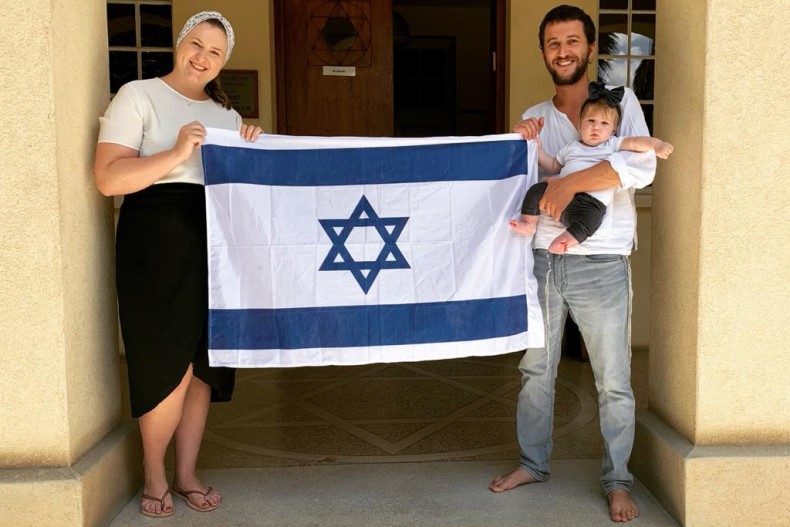
Chicago to Israel to Kenya
A family’s story of living Jewishly on three continents Michelle Cohen World May 28, 2021 Avital, Tzofia, and Netanel Kaszovitz outside their home in Nairobi on Yom HaAtzmaut. When Avital Kaszovitz prepared to be a Modern Orthodox shlicha (emissary) to the Jewish community in Ke
Read more -
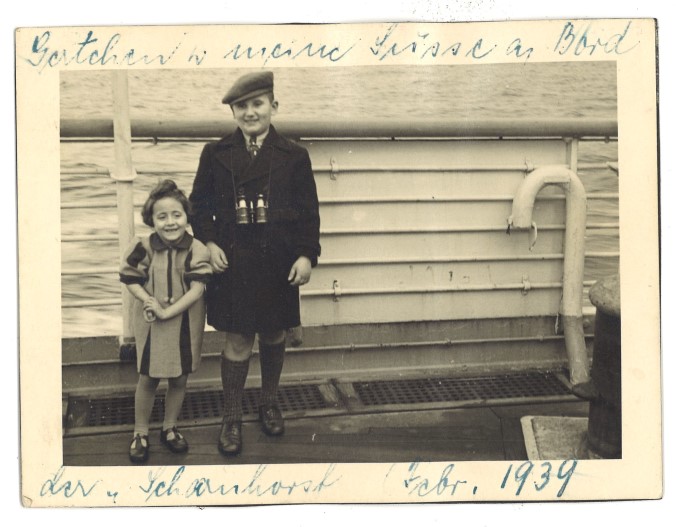
New exhibit spotlights the experience of ‘Shanghai Jews’
Explore a new Illinois Holocaust Museum and Education Center exhibit
Read more -
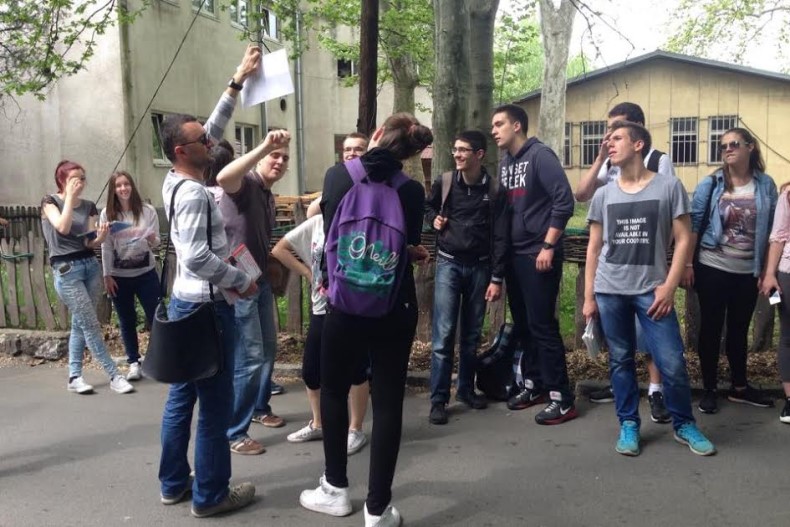
Europe’s brave new teachers of the Holocaust
Teaching the Holocaust in the modern era has its difficulties and rewards.
Read more
Blanche Suggs-Killingworth is getting ready to celebrate a major birthday. Her neighborhood, North Lawndale, will turn 150 in 2019.
Suggs-Killingworth, who’s the head of the North Lawndale Historical and Cultural Society, was born in Mississippi, but North Lawndale-on Chicago’s Near West Side-has been her home for more years than she can count. It’s the home of her soul, she says.
“The City of Chicago cannot exist without North Lawndale,” she said. “We need to understand its legacy and make a commitment to the future of this community.”
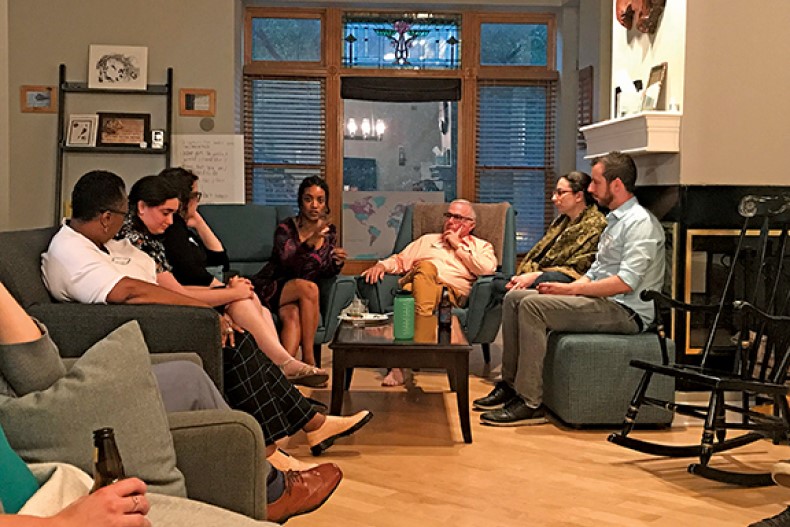
The upcoming celebration of the sesquicentennial-and how to honor the neighborhood’s Jewish and African-American history was an essential theme at a recent gathering between members of the Jewish community and North Lawndale leaders and residents, most of them African-American. The community was once a hub of Jewish life in Chicago and even became known as ”Chicago’s Jerusalem.” It was also where Dr. Martin Luther King, Jr. lived in the late 1960s during his campaign for affordable housing.
Sinai Hospital System, a part of JUF’s social service network, is located in North Lawndale, and other local institutions have been longstanding partners with JUF.
Held in August, the conversation was part of the second annual Dinner & Dialogue series hosted by JUF’s Jewish Community Relations Council. Along with 14 other events, the North Lawndale gathering sought to build on existing relationships and create more connections among individual participants. The small-group conversations throughout the metropolitan Chicago area focused on concerns of all who live here, including racism, anti-Semitism, community violence, Jewish-Black relations, Muslim-Jewish relations, issues facing LGBTQ communities, and many more.
“These encounters are building on existing community partnerships,” said Bill Silverstein, who chairs the JCRC. “The idea is to move the relationship from an institutional level to one based on people’s connections to each other.”
For Emily Berman Pevnick, who co-hosted a conversation with members of the Chicago Urban League’s MetroBoard, the series was a way to connect with an important partner in a new way. Pevnick is an outgoing member of JUF’s Young Leadership Division (YLD) Board and the first chair of YLD’s Community Relations Committee. Together with fellow YLD Board member Benny Ginsburg and MetroBoard’s Ivy Pierce and Martha Watkins, she crafted a discussion about creating spaces for young professionals in existing community institutions. The group shared best practices and thought of ways to support each other as growing leaders in Chicago.
“It was a special evening to break down silos and learn from each other,” she said. “The positive energy and mutual respect in the room was palpable. We’re already planning next steps to keep the relationships growing.”
Although primarily held throughout August, the series also will include opportunities for engagement throughout the year. One of the main goals is to encourage participants to keep in touch with each other and to share opportunities to get back together outside the formal framework of Dinner & Dialogue, whether it’s joint volunteering, advocacy work, or visits to each other’s worship spaces.
“Dinner & Dialogue was a really wonderful way to get people who would never meet each other or talk to each other to hear and share ideas,” said Robbin Carroll, the founder of I Grow Chicago in West Englewood and co-host- with Howard and Deb Sitron- of a dinner centering on access to education. “We all grow from this dinner and will be more thoughtful and present to the changes and trauma that communities live with.”
Jane Charney is the director of Domestic Affairs for JUF’s Jewish Community Relations Council.
Other stories
-
Two local teens win national recognition
Recipients of the annual Diller Teen Tikkun Olam Awards
Read more -
Celebrating six young award winners cultivating the community
Introducing young adult award winners
Read more -
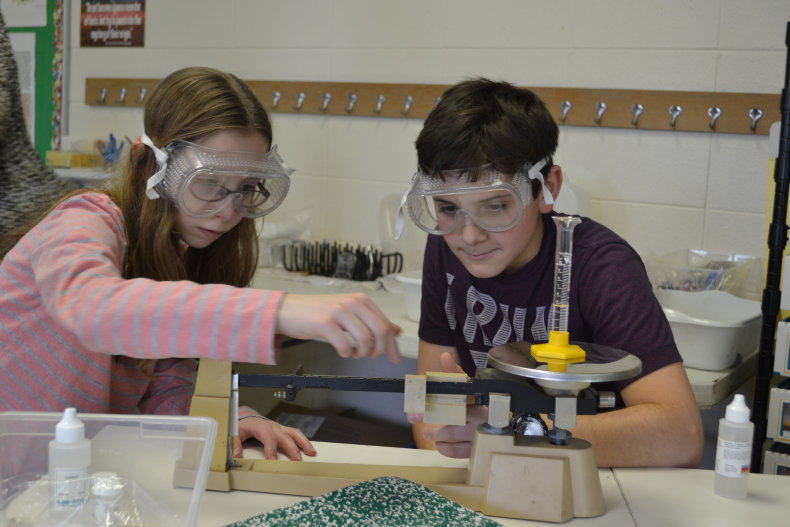
Jewish day schools are known for having a welcoming community, teaching Jewish values, and nurturing the whole child. But today, Jewish day schools are gaining a reputation for cutting-edge STEM (science, technology, engineering and math) education programs aimed at preparing the future Einsteins of the world.
In fact, four of the Chicago area’s top independent schools — Akiba Schechter Jewish Day School, Bernard Zell Anshe Emet Day School, Chicago Jewish Day School, and Solomon Schechter Day School — are creating a new equation for student achievement through the power of STEM education.
These schools are part of the Discover Jewish Day Schools’ multi-year initiative, funded locally by the Crown Family, and managed by PRIZMAH: Center for Jewish Day Schools. The initiative — working in partnership with the Jewish Federation of Metropolitan Chicago — aims to arm Jewish families with information about STEM.
Dr. Eliezar Jones, the new head of school at Akiba Schechter in Hyde Park, believes STEM education teaches children the critical skills needed to navigate a global and connected world. Recently, Akiba Schechter created an R&D (Research and Development) Lab — the first-of-its-kind for Jewish day schools — from a Jewish Education Innovation Challenge. Faculty members use the lab to incubate and test new ideas in education. Jones wants the R&D Lab to become a template for other schools and his teachers to become known design thinking and innovation.
At Solomon Schechter in Northbrook, a new Innovation Studio creates a space for students to collaborate and experiment — using 3D printers, green screens, and more. “When students walk into the Innovation Studio, they become architects, project managers, artists, problem solvers, critical tinkers, collaborators, teachers, and graphic designers,” said Debbie Harris, Solomon Schechter’s director of Education Technology.
In East Lakeview, Bernard Zell’s M’Kom Drisha is a new, state-of-the-art science lab, where coding and circuitry classes take place across all grade levels. M’Kom Drisha, Hebrew for “a place of exploration,” features 3D printers, a Vertical Garden, and a Tinkering Messy Zone for experiments. Bernard Zell students also collaborate with cutting-edge science organizations including a cyber learning program at the Learning Science Research Institute at the University of Illinois at Chicago.
At Chicago Jewish Day School (CJDS) in Irving Park, students are learning coding on iPads as early as first grade. The integrated educational approach at CJDS infuses STEM education throughout the curriculum. The inquiry-based approach encourages curiosity, questioning, and critical thinking that connects STEM education and Judaism to the everyday world. Project-based learning integrates math skills during in a Rainforest Unit. Last year, one middle school student developed a scheduling app that is used by CJDS teachers and students.
Albert Einstein famously said, “The important thing is to not stop questioning.” The tradition of questioning has been the foundation of Jewish study for generations. Today, Jewish day schools students are able to take questioning the world to the next level through the help of these programs.
As Bernard Zell science instructional leader Beth Sanzenbacher puts it: “We try to develop the inherent wonder and curiosity that all students have within them to better understand and develop questions about our world and universe.”
For more information, visit DiscoverJewishDaySchools.com.
Traci Stratford is the Financial Vitality Program Manager and School Advocate for PRIZMAH: Center for Jewish Day Schools.
Other stories
-
Two local teens win national recognition
Recipients of the annual Diller Teen Tikkun Olam Awards
Read more -
Celebrating six young award winners cultivating the community
Introducing young adult award winners
Read more -
Judaism, as a religion and as a culture, has a complicated relationship with food.
Many Jewish laws, holidays, and customs revolve around the kinds of meals we are required — or not — to eat. These same factors determine who prepares the meals, when they are served, and who eats them. In many cases, such as on Shabbat or following a wedding or bar/bat mitzvah, the act of eating is even considered holy. Yet, at those very same celebrations, it is not uncommon to see young women with empty plates looking longingly at the rolls in the center of the table.
You see, while food is celebrated in Jewish tradition, it is also feared, particularly by some women who feel pressured to look a certain way. Unfortunately, Judaism’s ambivalent relationship with food is an inextricable part of Jewish identity. It is also the topic thoroughly studied by this year’s cohort of the Jewish Federation of Metropolitan Chicago’s Research Training Internship (RTI).
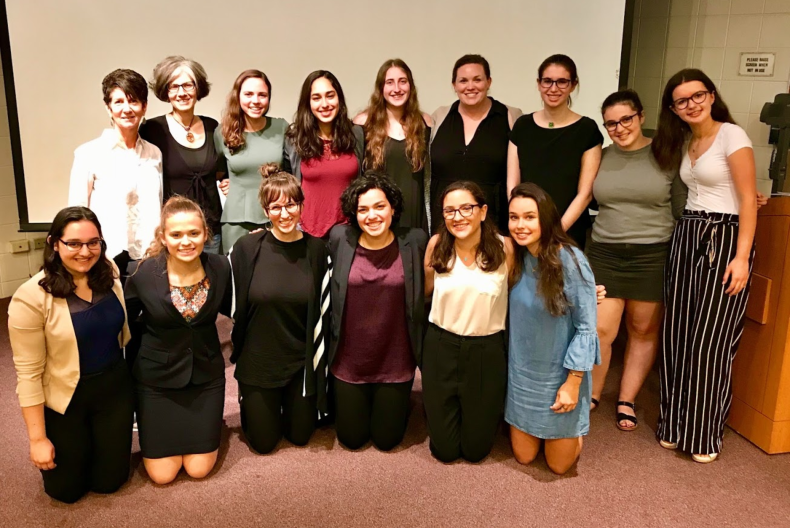
RTI is a selective, 10-month paid internship for high school students who identify as female looking to enhance their critical thinking and research skills. Over the course of the internship, RTI participants collectively select, research, and report on a topic exploring the messages Jewish young women and girls receive — from parents, peers, and the Jewish community at large — about who they are supposed to be and to become. This year’s RTI Cohort of eleven students decided to focus their research on disordered eating and attitudes about food in the Jewish community through the lenses of gender, Jewish tradition and Jewish law — completing both a full-length written report and video project on the subject.
Through their research, the interns collected evidence demonstrating astonishingly high levels of disordered eating and food/body-related anxieties in the Jewish community, particularly among females. According to their research, 78 percent of young Jewish women experience anxieties around food choices, body shape or size, or weight. One in four Jewish women demonstrate disordered eating behaviors, such as denying themselves food. Most devastatingly, 62.3 percent of young women shared that they experienced criticism from parents and other family members about their weight and food consumption. Many of these young women reported feeling that they did not “deserve” to eat.
Further research revealed that issues with weight and body image are passed down, l’dor vador, from generation to generation. Specifically, RTI researchers found “a direct link between grandmothers, mothers, and teenage girls of intergenerational transmission of food/body-related expectations, criticisms, and pressures to conform to idealized beauty standards.” Nearly 70 percent of the young women interviewed recounted experiences of Jewish female relatives berating themselves or others for food choices. Yet, only 5 percent of young men reported noticing such exchanges.
“Most of us experience criticism from family members about the ways we look at least 1 time per week,” write the teen researchers. Furthermore, “our research is directly in line with major, peer-led academic studies that show that Jewish women suffer from disordered eating at a higher rate than any ethnic minority.”
Food-based anxiety “is so deeply ingrained in everything we do as women, as Jews,” affirms Stephanie Goldfarb, outgoing program director of Youth Philanthropy and Leadership at JUF. “The patterns of disordered eating and the preoccupation around food and body image is so baked into Jewish culture on so many levels that it is almost impossible to see it.”
So, what do we do? How can Jews living today help bring an end to the double standards surrounding food facing women and girls in our community? The answer proposed by the RTI cohort is not one you’ll often hear in the Jewish world, but in this case, the young researchers recommend a break from tradition.
“We must break the cycle of the intergenerational transmission of food and body anxiety and sexism in food spaces in order to better our Jewish community and society as a whole,” they write. “In order to do so, we must educate ourselves and harness our strengths — the best way to end this cycle is to respect yourself and know your worth.”
RTI is hosted by the Jewish Federation of Metropolitan Chicago in partnership with Ma’yan and the Beck Research Initiative for Women, Gender, and Community, and is hosted in partnership with DePaul University. To learn more about RTI and the research completed by this year’s cohort, visit juf.org/teens/RTI_About.aspx.
Jenna Cohen serves as Grants and Planning Associate for Jewish Child & Family Services and is a freelance writer living in Chicago.
Other stories
-
Two local teens win national recognition
Recipients of the annual Diller Teen Tikkun Olam Awards
Read more -
Celebrating six young award winners cultivating the community
Introducing young adult award winners
Read more -

As Hurricane Florence batters Carolinas, Chicago’s Jewish Federation opens relief fund
As the Jewish new year begins, Hurricane Florence is battering the Carolina coast and leaving hundreds of thousands of evacuating residents wondering what they will find when they return. As it has done so many times in the past, the Jewish Federation of Metropolitan Chicago is ready to help with an emergency relief fund.
Donations to the Jewish Federation Hurricane Florence Relief Fund can be made at donate.juf.org/disaster, by calling (312) 444-2869, or by sending a check payable to Jewish Federation Disaster Relief Fund to 30 S. Wells Street, #3155, Chicago, IL 60606.
As always, Federation will absorb all administrative costs so that 100 percent of funds collected will provide relief for the those impacted by this disaster.
The Chicago Federation is working with the Jewish Federations of North America, NECHAMA: Jewish Response to Disaster, and local Jewish communities in the storm’s path to gauge the scope of the damage as it unfolds and to quickly address specific needs of the Jewish and general communities.
Other stories
-
Chicago to Israel to Kenya
A family’s story of living Jewishly on three continents Michelle Cohen World May 28, 2021 Avital, Tzofia, and Netanel Kaszovitz outside their home in Nairobi on Yom HaAtzmaut. When Avital Kaszovitz prepared to be a Modern Orthodox shlicha (emissary) to the Jewish community in Ke
Read more -
New exhibit spotlights the experience of ‘Shanghai Jews’
Explore a new Illinois Holocaust Museum and Education Center exhibit
Read more -
Europe’s brave new teachers of the Holocaust
Teaching the Holocaust in the modern era has its difficulties and rewards.
Read more