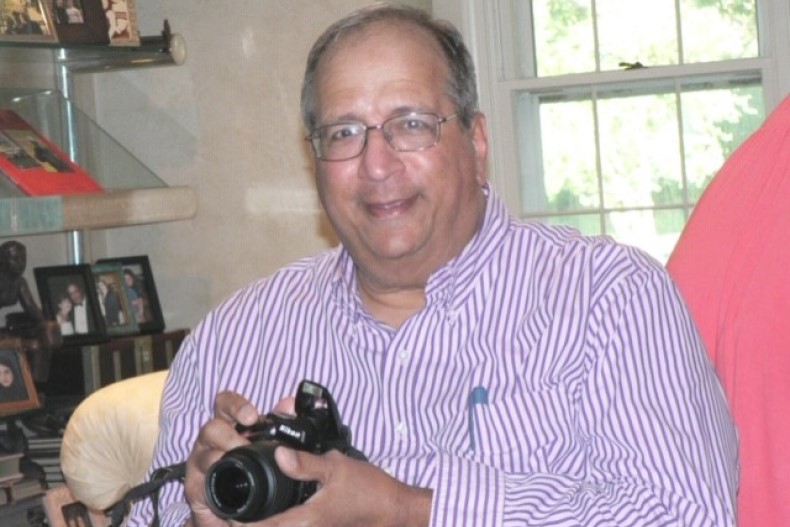
Remembering Dennis Kleper, longtime volunteer and community leader
Michelle Cohen
Ann-Louise Kleper remembers meeting her husband Dennis for the first time when both were in Washington, D.C. for the inaugural joint men’s and women’s executive committee meeting of the UJA (now JFNA) Young Leadership Cabinet. “He was holding court in the hotel lobby, telling stories, and everybody was laughing, including me. He continued to make me laugh during nearly 32 years of marriage,” she said. Dennis Kleper passed away at age 70 on March 13.
Kleper became involved with JUF through its Young Leadership Division (YLD), leading a Summer Singles Mission to Israel, and serving as its observer on the board of CJE SeniorLife, a board to which he was subsequently elected. He continued to work on behalf of the agency as a board and committee member until the time of his death. With Ann-Louise, he led a YLD Jewish Dialogues group, including a mission to Israel, and both were part of the first Chicago cohort participating in the Wexner Heritage Program. As part of UJA/JFNA missions, he visited refuseniks in the former Soviet Union and physically carried arriving olim , or immigrants, from Ethiopia off the planes when they landed in Israel.
A practicing criminal defense attorney for 25 years, Kleper was a board member of the National Association of Criminal Defense Lawyers. In a mid-life career change, he became a consultant and coach, facilitating groups of CEOs and their key reports, who served as advisors and sounding boards to one another. He was known for asking probing and insightful questions and was considered a mentor by many.
As an offshoot of his professional work, in a volunteer capacity he started the Chicago Jewish Entrepreneurs Forum, an organization designed to bring together Jewish business owners for the purpose of growing and enhancing their businesses and simultaneously encouraging and supporting their tzedakah and fostering their greater involvement in the Jewish community.
In addition to communal involvement and work, Kleper’s interests ranged from outdoor sports, including sailing, skiing, and canoeing to music, art, and theater. He was also involved in politics, serving as the Midwest finance director for Gary Hart when he pursued the Democratic presidential nomination in 1984.
According to Ann-Louise, most important of all to her husband was family. She described Kleper as a loving father but acknowledged that his greatest joy came from his four grandchildren. He kept ever-growing lists of the places he wanted to take them and things he wanted to show them.
Kleper is survived by his children, Adam (Stacy) Levine and Lara (Josef) Zeigler; his grandchildren, Aidan and Farrah Levine and Cybil and Paula Zeigler; his sister, Wendy Kleper; and nieces and nephews.
Other stories
-
Two local teens win national recognition
Recipients of the annual Diller Teen Tikkun Olam Awards
Read more -

Celebrating six young award winners cultivating the community
Introducing young adult award winners
Read more -
Lifelong teaching journey leads Indian preschool teacher to Pinsky Award
Michelle Cohen
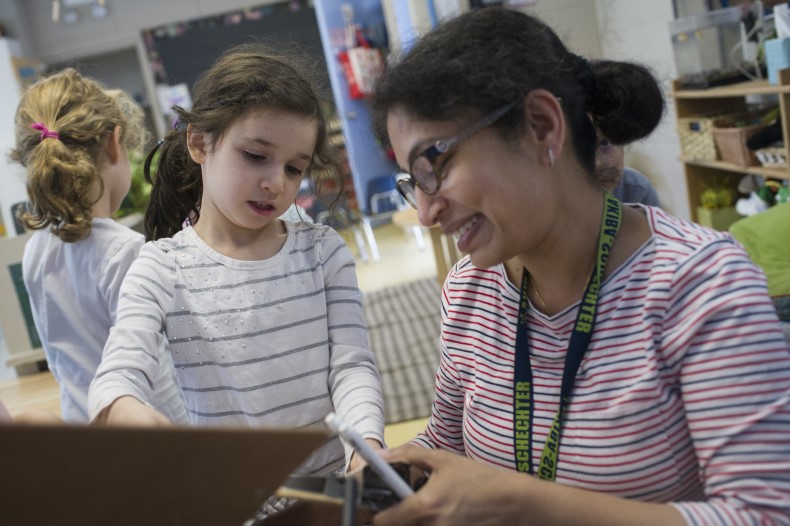
Arundhati Srimani’s teaching journey began in her childhood in India, playing make-believe as a teacher with chalk in her hand. Now a veteran teacher at Akiba-Schechter Jewish Day School, she recently won the 2019 Sue Pinsky Award for Excellence in Jewish Education for her 17 years of dedication to and love for the 4-year-olds she teaches.
The award was bestowed upon Srimani as part of JUF’s Early Childhood Education department’s evening of professional development and celebration called Early Childhood Education University. Held at Solomon Schechter Day School, more than 60 early childhood education teachers and directors attended.
“My childhood dream was always teaching,” said Srimani, who started teaching and mentoring younger children from underprivileged families when she was in the eighth grade. When she got married and moved to the United States in 1995, “I didn’t really think of doing anything else other than teaching,” even when she had a dependent visa and wasn’t able to work.
As she walked by Akiba-Schechter each day, she marveled at the dynamic between the teachers and children as they played on the playground. As soon as her visa went through, she applied for and obtained a job teaching at Akiba-Schechter–and the rest is history.
Her enthusiasm during her 17th year teaching in her famous “Blue Room” is the same as it was at the beginning. “I hear that many people have so much anxiety and stress going to work in the morning, but the moment I step into Akiba-Schechter, it’s my home, my family,” she said. Even when she had the opportunity to move to the suburbs, she chose to stay in the city and continue teaching at Akiba-Schechter, whose faculty and students, she said, have helped her grow as a teacher and a person.
“In the Torah, it says how good and pleasant it is for people to live together in unity, and this is true for Akiba-Schechter,” she added.
As someone who attended Catholic school as a child, Srimani sees the beauty in teaching and learning from difference. As a member of the Akiba-Schechter faculty, she felt “loved, nurtured, and respected” from the beginning. “They respected me and accepted me as who I am rather than try to change me, and that made me feel such self-respect and confidence that I could grow more,” she said.
Srimani connects to the “kindness, team spirit, and love” from both religions and uses these feelings to create a classroom that celebrates difference. She calls her students “rainbows” because “a rainbow has seven different colors and they’re different, but if they’re not together, there’s no beauty in the rainbow.”
She hopes that along with the curriculum, her students learn that “when you are respectful to others, no religion can be a boundary.”
Parents and faculty members at Akiba-Schechter agree that she is the kind of outstanding early childhood teacher deserving of the Pinsky Award. “Arun is a gifted educator and an amazing person. A year spent in the Blue Room with her is transformative for children and their families,” enthused Kathryn Smous, the parent of a child currently in her class.
“It is truly magical to watch Arun in her classroom,” added Akiba-Schechter preschool director Carla Goldberg. “Everything she sets up for the children is intentional and thoughtful. The children in her care feel loved and supported and learn to take risks as they grow and learn. To have Arun as your child’s teacher is truly a gift.”
Other stories
-
Two local teens win national recognition
Recipients of the annual Diller Teen Tikkun Olam Awards
Read more -
Celebrating six young award winners cultivating the community
Introducing young adult award winners
Read more -
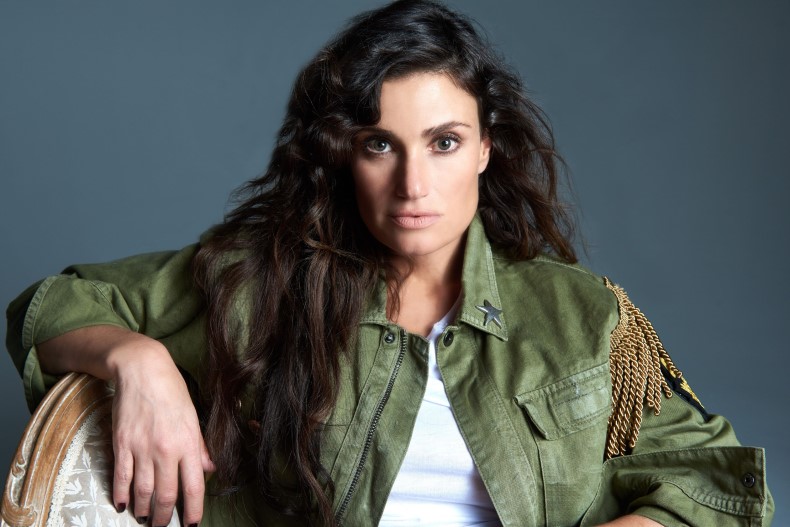
JUF Women’s Division Spring Event to feature singing superstar Idina Menzel
Michelle Cohen
From an ice queen sharing her spirit’s liberation to a green girl taking control of her destiny, Idina Menzel’s voice has brought many beloved characters to life on stage, film, television, and beyond.
She will join a group of passionate and dedicated Chicago-area women for the JUF Women’s Division Spring Event 2019, featuring a conversation with moderator Liz Schrayer as well as a special song.
“It will be a wonderful afternoon with a wonderful community,” said event co-chair Shari Reiches.
“I hope Spring Event awakens your inner soul and inspires you to help those in need, both locally and nationwide,” added fellow event co-chair Brooke Kauf.
Last year, the generous donors of the Women’s Division of JUF gave over $15 million to the JUF Annual Campaign, which helps Jews and others in Chicago, Israel, and beyond.
Menzel’s singing career began with weddings and bar mitzvah parties. She later became known for voicing Elsa, the ice queen in Disney’s animated musical Frozen , in which she sings the movie’s Oscar-winning song “Let It Go,” forever etched into little children’s and parents’ minds. She reprises the role of Elsa in the follow-up short Frozen Fever , and will star in Frozen 2 , which comes out later this year.
In addition to cast albums, she has also released solo albums including Still I Can’t Be Still , Here, I Stand, and idina . Her first Christmas album, Holiday Wishes , debuted at #1 on Billboard’s Holiday Albums chart and reached the top 10 on Billboard’s Top 200 Album Chart.
A multitalented artist, Menzel is the first person with both a Billboard Top 10 hit and a Tony Award for acting. She first rose to fame 20 years ago as the outrageous Maureen in the iconic Broadway hit Rent , for which she received her first Tony nomination. She later won a Tony for her performance as Elphaba in Wicked , portraying the enigmatic girl who would grow up to become the Wicked Witch of the West in The Wizard of Oz . Her most recent Broadway role, Elizabeth in If/Then , earned her yet another nomination.
Menzel, who is the mother of one son, has also acted on television, including as a recurring guest star in the hit series Glee . She will soon star on Happy Time , a sitcom produced by Ellen DeGeneres. Her major film roles include reprising Maureen in the film adaptation of Rent and Nancy Tremaine in Disney’s Enchanted .
As a groundbreaking female star, Menzel will inspire the women at Spring Event 2019 with both her takes of professional success and her philanthropic involvement. She co-founded A BroaderWay Foundation, which is dedicated to offering arts-centered programs to girls from underserved communities to help them develop self-esteem and leadership qualities. She is also involved with several LGBTQ rights organizations like The Trevor Project, the Give A Damn Campaign, and the NOH8 campaign.
“To me, Spring Event is so special because we bring together the larger community in one room, to celebrate the important work of JUF, and the generous women who make it happen,” said Deborah Schrayer Karmin, Women’s Board Vice President, 2019 Campaign.
The Women’s Division Spring Event featuring Idina Menzel will take place on Tuesday, May 21 from 11 a.m. – 1:30 p.m. The event has a couvert of $85 and women who make an individual gift of $365 or more to the 2019 JUF Annual Campaign are invited to attend. Register at juf.org/SpringEvent2019 .
Other stories
-

A ‘driving’ force for Jewish life
Updated documentary spotlights renovations in West Rogers Park
Read more -

Fourth Annual JCC Chicago Jewish film festival kicks off March 9
The Fourth Annual JCC Chicago Jewish Film Festival opens March 9 and includes an Academy Award nominee and an exclusive special showing of a star-studded film prior to its national debut.
Read more

There wasn’t a better pitcher on the planet in 1980 than the Baltimore Orioles’ Steve Stone. The right-hander won 25 games — the most in the major leagues — that season, was a first-time All-Star and received the Cy Young award as the best pitcher in the American League.
At last, the comparisons to Los Angeles Dodgers great Sandy Koufax rang true — or at least somewhat defensible.
Baseball writers had, however, been quick to join Koufax’s and Stone’s names nearly a decade earlier, when the latter pitcher was a rookie with the San Francisco Giants. Like Koufax, Stone threw plenty hard. Like Koufax, Stone was pegged early on as an intellectual. Let’s see, what else did they have in common?
Ah, of course: the Jewish thing.
“The way I describe it is there are only two Jewish Cy Young winners in history,” Stone, 71, said at the start of the 2019 season. “One was great, and the other was me.”
Stone was no slouch. He compiled a record of 107-93 over an 11-year career that included three seasons each with the White Sox (1973, ’77, ’78) and Cubs (1974, ’75, ’76). Combined, he won 56 games and lost 55 in Chicago. Any way you slice the math, the man comes out on the plus side of that equation.
Nowadays, Stone is far better known as a broadcaster. He called Cubs games on WGN from 1983 to 2004, save for a few seasons when he battled an illness. During an unforgettable 14-year run alongside Harry Caray, Stone earned a reputation as one of the most astute analysts in the game. Since 2008, he has been in the booth with the White Sox, working first with icon Ken “Hawk” Harrelson and more recently with play-by-play man Jason Benetti, who calls Stone “one of the best who’s ever done it.”
In all, Stone has lived more than 40 years as a resident of Chicago. From his home in River North, he can walk to more than one restaurant in which he has an ownership stake. It’s possible he has seen more big-league baseball up close in this city than anyone else alive. Fans on both sides of town revere him, and those who favor the Cubs often seem to forget he switched sides over a decade ago.
“I love Chicago,” he said. “And more than just loving Chicago, I have been fortunate to kind of have been taken into the bosom of the baseball fans of Chicago. And it doesn’t matter what side they’re on. People come up to me and ask, ‘How are the Cubs going to do this season?’ I ask them if they’ve been held hostage.”
Stone hails from suburban Cleveland. His father changed records in juke boxes. His mother waited tables. Their son was small for an exceptional athlete, but he excelled in all sports he played. His ever-churning competitive streak was a big part of it. As he advanced in baseball — and became known not just as a pitcher, but as a 5-foot-10 Jewish one — his determination grew to be recognized beyond any labels.
“I was bar mitzvahed, was born and raised in the Jewish religion,” he said. “I don’t go to temple anymore, but I’m very proud of the fact that I’m Jewish.
“I did not look — my whole life, I never looked — for any antisemitism because I felt it provided an excuse for not accomplishing anything. I never had an excuse for not accomplishing something, in my own mind. I tried to eliminate any of that.”
There is only one person who has played for both the White Sox and the Cubs, and broadcast in both the radio and TV booths for both teams. Understandably, Stone takes great pride in that, too.
He’ll turn 72 straight out of the All-Star break, during the White Sox’ first second-half series, in Oakland. How long will he continue living the grind of the baseball season?
“As a player, I told myself I’d play as long as it was fun, and that I would hope to have the good sense to leave before they ask me to do that,” he said. “As a broadcaster, I hope to do it as long as it’s fun and have the good sense to leave before they ask me to do that. And it’s still fun.”
Other stories
-
Two local teens win national recognition
Recipients of the annual Diller Teen Tikkun Olam Awards
Read more -
Celebrating six young award winners cultivating the community
Introducing young adult award winners
Read more -

Margit Kirsche (nee Weisz) was a Holocaust survivor who co-founded, owned, and ran the Hungarian Kosher Foods supermarket with her late husband, Sandor. She passed away on March 8; she was 96.
Her daughter, Lynn Shapiro, wrote a book about her parents aptly titled Food, Family, and Tradition . It traces her family’s story through recipes and stories that each spark recollections of the other. There was no other way to tell the tale, Shapiro explained, since the stories and recipes were so intertwined.
Margit was born in 1923 in Hungary to a Chasidic, Yiddish-speaking family. In 1944, when she was 21-on the last day of Passover-they were taken by the Nazis to a ghetto and then to Auschwitz. By the time the war ended, most of her family had been killed; only Margit and her older brother, Morton, survived.
But Morton had gone to Buchenwald, where he met Sandor, Margit’s future husband. He had told Sandor so much about Margit that Sandor recognized her when they first met in Freising, Germany.
The couple married in 1947 and immigrated to the United States in 1948, settling in Chicago. Margit became a seamstress, like her mother, and Sandor worked in the food industry.
The first food store they owned was a butcher shop, already called Hungarian, which they bought in 1973. Over time, they expanded to offer groceries, produce, fish, baked goods, and a deli counter with prepared items. In 1986, they officially opened Hungarian Kosher Foods. It is widely considered to be America’s first all-kosher supermarket.
Later, the grocery store became one of the largest kosher wine distributors in America, both in-store and online. They catered events, even for visiting dignitaries like Menachem Begin.
At the market, “my mom was the kitchen,” recalls Shapiro. “She used the store to do mitzvahs,” she added, such as donating Seder dinners. “It gave the community a place to come home to.”
Cancer took Sandor in 2007, so their son Ira took over. When she turned 75, Margit was stricken blind. The family sold the store in April 2018; it still operates under new management.
Shapiro recalls her mother being “fiercely independent,” learning to drive in her 50s. Even after she went blind, she still cooked. “Cooking was her lifeline,” Shapiro said.
Her mother “drew strength from where she came from,” Shapiro said. “She once told me she would never do anything her parents wouldn’t be proud of. Much of what she did was to keep the memory of families and the victims of the Shoah .”
Alisa Oler was very close with her grandmother, Margit. She spent most of her childhood Saturday nights in their home and helped at the store. They also took many trips together, from Disney World to a Holocaust conference, when Oler was a teen.
She recalls that Margit was “extremely independent. She was never intimidated. She was sharp and good at math. She fiercely defended her family and was very proud of them.”
“She didn’t let anything stop her.” Oler continued. “The whole family pulled all-nighters at the store before Passover, making gefilte fish and matzah balls. I remember her being home, alone, blind, and cooking, even lighting the pilot light herself. I used to take her shopping with me even after she lost her sight.”
Oler also remembers her grandmother’s warmth. “She loved to feed the community,” she said.
That was true of Kirsche’s store, and their house. “My parents’ home was always open,” Shapiro said, “like the tent of Abraham and Sarah.”
The wife of the late Sandor, Kirsche was the mother of Ira (the late Judy) Kirsche and Lynn (Irv) Shapiro. She was the grandmother of Alisa (Avi) Oler, Tova (Michael) Perl, Daniel (Catherine) Kirsche, Rocky (Myles) Brody, Sammy (Debbie) Shapiro, and Aaron Shapiro. She also had 16 great-grandchildren.
Other stories
-
Two local teens win national recognition
Recipients of the annual Diller Teen Tikkun Olam Awards
Read more -
Celebrating six young award winners cultivating the community
Introducing young adult award winners
Read more -
The title Avodat HaLev means “service of the heart,” and that’s what prayer is meant to be. The Rabbinical Council of America recently published Avodat HaLev , the new Orthodox siddur (prayerbook).
This siddur was a labor of love for Chicago’s Rabbi Leonard Matanky, the RCA’s former president. The dean of the Ida Crown Jewish Academy and rabbi of Congregation KINS of West Rogers Park, Matanky also serves on the boards of the Religious Zionists of Chicago and Camp Moshava, and co-chairs JUF’s Rabbinic Action Committee.
Matanky was still president of the RCA while the siddur was being created, a bit less than halfway through the process, working on it for nearly six years. He wrote its introduction and some of the commentary, and did much of the editing.
“I’m very pleased to have been involved in such a major endeavor,” he said.
Conceived to be used both every day and on Shabbat and holidays, Avodat HaLev was designed to become the standard siddur used in English-speaking Orthodox communities. It’s already on its way, said Matanky, adding, “I am glad to see that people have taken to it quickly.”
“A siddur ,” mused Matanky, “is a work that reflects the needs of the community and its society. Some pieces never change. But the ways it accesses the translations and the commentary does. It’s a once-in-a-generation work-and it reflects its generation.”
Rabbi Basil Herring, an expert in Hebrew liturgy and grammar, served as the siddur’s editor-in-chief, and Rabbi Herschel Schaechter was its halachic (Jewish normative) consultant.
The RCA had worked on the siddur standard to many Orthodox congregations, published by ArtScroll some 30 years ago. The new edition is published by Koren publishing.
Avodat HaLev is a project some nine years in the making, Matanky said. The research delved into the history and origins of the prayers. It sought the input of rabbinic and academic experts, as well as linguists and grammarians. Even the punctuation was debated.
“It has a new translation, commentary, and halachic guidelines and guidelines for how to lead services,” Matanky said. The publication also contains new translations of all 150 Tehilim (Psalms). The siddur includes practices that have been sanctioned by recognized sources, but also well-respected customs.
Practicality and ease-of-use were major considerations. Overall, the siddur’s translation favors contemporary syntax while keeping the meaning and poetry of the Hebrew wording. Instructional notes are given, regarding both the prayers themselves and the etiquette of public prayer. There is even a section about praying during long airplane flights.
“This siddur is for a different, better-educated audience,” Matanky explained, “capable of deeper understanding and new opportunities in prayer.”
The siddur draws on scholarship from the early Medieval period up through today, and pulls from Talmudic, Midrashic, Kabbalistic, and Hasidic sources. Further, relevant information from biology, physics, and psychology are also included, as well as references to classic literature.
Additionally, the prayerbook contains liturgies for Israeli holidays, as well as prayers for the state of Israel and its defense forces. Several Israeli sources are cited, and there are many mentions of the significance of Jerusalem and aliyah (immigrating to Israel). Avodat HaLev also discusses the Holocaust and includes a Yom Hashoah (Holocaust Memorial Day) service, and celebrates the milestones in American Jewish history.
The siddur was designed with women in mind. For instance, the prayer for the U.S. government provides for the possibility of a woman president. There are many prayers for women regarding lifecycle events. There is commentary on Jewish women like Hanna and Esther who influenced prayers, and on the necessity of a woman’s study of Torah. Another essay, “Achieving Kavanah: Praying from the Heart,” was written by Rabbanit Rookie Billet.
All of these factors taken into account are meant to help bring people together in prayer. According to the publisher, “the commentary emphasizes the virtues of Jewish harmony, unity, love, and mutual responsibility.” Worthy things to pray for, indeed.
The Avodat HaLev siddur is available from Koren Publishing at korenpub.com or by calling (203) 830-8508.
Other stories
-
Two local teens win national recognition
Recipients of the annual Diller Teen Tikkun Olam Awards
Read more -
Celebrating six young award winners cultivating the community
Introducing young adult award winners
Read more -
More than 50 members of JUF’s Government Affairs Committee, led by Chairman Lee Miller and Vice Chairs Jason Friedman, Judy Smith and Steve Victor, spent May 1 and 2 in our state’s capital on the Committee’s annual Springfield Advocacy Mission.
Delegates included JUF Board members, including Board Chairman Andy Hochberg, Government Affairs Committee volunteers, and staff and board members from JUF’s network of affiliated agencies, including the CEOs of EZRA Multi Service Center, CJE Senior Life, Jewish Child & Family and Services, Sinai Health System, and The Ark.
While in Springfield delegates lobbied state legislators and administration officials on 4 issues:
- Improving and speeding up the Medicaid eligibility determination and redetermination process;
- Raising the rates paid to human services providers;
- Expanding children’s and young adults’ access to mental health services;
- Improving community safety and security through state-funded security infrastructure improvements for religious institutions and closing flaws in rules and regulations related to gun ownership revocation.
Delegates met with more than 30 legislators, including Speaker Michael Madigan, Senate Minority Leader Jim Durkin, and House Majority Leader Greg Harris. Other meetings were held with State Treasurer Michael Frerichs, Healthcare and Family Services Director Theresa Eagleson, and Medicaid Director Doug Elwell. Representatives of the Pritzker Administration including Deputy Policy Chief Ramon Gardenhire briefed the group on the Governor’s “Fair Tax” plan, and on Thursday morning, Lt. Governor Juliana Stratton met the group for a breakfast briefing where she discussed the tax plan, justice reform and the need to combat antisemitism and all forms of hatred.
One of the highlights of the trip to Springfield was Wednesday night, when the delegation was broken into five groups for intimate dinners with 17 legislators from the Jewish Caucus, Latino Caucus and Black Caucus. “It is always critical to get to know your freshmen legislators, “said Jason Friedman Vice Chair of Government Affairs-State, “That process is helped when we at JUF spend quality time away from the Capital with bright and dedicated people like Ram, Jen, and Bob. Investing in these relationships now means that they see JUF as their partner in building our State.” (Senator Villivalam, Representatives Gong-Gershowitz and Morgan.)
The mission concluded with the seven Jewish Federations in Illinois joining the Governor’s office to co-sponsor the annual Statewide Yom HaShoah Observance. Community members, elected officials and faith leaders emphasized the need to recommit to “Never Again” – not just as a slogan, but as a reality in the face of rising antisemitism worldwide. Khana Stolyar told her story of surviving the Holocaust in Ukraine, which she said was only possible because of her father’s strength and resilience. Andy Hochberg implored those in attendance to “…rededicate our efforts to making sure that contemporary forces of evil do not gain ground.” Speaking on behalf of the Jewish Caucus in the General Assembly, Rep. Jennifer Gong-Gershowitz said, “hate has no political party and no religion,” and that “our children deserve a world where they can go to Sunday school without fear they will be gunned down in the classroom.”
Other stories
-
Two local teens win national recognition
Recipients of the annual Diller Teen Tikkun Olam Awards
Read more -
Celebrating six young award winners cultivating the community
Introducing young adult award winners
Read more -

Community-wide 'Chicago Loves Israel' event set for June 2 in Northbrook
ELIZABETH ABRAMS
This June, Chicago will celebrate its profound connection to the State of Israel through a series of special events and celebrations. To kick things off, the entire community is invited to Chicago Loves Israel, a fun-filled day of festivities for all ages presented by JCC Chicago and JUF, on Sunday, June 2, 9 a.m.-5:30 p.m., at Bernard Weinger JCC in Northbrook. The event will be co-chaired by Erika and Justin Burton.
Start the day with film and fitness for adults, including two special Cycle Israel classes at the Marvin Lustbader Health Club, powered by Midtown. A special screening of the Israeli film, Good Morning Son , followed by facilitated discussion, will begin at 9:15 a.m. Guests are welcome to explore the 36-piece touring photography exhibit, Humans of Tel Aviv , by internationally recognized photographer Erez Kaganovitz.
The party continues from 1-2:30 p.m. with experiences created exclusively for teens: silk screening, a DJ dance party, photobooth, graffiti wall, Eilat beach party, Krav Maga, and an Israel-focused service project. End the day at the Young Family Festival, 3:30-5:30 p.m. Children and their parents will love exploring Israel with an array of hands-on activities: an archeological dig, drum circle, candle making, Jerusalem shuk with Kosher snacks, planting, swimming, and an IDF obstacle course. The day will culminate with a live, outdoor concert featuring musician Rick Recht and other local cantors and vocalists.
Join us for another Chicago Loves Israel special event at Bernard Horwich JCC in West Rogers Park on Sunday, June 23, from 1-4 p.m., featuring an outdoor family concert with Israeli singer Itzik Dadya, along with his band. Working in partnership with the Jewish Neighborhood Development Council of Chicago and other Jewish organizations, this event promises a variety of ways to celebrate with a round robin of Torah study, hands-on activities, refreshments, and more.
And that’s not all. Later this year, a three-month series of special arts and culture events will be held in partnership with the South Suburban Cooperative Jewish Council. Activities will include scholars-in residence, an Israeli concert, dancing, film, and a family-friendly program with Beit AmiChai School of Jewish Education.
Show your love! When you register, you will have the opportunity to make a gift to JUF in honor of Israel’s 71st anniversary. Your contribution will provide needy Israeli children living in JUF’s Partnership Region with basic supplies for a successful school year.
Visit juf.org/chicagolovesisrael for details and to register.
Elizabeth Abrams is the director of Program Marketing and Communications for JCC Chicago.
Other stories
-
Two local teens win national recognition
Recipients of the annual Diller Teen Tikkun Olam Awards
Read more -
Celebrating six young award winners cultivating the community
Introducing young adult award winners
Read more -
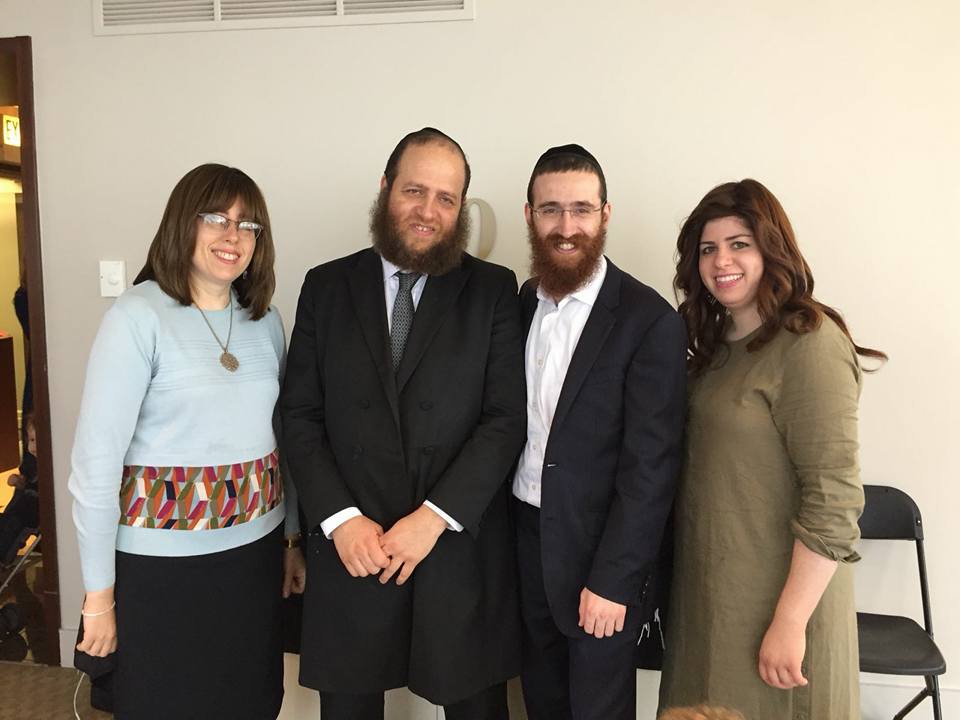
Friday night dinner served in a Boys & Girls Club or a car showroom. A succah built in the parking lot of a moving-truck company. Summer camp staged in a grade school.
These are just some of the makeshift situations that the Lakeview and Lincoln Square Chabad programs have adapted to. And while their hosts have been kind — and their own flexibility impressive — they would prefer not to have to shoehorn themselves into other people’s spaces, but find permanent bases in the neighborhoods they serve.
Ever since Chabad established itself in the area, they have been boarders, not residents. Their first home, in 1991, was at Congregation B’nei Ruven in West Rogers Park. When the late Rabbi Daniel Moscowitz wanted to expand Chabad in 2000 — into the broader Lakeview area and Lincoln Square — he sent Rabbi Baruch and Chanie Hertz.
For them, the mission of Chabad — part of the Hasidic movement — is straightforward, said Rabbi Hertz: to “make people more aware of their Yiddishkeit (Yiddish for ‘Jewishness’).” Though Chabad is an Orthodox institution, its emissaries-known for its outreach efforts — welcome all Jews to their events.
When developer Tomer Bitton bought Park Place Tower in East Lakeview, he gave them the party room for events. On Shabbat and holidays, the Hertzes walked an hour and a half there from their West Rogers Park home.
There, the couple held classes and programs for the burgeoning Jewish community in Lakeview — young singles, couples, and families. And some singles who became couples there.
The Hertzes were also involved in creating Anshe Sholom B’nai Israel’s mikvah (ritual bath), stocking a local grocery store with kosher food, and hosting Jewish holiday parties at Sluggers, a Wrigleyville bar.
Next, came a Sunday school program at Lakeview’s Nettelhorst School, now in its 10th year. The school also began Camp Gan Israel, a.k.a. Gan Izzy, which has grown from eight kids to 100. Many participating families from across the city are otherwise unaffiliated.
When the Hertzes began getting stretched thin, they enlisted their daughter, Devorah Leah, and her husband, Rabbi Dovid Kotlarsky.
The Kotlarskys live in Lakeview, with the mission of “growing the Jewish community of East Lakeview, and creating a center there,” the rabbi said. One of Devorah’s innovations is a Women’s Circle holding events like Menorahs & Martinis and a Mega Challah Bake. From Lag B’Omer carnivals to decorate-a-donut Chanukah parties-attended by hundreds — their goal, the rabbi said, is to “make Judaism fun, exciting, and alive.”
Some attendees have told Dovid that these Chabad events are their first touchpoints with Judaism since college, their b’nai mitzvah, or immigrating from Russia.
With the Kotlarskys’ help, Chabad has extended its (out)reach again, to West Lakeview, North Center, and Lincoln Square. Last year, Chabad held three outdoor menorah lightings. In West Lakeview, the local chamber of commerce invited the Chabad to do the lighting and sponsored the event.
For the Lincoln Square lighting, a small group protested the public display of Judaism; Rabbi Hertz countered with a larger menorah, built by a Holocaust survivor.
Most neighbors, however, have been neighborly. For example, the Sierra Auto showroom, owned by a Lebanese man, let the Hertzes hold Shabbat dinner there gratis.
While they still search for permanent lodgings in these neighborhoods, the Hertzes enjoy the friendships and memories that emerge from their improvised situation. “It’s these little stories,” Chanie Hertz muses. “That’s really what it’s all about.”
Until their Chabad finds a home, the Hertz-Kotlarsky family will continue to bring Yiddishkeit to people, and places, that have never experienced it before. As Chanie put it, “They would all come if they knew how much fun it is!”
Other stories
-
Two local teens win national recognition
Recipients of the annual Diller Teen Tikkun Olam Awards
Read more -
Celebrating six young award winners cultivating the community
Introducing young adult award winners
Read more -

How does one reconcile beauty, culture, and progress with the darkness of anti-Semitism and the oppression it brings?
I visited the former Soviet Union as part of the Jewish Federations of North America (JNFA) National Young Leadership Cabinet Mission to St. Petersburg and Tbilisi. In St. Petersburg, I thought about my childhood experience living in Kiev, Ukraine in the 1980s.
Yet, what I saw now in St. Petersburg was diametrically opposed to the times when I clenched my fists to fight just because I am Jewish. Now, in one of the most beautiful cities in the world, where theaters and museums grace almost every corner, I saw a revitalized Jewish community, with active social centers, schools, synagogues, and growing bonds with Judaism and Israel.
Can history finally stop repeating itself? While I saw great signs of optimism, I am cautious to believe it. We’ve been fooled into comfort more than once before. That is one of the reasons maintaining connections and supporting Jewish diaspora are crucial.
This is why I joined National Young Leadership Cabinet, a group of national Jewish leaders in their 30s and 40s who are part of the five-year program. We learn more about Jewish life and needs around the world, and strengthen our leadership skills and philanthropic commitments, all while forging lifelong friendships.
In St. Petersburg- where the Hermitage Museum, Empress Catherine II Palace, and Mariinsky Ballet were some of the highlights- listening to the stories and seeing the centers of Jewish life made the most impact on me and my chevre , my friends and fellow Cabinet members. We visited Jewish community centers and an ORT affiliated school, and attended Shabbat service at the Grand Choral Synagogue.
During a visit to the St. Petersburg’s Jewish community center, we met a group of retirees. One, an elderly lady, described to me the way many members of her family died of starvation during the Leningrad’s 1941-44 blockade by the Nazis. She then told me that coming to the Jewish community center provides her “the only happiness” as she struggles to live. Her wide eyes, trembling voice, and clutching hands conveyed an expression of deep gratitude.
We were accompanied by Natan Sharansky- a prominent Soviet dissident and Israeli politician- and his wife, Avital. Our trip was enhanced by his direct perspective, historic context, and conviction on the future of the Jews people.
I also was profoundly struck by Avital, a hero who rarely takes center stage. An ordinary person without grand aspirations or political ambitions, she was thrust into a position in which she had to step up and convince global leaders to support her cause: freeing her husband and all of Soviet Jewry.
She challenged the Soviet regime, chipping away at its foundation, and ultimately helped to win the freedom for millions of Soviet Jews, finally allowed to leave in 1987. Her resilience and ability to rise beyond seemingly insurmountable challenges were moving and truly empowering.
We then went to Tbilisi, in Georgia, a country located in the path of most Soviet military conquests. Jews settled there nearly 2,600 years ago, after the First Temple in Jerusalem was destroyed in 586 B.C.E. We visited the Jewish communities of Tbilisi and Gori. This is a land of proud, passionate people, with famous cuisine and vibrant national dancing. While most Jews emigrated, mainly to Israel, a few thousand remain.
There, we visited an elderly couple’s home who would not survive on their meager 70 dollars per person monthly pension without the Jewish community’s assistance, much of which is provided by Jewish organizations such as the American Jewish Joint Distribution Committee (JDC), which JUF supports.
In the town of Gori (also the birthplace of Stalin), a small but active Jewish center provides a refuge for Jewish troubled youth. This was a community of 90 Jews, with an active synagogue and small community center. Although the community has a declining membership, it does possess resources to continue.
Georgia and Russia presented a deep look into two different communities, in many ways, with similar past, but divergent future. One is shrinking, while the other thrives.
Regardless of these communities’ paths, we must not neglect those in need, regardless of where they are in the Diaspora or Israel. Collective responsibility and proactive support have enabled Jews to survive for millennia. We have all been on the receiving end of that support- some families more recently than others.
If one ever wonders how our financial contributions to JUF and other Jewish organizations support Jewish lives, the evidence that we witnessed on this trip was clear. We must not waver on our moral obligations.
Jeremy Oberfeld is an entrepreneur, investor, and the CEO of Midwestern Career College. Oberfeld, a first-year NYL Cabinet member, and his family immigrated to the United States in 1987 from Kiev, Ukraine. He and his wife live in Deerfield with their son and daughter.
Other stories
-
Chicago to Israel to Kenya
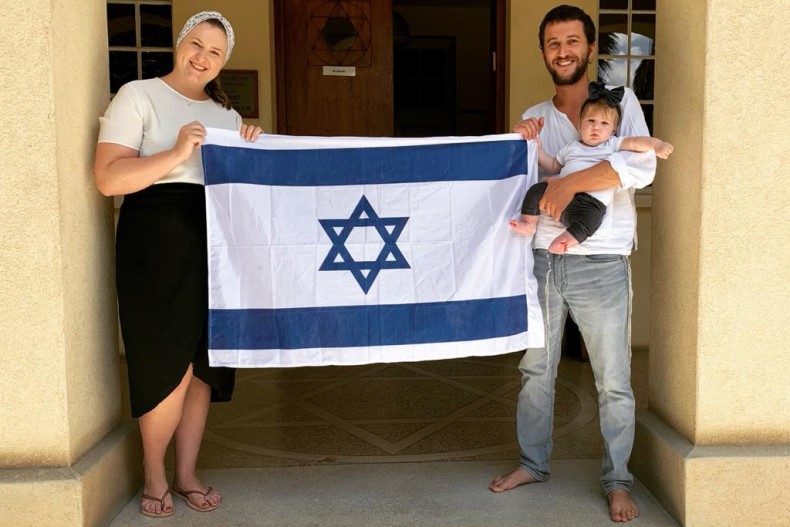
A family’s story of living Jewishly on three continents Michelle Cohen World May 28, 2021 Avital, Tzofia, and Netanel Kaszovitz outside their home in Nairobi on Yom HaAtzmaut. When Avital Kaszovitz prepared to be a Modern Orthodox shlicha (emissary) to the Jewish community in Ke
Read more -
New exhibit spotlights the experience of ‘Shanghai Jews’
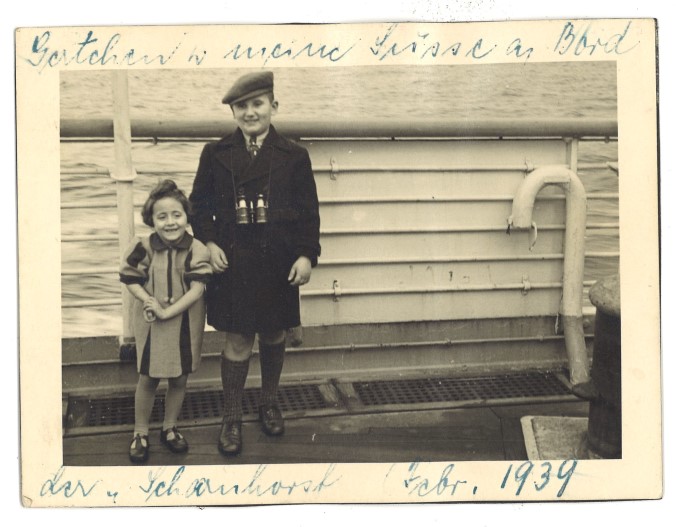
Explore a new Illinois Holocaust Museum and Education Center exhibit
Read more -
Europe’s brave new teachers of the Holocaust
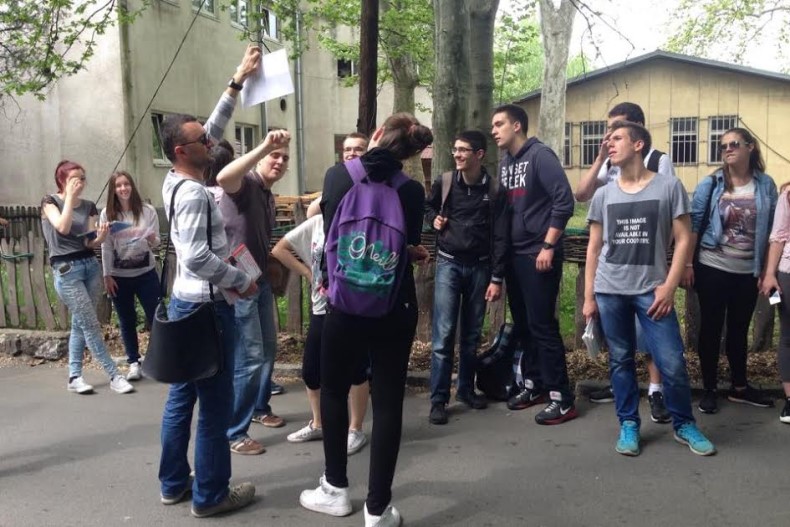
Teaching the Holocaust in the modern era has its difficulties and rewards.
Read more