Six individuals have been awarded 2016 Tikkun Fellowships by the Jewish United Fund’s Russian Jewish Division to help develop and support the fine arts and culture, further health and wellness, enhance Jewish education, all with Jewish flair.
Funded by the Genesis Philanthropy Group, Tikkun Fellowships help develop and support projects created by Russian-speaking Jewish individuals ages 22 to 40. Selected individuals receive a grant of up to $3,000 to develop projects that engage the community in a meaningful and significant way. Using their fellowships:
Franklin Drob , Highland Park, will provide chair yoga, relaxation response and well-being training to Russian-speaking seniors, and professionally produce a series of related web video tutorials in Russian. A Chicago native, Drob learned to speak Russian fluently from his grandmother. His relationship with her fuels his desire “to give back and improve the health and well-being of the Russian Jewish elderly community who gave us so much and were not privileged to always have the mind, body, health and wellness resources of today,” he said.
Jane Faynshteyn , Highland Park, will conduct a research study to learn the specific interests and attitudes held by Russian Jewish parents regarding educational and social opportunities for their young families. “If the data shows that there is enough interest in a Russian, Jewish preschool, I would like to further discuss this possibility with community leaders and (how to) make this a reality,” she said. Faynshteyn was born in Minsk, Belarus, and immigrated to Chicago in 1989 when she was 5 years old.
Irina Talia Geister , Northbrook, will establish a Mother-Daughter Jewish Club, in which mothers and daughters will participate in Jewish-themed creative activities and discussions. Born in Minsk, Belarus, Geister immigrated to the United States with her family at age 15. “My first introduction to Judaism was in a small synagogue in Minsk where several Jewish organizations and agencies were allowed to come after the collapse of the Soviet Union,” she said. “As I learned, I wanted to share the beauty of Judaism with others.”
Esther Gross , Rolling Meadows, will offer a series of Jewish-Israeli cooking classes for recently engaged or married couples. “This project will bring community members into the kitchen-and everyone speaks the same language in the kitchen,” she said. “Participants will be introduced to Jewish customs, Israeli culture, and great cooking techniques with inspirational chefs.” Challah-making, Passover, Israeli foods, and Shabbat dinner are among the class themes.
Talia Prilutsky , Wheeling, will produce a series of art classes for children, teens and adults culminating in “The Art of Jewish Heart,” a showing of students’ works to raise interest in Jewish culture and heritage. “By the end of this project, students will have the option of donating some of their artwork to Jewish facilities,” she said. “I would like to engage as many people as I can.” Prilutsky owns Art Studio ARTISHOCK in Wheeling, providing fine art classes for students ages 4 through adults.
Marina Taleysnik , Chicago, will offer Jewish-themed theater classes for children at The Bravo Theater. “This will allow children to playfully explore the history of the Jewish people,” she said. “Children will learn traditional dances and be introduced to Jewish music.” Taleysnik was born and raised in Kiev, Ukraine, and studied religion and culture in Israel before immigrating to the United States. She established The Bravo Theater in 2008 with the goal of preserving Russian language and culture.
For information, visit http://www.juf.org/rjd/ , or call 312-673-2351.
Other stories
-
Meet Andrew S. Hochberg, 2021 Julius Rosenwald Memorial Award recipient
Celebrate Andy Hochberg at the virtual Annual Meeting on Sept. 14
Read more -
Two local teens win national recognition
Recipients of the annual Diller Teen Tikkun Olam Awards
Read more -
Celebrating six young award winners cultivating the community
Introducing young adult award winners
Read more
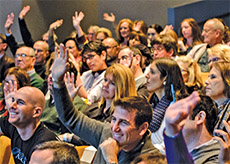
Adult humans are complicated, to say the least.
They navigate numerous competing goals and priorities. They possess varied personal identities, interests, strengths, and needs, not only from one another but over time. They participate in a range of personal and professional communities throughout their lives-each with specific commitments and responsibilities. Given all of this, what exactly might they want from Jewish education and how can adult Jewish learning be successfully offered?
While we need some background in adult learning theory to address this question, its answer is not theoretical. It matters why, what, how, and certainly if, members of our community continue to learn about Judaism and topics of Jewish interest. It matters to Jewish involvement, to the interests we instill in our children, the strength of our organizations, and the health and vitality of Jewish life.
That is why Spertus Institute, with funding from JUF, is spearheading a community-wide initiative around this issue, bringing professionals together to learn from and with each other, and to plan collaborative opportunities to learn. The first joint program will take place June 2.
There are many successful models of adult Jewish learning-measured variously by quality of program, attendance, ongoing engagement, and program sustainability. While there isn’t a precise recipe for creating and sustaining such programs, an overview of theory and practice can lay a strong foundation.
Major changes have impacted how, when, why, and where adults learn. In the U.S., the population is aging. These older adults possess higher levels of education, health, and income. Globalization has significant implications for what adults want and need to learn. And technology has revolutionized how adults access and evaluate information-and how they engage in learning itself.
Adult learning is multi-dimensional. It involves thought, feeling, and action. Much of it is informal and self-directed, occurring in everyday life. Yet adults clearly value learning in social contexts with support and direction. Characteristics that motivate adults to learn include an individual’s interest in the subject, social relationships, external expectations, and practical factors such as opportunities for professional advancement. These motivating factors have impact: Recent studies have found that 90 percent of U.S. adults are engaged in at least one formal or informal learning project.
To be attractive to adults, learning must be relevant. Scholarship suggests that the most significant adult learning leads to personal growth, making a difference in the learner’s behavior or attitudes. Transformative learning, which is much discussed today, has the potential to liberate “adults from distorted perceptions, beliefs, and assumptions that effectively limit their freedom to be responsible actors in the world” ( Facilitating Learning with the Adult Brain in Mind by Kathleen Taylor and Catherine Marienau).
Beyond theory, the practical experiences we have had at Spertus-having presented dozens of pubic programs annually for decades-leads to some conclusions. Adult learners have specific interests, which change over time. They are busy, and since participation takes time and effort, they need to know the benefits of participating. They are encouraged by social opportunities. They seek a combination of knowledge, discussion, and application.
Merging theory and experience, let me suggest a few factors that lay strong grounding for attractive and engaging adult Jewish learning experiences. Program content must be deep and rich. A knowledgeable presenter is important, but as important is a presenter who is engaging. Regardless of topic, adult learners are problem-centered and seek opportunities to apply their learning in their own lives. Adults are willing to be challenged, provided they are in a safe environment. While many adults value and engage in independent learning, they also indicate interest in experiences in which they can learn in person from experts. Many adult learners have an interest in Jewish texts, themes, and experiences, even as they seek to explore more general (at times comparative) thought and experiences.
Programs that are constructed with the needs, orientations, and interests of adults will be more likely to resonate, strengthening our community through lifelong learning.
Dr. Dean P. Bell is Provost and Vice President at Spertus Institute for Jewish Learning and Leadership. Visit spertus.edu/learning to sign up for information about the June 2 community-wide program.
Other stories
-
Meet Andrew S. Hochberg, 2021 Julius Rosenwald Memorial Award recipient
Celebrate Andy Hochberg at the virtual Annual Meeting on Sept. 14
Read more -
Two local teens win national recognition
Recipients of the annual Diller Teen Tikkun Olam Awards
Read more -
Celebrating six young award winners cultivating the community
Introducing young adult award winners
Read more
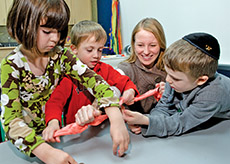
When a student has learning differences, navigating the world of day school education can be a real challenge for the child and family. It is also a challenge for schools, as they may not know how to accommodate all students who wish to attend. That’s where REACH: Resources for Educational Achievement, Collaboration, and Health comes in-with a centralized strategy that enables and empowers local Jewish day schools to provide quality, inclusive education for the 4,600 students in our day school community.
Turn back the clock five years. As demand for special services grew throughout the day school system, a number of organizations and professionals came together to address these needs in the Jewish community in a systemic way-and created REACH-to access more services for our children and build the capacity of our schools to serve children who learn differently. A partnership between JUF, the Associated Talmud Torahs of Chicago, and Jewish Child and Family Services, REACH’s collaborative nature allows it to overcome systemic obstacles, and make a deeper impact than individual smaller programs and services have been able to do.
REACH is the first strategic and coordinated effort to address a system-wide need to be more inclusive, building the capacity of the Jewish day schools to teach and care for children with a wide range of needs, so that all children can access a meaningful Jewish education that is reflective of their families’ values. The program uses its shared resources to serve Jewish students of all denominations in the Chicago area day school system, offering a comprehensive model of inclusion for all of the schools, with services for students, families, teachers, and administration:
• Students are connected to affordable diagnostic testing, individual academic counseling, and supportive services including occupational, speech, and language therapy.
• Parents receive personalized consultations on test results, options for their child, and tools for help at home.
• Schools receive support evaluating systemic needs and setting goals to meet those needs, plus access to professional development and training workshops for administrators, teachers, and families.
• REACH is active in multiple community coalitions to better coordinate services and providers working in Chicago’s day schools.
Unique in this community collaboration approach, REACH ensures coordination of students’ mental and physical health services and creates a one-stop program to meet the often overwhelming, confusing, frustrating world of finding out what special services a student requires and how to best meet those needs.
REACH is making a difference: In 2014-15, an estimated total of 2,140 students were impacted based on direct services and work with classroom teachers. The program directly served 16 day schools, 302 students, 192 teachers, and 167 administrators.
With its direct services, consultation, professional development, and community collaboration vision, REACH is reaching the children in need in all of our day schools with their own individual services-and that raises the education level, social inclusion, and community sense for all of our students, according to many day school faculty.
“REACH has been instrumental in providing many services to our school and students,” said one day school principal. “Particularly, REACH has become an integral player in professional development for our educational team. Through the Hidden Sparks program, they have been providing workshops, teacher observation and coaching, and administrative consultations on an ongoing basis. I can say without reservation that our school is a better institution due to the efforts of REACH.”
Interested in learning more? School administrators may contact Julie Gordon, director of REACH at (773) 467-3772 or [email protected] to add or expand REACH services at your school. Parents may contact your school administrator to request REACH services at your school.
Sharon Schwartz is the development specialist of the Associated Talmud Torahs of Chicago.
Other stories
-
Meet Andrew S. Hochberg, 2021 Julius Rosenwald Memorial Award recipient
Celebrate Andy Hochberg at the virtual Annual Meeting on Sept. 14
Read more -
Two local teens win national recognition
Recipients of the annual Diller Teen Tikkun Olam Awards
Read more -
Celebrating six young award winners cultivating the community
Introducing young adult award winners
Read more
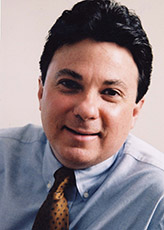
Ross Green, Ph.D., wants to change the conversation about-and with-kids and their issues.
Instead of often fruitless efforts to control them, Green advocates collaboration-making the child part of the solution. It’s a cooperative, relationship-building approach backed by research.
Green, a nationally recognized clinical child psychologist and author of The Explosive Child and Lost at School , served on the Harvard Medical School faculty for over 20 years, and now is adjunct associate professor at Virginia Tech. He originated what’s known as the Collaborative & Proactive Solutions approach, and founded Lives in the Balance, a non-profit dedicated to changing the lives of behaviorally challenging kids and their caregivers.
He will discuss the approach and his real-world experiences with parents and educators later this month when he keynotes JUF’s 6 th annual Jewish Day School Night, Tuesday, March 29, at the Holiday Inn North Shore, 5300 W. Touhy Ave., Skokie. The dessert reception begins at 7:15 p.m.
As the Lives in Balance website explains, when there is a behavioral situation with a child, adults often try to take control. But some children aren’t likely to respond positively to that approach, and things escalate. The CPS process offers ways for adults and kids to resolve problems together.
“When they approach problems collaboratively and work together toward solutions that are mutually satisfactory, things head in a positive direction. It’s very hard work, but it’s a lot better than the alternative.”
The Day School Night event is chaired by Bluma Broner and Rabbi Michael Schwab. There is no charge to attend, but a meaningful pledge to the 2016 JUF Annual Campaign is strongly encouraged. Reservations are required. n
For reservations, go to www.JUF.org/dayschool . For more information, email [email protected].
Other stories
-
Meet Andrew S. Hochberg, 2021 Julius Rosenwald Memorial Award recipient
Celebrate Andy Hochberg at the virtual Annual Meeting on Sept. 14
Read more -
Two local teens win national recognition
Recipients of the annual Diller Teen Tikkun Olam Awards
Read more -
Celebrating six young award winners cultivating the community
Introducing young adult award winners
Read more
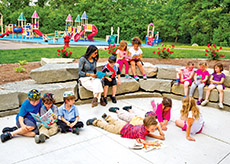
Five North American Jewish day school organizations and networks representing more than 375 schools from across the denominational spectrum are merging.
The Jewish Community Day School Network, or RAVSAK, the Partnership for Excellence in Jewish Education, or PEJE, Yeshiva University School Partnership, the Schechter Day School Network and Day Schools of Reform Judaism, or PARDES, announced in January they have agreed to “move forward toward the formation of a new, integrated North American Jewish day school organization.”
RAVSAK represents nondenominational Jewish schools, the Schechter network is affiliated with the Conservative movement and Yeshiva University mostly serves modern and centrist Orthodox schools. Together, the schools represented by the five groups enroll about 40 percent of the total number of students in full-time Jewish schools, according to The New York Jewish Week, which reported that the merger is estimated to save more than $1 million annually.
The merger comes as enrollment in non-Orthodox day schools is declining and centrist and modern Orthodox school enrollment is flat. Haredi Orthodox schools, which will not be represented in the new group, have been rapidly growing, accounting for more than half of all full-time Jewish school enrollment.
The decision to merge “recognizes that a combined day school organization will more effectively meet the diverse needs of local schools by pooling the talent, expertise and resources originally dispersed among its founding agencies,” according to the news release.
The merging organizations began combining their annual conferences in 2010.
The still-unnamed new entity is “committed to improving financial vitality and educational excellence in Jewish day schools, and supporting a vibrant, visible and connected Jewish day school field,” the release states.
The new group will “network colleagues and schools of different ideologies and geographies to address shared challenges and capitalize on shared opportunities, while still providing distinct services and counsel to schools from within similar streams.”
The decision to merge follows an almost year-long planning process facilitated in part by the Avi Chai Foundation, which has pledged financial support for the new organization until the foundation shuts down operations in 2019.
In a joint statement, the planning team, representing leaders from each group, said: “The formation of a single integrated day school organization will optimize the quality of services we provide to the schools we serve, giving them the resources they need to build the strongest possible future. It is a definitive affirmation of the centrality of day schools in Jewish life and reflects our dedication to seeing Jewish learning, literacy, culture, and commitment flourish in a rapidly changing world.”
The new organization, which has begun a branding process to select its name and “develop an identity that reflects a unified, cooperative and fresh vision of the day school field,” plans to launch this summer. ~JTA
Other stories
-
Meet Andrew S. Hochberg, 2021 Julius Rosenwald Memorial Award recipient
Celebrate Andy Hochberg at the virtual Annual Meeting on Sept. 14
Read more -
Two local teens win national recognition
Recipients of the annual Diller Teen Tikkun Olam Awards
Read more -
Celebrating six young award winners cultivating the community
Introducing young adult award winners
Read more
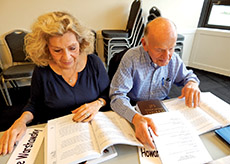
“Provide yourself with a teacher, and get yourself a companion…” (Pirke Avot 1:6)
In recent years, adult Jewish learning has been getting its own spotlight in the Jewish communal world. Research, professional development, and leadership have finally realized that adult education is different from teaching kids. These learners want to be there, they choose to carve out time and money, they are usually quite skilled in their own fields of work, yet choose to put themselves into situations where they don’t know answers, and their learning is done on their terms, not the educators.’ The Chicago Jewish learning landscape is lucky to have so many opportunities for this unique group of seekers, and what follows doesn’t even include individual congregational adult education, much less being an exhaustive list of what’s available communally.
Spertus
To begin, perhaps the grand dame of adult Jewish learning is Spertus Institute for Jewish Learning and Leadership. Begun in 1924 as the Chicago College of Jewish Studies, Spertus offered three courses. Today, it is a center for academic and public classes, offering local and distance learning, conferring graduate degrees in Jewish studies, Jewish communal leadership, and non-profit management. Programs include films, classes, exhibits, workshops at their Michigan Avenue location, and throughout city and suburban locations. Spertus is now convener, too, organizing a series of monthly meetings for communal professionals for community building and professional development. Over 40 individuals, representing about 30 organizations, have been working on a learning market analysis, and will offer a cross-communal pilot event on Thursday, June 2. ( www.spertus.edu )
Melton
For the last 15 years, the Chicago BJE has sponsored the Florence Melton School of Adult Jewish Learning, along with other organizational support. They currently offer 28 classes in city and suburban locations, for over 250 adult learners. The basic Melton experience is a weekly study session, for 25 weeks, for two years. The program is offered to students of all backgrounds, welcoming those with a desire to make Jewish learning a way of life. With a uniquely developed curriculum, Melton is a non-denominational, academically sophisticated experience that enables adults to be more passionate, knowledgeable Jews, and serve as role models within their families and community. After spring enrollment, Melton hopes to end up with 285 Melton students for the school year. (www.bjechicago.org .)
JCC Chicago
Adult learning at JCC Chicago aims to bring meaningful content and personal relevance to the individual and the entire community. Offerings of the J include Seed613 (formerly JCC PresenTense Chicago) to mentor budding entrepreneurs and help realize projects for social impact, and the annual Chicago Jewish Film Festival to use film as a medium to foster connection and conversation. In addition, “Say It In Hebrew” provides an innovative curriculum to develop Hebrew literacy through it’s a learner-centered approach as part of a national movement to change the way Hebrew is taught. In its third year, with 5 levels in 3 locations around town, about 120 adults participate each year to build language skills and deepen their connection to Israel. Mens’ groups, speakers and other cultural happenings also populate the JCC calendar located at www.jccchicago.org .
Orot
Two years ago, communal Jewish educators Rebecca Minkus-Lieberman, Sam Feinsmith, Jane Shapiro, and Jordan Bendat-Appell, opened Orot (Hebrew for “lights”), as an innovative, pluralistic, and progressive home for mindful learning that brought Jewish wisdom into people’s lives. Orot offers a new paradigm for Jewish study and practice. It interweaves text study with different disciplines in order to allow individuals to bring Jewish wisdom into every part of their lives, no matter their background or style of observance. Combining traditional learning with mindfulness meditation, music, visual arts, creative writing, and movement, Orot offers classes, programs, workshops, and retreats that provide opportunities for cultivating transformative habits of body, heart, and mind. Orot launched an innovative new high school program for 9-12th graders, using text study with reflective practices, the arts, and a social-emotional lens to support identify development. ( www.orot.org )
Davar
On a cold night in February, people packed into Milt’s Guide for the Perplexed restaurant for a night of learning, sponsored in part, by Davar, a privately supported Orthodox program with a unique perspective. It was formed to bring untapped topics to the Orthodox learning table that have been censored by the community, hearing teachers from all across the Orthodox spectrum. Based in Skokie, Davar was begun to supplement educational opportunities, hearing voices that aren’t getting heard. Davar looks for edgy speakers, on edgy topics, like pre/post nuptial agreements. Most of Davar’s programming is on Shabbat and Sunday, mostly in Skokie, but they hold Shabbaton weekends that draw from are larger area. ( www.davar.com/skokie )
Yeshiva University/Torah Mitzion Kollel of Chicago
Like pioneers of old, in 2008, eight Rabbinic families went forth from New York Yeshiva University to Chicago to form a Kollel, a learning community, within the Orthodox world of Skokie, West Rogers Park, and Lincolnwood. Meeting at synagogues, people’s homes, and other locations, on any given day or evening, you can find men studying in an open-community Beit Midrash (house of study). The program has been so successful, the Kollel has recently expanded programming to include a Women’s Institute of Learning. Their aim is to develop future leaders, and there are already 10 alumni who are serving in various capacities. The Kollel is adding staff and expanding to Highland Park, Buffalo Grove and Northbrook. All classes are free to the community, thanks to generous local support. ( www.chicagotorah.org )
SVARA
In 2003, Skokie native Rabbi Benay Lappe started a “traditionally radical” yeshiva that drew 90 percent of its participants from the LGBTQ community. Today, it’s more of a 50-50 split. SVARA comes from the Rabbinic tradition of being willing to make radical moves, sometimes even to overturn Torah itself, to make Judaism “more meaningful, compassionate, and responsive to the human condition.” Lappe has said her goal is to bring study tools of interpretation to those who have been considered marginal to the Talmudic tradition. In the past 13 years, thousands have taken part in SVARA’s curriculum, including two 5-day retreats and evening 6-week sessions, and a full time yeshiva training program. Students study in Hebrew, yet Lappe’s unique technique lets Hebrew beginners study alongside with more advanced Hebraists. ( www.svara.org )
Chai Mitzvah
Unlike other adult learning programs, Chai Mitzvah goes beyond the classroom, blending spirituality, social action, and self-guided individual study, in addition to a monthly group learning experience. Chai Mitzvah is an international non-denominational program, originally marketed to congregations from across the spectrum. Over a dozen local congregations have run Chai Mitzvah groups. Currently, groups are being formed outside the congregational model, such as Interfaith Family and friendship groups. Chai Mitzvah’s goal is to re-engage Jews by encouraging them to explore their personal “bucket list” of study, spiritual practice, and social action commitments over nine months, helping them define what a meaningful Jewish life looks like. ( www.chaimitzvah.org .)
Jewish Learning Institute
Jewish Learning Institute’s mission is to make Jewish learning accessible and meaningful to every Jew, regardless of background or affiliation. For 15 years, at over 13 locations in the city and suburbs, the Chabad-based program is meant to go beyond pure intellectual study, and become life-altering opportunities to grow one’s connection to Judaism and life in general. All classes are given with English translation, so the first-time learner and the advanced learner can benefit. Between 600 and 700 individuals have taken part in JLI classes, and most re-register for another of their trimester, six-week courses offered. They also have a CLE class for attorneys, co sponsored by the Decalogue society, JNF, and the American Association of Jewish lawyers and the Jewish Judges of Illinois. Classes are in everything from Talmud, Kabbalah, Holocaust studies, Israel, to Happiness and the Jewish Course of Why. ( www.myjli.com )
Limmud
And finally, over the last six years, thousands of Jews from across the Chicago Jewish community have gathered for one day, once a year, simply to learn. Over 35 years ago, in the UK, Limmud (Hebrew for “learning”) became a world-wide model of an adult Jewish festival of learning in over 80 communities; it changed the idea of what adult Jewish learning can be. Following values of diversity, respect, volunteerism, community building, and empowerment, Limmud participants explore all facets of Jewish life, identity and culture. Limmud is cross-denominational, multi-generational, and completely volunteer-run. There is no Limmud “agenda;” Limmud is who shows up. For a Limmudnik, everyone has something to learn, everything has something to teach. ( www.limmudchicago.org )
“Shammai said, ‘Make the study [of Torah] a fixed habit'” (Pirke Avot 1:15) In Chicago, there are plenty of places to make that happen. Check it out, Chicago.
Anita Silvert is a freelance teacher and writer, living in Northbrook. You can read more of her weekly Torah musings on her blog, Jewish Gems, atwww.anitasilvert.wordpress.com.
Other stories
-
Meet Andrew S. Hochberg, 2021 Julius Rosenwald Memorial Award recipient
Celebrate Andy Hochberg at the virtual Annual Meeting on Sept. 14
Read more -
Two local teens win national recognition
Recipients of the annual Diller Teen Tikkun Olam Awards
Read more -
Celebrating six young award winners cultivating the community
Introducing young adult award winners
Read more
When it comes to Jewish parenting, one size does not fit all. No one knows this better than the team at Kveller.com .
This winter, the national parenting site launched a portal for Chicago families, with support from the Jewish United Fund. So, if you’re expecting a baby or just moved here and need a preschool, don’t panic. Celebrate: Kveller-“Jewish parenting headquarters for all things bris , breastfeeding, matzo balls, and more”-is here.
“You’ll find resources for mohels , caterers for your bris and preschools,” said Rachel Rapoport, PJ Library program director at JUF.
The partnership was a great fit from the start, because JUF sought new ways to serve young families and increase access to Jewish community resources online. “We are excited Chicago was chosen,” she said. “It was a natural partnership because of Kveller’s great reputation and authentic parenting voice. They look for communities like ours with strong young family outreach and engagement programs.”
JUF currently engages about 7,500 young families through its three major programs-jBaby Chicago, PJ Library, and JUF Right Start. A 2010 Jewish Population Study revealed the potential to reach a larger, untapped audience of about 16,000 Jewish families with young children in the Chicago area.
In 2015, Kveller secured a $25,000 grant from JUF’s Breakthrough Fund for a year to test its feasibility and plan a local portal in the Chicago market. Its analytical team already knew its national parenting site attracted an average of 33,000 visits and 46,000 page views from the Chicago area.
More than a year in the making, the Chicago portal is one of six local communities on Kveller.com, joining Baltimore, Detroit, Long Island, New York, and New Jersey. The site reflects a happy marriage between JUF’s family outreach and Kveller’s parenting content, a mix of advice, humor, inspiration, and local resources.
Part of Kveller’s recipe for success is the philosophy that there is no one way to parent Jewishly. The other part is its ability to offer diverse perspectives and provide relatable content catering to all kinds of readers, whether they are first-time parents, stay-at-home moms or interfaith families.
“We call it our ‘special sauce,’ said Jennifer Reich Modlinger, director of Partnerships
for Kveller.
Regardless of what flavor of Judaism you practice, chances are you’ll learn about everything from running a Seder to the best preschools in the city for children with special needs.
“We bring people together with no barriers, and we talk about universal topics, not just the Jewish topics,” she said. “Even the most observant Jew who guides every step of her life by the Torah is still going to talk about pregnancy, breastfeeding, and tantrums.”
Kveller Chicago’s content is relatable but also easy to find. Listing of preschools, synagogues and local events are organized for maximum impact and searchability. That means translating Jewish communal speak into parent-friendly keywords. So, “reaching out to area youth” becomes “kids” and “children,” while “early childhood center” becomes “preschool”.
Whatever Kveller’s magic formula is, it’s working. With an average of 1 million page views per month, Kveller has grown to be the largest community of people parenting online. From the more than 57,000 likes on Facebook and 9,000 followers on Twitter, signs of Kveller’s popularity are everywhere. The parenting site earned a Simon Rockower Award for Excellence in digital outreach and made it into the Slingshot’s Top 50 most innovative Jewish programs in North America.
Annette Gendler, Hyde Park mom, writer, and memoir instructor, appreciates Kveller’s innovation and said its new Chicago portal “can open doors where readers discover something new about Jewish culture and heritage and get ideas about how to incorporate it into their lives.”
That was Gendler’s objective when she wrote a January blog post titled “How My Kids and I Celebrate TuBishvat.” In that piece, Gendler whose three kids attend Akiba-Schechter Jewish Day School, chronicled the adventures of the school’s Green Kindergarten class during a recent trip to the Garfield Park Conservatory. One highlight from the trip was an Israeli girl’s amazement that Sabra fruit from the supermarket actually grows on a cactus.
Gendler, who has penned articles for Chicago Parent , Northside Parents Network and Tablet magazine, adds: “What I really like about Kveller is that you can frame a secular activity like going to the Conservatory or apple picking in a Jewish way.”
Ready to discover something new about parenting Jewishly or want to make new connections? Let the kvells lead the way.
Jennifer Brody is a former associate editor at JUF News and a freelance writer living in Chicago.
Other stories
-
Meet Andrew S. Hochberg, 2021 Julius Rosenwald Memorial Award recipient
Celebrate Andy Hochberg at the virtual Annual Meeting on Sept. 14
Read more -
Two local teens win national recognition
Recipients of the annual Diller Teen Tikkun Olam Awards
Read more -
Celebrating six young award winners cultivating the community
Introducing young adult award winners
Read more
CASJE, the Consortium for Applied Research in Jewish Education , has announced that it will embark on a new research program to further explore how Jewish early childhood education can serve as a gateway for greater and long-term involvement in Jewish life. The three-year research program, funded by The Crown Family, will focus especially on better understanding opportunities around interfaith families and families that are not currently involved in a synagogue or other Jewish institution.
“As a community, we have anecdotal evidence and minor studies that show how ECE is this gateway into ongoing Jewish engagement,” says Lisa Farber Miller of Rose Community Foundation in Denver, who was involved in CASJE’s process to develop this research program. “We know that these are formative years of a child’s development of cognition, personality, and identity — including religious identity — and that this is an opportunity to engage parents and siblings in Jewish life. But we lack a deep understanding nationally about specific practices and strategies to fully leverage the ECE experience in this way.”
With the general focus of the research determined, CASJE now will identify a group of up to 10 researchers to participate in a virtual “research question generation” session. Following this session, some or all of these researchers will then be invited to submit proposals for one of two possible “awards” — a larger award, likely $400,000, to conduct a large scale, longer duration study (maximum of three years), and up to four smaller awards of $50,000 each to conduct smaller, shorter term studies designed to get learnings into the field within 6-8 months. CASJE anticipates receiving proposals from March-June, with a goal of making awards at its June Board meeting.
“Improved and enriched ECE may be an important strategy for reinforcing Jewish life in our diverse communities,” says Dr. Michael Feuer, co-chair of the CASJE board and dean of the Graduate School of Education and Human Development at The George Washington University. “There are many questions to answer: What ECE practices are most effective? How can communities maintain family involvement in Jewish life as their children grow? And how can communities engage with more families through ECE programs?”
This new research program will build on the limited Jewish ECE studies that already exist. These findings show that when children enjoy Jewish learning and rituals at school, they bring them home, introducing them to the entire family. Studies also show that parents in their 20s, 30s, and 40s who choose Jewish preschools in part do so because they seek a network of other Jewish parents with whom they can build community. And parents who form Jewish peer groups through their child’s ECE center are more likely to be actively engaged in Jewish life in the future.
“We want to equip communities with the knowledge and skills to welcome in families of all Jewish backgrounds as effectively as possible,” says Lesley Matsa, a program officer for The Crown Family .
Founded in 2011, CASJE is a unique and growing community of researchers, practitioners, and philanthropic leaders who work together to improve the quality of knowledge that can guide the work of, and investment in, Jewish education.
Other stories
-
Meet Andrew S. Hochberg, 2021 Julius Rosenwald Memorial Award recipient
Celebrate Andy Hochberg at the virtual Annual Meeting on Sept. 14
Read more -
Two local teens win national recognition
Recipients of the annual Diller Teen Tikkun Olam Awards
Read more -
Celebrating six young award winners cultivating the community
Introducing young adult award winners
Read more
Iran Watch: Report raises nuclear monitoring concerns; support for terror against Israel grows
The U.S. Government Accountability Office, an independent, non-partisan agency, released a report Tuesday raising concerns about the ability of the International Atomic Energy Agency to monitor and verify Iran’s obligations under the recently signed nuclear agreement, known as the Joint Comprehensive Plan of Action.
The report identified three potential problem areas: integrating JCPOA-related funding into its regular budget and managing human resources in the safeguards program; access challenges, which depend on Iran’s cooperation and the untested JCPOA mechanism to resolve access requests; and the inherent challenge of detecting undeclared nuclear materials and activities – such as potential weapons development activities that may not involve nuclear material.
In a joint statement released by Sens. Mark Kirk and Robert Menendez, Kirk said, “lawmakers must come together in a bipartisan manner now to create an insurance policy for imposing crippling pressure if and when Iran once again cheats on nuclear inspections as it has so many times in the past …”
Also this week, Iran’s ambassador to Lebanon pledged that the Islamic nation will pay thousands of dollars to the families of Palestinian terrorists killed in attacks against Israelis , and an additional $30,000 if their home is demolished.
It also was reported that senior Hamas officials recently traveled to Tehran to meet with Qassem Suleimani, the head of the Al-Quds Force of Iran’s Revolutionary Guards Corps, Iran’s global terrorist network. Iran has supplied missiles and funding to the Palestinian terrorist group, enabling it to continue its attacks against Israel.
“This is further proof of Iran’s continued support for anti-Israel terrorism and its destructive, hegemonic ambitions in the region,” said Steven Dishler, assistant vice president of JUF’s Jewish Community Relations Council.
Other stories
-
Chicago to Israel to Kenya
A family’s story of living Jewishly on three continents Michelle Cohen World May 28, 2021 Avital, Tzofia, and Netanel Kaszovitz outside their home in Nairobi on Yom HaAtzmaut. When Avital Kaszovitz prepared to be a Modern Orthodox shlicha (emissary) to the Jewish community in Ke
Read more -
New exhibit spotlights the experience of ‘Shanghai Jews’
Explore a new Illinois Holocaust Museum and Education Center exhibit
Read more -
Europe’s brave new teachers of the Holocaust
Teaching the Holocaust in the modern era has its difficulties and rewards.
Read more
Anti-Israel protests disrupt, threaten Palestinian human rights speaker on local campuses
During a string of JUF-sponsored visits to local university campuses last week, Palestinian human rights activist Bassam Eid — an outspoken critic of the Boycott, Divestment and Sanctions movement against Israel — was met with hostile protest by anti-Israel activists.
JUF’s Israel Education Center organized lectures for Eid at the University of Chicago, DePaul University and Northwestern University, as well as with JUF’s Jewish Community Relations Council for a group of several dozen faith leaders, diplomats, and local Jewish leaders. ( Watch video of Eid’s lecture at JUF. )
In his talks, Eid — founder of the Palestinian Human Rights Monitoring Group and chairman of the Near East Policy Institute — discussed corruption within Palestinian politics, the dearth of effective leadership, and his opposition to BDS, which he says harms Palestinian workers. He pointed out that 2,500 Palestinians lost their jobs when the Israeli company Soda Stream moved their factory from the West Bank to Southern Israel last year.
Eid was confronted by hostile protesters at all three of his campus lectures. At University of Chicago, the lecture was shut down after police had to remove a protesters for hostile behavior ; at DePaul University, activists were removed for shouting curse words at Eid in Arabic; and at Northwestern University, Eid cancelled the event after seeing the same protesters in the audience, saying that it would not be productive and he did not feel safe.
In response to these protesters’ attempts to effectively shut down dialogue on the issue of Palestinian human rights, Israel Education Center Executive Director Emily Briskman, in an op-ed published by JTA , wrote about the risk posed to free speech on college campuses and challenged universities to better protect it for all points of view.
Other stories
-
Local campus administrators convene on hate speech, bias
JUF and ADL brought together 17 student safety, diversity and inclusion and student affairs administrators and Hillel representatives from various Illinois campuses to discusses issues of hate speech and bias.
Read more -
Engaging students about Israel on campus
Too often we hear about difficulties facing Jewish college students on Illinois campus, but to focus solely on the politics gives only one piece of the complex narrative that is Jewish life on campus.
Read more -
Hillel International launches fellowship initiative to train young Jewish professionals
The Springboard Fellowship will train cohorts of young Jewish professionals in highly-valued skillsets and place them at local Hillel campuses for two years.
Read more