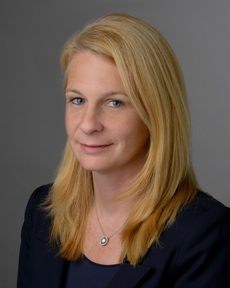
One of Rachel Sternberg’s favorite Chicago Jewish stories to tell took place before she was born. It was the one about Israeli Prime Minister Golda Meir visiting the old Chicago Federation building before the Arab-Israeli War of 1948 and calling upon the Chicago Jewish community to help support Israel in its time of need. We’re going to do this, the prime minister said, and we need your support.
Of course, said Sternberg, the JUF community stepped up to the plate. In its 116-year history, JUF has always come to the aid of any community in peril-from Israel to Ethiopian to Soviet Jewry and everyone in between.
What makes this institution great, she said, is that we’ve been here in the past and we’ll be here in the future–for good. “There’s this beautiful blend between honoring our past and the foundation that has built this community with so much history, success, and tradition, but at the same time we have the vision to look forward, to see new ways to innovate and address the needs of future generation,” she said.
And for more than 22 of those years, Sternberg has been working right in the thick of it, helping lead JUF in its mission to help repair the world. After more than two decades of professional leadership, Sternberg, senior vice president of Campaign, wrapped up an extraordinary career at JUF this past January, coinciding with the close of a successful 2015 JUF Annual Campaign.
She served as the catalyst to so many JUF programs and initiatives. Sternberg began her career at JUF in 1993 as Trades, Industries, & Professions (TIP) Division Director in the Campaign Department and in the years that followed, she played a wide range of roles in Resource Development, serving in and/or managing every aspect of Campaign as well as creating both the Events and the Community Outreach and Leadership Development departments, being promoted from Young Leadership Division director to Assistant Vice President, Associate Vice President, and Senior Vice President along the way.
In 2010, she became JUF/Federation’s Chief of Staff. Then, she returned to Campaign in 2012, where she became the lead professional in charge of the JUF Annual Campaign.
Though she is leaving JUF on a day-to-day basis, Sternberg will spearhead a special fundraising project for JUF culminating in 2017, with details to be announced in the near future.
Sternberg traveled on a JUF mission to Israel her first year on the job-and she subsequently traveled 20 more times to the Jewish State as well as on 25 missions total around the world, to the former Soviet Union and Eastern Europe, and to Cuba, among others.
But more than the places, it’s the people who Sternberg will remember most, the bonds between both the extraordinary lay and professional staff. She is grateful to the community, to her colleagues, and to JUF President Steven B. Nasatir for their unwavering support.
In turn, Nasatir said that Sternberg’s commitment to collective action inspires him. “Rachel’s uncanny capacity to think strategically and develop powerful relationships with volunteer leaders and colleagues has been a key to her success,” he said. “Her embrace of one of our founding principles–collective responsibility–has motivated all who work with her. Rachel is an extraordinary professional leader, and her contribution to JUF/Federation’s work during her tenure has been very significant.”
Sternberg will always be moved by the power of JUF. “There is something that people get by being a part of the work that we do, making already full lives even fuller,” she said. “No matter where they are in their work life or family life, they can gain by being part of the collective.”
Other stories
-
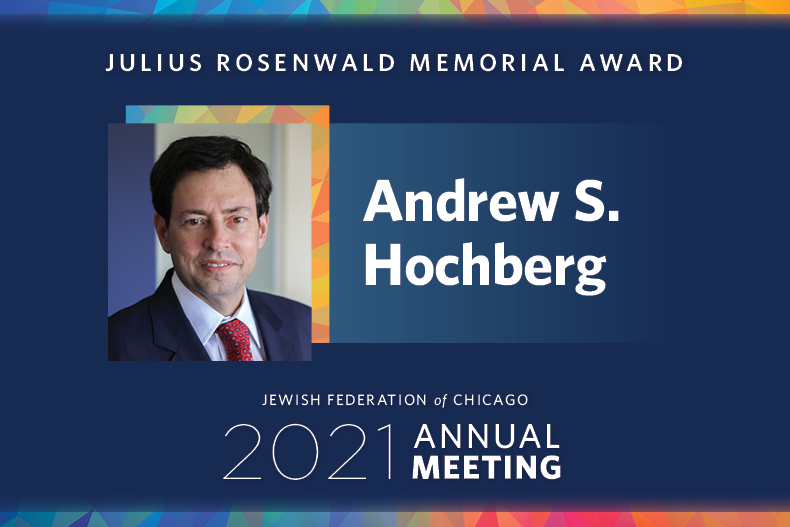
Meet Andrew S. Hochberg, 2021 Julius Rosenwald Memorial Award recipient
Celebrate Andy Hochberg at the virtual Annual Meeting on Sept. 14
Read more -
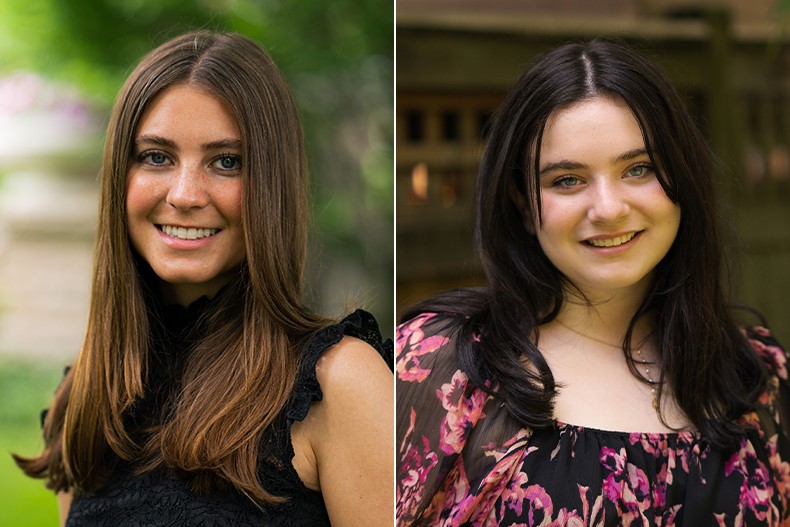
Two local teens win national recognition
Recipients of the annual Diller Teen Tikkun Olam Awards
Read more -

Celebrating six young award winners cultivating the community
Introducing young adult award winners
Read more
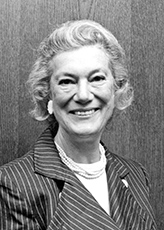
Frances Finch, who-with her late husband, Herman-supported JUF and its predecessor organizations since 1944, died in January. She was 94.
Finch served as Campaign Vice President of JUF’s Women’s Board, 1976-77, and in many other fundraising capacities for the Women’s Division; she made a Lion of Judah endowment. While serving on the JUF/ Jewish Federation Board, she also served on two of its Committees, Social Welfare and Legacies & Endowments.
“It was my pleasure to work with Frances and her late husband, Herman, for many years,” said JUF President Steven B. Nasatir. “She was a great lady and one of the sweetest I’ve ever had the pleasure of knowing. She was so very much committed to family and her community. I will always remember her as an elegant and energetic leader.”
Finch (nee Gutlow) was predeceased by her husband, Herman, and her parents, Sarah and Morris Gutlow. She is survived by her children, David (Julie), Robert (Gayle), and Mark (Jill) and grandchildren Nathan, Susan, Layla, Grant, Emily, Amanda, and Ryan. She was the sister of Freida and the late Lena, Henry, Gaye, Rosalie and Irma, and a treasured aunt, cousin, and friend to many.
Memorial services were held at Shalom Memorial Funeral Home, followed by interment at Shalom Memorial Park. In lieu of flowers, donations may be made to the Jewish United Fund of Metropolitan Chicago.
Other stories
-
Meet Andrew S. Hochberg, 2021 Julius Rosenwald Memorial Award recipient
Celebrate Andy Hochberg at the virtual Annual Meeting on Sept. 14
Read more -
Two local teens win national recognition
Recipients of the annual Diller Teen Tikkun Olam Awards
Read more -
Celebrating six young award winners cultivating the community
Introducing young adult award winners
Read more
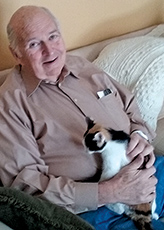
For years, my dad said he didn’t want a cat.
Although we’d always had cats when I was little, it had been ages since my parents had pets to look after. My mother missed having pets around, though, and started suggesting adopting a little kitten. She started visiting animal shelters, looking at the cats-“wouldn’t a sweet little tabby be nice?” she’d ask-but my father always said no. It was too much work, too much expense-better to remain cat-less and leave things as they were.
Increasingly, though, we-my dad’s kids and grandkids-thought maybe my mother was right, and they’d be happier as pet owners once again. After all, my parents are getting older, slowing down. My father finds it difficult to walk without a cane or a walker. But while they might be slowing down physically, emotionally they still have so much to give. Perhaps having a cat to love would give them some much-needed company and lift their moods.
We might not have realized it, but when we asked whether a cat would improve their lives, we were echoing a key Jewish teaching.
Rabbi Eliyahu Dessler, a great 20th Century sage, is famous for exploring the nature of love. In Western society, he pointed out, we’re used to thinking of love as an emotion that causes us to act. We have affection for a spouse, this thinking goes-so we offer a backrub when they come home from work. We dote on our grandchildren-and that leads us to want to shower them with gifts.
In reality, Rabbi Dessler wrote, we might have it all backwards. Love can come from giving. The more we offer to others, the more we feel invested in them. And the more we are invested in those around us, the more we come to care about them.
In fact, the Hebrew word for “love”- ahava -seems to back this up. The root of the word is hav , or “give”; through giving, it seems, love can grow.
Animals can be a powerful recipient of this love. Jewish history is replete with examples of loving relationships with pets. The Talmud recounts a cat that wore a leash in order to be walked on Shabbat. The Torah provides detailed instructions of how to be kind to animals-and forbids any form of animal cruelty: the way we treat animals is seen as the barometer of a person’s character. (As King Solomon wrote, “A righteous person knows the needs of the animal.”)
Lavishing affection on a beloved pet helps us exercise our capacity for love too: it helps us grow. Taking care of pets can also aid us in relating to others, as we exercise our reserves of patience and generosity.
That was certainly the case in our family. My mother recently brought home Maisie, an abandoned cat from a shelter. We all enjoy this playful kitten-but my father’s reaction was the biggest surprise. It was love at first sight. Now, as he sits in his chair or on the couch, he often has a little furry companion in his lap. I feel that he’s less on his own when my mother is out at work or running errands.
Watching him contentedly holding Maisie the other day, I asked if my dad was glad they’d finally got a cat. A smile played on my father’s face. “She’s a nice little cat” he admitted-then did something I’d never seen him do with the cats we had when I was a child. He gave her a hug.
Yvette Alt Miller, Ph.D. is a writer and teacher. Her book Angels at the Table: A Comprehensive Guide to Celebrating Shabbat has been used in book groups and classes around the world. Her work has appeared on Kveller.com , Aish.com , Chabad.org . She lives in the northern suburbs with her family.
Other stories
-
Meet Andrew S. Hochberg, 2021 Julius Rosenwald Memorial Award recipient
Celebrate Andy Hochberg at the virtual Annual Meeting on Sept. 14
Read more -
Two local teens win national recognition
Recipients of the annual Diller Teen Tikkun Olam Awards
Read more -
Celebrating six young award winners cultivating the community
Introducing young adult award winners
Read more
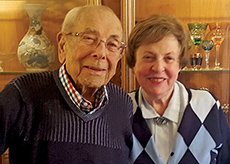
The Beatles said “all you need is love.” In “The Rose,” Bette Midler sang that it’s “an endless-aching need.”
As you get older and lose loved ones, family members, and friends, social opportunities and the pool of available singles can shrink, yet there is still a hunger for connection. Regardless of whether you’re 18 or 80, the search is never easy. Sometimes, you look for love in all the wrong places, and other times you find it right at your doorstep.
That’s what happened to Herman Cohn in 2011 when he rang the doorbell at Margot Eisenhammer’s Lincolnwood home. “We clicked from day one,” said Cohn, 94, during an interview at the couple’s Lincolnwood Place apartment.
“His friend knew I was a widow and suggested Herman look me up,” recalled Eisenhammer, 88, who hooked him with the first bite of a salad she prepared for him. “I knew he was coming, so I made herring salad, German style,” she said.
Nearly five years later, the flame is still burning. “We have a very good life together with some occasional fist fights,” Cohn jokes.
Cohn’s daughter Joyce Feuer, who lives in Hyde Park, has observed how their different tastes in film have sometimes sparked spirited debates. Eisenhammer favors quieter films like the current Brooklyn , while Herman gets fired up about war pictures.
Eisenhammer says their German-Jewish roots drew them together. Cohn, who was featured in a history channel documentary in 2015 for the 70 th anniversary of Dachau’s liberation, agrees: “Both of us left Germany as teenagers and had similar experiences of living in the U.S. trying to make a decent living.”
Both lost their spouses and decided not to marry again but live together blissfully, have mutual friends, and share an appreciation for family. Eisenhammer has grown fond of Cohn’s three children and Cohn has gotten to know her son and daughter.
Like an English Renaissance poet, Eisenhammer declares that it’s Cohn’s love for his family that she finds irresistible. “I’ve never come across a man who has this kind of love for his family. I find that so endearing in him. Isn’t that
right, Herman?”
“It goes both ways,” he says with a smile.
A long and winding road
It took Marvin & Beverly Grabow Rose of Evanston nearly 60 years to finally get together. They met each other as students in 1947 at a University of Chicago coffee shop but didn’t go on their first date until 1998.
They married other people, raised families, and were widowed around the same time. They ended up at a mutual friend’s slide show presentation of a China trip. A few months later, they met again during a Ghandi film screening at Northwestern University.
Marvin, 90, was gone for two months on a trip to Israel. Upon his return, he asked Bev, 86, to attend a Susan Sontag lecture with him. Bev accepted his invitation but insisted, “Oh, I’m not dating.” I told her, “Neither am I,” Marvin recalled with a chuckle.
For two people who weren’t dating, they became pretty inseparable. “We have emailed every night since,” said Bev.
Married for eight years, thes two snowbirds enjoy winters in Florida and appreciate each other’s differences. Marvin is an excellent cook, while Bev is a voracious reader and likes playing bridge.
Some say you can’t hurry love, and Marvin agrees. His advice: “Take things slow. You get to know the person so much better over time.”
Standing the test of time
At Hedy Ratner’s and Mort Kaplan’s sort-of commitment ceremony in 2011, Kaplan sang “Time after Time,” a 1984 love song, written by Cyndi Lauper and Rob Hyman, that captures the couple’s devotion through life’s ups and downs. (The two finally tied the knot on July 1, 2012).
They’ve supported each other on the road to professional success and to each other. Ratner, 70, is co-founder of the Women’s Business Development Center and Kaplan, 80, had a long career as a public relations consultant and is a Professor Emeritus of Columbia College in Chicago.
“Our love affair has lasted about 45 years, and it’s only grown stronger every year,” said Ratner. “Even in the worst of times, we’ve been able to make each other laugh.”
One example is the lengths to which Kaplan went to cheer up Ratner during a time of pain and loss. “When Hedy’s mother died, she was so depressed, and I was trying to figure out a way to cheer her up,” he recalled.
So he penned a love letter to her on a billboard at Chicago Avenue and Dearborn that said: “To Hedy, a parfait in a world of pound cake.”
Even though there were periods of separation in the early years, fate always stepped in. Ratner had been working for some months in D.C. when the two were reunited one Saturday night. Kaplan took his father to Chicago’s famous Pump Room, where Ratner also happened to be dining with her mother.
“We saw each other across the room, and it was spectacular,” Kaplan recalled.
You never know when your beshert will show up. So be ready!
Jennifer Brody is a former associate editor at JUF News and a freelance writer living in Chicago.
Other stories
-
Meet Andrew S. Hochberg, 2021 Julius Rosenwald Memorial Award recipient
Celebrate Andy Hochberg at the virtual Annual Meeting on Sept. 14
Read more -
Two local teens win national recognition
Recipients of the annual Diller Teen Tikkun Olam Awards
Read more -
Celebrating six young award winners cultivating the community
Introducing young adult award winners
Read more

As a journalism student, I was taught that there is a truth in every story and that it is my duty to tell the truth. As a JUF Israel Education Center intern, I learned that the concept of truth is not so black and white. I spent months searching for an ultimate truth in the Israeli-Palestinian conflict.
On my Taglit-Birthright trip, I floated in the Dead Sea, explored the shuk in Tel Aviv, and discovered my affinity for iced Aroma coffee. I returned home with questions and a deep longing to return to Israel.
When I learned I was one of 13 Illinois university students selected for IEC’s first Student Leadership Delegation to Israel, I was ecstatic. The itinerary was loaded with Israelis and Palestinians who could provide unparalleled insight. When we departed from Chicago in late December, I was certain I would have the opportunity to discover the truth about the conflict.
The delegation was a mix of Jewish and non-Jewish students from eight universities, including Sikh, Muslim, and Christian. For many, it was their first time engaging with Israel. Others had gone on gap-year programs to Israel, while one student had served in the Israel Defense Forces.
The first days in Tel Aviv were the heaviest for me. I felt immense pride to be a Zionist at Independence Hall. I was fascinated by the politics revealed in the street art we examined on a graffiti tour. In the guest book at the Rabin Museum, I read an entry inscribed in messy handwriting.
“I was named after you. I remember you. – Jack. Age 9. USA.”
Jack’s message reminded me of the importance of Rabin’s legacy. At times when peace feels impossible, it’s comforting to remember the strides that have been made.
At night, we met with a Jewish/Arab band. The musicians were our age and played a few songs for us. The conversation that followed was fascinating. One of the musicians, a 19-year old girl from Haifa, said she would never identify as Israeli, despite having Israeli citizenship. She felt like a second-class citizen in the country. She said she is accused of normalization and wonders if playing music with Israelis is right or wrong.
Why did she feel that way? What truth is in her narrative? Her testimony stayed with our group throughout the week.
Through a tour of south Tel Aviv, we learned about the history of African asylum seekers in Israel. We heard the sounds of rebuilding in the Gaza Strip from Nahal Oz, a kibbutz 500m from Gaza City. We met with soldiers at an Air Force base and learned about the abundance of precautions the IDF takes to prevent civilian casualties. We heard from former Knesset member Einat Wilf who challenged us to consider what it means to be a Jewish and Democratic state.
We learned about Israel’s security challenges through a visit to Shekef, a moshav near the Green Line in JUF’s Partnership Region. Bassam Eid, founder of the Palestinian Human Rights Monitoring Group, revealed the rifts in Palestinian politics that keep the peace process at a standstill.
When we reflected on our time in Israel, we were all emotional. Some of my non-Jewish peers also came from a people without a land and empathized with the Zionist narrative. For others, the trip pushed them out of their comfort zone to consider other perspectives.
Throughout the week, we heard conflicting narratives about Israel, security, peace, and politics. Each speaker gave us what they knew to be facts, and my peers and I were able to sculpt our own understanding of how those facts fit with other narratives.
Before the trip, I was determined to decide who was right and which narratives are invalid. Through the IEC Student Leadership Delegation, I let go of that goal. I embraced the complexities and cannot wait to continue advocating for Israel on my campus this semester. I will not go home and tell my friends about amazing falafel or beautiful beaches. The trip’s agenda was not increasing Hillel attendance or convincing us to make aliyah . There are a lot of tragedies, complexities, and misunderstandings. However, I learned that Israel’s complexities are what make it so meaningful to me.
Abigail Seitz is JUF’s Israel Education Center Israel Intern, and a sophomore studying journalism at Columbia College.
Other stories
-
Local campus administrators convene on hate speech, bias
JUF and ADL brought together 17 student safety, diversity and inclusion and student affairs administrators and Hillel representatives from various Illinois campuses to discusses issues of hate speech and bias.
Read more -
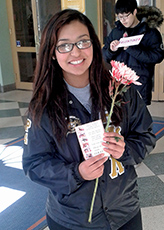
Engaging students about Israel on campus
Too often we hear about difficulties facing Jewish college students on Illinois campus, but to focus solely on the politics gives only one piece of the complex narrative that is Jewish life on campus.
Read more -
Hillel International launches fellowship initiative to train young Jewish professionals
The Springboard Fellowship will train cohorts of young Jewish professionals in highly-valued skillsets and place them at local Hillel campuses for two years.
Read more
National, state and local experts on the global refugee crisis visited JUF on Jan. 26 to brief members of the Government Affairs Committee and Jewish Community Relations Council on the current state of the crisis and its international impact.
Speakers at the meeting included the Honorable Herbert Quelle, Consul General of the Federal Republic of Germany; Kelly Gauger, deputy director of the Office of Refugee Admissions at the U.S. State Department; Ngoan Le, Chief, Bureau of Refugee and Immigrant Services, Illinois Department of Human Services; Melineh Kano, executive director of Refugee One; and Michael Masters, immediate past executive director of the Department of Homeland Security and Emergency Management for Cook County.
“Our goal was to shed light on the context and impact of this crisis on the international, national and local levels from both a humanitarian and security perspective,” said David Golder, chair of the Government Affairs Committee. “Given the magnitude and complexity of the current crisis, and given our Federation’s historical role in providing refugee resettlement services, it is important our community has up to date information on current admission policies, screening practices, and challenges.”
While there are millions of refugees from countries all over the world, panelists focused their remarks on Syrian refugees. Approximately 10,000 of the roughly 4 million refugees who have already fled Syria since the civil war began will be admitted into the U.S. in fiscal year 2016.
Acknowledging heightened security concerns after the terrorist attacks in Paris and San Bernardino, Gauger and Masters outlined the extensive screening process for people wishing to enter the U.S. as a refugee, a process that can take up to two years or more to complete. Both stated that refugees are subjected to the highest level of security screening of any person coming into the country, with Masters adding that the more significant risk comes from people entering the country through the temporary visa program.
Consul General Quelle outlined the unique challenges the refugee crisis poses in Europe and the differences of opinion within the European Union. Over 1.1 million refugees and migrants entered Germany in 2015.
As for Illinois, Le reported that 2,500 to 3,000 refugees come to Illinois every year from a wide variety of countries, and Kano said that some of the biggest service needs include mental health counseling and job training and placement. Kano also said that while there is an estimated 60 million refugees worldwide, less than one percent will be formally resettled in a third country in a given year.
“Given our long history of persecution and dislocation, the Jewish people well understand the plight of refugees” said JCRC Chair David T. Brown. “The information shared today underscores the complexity of the current refugee crisis, and highlights the need for ethical and secure resettlement policies, which uphold America’s fundamental values while also ensuring the security of our citizens.”
Other stories
-
Meet Andrew S. Hochberg, 2021 Julius Rosenwald Memorial Award recipient
Celebrate Andy Hochberg at the virtual Annual Meeting on Sept. 14
Read more -
Two local teens win national recognition
Recipients of the annual Diller Teen Tikkun Olam Awards
Read more -
Celebrating six young award winners cultivating the community
Introducing young adult award winners
Read more
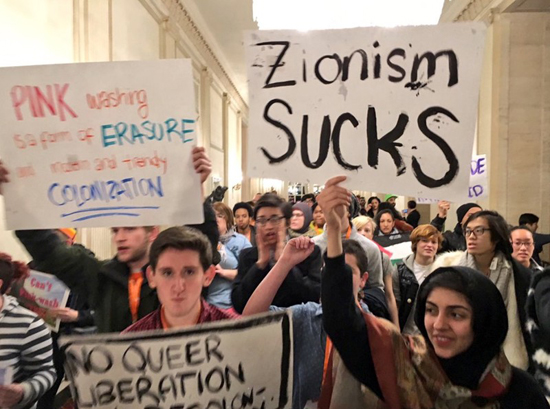
Anti-Israel protesters disrupt the A Wider Bridge reception at the Creating Change conference in Chicago on Jan. 22.
Anti-Israel vitriol tinged with anti-Semitism reared its head in Chicago last Friday, Jan. 22, when several hundred protesters sought to shut down an Israel-focused reception at the National LGBTQ Task Force Creating Change conference at the Chicago Hilton.
A Wider Bridge — a Jewish LGBTQ organization that promotes ties between American and Israeli LGBT groups and recipient of a JUF Breakthrough Fund grant — had organized the reception to showcase the work of Jerusalem Open House, Israel’s flagship LGBTQ organization.
Conference organizers had canceled the reception earlier that week in response to pressure from anti-Israel groups, but then reversed that decision after appeals from leading LGBTQ and Jewish activists including A Wider Bridge — a response that JUF assisted in crafting.
In the National LGBTQ Task Force’s Jan. 19 statement reinstating the event , Executive Director Rea Carey said, ” … We want to make it quite clear that the Creating Change Conference will always be a safe space for inclusion and dialogue for people with often widely different views.”
But the promised “safe space” became anything but, as protesters chanted hateful slogans , some of which crossed the line into anti-Semitism. JUF Executive Vice President Jay Tcath attended the event along with Steve Dishler, assistant vice president of JUF’s Jewish Community Relations Council and Michael Oxman, president of JUF’s Young Leadership Division. They described what unfolded as an ugly and unsettling scene.
“This incident showcased how anti-Israel activists are building coalitions with other social justice groups with the aim of excluding and silencing any voice that represents or is affiliated with Israel,” Dishler said. “Such attempts to demonize Israel, Israelis, and anyone associated with Israel, highlight the importance of our community relations agenda, and the need to build strong relationships and alliances with other religious and ethnic groups and civil rights movements.”
In a statement Monday, Carey condemned the expressions of anti-Semitism heard at the conference and promised an internal review of its conference practices and procedures.
The incident garnered national media attention. In a letter to the LGBTQ Task Force Wednesday, more than 50 LGBT leaders, Jewish and non-Jewish, expressed outrage over the incident and the anti-Semitic statements made by some protesters. They called for an outside review and made recommendations for ensuring that similar incidents do not occur at future conferences.
JUF and its national partner, the Israel Action Network, will continue to consult with A Wider Bridge to discuss strategies moving forward.
Other stories
-
Meet Andrew S. Hochberg, 2021 Julius Rosenwald Memorial Award recipient
Celebrate Andy Hochberg at the virtual Annual Meeting on Sept. 14
Read more -
Two local teens win national recognition
Recipients of the annual Diller Teen Tikkun Olam Awards
Read more -
Celebrating six young award winners cultivating the community
Introducing young adult award winners
Read more
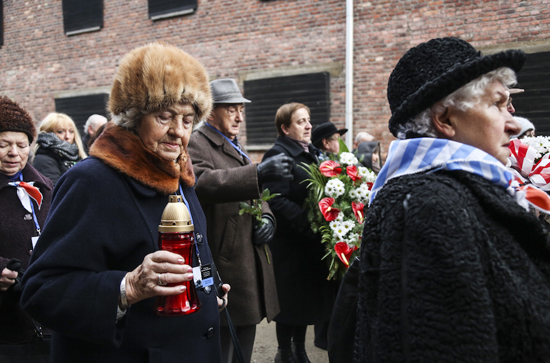
The 71st anniversary event commemorating the liberation of the German Nazi concentration camp Auschwitz in Oswiecim, Poland, Jan. 27, 2016. (Beata Zawrzel/Pacific Press/LightRocket via Getty Images)
( JTA ) – Former Auschwitz prisoners marked the 71st anniversary of their liberation during a ceremony at the Nazi death camp on International Holocaust Remembrance Day.
The Holocaust survivors gathered Wednesday at the camp, now a memorial and museum, in southern Poland, many carrying flowers.
International Holocaust Remembrance Day is observed on Jan. 27, the anniversary of the Auschwitz liberation by the Soviet army.
During a ceremony Wednesday at the European Parliament to mark the day, the parliament’s president said “it hurts that in today’s Europe Jews again live in fear.”
“It is unacceptable that Jews are reluctant to wear their traditional clothes and display religious symbols in the public because of fear of reprisals and aggression,” Martin Schultz said. “It is saddening when Jewish people consider leaving Europe because they no longer feel safe.
“Jewish friends and neighbors, we stand with you against those who seek to harm you. We will never let them make you outsiders in your own country. Europe is your home today, tomorrow and forever.”
European Jewish Congress President Moshe Kantor told the European Parliament that the governments of its member states should do more to protect their Jewish citizens.
“We are not asking for any special favors as Jews, we are asking for governments to fulfill their responsibilities towards us as European citizens,” Kantor said. “We ask for the same rights to life, security and safety as any other European.”
An Austrian Auschwitz survivor, Ruth Kluger, spoke before the German parliament in honor of Holocaust Remembrance Day.
Later Wednesday, President Barack Obama will speak at a ceremony honoring Righteous Among the Nations at the Israeli Embassy in Washington, D.C.
Other stories
-
Chicago to Israel to Kenya
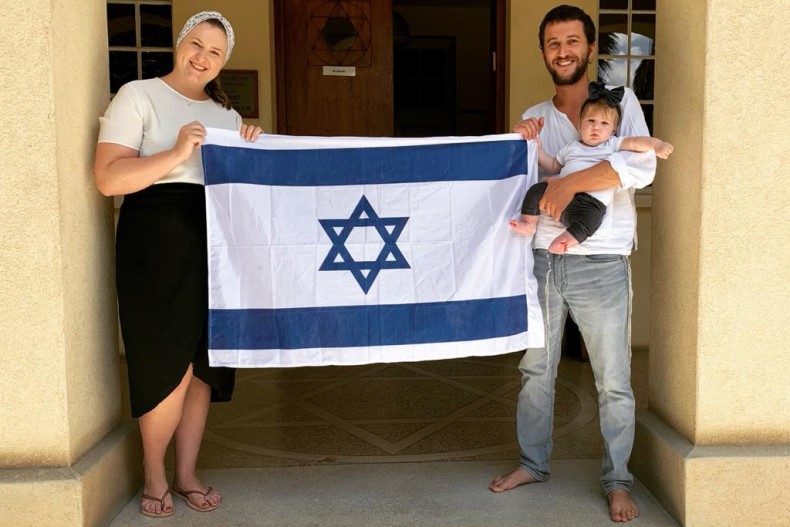
A family’s story of living Jewishly on three continents Michelle Cohen World May 28, 2021 Avital, Tzofia, and Netanel Kaszovitz outside their home in Nairobi on Yom HaAtzmaut. When Avital Kaszovitz prepared to be a Modern Orthodox shlicha (emissary) to the Jewish community in Ke
Read more -
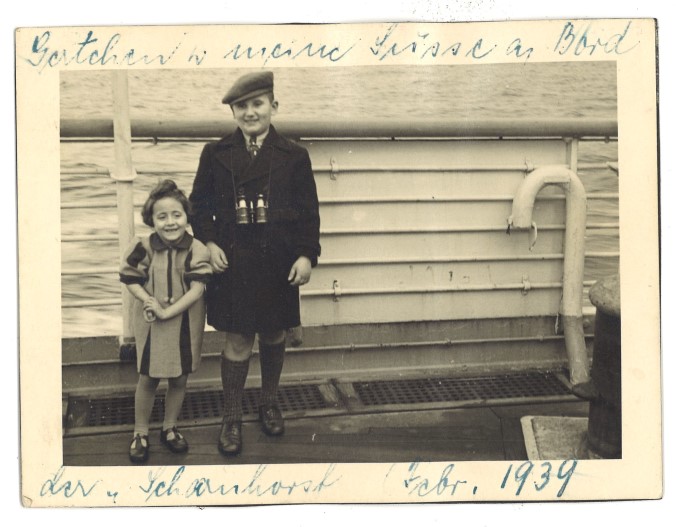
New exhibit spotlights the experience of ‘Shanghai Jews’
Explore a new Illinois Holocaust Museum and Education Center exhibit
Read more -
Europe’s brave new teachers of the Holocaust
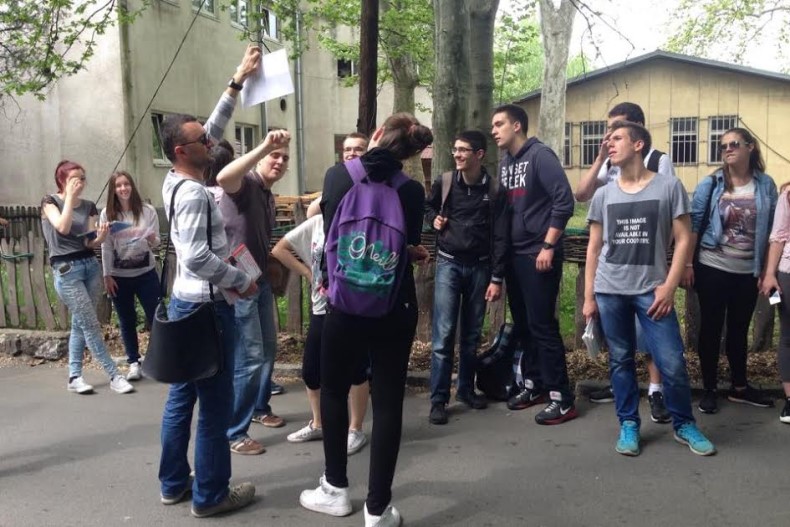
Teaching the Holocaust in the modern era has its difficulties and rewards.
Read more
As the state budget impasse enters its seventh month, the likely impact on human service agencies, including Jewish Federation-affiliated agencies, becomes more pressing.
Up until now, the continuing crisis has had a moderate impact on Jewish Child & Family Services, CJE SeniorLife and Sinai Health System; most of their funding is covered by federal consent decrees and court orders, which the State is required to pay. In contrast, similar institutions – such as Lutheran Social Services of Illinois, which the state owes $6 million – are terminating staff and eliminating programs.
Therefore, the Governor’s Office’s recently announced plan to challenge federal consent decrees and court orders has heightened concern. Such a move would likely reduce human-service funding and impact services for abused and neglected children, people with physical, developmental and intellectual disabilities and Medicaid rates for pediatricians serving low-income children.
Additionally, the failure to square up spending with revenues over these many months puts tremendous pressure on the governor and the General Assembly to make even deeper spending reductions in human services, health care and higher education than projected last July. The Governor’s Office of Management and Budget reports that the State is spending at a rate of $36.5 billion but only bringing in revenues at around $31.9 billion.
“We are very apprehensive about the failure of our state leadership to resolve the state budget impasse,” said David Golder, chair of the Jewish Federation’s Government Affairs Committee. “State and Federal funds, supplementing our community’s extraordinary philanthropy, provide our agencies with the critical resources required to do an amazing job in helping more than 300,000 people in need of help due to age, poverty or disabilities. This partnership between our agencies and our state government is in jeopardy.”
The Federation’s Government Affairs department continues to advocate in Springfield in support of the many important programs provided by the agencies that help individuals and families.
Other stories
-
Meet Andrew S. Hochberg, 2021 Julius Rosenwald Memorial Award recipient
Celebrate Andy Hochberg at the virtual Annual Meeting on Sept. 14
Read more -
Two local teens win national recognition
Recipients of the annual Diller Teen Tikkun Olam Awards
Read more -
Celebrating six young award winners cultivating the community
Introducing young adult award winners
Read more
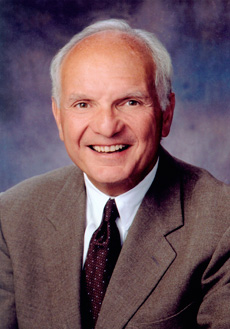
Commitment is a word that comes up a lot in descriptions of Harry J. Seigle. Commitment to business. To public service. Philanthropy. The Jewish community.
That commitment, along with his ability to forge relationships, will serve Seigle well in the latest of his long list of civic endeavors, as he chairs the Jewish United Fund of Metropolitan Chicago’s 2016 Annual Campaign. It is one of the largest annual fundraising efforts in the nation (the just-completed 2015 Campaign raised more than $83.1 million), and it supports a vast array of social service and community-building efforts locally and around the world.
“Giving empowers donors,” Seigle said. “You can’t control the rest of the world, but you can control what you give, how you give and how it impacts the world. I don’t see giving as an obligation. I see it as a privilege.”
It is a privilege in which Seigle engages wholeheartedly. In the last few years, he and his family have made major donations to both his alma maters, Washington University in St. Louis and Northwestern University Law School, as well as a $4 million gift through JUF to Sinai Health System – Sinai’s largest donation ever. The system’s Mount Sinai Hospital is a JUF-affiliate.
Seigle has long served on the JUF/Jewish Federation Board, currently as a vice chairman and previously as treasurer. He also is immediate past president of the American Jewish Committee’s Chicago Region.
“Harry Seigle brings both tremendous energy and a keen business perspective to the 2016 Annual Campaign,” JUF President Steven Nasatir said. “His leadership adds a powerful and special dynamic, and clearly will be a major force in driving this year’s campaign and supporting all those JUF serves.”
Seigle is an avid tennis player whose civic and philanthropic involvement extends to a variety of arts, business and education interests, locally and beyond.
He is a board member of Steppenwolf Theatre, the Chicagoland Chamber of Commerce and Washington University. He has served as chairman of the Illinois State Chamber of Commerce, was appointed by former Gov. Jim Edgar in 1995 to chair the Illinois Development Finance Authority and, in 1998, ran unsuccessfully for Illinois comptroller. Today, he estimates he devotes half his time to philanthropic efforts.
“I don’t give so I can give back,” he said, although he noted that a JUF partner agency rescued his mother from Nazi Germany in 1937. “My family and I give forward . Every dollar we raise to go forward will help the generation after us, and the ones after that.”
As for his commitment to JUF, Seigle says, “There is a goodness in what JUF does. We serve the needy and poor, without an eye to whether they are Jewish. We protect Israel and Jews wherever they are in danger. We promote and nurture Jewish life. It’s hard to imagine serving a greater purpose.”
JUF mobilizes resources that support the global and local Jewish communities by meeting basic needs, creating Jewish experiences, and strengthening Jewish community connections. The Annual Campaign is the core support for JUF services, providing the largest source of funds for a vital network of more than 70 programs and agencies whose services benefit over 300,000 Chicagoans of all faiths, and more than 2 million Jews in Israel and worldwide.
Seigle and his wife, Susan, live on Chicago’s North Side, but his roots are in suburban Elgin, where his family dates back to 1897. He remains active in supporting the Elgin United Way and Community Crisis Center. He also twice was elected trustee and chairman of Elgin Community College.
Since 1980, Seigle served as president of Seigle’s, Inc., the largest supplier of building materials to Chicago homebuilders. In 2005, the company was sold, and the following year Seigle founded The Elgin Company, which is devoted to real estate acquisition and management, private investing and philanthropy.
“I treat a dollar I give the same as the dollar I invest in business,” Seigle said. “If you want to invest, look at the management and the mission. There’s none better than JUF.”
Other stories
-
Meet Andrew S. Hochberg, 2021 Julius Rosenwald Memorial Award recipient
Celebrate Andy Hochberg at the virtual Annual Meeting on Sept. 14
Read more -
Two local teens win national recognition
Recipients of the annual Diller Teen Tikkun Olam Awards
Read more -
Celebrating six young award winners cultivating the community
Introducing young adult award winners
Read more