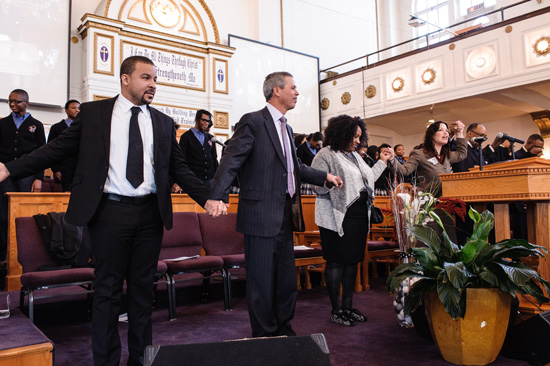
Faith leaders and elected officials in the African-American and Jewish communities join hands at the third-annual MLK Day program (Photo by Robert F. Kusel).
In a West Side Baptist church where Dr. Martin Luther King, Jr. once based his Chicago efforts, housed in what once was a synagogue in the heart of an Eastern European Jewish neighborhood, members of the city’s Jewish and African-American communities came together Monday morning for a unique Martin Luther King Day program.
The third-annual event, titled Where are the Drum Majors? Strengthening the Bonds Between the African-American and Jewish Communities , was co-sponsored by the Jewish United Fund of Metropolitan Chicago and the Lawndale community’s Stone Temple Baptist Church, where the event took place, as well as The Firehouse Community Arts Center, Sinai Health System and the North Lawndale Historical and Cultural Society.
The program included reflections on Dr. King’s legacy and on the relationship between the Jewish and African-American communities, as well as performances by the Kenwood Academy Concert Choir.
“Dr. King’s vision of a just world has always resonated strongly with the Jewish community,” said David T. Brown, Chairman of JUF’s Jewish Community Relations Council. “Dr. King asked us to look out for our fellow man, to be our brother’s keeper, and to join him as drum majors in the pursuit of full equality and justice for all humankind. We reaffirm our commitment to supporting each other on this important day.” Watch Brown’s remarks .
Featured speakers at the event included faith leaders and elected officials from both communities, as well as Mayor Rahm Emanuel, who has deep family connections to the neighborhood.
Stars of David still adorn Stone Temple Baptist Church, recalling the time when North Lawndale was home to so many Jews that it was known as “Chicago Jerusalem,” and was the early stomping ground of Jewish leaders such as former Israeli Prime Minister Golda Meir and musician Benny Goodman. The church also served as a base for Dr. Martin Luther King Jr.’s affordable housing campaign in the late 1960s. In tribute to this extraordinary history and Stone Temple’s continued strong presence in the community, efforts are currently underway to recognize the building as a Chicago historic landmark.
Jewish and Christian faith leaders in attendance called upon their communities to come together in support of one another year round — not just one day a year.
“Do not let today be the only time you speak to one another,” said Bishop Derrick M. Fitzpatrick of Stone Temple, who announced upcoming plans for joint activities with Stone Temple and JUF ranging from student visits to the Illinois Holocaust Museum and the DuSable Museum of African American History, a spoken word night, a youth roundtable discussion on street violence, and a historical bus tour of the North Lawndale neighborhood. Watch Fitzpatrick’s speech .
“When racial tension is at an all-time high, who’s going to stand up? Who’s going to step up? Who’s going to speak up?” challenged Pastor Chris Harris of Bright Star Church. “Blacks and Jews: Let’s support both of our communities. Let’s make sure we come out to each other’s communities and help each other out for real.”
“We have too much in common — too much to offer each other — to not stand and walk together,” added Rabbi Michael Siegel of Anshe Emet Synagogue.
“What we need today is more drum majors who are willing to serve on both sides of each other’s drum lines,” said Rabbi Shoshanah Conover of Temple Sholom.
The event also featured remarks by Debra Wesley , president of Sinai Community Institute — a JUF affiliate. Wesley spoke about Sinai’s innovative work with the Israeli-based organization NATAL to bring Israeli trauma care expertise to Chicago’s South and West Side victims of violence.
“Where are the drum majors? Well, I am proud to say that for nearly 100 years, Sinai Health System has been a drum major,” said Wesley. “We embrace the Jewish spirit of tikkun olam, repairing the world.”
Prior to the event, volunteers from both communities took part in a special service program cooking and serving breakfast to members of the North Lawndale neighborhood.
“I like volunteering to stay active,” said Madeline Kochman, of Forest Park, who volunteered through JUF’s TOV Volunteer Network. “I’m a first-generation Romanian Jew so it’s especially meaningful to be here volunteering in what used to be a Romanian Jewish neighborhood.”
Congresswoman Jan Schakowsky, Cook County Commissioners Richard Boykin and Robert Steele, Commissioner of Water Reclamation District Debra Shore, Alderman Michael Scott, Jr., Pastor Phil Jackson of the Firehouse Community Arts Center, Blanche Killingsworth of the North Lawndale Historical and Cultural Society, Claude Robinson of UCAN, and North Lawndale student Anthony Bush also spoke at Monday’s program.
Other stories
-
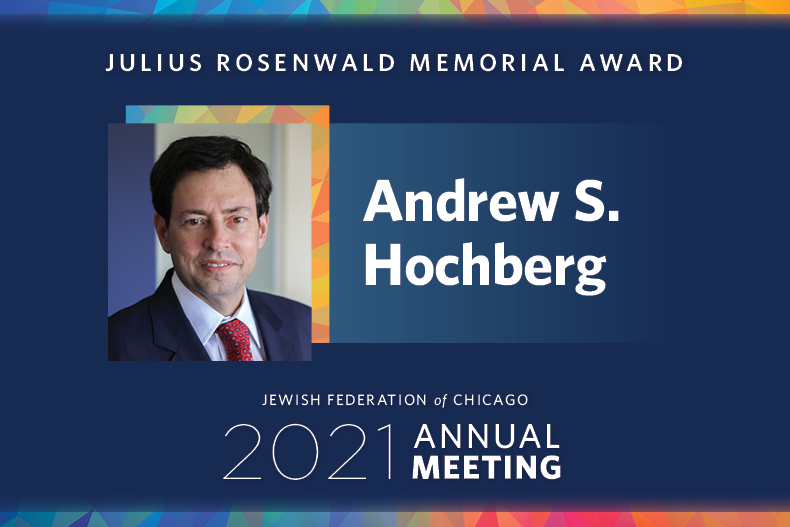
Meet Andrew S. Hochberg, 2021 Julius Rosenwald Memorial Award recipient
Celebrate Andy Hochberg at the virtual Annual Meeting on Sept. 14
Read more -
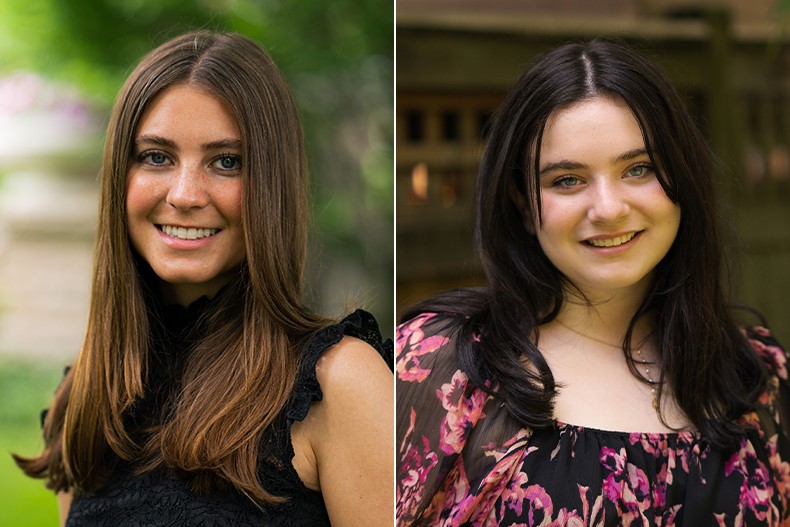
Two local teens win national recognition
Recipients of the annual Diller Teen Tikkun Olam Awards
Read more -
Celebrating six young award winners cultivating the community
Introducing young adult award winners
Read more
JUF 2015 Annual Campaign raises $83.1 million to care for needy and nurture a community
One of the largest annual fundraising efforts in the nation, the Jewish United Fund of Metropolitan Chicago Annual Campaign, closed its 2015 Campaign today at $83,122,764, assuring ongoing support for a vast network of essential human services, both local and global. The total was $1,025,536 higher than the successful 2014 Campaign.
The Annual Campaign is the largest element of an effort that last year mobilized $203,718,220 to help more than 70 vital social service agencies and programs feed, clothe, house and otherwise care for 300,000 Chicagoans of all faiths, and provide humanitarian assistance to 2 million Jews in Israel and around the world.
Those services include providing more than 543,000 meals and other food assistance locally to those in need; $3.3 million in emergency financial assistance to Chicago-area households; food, medicine, home care and other necessities for 132,463 Jewish seniors and 22,580 impoverished children in the former Soviet Union, including embattled Ukraine; and services to assist the integration of more than 26,000 immigrants into Israeli society.
The Campaign also helps strengthen the Jewish community. Some 23,951 children built stronger Jewish identities through supported formal and informal educational experiences; nearly three out of four local Jewish day school students received tuition assistance; 3,798 college students participated in Jewish life on Illinois campuses through Hillel and other programs; tens of thousands attended Israel Solidarity Day, trade dinners, the Young Leadership Division Big Event and other communal events; and Israel advocacy efforts resulted in strong legislation combatting boycott efforts.
In addition to the Annual Campaign, JUF raises funds through bequests, the Centennial Campaign, corporate partnerships, donations to emergency relief efforts, donor advised funds, support foundations and other sources. As a major funder of human services addressing the needs of the most vulnerable populations in Illinois, the Federation also receives significant grants – totaling more than $16.7 million in 2015 – from government and foundations, and is a beneficiary of the United Way of Metropolitan Chicago.
“Chicago’s Jewish community is amazing,” said 2015 Annual Campaign Chair Sara Crown Star. “The generosity and commitment to helping those in need is unmatched. The impact those dollars have on 300,000 lives in Chicago and 2 million lives worldwide is truly transformative. Every single day our community changes lives for the better. Our community should be really proud.”
“It comes down to trust,” said Board Chairman Bill Silverstein. “Because our community trusts JUF to effectively and efficiently serve those in need, strengthen Jewish life, and care for our extended family here and half way around the world, we are able to stay true to our mission. The responsibility is awesome, and it hasn’t gotten any easier in the last 115 years. But because of that trust, JUF continues to be where our community turns to heal the world.”
“The success of the Annual Campaign is all about people,” said President Steven B. Nasatir. “Tens of thousands of contributors. Thousands of volunteers. And a very committed staff. And, at the forefront, those who lead. We owe huge thanks to Sara Crown Star for her energy and commitment, End-of-Year Chairs David Goldenberg and Hilary Greenberg, Women’s Division Campaign Chair Linda Schottenstein Fisher, Young Leadership Division Campaign Chair Amy Kirsch, Campaign Senior VP Rachel Sternberg and all the others who made this possible.”
Numbers tell the story
In 2015, in addition to the examples already mentioned, Chicago’s Jewish community made it possible for JUF-supported agencies and programs to help 38,125 people get free or highly subsidized mental or physical healthcare; 3,206 seniors to stay in their homes rather than having to move to institutionalized care; 1,192 impoverished Jews to receive essential prescription medication; 1,475 children with disabilities to get intensive therapeutic services and education; and 581 workers to find jobs.
Countless Jewish experiences were sparked as 1,410 went to Jewish summer camp with scholarships; 6,942 families shared the joy of free Jewish books and music from JUF’s PJ Library; 687 got tuition aid that helped them start their child’s Jewish early childhood education; and 978 families with 1,430 young children explored and experienced Jewish life at JUF Young Families programs. 6,361 young adults attended programs focused on engaging the next generation, and 3,999 Jews of all ages provided hands-on assistance to those in need and other efforts through JUF’s TOV Volunteer Network.
Innovation also got a big boost as 19 visionary initiatives that meet local Jewish needs and engage community members Jewishly received grants from JUF’s Breakthrough Fund.
Compared to 2008, the beginning of the Great Recession, JUF scholarships and subsidies for Jewish early childhood programming grew by 330 percent, emergency assistance dollars provided by JUF agencies grew by approximately 250 percent, and the number of people receiving free or subsidized health care more than doubled. In just the past two years, the number of Chicago-area Holocaust survivors receiving services is up 89 percent.
Internationally, JUF’s overseas programs helped 26,428 Jews from across the globe begin new lives of freedom in Israel, where new immigrants received assistance with housing, Hebrew, employment and socialization; some 23,500 disadvantaged Israeli students received scholastic and emotional support; and 7,255 young Jews from Russia and other Eastern European countries built stronger Jewish identities through a Jewish camping experience.
“In the simplest terms, the agencies we support and the programs we provide in Chicago, Israel and around the world are the conduit between those who need help and those who can provide it,” Nasatir said. “The fuel for all of those efforts comes from the tens of thousands who support the Annual Campaign.”
Other stories
-
Meet Andrew S. Hochberg, 2021 Julius Rosenwald Memorial Award recipient
Celebrate Andy Hochberg at the virtual Annual Meeting on Sept. 14
Read more -
Two local teens win national recognition
Recipients of the annual Diller Teen Tikkun Olam Awards
Read more -
Celebrating six young award winners cultivating the community
Introducing young adult award winners
Read more
Thirty young adults from Illinois campuses will be traveling to Israel this coming summer to strengthen their resumes through a custom-designed overseas experience in Israel. The group is part of an initiative called Onward Israel, a partnership between the Jewish United Fund/Jewish Federation of Metropolitan Chicago and the Jewish Agency for Israel.
Every year, tens of thousands of young adults travel abroad for summer internships, volunteer opportunities and summer study. Onward Israel addresses many of the obstacles that have prevented larger numbers of young adults from returning for second immersive experiences in Israel, such as cost and the need for resume-building. Heavily subsidized, Onward Israel gives Jewish young adults the chance to build valuable work, service or study credentials while also experiencing Israel.
While most of the participants have already been to Israel through Birthright Israel or various teen programs, Onward Israel allows them to have a more long-term experience, which often translates into a stronger connection with Israel and with their Jewish community at home. Each delegation will focus on specific projects or work assignments that its local federation has developed with the Jewish Agency.
The Illinois delegation will be living in Tel Aviv where they will be placed in internships related to their fields of study or interest. The program will consist of four days a week interning at placements and an additional day a week of educational content over the course of eight weeks. Participants will also spend a weekend with Onward Israel participants from a variety of communities during the Global Jewish Peoplehood Shabbat experience.
Cindy Shapira, Jewish Agency Board of Governors member and the national lay chair of the Onward Israel initiative, along with her husband, David, realized the need for Onward Israel when their own children were looking for overseas summer internships.
“I learned that one could go almost anywhere, but hardly anyone mentioned Israel,” Shapira said. “Through Onward Israel, we can give thousands of Jewish young people the remarkable opportunity of a resume building experience in Israel.”
Emily Briskman, Director of JUF’s Israel Education Center, said that there was a specific need for a summer program in Israel that offers career development and advanced study.
“Offering this kind of opportunity is a great complement to our already robust menu of Israel education initiatives,” Briskman said. “Students will have an opportunity to simultaneously strengthen their Jewish identity and love of Israel while furthering their career goals.”
Applications for Onward Israel are now open. For more information and to apply please visit http://www.onwardisrael.com/category/chicago . Preference will be given to students currently attending college in Illinois.
Other stories
-
Local campus administrators convene on hate speech, bias
JUF and ADL brought together 17 student safety, diversity and inclusion and student affairs administrators and Hillel representatives from various Illinois campuses to discusses issues of hate speech and bias.
Read more -
Engaging students about Israel on campus
Too often we hear about difficulties facing Jewish college students on Illinois campus, but to focus solely on the politics gives only one piece of the complex narrative that is Jewish life on campus.
Read more -
Hillel International launches fellowship initiative to train young Jewish professionals
The Springboard Fellowship will train cohorts of young Jewish professionals in highly-valued skillsets and place them at local Hillel campuses for two years.
Read more
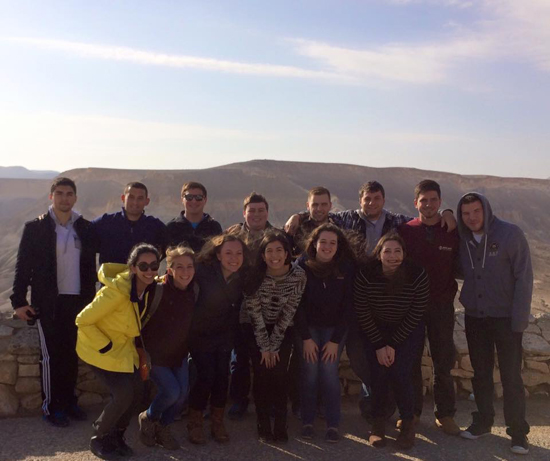
Participants on the Student Leadership Delegation to Israel at the grave of David Ben-Gurion.
Non-Jewish students from Sikh, Muslim, Christian, Assyrian and Armenian backgrounds experienced Israel with their Jewish peers through JUF’s Israel Education Center’s first Student Leadership Delegation to Israel last month.
Thirteen students from eight Illinois universities embarked on a journey to learn about the country and its conflicts firsthand. The trip’s diverse itinerary provided a unique and profound look into Israel and its culture, peoples and complexities through authentic interactions with Israelis and Palestinians.
Too often Israel and the Israeli-Palestinian conflict are boiled down to slogans and rhetoric on campus. This trip offered a diverse group of student leaders a deep dive into a complex and ever-changing situation. Ultimately, they will return to campus able to share their firsthand perspective of “what Israel really is.”
Students began the trip in Tel Aviv where they learned about Zionism and Theodor Herzl through a visit to Independence Hall. Professor Uzi Rabi, director of the Moshe Dayan Center for Middle Eastern Studies at Tel Aviv University, explained the complexity of the region and the security challenges Israel faces. Through discussions with former Knesset members, IDF soldiers and activists, students were able to engage with the multiple perspectives that exist in Israeli society.
Students also interacted with Israel’s rich culture through a graffiti tour, a performance by an Israeli-Arab youth band and an afternoon exploring Nachlat Binyamin and the Carmel Shuk.
Students then traveled to Nahal Oz, the closest kibbutz to the Gaza border. Journalist Amir Tibon, a resident of the kibbutz, answered students’ questions about war, security and life on the kibbutz. A visit to David Ben-Gurion’s grave in Sde Boker sparked a conversation about Israeli innovation and perseverance. At Shekef, a moshav in JUF’s Partnership Together region, students learned of the positive impact that Chicago’s Jewish community has on the area.
The group then traveled to Jerusalem and celebrated the New Year with Jewish and Arab students from Hebrew University while learning about life as Israeli college students. Visits to Yad VaShem and Mt. Herzl illuminated the historical events that had a profound impact on contemporary Israel. Afterward, students led Shabbat services — a first for some of the participants — to welcome the Sabbath and reflect on their eventful week.
In Jerusalem the group braved cold and rainy conditions to tour the Old City and learn of the diverse populations that call Jerusalem home. The final discussion was with Bassam Eid, a Palestinian human rights activist who talked about Palestinian society and the destructiveness of the BDS movement.
“The country itself reaffirmed my opinion that Israel does in fact have a right to exist, and seeing its beauty directly gives me renewed motivation to promote Israel education,” one student said. “As a Christian, I was filled with an overwhelming feeling of joy after seeing the Church of the Holy Sepulchre in Jerusalem. Mostly, I was proud to see that people of any religion can freely practice their faith in Israel, and I pray that this can be an example for the rest of the Middle East.”
Abigail Seitz is an Israel Intern with JUF’s Israel Education Center and a sophomore at Columbia College.
Other stories
-
Local campus administrators convene on hate speech, bias
JUF and ADL brought together 17 student safety, diversity and inclusion and student affairs administrators and Hillel representatives from various Illinois campuses to discusses issues of hate speech and bias.
Read more -
Engaging students about Israel on campus
Too often we hear about difficulties facing Jewish college students on Illinois campus, but to focus solely on the politics gives only one piece of the complex narrative that is Jewish life on campus.
Read more -
Hillel International launches fellowship initiative to train young Jewish professionals
The Springboard Fellowship will train cohorts of young Jewish professionals in highly-valued skillsets and place them at local Hillel campuses for two years.
Read more
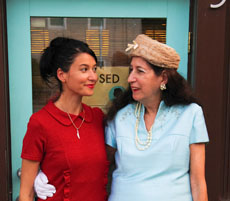
Pauline Dubkin-Yearwood was an original. She was a longtime journalist in the Jewish press, a lover of animals, a devoted mother–and an all-around free spirit.
Dubkin-Yearwood, the managing editor of The Chicago Jewish News for nearly two decades, died on Dec. 22 at the age of 73. She lost her yearlong battle with pancreatic cancer in New Paltz, N.Y.. She died in her sleep, surrounded by family.
“She brought just as much determination, verve, and feminist pep to her many projects and passions,” remembers Pauline’s daughter, confectionery chef Lagusta Yearwood. “Everyone she came in contact with was touched by her kindnesses and awed at how widely she projected her concern and compassion.”
Dubkin-Yearwood was born in Chicago in December of 1941. Her parents were Leonard Dubkin, a naturalist and journalist, and Muriel Schwartz, an actress and writer. She attended Francis W. Parker School, Bryn Mawr College, and the Medill School of Journalism at Northwestern University.
In the 1960s, Lagusta explains, her mother “gave herself over to the societal transformations taking place, resolving to never wear a neutral-colored item of clothing again.”
For 50 years, starting in 1965, Dubkin-Yearwood earned a living through her writing. She was the entertainment writer and theater critic for the Phoenix New Times and the Scottsdale Progress Tribune . Later, she edited and reported for Jewish newspapers, including nearly 20 years as the managing editor of The Chicago Jewish News .
She was also active in the American Jewish Press Association, serving on several of its editorial committees.
Additionally, Dubkin-Yearwood devoted countless hours to animal-related volunteer projects. She was a volunteer for Community Animal Rescue Effort (C.A.R.E.) in Evanston for 17 years. Most recently, she filled the role of adoption counselor, helping dozens of homeless cats find new homes.
Dubkin-Yearwood is survived by her daughter Lagusta, her son Leonard, and her cats Angel and Shanthi. Memorial services have been held. She wished that her body be used to spare animal suffering; an anatomical gift has been made to New York Medical College in Valhalla, N.Y. In lieu of flowers, the family asks that donations be sent to CARE.
A celebration of Dubkin-Yearwood’s life will take place from 1-3 p.m. Sunday, Jan. 24, at Spertus Institute, 610 S. Michigan Ave. Her daughter and son will be present.
~JUF News staff and JTA staff
Other stories
-
Meet Andrew S. Hochberg, 2021 Julius Rosenwald Memorial Award recipient
Celebrate Andy Hochberg at the virtual Annual Meeting on Sept. 14
Read more -
Two local teens win national recognition
Recipients of the annual Diller Teen Tikkun Olam Awards
Read more -
Celebrating six young award winners cultivating the community
Introducing young adult award winners
Read more
Dave Feldman was a well-known celebrity who passed away at age 85. His passion for horse racing made him an icon in the industry. He worked as a newspaper reporter, announcer, and a thoroughbred trainer. Dave’s wife Fern and horse racing were two of his greatest loves. Going to work was very easy for him. Even with a heart condition, and stuck in the hospital, Dave never missed a deadline.
His claim to fame was handicapping horses, which he did for over 60 years. Dave picked winning horses better than anyone else, and he let everyone know it. Even at age 15, people were asking him to pick horses for them.
Dave loved all facets of horse racing, especially the social aspect. He made friends at the track with the $2 betters, the high rollers, the jockeys and just about everyone else. He was honored in 1986 by the Illinois racing industry with a Dave Feldman Day at Hawthorne Race Course.
Chicago Sun-Times Columnist Neil Steinberg wrote a story about Dave helping a friend who had a sick horse. In the article titled “The Man Who Would Be King,” Neil wrote that Dave took one look at the horse and fed it a quart of brandy with a syringe. The next day the horse was running around like a champ.
Dave will be remembered as a wonderful storyteller, a true character, great friend, and hard worker to all that knew him. His great sense of humor was even evident in his will, where he left a friend a one-year subscription to the Daily Racing Form .
Dave made his mark on the racing community when he was alive and to the Jewish community in his passing. Dave and Fern left a generous gift to the JUF in their will. To learn how you can create your Jewish Legacy, contact Legacies and Endowments at (312) 357-4975 or email: [email protected].
Ron Krit is the manager of Endowment Development for the Legacies and Endowments department of the Jewish United Fund of Metropolitan Chicago.
Other stories
-
Meet Andrew S. Hochberg, 2021 Julius Rosenwald Memorial Award recipient
Celebrate Andy Hochberg at the virtual Annual Meeting on Sept. 14
Read more -
Two local teens win national recognition
Recipients of the annual Diller Teen Tikkun Olam Awards
Read more -
Celebrating six young award winners cultivating the community
Introducing young adult award winners
Read more
Dr. Robert Nathan Mayer, the president for 25 years of the Hulda B. and Maurice L. Rothschild Foundation, passed away in December. He was 66.
Mayer’s great-uncle and -aunt, Maurice L. and Hulda Rothschild, had owned Rothschild’s clothing stores; upon her death, Hulda requested that Mayer oversee their charitable funds. The Foundation was recognized in 2009 by the Council on Foundations with its Critical Impact Award.
Mayer was a long-term board member of CJE SeniorLife; its President and CEO Mark Weiner recalls that Mayer was “a dedicated and hard-working board member, a true believer in person-centered care.”
In 2012, Mayer was named one of the eight most influential people in healthcare design by Healthcare Design Magazine ; the following year, he received the Founder’s Award from the Healthcare Facilities Symposium & Expo.
Earlier, Mayer spent 14 years in the private sector at a Fortune 100 multi-national Corp. He later founded HomeCorps, a healthcare company to serve the elderly and those with disabilities.
Mayer was a regular contributor to JUF. A leader at the Council on Foundations, he also was a founder and trustee of the American Civil War Museum, and a trustee at the Museum of Contemporary Art and the Latin School of Chicago.
Mayer’s grandfather was Nathan Cummings, who founded Consolidated Foods, which grew to include Sara Lee (where Mayer worked in the mailroom), and other major brands. Cummings once took all his grandchildren to Israel, where they visited Prime Minister Golda Meir. Mayer grew up to serve as chair and treasurer of The Nathan Cummings Foundation.
Mayer grew up in Winnetka, attended school at North Shore Congregation Israel and North Shore Country Day School. He earned his bachelor’s at Kenyon College, his MBA at the University of Chicago, and his PhD from Northwestern University’s Kellogg School of Management. He later served as academic director at the Kellogg’s Center for Non-Profit Management.
Mayer is survived by his wife of 39 years, Dr. Debra Weese-Mayer, their children-Dr. Jennifer Robyn Mayer, Jaimie Ariel Mayer, and Jonathan Robert Mayer. He is also survived by his mother, Beatrice “Buddy” Mayer, his sister Ruth Durchslag, and his brothers Dr. Jim (Barbara) Weese and Dr. Bill (Lynn Wetherbee) Weese, as well as dear nieces and one nephew and his mother-in-law Mrs. Florence K. Weese. He was preceded in death by his father, Robert B. Mayer.
The family has asked that donations in his honor be made to The Hulda B. and Maurice L. Rothschild Foundation, c/o Dr. Debra E. Weese-Mayer at The Northern Trust Company, 50 South LaSalle Street, Chicago, IL 60603. All gifts should specify “Rob Mayer Memorial Gift.”
A private family interment was at Rosehill Cemetery; arrangements were entrusted to Lakeshore Jewish Funerals.
Other stories
-
Meet Andrew S. Hochberg, 2021 Julius Rosenwald Memorial Award recipient
Celebrate Andy Hochberg at the virtual Annual Meeting on Sept. 14
Read more -
Two local teens win national recognition
Recipients of the annual Diller Teen Tikkun Olam Awards
Read more -
Celebrating six young award winners cultivating the community
Introducing young adult award winners
Read more
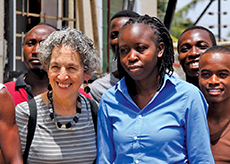
Tikkun olam-repairing the world.
For American Jewish World Service President and CEO Ruth Messinger, this core Jewish value resides deep within her DNA-and tikkun olam is the force that created and has driven AJWS for the past 30 years.
AJWS, a grantee of JUF, focuses on aiding vulnerable populations suffering from pressing human rights violations, ranging from the genocide in Darfur to the fight against anti-homosexuality laws in Uganda.
Messinger’s efforts have helped grow AJWS into a global leader and expand the definition of what it means to act on Jewish values. She came to AJWS in 1998 after a 20-year career as an elected official in New York City. She currently serves on the State Department’s Religion and Foreign Policy Working Group and co-chairs the Sub-Working Group on Social Justice; she previously served on the Obama administration’s Task Force on Global Poverty and Development.
“At AJWS, I spend my days with like-minded Jews and people of almost every background to fight for human rights for people in some of the poorest countries in the world. I do this work proudly as a Jew, for Jewish reasons, with a Jewish vision for repairin g the world. I am lucky to have been born a Jewish woman at this time in history and to live in this country. I am aware that this good fortune comes with the obligation to help those less fortunate.” Messinger said.
“I’m trained as a social worker. I worked briefly in casework and social work research [on] communities organizing for social change,” she said. “I went into politics because after 15 years of doing community work, education, and organizing, I decided it would be interesting. I loved it.”
Then she lost the New York City mayoral election. “The question was what would I do?” Working at AJWS was a “new opportunity to come at the world in a different way.”
She will transition from her current position as CEO to a new role as AJWS’s Global Ambassador on July 1, 2016. “I will expand work we’ve been doing with rabbis, reaching a lot of Jews, and developing further the work we’ve been doing in the last few years about being visible and effective in the global interfaith community.”
Regarding the immediate change she would like to see happen in the world, she said, “So many of the problems of the world are because one group puts another group down. If we could get beyond that and see each other for who we are as human beings, there would be a lot less conflict in the world.”
Robert Bank, AJWS executive vice president, will succeed Messinger as president.
AJWS is hosting a number of 30 th anniversary events in Chicago during the coming months. For information, call (847) 644-0954 or visit https://ajws.org/get-involved/ajws-in-your-community/chicago/ .
Other stories
-
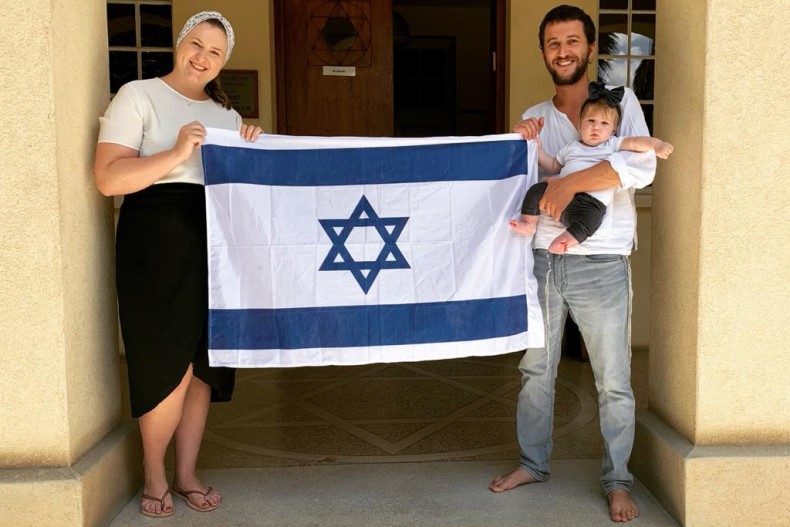
Chicago to Israel to Kenya
A family’s story of living Jewishly on three continents Michelle Cohen World May 28, 2021 Avital, Tzofia, and Netanel Kaszovitz outside their home in Nairobi on Yom HaAtzmaut. When Avital Kaszovitz prepared to be a Modern Orthodox shlicha (emissary) to the Jewish community in Ke
Read more -
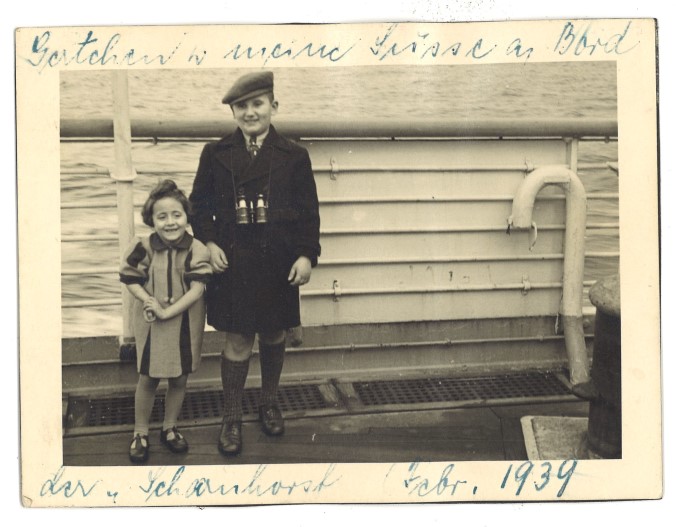
New exhibit spotlights the experience of ‘Shanghai Jews’
Explore a new Illinois Holocaust Museum and Education Center exhibit
Read more -
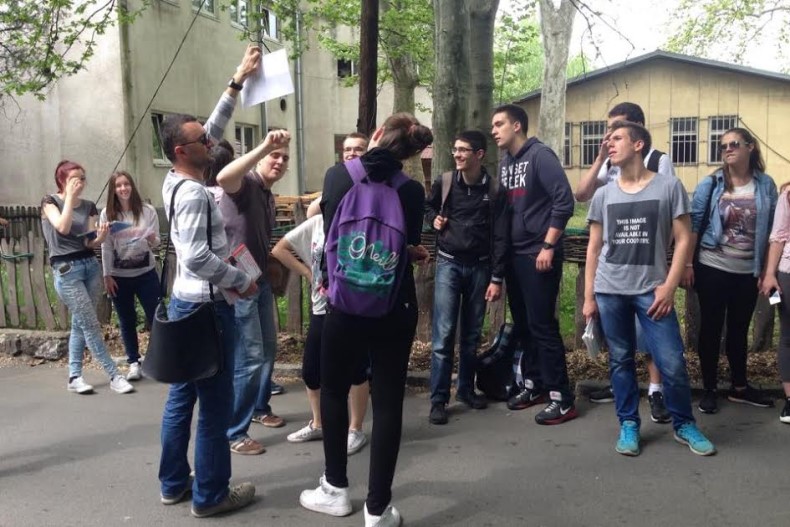
Europe’s brave new teachers of the Holocaust
Teaching the Holocaust in the modern era has its difficulties and rewards.
Read more
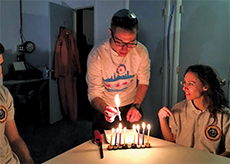
Yes, he has seen the recent film The Martian . But unlike the other millions who have seen that movie, Barak Stoltz was much closer to Mars than most.
Stoltz spent Chanukah in the Utah desert, in a few cramped capsules that make up the Mars Desert Research Station (MDRS). He lit his menorah, sang some songs, and even tried his hand at making latkes-all while practicing for a manned mission to Mars.
MDRS is run by the Mars Society, a Colorado-based non-profit that works toward a human presence on that planet. The idea of the MDRS is to recreate, as much as possible, the living and working conditions that astronauts might face once they start to live in Mars. Through these practice runs, the Society hopes to refine the equipment, experiments, and practices necessary for a successful Mars mission.
Even more impressive, Stotlz is one of the youngest students ever to participate in the MDRS in its 12 years. While his fellow “astronauts” were professionals, professors, and grad students, Stoltz himself is still a college junior. He is studying mechanical engineering and physics at the University of Illinois at Chicago. His title in the MDRS was Crew Astroengineer.
The five MDRS participants spent two weeks in December in the living pods, the lab, the greenhouse, and the observatory, wearing space suits when they venture outside. Stoltz’s assignment was in the observatory, which was donated by Elon Musk, where he was tasked with “getting the telescope up and running, testing its remote control, and making sure that the telescope is fully functional upon future crew arrival while “exploring the beauty of space in the process.”
MDRS participants hail from around the United States, Europe, Latin America, and Asia. In addition to scientists, the MDRS has also housed everyone from experts in extreme wilderness survival to psychologists testing the mental effects of Martian living.
“As both a Jew and an Israeli I plan on sharing some of my culture and beliefs with the rest of the crew, giving them a glimpse into our culture,” Stoltz says. “For me, one of the incredible things about my MDRS crew is the sheer diversity. From Australia to Italy and back, we bring a variety of cultures and experiences into one place and get the opportunity to work with each other; and being the only Israeli on the team I will attempt to answer any question they have about our people to the best of my abilities.”
Barak was born in Israel, like his mother, and he spent his early childhood there. In 2007, the Stoltzes moved to Chicago, and Barak attended Solomon Schechter Day School in Northbrook and Glenbrook North High School. In college, he says, “I am currently working doing research in a nanotechnology laboratory… on various nano-scale fibers which have some incredible conceptual applications.”
Ultimately, he’d like to actually go to Mars. “A successful manned mission to Mars would be one of the biggest accomplishments in human history, and being a part of it would be an absolute pleasure. It is time we push for a goal that is greater than ourselves and explore a little deeper into our universal neighborhood- what better place than our red neighbor?”
His dad, Michael, is on the team, too; “I’m actually affiliated with the group, serving as its volunteer media coordinator,” Michael said. He met Barak’s mother in Israel; they lived there for 14 years, during which time he worked in public relations for Israeli Prime Minister Benjamin Netanyahu, as he transitioned from the Knesset to the Prime Minister’s office. The Stoltzes still visit Israel
every summer.
As Barak elaborated, “For the longest time I had heard my father talk about MDRS due to his position as the Director of Media and Public Relations for the Mars Society. In my sophomore year, my father mentioned to me that one of the upcoming crews was short one member, so I applied. About a month later, I was officially a part of crew 159.”
Overall, Stoltz was “not nervous at all.” He said MDRS is such a unique, incredible learning opportunity from an academic prospective as well as hands-on experience. “As an enthusiastic believer in the future of space travel, I believe that our mind should wonder at the thought of space exploration, and what better way to do so than in the middle of the Utah desert with a sky full of stars.”
Other stories
-
Chicago to Israel to Kenya
A family’s story of living Jewishly on three continents Michelle Cohen World May 28, 2021 Avital, Tzofia, and Netanel Kaszovitz outside their home in Nairobi on Yom HaAtzmaut. When Avital Kaszovitz prepared to be a Modern Orthodox shlicha (emissary) to the Jewish community in Ke
Read more -
New exhibit spotlights the experience of ‘Shanghai Jews’
Explore a new Illinois Holocaust Museum and Education Center exhibit
Read more -
Europe’s brave new teachers of the Holocaust
Teaching the Holocaust in the modern era has its difficulties and rewards.
Read more
Making a difference for women and girls in Chicago and Israel
CHRISTINE SIEROCKI LUPELLA and SARA KALISH
The Jewish Women’s Foundation of Metropolitan Chicago (JWF) has awarded $397,500 to 21 exceptional projects that improve the lives of Jewish women and girls in Chicago and around the world.
The grants fund strategic projects that create social change at the individual, communal and institutional levels. The total includes the Foundation’s multi-year grant and grants from The Ellie Fund at the Jewish Women’s Foundation of Metropolitan Chicago (see sidebar).
One renewal grant supports The Jewish Community Against Sex Trafficking (JCAST) Chicago which works to eradicate sex trafficking in the Chicagoland area through public awareness, community engagement, and advocacy at local, state and national levels. Inspired by Jewish values, JCAST partners with interfaith and human rights groups, non-profit organizations, government officials, and law enforcement agencies. By serving as the Jewish voice against sex trafficking in Chicago, JCAST seeks to ensure that the Jewish community understands how sex trafficking affects our community, and recognize how we as Jews, have a moral imperative to advocate for policies, services for victims, and greater awareness. Using a gender lens, JCAST empowers Jewish women and girls to help end violence against women by taking a leadership role in advocating for systemic change in the way the law and our culture treats female victims of sex trafficking, and the way our culture views prostitution as acceptable and a ‘rite of passage’ for men.
“While there is much work to be done, JCAST seeks to effect a cultural change in perspective and behavior toward purchased sex as socially acceptable and a ‘victimless crime’,” JWF Grants Chair Shari Slavin said. “JWF is proud to be part of JCAST’s efforts to increase awareness and knowledge among the Jewish community about sex trafficking and the role Jews can play in preventing it.”
Established in 1997, JWF is the largest Jewish Women’s Foundation in the United States. With more than 315 trustees and a pledged endowment of over $8.8 million, JWF has awarded more than $3.2 million to 155 projects to improve opportunities in all aspects of Jewish women’s and girls’ lives.
“JWF trustees are engaged in dynamic, collaborative philanthropy through our hands-on grant making process,” said JWF Chair Gerri Kahnweiler. “Our trustees invest countless hours on every proposal JWF receives by researching, doing site visits and evaluating a potential grant’s impact on positive social change for Jewish women and girls in our community and across the globe.”
JWF awarded new grants to: Mavoi Satum: Supreme Court Appeals Department: Advancing Change in the Realm of Personal Status in the State of Israel ; American Jewish Joint Distribution Committee: Kanfei Yonah Girls School and Educational Project ; Yeshivat Maharat; and Bishvilaych Women’s Health Organization: Your Health is in Your Hands: Breast Health Awareness .
“Several of these new grantees focus on providing educational opportunities and legal advocacy for Jewish women experiencing discrimination and poverty,” said JWF Grants Chair Shari Slavin.
JWF’s renewal grants include: ATZUM: Task Force on Human Trafficking ; National Council of Jewish Women Chicago North Shore Section: Jewish Community Against Sex Trafficking Coalition Chicago ; Roger Baldwin Foundation of ACLU, Inc.: Reproductive Rights Project ; Adva Center: Community Empowerment to Improve the Lives of Women and Girls ; Eden Center: Crisis and Health Intervention Training for Israeli Mikvah Attendants ; Shalom Bait, Asociacion Civil de Prevencion de la Violencia Familiar: Pursuing Justice, the Law as a Tool of Change ; and SHALVA: Legal Liaison Program .
“These grantees concentrate on creating partnerships and programs locally and internationally to address issues including domestic violence, sexual exploitation, and sexual assault prevention. We are so pleased to support our grantee partners impacting social change in Tunisia, Israel, Argentina, New York, and the Chicagoland community through our grant making,” Slavin said.
Additional grants through the Ellie Fund at the Jewish Women’s Foundation of Metropolitan Chicago include: Chicago Alliance Against Sexual Exploitation (CAASE): Empowering Young Men to End Sexual Exploitation Program ; Chicago Metropolitan Battered Women’s Network: Medical Response Collaborative ; Jewish Federation of Metropolitan Chicago: Ma’yan Research Training Internship; Leo Baeck Israel Education Center: University Leadership Training Program ; Olim Beyahad: Employment, Empowerment, and Leadership for Excelling Ethiopian Israeli Women ; Paamonim: Economic Empowerment for Single Mothers ; University of Chicago (Ci3 ): Evaluating an Interactive Sexual Assault Bystander Intervention ; The Voices and Faces Project: The Stories We Tell ; and Women Moving Millions: Leadership Curriculum .
Following are the 2015 JWF grants:
Economic Security/Legal Reform for Women & Girls
ATZUM: Task Force on Human Trafficking Working on the grassroots level with other NGOs, this project employs a multi-pronged approach which includes lobbying for reform in the areas of prevention, border closure, services for victims, and prosecution of traffickers, pimps, and johns. TFHT is at the forefront of efforts to ensure that the currently seated Knesset legislate a Nordic Model law, designed to criminalize the purchase of sexual services and protect the prostituted person. Renewal Grant Amount: $21,100
Center for Women‘s Justice (CWJ) : The Public Interest Litigation Project This project files precedent-setting lawsuits in civil courts across Israel to address discriminatory decisions and policies decided by Israel’s rabbinic courts. Ge t refusal (husbands who refuse to grant their wives a divorce) is among the top priorities of these lawsuits. Renewal Grant Amount: $20,000
Mavoi Satum : Supreme Court Appeals Department: Advancing Change in the Realm of Personal Status in the State of Israel Twenty percent of Israeli men going through a divorce abuse the law to try to blackmail their wives in exchange for a get . By creating a department that specializes in Supreme Court appeals, Mavoi Satum will establish new precedents that will create positive, long-lasting change and expose this injustice within the Chief Rabbinate. Grant Amount: $20,000
National Council of Jewish Women Chicago North Shore Section : Jewish Community Against Sex Trafficking Coalition Chicago (JCAST) Inspired by Jewish values, JCAST partners with interfaith and human rights groups, non-profit organizations, government officials, and law enforcement agencies to eradicate sex-trafficking in Chicago. JCAST seeks to ensure that the Jewish community understands how sex trafficking affects the community, and recognizes how Jews have a moral imperative to engage in advocacy, services for victims, and greater awareness. Renewal Grant Amount: $25,000
Roger Baldwin Foundation of ACLU, Inc. : Reproductive Rights Project Using the full force of the ACLU’s integrated advocacy efforts, this project seeks to ensure that women in Illinois can access the reproductive health care and information they need regardless of the religious beliefs of their employers and health care providers. Renewal Grant Amount: $23,180
Education/Leadership Development for Women & Girls
Adva Center : Community Empowerment to Improve the Lives of Women and Girls This grassroots community organizing project is designed to give Israeli women the tools they need to become politically active in both formal and informal settings throughout their community. The program aims to increase women’s political and economic power by providing them with knowledge about their economy and society and about the inner workings of their local and national governments, empowering women in communities throughout Israel to effect change in their local municipalities. Renewal Grant Amount: $20,000
American Jewish Joint Distribution Committee : Kanfei Yonah Girls School and Educational Project Within the Jewish community of Djerba, Tunisia, most girls grow up to live a domestic life without considering possibilities for employment outside the home. Since 2011, Kanfei Yonah has been working within the scope of this highly traditional community and subtly broadening the mindset of its members by offering women basic education in subjects such as English and computer science, which are essential for developing potential careers beyond motherhood. The school itself hires teachers from within the community, offering a unique opportunity for some women to work outside the home while remaining within the framework of their ancestral community. In doing so, these teachers provide a model of working mothers, both to the community at large and to the young girls they teach. Grant Amount: $14,720
Yeshivat Maharat: Yeshivat Maharat is the first yeshiva in the United States to ordain women as Orthodox clergy. Founded in 2009 in New York, Yeshivat Maharat provides a credentialed pathway for women to serve in rabbinic positions. Grant Amount: $16,000
Health & Well-Being for Women & Girls
Bishvilaych Women‘s Health Organization : Your Health is in Your Hands: Breast Health Awareness Due to cultural insulation and modesty laws, Orthodox women in Israel tend to be uninformed of the importance of self-breast exams, clinical breast exams, mammography, and the possibility of genetic testing to determine their genetic risk for breast cancer. Women will receive informative, practical workshops on breast cancer, genetic testing, and breast self-exam training. Participants will be provided with a private clinical breast exam and consultation with a skilled physician immediately following each workshop. Grant Amount: $14,000
Eden Center : Crisis and Health Intervention Training for Israeli Mikvah Attendants This project seeks to transform the objective of mikvah (ritual bath) attendants from performance of the mikvah ritual to becoming an advocate for women’s health and well-being. Through a series of educational programs, Israeli mikvah attendants will address pressing issues such as domestic violence, post-partum depression, and breast health. This project seeks to shift individual and community behavior by educating and empowering mikvah attendants to recognize, inform, and advocate for the myriad of women with whom they interface on a regular basis. Renewa l Grant Amount: $20,000
Shalom Bait, Asociacion Civil de Prevencion de la Violencia Familiar : Pursuing Justice, the Law as a Tool of Change Located in Buenos Aires, Shalom Bait is the only Jewish organization working directly to meet the needs of Jewish victims of domestic violence in Argentina, providing them with legal counseling and representation as they engage in legal battles against their abusers. Shalom Bait also works to increase public awareness, train professionals in the community on how to intervene in cases involving domestic violence, and engage in advocacy efforts to enforce and strengthen the domestic violence laws in Argentina. Renewal Grant Amount: $21,000
SHALVA : Legal Liaison Program SHALVA, the oldest independent Jewish domestic violence agency in the United States, works to address domestic abuse in Chicago Jewish homes and families. To better assist clients, SHALVA’s Legal Liaison Program will hire attorneys to provide legal information and support to women who are engaged in lengthy legal battles with the men who abused them. The program will also educate divorce attorneys and judges on the differences between and the complexities of a divorce where there has been abuse versus a contentious divorce-and to create awareness of how abusers use the legal system to further the abuse, reassert control and wear down their partners. The Legal Liaison helps SHALVA’s clients better understand the complicated legal process and facilitates communication with their attorneys. Additionally, the Legal Liaison works to identify and recruit attorneys who will provide pro bono legal representation for SHALVA’s clients. Renewal Grant Amount: Second installment of $25,000 per year for three years ($75,000 total)
The Ellie Fund of the Jewish Women’s Foundation of Metropolitan Chicago
Chicago Alliance Against Sexual Exploitation (CAASE) : Empowering Young Men to End Sexual Exploitation Program This school-based prevention program engages young men in high school as allies in efforts to address and prevent sexual violence and exploitation. Through a series of workshops, young men learn about the violent and exploitative dynamic that accompanies the sex trade to deter their involvement as potential consumers and facilitate understanding of how sexual violence and exploitation affects them and their communities. This understanding effects change in young men’s relationships with women and empowers them to become part of the effort to end sexual violence and exploitation. Companion sessions are also held with high school aged young women. Renewal Grant Amount: $12,500
Chicago Metropolitan Battered Women‘s Network (CMBWN) : Medical Response Collaborative (MRC) CMBWN created the MRC to shift the medical system’s response to domestic violence. Bringing together member service providers in partnership with hospitals, Medical Response teams advocate for doctors and nurses to treat domestic violence as a public health issue where they play a proactive role in reducing future violence and help those in crisis by properly screening and referring victims. Grant Amount: $25,000
Jewish Federation of Metropolitan Chicago : Ma’yan Research Training Internship This internship program for high school students provides a girls-only space where participants engage in serious inquiry about the topics that matter most to them. Over the course of a school year, girls develop critical thinking and research skills and engage in feminist discussions during bi-monthly meetings. RTI interns produce new, well-researched evidence of the needs and experiences of Jewish teen girls, which can be used by community professionals to improve existing programs. This project is a partnership between the New York-based Ma’yan, the Jewish Federation of Metropolitan Chicago, and DePaul University’s Beck Research Initiative for Women, Gender and Community. Renewal Grant Amount $20,000
Leo Baeck Israel Education Center : University Leadership Training Program (ULTP) In response to discrimination against Ethiopian women in Israel today, Leo Baeck established ULTP to provide female Ethiopian university students with leadership skills and opportunities to succeed in the face of inequality and take an active role in becoming the next generation of Ethiopian-Israeli leaders. Participants gain an expanded sense of social and community responsibility, reinforced self-esteem, leadership and entrepreneurial skills, upward mobility in the workforce and the financial means to complete their university studies. Grant Amount: $10,000
Olim Beyahad : Employment, Empowerment, and Leadership for Excelling Ethiopian Israeli Women This program helps excelling Ethiopian Jewish university graduates and students in their final year of studies find suitable employment opportunities and properly integrate into their new jobs and Israel’s workforce, striving to give the underprivileged Ethiopian Israeli population a second chance at successful and permanent absorption into society. Through this project, excelling university graduates will serve as role models in their communities and inspire hope, belief, and motivation – especially amongst youth. Grant Amount: $15,000
Paamonim : Economic Empowerment for Single Mothers Paamonim aims to increase the financial literacy of single mothers in Israel by teaching them how to change their consumer habits, handle their debts, balance their budgets, improve their value in the job market, and manage their household finances. Women participate in group economic recovery workshops and receive individual economic recovery coaching. Through this project, they acquire the tools and knowledge to exit the cycle of poverty and change their lives and those of their children. Grant Amount $15,000
University of Chicago (Ci3) : Evaluating an Interactive Sexual Assault Bystander Intervention The University of Chicago’s Center for Interdisciplinary, Inquiry, and Innovation in Sexual and Reproductive Health (Ci3) is a campus-wide initiative committed to empowering young people, conducting innovative research, and uncovering opportunities for policy and systems change to advance the sexual and reproductive health of youth. The Ci3 GCC Design Lab developed Bystander , a web-based, interactive narrative that explores the responsibility of witnesses to sexual harassment and violence. The project aims to increase sexual violence awareness, diminish myths about sexual violence and sexual assault victims, and ultimately invoke intervening behaviors for sexual assault situations. By partnering with Response in implementing the intervention, they will “train the trainers” to use a game-based approach to prevention education and evaluate its feasibility and efficacy in a non-school setting. Grant Amount: $25,000
The Voices and Faces Project : The Stories We Tell This award-winning, Chicago-based storytelling initiative explores how public testimony can be used as a tool for social change and brings the testimonies of Jewish survivors of sexual violence to the public sphere, providing survivors with an opportunity to give voice to their experiences and reflect how those experiences place an explicit demand on the standards of justice in our culture. Renewal Grant Amount: $25,000
Women Moving Millions (WMM) : Leadership Curriculum WMM is a community of individuals who have made gifts and pledges of one million dollars or more to organizations and initiatives promoting the advancement and empowerment of women and girls. This community believes that women and girls are the single best investment towards creating healthy societies, economic growth, and global stabilization. WMM is committed to funding systemic change and building a peaceful and equitable world. The WMM Leadership Curriculum program will support women’s social impact leadership development across various issue areas by using varied platforms. The goal is to deliver experiences that will enable the WMM community to reach their full potential as leaders and funders. Grant Amount: $10,000
About The Ellie Fund at the Jewish Women’s Foundation of Metropolitan Chicago
Ellen H. Block, a founding trustee of The Jewish Women’s Foundation of Metropolitan Chicago and its first “Women Moving Millions” member, established the Ellie Fund at the Jewish Women’s Foundation of Metropolitan Chicago in 2013 with the first $100,000 of her multi-year Women Moving Millions pledge to JWF. The Ellie Fund at the Jewish Women’s Foundation of Metropolitan Chicago supports causes, issues, initiatives, and programs that promote safety, security, equal rights, equal voice and equal opportunity for girls and women. This year the Ellie Fund awarded $157,500 in grants.
Women Moving Millions is a diverse community of trailblazing philanthropists committed to mobilizing resources to support the advancement of women and girls around the globe. To date, 240 donors have pledged over $500 million to organizations and initiatives of their choosing.
Christine Sierocki Lupella is the JUF Senior Marketing Communications Manager and A JUF News staff writer. Sara Kalish is the Senior Program Officer of the Jewish Women’s Foundation of Metropolitan Chicago.
Other stories
-
Meet Andrew S. Hochberg, 2021 Julius Rosenwald Memorial Award recipient
Celebrate Andy Hochberg at the virtual Annual Meeting on Sept. 14
Read more -
Two local teens win national recognition
Recipients of the annual Diller Teen Tikkun Olam Awards
Read more -
Celebrating six young award winners cultivating the community
Introducing young adult award winners
Read more