
University of Chicago students in the Negev on a Birthright Israel trip.
During the last school year, more than 1,200 Chicago area students visited Israel on a free 10-day Birthright Israel trip. Birthright Israel trips offer students a unique opportunity to connect not only with the State of Israel, but also with their peers – both American and Israeli – and their campus Hillel.
On the University of Chicago campus, more than 20 percent of students have participated in a campus-sponsored Birthright trip with the UChicago’s Newberger Hillel.
This is my first time expressing my Judaism,” said UChicago student Name , who became a bar mitzvah on the trip. “I always considered myself half Jewish and being here in the Jewish homeland it has changed my perception.”
In August and September, Newberger Hillel and Northwestern University’s Fiedler Hillel each sent full busses to Israel where participants experienced all aspects and regions of the country from a Bedouin community to Mt. Herzl.
“The places we visited, the conversations we had, and the experiences were shared as a group are ingrained in my mind, and I have not been able to stop thinking about them since I got home,” said Northwestern student Samantha Max.
Registration is now open for winter Birthright Israel trips. Students can register for Northwestern trips and UChicago trips with Hillel; all other young adults in the Chicago area ages 18-26 can sign up for Birthright Israel through Shorashim for a JUF Chicago community trip.
Photo: UChicago students in the Negev on a Birthright Israel trip.
Other stories
-
Local campus administrators convene on hate speech, bias
JUF and ADL brought together 17 student safety, diversity and inclusion and student affairs administrators and Hillel representatives from various Illinois campuses to discusses issues of hate speech and bias.
Read more -
Engaging students about Israel on campus
Too often we hear about difficulties facing Jewish college students on Illinois campus, but to focus solely on the politics gives only one piece of the complex narrative that is Jewish life on campus.
Read more -
Hillel International launches fellowship initiative to train young Jewish professionals
The Springboard Fellowship will train cohorts of young Jewish professionals in highly-valued skillsets and place them at local Hillel campuses for two years.
Read more
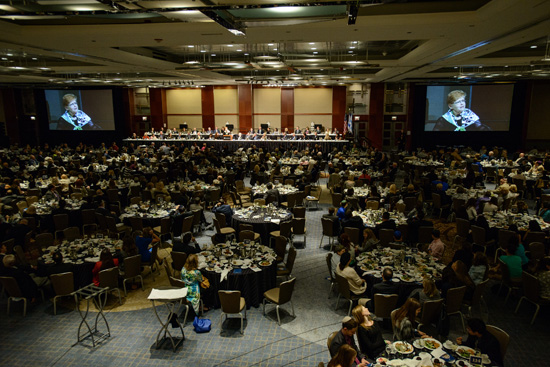
Photos by Robert F. Kusel.
A year of turmoil, celebration and deeply rooted commitment to Israel and Jewish life was marked Sept. 17 as the Jewish Federation of Metropolitan Chicago held its 115th Annual Meeting at the Hyatt Regency Chicago.
Historian, professor, and author Dr. Deborah E. Lipstadt delivered the keynote address. The Federation also recognized Frances G. Horwich with its highest honor, the Julius Rosenwald Memorial Award.
The luncheon session of the two-part meeting featured the annual State of the Federation address by President Steven B. Nasatir. Julie Dann Schneider chaired the event. ( Read about the morning business session .)
In presenting Sara Crown Star the Shofar Award for her work as chairman of the 2015 JUF Annual Campaign, JUF Chairman Bill Silverstein said, “She turned fundraising into friend-raising.” Star praised those she worked with on the Campaign, then urged attendees to “think about participating more,” promising they would enjoy it as she had. Harry Seigle was recognized as the incoming Campaign chair for 2016. Rabbi Elliot Gertel, emeritus of Congregation Rodfei Zedek in Chicago, gave the invocation.
More than 1,200 people attended the luncheon, including city, state and U.S. officials; members of local law enforcement; representatives from United Way and other human service agencies, and consular officials from Bosnia/Herzegovina, Bulgaria, Burundi, Canada, the Czech Republic, El Salvador, France, India, Israel, Japan, Jordan, Lithuania, Mexico, Morocco, Nepal, Poland, Romania and Taiwan.
Students from area universities, the Bernard Zell Anshe Emet Day School, Chicago Jewish Day School, Chicagoland Jewish High School, Ida Crown Jewish Academy and Solomon Schechter Day School also attended.
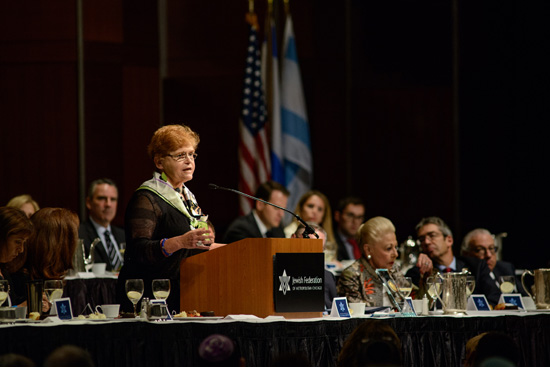
Accentuating the positive
Lipstadt, Dorot Professor of Modern Jewish and Holocaust Studies at Emory University, began her remarks by saying that she is “privileged to be a giver” as a Federation Lion of Judah. ( Watch Lipstadt’s speech. )
In 1993, Lipstand wrote Denying the Holocaust: The Growing Assault on Truth and Memory , in which she named a number of Holocaust deniers. In 1996, David Irving sued Lipstadt for libel in Britain; the legal battle lasted five years. Chicago’s Federation provided $50,000 toward her defense. The judge found Irving to be a Holocaust denier, a falsifier of history, a racist, and an anti-Semite.
Lipstadt’s 2005 book, History on Trial: My Day in Court with a Holocaust Denier, was adapted by British playwright David Hare and is to be produced as a feature film.
An upcoming book will address worldwide anti-Semitism in the 21st century and its impact on the Jewish psyche.
In her remarks, Lipstadt noted that Yom Kippur is her favorite holiday, citing its focus on “potential, remembering, and balance.”
“History is institutionalized memory,” she said. “The past is the anchor for the present. It is the stuff from which the future is shaped. It is a guide and a teacher. Jewish life is infused with imperative to remember.”
Regarding the upsurge of anti-Semitism worldwide and Iran’s threats to Israel, she noted three differences between now and the lead-up to the Holocaust. Then, Lipstadt said, the hate was state-sponsored, while today it is condemned by every European government. Also, “today we have the strong State of Israel that will not let happen to it, and to the Jewish people, what happened before.”
Lipstadt closed with a reflection on balance, one of her central elements of Yom Kippur. The objective is “to push the balance to the good,” she said. Despite the nature of her work, she chooses to focus on “Joy, not ‘oy.’ We have to know what was done to Jews, but also what Jews do, whether it’s helping others through JUF, learning, celebrating, or gathering together.”
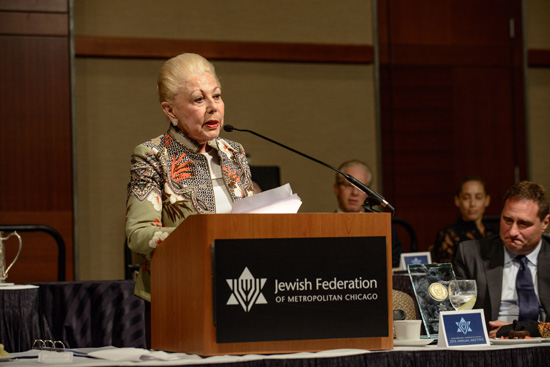
Rosenwald honoree
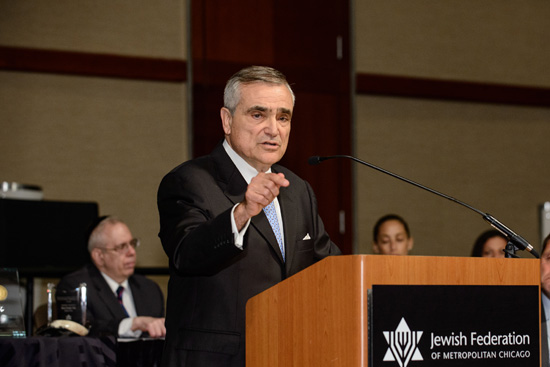
In recognition of her lifetime of service to the Jewish community in Chicago and around the world, the 52nd annual Julius Rosenwald Memorial Award was presented to Frances G. Horwich. ( Watch Horwich’s speech. )
Honoring the memory of Chicagoan Julius Rosenwald, one of America’s great philanthropists, the award is presented to an individual who has advanced the goals of the Federation and the welfare of the overall Jewish community.
Horwich and her late husband, Franklin, have been stalwarts in Chicago’s philanthropic world. They carry on a generations-long family ethos of supporting and strengthening the Jewish community and mentoring the next generations of leaders.
In introducing Horwich, Silverstein said, “She has chaired the Majors Gifts campaign, organized Women’s Division events, hosted get-togethers, joined many missions to Israel, and was a founding trustee of the Jewish Women’s Foundation. … She builds and betters our community by mentoring Jewish life and leadership. She models Jewish values, community and caring for all.”
In accepting the award, Horwich acknowledged the debt she owed her “coaches,” as she called her family and that of her husband- including his grandfather, Bernard Horwich. She praised her daughters, Marjorie Kulp and Carol Luber, for becoming Jewish communal leaders.
“I have concluded that any leadership on my part always has been very simple: When asked to help, I said ‘yes.’ We all must help, or there will be no us ,” she said.
Call for unity
In his State of the Federation address, Nasatir reflected on the vital work the Federation and its agencies have done this past year, a year of challenges in Israel and around the world. ( Watch Nasatir’s speech .)
“The world has turned upside down by war, terror, hatred and other challenges,” Nasatir said. “Through JUF, you entrusted us with your tzedakah , so that together we could turn the world right side up again for hundreds of thousands of Jews and others in Chicago, Israel, Ukraine and other countries.”
He praised Chicago’s “amazingly generous Jewish community,” detailing “over $82 million to JUF’s 2014 Annual Campaign, and almost $10 million to last summer’s Israel Emergency Campaign.
Due to these gifts, and other sources, he continued, “We allocated over $200 million during the fiscal year ended June 30. That’s a lot of help to non-Jews and Jews in need, creating Jewish experiences, strengthening community connections, and sustaining our abiding connections to the people of Israel.”
Referring to the state’s financial crisis in Illinois, Nasatir said that “cutting human services has been the unfair, unhelpful, default approach to our woeful state budget. … We advocate in Springfield on behalf of those our agencies serve, urging the governor and legislative leaders to find fiduciary and humane fixes for our state’s challenges.”
Bolstering Jewish knowledge also is a priority, Nasatir said.
“Israel travel, camp scholarships, Jewish education, Hebrew language instruction, and teaching about Israel are growth industries for us, because they grow the next-generation of engaged Jews. They care what happens in Chicago, in Israel and around the world.” He noted that some 2,500 youth had been to Israel for the first time through JUF since the last Annual Meeting.
“But,” he wondered, “what kind of world will they inherit and be called on to lead?” He listed attacks on Jews from Kansas City to Paris. In response, “we help our Jewish family in every way we can. We show solidarity. We provide financial aid for the families of the victims. We fund security for synagogues and other institutions. We help Jews make aliyah to Israel,” including 7,000 from France, Nasatir said.
“Israel’s enemies here in America are part of a global war to delegitimize the one and only Jewish State,” Nasatir warned. “It is a war that we will not let them win!” JUF is active in combatting the Boycott, Divestment, and Sanctions movement, and advocated to make Illinois the first state to enact a law against those efforts.
Turning to global affairs, Nasatir said, “The world and our country must not-and this Jewish community will not-turn a deaf ear to Iran’s genocidal ranting toward Israel and their ever-present ‘Death to America’ chant.” In August, he stated, Federation launched a renewed Iran Action Plan, building upon one unanimously adopted by JUF’s Jewish Community Relations Council nearly 10 years ago.
In addition to fighting hatred against Jews, he said, “We cannot turn a blind eye to the terrible plight of Syrian and other Middle Eastern Muslims and Christians, who now constitute the largest refugees crisis since WWII. … Through the Jewish Coalition for Disaster Relief, this Federation supports those who have already been assisting Syrian refugees for two years. And we are proud of Israel’s humanitarian efforts helping injured Syrians.”
Nasatir urged unity at a time of disagreements.
“It is up to each one of us to respect one another, even as we disagree. That is a lesson of our history and of this High Holiday season. Our community faces real struggles. Our tradition teaches we will be judged by our response to those struggles. Each one of us must commit ourselves to the core principles that we all hold dear, especially our love of America, of Israel and of the entire Jewish people.”
Other stories
-
Meet Andrew S. Hochberg, 2021 Julius Rosenwald Memorial Award recipient
Celebrate Andy Hochberg at the virtual Annual Meeting on Sept. 14
Read more -
Two local teens win national recognition
Recipients of the annual Diller Teen Tikkun Olam Awards
Read more -

Celebrating six young award winners cultivating the community
Introducing young adult award winners
Read more
Jewish Federation honors up-and-coming leaders, spotlights services for aging Holocaust survivors
CHRISTINE SIEROCKI LUPELLA
The Jewish Federation of Metropolitan Chicago’s 115th Annual Meeting, held Sept. 17 at the Hyatt Regency Chicago, featured a keynote address by internationally recognized Holocaust scholar Prof. Deborah Lipstadt, and honored Frances G. Horwich for her lifetime of service to the Jewish United Fund/Jewish Federation of Metropolitan Chicago and the global Jewish community. ( Read about the afternoon luncheon program. )
The morning business meeting opened with the unanimous election of the 2015-16 JUF/Federation Board, while outgoing directors were honored for their service.
Davis, Gidwitz and Glasser Young Leadership Award
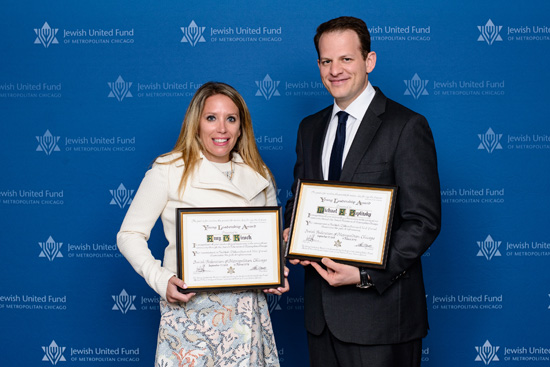
Davis, Gidwitz and Glasser Young Leadership Award winners (from left) Amy Kirsch and Michael Teplitsky. (Photo by Robert F. Kusel)
Following the election, several prestigious awards were presented to rising community leaders.
Bill Silverstein, chairman of the Federation Board, presented the 51st annual Davis, Gidwitz and Glasser Young Leadership award to Amy Kirsch and Michael Teplitsky. The award honors young volunteers who have demonstrated exemplary dedication and made significant contributions to Chicago’s Jewish community.
Amy Kirsch: Building the community
Kirsch, 35, of Chicago, the 2015 YLD campaign chair, joined the JUF Young Leadership Division Board in 2011. As campaign chair, she led one of the most successful Big Event fundraisers, raising $250,000 with over 2,400 in attendance. Kirsch previously served as YLD’s 2013-2014 executive vice president, chaired the 2013 YLD Israel Mission, and participated in the YLD Gesher leadership program. She has served on numerous JUF committees and commissions, and currently is a local co-chair of the National Young Leadership Cabinet. This past July, Kirsch was named to the 2015 YLD/Oy!Chicago annual “36 under 36” list in honor of her numerous commitments to the Jewish community.
In her remarks, Kirsch noted that Chicago’s young Jewish community is growing in strength and commitment. Young leaders provide critical support not only to Jews in Chicago, but those around the world as well.
“I have witnessed firsthand just how much our dollars impact our community,” she said.
Professionally, Kirsch is the head of investor relations for PeerRealty.
Michael Teplitsky: A parcel brings hope
Teplitsky, 35, of Highland Park, currently is campaign chair for the JUF Trades, Industries and Professions Financial Services Division. He has been a member of the YLD Board, and stepped in to serve as the 2012 campaign chair when the position was vacated mid-term. He has participated on numerous JUF committees and commissions over the years, bringing a unique perspective as an emigrant from the Former Soviet Union.
During his remarks, Teplitsky described his family’s experience as Russian Jews. His parents and grandparents were Refuseniks-Russians who were stripped of work and educational opportunities because they were Jewish, yet the government refused to give them permission to emigrate.
“In 1980, when I was born, Soviet anti-Semitism was at its peak,” Teplitsky said. In 1982, his family received one of 84,000 parcels containing clothing and Jewish religious articles from the American Jewish Joint Distribution Committee – a JUF overseas partner. The gift was life-changing, he said.
“That parcel gave us something that we almost lost-hope.” It was the first of numerous times his life was touched by JUF and the Chicago Jewish community.
In addition to his work with JUF, Teplitsky is the Chicago co-chair of the National Young Leadership Cabinet. His civic leadership includes Chicago Children’s Choir, Kellogg Alumni in Private Equity, and Young Professionals in Energy.
Professionally, Teplitsky is vice president of Wynnchurch Capital.
Samuel A. Goldsmith Award
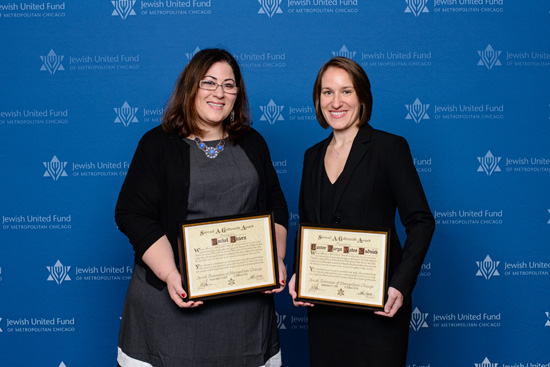
Samuel A. Goldsmith Award winners (from left) Rachel Shtern and Cantor Faryn Kates Rudnick. (Photo by Robert F. Kusel)
Cantor Faryn Kates Rudnick and Rachel Shtern received the 28th annual Samuel A. Goldsmith Award, given to exceptional young professionals who have shown outstanding performance at a Jewish agency in the Chicago area.
Faryn Kates Rudnick: Advocating inclusion for those with disabilities
Rudnick, 33, of Vernon Hills, has been cantor at Temple Beth-El, Northbrook, since 2013. In addition to her pastoral work, she initiated a congregational Disability Awareness Program. Under Rudnick’s leadership, Temple Beth-El has been recognized by the Union of Reform Judaism as an exemplar congregation for its work in inclusion.
Rudnick is the incoming president of the Reform Cantors of Chicago, and a member of the American Conference of Cantors social action committee. She has chaired of the Hebrew Union College Day of Learning, and co-led a workshop on inclusion at the annual ACC convention this year. She represents the ACC on the Jewish Disabilities Network, is a member of the Synagogue Federation Commission’s Inclusion Program Planning Committee, and has been a presenter for the Union for Reform Judaism’s inclusion initiative.
Accepting her award, Rudnick said that in the past, people who were disabled often had limited responsibilities in the community.
“We have come to understand that having a disability is anything but limiting,” she said. “Becoming an inclusive community is about changing culture, changing language … so our houses are truly houses for all people.”
Rachel Shtern: Education as inspiration
Shtern, 34, of Chicago, is assistant director of Community Building and Jewish Continuity at JUF. In her position, she focuses on Jewish education in general, and day-school education in particular, and maintains positive relationships with professional and volunteer leadership at the 16 JUF-affiliated day schools.
In addition, Shtern’s leadership provided the impetus for making operational improvements to the Community Foundation for Jewish Education’s Ta’am Yisrael eighth-grade Israel program that has contributed to the program’s success. More recently, she has expanded her focus on day schools and involvement in JUF’s Orthodox community outreach.
In her remarks, Shtern said she is awed by the respect and cooperation demonstrated between day school administrators and lay leadership, in particular their support of each other’s efforts for the good of the whole.
“I love being part of our continued growth of education in our community,” Shtern said.
JUF Holocaust Community Services: Providing survivors with caring, critical support
The business meeting culminated in a showcase of the work of Holocaust Community Services, an inter-agency program between the Federation, CJE SeniorLife and Jewish Child & Family Services, with HIAS Chicago.
Founded in 1999, HCS helps ensure that Holocaust survivors can continue to live independently and with dignity, providing them with essential help such as food, medicine, in-home assistance, emergency cash assistance, and support groups and social events to create a community of survivors.
“Today, Holocaust Community Services is serving nearly 900 survivors,” said Yonit Hoffman, HCS director. “We are working together to ensure that Holocaust survivors receive support as they face the demands of aging, which are made all the more acute due to their experiences during the Shoah.”
CJE SeniorLife and Jewish Child & Family Services provide survivors with critical support, and HCS maximizes available services through relationships with The ARK, EZRA, and Maot Chitim. Alpha Omega, the Jewish dental fraternity, provides pro-bono dental care to many local survivors, and the Michael Reese Health Trust recently awarded a grant to Federation to increase the dental safety net for survivors and older adults.
“JUF plays a significant role in ensuring that Holocaust Community Services has sufficient resources. Our goal is a $5 million fund to support Holocaust survivors’ current and future needs,” said Steve Miller, JUF/Federation board vice chairman and HCS Leadership Committee chair.
HCS also receives funding from the Conference on Jewish Material Claims against Germany, which manages and distributes reparations for victims of Nazi persecution.
In addition, Federation partners with Sheerit Hapleitah, a local umbrella organization for Chicago-area survivor groups, to host the annual Holocaust memorial service; participates in the State of Illinois annual Holocaust memorial commemoration; and provides substantial support to the Illinois Holocaust Museum and Education Center.
“When it comes to Holocaust survivors, we believe it is incumbent upon us to make sure that their last years are lived with as much comfort, dignity and peace of mind as possible,” Miller said.
Other stories
-
Meet Andrew S. Hochberg, 2021 Julius Rosenwald Memorial Award recipient
Celebrate Andy Hochberg at the virtual Annual Meeting on Sept. 14
Read more -
Two local teens win national recognition
Recipients of the annual Diller Teen Tikkun Olam Awards
Read more -
Celebrating six young award winners cultivating the community
Introducing young adult award winners
Read more
As millions of Jews gather to observe Yom Kippur next week, we’ll recite the solemn Unetaneh Tokef prayer with its harrowing list of death by various means.
For many of us, the phrase “Who by water …” will have tragic resonance as we recall the lifeless body of 3-year-old Aylan Kurdi, a Syrian refugee, who washed ashore after drowning during his family’s grueling, but hopeful, journey to a new life.
Kurdi — whose death garnered overwhelming media attention and set off a new round of international responses to the worst refugee crisis since World War II — was but one of millions who have been displaced in recent years by war, famine, and upheaval in many forms.
For the Jewish community, which has known a history of dislocation and persecution, this crisis has special resonance and has catalyzed aid responses for two major populations fleeing civil conflict in their homelands: Ukrainian Jews and Syrian refugees.
While the two situations are vastly different in many ways, the humanitarian response to the needs of these people facing homelessness, fear, and utter despair has once again demonstrated our collective Jewish capacity to save lives and uphold our tradition’s sacred value for each individual life.
The Jewish United Fund, our longtime partner, has been among the leading supporters and advocates for these efforts. This work has been ongoing for several years and are worth revisiting — and supporting anew with critical speed — in the face of swelling numbers of refugees and migrants pushing across Europe and ongoing violence and widespread economic devastation in Ukraine.
For refugees and migrants in Europe and other parts of the Middle East, the American Jewish Joint Distribution Committee (JDC)-led Jewish Coalition for Syrian Refugees in Jordan — initiated two years ago — has expanded its mandate and is raising funds to provide aid beyond Jordan. In a short time, the Coalition has raised more than $125,000 — beyond the $500,000 already raised and disbursed in critical medical, nutritional, and psychosocial care for refugees in Jordan-and is soliciting aid proposals from Jewish and non-sectarian organizations working in Europe.
To bolster those efforts, JDC experts in Hungary, where we have a significant ground presence, have been distributing basic supplies to refugees in Budapest train stations and assessing needs and best avenues for support at refugee camps/transit centers. Probable interventions include safe spaces for children and women and psychosocial support programs.
For Ukraine’s displaced Jews-who fled two-years of violent internecine conflict in the eastern part of their country — challenges are many: homelessness, unemployment, and lack of connections in new cities they call home. They also face suspicion and discrimination from potential employers and landlords.
So we have deployed a robust aid package through the network of JDC-supported Hesed social welfare centers in Ukraine. Our support for 2,800-plus displaced Jews includes: food, medicine, stipends for new accommodation, temporary housing, post-trauma care, and vitally important winter fuel, bedding, and clothing. We have also connected these Jews to their new Jewish communities, critical social services, education, holiday celebrations, summer camps, and other Jewish cultural activities.
At a meeting just two weeks ago in Kiev with displaced Jews receiving our help, one woman stood out. Ekaterina was her name and with tears on her face she told her story:
“When I came from Donetsk, I was in a terrible state. After shooting and missile attacks, I fled to Kiev and then I had to undergo very complicated surgery. I cried all the time when I recalled the last events in my native city. The Joint (JDC) /Hesed returned me to life. Now I can smile again. I am so grateful.”
While it is easy to despair in the face of such odds, of human suffering that reminds us of our tragic past as Jews, our ongoing work to address this overwhelming refugee crisis is a testament to the Jewish spirit and a hallmark of Jewish tenacity. As in the past, we are bucking the winds of history and working to make whole a world in chaos.
As we repair broken lives and hearts, we urge you to join JUF, and all of us, as we once again put into action the concept of arveut , mutual responsibility for our fellow Jews and all humankind.
Alan H. Gill is the CEO of the American Jewish Joint Distribution Committee (JDC) and Will Recant is JDC’s Assistant Executive Vice President overseeing the Jewish Coalition for Syrian Refugees.
The American Jewish Joint Distribution Committee is an overseas partner of the Jewish United Fund of Metropolitan Chicago.
Other stories
-
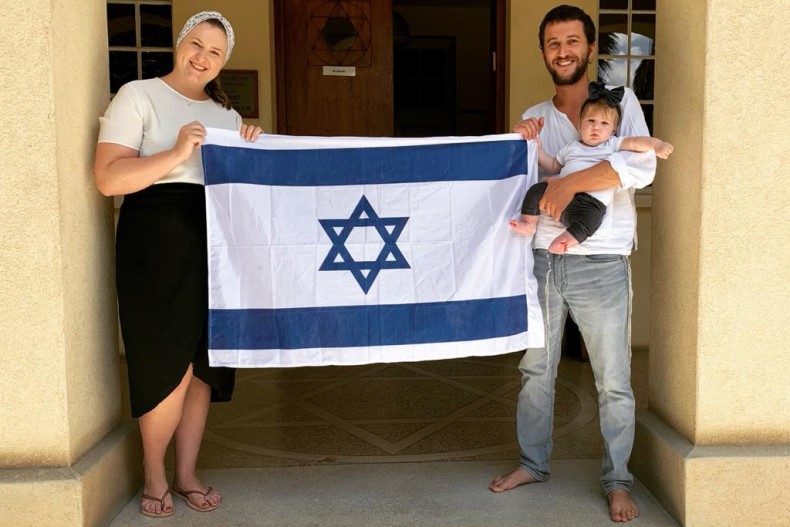
Chicago to Israel to Kenya
A family’s story of living Jewishly on three continents Michelle Cohen World May 28, 2021 Avital, Tzofia, and Netanel Kaszovitz outside their home in Nairobi on Yom HaAtzmaut. When Avital Kaszovitz prepared to be a Modern Orthodox shlicha (emissary) to the Jewish community in Ke
Read more -
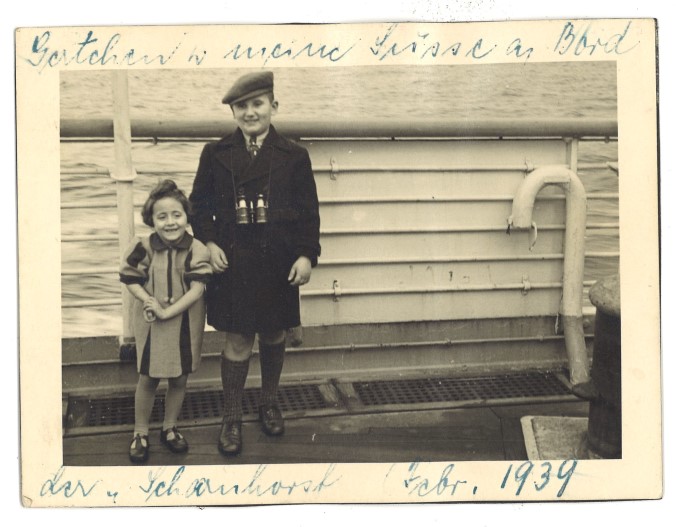
New exhibit spotlights the experience of ‘Shanghai Jews’
Explore a new Illinois Holocaust Museum and Education Center exhibit
Read more -
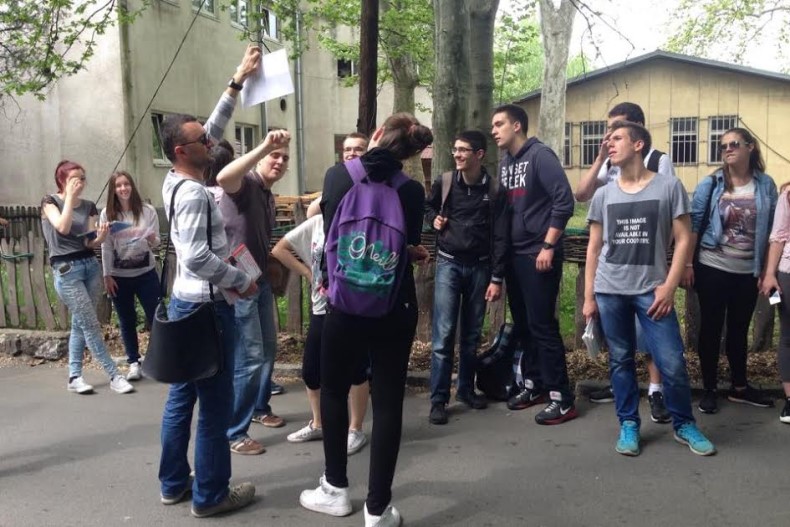
Europe’s brave new teachers of the Holocaust
Teaching the Holocaust in the modern era has its difficulties and rewards.
Read more
A collection of features published in JUF News Express featuring individual programs at JCFS, CJE SeniorLife and Sinai in order to describe the impact of the budget impasse, the gradual decline in state support for community human services, and proposed rules limiting eligibility of the people served by our community.
Sinai pregnancy prevention program closes (November 6, 2015)
In 1994, Sinai Community Institute, an affiliate of Sinai Health System, launched the Subsequent Pregnancy Prevention program, which seeks to delay a second pregnancy among adolescent mothers through reproductive health education, home visits and support groups.
“This is much bigger than a teen pregnancy program,” said Debra Wesley, president of Sinai Community Institute. “It is about equipping our young people with the skills they need to make better decisions about life. Our home visiting counselors stay connected to the young ladies through high school graduation and often through college. The small caseload allows the counselors to show a young person that someone really cares about her. Many of these young ladies go on to become peer educators themselves.”
The program data speaks to its success. In 2014, only one out of 256 girls had a repeat pregnancy. Ninety-five percent of the girls remained in school and 70 percent of the high school graduates were accepted into college.
Yet despite these impressive outcomes, cost savings to the state, and a 62 percent drop in the Illinois teen birth rate between 1991 and 2013, state funding was eliminated this year and the program was forced to close.
“This program not only helps the clients; it reduces future costs” Wesley said. “Politicians must realize that money saved this year will just trigger increased spending for babies born next year to adolescent mothers who were beginning to create a life for themselves and their first child.”
Adult day services (October 9, 2015)
“When my husband developed Alzheimer’s, I couldn’t bear the idea of placing him in a nursing home, but I was exhausted from the 24/7 care he required,” said the wife of a retired professor who receives services from CJE SeniorLife. “Between the program, which he loves participating in, and the door-to-door transportation, CJE’s Adult Day Services makes it possible for me to keep him safe at home.”
When CJE SeniorLife first designed the Adult Day Services Program, the focus was on older adults facing cognitive, physical and emotional challenges, which kept them isolated. It quickly became apparent, however, that family caregivers also were vulnerable and in need of support.
“Our monthly support group is a chance for caregivers to share ideas and feelings about how to care for someone you love as he or she declines,” said Melissa Gelfand, CJE SeniorLife director of Adult Day Services.
Both private pay and government-subsidized clients participate, and CJE SeniorLife has supplemented the gap between cost and government subsidy with charitable contributions and grants. But now, the governor and Illinois General Assembly are threatening rate reductions to balance the budget. If this happens, CJE SeniorLife will have to seriously consider restricting admission to only private pay clients, a change that could impact up to 55% of their clients.
“This doesn’t make sense,” Gelfand said. “If this program goes away for the government-funded clients, caregivers will be forced to quit jobs or place clients in nursing homes, which will cost the state more.”
Early intervention services (September 18, 2015)
Mild to moderate developmental delays in toddlers are often easy to fix, according to Marlies Gramann, who supervises the Jewish Child & Family Services Early Intervention Program. But “if you wait until the child enters preschool or kindergarten, chances are that the delay will have increased and the child will need special education for much longer than if he had used early intervention services like speech and occupational therapy.”
At age 2-1/2, Simon was referred to JCFS because he was barely talking and not engaging in play with other children, a sign that he might be on the autism spectrum. After a year of EI therapy for five hours each week, he began to flourish in pre-school. His evaluation for kindergarten showed no need for special education.
Yet children are losing access; early intervention providers have not been paid since mid-June because of the budget impasse, and are shutting their doors. (Illinois Comptroller Leslie Munger did announce Wednesday, however, that she will begin issuing payments for EI providers .)
Moreover, a proposed policy change is aimed at limiting service eligibility to children delayed 50 percent or more. This ignores research about the power and cost-effectiveness of early intervention service, particularly for the growing number of children born prematurely or with autism, many of whom are testing in the range of 30-50 percent delayed.
“It would be embarrassing if Illinois becomes the third most restrictive state in the nation,” Gramann said. “We must work to insure that that doesn’t happen.”
Overview (September 11, 2015)
Eleven weeks into the new fiscal year, Gov. Rauner and the leaders in the Illinois State Legislature still have yet to come to an agreement on the budget.
Community-based nonprofit human service agencies and healthcare systems continue to provide service, even though many have not been paid since June and are spending cash reserves and drawing down lines of credit to keep their doors open. Jewish Child & Family Services, CJE SeniorLife and Sinai Health System are watching carefully – between 45 and 85 percent of their funding comes through state government.
“Now is the time for a very serious conversation about our state’s deteriorating investment in community human services,” said David Golder, JUF Board member and chair of the Government Affairs Committee, who recently addressed this issue in JUF News . “Passing state budgets that simply continue to cut human services is not smart for ourselves, our children, our families, our communities, and our shared future.”
As a leading player in statewide advocacy efforts to preserve health and human services, JUF’s Government Affairs department has been closely tracking the current state budget impasse and advocating for the protection of vital community-based programs.
Other stories
-
Meet Andrew S. Hochberg, 2021 Julius Rosenwald Memorial Award recipient
Celebrate Andy Hochberg at the virtual Annual Meeting on Sept. 14
Read more -
Two local teens win national recognition
Recipients of the annual Diller Teen Tikkun Olam Awards
Read more -
Celebrating six young award winners cultivating the community
Introducing young adult award winners
Read more
After more than two decades of no Level 1 trauma center, and years of protest from community activists, South Side neighborhoods are slated to get improved emergency and trauma care via a $40 million joint project announced yesterday by University of Chicago Medicine and Sinai Health System.
The emergency room at Holy Cross Hospital — part of the Sinai system, which also includes JUF affiliate Mount Sinai Hospital — will be converted into a Level 1 trauma center. The facility, at 68th Street and California Avenue, will place many of Chicago’s violence-plagued neighborhoods within 5 miles of significantly upgraded emergency care.
According to the Chicago Tribune , a 2013 study found that people shot more than 5 miles from a trauma center are 23 percent more likely to die. The South Side has been without a Level 1 trauma center since 1991.
“Since Holy Cross became part of our health care network in 2013, we have been seeking ways to expand its reach, especially when it comes to acute care and violence prevention,” said Sinai CEO Karen Teitelbaum. “Bringing the expertise and resources of the University of Chicago Medicine and Sinai Health System together, we can do exponentially more for all of the communities on the south and southwest side of the city.”
According to the press release , Sinai — which has long had a Level 1 trauma center at Mount Sinai Hospital — will provide most of the staffing needs while UChicago provides specialists and capital to fund the renovation of the Holy Cross facilities.
Other stories
-
Meet Andrew S. Hochberg, 2021 Julius Rosenwald Memorial Award recipient
Celebrate Andy Hochberg at the virtual Annual Meeting on Sept. 14
Read more -
Two local teens win national recognition
Recipients of the annual Diller Teen Tikkun Olam Awards
Read more -
Celebrating six young award winners cultivating the community
Introducing young adult award winners
Read more
Every day we learn of the worsening plight of refugees from Syria. Displaced people sailing across the Mediterranean Sea represent the most severe refugee crisis to hit Europe since World War II.
Through the Jewish Coalition for Disaster Relief , Jewish organizations have been funding relief efforts to support Syrian refugees for the past two years. Convened by JUF’s overseas partner, the American Jewish Joint Distribution Committee, JCDR provides a coordinated Jewish response to humanitarian crises around the world, most recently after earthquakes in Nepal.
JCDR is a consortium of nearly 50 Jewish organizations including Federations and all streams of Judaism. Together they maximize the use of pooled financial resources, coordinate the activities of member agencies, and demonstrate the long tradition of Jewish humanitarianism.
To date, JCDR’s assistance to Syrian refugees has been delivered in Jordan, which has seen more than 625,000 officially registered refugees enter the country since the beginning of the fighting in Syria. Jewish and Israeli efforts to steady the situation in Jordan reflect both humanitarian and security concerns.
Israel has evacuated and provided medical care to approximately 1,000 Syrian citizens since the outbreak of the conflict. This week, JCDR expanded the scope of its mandate in Jordan to include refugees and migrants in Europe and the Middle East.
Other stories
-
Chicago to Israel to Kenya
A family’s story of living Jewishly on three continents Michelle Cohen World May 28, 2021 Avital, Tzofia, and Netanel Kaszovitz outside their home in Nairobi on Yom HaAtzmaut. When Avital Kaszovitz prepared to be a Modern Orthodox shlicha (emissary) to the Jewish community in Ke
Read more -
New exhibit spotlights the experience of ‘Shanghai Jews’
Explore a new Illinois Holocaust Museum and Education Center exhibit
Read more -
Europe’s brave new teachers of the Holocaust
Teaching the Holocaust in the modern era has its difficulties and rewards.
Read more

In Genesis (2:2) tradition tell us that on the seventh day God rested. Sometimes I wonder how God rested. Did God take a nap, sleep all day, or get the recommended eight hours? All we know for sure is God needed rest and so do we.
Insomnia is very common; people may have trouble falling asleep, staying asleep, and sometimes even both. There are many different types of sleep disturbances; events from the day, caffeine, and even technology. A big unknown culprit to poor sleep is the position one slleps in. It can cause you to be sore in the morning and feel unrested. It also may lead to pain and tension in the body, especially in the middle of sleep. One way to help fix this is to change your sleeping position.
The Even Haezer (23:3) preferred that people sleep on their stomach, but stomach sleeping is actually the hardest on the body. It puts a lot of tension on the neck because you have to turn your head to the side. However, some people still like sleeping on their stomachs because it feels good on their digestive organs. If you do want to sleep on your stomach, the easiest way to ease that tension is to put a pillow under your stomach.
Sleeping on your back is the best for your muscles and joints. It helps keep your spine aligned and no nerves get pinched, so nothing feels numb. The problem is it may cause snoring, disrupting your airway and your partner. You can add a pillow to sleep on more of an incline or you can try to sleep on your side.
Side sleeping is gentler on your body then stomach sleeping but can still cause discomfort. According to the Mishna Brurah (work of Jewish law) (239:6), we should only sleep on our sides. What the Mishna (first major redaction of oral Torah) doesn’t mention is that sleeping on your side can cause your arms and legs to fall asleep. Putting a pillow between your legs can help ease some of that tension. We are also permitted to say the nighttime shema on our sides. In general, having a nighttime routine like saying the shema helps the body relax and fall asleep more easily.
Another common problem when people sleep is their pillows are too puffy, or they just have too many pillows altogether. The more we elevate our necks, the tougher it is on our bodies. Try to sleep with one pillow or no pillow at all, ensuring your spine is more aligned. Other minor changes you can make to promote a more restful night are washing your pillowcase frequently and wearing socks to bed. Washing your pillowcase cleans any allergens off your pillow, which may be causing you to not sleep well or wake up feeling drowsy. Cold feet can also be the root to your restless night. If before you go to bed you feel cold, put on socks to warm your body faster for a better night’s sleep.
There is no right way to sleep because everyone’s body is comfortable in different positions. Be conscientious of how you sleep, but don’t let it drive you crazy. It is important to figure out ways to accommodate your preferred position to ensure the best night’s sleep. Hopefully these suggestions can help you make the Rambam’s (Deot 4:4) recommended eight hours of sleep a night restful and pain free.
Dana Fine is owner of Dana Fine Acupuncture, LLC in Northbrook, and a board certified acupuncturist and herbal medicine practitioner. She loves Judaism and Chinese medicine, and is currently writing a book connecting the two. For more on Dana, visit www.danafineacu.com .
Other stories
-
Meet Andrew S. Hochberg, 2021 Julius Rosenwald Memorial Award recipient
Celebrate Andy Hochberg at the virtual Annual Meeting on Sept. 14
Read more -
Two local teens win national recognition
Recipients of the annual Diller Teen Tikkun Olam Awards
Read more -
Celebrating six young award winners cultivating the community
Introducing young adult award winners
Read more
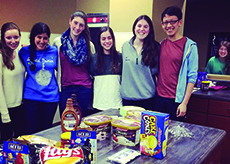
My mom has a bit of a reputation for cooking and baking, and not just within my family. Our friends near and far look forward to our Shabbat dinners for the company-and my mom’s fantastic food. They are also astounded at how she can make a Shabbat dinner this good while working all day.
The main reason my mom is committed to making Shabbat dinner is to welcome people into our community and others who don’t have a place to go on Friday night. My dad, too, goes out of his way to make our guests feel as if they have known my family their entire lives, translating the blessings into English, and explaining the Torah portion so all can understand.
I especially looked forward to meeting new people, seeing familiar faces at our dinner table and the aroma of my mom’s famous “cookie bars.” Fridays were always my favorite days.
Then I left for college.
During my first week at Washington University in St. Louis, I attended Shabbat dinner with some new friends. The Hillel staff was warm and welcoming, and the challah was acceptable-not as tasty as my mom’s, but acceptable. I could feel my new Shabbat community forming. Afterward, I made it my mission to celebrate Shabbat every week and to find a community of like-minded people.
Here are some tips for finding a Shabbat community based on what I did my freshman year when I was far from the comfort of the smells, tastes, and faces of Shabbat at home.
Find a friend who will go with you to Shabbat dinner consistently.
Nothing is scarier for some people than walking into a crowded room and not knowing anyone. Finding a friend who is also interested in going to Shabbat dinner each week is a good resource to have, especially in the beginning. By the end of the year, you won’t even need to think about it because you will already know people.
Try to bring a new friend to Shabbat every week, even if they aren’t Jewish.
The people you are with will improve your Shabbat experience and the company of new and old friends can feel like family, even when you are away from home. People at my school are also really interested in learning about cultures and trying new experiences, and love to come with me to Shabbat dinners. Try to find a new friend to bring each week, and maybe they will become a regular.
Join Challah for Hunger, or some other Shabbat baking club or group.
I really enjoy baking challah with Challah for Hunger. The people involved are a real constant on Friday nights. Even if you aren’t on a campus, cooking Shabbat dinner with friends can be fun and helps build community.
Try to attend a variety of different Shabbat dinners, if possible.
One great part of living away from home is that you aren’t obligated to have Shabbat in the same place week after week. Take the rabbi up on his offer to have Shabbat dinner at his house or that distant family member who lives nearby. I went to a friend of a friend’s house once; I learned about their family’s traditions and I got a real taste of home.
Go to Shabbat lunch for a change.
A lot of people on my campus and in cities are shomer Shabbat, which means that they can’t work on Shabbat, or more specifically, do not drive, spend money, or use electronics. So, a lot of people on my campus attend Shabbat lunch at Hillel or Chabad. In my experience, the environment is much less formal than Shabbat dinner, but people still enjoy each other’s company and eat amazing food.
This coming semester, I hope to expand my Shabbat community. I will continue to miss our family table, but I know that fostering a Shabbat community at school allows me to have a whole other family on campus.
Other stories
-
Meet Andrew S. Hochberg, 2021 Julius Rosenwald Memorial Award recipient
Celebrate Andy Hochberg at the virtual Annual Meeting on Sept. 14
Read more -
Two local teens win national recognition
Recipients of the annual Diller Teen Tikkun Olam Awards
Read more -
Celebrating six young award winners cultivating the community
Introducing young adult award winners
Read more
Across years and miles, reuniting a Holocaust refugee and the family that sheltered her
FREDDA SACHAROW
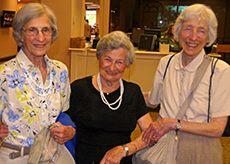
It was a reunion seven decades in the making, bringing together a one-time refugee from pre-war Austria and the two Highland Park, Ill. sisters for whom she served as beloved governess. Marjorie Nath Ettlinger and Laurie Nath Reinstein are in their 80s now, but the years peeled away as they embraced Susan Pisker Graham, who came to live with their family in 1939 as an 18-year-old sent from Vienna by parents all too conscious of the dangers that lay ahead for the Jews of their country.
“They were very good to me,” Graham, now 93, said of Bernard and Ruth Nath, who took her under their wing while she struggled to learn English and adapt to the challenges of her new country. “They were always encouraging me to use their piano and their ping pong table.” Bernard Nath was a prominent real estate lawyer in Chicago and a Jewish communal leader long active in the Anti-Defamation League.
Graham, who now lives in a retirement community in Voorhees, N.J., would stay in the Naths’ Highland Park home for the next five years, serving as governess for young Marjorie and Laurie. Even after the sisters no longer needed a nanny, the Naths made her feel welcome in their home, she recalled. And when she met John Graham in St. Louis, Mo., through a HIAS connection, they offered to pay for the wedding.
In 1945, Graham moved to New York, where her new husband lived. None of them knew it would be the last time in 70 years that the three women-one now a great-grandmother, the other two grandmothers-would be together under the same roof.
On a humid morning this summer over arugula salad and spinach omelets at Longwood Gardens in Kennett Square, Pa., they relived their time together, with Graham filling in the gaps for her former charges, now 86 and 82. “We knew she was from Austria, and we knew there was trouble back home, but as a child, the details were not discussed in front of us,” said Reinstein.
Ettlinger was 10 and her sister was 6 when the young woman she and her sister called Susie arrived.
After Graham’s father was allowed to return home from a concentration camp, he and his wife, owners of a dry goods store, insisted that their only child accept the offer of a maternal uncle to act as her sponsor for immigration to the United States. Stephanie and Franz Pisker promised they would follow right behind her. That never happened.
Only after the letters from Vienna stopped coming, after Bernard Nath had used his considerable influence to help track the Austrian couple’s journeys, after Graham had a child of her own, did she learn their fate. Both died in Sobibor, a death camp near what is now the eastern border of Poland.
“I would never have left if I’d known my parents wouldn’t follow,” Graham told the sisters at the reunion.
She survived a turbulent ocean crossing on the Italian liner named The Rex, only to learn on her arrival in Chicago that the arrangement with her uncle had fallen through.
Ruth Nath went to meet the young refugee at the offices of a Jewish organization in the city. Graham believes the organization was Hadassah, but the years have dimmed her memory, she said.
At the reunion luncheon were members of Graham’s family: her daughters Carrie Chein of Cherry Hill, N.J. and Brenda Silver of White Plains, N.Y., as well as Carrie’s husband, Orin Chein. “I grew up hearing the stories about my mother’s time with the Naths,” Carrie Chein recalled. “I still have a silver cup with my name engraved on it that the Naths sent when I was born.”
Also present was Nancy Goldberg, formerly of Moorestown, N.J. and now of Highland Park, who played a pivotal role in arranging the get together. A longtime friend of both, Carrie Chein, whom she knew from her time in New Jersey, and Ettlinger, whom she knew from the League of Women Voters Highland Park/Highwood, Goldberg decided to propose a “girls’ jaunt” to Philadelphia for a reunion.
“She totally lit up,” Goldberg said of Ettlinger’s reaction. “It felt like her smile went around one ear and got to the other.”
At a Shabbat dinner at the Cheins’ Cherry Hill home, the sisters met Graham’s grandchildren and great grandchild. During the multi-generational dinner, the women exchanged family pictures and exclaimed over photos of their former home on Hazel Street in Highland Park–including the guest room, which the sisters still refer to as “Susie’s room.”
“We talked about how the years have gone by and how we all changed,” Graham said later. “My memory of them is when they were young children, and now they are grandparents. I was shocked that they got older–like I did.”
In the weeks following the reunion, Ettlinger and Reinstein said they hope to keep in touch with Graham. Both added that they were grateful for the opportunity to re-create those earlier years.
“For me, the most exciting thing was to see how well she is,” Reinstein said. “She is a beautiful woman, and I’m glad there was a happy finish to a life that didn’t begin so well.”
Fredda Sacharow is a freelance writer and former editorial page editor in New Jersey. Her work has appeared in The New York Times, the Penn Law Journal, and Rutgers Today, among other publications.
A version of this article originally appeared in The Jewish Voice of Southern New Jersey.
Other stories
-
Meet Andrew S. Hochberg, 2021 Julius Rosenwald Memorial Award recipient
Celebrate Andy Hochberg at the virtual Annual Meeting on Sept. 14
Read more -
Two local teens win national recognition
Recipients of the annual Diller Teen Tikkun Olam Awards
Read more -
Celebrating six young award winners cultivating the community
Introducing young adult award winners
Read more