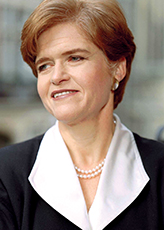
It’s been 15 years since the courageous Holocaust studies professor and historian Deborah E. Lipstadt battled infamous British Holocaust denier David Irving in a landmark legal case.
The quest for truth, light, and justice in that British courtroom has become an even more meaningful legacy since that time, as so many firsthand witnesses to the Holocaust have passed away, and we strive to educate the younger generations about the atrocities without the survivors here to share their stories.
Back in 1996, Irving accused Lipstadt of libel, arguing she ruined his reputation by characterizing him–along with others–as a Holocaust denier in her 1993 book Denying the Holocaust: The Growing Assault on Truth and Memory .
Irving, who had made revisionist claims such as denying that Jews were systematically killed in the Auschwitz gas chambers, sued Lipstadt and her publisher, Penguin Books, stating that Lipstadt destroyed his reputation and career by claiming that he distorted historical data to fit his own assertions.
Then, in the winter of 2000, Lipstadt and Irving duked it out in London’s Court of Royal Justice in a trial that lasted nearly three months, the biggest judicial exploration of the Holocaust since the Adolph Eichmann trial 40 years earlier.
Home to one the largest Holocaust survivor populations in the country, the Chicago Jewish community, and specifically JUF’s Holocaust Community Services and the Illinois Holocaust Museum and Education Center, have always been committed to serving the survivor community and teaching Holocaust awareness and education. In fact, the Jewish Federation of Metropolitan Chicago provided $50,000 toward Lipstadt’s defense, one of the first contributions she received in connection with the trial.
“Going back to the time of the trial and then the verdict, I remember thinking that at a time when the number of eye witnesses to the Holocaust grows smaller, it was essential that those who would attempt to distort history be properly identified,” said Steven B. Nasatir, JUF President. “An alternative verdict in the case, while not changing historical realities, could have had a disastrous and intimidating effect on scholars and the media. We were enormously relieved when that did not happen and very proud to be an early supporter of Deborah’s courageous effort to stand up for the truth.”
In American law, the burden of proof in libel cases lies with the accuser. Conversely, in British law, the burden rests with the accused, in this case Lipstadt and her publisher, to prove that what she said about Irving was true. Still, even with the daunting task to take down Irving, Lipstadt was victorious.
Justice Charles Gray declared that Irving falsified history, calling him an “an active Holocaust denier,” “anti-Semitic and racist,” and one who “associates with right-wing extremists who promote neo-Nazism.”
As The New York Times reported back then, “History has had its day in court and scored a crushing victory.”
After all this time, Lipstadt, whose trial will soon be depicted in a feature film, will speak to the Chicago Jewish community at the Jewish Federation’s 2015 Annual Meeting on Thursday, Sept. 17. In anticipation of her speech to the community, Lipstadt, the Dorot Professor of Modern Jewish and Holocaust Studies at Emory University in Atlanta, sat down for a phone interview with JUF News.
JUF News: What sort of connection do you feel with the Chicago Jewish community?
Deborah E. Lipstadt: The Chicago Jewish Federation’s support of me at my trial was unbelievably generous, forthcoming, and wholehearted. Chicago was one of the first communities to stand up in such an uninhibited way, and I’m very grateful for that.
Tell me about your Jewish upbringing on Manhattan’s Upper West Side.
My parents were absolutely committed to Orthodoxy and tradition, but also believed in living in this world-theater, museums, and novels. They very much believed that you did both and one did not preclude the other. The synagogues we worshiped at and our rabbis influenced me too. All of that informs my life to this day.
You are not the child of Holocaust survivors. So, what then, inspired you to enter the field of Holocaust studies?
I went to Israel as a student in 1966, 20 years after the Holocaust. Survivors were all around you, and the Holocaust was very present. I was also there during the Six-Day War in 1967. Both [factors] had a huge influence on me.
What has 15 years hindsight taught you about the trial and your victory?
It confirms my inclination that you can’t fight every evil, but when you see certain evils, you can’t turn away from them. You really have to take them on and challenge them.
Was there ever a thought that maybe you should back down from challenging Irving?
One depressing day, early on in the fight…a group of leading Jews in England said I was doing the wrong thing by fighting him. And it took one short conversation with a member of my legal team [to convince me to fight]. I said, ‘Oh my God. I must have gone crazy–I don’t know what I drank last night.’ And I never thought twice about it again.
How is the surge in anti-Semitism in Europe in recent years different than during World War II?
First, during the Holocaust, the State–Germany–was sponsoring anti-Semitism, destruction, and persecution. Today, in many places where we see anti-Semitism–France for example–the State is clearly against what is happening. Whether it’s doing enough, or saying the right thing is open to debate. Second, today government is speaking out about anti-Semitism…. It wasn’t condemned in the 1930s. Third, we have the State of Israel. The State of Israel has one of the most powerful armies in the world, and the State of Israel is committed to protecting Jews as well as itself. And we have memory–we know what happened, we know what can happen. All those things make a big difference.
How dangerous are the comparisons made to the Holocaust within the Boycott, Divestment, and Sanctions (BDS) Movement narrative?
BDS is very dangerous. It was started by people, I believe, who would like to see the destruction of the State of Israel. That doesn’t mean everybody who supports BDS believes that, but I think that’s the ultimate goal of the people who created BDS. They have been absolutely right on target from their perspective in terms of how they have phrased it with the right language, a Democracy language, anti-persecution language, so that kids who can’t find Israel on a map think that this is a no-brainer, just as being against Apartheid was a no-brainer.
Iran often makes statements about delegitimizing the Holocaust and wiping Israel off the map. What can our community do to counter Iran’s threats?
We have to keep speaking out, to keep pointing to them as a regime that engages in Holocaust denial, a regime that calls for the destruction of Jews, that [also] calls for the destruction of Israel…
How do you feel about the new film in production that will dramatize your trial?
In Hollywood, you got to wait. When it opens on the screen, I’ll be ready for it, but until then I’m waiting to see what happens. I consulted in the earlier periods when the script was being written. It’s a terrific script by David Hare, one of Britain’s, if not the world’s, leading contemporary playwrights…
You’ve done so much to educate people about the Holocaust but it seems like we’ve taken a few steps backwards in the past decade. Do you still feel hope?
We’ve made great strides, and my trial was part of those great strides….Today, there is far less of what I call “hard-core” Holocaust denial–people saying it didn’t happen and that there were no gas chambers, etc. That has been proven to be just ludicrous and anyone who makes that kind of statement, every time [former Iranian President] Ahmadinejad attacks the United States and makes that kind of statement, people just laugh at him.
What we do have is “soft-core” Holocaust denial-false analogies to the Holocaust whether it’s animal lovers [talking about] a Holocaust on your plate when you eat chicken, or people talking about the abortion Holocaust. Or people talk about the genocide of the Palestinians–you can think that Israel policies are completely wrong, you can think that they’re misguided–but there is no genocide of the Palestinian people. They’re suffering and they’re living in dire circumstances, and we can debate why, but it’s not a genocide.
This more subtle denial can be just as dangerous because it’s dressed up in sheep’s clothing, right?
Exactly. It’s what I call “squishier.” It’s harder to pin down. It reminds me of what a member of the Supreme Court, Justice Potter Stewart, said about pornography. ‘I can’t define it, but I know it when I see it.’ So at some level, the “soft-core” stuff is sometimes hard to pin it down, but in your gut, you know [it].
All these years later, do you still love your work?
I feel very lucky, even though we live in very trying times for us as a community, for us as a people, and for Israel. Nevertheless, I feel blessed that I get a chance to get up each morning and write about, teach about, and speak about something that means a heck of a lot.
In addition to Lipstadt’s keynote address at the Annual Meeting on Sept. 17, the featured program of the Annual Meeting will be the commitment to helping Holocaust survivors live with dignity through JUF’s Holocaust Community Services (administered by CJE SeniorLife in collaboration with Jewish Child and Family Services)
To register for the 2015 Annual Meeting, visit juf.org/annualmeeting . For information, call 312-357-4876 or email [email protected]
Other stories
-
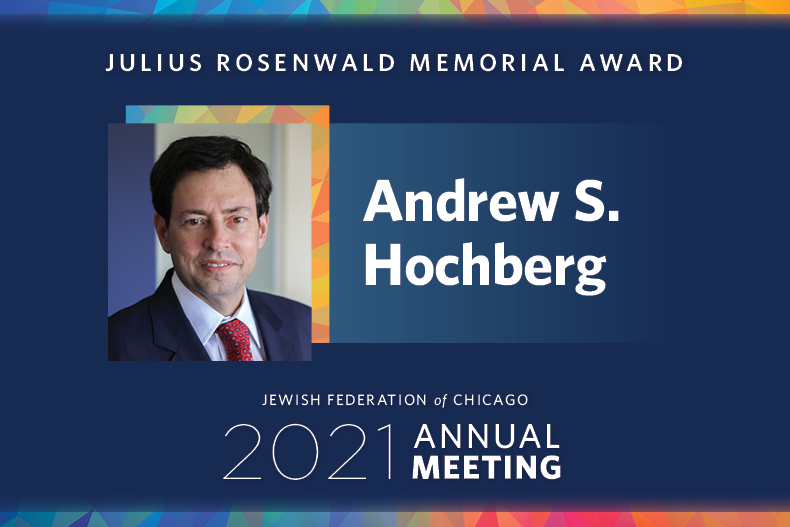
Meet Andrew S. Hochberg, 2021 Julius Rosenwald Memorial Award recipient
Celebrate Andy Hochberg at the virtual Annual Meeting on Sept. 14
Read more -
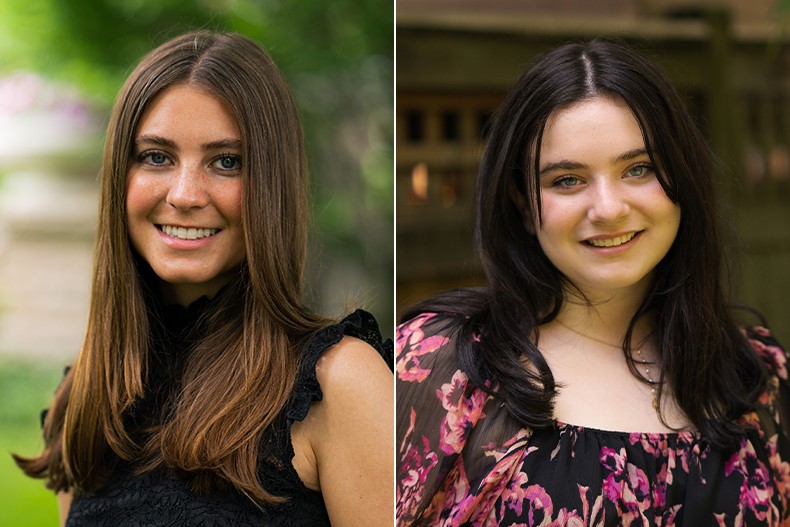
Two local teens win national recognition
Recipients of the annual Diller Teen Tikkun Olam Awards
Read more -
Celebrating six young award winners cultivating the community
Introducing young adult award winners
Read more
As JUF News went to press, President Obama was scheduled to discuss the Joint Comprehensive Plan of Action, otherwise known as the Iran accord, during a special live webcast Aug. 28 with Jewish communities throughout North America. By Sept. 17, the House and Senate will likely hold votes on resolutions disapproving of the Iran pact. (For updates on the Iran nuclear agreement, visit www.jufnews.org.)
Meanwhile, in mid-August the Board of Directors of the Jewish Federation convened in special session to discuss the accord. Following a substantive and respectful civil three-hour discussion, the board reiterated its core mission to support Israel and safeguard Jews everywhere. Further, a majority opinion emerged and was adopted: to call on Congress to oppose the JCPOA as originally submitted, and to ask legislators to work with the Administration to produce better solutions addressing Iran’s nuclear program. All board members-both proponents and opponents of the JCPOA-together called for launching a renewed Iran Community Action Plan.
Thanking the Obama Administration for its prioritizing the threat posed by an Iran nuclear weapon and forging a potent international sanctions coalition against it, the board described its “deliberate listening, learning and governance process,” leading to the Action Plan. The process included educational sessions with Administration and Israeli officials, meetings with the Illinois congressional delegation and independent experts, and conversations with “many hundreds of passionate members of our community.”
“Opinions on the JCPOA differ, but there is unanimity on the end goal: preventing Iran from obtaining nuclear weapons. Thus, the more difficult task has been to focus on the best specific path to achieve that goal,” the board stated.
The Iran Community Action Plan
The board pledged to implement the following steps.
a) Call upon this and future U.S. presidents to continue to make clear that the United States will use any measures, including military power, to ensure that Iran is never able to threaten the United States, Israel, or others with nuclear weapons..
b) Call upon Congress to provide the President with advanced authority to take such action if needed.
c) Urge both Congress and the Administration to intensify both our own and international efforts combatting Iran’s sponsorship of global terrorism.
d) Advocate directly to the United Nations and to the Chicago-based Consuls General of its member states that all relevant U.N. bodies must no longer indulge Holocaust denial or genocidal statements by Iranian government officials. No more free rides for Iran’s deadly hatred.
e) Call upon the U.S. to establish unprecedented levels of advanced understandings and channels of cooperation with Israel to confront risks stemming from the agreement and/or its violation by Iran. This includes clear definitions of what constitutes minor and major violations of the agreement, and accompanying responses, and a security aid package improving Israel’s unilateral ability to thwart an Iranian breakout toward a bomb.
f) Urge that Israel be added to additional multilateral defense alliances (such as NATO) and/or further upgrading the U.S.-Israel military partnership beyond both “Major Non-NATO Ally” status and that specified in the United States-Israel Strategic Partnership Act of 2013.
g) Regardless of the fate of international sanctions, urge continued enforcement of Illinois, Cook County, and Chicago divestment laws.
In addition, the board called on concerned members of the community to adopt and implement the Iran Action Plan through involvement with organizations within and beyond the Jewish Community Relations Council; the media; communicating with members of Congress, and organizing educational events through synagogues, alumni associations, fraternal groups like Rotary, trade associations, etc.n
See the full Federation statement at jufwebfiles.org/pdf/express/JFMC-Iran-Statement-Aug-15.pdf .
Other stories
-
Chicago to Israel to Kenya
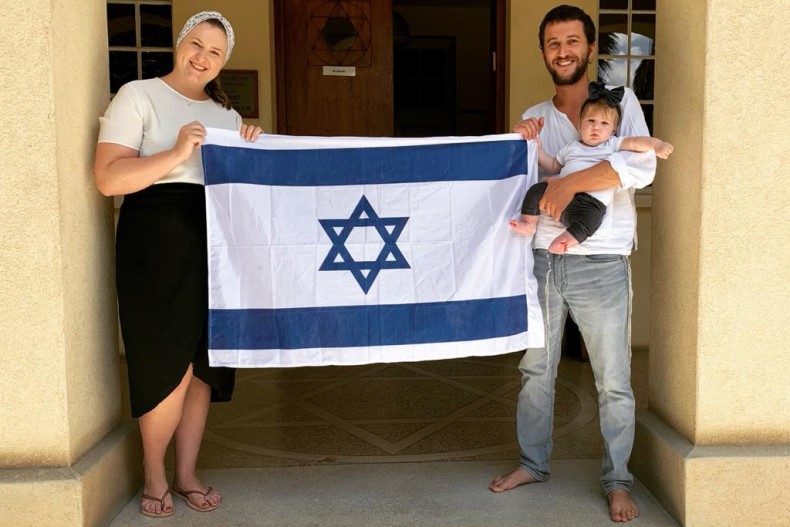
A family’s story of living Jewishly on three continents Michelle Cohen World May 28, 2021 Avital, Tzofia, and Netanel Kaszovitz outside their home in Nairobi on Yom HaAtzmaut. When Avital Kaszovitz prepared to be a Modern Orthodox shlicha (emissary) to the Jewish community in Ke
Read more -
New exhibit spotlights the experience of ‘Shanghai Jews’
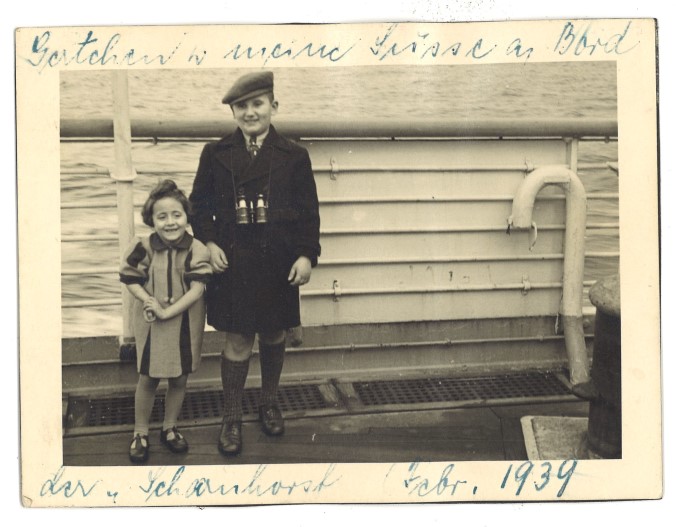
Explore a new Illinois Holocaust Museum and Education Center exhibit
Read more -
Europe’s brave new teachers of the Holocaust
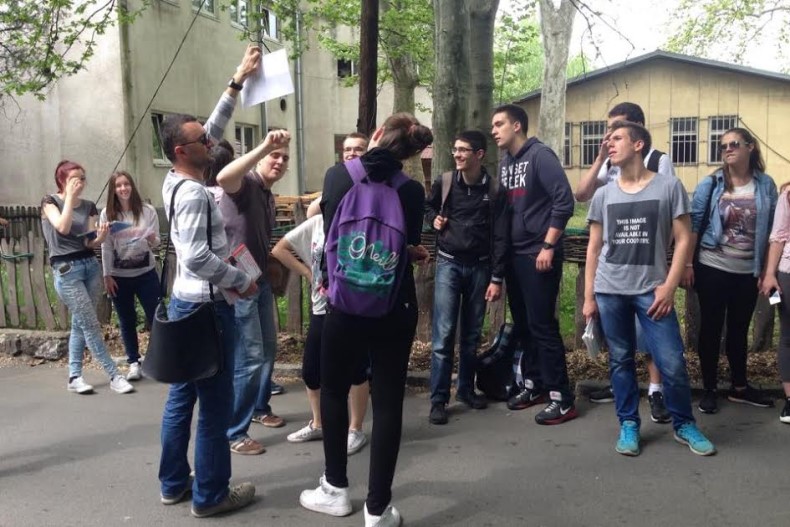
Teaching the Holocaust in the modern era has its difficulties and rewards.
Read more
What if learning Hebrew in public schools was as common for Jewish students as studying French or Spanish?
With that in mind, in April, JUF established a first-of-its-kind foundation focusing exclusively on promoting the study of Hebrew and Israeli culture in the public schools. Its goal: to make Hebrew education as easy as aleph-bet .
SAFA: Foundation for Promotion of Hebrew Language and Israel Culture in Public Schools, named for the Hebrew word for “language,” hopes to maximize the number of students taking Hebrew language classes. While efforts will begin locally, the ultimate goal is to expand the foundation’s work nationally.
Hebrew language in the public schools is aimed at those Jewish students not enrolled in a Jewish day school, who may have had some exposure to Hebrew in a congregational setting, while attending a Jewish camp, or during a trip to Israel. A public school curriculum enables these students to become proficient in the language through daily study.
“We believe there is untapped potential for expanding Hebrew education by offering it as an option for an existing requirement for college-minded students-study of a foreign language within a public school setting,” said JUF President Steven B. Nasatir, a founding member of the foundation. “This is a skill that is important for deepening ties to their Jewish identities, to their local community and to Israel.”
The study of Hebrew in public schools is paid for through public funds at no additional cost to parents, just like Spanish, French, or any other foreign language course. Currently, there are only 21 known public schools-19 high schools and two middle schools-throughout the U.S. offering Hebrew language courses as a foreign language choice.
Of the estimated 2,000 students enrolled in Hebrew classes in public schools nationally, nearly 600 of them are studying Hebrew in seven high schools throughout the Chicago metropolitan area: Evanston Township, Niles North, Deerfield, Highland Park, Glenbrook North, Stevenson and New Trier. Throughout the years, JUF has worked with organizations such as Shorashim, and more recently the iCenter, to promote and enhance the impact of Hebrew in public schools in the Chicago area.
SAFA will heighten the visibility of Hebrew in the public schools by bringing together organizations, students, and parents involved in existing Hebrew programs; advocate for expanding Hebrew programs to more school districts both locally and throughout the country; and raise and allocate funds in support of these efforts.
The foundation is also collaborating with local educators to explore introducing Hebrew language study at the middle school level.
“Bringing Hebrew language programs to local middle schools would ensure continuity of language study from middle through high school and more consistent enrollment in high school programs,” said Arnie Kanter, another founding member of the foundation.
Other founding members of SAFA include Anne Lanski, executive director of the iCenter, Peter Friedman, JUF’s senior planning advisor, and Andrea R. Yablon, a JUF board member.
“Students who study Hebrew as a foreign language in schools show a greater interest in other Jewish and Israeli cultural activities both within and outside of the walls of the schools,” Yablon said. “These students are more likely to engage in extracurricular Hebrew and Israel-focused activities like Israel clubs, youth groups, teen philanthropy and Israel advocacy programs, which create long-lasting connections and entry points into Jewish life and our local community.”
For more information about Hebrew language offerings in the public schools please contact [email protected]
Other stories
-
Meet Andrew S. Hochberg, 2021 Julius Rosenwald Memorial Award recipient
Celebrate Andy Hochberg at the virtual Annual Meeting on Sept. 14
Read more -
Two local teens win national recognition
Recipients of the annual Diller Teen Tikkun Olam Awards
Read more -
Celebrating six young award winners cultivating the community
Introducing young adult award winners
Read more
Jewish women and men 10 times more likely to inherit breast cancer gene mutation
CHRISTINE SIEROCKI LUPELLA
The Center for Jewish Genetics, in conjunction with the Basser Center for BRCA, will host one of the nation’s leading authorities on breast cancer and a panel of experts discussing “What’s Jewish about BRCA ?” on Wednesday, Oct. 14, at the Chicago Botanic Garden in Glencoe. A reception begins at 6 p.m.; followed by the program at 7 p.m. Cost is $18 per person.
“BRCA refers to hereditary mutations in the BRCA1 and BRCA2 genes that significantly increase the risk of breast cancer both in women and in men,” said Jason Rothstein, director of the Center for Jewish Genetics.
“While everyone faces a risk of cancer, Jewish men and women with an Ashkenazi background are 10 times more likely to have a BRCA mutation than the general population,” he said. “The connection between the mutation and breast cancer is widely known, but individuals with BRCA mutations also face an increased risk of ovarian cancer, prostate cancer, pancreatic cancer, and melanoma.”
Panelists at the Oct. 14 event-all experts in fields ranging from medical oncology, surgery and gynecological oncology to genetics and advocacy-will discuss a variety of topics, including strategies for identification of high-risk individuals and families, and options for intervention.
“If you don’t know you’re at risk, you can’t make an informed decision about [how to address] that risk,” said keynote speaker Dr. Susan M. Domchek, MD, during a recent interview. She is a nationally recognized expert in breast and ovarian cancer genetics; hereditary cancer risk and prevention; and breast cancer treatment.
The BRCA1 and BRCA2 genes were identified in 1994 and 1995 respectively-within a year of Domchek’s graduation from medical school. “I have sort of grown up with the discoveries related to these genes. During the past 20 years, so much has been learned,” she said. “We have a better understanding of what risks are associated with these [genetic mutations].”
“Genetic testing is valuable because you can identify individuals who are at increased risk of developing cancer,” she said. “Family history is important as well. If you have a strong family history of cancer, that’s important to know for screening and prevention. It’s important to talk to your health care provider about the pros and cons and what will work best for you,” she said.
Domchek is executive director of the Basser Center for BRCA in Penn’s Abramson Cancer Center; director of the MacDonald Cancer Risk Evaluation Center; and the Basser Professor of Oncology at the Perelman School of Medicine at the University of Pennsylvania. Her research focuses on understanding breast and ovarian cancer susceptibility in genes such as BRCA1 and BRCA2 , and how to target such genetic mutations for improved cancer treatment. Domchek has been recognized as one of the “Best Doctors in America” by the American Society of Clinical Oncology, and as a “Top Doc” in Philadelphia Magazine .
Bonnie Miller Rubin, Chicago Tribune Health and Family reporter, will moderate the event.
Expert panelists include Taya J. Fallen, CGC, Northwestern University; Melissa K. Rosen, MA, Director of National Outreach, Sharsheret; Catherine E. Pesce, MD, breast oncology specialist at NorthShore University Health System; and S. Diane Yamada, MD, Professor of Obstetrics/Gynecology and Chief, Section of Gynecologic Oncology, at University of Chicago.
For information or to register, visit http://www.juf.org/cjg/BRCA-Panel.aspx , or call (312) 357-4994.
The Center for Jewish Genetics, an educational resource for hereditary cancers and Jewish genetic disorders, is a cooperative effort of the Jewish United Fund of Metropolitan Chicago and the Ann and Robert H. Lurie Children’s Hospital of Chicago, and is supported in part by the Michael Reese Health Trust.
Other stories
-
Meet Andrew S. Hochberg, 2021 Julius Rosenwald Memorial Award recipient
Celebrate Andy Hochberg at the virtual Annual Meeting on Sept. 14
Read more -
Two local teens win national recognition
Recipients of the annual Diller Teen Tikkun Olam Awards
Read more -
Celebrating six young award winners cultivating the community
Introducing young adult award winners
Read more
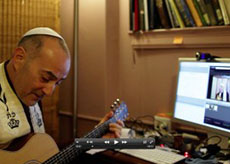
A “Sim” videogame, like Sim City , is one that “simulates” real life. But there is nothing simulated about Sim Shalom, the online synagogue. The services are live- if electronically transmitted- and the rabbi, Steven Blane, is a very real person.
Even a cyberspace house of worship must have some basis in real space, and Sim Shalom is based in Brooklyn. Blane had a congregational building whose infrastructure was crumbling when it occurred to him that, with the Internet, a physical building’s limitations could be eliminated.
So, in 2009, he started Sim Shalom, an online synagogue. He recently signed up the 150 th member. Most are American, but others live in South America, the United Kingdom, Germany, Portugal-as far away as Tokyo. Still, all are as near as their closest computer. Even without a building fund or membership dues, Sim Shalom has expenses, and is fueled by donations.
This year, Sim Shalom will be streaming its High Holiday services from the legendary Bitter End jazz nightclub, on Bleecker Street in Greenwich Village. Blane is a jazz musician, and so the service’s melodies are taken from the Tin Pan Alley songbook; most of these melodies were written by Jewish composers in any case.
Blane recently released Sim Shalom’s Live Jazz High Holidays on CD; it was recorded at other New York jazz clubs and is available for download at the CD Baby website.
Sim Shalom holds services every weeknight at 7:00 p.m. EST and twice monthly on Shabbat morning at 10:00 a.m..
Blane leads on Shabbat- he also has a jazz Friday night service-and other rabbis take weeknight services. The services can be participated in live with other congregants, via UStream. Instead of flipping pages in a prayerbook, worshippers scroll through a slideshow presenting the text, in Hebrew, English, and transliteration.
But services are only one of the services Sim Shalom offers. Blane has converted several people to Judaism and has more than a dozen more now in process. As part of the conversion process, congregants must visit synagogues near them, of as many different Jewish denominations as possible. Blane also performs weddings, but prefers to do so in person. And anyone can use Sim Shalom’s website to sell their chametz (leavened food forbidden on Passover).
Blane also ordains other rabbis, through his Jewish Spiritual Leaders’ Institute, of which he is founder and dean. It’s a rabbinical school, and like his synagogue, it happens online. The Institute recently ordained its ninth class of rabbis and cantors, for a total of 90 ordinations so far. Many of his students are between 40-70 years old.
While describing the synagogue as “apolitical,” its stance on Israel is clear: “We lovingly support Israel as our ancient and modern homeland. We continue to pray for peace.” It is non-denominational, describing itself as “Universalist- liberal in thought and traditional in liturgy.”
Rabbi Blane received his smicha (ordination) in 2001 at Rabbinical Seminary International and has held several traditional pulpits, mostly in New York and New Jersey.
But he is also a cantor, beginning his studies in 1990 and leading High Holiday services from Buffalo, N.Y. to Biloxi, Miss..
As befits a spiritual leader of a synagogue without walls, Blane is very open-minded and open-hearted. His congregation follows suit: “We are an unaffiliated and pluralistic Jewish community, evolving and organically growing,” he said. “…’No’ is not in God’s vocabulary.”
Other stories
-
Meet Andrew S. Hochberg, 2021 Julius Rosenwald Memorial Award recipient
Celebrate Andy Hochberg at the virtual Annual Meeting on Sept. 14
Read more -
Two local teens win national recognition
Recipients of the annual Diller Teen Tikkun Olam Awards
Read more -
Celebrating six young award winners cultivating the community
Introducing young adult award winners
Read more
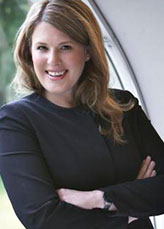
This summer, Rabbi Wendi Geffen became the ninth senior rabbi-and the first female one-in the 95-year history North Shore Congregation Israel (NSCI). Geffen, originally from Dallas, has served there since her rabbinic ordination in 2002.
“The profound gift of serving as a rabbi enables me to share my love of Judaism and its potential to foster growth and understanding, with the hope of changing lives for the better,” Geffen said. “As a compelling and vibrant faith and culture, Judaism- its practices, prayer, teachings and interpretations-enables us to transform ourselves, our communities and our world from the way they are to the way they can be.”
Geffen will lead one of the largest congregations in the Chicago area, with 1,350 families. In addition to her spiritual duties, Geffen will administer a multi-million dollar budget; she is dedicated to developing funding sources beyond membership dues.
With this appointment, Geffen becomes one of only five young female rabbis nationwide to head synagogues with memberships with more than of 1,000 families.
She described her vision for her congregation, saying, “Today’s synagogue must be recognized as a living, dynamic, networked organization. When we redesign what the ‘walls’ of the synagogue look and feel like, people will gain a powerful sense of connection in an expansive, yet intimate way.”
Geffen’s formal installation took place in late August. The guest speaker was Geffen’s own congregational leader, Rabbi David Stern, the senior rabbi of Temple Emanu-El in Dallas, the third largest Reform synagogue in the US.
Her installation weekend culminated with several social justice projects that highlight her priority of service to the community. She is also spearheading the congregation’s participation in Operation Backpack (see p. 13), and its efforts in providing meals for families in need.
Geffen further said she plans to expand on the synagogue’s mission of maintaining an open, inclusive congregation that welcomes interfaith families, families with special needs, people of varied backgrounds and the LGBTQI community.
Recently, Geffen spoke at a fellowship luncheon at Stone Temple Church when it welcomed members of the Jewish community to their Sunday morning prayer service, prior to a tour of North Lawndale, a neighborhood that was once a central hub of Jewish life in Chicago. The tour, organized by JUF’s Jewish Community Relations Council in partnership with the church, showed leaders from the Jewish and African-American communities historical sites from the shared history of both communities.
Geffen and her husband, Scott Duby, are the parents of two young children.
Other stories
-
Meet Andrew S. Hochberg, 2021 Julius Rosenwald Memorial Award recipient
Celebrate Andy Hochberg at the virtual Annual Meeting on Sept. 14
Read more -
Two local teens win national recognition
Recipients of the annual Diller Teen Tikkun Olam Awards
Read more -
Celebrating six young award winners cultivating the community
Introducing young adult award winners
Read more
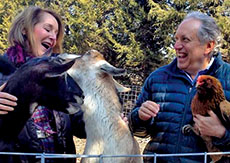
Pushing the Envelope Farm, an organic community farm in Geneva, Ill., contains all the features of a typical farm: chickens, crops, goats, and dedicated farm staff. But, at this particular farm, there’s one other unique component: it’s rooted in Jewish values.
Rabbi Fred and Trisha Margulies began their journey towards founding Pushing the Envelope Farm in 2007, by attending the Hazon Food Conference. The conference inspired them to take the land next to their family business, Continental Envelope, and transform it into an organic farm.
Today, the farm makes a palpable impact, teaching people about the intersection between farming and Jewish ideals. People from around the world flock to the farm: residents of the U.S., international visitors, as well as refugees who are sometimes victims of terror. All can purchase plots and share their farming techniques.
The decision to emphasize Jewish tradition was a family affair. The Margulies’ participation in Jewish life and their kids’ influence swayed them to highlight Judaism in their mission. Through their interactive methods, they hope to inspire Jewish people of all ages to connect to Judaism through agriculture.
The farm was one of the recipients of this year’s JUF Breakthrough Fund Grants, which it plans to use to extend its reach to new audiences. The grant will be used to create two Jewish Food Justice Cohorts and a volunteer steering committee to be involved in programs that emphasize Jewish agricultural tradition. The programs will connect Jews from the western suburbs to the larger Jewish community.
The link between modern Jews and the ancient Jewish tradition today is called “Jewish Environmentalism.” The term implies that because Judaism is largely an agriculturally based religion, there are many mitzvot (commandments) and customs in the Torah that can be adopted on a modern farm.
“If you look at the three pilgrimage festivals, (Sukkot, Passover, and Shavuot) they were all agriculturally related…part of what we are trying to do is say Judaism has something to say…there is a lot to be learned by using land as a vehicle for teaching,” Rabbi Fred clarified.
Rabbi Fred makes these principles relevant by demonstrating proper treatment of animals with his own animals and about letting his land rest on the shmita year-the seventh year of the seven-year agricultural cycle mandated by the Torah for the land of Israel.
The holiest days on the Jewish calendar are also celebrated in a distinctive way. Before Rosh Hashanah, the farm hosts beekeepers to gather honey and they have a fresh harvest at their Sukkot table. Many Jewish people are drawn to the farm for a holiday season filled with fresh holiday foods.
Through these non-traditional methods of expressing Judaism, the farm hopes to attract Jews who may not identify with more traditional means of Jewish engagement. They may visit the farm to discover a stronger tie to their Jewish identity.
“There is this whole sphere of Jewish life and I see the farm as one aspect, and one point of entry that might lead you to a lot of other points of connection.” Rabbi Fred said.
One “point of entry” may be through tikkun olam , or repairing the world, especially for young people. Day schools and camps visit the farm regularly, and participate in this effort by growing food for the Tzedakah Donation Garden. The fruits and vegetables from the garden are donated to underserved populations and to food banks such as the Northern Illinois Food Bank and the ARK of Chicago.
Through these programs, the community learns the Jewish value of tzedakah , or charity, in a concrete way. All are encouraged to partake in these programs, and there are accommodations so that those with physical restrictions can also learn a “hands-on” way to make a difference.
“We want to be part of participating and setting an example. We certainly want to make sure that within our Jewish institutions that those needs are met and that other needs are met as well,” explained Trisha, a past JUF board member..
The Margulies pair hopes to continue their philanthropic and agricultural work to inspire the community, one harvest season at a time.
For more information, about Pushing the Envelope Farm, visit www.pushingtheenvelopefarm.org .
Other stories
-
Meet Andrew S. Hochberg, 2021 Julius Rosenwald Memorial Award recipient
Celebrate Andy Hochberg at the virtual Annual Meeting on Sept. 14
Read more -
Two local teens win national recognition
Recipients of the annual Diller Teen Tikkun Olam Awards
Read more -
Celebrating six young award winners cultivating the community
Introducing young adult award winners
Read more
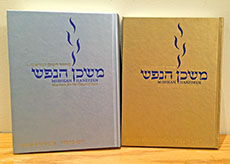
“Machzor” means “Jewish holiday prayer book.” The root means to “return” but also to “review.” Now, the Central Conference of American Rabbis (CCAR) has reviewed, and renewed, the Reform movement’s High Holiday prayer experience.
The result is a two-machzor set-one for Rosh Hashanah, one for Yom Kippur-titled Mishkan HaNefesh , loosely, “Temple of the Soul.” The title Mishkan HaNefesh aligns the work with the CCAR weekly prayer book called Mishkan T’filah .
This effort marks the first completely new North American machzor since the Union Prayer Book (UPB) was created in the 1890s; Mishkan HaNefesh replaces Gates of Repentance , a 1970s update of the UPB .
The first North American, from-scratch Reform machzor in a century, Mishkan HaNefesh is the result of a seven-year effort involving dozens of rabbis, scores of congregations, and thousands of congregants. From 2011-14, over 300 congregations, Hillels, and day schools participated in piloting opportunities. This is a machzor made by, and for, the collective Reform Movement.
Mishkan HaNefesh is also available digital and large-print versions. Additionally, there is a collection of accompanying music, Shirei Mishkan HaNefesh , created by the American Conference of Cantors.
The Mishkan HaNefesh text is in Hebrew, English, and transliteration. The text is gender-free and LGBT-inclusive. It offers options for Torah readings, as well as new commentary, study texts, poetry, alternative readings, meditations, and abstract illustrations.
Even the title is significant: “Mishkan” (sacred dwelling) evokes communal prayer; “HaNefesh” (the soul) reflects individual repentance.
Rabbi Hara Person, of CCAR Press, the publisher, says the book serves to “embrace the rich liturgical voices of the Jewish past and the aspirations of our people today.” For example, Leonard Cohen’s song “Who by Fire?” is printed alongside the passage that inspired it, “Unetaneh Tokef” (liturgical poem in Rosh Hashanah and Yom Kipper services).
Rabbi Edwin Goldberg, senior rabbi at Temple Sholom of Chicago, served as managing editor for Mishkan HaNefesh ; he was joined on the editorial staff by colleagues from across the country: Rabbis Janet Marder, Sheldon Marder, and Leon Morris, with Rabbi Elaine Zecher, Cantor Evan Kent, and Rabbi Peter Berg. “The editors consulted many different machzorim (prayer books), noting variants in the text,” explained Rabbi Goldberg. “Each of their choices reflects the desire to render the most faithful version of the tradition.”
Goldberg, who also serves on the President’s Rabbinical Council of the Hebrew Union College-Jewish Institute of Religion, continued that Mishkan HaNefesh encourages choice on the user’s part as well. “What matters is not doing everything, but deciding what matters most for you and your congregation, and employing the machzor in that endeavor. We encourage personal engagement with the material in Mishkan HaNefesh , and hope that everyone will find something within the covers that will pique their curiosity or stir their soul. There will never be a ‘just add water’ prayer book.”
A unifying approach pervades the entire project. “We want worship that is complex rather than complicated,” Goldberg said. “We seek an integration of tradition and innovation, prayer and music, speech and silence, the struggle with God and the struggle with being human.”
“We are not creating a book, so much as a sacred tool.” he said. “What do we hope to have realized by the worshippers at the end of Neilah (Yom Kippur concluding service)? How will their lives have changed? Our machzor will be designed to lead the worshiper through a process in which painful truths are realized, change is adopted, and the individual leaves with a plan for self-improvement.”
There was great diversity in the sources that went into Mishkan HaNefesh , but Goldberg believes that what emerged was Reform at heart: “We believe the Reform nature will be evident in its commitment to the equality of men and women; in its faithfulness to the ethical dimension of Judaism and, perhaps most of all, in its effort to deal with the tension between the historical theology of the High Holy Days and more contemporary beliefs,” he said.
On a personal note, Goldberg recalled, “Shortly after beginning work on the machzor, I came across my great-grandfather’s original 1895 UPB . I imagine Lewis Wessel praying with this book on the Upper West Side. Our new book will be different, but it will seek to solve the same problem: How do we return to our sacred path in a world that seduces us away from the work that we must do?”
Other stories
-
Meet Andrew S. Hochberg, 2021 Julius Rosenwald Memorial Award recipient
Celebrate Andy Hochberg at the virtual Annual Meeting on Sept. 14
Read more -
Two local teens win national recognition
Recipients of the annual Diller Teen Tikkun Olam Awards
Read more -
Celebrating six young award winners cultivating the community
Introducing young adult award winners
Read more
There are many new rabbis joining pulpits this year at congregations around the Chicago metropolitan area. JUF News caught up with each of them to find out what their hopes are for the year ahead…
Rabbi Donald Rossoff, Interim Rabbi; Jewish Reconstructionist Congregation, Evanston
My biggest hope for this New Year is to plug into the exceptional energy of the Jewish Reconstructionist Congregation community and its commitment to Jewish learning and social justice and to journey with them through this exciting time of transitioning and visioning for the future. I am looking forward to a year of service, friendship, learning, and personal and professional growth.
Rabbi Ryan Daniels, Assistant Rabbi; North Shore Congregation Israel, Glencoe
I look forward to continued opportunities to meet and learn with members of this community. I am humbled by the opportunity to develop a rabbinate where cultivating lasting relationships is a central part of my daily work.
Rabbi Ilana Baden, Associate Rabbi; Temple Chai, Long Grove, IL Senior
As I anticipate Rosh Hashanah 5776, one of my greatest professional aspirations is also a personal goal: to form genuine relationships within the congregation. As a rabbi, I have always appreciated the honor of getting to know people through learning opportunities, pastoral sessions, life cycle moments, worship experiences, and program involvement. Being able to connect with families and individuals-at sacred occasions as well as day-to-day interactions-not only fulfills me professionally, but also spiritually. I feel incredibly blessed to join the Temple Chai family and to be part of the larger Chicago area Jewish community.
Rabbi Ari Averbach, Assistant Rabbi; Beth Shalom in Northbrook, Northbrook
I look forward to continuing Beth Shalom’s holy work of making the synagogue feel like a family. Together we will be reaching out to every individual and getting to know them on a personal level, especially our younger members. My family and I are lucky enough to be at a shul that values Torah, tradition, and lifelong learning, creating a truly sacred community.
Rabbi Amanda Greene, Assistant Rabbi; Chicago Sinai Congregation, Chicago
My biggest hope for the coming year is to build meaningful relationships-with congregants, with the Chicago Jewish community, with the wider Chicago community. It’s a lofty hope, but through taking the time to hear each individual’s story, my hope is for this year to be one of learning through listening.
Rabbi Mordechai Silverstein, Interim Rabbi; Moriah Congregation, Deerfield
My professional goal is to bring the members of my congregation closer to God through the joy of being a Jew and through the excitement of studying Torah.
Rabbi Brandon Bernstein, Campus Rabbi; Northwestern University Hillel
I hope to help my students at Northwestern Hillel successfully heed both the still, small voice ( kol d’mama daka ) urging them to become the best possible versions of themselves and the sound of the great shofar ( shofar gadol ) calling them to act righteously in an unjust world. God willing, I’ll be able to model what it means to strike a balance between work life and home life, self-care, and tending to the needs of others, concrete realities and spiritual aspirations. Piece of cake, right?
Rabbi Jeremy Weisblatt, Assistant Rabbi; Temple Sholom of Chicago, Chicago
As I begin my time here in Chicago at Temple Sholom, my hope is that I can look back a year from now and know that I have helped to build relationships that brought people closer to one another, strengthened people’s engagement with our traditions and texts, and helped to create moments of meaning in their lives. Through these things, I pray that it will help me to fulfill Temple Sholom’s mission of being a sacred community that embraces, inspires and matters.
Rabbi Ari Margolis; Congregation Or Shalom, Vernon Hills
I am excited to get to know those in my new congregational family and learn all about our hopes, dreams, and needs. I pray that I will catalyze meaningful connections with one another, with our Jewish heritage and tradition, and with the world around us. I hope to help those who attend any function with our Or Shalom community to return home with inspiration, friendship and a smile.
Rabbi Adir Glick; West Suburban Temple Har Zion, River Forest
My biggest hope for my career in the New Year is to serve my community and Am Yisrael with love, dedication, and sincerity. To inspire my congregants to deeper Jewish commitment and greater closeness to each other and the Divine.
~Compiled by Jessica Hochberg
Other stories
-
Meet Andrew S. Hochberg, 2021 Julius Rosenwald Memorial Award recipient
Celebrate Andy Hochberg at the virtual Annual Meeting on Sept. 14
Read more -
Two local teens win national recognition
Recipients of the annual Diller Teen Tikkun Olam Awards
Read more -
Celebrating six young award winners cultivating the community
Introducing young adult award winners
Read more
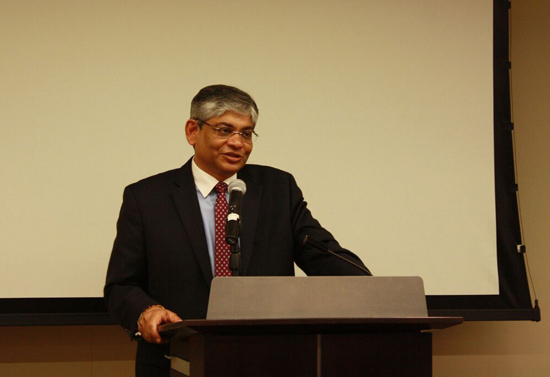
India Ambassador to the U.S. Arun Kumar Singh speak with Jewish community leaders.
His Excellency Arun Kumar Singh, India’s ambassador to the United States, addressed a special joint meeting of JUF and AJC on Aug. 27.
Singh who had previously served as his nation’s ambassador to Israel, spoke about the long history of Jewish life in India and his experience engaging with Israelis of Indian origin.
“They would tell me Israel is my fatherland and India is my motherland,” Singh said.
Echoing remarks earlier in the meeting by Israeli Consul General to the Midwest Roey Gilad, Singh discussed the growing bilateral trade between Israel and India in hi-tech, agriculture and defense, which will reach $4.5 billion this year. Of particular importance to India’s development are 28 agricultural centers using Israeli technology that have been established in nine states.
Both diplomats also mentioned the importance of tourism between the countries, which helps deepen people-to-people connections. One indication of the burgeoning bilateral relations is President Pranab Mukherjee’s plan to visit Israel in the near future.
On a local level, the Jewish Community Council of West Rogers Park , whose leaders attended the meeting, has launched a project with the Indian community and others to advance neighborhood business initiatives, while JUF is organizing a mission to India in November.
Other stories
-
Meet Andrew S. Hochberg, 2021 Julius Rosenwald Memorial Award recipient
Celebrate Andy Hochberg at the virtual Annual Meeting on Sept. 14
Read more -
Two local teens win national recognition
Recipients of the annual Diller Teen Tikkun Olam Awards
Read more -
Celebrating six young award winners cultivating the community
Introducing young adult award winners
Read more