Humankind: Of lower and higher
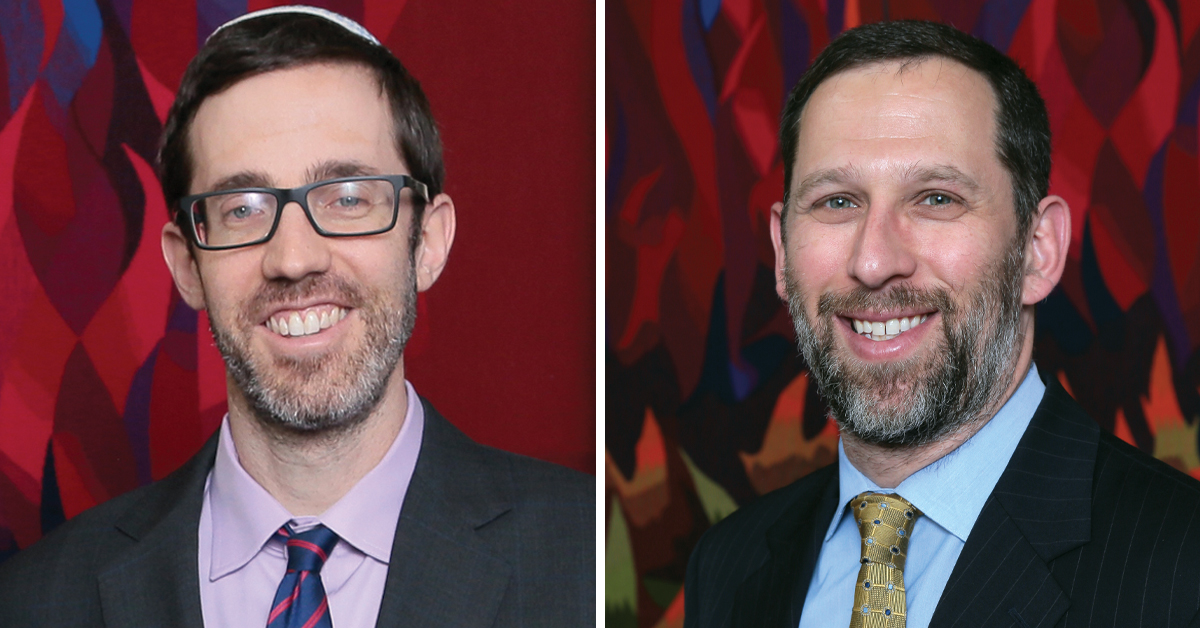
Rabbi Alex Freedman and Rabbi Michael Schwab
The secular scientist says to God, “Listen, God, we’ve decided we don’t need You anymore. These days we can clone people and do all sorts of things that used to be considered miraculous.”
God replied, “Don’t need Me, huh? Let’s see if You can make a human.”
“Fine,” says the scientist. He bends down to scoop up a handful of dirt.
“Stop!” says God. “Not so fast. Get your own dirt.”
The Book of Genesis is all about beginnings. Let’s take a closer look at God’s two ingredients, as it were, for making humankind: “The Lord God formed man from dust of the earth– Afar Min HaAdamah –and breathed into his nostrils the breath of life– Nishmat Hayim . So the human became a living being” (Gn. 2:7).
We see that humanity is formed from both lower matter–dirt– and upper matter–God’s breath of life. As it turns out, this dual origin of humanity is unique among creatures. And this duality preserves a delicate balance in the universe.
Here is Rashi’s insight on our verse: “God made Adam from the lower world and the upper world–a body from the lower with a soul from the upper.” In fact, this duality exists in every day’s act of creation, highlighting the uniqueness of human beings.
Day 1. Shamayim Va’Aretz , Heaven and earth. Both upper and lower.
Day 2. The Rakia firmament in the skies. Upper.
Day 3. The dry land and the seas. Lower.
Day 4. The sun, moon, and stars. Upper.
Day 5. The sea animals. Lower.
How can one more product–humanity–be created while preserving this equilibrium between upper and lower? Day 6. Adam is created from dust of the earth–lower– and God’s breath of life–upper. This unique fusion maintains the pristine balance, even as it highlights the uniqueness of human beings. What does it mean for humankind–then and now–to possess these two origins?
Let’s consider three ideas.
The first is from Rashi himself. The lower part of the human is the body. We are indeed composed of organic matter. Meanwhile, the upper part of the human is the soul; each of us is more than a body. We all have a Guf and Neshama , a temporary body and an eternal soul. As the Etz Hayim Chumash notes, “After death, the body returns to the earth, its source– and the soul to God, its source.”
Second: People must take care of both lower and higher needs. “Lower” needs include the things we must do every day to survive: to eat and drink, to find clothing and shelter, to sleep, to create families, to socialize, to do the things many other animals do. But life is about more than surviving. We must also attend to “higher” needs every day, things unique to people: education, spirituality, community, ethics.
Third: Each of us has the capacity to be an animal or an angel. The range of human potential spans from earth to heaven. Our individual actions can lower us to the level of animals–dust of the earth–or elevate us to the level of angels–God’s breath of life. Every day we are faced with choices, small or challenging. How do we respond?
When we make decisions–especially, challenging decisions–we place ourselves on the ladder of humanity which ranges from contemptible to commendable. From low character to high.
Are we humans born to be more like animals or angels? Both. To follow instinct or ideals? Both. So, let’s aim high.
Rabbi Alex Freedman is the Associate Rabbi and Rabbi Michael Schwab is the Senior Rabbi of North Suburban Synagogue Beth El in Highland Park.