This spring, both of my daughters will be graduating. OK, so they’re graduating pre-K and kindergarten—but you might as well tell me they’re graduating high school or getting their master’s degrees, because they’re growing up fast!
Wasn’t it just two months ago that I was holding my older daughter, an infant, cooing on my lap during Zoom calls with my colleagues during the pandemic?
And I swear it was just the other week that my husband and I were introducing a brand-new big sister to her two-day-old little sister, fresh from the hospital.
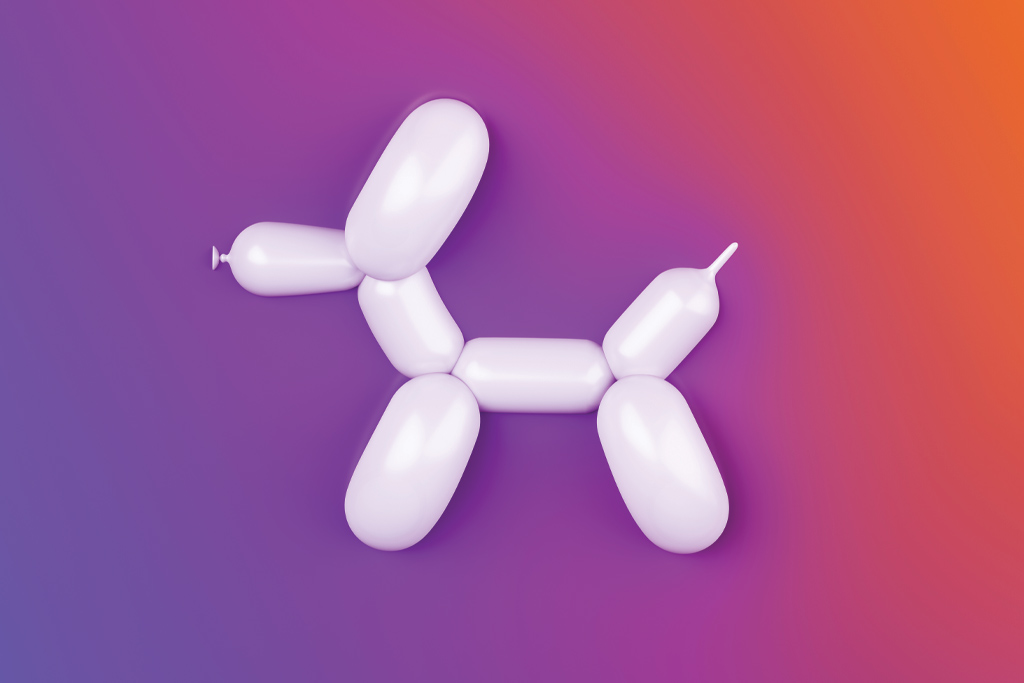
Time flies as I watch these little souls bask in life’s wonderment. I delight in their delight: They delight in transforming a pile of sticks, leaves, and dirt into a land of enchantment. They delight in balloon animals—at our Purim carnival, I watched them wait in line for an hour for the balloon-animal artist to fashion two unicorns from pink and silver balloons. They delight in singing: Taylor Swift, KPop Demon Hunters, “Dayenu,” you name it. They belt it out, loudly and joyfully, off-key.
My children, and most children for that matter, seem to live by the words of Rabbi Abraham Joshua Heschel who said: “Our goal should be to live life in radical amazement…. Everything is phenomenal; everything is incredible. Never treat life casually. To be spiritual is to be amazed.”
Don’t get me wrong—it’s not all unicorns and K-pop. You know how they say the days are long, but the years are short? They were right; at the end of each marathon day, I’m one tired mama.
And yet, simultaneously, the years feel like they’re speeding up—and I don’t want to miss any of it! Because I know that one day I’ll be nostalgic for this precious time.
Psychologists have explored the subject of nostalgia in recent years, and have discovered that there are varying types. As we know, nostalgia, in general, is a longing for a past remembrance, usually a happy memory, with a touch of wistful yearning for something that is gone. In contrast, both “anticipated” nostalgia and “anticipatory” nostalgia focus less on the past, but rather on the present—and the future.
Psychologist Dr. Wing Yee (VerBon) Cheung has devoted much of her research to the subject of nostalgia. Anticipated nostalgia, she explains, is the foreseeing of looking back on life events and expecting to feel nostalgic about them in the future. In contrast, anticipatory nostalgia, Cheung says, is missing something in the present, before it is lost.
I’m inclined to both types: I currently feel nostalgia for these moments with my young children, and I predict that I’ll miss this time in the future, too.
I believe it’s all about savoring the moment, being present in the present, and not letting days passively slip away.
Cheung suggests that, by appreciating experiences now, we can create more meaningful and robust nostalgic memories in the future.
Judaism, too, places a high value on the here and now. The word “ha-yom”—“this day” or “today”—appears frequently in the Bible, stressing that our Torah isn’t just a historical document, but a living and breathing text, guiding us to act in the present, and not delay our deeds for the future or for the world to come.
Through prayer, blessings, and mitzvot, Jewish texts teach us to be intentional about our days and infuse meaning and holiness into the present, which ultimately safeguards our memories in the future.
I’m striving to show up in the moment with my girls—and with my other loved ones, too. To put down my phone, quiet the external noise, and treasure these sweet moments with my favorite people.
And I hope you will, too. In this issue—as we celebrate love and relationships of all kinds—I challenge you to find ways to be present and intentional in your relationships.
Let’s cherish the people who matter most to us. Because, after all, it goes so fast. to just exist, but to live with intentionality and purpose. Each of us is here to shine our own unique light on the world. Where will you shine yours?