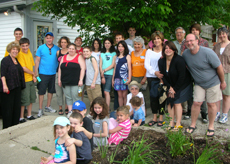
At the age of 7, Michael already considered himself a philanthropist and social activist. Each year, Michael, his brother, Steven, and cousins Matthew, Jordyn, and Gillian carefully decide how to spend their “philanthropy budget.” One year, Michael spotted some mittens on sale for only 65 cents. He consulted with his team and the children spent $100 to buy as many mittens as they could to distribute to the poor.
Every year, as a grandmother, I deposit $100 in a “philanthropy” bank account for each of our five grandchildren. Our “Philanthropy Club” helps the children spend money on philanthropic actions. The Club broadens my relationship with my grandchildren beyond movies and cookies, and teaches them values that are important to us.
The philanthropy club was so meaningful that it inspired me to create Grandparents for Social Action (GSA), an organization that encourages seniors to engage in social action and teach their grandchildren, through word and deed, that they have a responsibility to perform acts of kindness, justice and world repair. I believe we all want to leave a legacy to the next generation. There are many ways to achieve that goal.
GSA serves a number of important functions, including developing a grandparent network and providing ideas to spark a teaching relationship between grandparent and grandchild. It offers a free monthly e-newsletter, with a column by me, a.k.a. “Bubba Sharon,” along with social action quotes, book reviews, activity ideas, inspirational stories, articles by guest columnists, and more.
To take our work to the next level, I’ve partnered with JUF and InterfaithFamily/Chicago to develop a series of classes, known as GIFTS (for Gratitude, Inspiration, Family, Tzedakah and Service) to teach grandparents how to pass along their values to their grandchildren. Funded by a Covenant Foundation Ignition Grant, the GIFTS program includes five 90-minute sessions taking grandparents through the process of visualizing their own values, and giving them the skills to pass those values along to their grandchildren. The classes, piloted at four congregations last fall, are currently running at Anshe Emet, Bernard Weinger JCC, and Beth Tikvah, and will run at additional congregations and locations this fall. Information about the classes and website, and soon the curriculum and supporting materials, including inspiring videos, will be available on a new GIFTS webpage on juf.org.
We love to just be with our grandchildren, to teach and play with them, but most important is to teach them values. As our grandparents taught us, so must we teach our grandchildren that together we can change the world, that each individual child can make a difference and repair the world. Our efforts and actions will live on unto the thousandth generation. It is an awesome responsibility and a most exciting opportunity.
For more information, visit grandparentsforsocialaction.org or email sharon@grandpar
Sharon Morton is the grandmother of five grandchildren, ages eight to 19. She is the founder and executive director of Grandparents for Social Action. She was the educational director of Am Shalom in Glencoe for more than 30 years, and now is a storyteller and educator who teaches at congregations around the county.
Hallie Shapiro, assistant vice president of Israel Experience and Youth Initiatives for the Jewish United Fund/Jewish Federation of Metropolitan Chicago, contributed to this article.
Other stories
-
Meet Andrew S. Hochberg, 2021 Julius Rosenwald Memorial Award recipient
Celebrate Andy Hochberg at the virtual Annual Meeting on Sept. 14
Read more -
Two local teens win national recognition
Recipients of the annual Diller Teen Tikkun Olam Awards
Read more -
Celebrating six young award winners cultivating the community
Introducing young adult award winners
Read more

It goes without saying that the aging process affects everyone’s physical appearance differently-some reach their 60s without much gray hair; some wrinkle sooner than others. That’s true with mental aging, too, and now, researchers are studying a group of older people whose brains are high-functioning and show little signs of age.
They’re called the Super-Agers-high-performing persons in their 80s, 90s and 100s who have mental capacities of persons much younger than their peers. They are so different from average-performing, similarly aged people, that they have prompted numerous studies.
A longitudinal study of Northwestern University’s Super-Aging Project looked at the appearance of the Super-Agers’ brains. Led by principal investigator Changiz Geula, M.D., the study took Magnetic Resonance Imaging scans (MRIs) of 48 octogenarians’ brains and compared the MRIs to the brain scans of 50- to 60-year-olds and average 80-year-olds.
In a recent interview with Emily Rogalski, Ph.D., Research Assistant Professor at Northwestern and the study’s co-investigator, she elaborated, “We found that the brains of the Super-Agers were exactly identical or better than the brains of 50- to 60-year-olds and average 80-year-olds. Specifically, we found that the Super-Agers’ brains had a much thicker left anterior cingulated cortex than both comparison groups.” The anterior cingulated cortex is known for its role in error detection, attention and motivation, although its role in the brains of Super-Agers has not yet been fully explored. Rogalski noted the Super-Agers had aged physically at a normal rate, but their brains were youthful
in appearance.
The methodology of the study was novel. “We studied the aging brain in a completely different way,” Rogalski said. “The whole idea was to look at the opposite side of dementia-to see what was going on in elderly brains that made them function extremely well. We wanted to gain insight about the older high-performing brains so we could eventually understand the disease of dementia, and hopefully cure it.” In other words, instead of studying dementia, or what goes wrong in brains, the researchers wanted to study what goes right in brains as people age.
Volunteers were submitted to tests that included neuropsychiatric testing, imaging, medical history, psychosocial history, education and personality. Those who performed in the upper tier of cognitive ability were chosen. Simply put, all had to be over 80, be able to think well and have a good memory. The participants agreed to be in the study for the long haul. Many of them agreed to donate their brain to the project upon their death.
Rogalski admits that the members of the study could not have been more different. Some were smokers and heavy drinkers; one was a Holocaust survivor; another a cancer survivor. Some were academics; others were uneducated. The study reported that “at least superficially, they appear to be nothing like one another beyond possessing the memory of an individual two or three decades younger.”
Rogalski states anecdotally, “In fact, it was not always the case that the most active people had the most highly functioning brains. Some of the subjects were very sedentary.” Rogalski said that, though high functioning abilities had long been thought to have genetic roots, one purpose of the study was to investigate the epigenetics (study of the heritable changes in genes from other causes) of the aging process of the brain. “Besides their DNA,” she said, “we are interested in how their environment could affect brain aging.”
The study, now in its sixth year, could lead to drug discoveries that might slow the brain’s aging process. The next step for the Northwestern study will be to compare the connectivity between brain regions in Super-Agers and control subjects. A published article with the project’s latest findings is due to be released in late fall.
What are the implications for society? Madelyn Iris, Ph.D., Director of CJE’s Leonard Schanfield Research Institute and Adjunct Associate Professor of Preventive Medicine at Northwestern’s School of Medicine emphasizes: “Studies like these remind us once again of the amazing diversity of experience, lifestyles and personal history to be found when working with any group of older adults.” Iris challenges us all: “Researchers, policy makers and society as a whole have to be responsive to this diversity and make sure that our programs and policies never neglect anyone, whether a Super-Ager or an assisted living resident.”
Since 1972, CJE SeniorLife has enhanced the lives of older adults and their families through an innovative, comprehensive network that includes life enrichment programs, supportive resources, healthcare, research and education. CJE is a partner in serving the community, supported by the Jewish United Fund/Jewish Federation of Metropolitan Chicago. For more information about CJE services, call 773/508-1000 or visit www.cje.net.
Mary Keen is the Marketing and Communications Manager at CJE SeniorLife.
Other stories
-
Meet Andrew S. Hochberg, 2021 Julius Rosenwald Memorial Award recipient
Celebrate Andy Hochberg at the virtual Annual Meeting on Sept. 14
Read more -
Two local teens win national recognition
Recipients of the annual Diller Teen Tikkun Olam Awards
Read more -
Celebrating six young award winners cultivating the community
Introducing young adult award winners
Read more
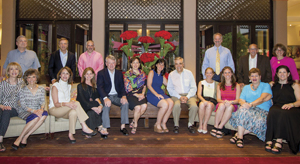
This spring, 21 members of JUF’s King David Society (KDS), embarked on a once-in-a lifetime mission to Morocco along with 54 KDS members from 16 Federations across the country. KDS members generously support our community with a minimum gift of $25,000 to the JUF Annual Campaign. From Fez, to Rabat, Casablanca and Marrakech, we were enchanted by Morocco’s colorful architecture and rich history, and moved by the warm reception we received.
The country is ablaze with color: blue walls, colorful mosaic tiles and narrow cobblestone streets bustling with commerce. Donkeys, snake charmers and the aroma of spices and mint tea were all part of the Morocco we experienced. Each city was uniquely captivating, from the medieval aura of Old Fez where residents live as if it were hundreds of years ago, to the cosmopolitan capital city of Rabat with its contemporary restaurants and towering buildings.
We were privileged to travel with Marilyn Diamond, Honorary Consul General for Morocco in Chicago, a true scholar of its history, culture, economic and political landscape. Through her official capacity, we gained extraordinary access to key government and business leaders, including a reception at Villa Mirador, the residence of US Consul General, Brian Shukan and his wife Clare. We were joined by Dwight L. Bush Sr., Ambassador of the United States to the Kingdom of Morocco, and were mesmerized by an unforgettable private recital by renowned pianist, Marouan Benabdallah.
We met with an impressive list of dignitaries and saw many historical sites, but our primary purpose was to gain an understanding of Morocco’s unique character where Arab, Muslim, and Jews live openly and respectfully alongside one another, and to learn how Federation dollars are used to care for our Jewish Moroccan brothers and sisters in need. This is at the heart of what makes JUF missions so special. Dr. Steven B. Nasatir, JUF/JF President and a Morocco Mission participant, summed up our roles this way: When you participate in a JUF Mission to a country that has geopolitical significance for Israel and the Jewish people, you become a mini-ambassador for the Jewish people. That certainly was the case on this mission and those who participated played that role with intelligence and commitment.”
Participant Linda Schottenstein Fisher remarked, “I have so many memories but chief among them is the juxtaposition of the Jewish Day School where the kids were singing Hebrew at the top of their lungs and wearing kippot, smack dab in the middle of a Muslim country.”
Dana Hirt noted, “A JUF Mission is one of the most interesting ways to see the world. I came away with a deep appreciation for the culture of the country, a clear understanding of the history of the Jews in the region, an awareness of the challenges and opportunities facing the region, and some wonderful new friends.” Fellow travelers Laure and Todd Lustbader and Shari and Mark Slavin echoed Dana’s observations about their new awareness of the importance of our work abroad.
Support for the Jewish community and the promotion of tolerance and mutual respect is a primary objective of His Majesty, King Mohammed VI, a strong and committed friend to Morocco’s 4,500 Jews, whose allegiance dates back to his grandfather, King Mohammed V. Marilyn and Michael Vender, Chicago Mission Co-Chairs, recalled that King Mohammed V refused a request by the pro-Nazi Vichy France regime to round up the country’s Jews for deportation. When asked to provide a list of all the Jews living in Morocco, the King replied, “I don’t have any Jews here, I only have Moroccans.” That act of defiance saved countless lives, and the future generations of those Moroccan Jews now number over a million throughout Israel and Europe.
Our jet lag is almost gone, but because of the extraordinary experience we shared and the close friendships we forged, the memories of this mission will last a lifetime.
To find out more about JUF Missions and VIP travel, contact Naomi Fox, Director of Missions at 312-357-4929 or [email protected].
To learn more about JUF’s King David Society contact Patti Frazin at (312) 357-4878 or [email protected].
Kim Shwachman served as Mission Co-Chair alongside her husband, Perry. She also serves as JUF’s Mission Chair and as a JUF Board Member.
Other stories
-
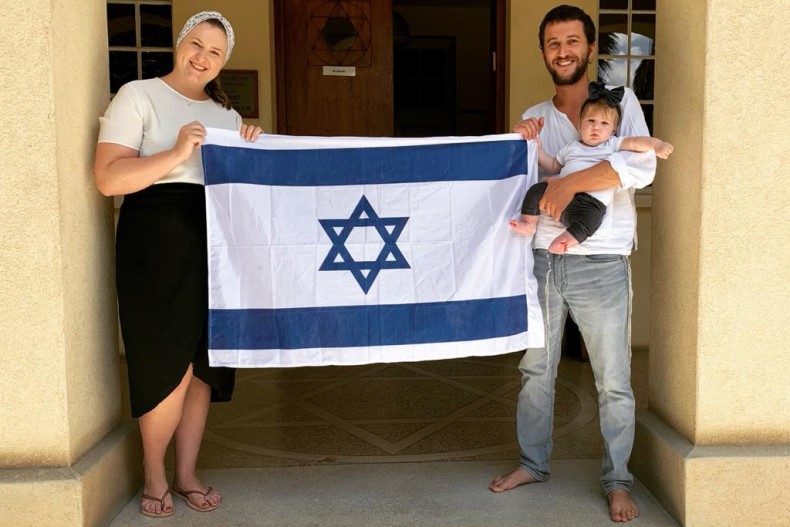
Chicago to Israel to Kenya
A family’s story of living Jewishly on three continents Michelle Cohen World May 28, 2021 Avital, Tzofia, and Netanel Kaszovitz outside their home in Nairobi on Yom HaAtzmaut. When Avital Kaszovitz prepared to be a Modern Orthodox shlicha (emissary) to the Jewish community in Ke
Read more -
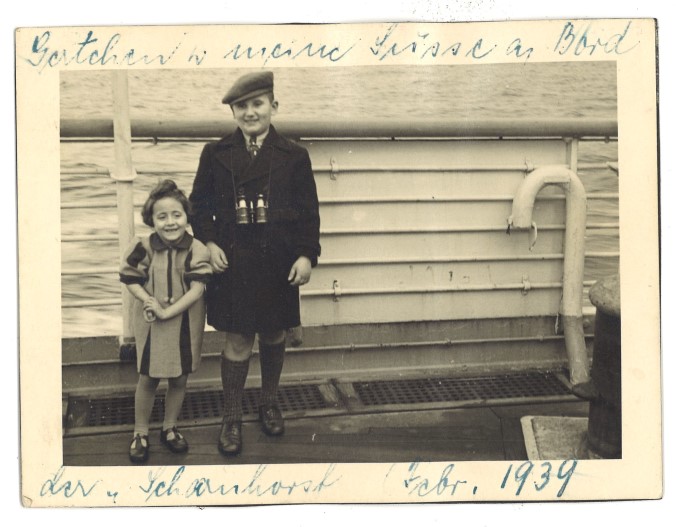
New exhibit spotlights the experience of ‘Shanghai Jews’
Explore a new Illinois Holocaust Museum and Education Center exhibit
Read more -
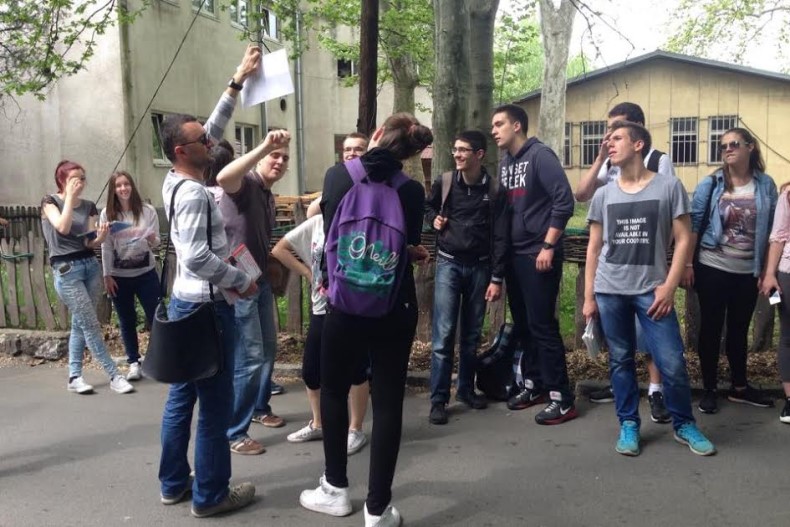
Europe’s brave new teachers of the Holocaust
Teaching the Holocaust in the modern era has its difficulties and rewards.
Read more
To commemorate the 75th anniversary of that ill-fated ship, the SS St. Louis Legacy Project and Protravel International are hosting an educational cruise, Nov. 5-19, on the Crystal Serenity.
The trip will include meetings with survivors of the so-called “Voyage of the Damned,” a viewing of a documentary about its voyage, and a mock trial of FDR for refusing its refugees.
The cruise will depart New York City for Baltimore, Norfolk, Charleston, Grand Turk, Curaçao, and Aruba, and disembark in Miami.
For more information on retracing the SS St. Louis history, call (800) 785-1944.
Other stories
-
Meet Andrew S. Hochberg, 2021 Julius Rosenwald Memorial Award recipient
Celebrate Andy Hochberg at the virtual Annual Meeting on Sept. 14
Read more -
Two local teens win national recognition
Recipients of the annual Diller Teen Tikkun Olam Awards
Read more -
Celebrating six young award winners cultivating the community
Introducing young adult award winners
Read more
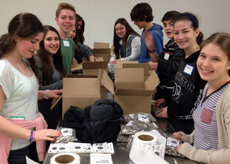
This spring marked the launch of “Mitzvah Week,” a new collaboration between JUF’s Tikkun Olam Volunteer (TOV) Network and Solomon Schechter Day School to bring volunteerism to the entire student body. The initiative was created to bring Jewish values to life and inspire students from learning toward action. Mitzvah Week kicked off on Yom Hashoah, propelling students to make the world a better place in memory of all those who perished in the Holocaust.
Whether making sandwiches for local shelters, sorting food at the Northern Illinois Food Bank, learning about sustainability with Pushing the Envelope Farm, building benches for JCC, or donating birthday gifts to CJE residents, the week was action packed and the impact profound.
Each grade did service projects tailored to their age:
Grades K-2: donated 256 birthday bags to CJE SeniorLife; and planted 289 trees, whose fruit will be donated to Northern Illinois Food Bank.
Grades 3-4: Made 307 sandwiches for four local agencies: Lincoln Park Community Shelter, Inspiration Corporation, A Just Harvest and Connections for the Homeless; created 100 birthday and various greeting cards to these shelters; and decorated 100 cookies for Temple Sholom’s Monday Meal
Grades 5-8: Collectively provided 28,680 meals to their hungry neighbors at the Northern Illinois Food Bank
Grade 7: Built and painted 15 benches with Jewish themes for the JCC’s Camp Chi.
In partnership with Young Family Programming and Teen TOV, TOV designed meaningful service projects for each grade. To augment Mitzvah Week, collection drives were coordinated to help stock our agencies with critical supplies.
For more information about TOV, www.juf.org/tov.
Yael Brunwasser is director of Volunteer Services (TOV) for the Jewish United Fund of Metropolitan Chicago.
Other stories
-
Meet Andrew S. Hochberg, 2021 Julius Rosenwald Memorial Award recipient
Celebrate Andy Hochberg at the virtual Annual Meeting on Sept. 14
Read more -
Two local teens win national recognition
Recipients of the annual Diller Teen Tikkun Olam Awards
Read more -
Celebrating six young award winners cultivating the community
Introducing young adult award winners
Read more
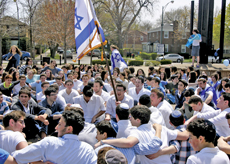
Four years away from home! For some, it’s a dream come true. For others, a frightening rite of passage. But for every young adult, it is transformative. Because there is something about that first time a young adult is away from home, at just the right age, in a diverse environment of the highest level of thinking that makes the college years unlike any other. Perhaps this is because there is no other period of time when one is immersed in so many new ideas, experiences, and opinions. And once those thoughts take root, they rarely change. For the path toward who we are, who we marry, who we vote for, and what we are passionate about so often begins in college.
For the Jewish community and for the sake of our Jewish future, this means that we have a short window of opportunity to ensure that our college students one day take their place in our collective Jewish story. To us as educators and Jewish leaders, the challenge of ensuring that our Jewish future is bright has perhaps never been greater. On many of our nation’s most prestigious campuses, our young people face hostility against Israel, divestment campaigns, and Israel as an apartheid debates, yet they are rarely equipped with answers. These are ideas that so many of our Jewish youth, raised in the comfort of their suburban communities, have never even considered. And yet, they are forced to answer on behalf of the Jewish State, remain silent, or worse, oppose her.
But even more, Jews on campus are also often left for the very first time to decide for themselves whether or not they will observe the holidays (Rosh Hashanah and Yom Kippur are often in the first week of classes!), whether they will keep kosher, observe Shabbat, or connect with a minyan (quorum of 10).
In my own Modern Orthodox Jewish day school, where I serve as dean, we strive for four years (plus at least one additional intensive year of study in Israel) to provide our students with the strongest possible background of Torah knowledge. We dedicate each day to strengthening our students’ love for Judaism, commitment to community, and dedication to Israel. Our seniors spend a full semester course learning to advocate for Israel on campus. And we organize Israel programming, Shabbatonim, and experiential Jewish learning to light a fire for Judaism in the hearts and souls of our students.
And finally, when our upperclassmen begin the college application process, we encourage them to take four steps to prepare themselves for four years of Jewish growth and commitment on campus. If all of our young Jewish people considered these four steps, perhaps the challenges facing Jewish students on campus would not be quite as great.
1. Choose a college with a thriving Jewish campus life. For us, that means a campus with kosher food, daily services, opportunities for Torah learning, and housing which encourage Sabbath and holiday observance. To assist our students, we even rate schools not only by their academic standing, but according to the quality of Jewish life on campus. But for any Jewish student, it is important to choose a school with a significant percentage of Jews on campus, Jewish activities, and holiday services. Even if this isn’t a priority at the time of applying, leave the opportunity for Jewish connection open.
2. Find a Jewish mentor. Following the advice of our sages, who taught “assay l’cha rav u’knay l’cha chaver” (establish for yourself a rabbi and engage a friend), make sure that once on campus you seek out a Jewish professional, professor, campus rabbi, or even an older student who can advise you on Jewish matters. You’ll stay more connected if someone is looking out for you and have a sounding board for any matters that may arise regarding Israel and Jewish life on campus. Or as this year’s Israel Prize recipient (and former ICJA student) Rabbi Aharon Lichtenstein once told our parents-that the only way he felt prepared to attend Harvard, where he received his Ph.D. in English literature, was the fact that he was able to study on a regular basis with his mentor, Rabbi Joseph
B. Soloveitchik.
3. Get involved in Jewish cultural opportunities. Every campus with a thriving Jewish life has Jewish music, art, clubs, and trips galore-all accessible to Jewish students. No doubt you’ll experience hundreds of social and cultural experiences in four years of college. Make sure to seek Jewish opportunities. Not only to stay connected with Jewish students on campus, but to create the life-long Jewish friendships that will define your life (and maybe even to meet your b’shert!).
4. Make sure to find the Hillel, the Chabad, or whatever Jewish student organization is on campus. Because it’s important to “do Jewish” rather than just “be Jewish.” So get involved and help. Get involved and make a difference. Get involved and build community.
Rabbi Dr. Leonard A. Matanky is dean of Ida Crown Jewish Academy in Chicago, rabbi of Congregation KINS, president of the Rabbinical Council of America, and co-chair of JUF’s Rabbinic Action Committee.
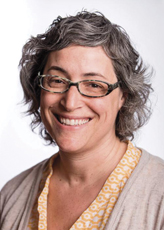
The Covenant Foundation honored three educators, including Chicagoland Jewish High School’s Dr. Rebecca Schorsch, for excellence in the field of Jewish education.
Along with Schorsch, the two other recipients are Alison Kur, executive director of Jewish Living at Temple Beth Elohim in Wellesley, Mass., and Rabbi Yisroel Boruch Sufrin, Head of School at Harkham Hillel Hebrew Academy in Beverly Hills, Calif.
Dr. Rebecca Schorsch, director of Jewish Studies at Chicagoland Jewish High School (CJHS) in Deerfield, has made an impact on students, fellow educators, and the greater community in the Chicago area and beyond with singular dedication and leadership.
At CJHS since 2003, she oversaw the merger of the school’s Bible, Talmud, and Jewish Thought departments under a greater Jewish Studies department and has led it for the past three years.
More broadly, she has created a culture of Torah Lismah—learning for its own sake—and has developed a voluntary learning program to engage various levels of students, her colleagues included, in Jewish study. For example, a series of lunch-and-learns by faculty and for faculty has created a new learning space for educators in which the categories of teacher and learner are fluid.
“What is compelling and even stirring both in Rebecca’s teaching and in her more personal interactions is how she pushes people to challenge their beliefs and engage in difficult reflection about the things that matter most,” said Tony Frank, CJHS Head of School, who nominated her for The Covenant Award. “Ultimately, this is the way in which Rebecca’s influence is so often experienced not merely as profound, but as transformative.”
Although based at CJHS—which enrolls 166 students in grades 9 to 12—her reputation and influence as a Jewish educator has traveled far beyond the school’s walls. Dr. Schorsch has served as Scholar-in-Residence at Camp Ramah in Wisconsin since 2001, teaching campers, staff, visitors, and families, and working with counselors and unit heads to craft educational programming.
“Reaching kids of any age can be a challenge for an educator,” said Benjy Forester, a 2012 graduate of CJHS who studied with Dr. Schorsch and continues to do so as a counselor at Camp Ramah in Wisconsin. “Empowering the next generation of Jews and helping them cultivate Jewish identities that make them proud, however, is an imperative on which Jewish continuity depends. The skills Rebecca teaches and the conversations she begins leave students with important challenges and lessons that resurface as they continue their lives as independent young Jewish adults.”
She frequently teaches in private study groups, university and academic settings, local and regional synagogues, and Jewish institutions and organizations nationally, describing herself as an “educator at large” and a “community educator” with the stated purpose of helping each student individually on his or her Jewish journey.
“Every day I feel blessed to do what I love, something at once meaningful and critical to building the world that we wish to inhabit,” Schorsch said. “I am grateful to Covenant for honoring my work and, more importantly, for valuing the significance of Jewish education.
“This award depends upon the deep support of family and friends, students, colleagues and community, who nourish me, encourage me, challenge me, and work devotedly to teach and embody Torah. I am excited to join a national cohort of committed and excellent Jewish educators who will further stimulate my thinking and support my work in the field.”
For guidelines on nominating an educator for a 2015 Covenant Award, and to view a list and biographies of past recipients, visit www.covenantfn.org/awards. The Covenant Foundation is a program of the Crown Family Philanthropies.
Other stories
-
Meet Andrew S. Hochberg, 2021 Julius Rosenwald Memorial Award recipient
Celebrate Andy Hochberg at the virtual Annual Meeting on Sept. 14
Read more -
Two local teens win national recognition
Recipients of the annual Diller Teen Tikkun Olam Awards
Read more -
Celebrating six young award winners cultivating the community
Introducing young adult award winners
Read more
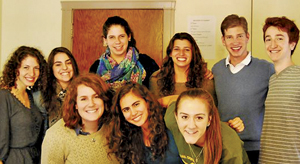
Graduating high school seniors are getting ready to head to colleges and universities all over the country and Hillels are getting ready to welcome them to their campus communities. Once on campus, there are (at least) a hundred things vying for the attention of incoming freshmen: getting to know roommates, finding your way around campus, learning about student clubs, etc. Often, and much to the chagrin of their parents, Jewish life on campus isn’t a new student’s top priority.
A new website, www.jcollegebound.org, makes the transition a bit easier. As soon as a student knows the college or university they’ll be attending, they can sign up and then hear from a Hillel professional on that campus.
From the Hillel perspective, Andrea Hoffman, executive director at the Newberger Hillel Center at the University of Chicago, explained, “We know how overwhelming it can be to come to a new environment and be far from a familiar support system. This connection allows us to welcome a student before they even arrive and help them get to know about campus and community resources.”
Jonas Actor, a second-year student from Houston, said, “There is so much going on when you first arrive, it would have been great to have had Jewish contacts on campus before I even got there.”
“We are always excited to meet incoming students, even just through email, before they arrive on campus. It also gives them an opportunity to ask questions they may not be thinking about during Orientation Week,” said David Korenthal, UChicago Hillel engagement associate.
The jcollegebound site was developed by the Hillels of Florida and was expanded this spring to serve campuses nationally. Information is only shared with the Hillel director at the University indicated by the student, and never shared with third parties.
While jcollegebound hopes to help the transition from home to college and university, UChicago Hillel, Northwestern Hillel, Metro Chicago Hillel and Illini Hillel all wish a smooth transition for our graduating seniors moving from campus to
graduate schools and the
work-world.
For more information, visit www.jcollegebound.org.
While jcollegebound hopes to help the transition from home to college and university, UChicago Hillel, Northwestern Hillel, Metro Chicago Hillel and Illini Hillel, all part of JUF’s department of Campus Affairs and Student Engagement, wish a smooth transition for our graduating seniors moving from campus to graduate schools and the work-world.
Other stories
-
Local campus administrators convene on hate speech, bias
JUF and ADL brought together 17 student safety, diversity and inclusion and student affairs administrators and Hillel representatives from various Illinois campuses to discusses issues of hate speech and bias.
Read more -
Engaging students about Israel on campus
Too often we hear about difficulties facing Jewish college students on Illinois campus, but to focus solely on the politics gives only one piece of the complex narrative that is Jewish life on campus.
Read more -
Hillel International launches fellowship initiative to train young Jewish professionals
The Springboard Fellowship will train cohorts of young Jewish professionals in highly-valued skillsets and place them at local Hillel campuses for two years.
Read more
We stand in solidarity with Jews worldwide in condemning attacks in Belgium and France
Jewish United Fund/Jewish Federation of Metropolitan Chicago leaders David T. Brown, chairman, and Steven B. Nasatir, president, issued the following statement in response to the May 24 murders of four people at the Jewish Museum of Belgium, followed by the brutal assault on two men leaving a Paris synagogue:
The attacks perpetrated over the weekend against people inside and in proximity to Jewish institutions in Belgium and France shook us to our core. Vicious and deadly assaults such as these remind us of the baseless—and seemingly boundless—hatred some people harbor towards Jews.
On behalf of Chicago’s Jewish community, and people of good conscience throughout our wider community, we express our deepest condolences to the families of those killed at the Jewish Museum of Belgium, including Israeli tourists Mira and Emmanuel Riva; Dominique Chabrier, a French volunteer; and Alexandre Strens, a Belgian employee.
We pray for a refuah shleimah, a speedy and full recovery, for the men injured in France.
That the scourge of anti-Semitism continues to manifest in such crimes, testifies to the dark climate of hatred, provocation, incitement and delegitimzation that exists in some communities around the world. We call on the leaders of all nations to root out the menace of anti-Semitism and demonization, and to prosecute those who commit crimes motivated by extremism to the full extent of the law.
Other stories
-
Chicago to Israel to Kenya
A family’s story of living Jewishly on three continents Michelle Cohen World May 28, 2021 Avital, Tzofia, and Netanel Kaszovitz outside their home in Nairobi on Yom HaAtzmaut. When Avital Kaszovitz prepared to be a Modern Orthodox shlicha (emissary) to the Jewish community in Ke
Read more -
New exhibit spotlights the experience of ‘Shanghai Jews’
Explore a new Illinois Holocaust Museum and Education Center exhibit
Read more -
Europe’s brave new teachers of the Holocaust
Teaching the Holocaust in the modern era has its difficulties and rewards.
Read more
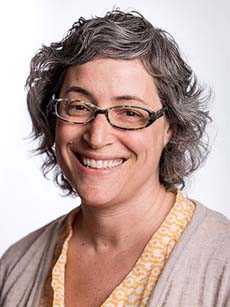
Three visionary educators demonstrating the power of inspired Jewish education, including Dr. Rebecca Schorsch, Director of Jewish Studies at Chicagoland Jewish High School in Deerfield, are the 2014 recipients of The Covenant Award for excellence in the field, The Covenant Foundation announced last week.
Schorsch is joined by Alison Kur, Executive Director of Jewish Living at Temple Beth Elohim in Wellesley, Massachusetts and Rabbi Yisroel Boruch Sufrin, Head of School at Harkham Hillel Hebrew Academy in Beverly Hills, California, as the recipients of the award, among the most coveted of honors in the field of Jewish education.
Eli N. Evans, Chairman of the Board of Directors of The Covenant Foundation, cited them as catalysts of innovation and educators with a drive, commitment and creativity that is strengthening students, institutions, communities, and the Jewish future.
“These three individuals illuminate the field of Jewish education through a combination of devotion, approach, strong leadership for the present and sacred obligation to the future,” he said. “Each of them, each day, is proving that Jewish education – across the broad spectrum of ages, venues and denominations – fuels individual and community enrichment, cohesion and growth. They are models of what we all can be.”
Schorsch has made an impact on students, fellow educators and the greater community in the Chicago area and beyond with singular dedication and leadership. At CJHS since 2003, she oversaw the merger of the school’s Bible, Talmud and Jewish Thought departments under a greater Jewish Studies department and has led it for the past three years.
More broadly, she has created a culture of Torah Lismah – learning for its own sake – and has developed a voluntary learning program to engage various levels of students, her colleagues included, in Jewish study. For example, a series of lunch-and-learns by faculty and for faculty has created a new learning space for educators in which the categories of teacher and learner are fluid.
“What is compelling and even stirring both in Rebecca’s teaching and in her more personal interactions is how she pushes people to challenge their beliefs and engage in difficult reflection about the things that matter most,” said Tony Frank, CJHS Head of School, who nominated her for The Covenant Award. “Ultimately, this is the way in which Rebecca’s influence is so often experienced not merely as profound, but as transformative.”
Although based at CJHS – which enrolls 166 students in grades 9 to 12 – her reputation and influence as a Jewish educator has traveled far beyond the school’s walls. Schorsch has served as Scholar-in-Residence at Camp Ramah in Wisconsin since 2001, teaching campers, staff, visitors and families, and working with counselors and unit heads to craft educational programming.
“Reaching kids of any age can be a challenge for an educator,” said Benjy Forester, a 2012 graduate of CJHS who studied with Schorsch and continues to do so as a counselor at Camp Ramah in Wisconsin. “Empowering the next generation of Jews and helping them cultivate Jewish identities that make them proud, however, is an imperative on which Jewish continuity depends. The skills Rebecca teaches and the conversations she begins leave students with important challenges and lessons that resurface as they continue their lives as independent young Jewish adults.”
She frequently teaches in private study groups, university and academic settings, local and regional synagogues, and Jewish institutions and organizations nationally, describing herself as an “educator at large” and a “community educator” with the stated purpose of helping each student individually on his or her Jewish journey.
“Every day I feel blessed to do what I love, something at once meaningful and critical to building the world that we wish to inhabit,” Schorsch said. “I am grateful to Covenant for honoring my work and, more importantly, for valuing the significance of Jewish education.
“This award depends upon the deep support of family and friends, students, colleagues and community, who nourish me, encourage me, challenge me, and work devotedly to teach and embody Torah. I am excited to join a national cohort of committed and excellent Jewish educators who will further stimulate my thinking and support my work in the field.”
Schorsch, Kur and Sufrin join 69 other Jewish educators honored with a Covenant Award since the Foundation established it in 1991. Along with the honor, they will receive $36,000, and each of their institutions will receive $5,000.
The Foundation and the Jewish community will honor them at an awards dinner in Washington, D.C. on Nov. 9, during the General Assembly of The Jewish Federations of North America.
Other stories
-
Meet Andrew S. Hochberg, 2021 Julius Rosenwald Memorial Award recipient
Celebrate Andy Hochberg at the virtual Annual Meeting on Sept. 14
Read more -
Two local teens win national recognition
Recipients of the annual Diller Teen Tikkun Olam Awards
Read more -
Celebrating six young award winners cultivating the community
Introducing young adult award winners
Read more