The massacre in Orlando has reignited an impassioned debate in Congress on gun violence and terrorism in the U.S. and what additional measures can be taken to prevent or possibly minimize the lethality of future attacks.
After a 14-hour filibuster by Rep. Christopher Murphy of Connecticut — with support from colleagues including Illinois Sen. Dick Durbin — the Senate Democratic and Republican leadership agreed to allow votes next week on two proposals. The first would prevent suspected terrorists on the national watch list from purchasing firearms, and the other would expand background checks at gun shows and for online sales.
“Common sense dictates that we as a Congress listen to the pleas across America to stop this gun violence,” Durbin said. “What happened in Orlando was heartbreaking.”
Chicago’s Jewish Community Relations Council has a long-standing gun safety policy , which its 40 constituent organizations overwhelmingly approved in 1999. Included in this policy are calls for background checks and bans on automatic assault weapons.
“Gun violence continues to plague our society, from Orlando to the streets of Chicago, in devastating ways” said JCRC Chair David T. Brown, “We urge Congress to take concrete steps to implementing common sense reforms that could save countless lives.”
JCRC encourages you to find and contact your elected representatives .
Other stories
-
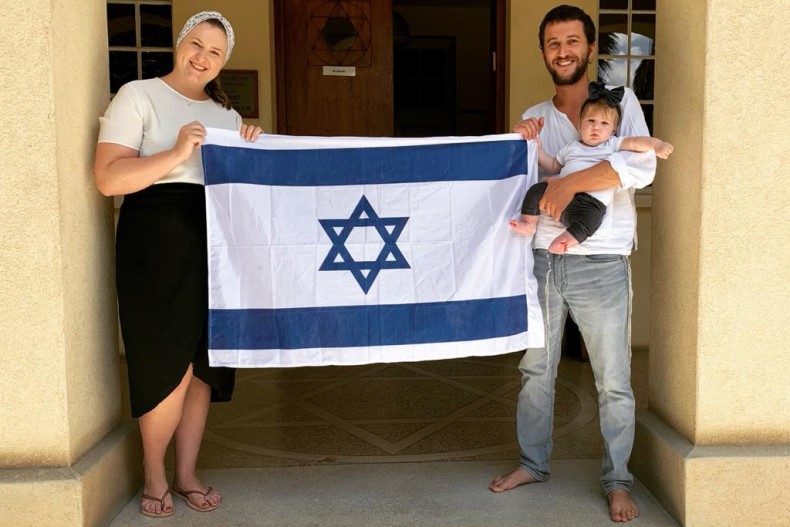
Chicago to Israel to Kenya
A family’s story of living Jewishly on three continents Michelle Cohen World May 28, 2021 Avital, Tzofia, and Netanel Kaszovitz outside their home in Nairobi on Yom HaAtzmaut. When Avital Kaszovitz prepared to be a Modern Orthodox shlicha (emissary) to the Jewish community in Ke
Read more -
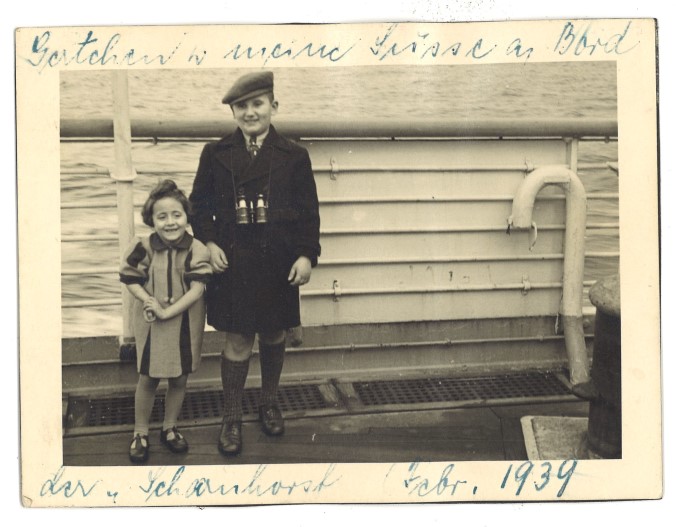
New exhibit spotlights the experience of ‘Shanghai Jews’
Explore a new Illinois Holocaust Museum and Education Center exhibit
Read more -
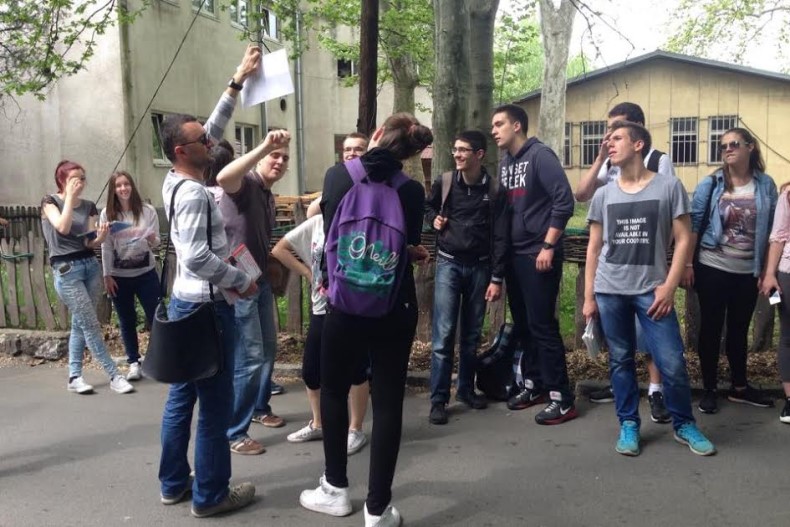
Europe’s brave new teachers of the Holocaust
Teaching the Holocaust in the modern era has its difficulties and rewards.
Read more
Plant a seed and watch it grow.
Once again, the Jewish Federation of Metropolitan Chicago’s South Suburban Mini-Grant Program will provide the financial oomph to help a wide array of Jewish cultural programming blossom in the Southland. Over the coming year, 13 cultural, religious and educational projects will share nearly $20,000 in small grants, ranging from $275 to $4,000 each.
Programs will look at historic figures ranging from “Rabbi” Abraham Lincoln to Japanese diplomat Chiune Sugihara; highlight Arabic music, great classical composers and Israeli and Jewish cinema; explore Hinduism, the Qur’an and black-Jewish relations; and delve into repentance, forgiveness and finding goodness amid the Holocaust.
All were selected from proposals submitted by area Jewish organizations and reviewed by a group of local residents – the South Suburban Mini-Grant Kehillah – which awarded the grants.
The full list of programs includes:
- BBYO Sports Day – presented by BBYO Great Midwest Region, Chaverim BBG and Barney Ross AZA
Teens from across Chicagoland and northwest Indiana will be brought to the Windy City Fieldhouse for an evening of sports and entertainment after Shabbat on Saturday, April 8, 2017.
- Chiune Sugihara: Unsung Hero of the Holocaust – presented by B’nai Yehuda Beth Sholom
A one-man play recounting the exploits of a foreign diplomat who saved thousands of Jews from the Holocaust.
- Ishmael and Isaac: A Concert of Arabic and Jewish Music and Poetry – presented by B’nai Yehuda Beth Sholom
Cross-cultural enrichment and increased mutual understanding among a diverse, interfaith group.
- The Forgiveness Project – presented by B’nai Yehuda Beth Sholom, Congregation Am Echad and Temple Anshe Sholom
Explores forgiveness from the Jewish perspective, as well as its impact on broader society. It’s especially relevant as we mark Selichot, the prayers of repentance recited before the High Holidays. Friday evening, Sept. 23, Saturday evening, Sept. 24, and Sunday morning, Sept. 25.
- We Called Him Rabbi Abraham – presented by B’nai Yehuda Beth Sholom and Temple Anshe Sholom
President Lincoln had a unique relationship with the Jewish community and, in some cases, was treated as one of us. We will learn how he acquired his exceptional status and how this fascinating relationship evolved.
- Got Questions? Jewish Responses to Modern Issues – presented by Congregation Am Echad
Answers to interesting modern questions of worship, ritual Shabbat observance, matters of personal status and family life, and communal issues.
- Hinduism: How Much Do You Really Know About It?
What Does the New Testament Have to Say About Judaism?
What Does the Qur’an Have to Say About Judaism?
Presented by Congregation Am Echad
Educates the Jewish and non-Jewish community about the beliefs, practices and holidays of Hinduism, and compares them to Judaism’s. Presented by Dr. Ronald Rutzky. Sundays March 26, April 30 and May 7, 2017.
- Chicago Festival of Israeli Cinema in the Southern Suburbs – presented by JCC Chicago
Presents two acclaimed Israeli films with facilitated discussion. Nov. 20, 2016.
- Chicago Jewish Film Festival – presented by JCC Chicago
Presents two acclaimed Jewish films with facilitated discussion. March 2017.
- In the Midst of the Holocaust There Was Goodness – Irene Sendler – presented by National Council of Jewish Women South Cook Section
Judy Winnick portrays Irene Sendler, known as the Angel of the Warsaw Ghetto. April 26, 2017.
- Race, Religion and Issues Affecting Blacks and Jews – presented by Temple Anshe Sholom
Michael Rubin examines interracial history from the Deep South and Chicago. 7-10 p.m. Thursday, Nov. 3, 2016.
- Yom HaShoah 2017, Remembering Together – presented by Temple Anshe Sholom
Music transcends words. The poetry of Alden Solovy, and IPO musicians will play music of Schulhoff, Ullman, Klein and Weinberg, composers who all were lost in the Holocaust. April 23, 2017.
- Judaism’s Influence on the Great Composers – presented by Temple Anshe Sholom
Professor and Refusnik Eduard Schmieder will discuss how composers were influenced by traditional Jewish music. Musicians from IPO will perform the Shostakovich Piano Trio No. 2.
Mini-grant proposals were reviewed and selected for the South Suburban Mini-Grant Kehillah by Dr. David Gottlieb and Bob Zitter (co-chairs), Laura Eisenwasser, Dan Greenberg, David Lebowitz and Bonnie Ribbet.
For more information, contact Alene Rutzky, Jewish Federation South Suburban Office coordinator, at (708) 798-1884 or [email protected] .
Other stories
-
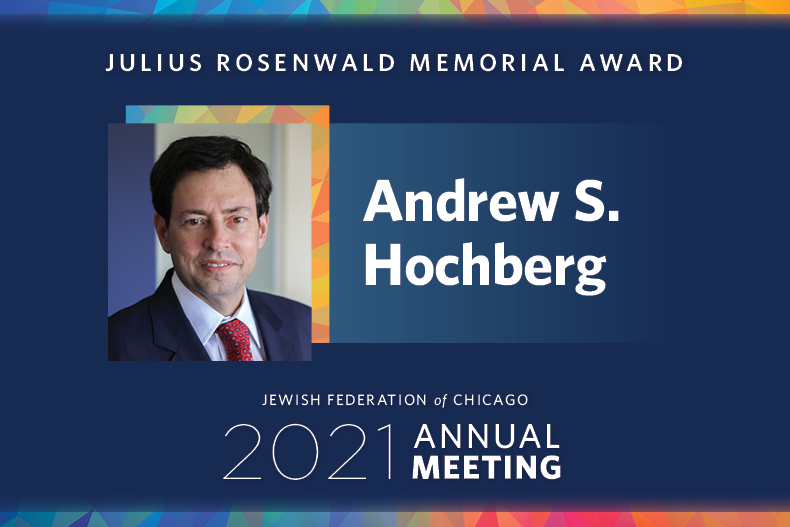
Meet Andrew S. Hochberg, 2021 Julius Rosenwald Memorial Award recipient
Celebrate Andy Hochberg at the virtual Annual Meeting on Sept. 14
Read more -
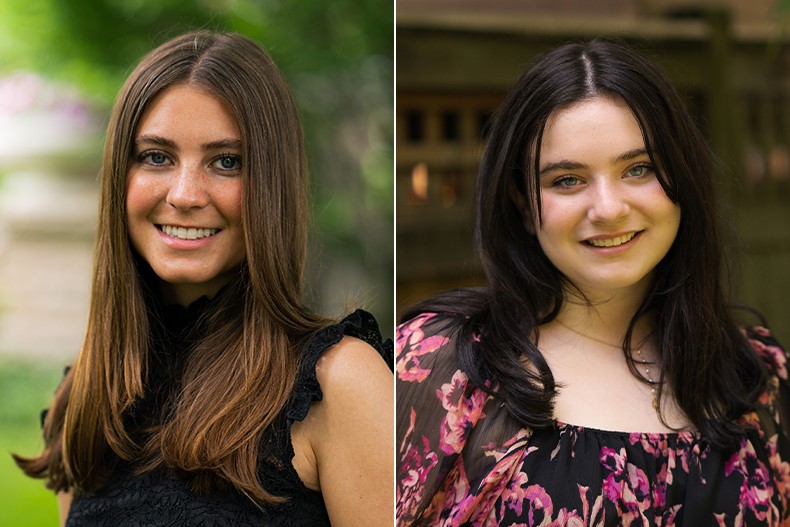
Two local teens win national recognition
Recipients of the annual Diller Teen Tikkun Olam Awards
Read more -
Celebrating six young award winners cultivating the community
Introducing young adult award winners
Read more
Ten outstanding Chicago-area students have been chosen to receive 2016 Israel Experience Merit Scholarships from the Jewish United Fund of Metropolitan Chicago.
Each recipient will receive $1,000 toward his or her upcoming approved Israel Experience program in the Jewish State.
The awards – which go to high school, college and graduate students to age 23 who demonstrate significant leadership skills – encourage the development of Jewish identity, nourish greater commitment to Israel and the Chicago Jewish community, and recognize future leaders.
Eight of the students will receive Jewish Federation Naftali Steinfeld Israel Experience Merit Scholarships, and two others will get the Women’s Board Presidential Israel Experience Merit Scholarship.
The Naftali Steinfeld Merit Scholarship recipients are:
- Adina Arnet, West Ridge/West Rogers Park, Ida Crown Jewish Academy
- Devin Davidson, Highland Park, Highland Park High School
- Jacob Hershenhouse, Glenview, Glenbrook South High School
- Avi Limer, Vernon Hills, Vernon Hills High School
- Tuvya Miller, Skokie, Niles North High School
- Margalit Pogonitz, Skokie, Ida Crown Jewish Academy
- Molly Singer, Skokie, Ida Crown Jewish Academy
- Allison Wexler, Deerfield, Deerfield High School
The Women’s Board Presidential Merit Scholarship recipients are:
- Lauren Carrier, Naperville, Naperville Central High School
- Hannah Chonkan-Urow, Highland Park, Highland Park High School
The winners were selected from more than 40 outstanding, dedicated teens and young adults for their involvement in multiple activities (Jewish and secular), their leadership roles, and their ability to be role models for their peers.
“Our Merit Scholarship honorees are exceptional,” said Lisa Rosenkranz, chair of the Scholarship Committee. “They all showed tremendous leadership capabilities and a strong commitment to Judaism and to Israel. With these young adults as an example, the future leadership of our community will be strong.”
For more information about the JUF Israel Experience Merit Scholarship Program, visit www.juf.org/israel_experience/merit_scholarship.aspx .
Other stories
-
Meet Andrew S. Hochberg, 2021 Julius Rosenwald Memorial Award recipient
Celebrate Andy Hochberg at the virtual Annual Meeting on Sept. 14
Read more -
Two local teens win national recognition
Recipients of the annual Diller Teen Tikkun Olam Awards
Read more -
Celebrating six young award winners cultivating the community
Introducing young adult award winners
Read more
The Jewish United Fund/Jewish Federation of Metropolitan Chicago and its Jewish Community Relations Council sent the following letter to Orlando Mayor Buddy Dyer following the tragic shooting at Orlando’s Pulse nightclub early Sunday morning.
Dear Mayor Dyer,
Sunday morning’s massacre at Orlando’s Pulse nightclub has shaken and saddened the world. The thoughts, prayers and best wishes of decent people everywhere are with the victims’ families and loved ones. Mourning the dead, extending condolences to families, praying for the recovery of the injured and applauding and echoing your own strong words of condemnation and tolerance are the first of several responses we look to undertake.
Violence and hatred targeting Americans in general, and the LGBTQ community celebrating a Latin-themed night in particular, requires unequivocal condemnation and must be countered. We join with members of every faith community decrying those who, infected with the ideology of radical Islam, are inspired to commit such barbaric acts of terrorism.
Having just celebrated the festival of Shavuot, our tradition offers special words about this deadly struggle between those who embrace tolerance and freedom and those who murder, oppress and hate. The festival marks the receiving of the Ten Commandments, the foundational laws of our faith and others, including, “Thou shalt not kill,” and a sacred wisdom tradition that reminds us, time and again, to accept the “other.”
As members of a minority group that has often been targeted, our shared duty as Americans is to buttress our society against bigotry and combat the scourges of gun violence and untreated mental health issues. An attack on any one group — be it LGBTQ, members of a particular faith, people of color, immigrants, or others — is an assault on all who cherish the very principles that make our country great.
In that spirit we look forward to working with our colleagues at the Jewish Federation of Greater Orlando and showing our solidarity with Chicago’s LGBTQ community as participants in our city’s Pride Parade.
Let us resolve to preserve the sanctity of human life, dignity and freedom. Let us stand with people from all walks of life — all of us “others” joining together with one another–to heal Orlando, our nation and the world.
Sincerely,
Steven B. Nasatir, President, JUF
Bill Silverstein, Chair, JUF
David T. Brown, Chair, JCRC
Emily M. Sweet, Executive Director, JCRC
Other stories
-
Chicago to Israel to Kenya
A family’s story of living Jewishly on three continents Michelle Cohen World May 28, 2021 Avital, Tzofia, and Netanel Kaszovitz outside their home in Nairobi on Yom HaAtzmaut. When Avital Kaszovitz prepared to be a Modern Orthodox shlicha (emissary) to the Jewish community in Ke
Read more -
New exhibit spotlights the experience of ‘Shanghai Jews’
Explore a new Illinois Holocaust Museum and Education Center exhibit
Read more -
Europe’s brave new teachers of the Holocaust
Teaching the Holocaust in the modern era has its difficulties and rewards.
Read more
The U.S. Senate Appropriations Committee has moved to provide $2.5 million for the Holocaust Survivors Assistance Program.
The funding was included in the fiscal 2017 Labor-Health and Human Services-Education bill, which the committee advanced Thursday in a 29-1 vote. Sens. Mark Kirk and Dick Durbin, both on the committee, voted for the bill.
The Holocaust Survivors Assistance Program is one of the Jewish Federation’s top domestic policy priorities. It helps to ensure that Holocaust survivors in the Chicago community and around the country receive the type of trauma-informed care and services they need and deserve.
Of the more than 6,000 Holocaust survivors in Chicago, about one third live at or just above the poverty line and many more are in poor health. Chicago’s CJE SeniorLife, which obtained a grant through this program, continues to see growing demand for these services, making its funding all the more crucial.
The Jewish Federation will continue to advocate for maximum funding to ensure that there are sufficient resources to improve and expand services to survivors.
Given the shortened legislative calendar due to the fall elections, it is not clear whether lawmakers will consider this bill in the full Senate before the start of the fiscal year on Oct. 1. The bill would therefore likely become part of an “omnibus” spending package later this year.
Other stories
-
Chicago to Israel to Kenya
A family’s story of living Jewishly on three continents Michelle Cohen World May 28, 2021 Avital, Tzofia, and Netanel Kaszovitz outside their home in Nairobi on Yom HaAtzmaut. When Avital Kaszovitz prepared to be a Modern Orthodox shlicha (emissary) to the Jewish community in Ke
Read more -
New exhibit spotlights the experience of ‘Shanghai Jews’
Explore a new Illinois Holocaust Museum and Education Center exhibit
Read more -
Europe’s brave new teachers of the Holocaust
Teaching the Holocaust in the modern era has its difficulties and rewards.
Read more
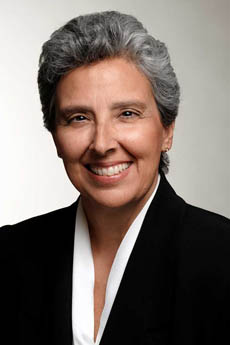
Rabbi Benay Lappe, founder of Chicago’s SVARA: A Traditionally Radical Yeshiva, is one of three Jewish educators who will receive The Covenant Award for 2016.
Lappe joins Daniel Henkin, director of music at The Ramaz Upper School in New York and at Camp Ramah Nyack and Ilana Ruskay-Kidd, founder and head of school at The Shefa School, New York as recipients of the award, which is among the highest honors in the field of Jewish education.
“For over 25 years, excellent, innovative Jewish educators have been recognized by The Covenant Foundation,” said Eli N. Evans, chairman of the board of directors of The Covenant Foundation. “These three recipients now join 75 others who, together, form a contingent of inspired, courageous, motivated and forward-thinking Jewish leaders.”
Lappe has created an exciting paradigm in Jewish education — learning that is traditional yet radical, and extremely rigorous yet accessible. She has painted a new picture of what adult education can look like and SVARA has become a compelling model of a new kind of Jewish learning.
When Lappe founded SVARA in 2003, its focus was on providing serious Talmud study to Jews on the margins whose outsider experience stemmed from their sexual orientation or gender identity. Today, SVARA’s approach to Jewish learning — one that foregrounds the native radicalness of the Talmud, and where everyone learns Talmud in the original Hebrew/Aramaic, even those who’ve just learned their alef-bet — speaks to a wide variety of Jews who feel that mainstream institutions and more typical approaches to adult learning are not working for them.
“There were so many others like me — Jews on the margins who’d been told that Judaism was a take-it-or-leave-it proposition,” she said. “But in the Talmud, I discovered a Judaism that offered a third alternative. What I saw the Rabbis doing was very powerful to me. I realized that the Talmud, which has been taught to only 1 percent of the Jewish population, needed to be taught to the other 99 percent and I figured out a way to do that. I was a teacher who had finally figured out what she needed to teach, whom she needed to teach, and why.”
Under her leadership, SVARA’s students now represent the full spectrum of Jewish life and diversity and enrollment has grown dramatically. In its first year, eight students enrolled at SVARA. Last year, 600 students studied in SVARA’s beit midrash . SVARA now boasts week-long summer Talmud retreats, a full-time yeshiva, and a teacher training program.
“Her Torah empowers those who would otherwise see themselves as fully outside of the Jewish community or on its periphery, giving them the inspiration, confidence and tools to become ‘players’ in a reimagined Jewish world — a world in which they have central roles,” said Rabbi Lizzi Heydemann, founder of Mishkan Chicago, who nominated Rabbi Lappe for the Covenant Award.
“Benay’s teaching is rigorous Talmud study that is accessible to all … She turns people who barely know the alef-bet into serious students of gemara and shows them how the Jewish tradition not only allows, but demands, radical creativity.”
Lappe is also senior fellow and director of education at the Institute for the Next Jewish Future in Chicago, where she oversees the faculty and staff Beit Midrash and participates in its Judaism Unbound podcasts. Rabbi Lappe travels widely and brings SVARA-style Talmud study to seminaries, synagogues, schools, and other Jewish institutions across the United States and Israel.
“This is the greatest honor a Jewish teacher can receive. I will walk through the world just a little bit taller — for the rest of my life — because of it,” Lappe said upon learning that she would receive the 2016 Covenant Award. “My hope is that, because of the Covenant Foundation’s recognition of me and of SVARA, this kind of rigorous Jewish learning will flourish, and those who never thought they had a place at the table, will see that they do.”
Lappe and the other recipients will each receive $36,000 and each of their institutions will receive $5,000.
The Foundation and the Jewish community will honor the 2016 award recipients at a dinner in Washington, D.C. on Nov. 13 during the General Assembly of The Jewish Federations of North America.
For guidelines on nominating an educator for a 2017 Covenant Award, and to read biographies of past recipients, visit www.covenantfn.org/awards .
The Covenant Foundation is a program of the Crown Family Philanthropies.
Other stories
-
Meet Andrew S. Hochberg, 2021 Julius Rosenwald Memorial Award recipient
Celebrate Andy Hochberg at the virtual Annual Meeting on Sept. 14
Read more -
Two local teens win national recognition
Recipients of the annual Diller Teen Tikkun Olam Awards
Read more -
Celebrating six young award winners cultivating the community
Introducing young adult award winners
Read more
As summer approaches, many welcome changes are coming to Chicago. Flip-flops, sunscreen, and beach are words that once again enter our daily vernacular. Of course, summer also means a hiatus from school for children and teenagers. As the young people in your life take a break from schoolwork, the staff at the Center for Jewish Philanthropy encourages you to engage in a meaningful conversation on philanthropy and its importance to your family.
Words such as tzedakah , philanthropy, and charitable giving can be integrated into conversations with your children in a way that is age appropriate and significant. In today’s world, with the multitude of video games and screens that attract the attention of youth, the chance to unplug and impact the community is essential. Depending on your children’s ages and maturity, their involvement in your family’s charitable giving can range from discussions introducing these concepts, collective decisions on which charities you are passionate about as a family and for a young adult, establishing his or her own tzedakah fund. If you would like to discuss ideas or learn more about strategies and ways to speak with your children about Jewish giving, our staff is here to offer professional insight and advice.
The Center for Jewish Philanthropy can also help your family handle your charitable giving. We help thousands of individuals and families manage their philanthropic interests through donor-advised funds, annually allocating many millions of dollars to charities in the Jewish and wider community here in Chicago, Israel, and worldwide. A donor-advised fund is a simple, easy-to-use charitable giving account that allows fund holders to recommend grants to qualified charities. For only $1,000, you can establish a fund-either collectively as a family or for a young person in your life-in order to begin incorporating charitable giving with a Jewish lens into your everyday life.
In particular, as a child approaches celebrating the significant milestone of a b’nai mitzvah , opening a donor-advised fund to honor this event can be especially meaningful. In the eyes of Jewish tradition, a bar or bat mitzvah becomes an adult and is afforded corresponding privileges, but also must take on the responsibilities of Jewish adulthood. Allowing family and friends to contribute to a b’nai mitzvah fund and giving your child the opportunity to decide which charities to support can help instill the importance of tzedakah at such a critical personal and religious moment.
For instance, if your child heads off to summer camp or participates in a youth leadership program for the summer, whether Jewish or secular, he or she can support the charities that run those programs. The opportunities to support the organizations that give them such a monumental life-changing experience-whether as a camper or a staff member-through their donor-advised fund can be an instrumental learning experience.
Now that tax season is behind us and the calm of summer is upon us, the Center for Jewish Philanthropy is also taking the time to reflect on all of the kindness exhibited by our generous community. Mother Teresa advised that one should ” never worry about numbers. Help one person at a time and always start with the person nearest you .” While we agree and are extremely proud of every single generous donation, our staff is also floored to see the collective impact of our close to 850 donor advised funds. In 2015 alone, our funds distributed over $28.5 million from 6,816 grants to charities both Jewish and secular, helping those nearest to us here in Chicago, in Israel, and around the world.
We encourage you to also reflect on your charitable giving over the past year and if you and your family are working towards accomplishing your philanthropic goals. Are you fulfilling your responsibility to pass the value of tzedakah onto the next generation? For more information on reaching your charitable goals now and in the future, contact Amy Saltzman at the Center for Jewish Philanthropy at [email protected] or (312) 357-4719. We look forward to seeing what the next generation of thoughtful philanthropists can accomplish.
Amy Saltzman is the endowment associate for Donor Advised Programs in the Legacies & Endowments department of the Jewish United Fund/Jewish Federation of Metropolitan Chicago.
Other stories
-
Meet Andrew S. Hochberg, 2021 Julius Rosenwald Memorial Award recipient
Celebrate Andy Hochberg at the virtual Annual Meeting on Sept. 14
Read more -
Two local teens win national recognition
Recipients of the annual Diller Teen Tikkun Olam Awards
Read more -
Celebrating six young award winners cultivating the community
Introducing young adult award winners
Read more
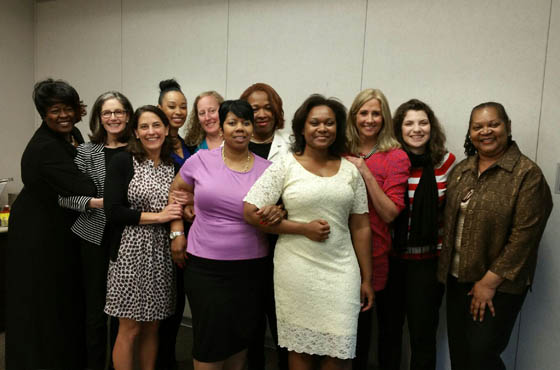
Chicago women of diverse backgrounds met at JUF on May 27 to strategize how different religious communities can come together to promote peace in Chicago. The conversation took place around “Pray the Devil Back to Hell,” a film that details the way Liberian women brought peace to their war-torn country in the early 2000s.
The event, the latest in a series organized by the Jewish Community Relations Council, the Jewish Women’s Foundation and Fierce Women of Faith to build relationships between women from diverse communities, took place in conjunction with the start of Chicago’s third Summer of Faith and Action ; representatives from the Mayor’s Office also participated.
“Women have always been the exception to the rule,” said Rev. Dr. Marcenia Richards, who founded and leads Fierce Women of Faith , a coalition of women from all over Chicago who are building anti-violence prevention and peace programs. “Chicago is our city, and together we can make the difference.”
“The energy and passion of the women in Liberia inspired the women in Chicago,” she added. “This is only the beginning.”
The Liberian pro-peace movement of the early 2000s forged alliances between Christian and Muslim women to pressure the government and rebel fighters to engage in peace negotiations. Further action by the women ensured the election of Ellen Johnson Sirleaf, the world’s first elected black female president and Africa’s first elected female head of state.
The post-screening discussion centered on how the lessons from the successful women’s movement in Liberia can be translated to preventing violence in Chicago.
“We walked away from the conversation with a deeper recognition that we all have a role to play,” said Emily M. Sweet, executive director of the JCRC. “Our Jewish tradition teaches us that we are all responsible for one another. There is power when we bring our voices together. “
Other stories
-
Meet Andrew S. Hochberg, 2021 Julius Rosenwald Memorial Award recipient
Celebrate Andy Hochberg at the virtual Annual Meeting on Sept. 14
Read more -
Two local teens win national recognition
Recipients of the annual Diller Teen Tikkun Olam Awards
Read more -
Celebrating six young award winners cultivating the community
Introducing young adult award winners
Read more
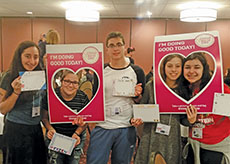
“As a community, we are heavily invested in identifying ways to engage teens in Jewish life,” said Sarina Gerson, the director of Springboard, JUF’s Teen Engagement Initiative. “While support of programs and outreach to teens are critical, it is equally, if not more important that we actually understand what teens want and work with them to create meaningful experiences.” This lesson, she added, is emphasized in a new study, Generation Now: Understanding and Engaging Jewish Teens Today released by The Jewish Education Project.”
Generation Now offers an unprecedented look at Jewish teens- their interests, hopes, beliefs, and more. Based on more than two years of research, focus groups, and surveys, the report outlines 14 outcomes that Jewish teen initiatives and programs should strive to achieve in order to have the deepest, most meaningful impact.
These outcomes would reflect a program’s ability to impact teens both as human beings and as Jews. They include that teens: feel a sense of pride about being Jewish; experience learning that is both challenging and valuable; establish strong friendships with each other and their families; and feel inspired and empowered to make a positive difference in the world in which they live.
“As our process of listening directly to teens unfolded, what we began to learn clearly warranted a complete paradigm shift in how the Jewish community approaches teen education and engagement,” says David Bryfman, Chief Innovation Officer at The Jewish Education Project, who oversaw this research and compilation of the report. “We should develop Jewish opportunities in concert with teens and that address all aspects of their lives. As a whole, teens want to learn, want to be challenged, value family and friends, and they often seamlessly blend all facets of their identity and personality.”
Although not every Jewish program will address all 14 recommended outcomes, as teens participate in multiple programs over the course of their development, the hope is that they will experience the majority of the outcomes.
These outcomes-along with accompanying indicators and measurement tools-are already being field-tested in many communities. In Chicago, they are being used to measure the impact of existing programs for teens, as well as new, immersive, Jewish experiences taking place over school vacations through Springboard.
Gerson explains that a baseline survey of Jewish teens in Chicago was fielded in April and May to gain local insights. “We need to know how teens are connecting to existing programs, as well as how these programs might already be providing the outcomes we want,” she said. “Springboard will support local programs by providing professional development, assistance with program design, and field-tested measurement tools to ensure that teens have access to the highest-quality Jewish experiences.”
Generation Now builds on a 2013 report by the Jim Joseph Foundation . Following the release of that report, the Jim Joseph Foundation began partnering with funders in 10 US communities-including Chicago-to significantly invest further in Jewish teen education and engagement.
The Jewish Education Project has run the National Incubator that has been working closely with these communities as they design and modify their teen initiatives based on the latest research.
“If we, as a community, are going to be successful at supporting meaningful and relevant Jewish learning experiences for teens,” said Josh Miller, Program Director at the Jim Joseph Foundation, “we must be attuned to what matters most to them as human beings and as Jews.”
For more information about how JUF’s engages local Jewish teens, see the Teens@JUFwebpage at juf.org/teens .
Other stories
-
Meet Andrew S. Hochberg, 2021 Julius Rosenwald Memorial Award recipient
Celebrate Andy Hochberg at the virtual Annual Meeting on Sept. 14
Read more -
Two local teens win national recognition
Recipients of the annual Diller Teen Tikkun Olam Awards
Read more -
Celebrating six young award winners cultivating the community
Introducing young adult award winners
Read more
This year, Mother’s Day brings added meaning to the Russian-speaking community in Chicago because it coincides with the annual Victory Day celebration.
Victory Day marks Germany’s surrender to the Soviet Union in 1945, ending the Great Patriotic War for the USSR. In total, the USSR lost about 20 million of its citizens in the four years of fighting. Among them were 11 million Soviet soldiers-including 800,000 women-who served as pilots, snipers, machine gunners, tank crew members, and partisans, as well as in auxiliary roles. Nearly 200,000 woman soldiers received some form of a medal or recognition and 89 of them received Soviet Union’s highest award, the Hero of the Soviet Union.
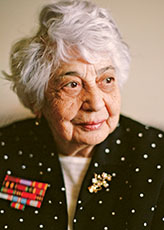
One such decorated soldier was Bella Kaganovich, who passed away in March at the age of 94. In May 1942, months before the Battle of Stalingrad, Kaganovich was sent to the Eastern Front. “I wasn’t drafted. I volunteered because my country was in a terrible situation,” she said at the last year’s Victory Day celebration at the Illinois Holocaust Museum and Education Center.
The coinciding of Victory Day and Mother’s Day sheds light on the important role women played during the war as well as their role today. The Victory Day events in Chicago will be led by the Women’s Leadership Board of Russian-speaking World War II veterans.
“As each year passes, Victory Day gets more important to celebrate,” said Tanya Polsky, founder of the Women’s Leadership Board. “Our veterans represent a generation that sacrificed everything so that we could prosper today. They are national treasures who need recognition. We find pure joy in being able to help them celebrate this very important day properly with dignity and grace.”
In addition to the celebratory brunch on Sunday, May 8, at Skokie’s Doubletree Hotel, the Chicago Association of Veterans of World War II will hold a Victory Day gathering on Friday, May 6, at Bernard Horwich JCC in Chicago. More than 500 veterans, Holocaust survivors, and other community members are expected to attend this year’s events.
Yet, the majority of the war heroes are no longer able to leave their homes. JUF’s Russian Jewish Division will once again mobilize volunteers and coordinate over 200 home visits to bedridden veterans. Young professionals will bring veterans what has now become a Victory Day tradition: red carnations and cards made by children from Russian daycare centers. While presenting these gifts, the volunteers will hear the stories of courage and sacrifice.
Annual Victory Day events are sponsored by the Peter Polsky Freedom Fund. Community partners include Holocaust Community Services, CJE SeniorLife, and JUF’s Russian Jewish Division.
Evgenia Kovelman is director of JUF’s Russian Jewish Division.
Other stories
-
Meet Andrew S. Hochberg, 2021 Julius Rosenwald Memorial Award recipient
Celebrate Andy Hochberg at the virtual Annual Meeting on Sept. 14
Read more -
Two local teens win national recognition
Recipients of the annual Diller Teen Tikkun Olam Awards
Read more -
Celebrating six young award winners cultivating the community
Introducing young adult award winners
Read more