Congregational and early childhood educators talk innovation, recognize innovators
AARON B. COHEN
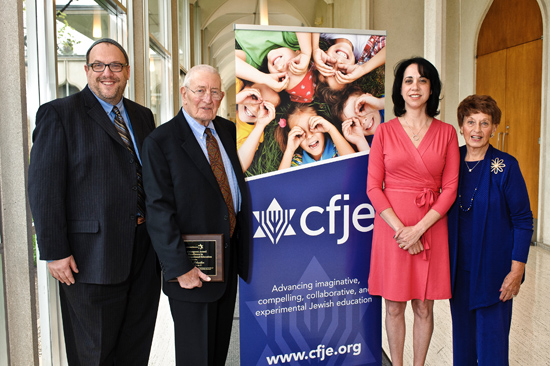
(From left) Rabbi Scott Aaron, CFJE executive director; Buddy Schreiber, recipient of the CFJE-Grinspoon Foundation Award for Excellence in Jewish Congregational Education; Claudine Guralnick, recipient of the Sue Pinsky Award for Excellence in Jewish Education; and Sue Pinsky. (Photo by Robert F. Kusel)
“What are we hearing from families about choosing Jewish early childhood education?” “What are common challenges and opportunities in congregational education?” “How do macro trends impact Jewish learning/life programming and choices?”
Some 150 educators, clergy, lay leaders, administrators and other stakeholders gathered May 10 to tackle these and other big questions, hear about innovation approaches from national experts, stimulate one another’s thinking, and empower each other to effect change.
Convened by JUF’s Community Foundation for Jewish Education, “Thinking Together: Communal Conversations about Jewish Congregational and Early Childhood Education in Chicago” focused on national ideas and local challenges in the field, which engages nearly 8,000 students enrolled in 40 schools in the metropolitan area.
The participants began their day of learning and idea exchange with an overview of key data points relating to enrollment trends, capacity utilization, teacher compensation and professional development, funding and costs, and other vital information.
“2015-2016 was the first year Chicago’s Jewish early childhood programs participated in a community wide, systematic data collection. The results offer a first view of the landscape and serve as a baseline for future tracking,” said CFJE Executive Director Rabbi Scott Aaron.
The data study was facilitated by CFJE and conducted by JData, a research program operated by Brandeis University with generous support from the Jim Joseph Foundation.
With information in hand, the conference participants broke into two interest groups, one focusing on early childhood education and another centering on congregational education. Both sessions offered case studies of innovative approaches and programs designed to address the challenges of engaging families and youth in Jewish education.
“The passion and energy in the room was unstoppable,” said one participant of the interaction with other professionals. “Although we have a long way to go [in advancing the field,” said another, yet another educator stressed how “empowering [it is] being in the room with passionate Jewish educators.”
Guralnick, Schreiber receive Jewish education awards
Following informal conversations during lunch, CFJE presented its second annual Sue Pinsky Award for Excellence in Jewish Education to Claudine Guralnick, of Oak Park, an educator at West Suburban Temple Har Zion in River Forest.
Members of her congregational community described Guralnick as “understanding, perceptive, patient, and fun… Her support [for children and families] is unwavering, and her engagement with the children is constant and active.”
The Pinsky Award honors Sue Pinsky, a Jewish educator who was instrumental in the founding of the North Suburban JCC. Her son, Mark Pinsky, and his wife, Lisa, generously established an endowment fund in Sue’s honor to ensure the award in perpetuity through JUF’s Agency Endowment Program.
CFJE also awarded its first annual CFJE-Grinspoon Foundation Award for Excellence in Jewish Congregational Education to Buddy Schreiber, who teaches at Am Shalom in Glencoe.
The award celebrates successful innovation in Jewish education and was awarded to Schreiber, in part for “the quiet way [he] impacts students…[and] his determined presence and desire to bring them a high level discussion about higher level ideas.”
To learn more about the groundbreaking work of JUF’s Community Foundation for Jewish Education of Metropolitan Chicago, visitwww.cfje.org.
Other stories
-
Meet Andrew S. Hochberg, 2021 Julius Rosenwald Memorial Award recipient
Celebrate Andy Hochberg at the virtual Annual Meeting on Sept. 14
Read more -
Two local teens win national recognition
Recipients of the annual Diller Teen Tikkun Olam Awards
Read more -

Celebrating six young award winners cultivating the community
Introducing young adult award winners
Read more
JUF Board Chair Bill Silverstein offered the following remarks at Sheerit Hapleitah’s 71 st annual Holocaust Memorial Service, held Sunday, May 8, 2016, at Skokie Valley Agudath Jacob Synagogue. The event, considered the largest gathering of Holocaust survivors in the Midwest each year, was co-sponsored by JUF.
On behalf of the Jewish United Fund, I thank all of you for being here today. This is a sacred event that JUF has been proud to support for many years, and it is humbling for me, personally, to be part of such a significant program.
Thank you, particularly, to Sheerith Hapleitah for its profound role in honoring the memory of the six million. Charlie Lipschitz and Sheerith Hapleitah’s leaders truly are living examples of what it means to be “a light unto the nations.”
They are a light illuminating the lives and memories of the six million. They are a light, as well, shining on the horrors of that era and keeping them from fading into the shadows. And they are a searing beacon focused on those who deny what happened then, even as they prepare to repeat it.
Today, we remember. For us, true remembrance requires action by keeping faith with our survivors, here in Chicago and worldwide. Our city has one of the largest and youngest survivor communities, and its unique needs will have to be met for many years to come.
That is why JUF launched our special Holocaust Community Services program. Whether the need is financial, medical or social, whether those survivors need food or housing or care or simply companionship, we, the entire Jewish community, are helping them.
Last year, we served nearly 900 survivors. That’s almost 90 percent more than just two years earlier. The need is growing rapidly.
We’re also providing similar help to survivors in Israel, Ukraine, Russia and Europe.
And we are relentless in countering the escalating attacks on Jews and Israel around the world. For we remember too well where they can lead.
Next year, on March 23 at Symphony Center, JUF will sponsor yet another form of remembrance — the first Chicago performance of “Defiant Requiem,” a powerful symphonic retelling of the remarkable resistance and resilience of the valiant prisoners of Terezin. It is a story every person, Jewish or not, must hear. And the dollars raised will, of course, support our survivors.
We remember. We act. We care. Together we mourn, and together, in the face of those who continue to seek our destruction, we will go from strength to strength.
Other stories
-
Meet Andrew S. Hochberg, 2021 Julius Rosenwald Memorial Award recipient
Celebrate Andy Hochberg at the virtual Annual Meeting on Sept. 14
Read more -
Two local teens win national recognition
Recipients of the annual Diller Teen Tikkun Olam Awards
Read more -
Celebrating six young award winners cultivating the community
Introducing young adult award winners
Read more
Eulogy for Ernie Michel, Holocaust survivor and American Jewish leader
STEVEN B. NASATIR
JUF President Dr. Steven B. Nasatir delivered the following eulogy at the funeral of Ernie Michel on May 11, 2016.
Like each and every one of you, I loved Ernie Michel.
And Ernie loved us back as we were all dear to him.
We loved and admired him because of his character, strength and special genius. And let’s be clear, he was in his own way a genius and a giant.
We also loved and admired him because Ernie through his relationships and accomplishments provided each of us a personal and up close look at the finest and best example of Jewish resiliency.
I am deeply honored that Ernie left instructions requesting that I speak here today. He told me many years ago that was something he wanted me to do and I laughed and changed the conversation because the last thing I wanted to do was engage in a discussion of his mortality.
All of us know Ernie’s remarkable story. Much of it came to each of us when he personally shared parts of his journey. And, because he couldn’t share all of it with everyone, in 1993 at, age 70, he wrote his wonderful book, Promises to Keep .
Fifteen years later, a somewhat amended version was published with the appropriate title, Promises Kept . Those titles weren’t accidental. From the time of Ernie’s liberation from the hell of the Nazi genocidal killing machine till age 85, step by step, position by position, relationship by relationship, achievement by achievement Ernie Michel labored long and hard to fulfill obligations to his family that perished along with the rest of the 6 million whose lives that were taken. By age 85, promises had been kept.
Ernst Michel was the boy from Mannheim who went to school one day where he and the other Jewish students were told this was their last day — there will be no more school for them. We know how his father set up an apprentice type opportunity for him as a calligrapher. Fast forward to 1943. In Auschwitz, we know that an SS man struck him and he had to go to the infirmary. While there, they came and asked “does anyone have good handwriting?” Ernie raised his hand. That writing skill gift provided by his dear father saved his life.
With his fine penmanship, Ernie wrote documents and filled out death certificates –never was the cause of death identified as being sent to the gas chambers. He was told to write physical weakness or heart failure.
There is more to that story including meeting up with that officer’s son decades later, but the overarching takeaway amidst all the irony was that our Ernie went from writing death certificates to becoming in the second half of the twentieth century one of the important authors of the unfolding book of the Jewish people. That is truly remarkable.
As most of you know, Ernie Michel, after an extraordinary career as speaker and professional with the national UJA, in 1970 became the executive vice president of UJA New York. I didn’t become the executive in Chicago until 1979, but knew Ernie and had the opportunity to work with him a bit in the ’70s partially because of our mutual connection to Al Hutler.
Al Hutler was the kind American lieutenant that met Ernie in the DP camps and became his lifelong friend. It was Al who encouraged Ernie to come to the U.S. and it was Al who opened up his heart and house to this extraordinary Jewish refugee and so we enjoyed a three-way connection.
As regards Ernie, the living legend, it began in post-war Europe when Ernie with his seventh grade education was hired to be the correspondent for the German General News Agency. Somehow, someway, Ernie convinced the GGNA to professionally accredit him as a correspondent for the Nuremberg trials. They did, and this young man from the concentration camps filed each day under the title Auschwitz #104995.
He continued to tell his story when he came to America and worked and studied and began to give speeches leading to a professional position with the national UJA from which came all those fabulous stories of hanging out with Hollywood stars, accepting bags of cash for Israel from Jewish gangsters and Jewish brothel owners and helping strategize the enormous campaigns of ’67 and ’73.
For example, during the Yom Kipppur War, Ernie reached out to a major Jewish donor with strong ties to Israel from whom he asked $5 million. The answer was yes and Ernie said great, now let’s go together and ask at least four more for $5 million each and they did and catapulted the New York campaign forward in a spectacular way.
I spoke Sunday to Rabbi Brian Lurie, another dear friend of Ernie’s and mine, who worked for Ernie and also loved him dearly. Brian seems to recall that in 1973 the New York UJA raised over $130 million for that emergency campaign. God only knows what that computes to today, but both Brian and I do remember Ernie telling us that he had made a terrible mistake — he should have asked for $10 million not 5.
I think the first time Ernie sought me out for my input on something really big was in 1979 in connection with his dream and those of other survivors to have a world gathering of Holocaust survivors in Yerushalayim in June of 1981. Thirty-six years — double chai — since the liberation of the camps. I knew that a couple of years earlier Ernie shared this big idea with the Federation Large City Executive group, and some members of that group at that time had questions most of which centered on logistics, funding and how many would really come.
When Ernie and I talked a couple of years later in advance of a Large City Executive meeting, I was enthusiastic about the proposed gathering not because I didn’t think all those questions didn’t need to be answered, but because at the end of the day the decision to attempt this or not should be totally in the hands of the survivor community.
Who were we to second guess why survivors like Ernie and others thought this to be important for them, their children and a world that still needed reminding of the great tragedy of the Shoah? Who better understood the remarkable rebirth of Jewish sovereignty in our land and the remarkable contribution that survivors had made to Jewish life by those who survived this terrible tragedy?
I shared with Ernie my recollections of a number of years earlier being in a room where survivors in Chicago came to Federation and told us about the announced Nazi march in Skokie and that it must be stopped. I went into that room knowing a bit about free speech issues and thought perhaps we not go against the then conventional Jewish organizational thinking on such a matter.
Within 10 minutes of listening to survivors talk about what jack boots and swastikas marching through Skokie meant to them — with images and memories that were authentic and unique — who were we to patronizingly say, “there, there – it will be okay.” We had no right to drape ourselves in conventional thinking when our fellow Jews within the survivor community were hurting as they were.
So we flipped that conventional wisdom on its head and fought the ACLU and the Nazis did not march in Skokie.
And though that proposed march and that proposed world gathering were different, the obvious conclusion was the same. Our message to survivors must be we thank God you are alive and our role is to support your vision. Ernie agreed.
Many other Federation executives and lay leaders held the same view and the world gathering, which Ernie chaired, was a huge success. Six thousand survivors plus children and grandchildren from 23 countries all gathered to celebrate their survival and the strength of the Jewish people.
Ernie called the world gathering the greatest experience of his life. Ernie always had the great gift of saying the right thing at the right time and though many of you have read or heard Ernie’s speech at Yad Vashem, do yourself a favor and listen to it or read it one more time. He began by talking about a dream born in the darkness of Auschwitz nourished by the liberation and finally brought to life and ended with:
“We came to this place with a great burst of love for one another and for the ideals in which we believe – our Jewishness, our Israel, our ancient heritage.
When the final shofar of that closing ceremony sounds, we shall return home and most of us will never meet again. But we will leave with gratitude in our hearts for the miracle of our survival, for that of the Jewish people, and for the rebirth of the Jewish land. Go my friends – go — knowing that history will tell our story forever.”
Over the years, Ernie, Amy, Carolyn and I spent lots of time together in Chicago and upstate New York; in Arizona and New Yor City. He was an inspirational friend to all five of our sons and that’s why my youngest son, Eli, flew in today.
I remember when Ernie learned that the Mormon Church was accessing names of Holocaust victims and was posthumously baptizing the deceased including his father and mother. Ernie was someone who respected all people of all religions, and though he understood the theology of this Church, he thought this was terribly wrong.
My friend was extraordinarily hot over this issue and I knew that the Church of the Latter Day Saints probably didn’t know what was about to hit them. They weren’t just dealing with a group of angry Jews, it was a group of angry Jews headed by Ernie Michel.
When Ernie’s blood was up, he didn’t just reach out to a couple of people, he recruited an army. U.S. Senators, corporate executives, media, attorneys — of which my wife was one — communal professionals; quite a group was assembled and it became a big story. Following his meetings with Senator Oren Hatch a successful negotiation resulted in the withdrawal of 400,000 names of Jewish Holocaust victims from Church records.
These examples and all the rest that Ernie did is the stuff from which more than one novel could be written. And for those of us who were privileged to watch Amy and Ernie’s love story evolve, there is a novel or a film yet to made.
They loved each other dearly. Each would sacrifice for the other. Ernie told everyone that his Amy had given him a new life. I remember their marriage in Westchester like it was yesterday. The love and respect they had for each other was obvious.
And like any good Hollywood musical, Amy’s uncle, Sammy Kahn, who wrote so much of America’s songbook was in attendance and serenaded the loving couple by inserting Amy and Ernie in his classic song, “Love and Marriage.” It was a glorious day, they were a remarkable couple and they had a fabulous life together. Amy always knew that as Ernie got older the responsibility to care for him would become hers, and that, of course, did happen.
And Amy’s care for her beloved Ernie was astounding in all respects.
As the Federation Executive asked to speak today, I want to make special mention of my colleagues, Steve Solender , John Ruskay and Eric Goldstein. We are informed by this week’s Parsha that we are to have special regard for our elders. An elder is someone who has acquired much wisdom by virtue of rich life experiences. The Torah says, “You shall see as beautiful and wondrous the face of the elder.” Steve, John, Eric and so many others always saw Ernie as beautiful, wondrous and possessed of real wisdom, and so they always treated Ernie with respect and love during his retirement.
It’s hard to think of a more fitting time in the annual Jewish calendar to celebrate the life of Ernie then in these seven or eight days. Last week we honored the 6 million murdered members of our family.
Tomorrow we honor the memory of those more than 27,000 members of our family who fought for the establishment and defense of the State of Israel and the very next day we commemorate Israel Independence Day.
Auschwitz, where Ernie spent an eternity of years, was liberated in January of 1945. It is awesome beyond expression when we note the State of Israel, marking the assumption of power by the Jewish people, was established but three years later. Ernie was a man whose very life bridged these two universes — Auschwitz and its evil; a restored Jerusalem and its golden beauty.
In the last sentence of Promises Kept , Ernie tells us in simple but with insightful language that “every person has ups and downs. That is life. When things get tough, there is always hope. Always a new day. Never forget this.”
We will never forget this, Ernie and we will never forget you. Your memory will continue to be a blessing to us all.
Other stories
-
Meet Andrew S. Hochberg, 2021 Julius Rosenwald Memorial Award recipient
Celebrate Andy Hochberg at the virtual Annual Meeting on Sept. 14
Read more -
Two local teens win national recognition
Recipients of the annual Diller Teen Tikkun Olam Awards
Read more -
Celebrating six young award winners cultivating the community
Introducing young adult award winners
Read more
Three Chicago-based Jewish organizations — Libenu Foundation, Makom, and Pushing the Envelope Farm — have been selected to cohort nine of the UpStart Accelerator, a Jewish community engine that helps innovative, early-stage organizations succeed. Selected from the Accelerator’s largest applicant pool ever (66 from across the world), these organizations will join a cohort of eight other organizations that are opening up new access points to Jewish life.
Since 2006, the UpStart Accelerator has served as a launch pad for over thirty Jewish organizations, providing them with the training, network, and funding needed to transform vision and passion into game-changing Jewish social ventures. Current Chicago organizations and national alumni include BimBam (formerly G-dcast), Moishe House, Mishkan Chicago, SVARA and A Wider Bridge.
“The Jewish community is increasingly diverse and hungry for unique and personal ways to connect to Jewish life,” says Aaron Katler, CEO of UpStart. This Accelerator cohort is tapping into exactly this desire, by creating new points of connection to Jewish wisdom, community, and identity. We look forward to partnering with these bold innovators to take their work to the next level.”
Below is the full list of this year’s cohort, which will join the 35 organizations and alumni already in the UpStart Accelerator network:
- 30 Years After (Los Angeles) – Promotes the participation of Iranian-American Jews in political, civic and Jewish life.
- At The Well (Bay Area) – Supports young professional Jewish women to live spiritually connected to their bodies and to feel empowered to be fully themselves.
- JCC MaccabiSports Camp (Bay Area) – Hosts an overnight Jewish sports camp that combines sports and camp activities with core Jewish values .
- Libenu Foundation (Chicago) – Provides adults with developmental disabilities the opportunity to live independent, meaningful lives as respected members of the Jewish community.
- Makom (Chicago) – Helps Millennials fill the emotional, spiritual, and social space that they wish to find from their Judaism but haven’t been able to find just yet.
- Mishpucha (New York) – Offers culturally authentic, immersive experiences for Russian-speaking American Jews that foster community building, identity exploration, and Jewish education.
- Pushing the Envelope Farm (Chicago) – Provides opportunities for hands-on, farm-based exploration of Jewish agricultural traditions, ecological design, and social justice.
- Yachad: The Jewish Educational Platform for Teens in Minneapolis (Minneapolis) – Engages, inspires, and educates teens to become future leaders who possess confidence, enthusiasm and curiosity about Jewish life.
- ZABS Place (North Carolina) – Provides training and work experiences to young adults with special needs to help reveal their unique potential, talents, and skills.
“The UpStart Accelerator was a formative experience during the early stages of BimBam,” said Sarah Lefton, founder and director of BimBam, an alum of the Accelerator. “We’re proud to welcome such an exciting cohort of organizations into the UpStart network, and we can’t wait to witness their growth over the coming years.”
More information can be found at http://upstartlab.org/cohort-9/ .
Other stories
-
Meet Andrew S. Hochberg, 2021 Julius Rosenwald Memorial Award recipient
Celebrate Andy Hochberg at the virtual Annual Meeting on Sept. 14
Read more -
Two local teens win national recognition
Recipients of the annual Diller Teen Tikkun Olam Awards
Read more -
Celebrating six young award winners cultivating the community
Introducing young adult award winners
Read more

To assist victims of the wildfires raging across Alberta, Jewish Federations of Canada-UIA has opened an Alberta Fire Relief Fund . Jewish groups in Alberta are working to support victims of the wildfires that have ravaged the area and forced the evacuation of the entire city of Fort McMurray.
One hundred percent of funds raised will be directed to local organizations and services providing relief on the ground, including in Edmonton, which has received most of the evacuees.
To help the victims, JUF and the Jewish Federations of North America encourage you to donate to the Jewish Federations of Canada – UIA Alberta Fire Relief Fund .
Other stories
-
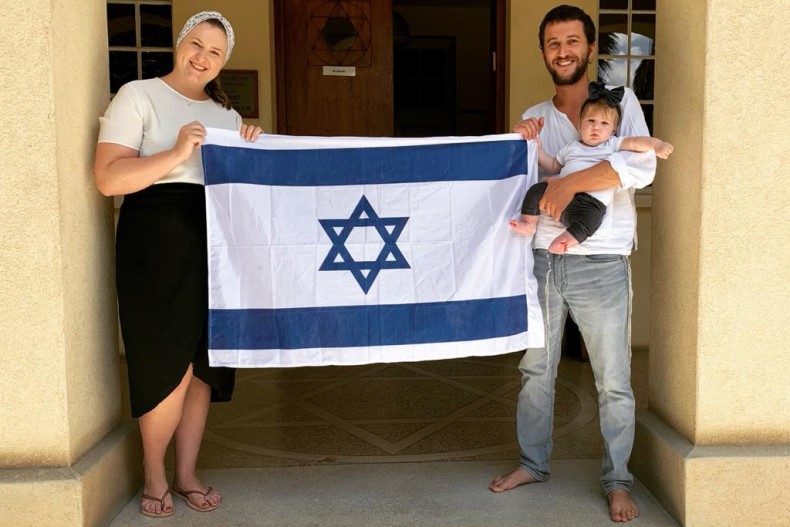
Chicago to Israel to Kenya
A family’s story of living Jewishly on three continents Michelle Cohen World May 28, 2021 Avital, Tzofia, and Netanel Kaszovitz outside their home in Nairobi on Yom HaAtzmaut. When Avital Kaszovitz prepared to be a Modern Orthodox shlicha (emissary) to the Jewish community in Ke
Read more -
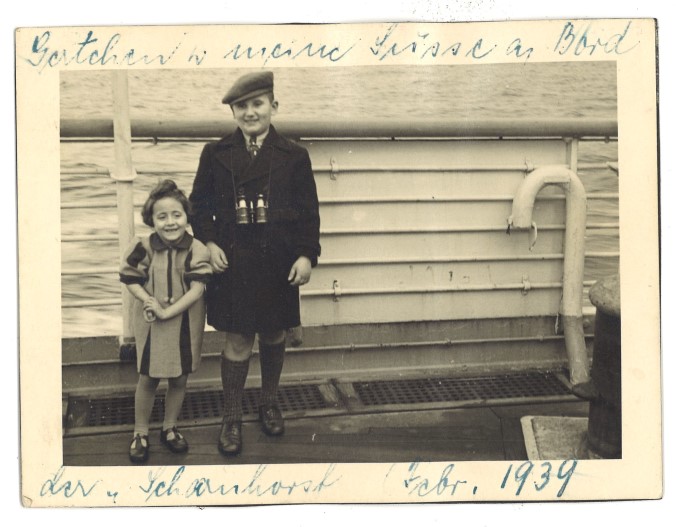
New exhibit spotlights the experience of ‘Shanghai Jews’
Explore a new Illinois Holocaust Museum and Education Center exhibit
Read more -
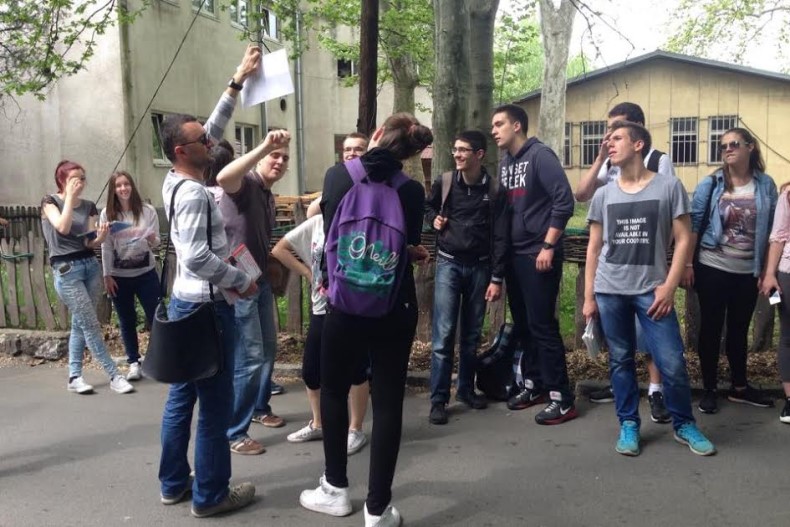
Europe’s brave new teachers of the Holocaust
Teaching the Holocaust in the modern era has its difficulties and rewards.
Read more
State government officials and Jewish community leaders from across Illinois gathered for the Statewide Holocaust Memorial Service at the Old State Capitol in Springfield on May 5.
Keynoted by Gov. Rauner, speakers included Jewish Community Relations Council Chair David T. Brown, State Rep. Sara Feigenholtz, Holocaust survivor Matus Stolov, Illinois Holocaust and Genocide Commission Co-Chair Michael Bauer, several rabbis and other religious leaders from throughout the state.
In his opening remarks, Brown reflected on the importance of Yom HaShoah.
“Today we recommit ourselves by making sure the meaning of ‘never forget’ is never forgotten,” he said. He also spoke about his experiences on JUF’s Nachshon Mission to Poland and Berlin.
Rauner, who issued a proclamation calling upon the Illinois people to remember the victims of the Holocaust, shared a similar message. “We must make sure never forget is a true call to action,” he said.
Bauer, a son of a Polish survivor, honored his mother on her 100th birthday. He referred to her as the strong-willed matriarch of his family; she lost her entire family – including eight brothers and sisters — in the Holocaust.
Feigenholtz recounted Anne Frank’s story and highlighted the lesson that no one has been poor by giving. “We could all learn from the universal messages of tzedakah and chesed, ” she said.
Stolov, a survivor from the former Soviet Union and the first Russian remembrance speaker at the statewide service, reflected on his escape to Kazan by jumping a moving train and dodging bullets in the German-occupied territories near his home. He survived the Minsk ghetto with the help of an underground German-resistance fighter, “Big Lena” who was known to the Jews as a silent helper. After Minsk was liberated in 1944, Stolov returned to his hometown and eventually immigrated to Chicago in April 1982, in time to celebrate his first Passover.
Other stories
-
Meet Andrew S. Hochberg, 2021 Julius Rosenwald Memorial Award recipient
Celebrate Andy Hochberg at the virtual Annual Meeting on Sept. 14
Read more -
Two local teens win national recognition
Recipients of the annual Diller Teen Tikkun Olam Awards
Read more -
Celebrating six young award winners cultivating the community
Introducing young adult award winners
Read more
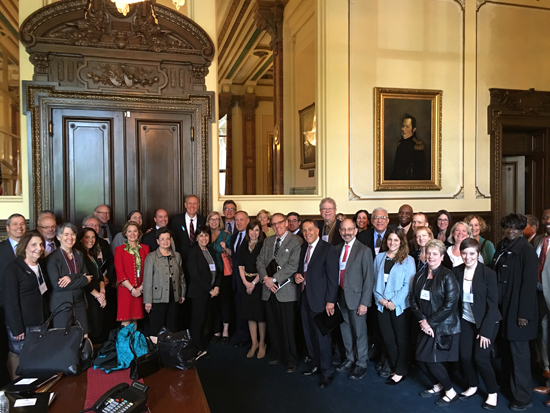
Springfield Advocacy Mission 2016 participants with Gov. Rauner.
Fifty leaders from the Jewish community traveled to Springfield on May 4-5 on the annual Springfield Advocacy Mission.
Representatives from JUF, Jewish Child and Family Services, CJE SeniorLife, Keshet and Sinai Health System spent two days talking with state lawmakers about the impact of the declining investment in human services, the budget crisis and the transition to Medicaid Managed care on JUF funded agencies.
The governor, the house speaker, the senate president, Republican leadership, and more than 30 legislators from both parties met with and listened closely to the group, led by JUF Government Affairs Committee Chair David Golder and State Vice Chair Steve Greenbaum.
“There is a great power in bringing a strong team together with a consistent powerful voice,” Steve Greenbaum said.
During the mission’s opening luncheon, Gov. Rauner’s Chief Operating Officer Linda Lingle, who earlier in her career was the first Jewish Republican governor of Hawaii, spoke about the multi-departmental initiatives she is leading to transform how health care, human services, corrections and public health services are provided. She was followed by Felicia Norwood, director of the Department of Healthcare and Family Services, who spoke about the transition to Medicaid Managed care.
Afterward, participants divided into four lobbying groups, each with an experienced Springfield insider, and descended on the Capitol for meetings with legislators.
That evening, participants hosted Jewish caucus members State Sens. Daniel Biss, Julie Morrison and Ira Silverstein, and State Reps. Scott Drury, Sara Feigenholtz, Laura Fine, Robyn Gabel, Will Guzzardi, Lou Lang, and Elaine Nekritz in five separate dinner groups.
“Having a private dinner with Rep. Lang meant that we had a chance to have an in-depth conversation with him in a casual setting,” said Andrea Yablon, chair of JUF’s Planning and Allocations Committee. “Rep. Lang was very candid about the current challenges and potential opportunities.”
“Our meetings in Springfield reinforced our relationship with state government, including the recognition of the critical services that we provide for vulnerable and under-served populations,” Golder said. “Legislators, who have been long-time partners are frustrated and understand the stress that the current financial crisis has put on our system. They shared their commitment to working towards a long term solution. Our conversations served as a reminder of the challenges ahead.”
Other stories
-
Meet Andrew S. Hochberg, 2021 Julius Rosenwald Memorial Award recipient
Celebrate Andy Hochberg at the virtual Annual Meeting on Sept. 14
Read more -
Two local teens win national recognition
Recipients of the annual Diller Teen Tikkun Olam Awards
Read more -
Celebrating six young award winners cultivating the community
Introducing young adult award winners
Read more
On April 28, Rabbi Herman E. Schaalman – the oldest living Rerform rabbi — celebrated his 100th birthday.
As a refugee from Nazi Germany, Schaalman came to America in 1935 on a scholarship to Hebrew Union College. Six years later, on the same day as his ordination, he married his life-long wife, Lotte. After serving for eight years as the rabbi of a small congregation in Cedar Rapids, Iowa, Schaalman came to Chicago to be the Midwest Director of the Union of American Hebrew Congregations. In 1956, he took the post as senior rabbi at Chicago’s esteemed Emanuel Congregation where he served for the next thirty years.
During that time, Schaalman established himself as one of the foremost Reform rabbis in America. One of his major contributions to Reform Judaism, and the one he is most proud of, was his role in establishing the first summer camp for Jewish youth, Olin Sang Ruby Union Institute in Wisconsin. The camp became a model for the development of eighteen other camp programs across the United States and Canada.
Over the more than seven decades of his long career, he has received many honors for his contribution to interfaith work both in the United States and worldwide. As part of his commitment to interreligious understanding and the promotion of a peaceful world, Schaalman served as a Trustee on the Board of the Millennium Institute and a member of the Executive Committee of the Council for the Parliament of World Religions. In 1991, the president of Germany honored him with the award of the Order of Merit, First Class. The International Council of Christians and Jews gave Schaalman its highest honor, the Interfaith Gold Medallion — Peace Through Dialogue.
Because he believed that the Holocaust was partly the result of a lack of understanding of Jews and Judaism, Schaalman took positions in theological seminaries where, over the course of more than fifty years, he taught seminary students in both Catholic and Protestant seminaries including Northwestern’s Garrett Theological Seminary from 1957 to 2014; Chicago Theological Seminary; Catholic Seminary of the Society of the Divine Word; and North Park College Theological Seminary. When he served as rabbi in Cedar Rapids in the 1940s, he taught at two local colleges Coe College and Cornell College.
Chicago’s Spertus Institute of Jewish Studies awarded him the Doctor of Hebrew Letters degree, honoris causa for his contributions in fostering strong Jewish participation in interfaith dialogue. His friendship for Chicago’s Cardinal Bernardin set a precedent for interfaith cooperation. The two clerics become such close friends and associates, that Bernardin requested that Schaalman participate in his funeral, the first Rabbi ever to have officiated at a funeral for a Cardinal. Schaalman was awarded the prestigious Order of Lincoln Award from the Lincoln Academy of Illinois for his exceptional effort to advance religious knowledge and understanding among citizens of different religious persuasions.
In the early 1990s, after he had retired, Schaalman was able to devote more time to the issue of social justice and Jewish affairs. He served as president of The Jewish Council on Urban Affairs and the Chicago Board of Rabbis.
In 1991, Jewish Community Centers of Chicago named him its Honoree for its Hall of Fame. In the ceremony, Rabbi Alexander Schindler, President of the Union of American Hebrew Congregations congratulated him for his years of service to the Jewish community and acknowledged Schaalman’s leadership as a “superb example” and “total commitment to our people and our faith.”
Among his many other noteworthy awards is an Honorary Doctorate from Chicago’s Catholic Theological Union, and the Graham Taylor Award from Chicago Theological Seminary for his outstanding lifetime dedication to a life of “selfless service, mercy and justice for all.”
Late in his life, Schaalman’s received two of his most cherished academic recognitions when the Chicago Theological Seminary, where he had taught for many years, established The Rabbi Herman E. Schaalman Chair of Jewish Studies in 2005. In 2012, the University of Chicago initiated the Herman E. and Lotte Schaalman Civilization Program for study in Jerusalem.
Rabbi Schaalman continues to teach and engage with members of Emanuel today, especially through Shabbat morning Torah study which a few dozen adult students attend regularly. Begun in 1963 at the urging of several post-Confirmation students for after-school study, this practice has continued to the present, morphing to meet changing demands and new participants. Many of those early students continued to study with their rabbi for decades. A few who went away and came back, still participate, and one has been a continuous student for nearly forty-five years.
To this day, Rabbi Schaalman is revered for his compassion, wisdom and leadership. For over 50 years, the Rabbi has continued to hold a vibrant weekly Saturday morning Torah study class hosting between 14-20 participants irrespective of weather or calendar.
Rabbi Zedek, a close friend of Rabbi Schaalman and the senior rabbi of Emanuel Congregation said, “Rabbi Schaalman’s influence on the Jewish world has been immeasurable. He has been a bridge among communities with some of his awesome pioneering work and has had an amazing impact on rabbis and American Jewish life and thought.”
Other stories
-
Meet Andrew S. Hochberg, 2021 Julius Rosenwald Memorial Award recipient
Celebrate Andy Hochberg at the virtual Annual Meeting on Sept. 14
Read more -
Two local teens win national recognition
Recipients of the annual Diller Teen Tikkun Olam Awards
Read more -
Celebrating six young award winners cultivating the community
Introducing young adult award winners
Read more
Isaac Mizrahi talks creativity, fashion, Judaism—and gardenias—at Women’s Division’s Spring Event
CINDY SHER
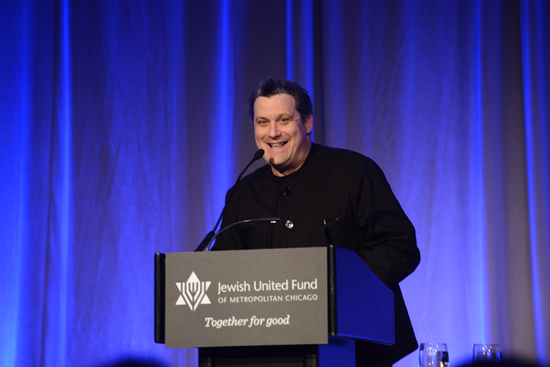
Isaac Mizrahi speaks to a room of more than 730 Jewish women at JUF’s Women’s Division 2016 Spring Event on May 4. (Photo by Robert F. Kusel) See more photos from the event.
Isaac Mizrahi has dressed women his whole life — super famous women like Audrey Hepburn, Meryl Streep, Oprah Winfrey, and Michelle Obama. And, he says he’s a big fan of all women — including women of the tribe.
“You know how comfortable I am around Jewish women,” the Jewish trailblazing fashion mogul told more than 730 Jewish women at the Jewish United Fund of Metropolitan Chicago’s Women’s Division 2016 Spring Event on Wednesday afternoon, held at the Fairmont Chicago.
“Isaac Mizrahi: An Unruly History,” an exhibition of his clothes, drawings, hats, jewelry, shoes, and other accessories, is on display now through Aug. 7 at the Jewish Museum in New York City. “People ask me why the Jewish Museum? I think it’s an important time right now for Jews to come up and [speak out] considering the world situation,” Mizrahi said.
Hineni — here I am.
Before his remarks, women at the luncheon learned about the vital work and impact of JUF and supported the 2016 Annual Campaign.
“Every hour, every day, the women in this room are the wind beneath the wings of Jewish life and Jewish lives in Chicago, in Israel, and in 70 countries across the globe,” said Rachel Stein, vice president of Campaign for JUF’s Young Women’s Board.
This year marks the 70th anniversary of the founding of the National Women’s Division of what was then known as UJA (the United Jewish Appeal). In 1946, in the aftermath of the Holocaust, some 300 woman convened in St. Louis to show solidarity with the remnants of European Jewry and participate in a personal way in the relief effort.
Women then and now are the primary communicators and conveyors of Jewish history and heritage, traditions, and teachings, said Ann-Louise Kleper, longtime Chicago Jewish community leader, attorney, and a Chicago recipient of the North American Kipnis Wilson-Friedland award, named for the two women who founded the Lion of Judah. She explained that the reasons for women’s giving are even more compelling today. “When a woman makes a Campaign gift in her own name, she is demonstrating that she wants to be recognized as a full-fledged member of the community. She is saying hineni — here I am. I count and I can be counted upon,” Kleper said.
Other speakers included Cindy Kaplan, 2016 Women’s Board Vice-President of Campaign; Wendy Abrams, Women’s Board President; Kim Shwachman, Spring Event Chair; and Heather Sher, Young Women’s Board Spring Event Chair, who interviewed Mizrahi during the luncheon.
Isaac unzipped
Mizrahi was born and raised in an observant Sephardic Jewish Brooklyn community — his mother was a homemaker while his father made his living in the clothing business. Recognizing his son’s shared interest in fashion, Mizrahi’s father gave him a sewing machine when he was 10. Bullied for being overweight and effeminate while attending yeshiva in Flatbush, he convinced his parents to send him to high school for the performing arts and then the Parsons School of Design to pursue his twin loves of acting and design.
Mizrahi has been a trailblazer in the fashion industry for nearly 30 years. “I bore very easily and, as a fashion designer, that’s great because you keep creating this new look,” he said. “I procrastinate a lot and watch loads of TV…and then a creative idea hits me in the face like a gnat until I acknowledge it,” he said.
He was the subject and co-creator of Unzipped, a documentary film about the making of his fall 1994 ready-to-wear collection. He formed an partnership with Target in 2002 that helped create the concept of masstige, a term meaning “prestige for the masses.” In 2012, he launched the Isaac Mizrahi New York collection, and he’s Chief Designer for the Isaac Mizrahi brands, a division of Xcel Brands, Inc. He has hosted his own TV show, written two books, and appeared in film and television. He currently serves as a weekly judge on Project Runway: All-Stars.
One of his greatest loves is the stage, both as a performer and as a costume designer, He has designed costumes for the New York Metropolitan Opera, the American Ballet Theater, Broadway, and Off Broadway among others. “Under the stage lights,” he said, “things magically become beautiful.”
Mizrahi says he never wants to look back and wonder what could have been. “If there’s an idea, whether it’s creative, political, or philanthropic, it’s easier to do it than to wonder and regret not having done something,” said Mizrahi, who praised JUF’s mission.
Skepticism, he says, leads to creativity, and adds that Jews are a skeptical and questioning people. He describes his sense of skepticism in a story about his spouse buying him a gardenia. When he brought him the plant, “The first thing I said was, ‘That’s so beautiful. Thank you so much darling,’ immediately followed by ‘It’s going to die.’ Then my mother came over to [my house] and said, ‘How beautiful! It’s going to die.'”
“Knowing the gardenia plant is going to die is very good information,” Mizrahi told the women. “It doesn’t last forever. The important message about creativity is that it doesn’t last very long — and life doesn’t last very long. [So,] you really must grasp opportunities.”
Other stories
-
Meet Andrew S. Hochberg, 2021 Julius Rosenwald Memorial Award recipient
Celebrate Andy Hochberg at the virtual Annual Meeting on Sept. 14
Read more -
Two local teens win national recognition
Recipients of the annual Diller Teen Tikkun Olam Awards
Read more -
Celebrating six young award winners cultivating the community
Introducing young adult award winners
Read more
It was a warm summer day when I met recent college graduate Sara. She was on her computer in a crowded Starbucks looking furiously for jobs in Chicago. Sara was from Ohio and excited for the possibilities that Chicago offered, but she was also nervous; she had no job and not many friends.
I meet with many recent college graduates like Sara, and they are usually looking for one of two things: Either they just moved to Chicago and need new friends, or they grew up on the North Shore, went to a nearby Big Ten college, and want to branch out. JUF’s Young Leadership Division aspires to help them do both. We are deeply invested in connecting recent college graduates to each other and the Chicago Jewish community. We invite them for coffee dates to get to know them better, tell them about the programing that exists, and also to put a friendly face on a big city full of big organizations like JUF.
Sara opened up to me about her journey to Chicago and her desire to get involved. She went to Jewish day school and camp, and was involved in youth group. Looking for a change, she chose a college with a less vibrant Jewish life and joined a non-Jewish sorority. She loved her experience, until her senior year, when she realized she no longer fit in with her college friends. The differences became more apparent. She felt awkward explaining Rosh Hashanah or why she didn’t celebrate Christmas. Sara had strayed away from Jewish life long enough; she wanted to be involved again.
Many millennials move to Chicago after college and are disengaged from organized programs. YLD wants young adults to see the value in a vibrant Jewish community, so we craft events and opportunities to bring new grads in similar life situations together.
One of the first things we do is provide resources. Last year, we created a Class of 2015 Facebook group to share what’s happening and facilitate networking. When I met with Sara, she told me she was looking for a roommate and I suggested posting in the Class of 2015 Facebook group. Shortly after posting, she met another young woman and they ended up living together.
Finding and connecting with these new grads takes work, but is easier than you might think. These young adults want to make the big city of Chicago smaller, and JUF is a great option to plug into a smaller Jewish world.
They’re also excited to bring others along. The relationships I’ve built with the previous year’s graduating class, for example, prove extremely useful to meeting the newest class. Jamie, for instance, graduated in 2014 from a Big Ten school and moved to Chicago. She served on the host committee for our Class of 2014 Happy Hour event and had such a great experience that she stayed involved with YLD throughout the year. When I started to reach out to 2015 graduates, I asked Jamie if she had younger friends moving to Chicago, and she connected me with at least 10 people interested in getting involved. Hillels are also extremely helpful in making these introductions.
Following many meetings, phone calls, and emails, we eventually assemble a host committee for the first event for that graduating class. Last year, the 25 Class of 2015 committee members represented 16 schools, and we empowered them to invite their friends and networks.
Encouraging these young adults to become leaders is a critical component. We assured committee members that even if they only knew one person in Chicago, that person might invite other friends, spreading the word and bringing people together. We knew that if they felt ownership of this event, felt successful, and saw firsthand the importance of Jewish community and JUF’s role in building it, that they would be inspired to take more steps on their journey as young Jewish leaders.
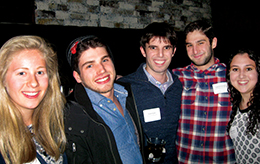
The Class of 2015 Happy Hour had 110 recent graduates representing 39 universities. Participants reconnected with old friends and made new ones. With the buzz being so positive, we added a second Class of 2015 event this past January. Now, almost a year after graduating, many of them still get together and are still involved.
Making matches such as Sara and her roommate is the best part of my job-and it really makes a difference. These young adults are making lasting relationships with each other and the Chicago Jewish community. All we have to do is reach out, facilitate these connections, and encourage these new grads to become leaders and the future of the Jewish community gets a little brighter.
The Class of 2016 Happy Hour will take place this September. To get more information about the event and similar opportunities for Class of 2016 graduates, you can email me at [email protected] or join the Class of 2016 Facebook Group.
Samantha Cutler is the young adult engagement associate the Young Leadership Division of the Jewish United Fund of Metropolitan Chicago.
Other stories
-
Meet Andrew S. Hochberg, 2021 Julius Rosenwald Memorial Award recipient
Celebrate Andy Hochberg at the virtual Annual Meeting on Sept. 14
Read more -
Two local teens win national recognition
Recipients of the annual Diller Teen Tikkun Olam Awards
Read more -
Celebrating six young award winners cultivating the community
Introducing young adult award winners
Read more