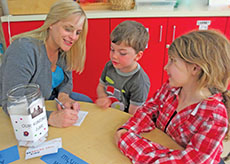
The colorful plastic jar used to hold jellybeans. Now, it holds something even sweeter–acts of kindness done by children.
The Junior Kindergarten class at the Bernard Zell Anshe Emet Day School began using what they call “The Kindness Jar” in December. Every time a students see another child acting in a kind way, they tell their teachers, Sheila Schraber and Ann Schneiderman. The teachers write the act down on a slip of paper-in the student’s own words-and place it in the jar, which the children decked out with hearts, stars, and flowers.
“The notes get read each day at lunch,” said Schraber, “and we then talk about how it felt to be both the giver of the thoughtful act as well as the recipient.
“We came up with the idea to use a Kindness Jar as a way to make the idea more tangible for the children,” Schraber said. “Not only is it helping to reinforce the idea of being kind, but it helps teaches them to recognize the kindness in others as well,” she said. Often, both Ann and I catch children doing wonderful things for each other and we write those in the jar as well. They love the surprise of hearing their name called out when they didn’t know anyone saw what they did.”
“We’re striving to create a culture of kindness” in the classroom, Schneiderman explains, by “emphasizing kindness among friends.”
“Young children start with open hearts and open minds,” Schraber said, “So we have to model kindness for them, and teach them to look for kindness.”
The effort is paying off, she says. “We are sensing more of a community feeling in class.” Schneiderman reports that the students have started putting Kindness Jars in their own homes as well.
Some examples of kindness from the classroom’s jar include: Hannah brought in enough tzedakah so that all of her classmates had some to put in the tzedakah box; Noah invited Emme to play with MagnaTiles with him when he saw she didn’t have any; Eden helped Henna to roll up her sleeves so they would not get wet when she was washing her hands; Henna took out Abby’s rest mat for her simply so she didn’t have to.
Aside from a very real kindness jar and tzedakah box, the class also learns about the metaphorical invisible bucket. “For the past several years, all three of the Junior Kindergarten classes have used the book Have You Filled a Bucket Today? by Carol McCloud as a means to reinforce kindness and thoughtful actions,” Schraber said. “The idea is that everyone has an invisible bucket that holds our thoughts about ourselves. You can ‘fill’ a bucket when you say or do something kind. By making someone feel special, you fill your own bucket as well.”
Other stories
-
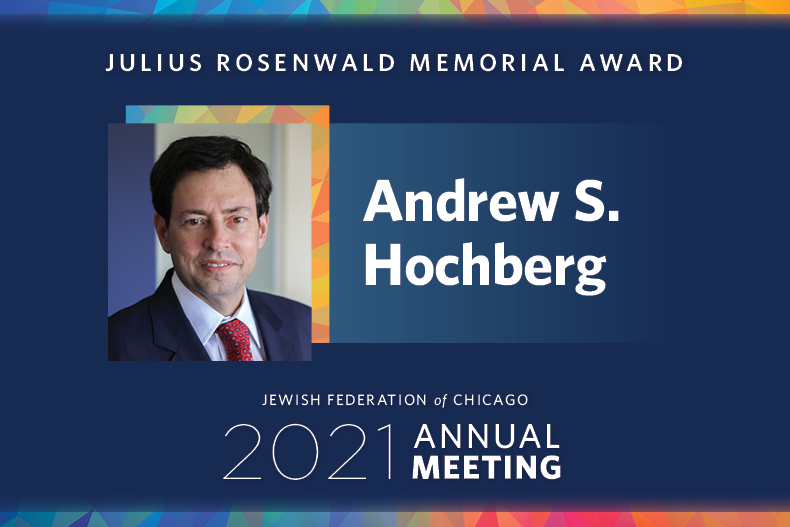
Meet Andrew S. Hochberg, 2021 Julius Rosenwald Memorial Award recipient
Celebrate Andy Hochberg at the virtual Annual Meeting on Sept. 14
Read more -
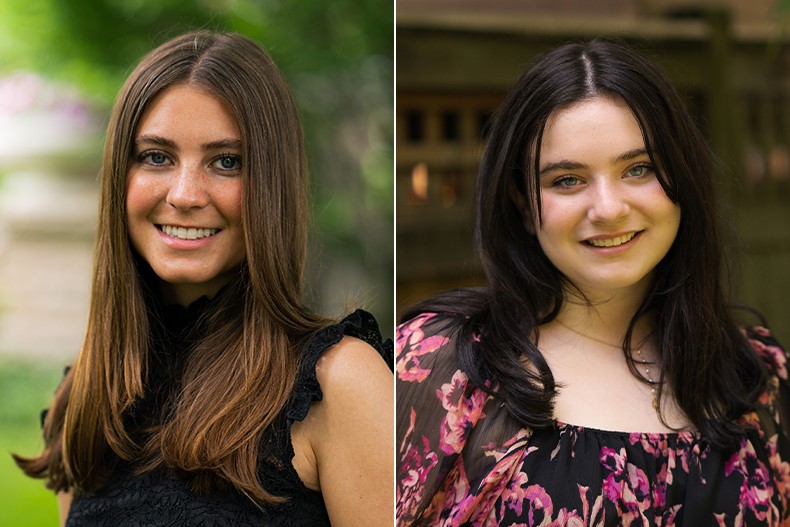
Two local teens win national recognition
Recipients of the annual Diller Teen Tikkun Olam Awards
Read more -
Celebrating six young award winners cultivating the community
Introducing young adult award winners
Read more
Nationally 'inspiring' Rabbi Menachem Cohen reaches out to at-risk youth
ABIGAIL PICKUS
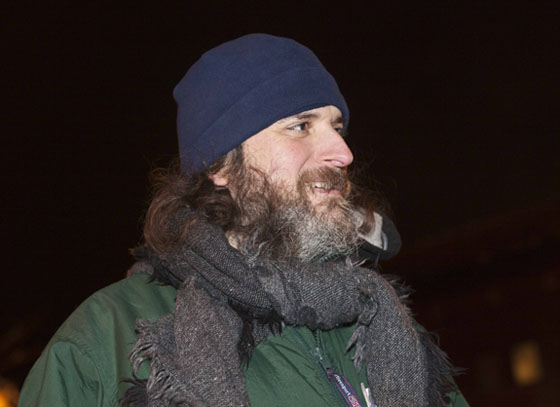
Chicago Rabbi Menachem Cohen was named to the Forward’s list of most inspiring rabbis in 2016.
Years before he started working for the Night Ministry, Rabbi Menachem Cohen spotted its bus on the street one night and made a silent promise.
“In the back of my mind, I said, ‘I’m going to bring some yiddishkeit to that one day,'” said Cohen. He was referring to one of Chicago’s oldest social service organizations, whose well-known outreach bus offers those in need everything from coffee to medical care.
Cohen kept his promise; when looking for a job in 2003, he contacted the Night Ministry. Since then, he has been a vital part of their youth outreach team, where he finds and engages young people at risk of experiencing homelessness.
He’s also the founder of Mitziut , an independent, non-denominational Jewish spiritual community based in East Rogers Park.
Now, Cohen’s dedication and unique contribution to Jewish life and beyond is being officially recognized. The Forward has chosen him as one of America’s most inspiring rabbis in 2016.
“I’m honored, humbled, and excited about what this can mean for the programs I’m part of,” said Cohen about his recognition. He is one of only 32 rabbis from across the country chosen for this honor, out of more than 100 nominees.
Cohen grew up in the Chicago area, the son of a social worker and a teacher. He has always worked in social services, but with the Night Ministry he feels he’s found his perfect match.
“The philosophy of the team is relationship-based,” said Cohen. “We call it the ‘ministry of presence.’ We don’t have an agenda. We are there to be with them, to remember their names, and to let them know what services we have. We’re not trying to sign them up for a program. In this way, they get to know us and then they will come to us. It’s more authentic that way, and then they work on what they want.”
The work is deeply satisfying, he said. “It is so wonderful to build these relationships with young people. I know when they give me nicknames that I’m connected,” he said. And with his signature kilt and long hair, Cohen said he is often on the receiving end of many affectionate nicknames.
But his connection to youth at risk goes much deeper than a few nicknames. After a series of deep conversations, one young man decided to make some very profound and positive changes in his life. And he credited Cohen with being his “touch person.”
“I didn’t help him fill out any [job or college] applications, but what I did was have conversations where I heard him and listened to him as a person, and that is really what stuck with him. That approach gives me such satisfaction because it’s a soul-to-soul approach. It is a longer road but in the end it makes a bigger difference,” said Cohen.
As for the “rabbi” side of Cohen, he was ordained by the Hebrew Seminary — a Rabbinical School for Deaf and Hearing, because of his deep connection to Congregation Bene Shalom in Skokie and its Rabbi Douglas Goldhamer.
“Everyone told me about the deaf congregation that was founded by deaf families, and I fell in love with the place,” he said.
After becoming a rabbi, Cohen founded Mitziut in 2003 as an answer to the disconnected Jew who longed for more spirituality and meaning. Meeting on Shabbat and holidays for a spirited, musical service followed by a potluck meal, the community gathers everywhere from people’s homes to the beach.
If that isn’t enough, Cohen is also a partner at AlleyCat comics in Andersonville. And, as a life-long game player, he is working on a prototype for a game that will teach empathy for those experiencing homelessness.
Married to an art therapist, Cohen and his wife are parents to a 9-year-old child.
Throughout it all, Cohen is energized about his life and his work. “I love that I’m doing good work in the world and am helping people improve their lives,” he said.
Abigail Pickus is a Chicago-based writer and editor.
Other stories
-
Meet Andrew S. Hochberg, 2021 Julius Rosenwald Memorial Award recipient
Celebrate Andy Hochberg at the virtual Annual Meeting on Sept. 14
Read more -
Two local teens win national recognition
Recipients of the annual Diller Teen Tikkun Olam Awards
Read more -
Celebrating six young award winners cultivating the community
Introducing young adult award winners
Read more
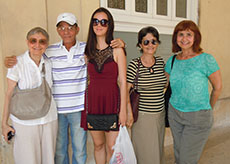
We’d been anticipating the visit for months, years, really. What interest would our native land hold for us after a 56-year absence? Cuba had sheltered our 20-something German Jewish father when the United States turned him away late in 1938. And in 1924, it became home to our young mother and her family after they left Lithuania. Our parents, Gerardo and Emma met through the Jewish community in Havana and married in 1946. My sister Clara Basch Stone, our brother Ricardo, and I lived in Havana until our family immigrated to Chicago in 1960.
This spring, Clara and I joined a cultural tour to Havana, Cienfuegos, and Trinidad, with Los Cantantes del Lago, a singing group of mostly American and Canadian expatriates based in the Guadalajara, Mexico area. Los Cantantes’ director, Timothy Ruff Welch, Clara’s acquaintance, arranged the tour.
While in Havana, an important priority for Clara and me was to visit The Patronato at Havana’s main synagogue, Templo Beth-Shalom in the Vedado neighborhood, where for many years our maternal uncle, Abraham Marcus Matterin (our Tio-Uncle Abraham), worked at the community’s library and as vice-president of the congregation.
Our maternal aunt, Tia Anita, immigrated with her family to the New York City area a couple of years before our own family left. Tia Anita kept us connected to the widely dispersed members of our Lithuanian family and its history. We thought all of our maternal grandfather’s family had left Cuba. Yet, a few days before our departure to Cuba, we learned that two cousins remained in Havana. And the daughter of one of those cousins worked at Beth-Shalom. Clara and I had an appointment with Adela Dworin, Beth-Shalom president, and we arranged to meet cousin Anay Vega there, too.
When we arrived at The Patronato, Adela and Anay were waiting for us in the Library, named in memory of our Tio Abraham who devoted his life to literary and intellectual pursuits. Using a list provided by the American Jewish Joint Distribution Committee-one of JUF’s overseas arms- Clara and I brought many items requested for the needs of the Jewish and other Cuban community, including vitamins and supplements, bottles of aspirin and ibuprofen, audio CDs to help Spanish speakers learn Hebrew, and clothing.
Adela’s father had been on the same ship as our mother’s family, Adela told us, and, although he was 10 years older than our Tio Abraham, the two became good friends. Jewish emigre families usually lived in the second floor apartments in La Habana Vieja, Adela explained, but our mother’s family lived in a large apartment on the first floor. Eventually, many Jewish families, including Adela’s, moved to the Vedado neighborhood to live close to the main conservative synagogue. Adela has lived in the neighborhood for some 60 years, she said. Our Tio Abraham and our bubbele stayed in the same apartment in La Habana Vieja until their deaths. When our bubbele died, she was mourned at the funeral home Caballero which had a Jewish chapel, Adela said.
With fascination, we learned parts of Adela’s story in connection to Tio Abraham. When Adela was a girl, he asked her to work with him at the Patronato’s Library, beginning in 1970. In 1975, a couple of years after Adela started working fulltime at that library, Tio Abraham started writing a history of the Jews in Cuba. He had almost completed that history when he died in 1983 at age 67. But after Abraham died, his life-long residence was emptied of all its possessions, including his extensive personal library, and his manuscript of his history of Jews in Cuba vanished. His books ended up in the possession of the government of Cuba but his history of Jews in Cuba, “which would have been the best history,” Adela said, was never found. Even the historian for the city of Havana, Eusebio Leal Spengler, whose help Adela enlisted, was unable to locate the manuscript.
“I learned a lot from him,” Adela said about Tio Abraham. “I was not a librarian and he did not have a trained librarian’s methods,” but it all worked. Tio Abraham hosted many literary and intellectual conferences here, Adela explained. “He knew a lot of important intellectuals,” including Ernest Hemingway, the Chilean poets Pablo Neruda, and Gabriela Mistral. At one time, he had his own printing press and published a magazine named Israelia .
Our meeting with Adela concluded; then we visited briefly with Anay. I learned she trained for many years at Cuba’s famed National School of Ballet, but an injury sidelined her. She now teaches the youngest children at The Patronato and dances in the young adult group. Anay arranged a meeting for us with the Vega Osin family, her father, Ramon, and her aunt Hilda. Their mother, Anna, was our mother’s cousin.
We are so very grateful to have been able to reconnect with our long-lost familia in Cuba and look forward to getting to know each other better. I wish this beautiful country continued progress so that we can all visit freely together again.
Other stories
-
Chicago to Israel to Kenya
A family’s story of living Jewishly on three continents Michelle Cohen World May 28, 2021 Avital, Tzofia, and Netanel Kaszovitz outside their home in Nairobi on Yom HaAtzmaut. When Avital Kaszovitz prepared to be a Modern Orthodox shlicha (emissary) to the Jewish community in Ke
Read more -
New exhibit spotlights the experience of ‘Shanghai Jews’
Explore a new Illinois Holocaust Museum and Education Center exhibit
Read more -
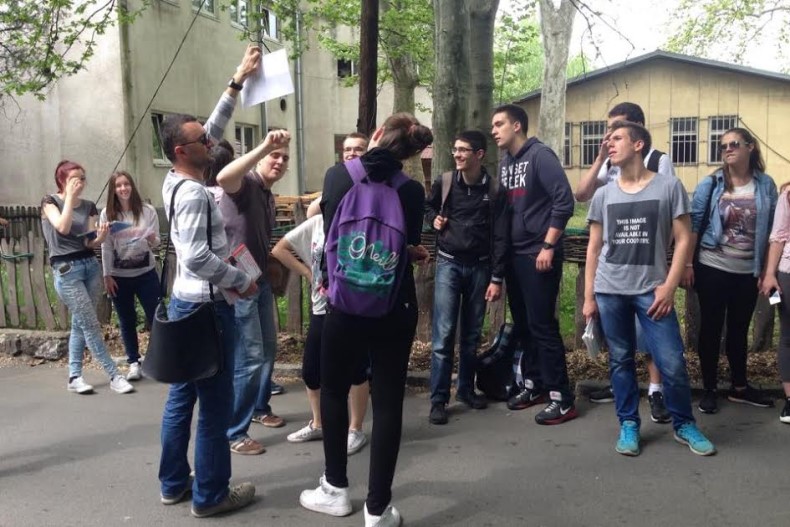
Europe’s brave new teachers of the Holocaust
Teaching the Holocaust in the modern era has its difficulties and rewards.
Read more
Breaking news from the Breakthrough Fund: JUF awards more than $1 million to encourage smart growth and innovation
STEFANIE PERVOS BREGMAN
For the third year in a row, the Jewish United Fund of Metropolitan Chicago’s Breakthrough Fund is giving a boost to innovative, leading-edge initiatives that meet local human needs, engage Chicagoans Jewishly, and strengthen Jewish communities in Israel.
This summer, $1.06 million will be awarded to programs focusing on themes ranging from inclusion of teens with special needs; educational programs to raise awareness about mental illness; crisis intervention and self-sufficiency for at-risk Israeli young adults; professional development for those working in the Jewish community; and engaging new Jewish experiences for local bar and bat mitzvah students, college students and congregants.
Some $781,000 will fund 16 new initiatives, with awards ranging from one-year grants of $10,000 to multi-year grants totaling $200,000. An additional $282,000 will support two programs in the third year of multi-year grants awarded in 2014.
Encouraging smart growth and innovation in the Jewish nonprofit sector is the goal of JUF’s Breakthrough Fund, which launched in fall 2013 and has since awarded more than $3.3 million to nearly 60 local initiatives.
“They say the third time’s the charm, but the Breakthrough Fund has truly been spectacular from the start,” said Steve Miller, chairman of the Fund’s review committee. “Three years in, we already are seeing our past grantees making incredible waves and changing this community’s future for the better.
“I am so proud of the programs we are supporting this year that reach out to new communities across the world and create meaningful experiences for our community here at home-and that’s what it’s all about.”
New Grants
Anshe Tikvah: Jewish Recovery Home Research Project will explore the viability of a Jewish Recovery Home for those dealing with substance abuse in the Chicago area, and will establish appropriate relationships with community stakeholders.
Educating for Excellence: Pre-Academic University Program aims to introduce an extracurricular academic model of learning to young underserved middle and high school students in Israel’s periphery.
Hillel: Habayit Shel Hillel (Hillel’s House) Emergency Shelter houses 12 yotzim (young adults leaving the Haredi community) at a time for up to four months each, providing crisis intervention, counseling, social skills, employment preparation, and other support that empowers them as they transition to stable, self-sufficient living in secular society.
JCC Chicago: All-Star Abilities is a fitness literacy, wellness instruction, and recreational opportunity for teenagers with special needs, working in concert with community partners and peer volunteers. JCC will develop a research-based curriculum and pilot a model of teen engagement programming that is inclusive of all teens.
Jewish Child & Family Services, together with CJE SeniorLife, the Chicago Board of Rabbis, and other partners, will pilot Tikvah: The Jewish Chaplaincy Community Initiative in the Chicago City North region, offering pastoral support to individuals and institutions across denominations (including the unaffiliated), geographies, lifespan, language, culture and traditions.
Jewish Child & Family Services also will expand planning and research supported by the Breakthrough Fund this past year in order to develop community and institutional readiness for including disabled persons, of whatever age or special need, in all aspects of synagogue life, through Encompass’s Synagogue Inclusion Education and Engagement Project.
Jewish United Fund: ThINK will test how a collaborative “ecosystem” can spur Jewish professionals to imagine, create, and share ideas and experiences, and to work together to advance the wider Jewish community’s work and life. During this pilot year, an in-person symposium as well as a survey of Jewish communal professionals will test interest in print, online and face-to-face communications and opportunities to expand collective knowledge and programmatic offerings.
JUF Metro Chicago Hillel: Base Hillel empowers a young and dynamic rabbinic couple to use their home as a convening point for pluralistic Jewish life. Launching this summer in Lincoln Park, the couple builds individual relationships with young adults through hospitality, service and learning.
KAHAL: Your Jewish Home Abroad, creates transformational Jewish experiences for study-abroad students, connecting them to the Jewish experience and community in their host cities. Working with campus partners at the University of Illinois, Northwestern and other universities serving the Chicago area and Chicago students, KAHAL’s work on local campuses is imbuing students with a sense of belonging to a global, diverse Jewish collective, helping them return home to their campus communities as internationally-minded leaders and future change-makers.
Ma’ase Center Organization will launch a pilot of the Bedouin Leadership in the Galilee program, which will develop self-efficacy and leadership skills of young Bedouin men before, during and after their IDF service, and provide them with an opportunity to develop and fulfill their innate potential through long-term academic, employment and social support.
Moving Traditions, in tandem with local congregations, will pilot Coming of Age , a new program to deepen the meaning of b’nai mitzvah preparation and halt post-b’nai mitzvah dropout by tweens and their parents. Coming of Age focuses not on the ritual, but rather on Jewish character education and exploring what it means to grow into a Jewish adult.
No Shame on U will increase community-wide knowledge about mental illness and the resources available in our community, raising much needed awareness and normalizing the conversation around mental health through both large community events and small group programs.
One Table Chicago aims to engage a broad network of individuals and their friends to develop positive, authentic and sustainable Shabbat dinner practices through in-home Shabbat dinners, large dinners at restaurants and clubs, and hybrid models in conjunction with other local Jewish organizations.
Poetry Pals uses creative expression and poetry to promote understanding, cooperation and peace in our multi-faith society. The program brings together elementary school children at faith-based schools and creates a safe, fun environment for them to learn about each other and become friends. This funding will allow the program to revise the curriculum for teens, as well.
The Garage: A Shared Office and Program Space for Jewish Nonprofits in Chicago, will create co-working and program/event space for Jewish innovation in Chicago, in order to stimulate cross-fertilization of ideas, encourage innovative collaboration, and reinvigorate the Jewish scene in Chicago and nationally.
United Synagogue of Conservative Judaism will pilot Yozma Pilgrimage , a summer trip for Chicago-area teens with cognitive and social challenges. With specially trained staff, a safe, educational and fully immersive Jewish identity-building program will be made available to a population too long underserved and turned away from immersive summer programs in Israel.
Renewed Grants
Jewish Child & Family Services : Jewish Center for Addiction will work with Response to implement youth prevention and support programs in a Jewish context, including educational programs, individualized case management and referral, support groups, and recovery retreats for youth and young adults in recovery.
UpStart: Chicago will establish a network of support for approximately 20 local Jewish project leaders; provide R&D assistance to 6-10 emerging Jewish social entrepreneurs; and model “intrapraneurship” opportunities in Chicago’s mature Jewish communal organizations.
For more information about the JUF Breakthrough Fund or to learn how to apply for a future Breakthrough Fund grant, contact Sarah Follmer, Director of Grants, at (312) 357-4547, email [email protected] , or xvisitwww.juf.org/grants/breakthrough.aspx.
Other stories
-
Meet Andrew S. Hochberg, 2021 Julius Rosenwald Memorial Award recipient
Celebrate Andy Hochberg at the virtual Annual Meeting on Sept. 14
Read more -
Two local teens win national recognition
Recipients of the annual Diller Teen Tikkun Olam Awards
Read more -
Celebrating six young award winners cultivating the community
Introducing young adult award winners
Read more
JCRC meeting addresses BDS within Christian denominations and on campus
STEVEN CHAITMAN
The latest iterations and impacts of the Boycott, Divestment and Sanctions movement within denominations of Mainline Protestant Christianity and on local college campuses were the focus of Tuesday’s meeting of JUF’s Jewish Community Relations Council.
Led by JCRC Chair David T. Brown, the meeting included information and insight from Rabbi Yehiel Poupko, JUF Rabbinic scholar in residence; the Rev. Robert Cathey, professor of theology at McCormick Theological Seminary; John Lowenstein, JUF vice president for campus affairs; and Rachel Zucker, a second year student at the University of Chicago and an Israel intern with JUF’s Israel Education Center.
Poupko began the meeting with an overview of relations between Jewish leaders and the leaders of various Christian denominations in Chicago. He provided some context for the BDS efforts taking place within the national mainline Protestant churches including four BDS resolutions that were defeated by the United Methodist Church at its general conference in Portland, Oregon last week.
“It’s very important for all of us to distinguish local reality from national headlines because it is exceptional events that too often shape our attitudes,” Poupko said. Through JCRC, he noted, there is ongoing, positive dialogue between Jews and Protestants in Chicago.
Jews and Presbyterians are one such example of improved Jewish-Protestant relations. Local Jewish and Presbyterian leaders began meeting regularly after the Presbyterian Church (USA) passed its first divestment resolution in 2004. Poupko was part of those meetings, as was Cathey, a Presbyterian minister who has participated in seminars in Israel with Jewish colleagues.
Cathey presented the findings and reactions to a report about the Church’s commitment to a two-state solution between Israelis and Palestinians. The report was recently circulated to Presbyterian leaders in advance of its general assembly in June, where two years ago it adopted three Israel divestment resolutions.
Cathey called the report “negative” in its outlook and proposed several steps to rebuild the relationship between Presbyterians and Jews and provide Presbyterians with more perspectives and information on the Israeli-Palestinian conflict.
“As I speak with Protestants around Chicago and in northern Indiana, what I often discover is what influences people’s perceptions of the Israeli-Palestinian conflict is which organization they made their first trip to the region with,” Cathey said.
Cathey proposed Jews and Presbyterians study Hebrew and Bible together, and said that seminary students, who are required to study Hebrew, could be doing it while living in Israel for a semester.
The meeting then shifted to a report and discussion of the climate on college campuses for Jewish students, who continue to feel marginalized and unwelcome for their support of Israel.
“Students come to campus to be intellectually challenged, not to be intimidated because of their support for Israel or because they are Jewish,” Lowenstein said.
Lowenstein then introduced Zucker, who shared her experiences on campus and the hostile environment for Jewish students that support Israel.
“The reason I chose the University of Chicago is I wanted to be challenged in every way imaginable, but I didn’t want my identity to be challenged,” Zucker said. “That’s really the biggest issue we see … no longer are we challenging people’s ideas and opinions, but we’re challenging the very fiber of who they are.”
Zucker was one of the Jewish students on her campus to stand up against a divestment resolution that ultimately passed the UChicago student government last month. An amendment to that resolution that would have supported the Jewish right to self-determination and the continued existence of the state of Israel was rejected.
“The BDS campaign is more than just a campaign to divest from Israel; it’s to make sure that [pro-Israel] students feel unsafe and insecure,” Zucker said.
JCRC continues to partner with the Israel Action Network, an Israel advocacy initiative created by the Jewish Federations of North America, to aid those on the front lines in the fight against BDS in Chicago and across the country, as well as the Israel Education Center .
Other stories
-
Meet Andrew S. Hochberg, 2021 Julius Rosenwald Memorial Award recipient
Celebrate Andy Hochberg at the virtual Annual Meeting on Sept. 14
Read more -
Two local teens win national recognition
Recipients of the annual Diller Teen Tikkun Olam Awards
Read more -
Celebrating six young award winners cultivating the community
Introducing young adult award winners
Read more
Mariano’s Fresh Market recently received the 2015 SourceAmerica Business Partnership Award for their collaboration with JVS Chicago. The award recognizes a commercial business that has partnered with an AbilityOne-producing nonprofit agency to increase the employability of people with significant disabilities.
“We have a wonderful relationship with Mariano’s — a true partnership — which has resulted in the placement of more than 90 JVS Chicago clients in Mariano’s stores throughout the Chicago area,” said Nanette Cohen, director of employment development for JVS Chicago. “Mariano’s is ideal to work with and to work for. It was an honor and a pleasure for JVS Chicago to work with Mariano’s; this award is well deserved.”
One of the many areas of career and employment services in which JVS Chicago has special expertise assisting job seekers and employers is Customized Employment, which uses a unique blend of flexible strategies, services and supports designed to increase employment options for job seekers with disabilities.
The JVS Chicago staff is specially trained in this individualized approach to help job seekers with severe challenges identify their interests and abilities, map out a career path and learn job search techniques. Staff then follows up with on-the-job coaching, helping employers to create accommodations and support.
Leah Rudy, supervisor of client services at JVS Chicago said, “One of the ways that we’re different from some agencies is that we really work to meet an employer’s needs as well as the client’s needs.”
SourceAmerica connects product and service contracts to a national network of nonprofits who employ people with disabilities. Working together, they meet requirements cost effectively and efficiently while changing lives.
Named for Chief Executive Officer Robert Mariano, Mariano’s stores are designed and built to deliver the highest quality products from around the world and those produced locally to shoppers with unequaled service and hospitality.
Other stories
-
Meet Andrew S. Hochberg, 2021 Julius Rosenwald Memorial Award recipient
Celebrate Andy Hochberg at the virtual Annual Meeting on Sept. 14
Read more -
Two local teens win national recognition
Recipients of the annual Diller Teen Tikkun Olam Awards
Read more -
Celebrating six young award winners cultivating the community
Introducing young adult award winners
Read more
Amendments protecting Israel and requiring reports on Iran terrorism included in defense bill
Two amendments regarding Israel and Iran were included in the National Defense Authorization Act (NDAA) passed by the House this week. Both amendments were authored by Rep. Peter Roskam.
The first requires the president to regularly report to Congress on the steps being taken to ensure that Israel has what it needs to defend itself from existential threats. The second requires the president to report to Congress on Iran’s usage of commercial aircraft for military and terrorism-related purposes, an amendment that is in large part is a response to Boeing’s ongoing negotiations to sell planes to Iran .
The Senate still needs to approve its version of NDAA. The Senate Armed Services Committee approved its bill yesterday, and the bill could come up on the Senate floor for a vote as early as next week. Once the Senate acts, both chambers of Congress will need to reconcile any differences between the bill, including any language related to Iran.
Other stories
-
Chicago to Israel to Kenya
A family’s story of living Jewishly on three continents Michelle Cohen World May 28, 2021 Avital, Tzofia, and Netanel Kaszovitz outside their home in Nairobi on Yom HaAtzmaut. When Avital Kaszovitz prepared to be a Modern Orthodox shlicha (emissary) to the Jewish community in Ke
Read more -
New exhibit spotlights the experience of ‘Shanghai Jews’
Explore a new Illinois Holocaust Museum and Education Center exhibit
Read more -
Europe’s brave new teachers of the Holocaust
Teaching the Holocaust in the modern era has its difficulties and rewards.
Read more
You can learn a lot while giving away thousands of dollars.
Especially if you are still in high school.
For the past dozen years, Voices: The Chicago Jewish Teen Foundation has been teaching high school students the ins and outs of philanthropy. The Jewish United Fund of Metropolitan Chicago program hands them $25,000 and puts them in full control of their own charitable foundation.
In the process of raising additional funds and figuring out what to do with the money, the teens’ eyes are opened to needs they never imagined, even as they are confronted with the kinds of decision-making and challenges that build leaders.
This year’s cohort of 25 students from throughout the Chicago area just announced $32,735 in grants to seven local and international programs and organizations. A second group, made up of alumni from previous years, awarded an additional $29,825 to six such efforts – bringing the year’s total to $62,560.
Over the life of the program, nearly 300 teens in Voices have allocated more than $450,000.
“Voices is a truly incredible program,” said Quincy Hirt, part of the alumni group and a junior at Whitney M. Young Magnet High School. “Through working with a great group, learning from an amazing teacher, and granting large amounts of real money, Voices teaches the students not only how to give money away, but how to do it strategically, benefiting from our group dynamic to address our objectives.
“This is key to philanthropy,” the Lincoln Park resident said. “The Voices participants spend their whole year making sure their money goes to great organizations that do great work in communities where there is a need.”
In the program’s initial group, the Voices 101 Foundation, team members conduct community needs research, perform due diligence, write grant guidelines and Requests for Proposals, analyze the proposals, take part in site visits, and learn to advocate, negotiate and collaborate with each other to make strategic allocations.
The following year, the teens have the option to participate in the Voices Alumni Foundation, where they translate what they’ve learned into more specialized and focused philanthropic work and mentor the Voices 101 teens. Alumni raise all the dollars they award, which this year was matched by JUF.
“Voices is not just about dollars and cents,” program director Stephanie Goldfarb said. “It’s about providing the skills and resources to help our young people find not only their social justice passion, but their power to affect real change.”
This year’s Voices grant recipients are:
Voices 101 Foundation 2016 Grants (Total: $32,735)
Children of Peace, Creativity for Peace Project, $5,000
Children of Peace is a non-partisan children’s charity in Israel dedicated to building trust, friendship and reconciliation between Israeli and Palestinian children, ages 4-17, and their communities. The Creativity for Peace Project trains Israeli and Palestinian girls to coordinate their own peace-keeping projects through social entrepreneurship.
Nirim, Wilderness Therapy Program, $7,000
Since 2003, Nirim has provided Israeli youth at high risk an opportunity – in many cases, their last – to overcome their harsh life circumstances, discover their strengths, and become self-confident and successful members of society. Wilderness Therapy is a key rehabilitative component, pivotal to their success. Teen participants learn to work as a team to achieve personal and mutual physical and psychological goals.
Response, Gendernauts, $8,000
Response, a Jewish Child & Family Services resource center in the northern suburbs, supports adolescents and their families in the Jewish and general community by providing prevention, outreach, counseling and sexual health services in a teen-friendly environment that empowers youth to make healthy life choices. The Gendernauts program will bring together transgender, gender-creative and gender-exploring youth in a safe place to share their common struggles with gender variance, talk about accomplishments in self-expression, and work on improving self-esteem and building resilience in a world that tends to stigmatize them.
CJE, Home Delivered Meals Program , $5,580
CJE SeniorLife enhances the lives of Chicago area older adults and their families through a comprehensive network that offers housing, health care, community services, health and wellness education, life enrichment programs and applied research. The Home Delivered Meals Program provides hot kosher meals for older adults who are unable to shop and/or prepare food.
Jewish Community Center of Chicago, J at School, $3,155
This Voices grant will provide scholarship assistance so low-income children in Chicago Public Schools will have access to quality educational and personal growth experiences in J at School’s After-School Enrichment programs.
Keshet, Inclusion Specialist at Congregation BJBE, $3,000
Keshet, the premier provider of educational, recreational, vocational and social programs for individuals with intellectual disabilities operating according to traditional Jewish values in Chicago, is working with Congregation BJBE in Deerfield to help Sunday school students with disabilities participate more fully in its programs. Hiring a professional Inclusion Specialist is the key to this partnership.
Jewish United Fund, Annual Campaign , $1,000
The JUF Annual Campaign focuses on helping people in need, rescuing people in danger, and keeping Jewish life strong. Voices dollars will go to JUF programs that care for 300,000 Chicagoans of all faiths, and 2 million Jews in Israel and around the world.
Voices Alumni Foundation 2016 Grants (Total: $29,825)
The Ark, Sarnoff Levin Residence Health Center, $5,000
The ARK provides a broad array of medical, social, and legal services to 3,700 low-income Chicago area Jews each year. All services are provided free of charge. The Sarnoff Levin Residence, Health Center, and Social Services departments provide short-term housing; medical, dental and optometry care and prescription medications; and clothing for low-income Jewish clients.
Jewish Vocational Service, Customized Employment Services Program, $7,500
JVS improves life through employment and productivity, recognizing that personal development is a lifetime endeavor. JVS’s Customized Employment Services Program offers targeted vocational services to Chicago-area Jewish youth and adults with disabilities, ages 18 and older.
EZRA, JUF Uptown Café and Food Pantry, $3,600
EZRA’s services strive to alleviate homelessness, hunger, unemployment and other self-sufficiency barriers. In addition, EZRA offers social activities and holiday celebrations to ensure that Jews who live in poverty remain actively connected to their heritage. The JUFUptown Café and Food Pantry programs, based in Uptown, help feed hundreds of community members a year, regardless of faith or ability to pay.
KAM Isaiah Israel, Reavis Elementary Math and Science School/Israel Food Justice and Sustainability Program , $6,225
KAM Isaiah Israel Congregation in Hyde Park has a long history of innovative social justice work. This program centers around sustainable land use, environmental degradation, and natural resource stewardship and conservation. It will provide environmental education to 3 rd , 4 th and 5 th grade students at CPS’s Reavis Elementary School in Kenwood.
SHALVA, Project Hope Discretionary Fund , $6,500
SHALVA’s mission is to address domestic abuse in Chicago-area Jewish homes and relationships through counseling and education. The Project Hope Discretionary Fund offers direct financial aid to clients who leave their abusive home and are in emergency situations.
JUF, Annual Campaign , $1,000
The JUF Annual Campaign focuses on helping people in need, rescuing people in danger, and keeping Jewish life strong. Voices dollars will go to JUF programs that care for 300,000 Chicagoans of all faiths, and 2 million Jews in Israel and around the world.
For more information about the Voices program, please visithttp://www.juf.org/teens/voices.aspxor contact Stephanie Goldfarb at 312-444-2802 or[email protected].
Other stories
-
Meet Andrew S. Hochberg, 2021 Julius Rosenwald Memorial Award recipient
Celebrate Andy Hochberg at the virtual Annual Meeting on Sept. 14
Read more -
Two local teens win national recognition
Recipients of the annual Diller Teen Tikkun Olam Awards
Read more -
Celebrating six young award winners cultivating the community
Introducing young adult award winners
Read more
JTA — Just days after rejecting four resolutions calling for divestment from companies that profit from Israel’s control of the West Bank, the United Methodist Church recommended withdrawing from the US Campaign to End the Israeli Occupation.
In a nonbinding vote of 478-318 at its general conference in Portland, Oregon, on Tuesday, the church accepted a petition requesting its withdrawal from the group, Religion News Service reported . It was not clear if the church would act on the recommendation.
The US Campaign to End the Israeli Occupation is a national coalition that “works to end U.S. support for Israel’s occupation of the Palestinian West Bank, Gaza and East Jerusalem,” according to its website.
The Methodist petition called the group a “one-sided political coalition” that seeks to isolate Israel “while overlooking anti-Israel aggression.” The US Campaign promotes the Boycott, Divestment and Sanctions movement against Israel and seeks to end U.S. aid to that nation.
“Blaming only one side while ignoring the wrongdoing of Hamas, Hezbollah, and Iran will not advance the cause of peace,” the petition added.
Not everyone was pleased with the vote.
The Rev. Armando Arellano, a delegate from Ohio, told RNS the US Campaign is “neither pro-Palestinian or pro-Israel, but pro-equal rights for all.”
“By withdrawing from the coalition,” he said, “we are withdrawing our commitment to be an agent of peace and justice.”
Over the weekend , a church committee rejected four resolutions calling for the church to divest from companies that profit from Israel’s control of the West Bank.
The resolutions called for divesting from three companies that pro-Palestinian activists have accused of working with Israeli security forces to sustain Israel’s West Bank settlement enterprise. They are Caterpillar, Hewlett-Packard and Motorola.
Similar boycott, divestment and sanctions petitions failed at general conferences in 2008 and 2012.
Last week Hillary Clinton, the front-runner for the Democratic presidential nomination who was raised and remains a practicing Methodist, criticized the BDS movement in a statement that was believed to be directed at the church, though it did not specifically mention the church.
In January, the Methodists’ pension fund removed five Israeli banks from its portfolio, saying the investments were counter to its policies against investing in “high risk countries” and to remain committed to human rights.
BDS activists have scored a series of successes in recent years in advancing similar resolutions, most prominently by the United Church of Christ in 2015 and the Presbyterian Church (USA) a year earlier.
Other stories
-
Chicago to Israel to Kenya
A family’s story of living Jewishly on three continents Michelle Cohen World May 28, 2021 Avital, Tzofia, and Netanel Kaszovitz outside their home in Nairobi on Yom HaAtzmaut. When Avital Kaszovitz prepared to be a Modern Orthodox shlicha (emissary) to the Jewish community in Ke
Read more -
New exhibit spotlights the experience of ‘Shanghai Jews’
Explore a new Illinois Holocaust Museum and Education Center exhibit
Read more -
Europe’s brave new teachers of the Holocaust
Teaching the Holocaust in the modern era has its difficulties and rewards.
Read more
JUF’s Jewish Community Relations Council partnered with Fierce Women of Faith on May 10 to convene four interfaith discussions about violence. The meetings were part of the Chicago Community Trust’s On the Table initiative.
Held in different locations throughout the city, the conversations engaged a diverse cross-section of women who are working to promote peace and nonviolence in Chicago.
“It was inspiring to see women coming together across communities who share a common commitment to finding solutions to pressing problems impacting our city,” said JCRC Executive Director Emily Sweet. “This type of interfaith engagement is a cornerstone of JCRC’s work.”
Participating organizations included the Jewish Women’s Foundation of Chicago, AJC, Sinai Health System, The Voices and Faces Project, Strides for Peace, the City of Chicago, the Chicago Foundation for Women, and survivors groups.
“The goal is to start a movement, to identify solutions, and these conversations are just the beginning,” said Rev. Dr. Marcenia Richards, founder and executive director of Fierce Women of Faith.
Other stories
-
Meet Andrew S. Hochberg, 2021 Julius Rosenwald Memorial Award recipient
Celebrate Andy Hochberg at the virtual Annual Meeting on Sept. 14
Read more -
Two local teens win national recognition
Recipients of the annual Diller Teen Tikkun Olam Awards
Read more -
Celebrating six young award winners cultivating the community
Introducing young adult award winners
Read more