Here and there: Shalom U’Lehitra’ot
Permanent linkThis is my final blog as JUF/JF's Israel Office Director after 17 years on the job. It has been a wonderful professional period for me. The challenges and the satisfaction have both been remarkable.
I was here in 1995 to help with then-Cardinal Joseph Bernadin's visit to Israel (at the time, the highest ranking Roman Catholic ever to have visited the country); I was here to help through the period of the Second Intifada, the Second Lebanon War, Operation Cast Lead, rockets raining down on Sderot and throughout the south of Israel - that is, throughout JUF's remarkable response via both the first and second Israel Emergency Campaigns.
And I have been part of the day-to-day involvements of JUF in Israel as well-the enduring and deeply entrenched care which the Jews of Chicago have evidenced year in and year out, despite their own challenges, in particular since the financial downturn which began in 2008.
If there has been one weakness, it pertains to Jews on both sides of the ocean. There's a seriously insufficient depth of knowledge of 'the other' - Jews in Chicago by and large don't know enough about the realities of life in Israel; and Israeli Jews don't know enough about the realities of being Jewish in Chicago.
The irony of course is that with modern technology, there's greater access to information than ever before. Yet information is not knowledge, and it certainly is no replacement for direct human interaction between Chicago Jewry and Israeli Jewry.
And even if the Chicagoans speak Hebrew and the Israelis speak English, it doesn't mean they speak a common language.
Why do Israeli politicians make some of the decisions they do which seem to fly in the face of what Jewish Americans think makes sense? Why do Jewish Americans often know the words of Christmas carols even if they have a strong personal Jewish identity? A case in point indicating the misunderstandings was the recent campaign Israel's Ministry of Immigrant Absorption undertook to encourage Israelis living in the US to return to Israel. The ad campaign was quickly stopped when it became clear that American Jews found it offensive to their way of life.
To appreciate the substance of each other's worlds, to more fully appreciate the need to sustain the thread which has connected this unique peoplehood over 4,000 years, there have to be more face-to-face interactions-honest ones; open ones. Such opportunities to exchange ideas about what it means to be Jewish in each other's contexts require the infrastructure to facilitate this. Yet the infrastructure exists; it's just underutilized.
Birthright brings Americans to Israel for 10-day visits and puts Israelis on the buses with them; the Jewish Agency for Israel supports a program called MASA, which creates longer-term opportunities for Jews from around the world to spend 6-12 months in Israel; JAFI (The Jewish Agency for Israel) is also now developing programs for durations which fall between the 10 days and the 6-month programs. JDC (the American Jewish Joint Distribution Committee) has a program for Jews from around the world to participate in 'tikkun olam' in developing countries, albeit without Israelis.
All of these programs are focused on helping Jews in the Diaspora understand Israel or be part of a world larger than themselves; they do not relate to Israeli Jews understanding the Diaspora.
There is only one program which consistently does that - Partnership2Gether (formerly Partnership 2000). Chicago has carefully built relations with her partnered communities of Kiryat Gat, Lachish and Shafir over the last 16 years.
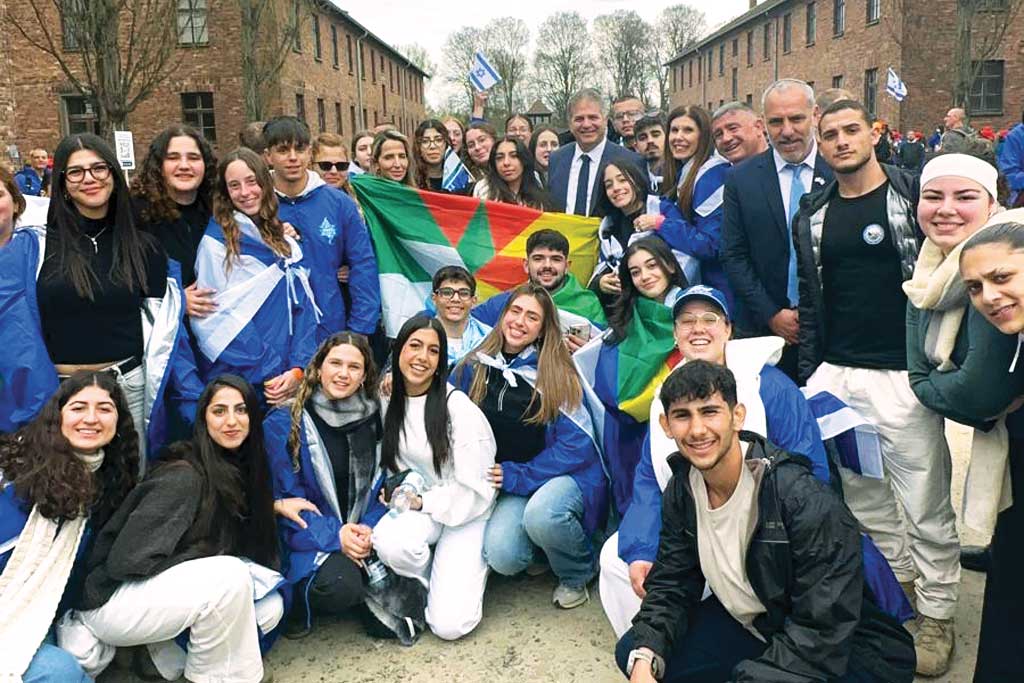
Numerable Chicagoans visit the region and spend time with their peers (1,300 alone in 2010), while Israelis from the Region visit Chicago in a myriad of programs, including school connections, summer camps, professional exchanges. And for the last few years, school students, teens on summer programs and Jewish Chicagoans 65+ have been coming to Israel while Israelis from the P2 Region travel with them throughout Israel or have them meet their families in their own homes.
And it's still just a drop in the bucket. We can-and should-do more. It teaches Chicagoan Jews about what it means to be an Israeli Jew; and it teaches Israeli Jews on what it means to live in the Diaspora and to maintain a deep connection to their Judaism. And more often than not, the participants maintain personal connections for years after the personal encounter.
Part of my role in representing JUF/JF in Israel has been to help bridge the cultural divides. In the 17 years I have been doing this, I have not encountered any other program which provides such long-lasting substantive opportunities to learn one from the other, to work towards the common goal of maintaining the warp and woof of the weave which gives world Jewry its raison d'etre to continue to call itself a 'people'.
Thank you for the opportunities you have provided me, and good luck to us all.


(1).jpg)