Dudu Fisher

Plain Meanings - Complex Texts

JUF News blog

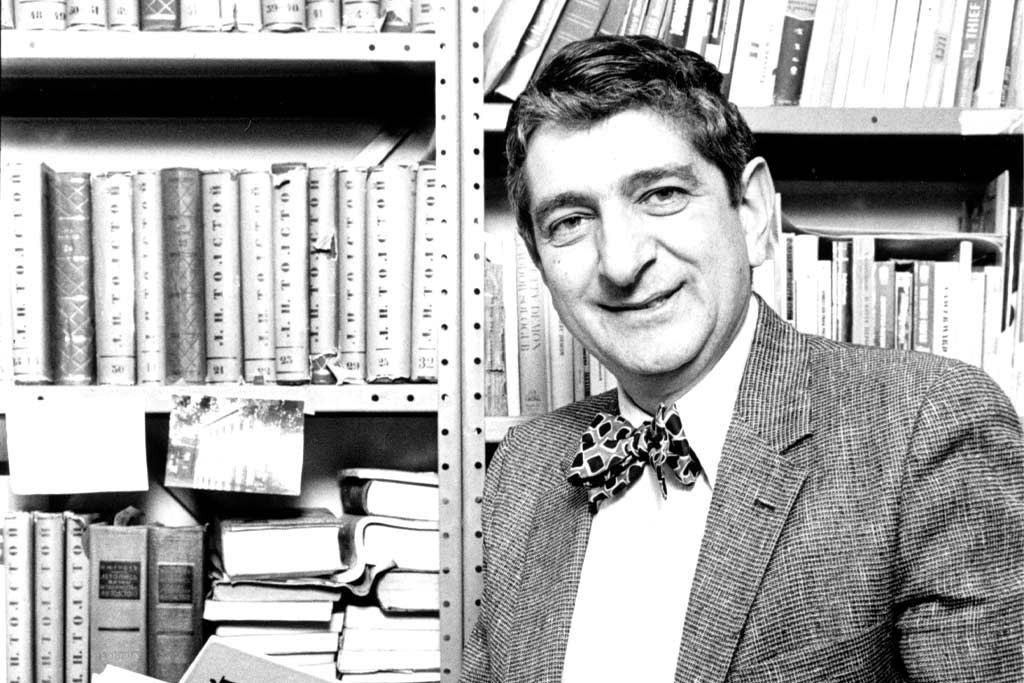
Rabbi Yehiel Poupko is bridging the gap between old Jewish books and contemporary realities.

Plain Meanings - Complex Texts

Inconveniences: Temporary or enduring?

 Permanent link

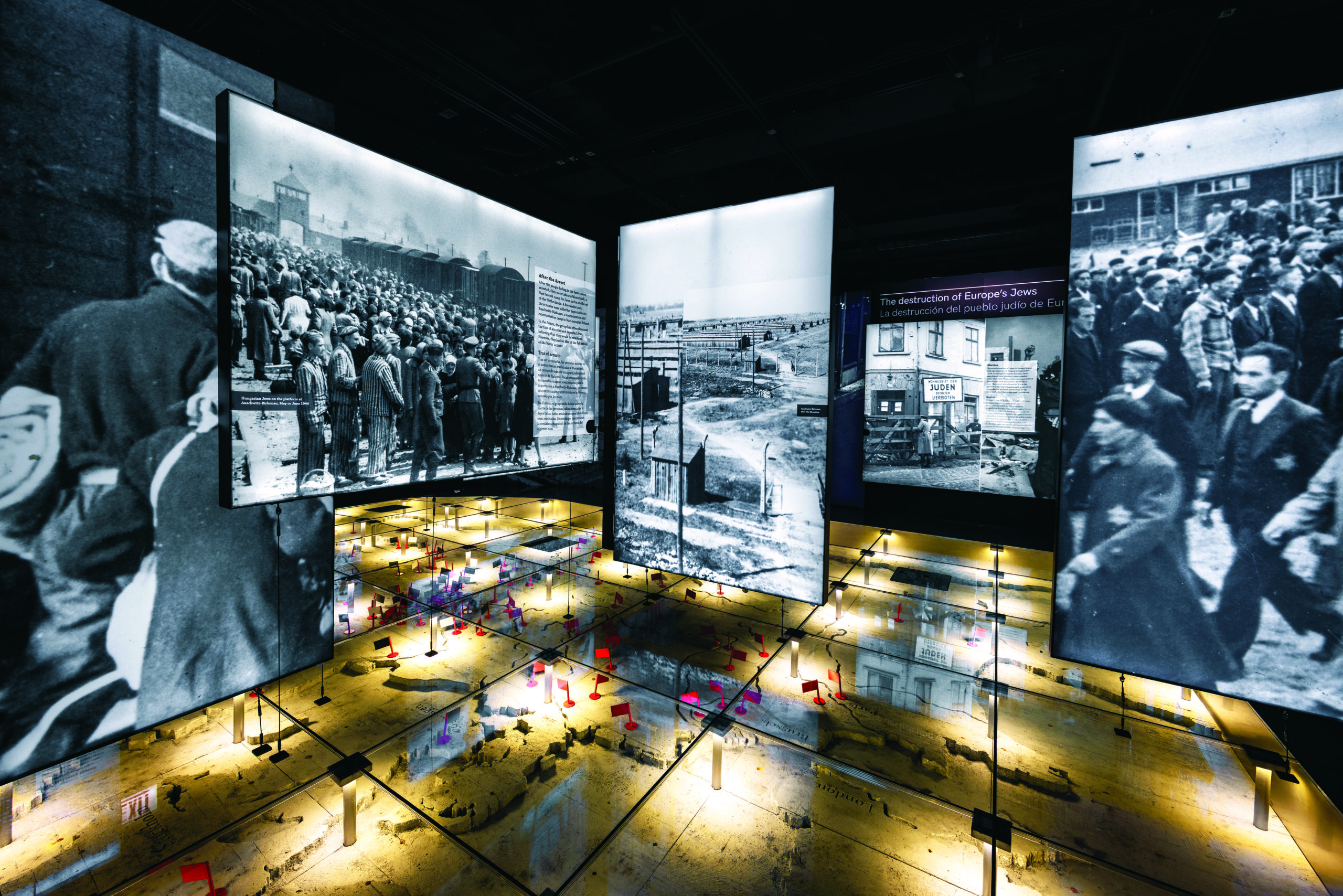
Just a week ago I had the privilege to learn with the members of Nachshon, a JUF men's leadership mission, now in its 11th year. This learning took place in Auschwitz, Majdanek, the Warsaw Ghetto, and upon the topography of terror that is Berlin. While there we learned about the sleeping conditions, the available food and drink, the workday, the sanitary facilities, the medical care for the Jewish residents, and the landscape outside the windows of their living quarters. 

I thought about all this over the past few days as the news reports kept growing in intensity and despair about the cruise liner Carnival Triumph. The ship had a fire in the engine room; the ship lost power. The food preparation systems and the sanitary facility systems stopped working. Getting food and drink was not at all easy. It was really inconvenient. It was, in fact, a huge inconvenience. Electronic access to the world at large brought their predicament into our living rooms as the media, with ever increasing coverage, dramatized their plight. As I understand from the papers there were two or three cases of passengers who were thankfully airlifted off of the ship because of health problems. Several days of no showers, no fun vacation, sanitary facilities denied and so on; The Cruise from Hell, it was labeled.

But now let's take a larger view of this. To be sure, from the confined perspective of the passengers adrift at sea this was an unnerving experience. It became for them, and many observers, a microcosm of what can happen when humanity loses its regular supports. However, do we really believe that the significant inconveniences, absent any threat to life or limb, rises to the levels of suffering described in the news media? Have we reached such a point that being deprived of some basic conveniences is really, as one newscaster put it, nightmarish? And now we are going to begin the litigation circus. All sorts of attorneys are going to descend upon this group. And all sorts of passengers are going to see how much they can get out of this cruise ship company for their inconveniences. In our society, must every inconvenience be equated with real human suffering? 

I have a proposal for the passengers of the inconvenience fated cruise ship. One of the fundamental moral principles of Judaism is what was done to you, you should never do to others; what you experienced, you should never allow others to experience:

You shall not oppress a stranger, for you know the feelings of the stranger, having yourselves been strangers in the land of Egypt. (Exodus 23:9)

So for all of you aboard the good ship 'inconvenience' who are now comfortably back on dry land, having just recently shaken your heads in media covered despair, this is an invitation to join in alleviating the real and enduring suffering in this world. 

Given the well-defined, limited, non-life threatening inconveniences in the areas of food, nutrition, sleeping accommodations, sanitary facilities, and the deprivation of recreational activities, might it not be a good idea for the passengers of the Carnival Triumph to form a society for the relief of inner city hunger and homelessness, for the rescue of those dying of starvation in sub-Saharan Africa, and withering away in the throes of genocide and violence in Darfur and the Congo? For the lack of recreation on board ship in the sunny Caribbean, can this group of passengers commit to building some playgrounds in our inner cities? If in such temporary conditions the passengers reacted the way they did and experienced a short taste of inconvenience, what can they now do for those who live those 'inconveniences' daily? Can they and we move from selfishness to selflessness?

On the death of a child

 Permanent link

As I write, news reporters, television, print, and electronic, are trying to find words for which there is no language. They fill our culture with the easy and the superficial. Words like: 'healing,' 'cope,' 'grieving process,' 'get past this,' 'come out OK,' 'move on,' roll off the tongue. Glibness is everywhere. Judaism teaches that when there is nothing to say we should say nothing.  We moderns get uncomfortable in silence.  We rush to fill it with the sound of our voices. We cannot imagine a world without the noise and words of connectivity. Sometimes only silence gives voice to what has happened.

In the encounter with the death of a child Aaron is our model. When two of his sons died we read "And Aaron was silent". When David lost Absalom, the son who rebelled against him, we read:

The king was shaken. He went up to the upper chamber of the gateway and wept, moaning these words as he went, "My son Absalom! O my son, my son Absalom! If only I had died instead of you! O Absalom, my son, my son!" (2Sa 19:1 TNK)

A bereaved parent would substitute their death for the death of the child.  This depth of despair is not often found in the more regular and natural deaths that are part of life.  Many languages have words for people who have lost certain relatives. A young person who loses parents becomes an orphan.  Bereaved spouses become widows and widowers. There are certain deaths that so profoundly alter the very nature of the bereaved that a specialized word is needed to express this new state of being.  Hebrew is a wise language.  It is one of the few languages that has a word to designate the person whose child has died.

That word is 'shakul' and in the feminine, 'shakula.' This Hebrew word appropriately enough means a reversal of the natural order. It is the way of the world that children shall bury old parents. The reverse is chaos. It is the undoing of the natural order for the parent, creator of life to witness the death of the life created. These Hebrew words are so unique that the only way to translate it is with a phrase, 'one who has lost a child'. There is no parallel in English.

Shabbat morning I had a conversation in Shul with a wise and learned pediatrician Dr. Edith Chernoff who treats very sick babies and little children.  Because she knows, and cares for parents who have lost children, I sought wisdom from her.  She said to me, "For the rest of their lives these parents will live in hell.  In the morning they sent a healthy, happy child off to school who came home lifeless."

This is why the TaNaKh, the Hebrew Bible has a word for such a person.  The fathers of the murdered children of Newtown, Connecticut are forever shakul and the mothers are forever  shakula

There are no words, no ideas, or poetry for the shakul and the shakula. We can offer only what the Halacha in its eternal wisdom provides. We can be with them. 

Sandy and God

 Permanent link

As I write these lines, six of my grandchildren in the New York Metropolitan area are without power.  It is getting cold.  Their day school was flooded by God's Atlantic Ocean. No one knows when it will re-open.  Their capable school staff and parent body are scrambling to find classroom space in local synagogues.  What are we to make of God and Sandy? 

Eight years ago after the Asian Tsunami which killed more than 230,000 people, the Chicago Tribune asked several area clergy a simple question:  What is the response of a believer to cataclysmic natural events?  My response was conditioned by other responses that made headlines around the world.  Some clergy of several faiths declared that the Tsunami was sent by God as punishment for a variety of sins.  At that time, I wrote that no one can know such a thing unless God has appointed him or her a prophet, and then told them the reason for the Tsunami.  We Jews believe that Almighty God spoke with our ancestors, especially Moses at Sinai. We also believe that God  has not spoken with anyone since the prophet Malachai in the sixth century BCE.  After the destruction of the First Temple, prophecy ends.  If we want to know the mind of God we look it up in the Torah and the Talmud and the codes. These tell us what to do in all of life's situations. The Torah and the Talmud do not tell us how to interpret contemporary events in nature or history. This article was, at the time, criticized by both Christian and Jewish fundamentalists. 

The fact is that according to the Jewish tradition no one today can assert that they know the mind of God about any natural event, or any event in history. What God has instructed us is found in the Torah and in the way the Torah is explained to us in the Talmud and other great works.  The response to any natural disaster is two-fold.  We are given the mitzva to help the suffering. We are given the instruction to learn how nature works (that is called science) to the end that we can protect ourselves from the mighty forces of nature.  The question then for a good Jew is not, why is this happening?, but rather, now that something awful and mysterious has happened what are my God given imperatives?  The answer to that is well known. 

Bloggedy babble blog

 Permanent link

This is a blog. I really don't like the word 'blog.' It is a contraction, which erases two or more words and creates a new one, and the original meanings are lost. When I first heard the word 'blog' I thought it was 'blob.' It took me a while to figure out it was 'blog, which comes from the two words: 'web' and 'log. 'Web' is taken from the world of arachnids describing a woven or spun structure with a high degree of connection, which is how we described such things before we created the word connectivity. A 'log' originally meant short brief entries in a diary that measures naval progress. And then we get this word 'blog,' short for 'web' (meaning world wide web) with 'log' stapled on to the orphaned surviving 'b' of 'web.' Frankly, lots of stuff that ends up in a blog isn't a log at all. It is just writings of all sorts. And I guess people who coined this term continue to believe that since all of this was birthed by young people it should have funny, interesting, and cute kinds of names. Now you're thinking to yourself, blah, blah, blah, where is he going with all of this blog, blob, babble about all the babble, babble that the new technology that gives us web logs, blobs and blogs has made possible. I'm headed right for the first babble of all babbles, the Tower of Babel read in this season in the Synagogue.                            

Everyone on earth had the same language and the same words…They said to one another, "Come, let us make bricks and burn them hard." …And they said, "Come, let us build us a city, and a tower with its top in the heavens, to make a name for ourselves; else we shall be scattered all over the world."  The LORD came down to look at the city and tower that man had built, and the LORD said, "If, as one people with one language for all, this is how they have begun to act, then nothing that they may propose to do will be out of their reach.  Let us, then, go down and babble their speech there, so that they shall not understand one another's speech."   Thus the LORD scattered them from there over the face of the whole earth; and they stopped building the city.  That is why it was called Babel, because there the LORD babbled the speech of the whole earth; and from there the LORD scattered them over the face of the whole earth.   (Gen 11:1-9 TNK)

Now what was their sin and why does the punishment fit the crime?  So what if they wanted to get into Heaven?  What's so bad about that?  It's cooler than trying to get into Hell.  And if they wanted to get into Heaven it's probably because they had some interest in God and possibly even wanted to talk with Him. 

Whatever their sin is, we do know one thing, God identifies the cause of the sin.  Their desire to capture Heaven, their desire to build a monument for themselves, their desire to make a name for themselves, their complete focus on themselves, could come about, the Torah teaches, in only one way.  They all spoke the same language; literally and figuratively.  Language reflects the creativity and the infinite complexity of the human mind.  Their language was engraved and frozen in stone; this means their thoughts were frozen.  They lacked a multiplicity of cultures. They lacked creativity.  Language is the first product of human intellectual creativity.  So all they could do was focus on themselves, a tower for themselves, a name for themselves.  People who focus on themselves think they can capture Heaven itself.  What does God say?  You've got to get away from yourselves.  You're going to get dispersed all over the Earth, but more importantly, you will no longer have one language.  Human multiplicity is borne of human beings being created in the infinite image of the One God.  If God is infinite then human intellectual, cultural, and spiritual variety is a testimony and an expression of that infinity.  These people were idolatrous.  They worshipped themselves and only one aspect of God.  So they spoke only one language.  God spreads them out.  God mixes up all their languages.  God babbles their language. That's where you get the Tower of Babel from, He babbles it all up.  He mixes it all up.  This people who were all of one language and of one mind,  got together in one place refusing to spread out and create many cultures and languages. What's their judgment?  God gave them so many languages they couldn't communicate.  Babel, Babel, Babel. And out of that civilizations were created.

They created  new languages. And we do it to this very day. That's how we got 'blog' out of 'web log,' and all the new language of inter-connective, intergalactic, uploading and downloading, platform connectivity, interface, webhosting, and a bunch of other words that all those younger folks know, that I do not, and not just contractions, but far worse, like LOL, BTDT, BTBS, TYOA, LIAM, GLY and on and on…..  and blog, blob, babble blog.


Against healing

 Permanent link

The Jewish tradition does something brutal to the mourner, to someone who has lost a first degree relative, it forces them to hear the following words, "May you be comforted amongst all those who mourn for Zion and Jerusalem."  The message is clear: You're not the only mourner, and while we the community will make sure that you are not abandoned in your moment of loss, pain, and mourning, we also remind you that you are not the only mourner.  There have been many mourners before you and long after you are gone there will continue to be many mourners.  Your experience is not unique, despite the fact that you and the dead you mourn are utterly unique.

In these times and in our society mourning has taken on new meaning.  Mourning used to be about standing for human dignity.  When a death takes place, no matter under what circumstances or what age, it is ever and always an assault on the dignity of the human being created in the image of God.  As John Donne writes: 

"No man is an iland, intire of it selfe; every man is a peece of the Continent, a part of the maine; if a clod bee washed away by the Sea, Europe is the lesse, as well as if a Promontorie were, as well as if a Mannor of thy friends or of thine owne were; any mans death diminishes me, because I am involved in Mankinde; And therefore never send to know for whom the bell tolls; It tolls for thee...."  (John Donne 1624)

It is the mourner's primary obligation to stand in protest against this assault.  The mourner's rituals are designed so that the dead not be swallowed up by the silence of death.  It is the singular task of the first degree relative to protest death's assault on human dignity.  No human can be allowed to die without protest.  This obligation falls first and foremost on the family, for they know better than anyone else the utter sanctity of the life just lost.  If, God forbid, someone dies and leaves no first degree relatives then the rituals of mourning fall upon the community.  Mourning in the Jewish tradition is an outcry against death's assault on the honor of life. 

Mourning today is focused on the mourner's feelings; and how the mourner will express feelings; and how the mourner's feelings will be managed by those around the mourner. Our society has pathologized mourning.  Look at the language that is current in our society in the face of death.  We talk about healing, as if the mourner is ill or sick; as if death imparts disease to those who live after.  And if death's sting brings illness then we must seek a cure. We must seek closure for that is what a cure means.    The illness is no more.   We talk about the grieving process as if it is a managerial task, each of whose stages can be mapped out and assigned and monitored. 

Mourning is not an illness. The mourner is not sick. The mourner is living through life's most natural experience, death.  The pathologizing of mourning erases the central and classic feature of mourning in the Jewish tradition.  Mourning means to stand against death's assault on human dignity.  When someone has lost a first degree relative there is no healing.  For what has been lost will never be restored in this life.  There is no closure.  A permanent void remains in the life of the mourner.  And, there is no grieving process whose managed stages come to closure.  For as long as there is memory there is a void.  The task, classically, in Jewish mourning is surely not to forget and just as surely not to be healed. The task at hand is first and foremost to assert that death will not have the final word on human dignity.  Then the task is for the mourner to fashion out of the life of the deceased a life portrait.  That portrait is what we call memory. 

The mourner does not need healing.  To be in mourning is not to be sick.  The mourner has experienced what all will experience, the death of those who create the mourner, the very source of the mourner's life,  parents; the death of a husband or wife; the death of brothers and sisters; and in a few horrific cases that death in the face of which we are mute.  The Jewish tradition distinguishes between those deaths which are tragic, which are not part of the way of the world and those deaths which are sad.  The death of the well-lived old parent or grandparent is sad, deeply sad, but not tragic.  That is the way of the world. 

And when the individual is a member of a family and the family is a member of a Jewish community and Jewish life is lived in that family and in that faith community then everyone knows their part in this regular and recurring life drama.  Tradition recognizes and creates for the mourner the means to express rage at death's violation of life.  Tradition expects the mourner to sit for a week, for a cycle of creation, to testify that human dignity, creation itself, has been menaced by death.  The task of sitting shiva has two features: the sequestration of the mourner who has known death and is in a state of despair; and the transference of the community to the house of the mourner.  The community bears witness to the mourner's stand for human dignity.  It is in this setting that the tradition and the community provide the framework for the mourner to give voice and expression to rage, anger, despair, and pain. The community reminds the mourner that he or she will soon return to the community. Then the tradition provides for the methodical  reintegration of the mourner into the community of the living.  Mourning grapples with great ideas and with common human experiences, but not with an illness.


Roman time

 Permanent link

In April of 1943 in Warsaw, Czeslaw Milosz looked at the Warsaw ghetto under assault by the Germans.  He saw Jews murdered, going up in flames, not in some small village in a distant forest, but in the very center of one of Europe's great cities just across the way from one of Warsaw's wonderful carnival-like parks and gardens.  Milosz could not understand how a whole city could enjoy life while a part of it was murdered, consumed in fire.  For precedent and meaning, he reached back hundreds of years to another great city and another such place in his epic poem Campo di Fiori.

In Rome on the Campo di Fiori

Baskets of olives and lemons,

Cobbles spattered with wine

And the wreckage of flowers.

Vendors cover the trestles

With rose-pink fish;

Armfuls of dark grapes

Heaped on peach-down.

And why bother repeating the tale when Milosz does it so poetically? Just one fact unmentioned in his poem is necessary.  Giordano Bruno was considered a heretic by the Roman Catholic Church.

On this same square

They burned Giordano Bruno.

Henchmen kindled the pyre

Close-pressed by the mob.

Before the flames had died

The taverns were full again,

Baskets of olives and lemons

Again on the vendors' shoulders.

And so, Milosz reminds us that in places filled with life, beauty, and color, brutal murder can take place without so much as a curious gaze from those who are having such a good time. And then he returns to Warsaw.

I thought of the Campo dei Fiori

In Warsaw by the sky-carousel

One clear spring evening

To the strains of a carnival tune.

The bright melody drowned

The salvos from the ghetto wall,

And couples were flying

High in the cloudless sky.


At times wind from the burning

Would drift dark kites along

And riders on the carousel

Caught petals in midair.

That same hot wind

Blew open the skirts of the girls

And the crowds were laughing

On that beautiful Warsaw Sunday.


Four hundred and twelve years later the Campo di Fiori is still there in Rome.  Its vendors are still hawking flowers, and rainbow cornucopia of fruits and vegetables.  Giordano Bruno was burned at the stake on February 17, 1600.  He was not the first put to the torch in this Italian campo, flush with life, color and food.  On September 9, 1553 wagonloads and wagonloads of the Talmud and many other sacred Jewish texts were burnt in the Campo dei Fiori by order of the Pope.  For decades a complete edition of the Talmud could not be had anywhere in Italy.  

Today, in the Campo dei Fiori, next to the statue that memorializes Giordano Bruno, is a simple plaque set in the cobble stone pavement.  On this bronze plaque are engraved two quotes from earlier Jewish incinerations.  When Rabbi Hanina ben Teradion was burnt at the stake by the Roman Emperor Hadrian in 1937, he was wrapped in a Torah scroll.  As he and the Torah scroll were consumed in fire, Rabbi Hanina declared:  The parchment is burning, and  the letters are flying in the air!  The second quote is from an elegy written by Rabbi Meir of Rothenberg who, upon witnessing the incineration of the Talmud in a Paris marketplace in 1242 declared: Sha'ali, serufa ba-eish… You sacred scrolls and Talmud texts consumed in fire, inquire after  the welfare of those (the Jewish People) who mourn you. Heine wrote, "Where they have burned books, they will end in burning human beings."  Today in Rome on the site of the incinerated Giordano Bruno and the Talmud, there is a plaque.  Europe is surely filled with memorial plaques.  It is a continent breaking  under the weight of memorial plaques for martyred Jews, destroyed Jewish communities, and awful events in Jewish history.   Rome is home to the oldest Jewish memorial plaque.  When Titus was victorious over Israel and destroyed Jerusalem in the year 70, he built a triumphal arch in the Forum in the year 82 to celebrate his victory.  On it is a bas relief, an ancient "photograph" of Roman soldiers  carrying the Menorah and other sacred Temple vessels to Rome.  This is the first and oldest of what was to become the most enduring literary creation of European civilization, the premature obituary of the Jewish people.  These are the times of Rome, from 82 to 1553, to 1600; and lest we forget there are now small bronze plaques in the pavement outside the homes of Roman Jews sent to Auschwitz in October of 1943.

The Oreo and the Jewish problem

 Permanent link

I'm writing this on Wednesday night, March 7, 2012. The election returns are in from Super Tuesday's Republican Primaries. Prime Minister Netanyahu and President Obama have just met. And on the CBS evening news, right alongside reports on these major events with implications for the future of the United States, Israel, and the world, is a story on the celebration of the 100th anniversary of the Oreo cookie, including an interview with the Turnier family, the children and the grandchildren of the man who did the last design of the Oreo cookie in 1952. This is an event of such significant scholarly proportions that the report presented the actual copy, the bill-of-sale, for the first batch of Oreo cookies back in 1912 to a grocer in Hoboken, NJ.

If ever there was a  text-grounded people, it is the Jewish people. We love first editions. There it was for everyone to behold on national television, the bill-of-sale for the first batch of Oreo cookies. Oreo cookies are that utterly delicious, portable, bite-size cookie icon of 20th century American culture, the cookie of 'milk and cookies.'

After hearing this news, I then remembered that all important question: The Oreo and the Jewish Problem. This is not the beginning of a joke. You surely remember that day when Oreo gained Kosher certification. It was announced Friday, January 16, 1998. Many in the Jewish world were ecstatic. Even those Jews with little concern for Kashrut practices were thrilled. What a marriage! What an embrace! This icon of America, the Oreo cookie, and the 3,000 year-old institution of Kashrut, the Jewish dietary practices! Talk about acceptance of the Jews in America. Kosher comes to Oreo! Does it get any better than this?! This is a Sandy Koufax moment. Who will ever forget the moment when Sandy Koufax said that he wouldn't pitch in Game 1 of the 1965 World Series because October 6, 1965 fell on Yom Kippur. Baseball embraced Yom Kippur. What a moment of Jewish acceptance by all of America. Indeed, as known in that pseudo-sacred authoritative text of Jewish intellectual history, The Big Lebowski, The Dude, turns to Walter Sobchak, and accuses him of "living in the <expletive> past." Walter Sobchak responds, "Three thousand years of beautiful tradition from Moses to Sandy Koufax . . .You're <expletive> right I'm living in the <expletive> past!" Need more be said?

Why bring this up now? We are headed into the four week period between Purim and Passover. This season is a Jewish 'foodie' high point. We are going to be talking a lot about food. Some Jews are going to call the great-aunt, the last one left in her generation, for their great-grandmother's Passover hazelnut cake or brisket recipe. Brothers and sisters are going to argue over who should maintain possession of mom's cookbooks and hand-written recipes with decades of food stains on them. Some are going to engage in that all important theological encounter between tradition and modernity. Gefilte fish at the Seder? Surely! But none of this old stuff, let me go with Wolfgang Puck's cabbage cosseted gefilte fish, or Mimi Sheraton's tureen interspersed with leek, beet, and carrot, along with halibut and salmon thrown into the mix. All this is to the good. There are five intimate things that people do together: work, play, love, study, and eat. Eating is intimacy. Proust was right about madeleines and Oreos, and old family chicken soup recipes, as well. It is remembrance of things past and more. The enchantment of all those food recipes is more than the remembrance of things past. It is life in the meaningful present.

Now Oreos and Sandy Koufax not playing on Yom Kippur have something in common. In both instances there was a meeting between the values of a minority culture and the embrace by the majority host culture. Sandy Koufax said Yom Kippur is more important than baseball, the all American sport. Baseball did not demand that Sandy Koufax give up Yom Kippur and Oreos came to Kosher.

There is a reverse trend out there taking place in America. It is the entry of Jewish ethnic food into the mainstream of 'foodie' or culinary America. Recently in New York City a restaurant was opened called "Kutsher's Tribeca." Now for those of you from the Midwest Kutsher's Country Club was a legendary, possibly venerable, Catskills mountain resort for New York Jews. Well a scion of that family has just opened up a new restaurant called Kutsher's Tribeca. Here is an excerpt from a review of this restaurant from that great arbiter of highly popular expensive, high-brow and low-brow culture, New York Magazine.

There's a dish called pickled herring "two ways" on the menu, the kasha varnishkes are made with wild mushrooms and quinoa, not kasha, and the house gefilte fish is molded into decorative gourmet pedestals and feathered with micro-greens and a parsley vinaigrette.

"This is not my grandmother's Kutsher's," said one of my guests as the first wave of newfangled, heretical deli creations began arriving at the table . . . but the contents of the excellent house delicatessen plate (which include pink veal tongue and strips of soft, house-cured duck and ­deckle pastrami with pickles, mustard, and a pot of delicious horseradish aïoli) were quickly devoured . . . and to the ingenious aforementioned herring dish, which is also cured in-house and served in two little Alfred Portale-style towers, one of them dressed in the traditional way, with sour cream and pickled onions, the other with wasabi and yuzu.

Kutsher's executive chef, Mark Spangenthal, has worked at top kitchens around the city, and if there's a problem with his radical interpretations of these ancient dishes, it's that some of them are actually too good. At least that was the twisted, Talmudic argument presented by one of the food scholars at my table, who pronounced his matzo-ball soup to be "overstudied." The smooth chopped chicken liver at Kutsher's is folded with unorthodox spoonfuls of gourmet duck liver ("nouvelle chopped liver," one of the scholars called it), and you can get your (slightly sodden) potato latkes topped with three kinds of caviar or a compote made with local Greenmarket apples. The traditionalists at the table were confused by the weirdly elegant shape of the gefilte fish, but the texture and taste, it was generally agreed, were a cut above what they'd been forced to endure over the decades at family holiday feasts.

Now, thanks to this restaurant, and lots of other similar trends, the world of Jewish ethnic food is on the diet and in the menus of America.  However, there is not much attached to it other than good food and the artistry of updating it, deconstructing it, re-imagining it, repositioning it, and all sorts of other pretentious twists and turns and culinary gymnastic artistries, but along with it come no Jewish values, no Jewish history, no food that embodies Jewish experience.

Meals marry the sensual and the life giving to family and community and sacred experience. In the Jewish community, and not only the Jewish community, eating is one of the ways of remembering the past, creating memories in the present, and passing on Jewish experience to the next family in Jewish history. The first Jewish national experience is a family meal in Egypt, the night before liberation from slavery. And because that event was remembered for more than 3,000 years in a family meal we are still here, eating and remembering.

Mazal Tov to Oreo on its 100th birthday! Bless the Oreo that came to Kosher and Sandy Koufax who chose Yom Kippur over the World Series. And so if you have to have nouvelle chopped liver or 'overstudied' Matzo Balls or gefilte fish with horseradish aioli and microgreens sourced from your local sustainable farmer for your Seder that is just great, because unlike Kutsher's it will be served in celebration of the world's most ancient and enduring national religious meal. And who knows but that just a decade or so from now in the week before Pesach a brother will call a sister and ask for Mom's deconstructed gefilte fish recipe.