Doing the Math
|
Two important sets of numbers have lately been published. The first, the National Jewish Population Survey, indicates that Jewish women in the United States bear not quite 1.9 children each, which is lower than the 2.1 that demographers deem the replacement level of a population. Couple that statistic with the inevitable phenomena of intermarriage and assimilation in America's wide-open, tolerant society 47 percent of the Jews who married between 1996 and 2001 married out and you don't need to be a social scientist to intuit that Jews in America won't be growing in numbers anytime soon. What will this mean, down the road, for American policy in the Middle East?
A few days before Rosh Hashanah, the Israeli government released its annual population statistics. At the end of 2002, according to these official figures, the Jews living in the State of Israel made up 76.8 percent of the total population of 6.631 million, down slightly from 77.2 percent the year before. The Jewish population did grow over the past year, by 1.4 percent; the Muslim growth rate, however, was 3.4 percent. Twelve per cent of the Jews are older than 65, as compared with 3 per cent of Israel's Muslim citizens. About one-fourth of Israeli Jews are children. But among Israeli non-Jews, kids make up 43 percent.
On the same morning that they reported the government's sobering figures, the newspapers in Israel carried the obituary of Simcha Dinitz, who served as chairman of the Jewish Agency from 1987 to 1994, and as Israel's ambassador to Washington from 1972 to 1978. It was in the latter capacity that Dinitz performed an incalculably valuable service to the Jewish state and the Jewish people, by lobbying the Nixon administration to provide emergency arms shipments to Israel during the Yom Kippur War.
Who among us, American Jews of middle age and older, can ever forget that day, Yom Kippur 1973, when word buzzed round the synagogues that Israel had been attacked by Egypt and Syria, caught by surprise on our people's holiest day? Where do we stand, 30 years after that terrible war, in which more than 2500 Israeli soldiers lost their lives? In Israel, controversies continue to swirl. During the summer, the two biggest papers, Ma'ariv and Yediot Aharonot, published previously unreleased transcripts of tapes that recorded the wartime communications of the late Shmuel Gonen, the general who headed Israel's southern command and was singled out by the postwar Agranat commission as one of those to blame for Israel's lack of preparedness. The tapes shed light on the strong differences of opinion among military commanders, with Ariel Sharon, who led the charge across the Suez Canal, wishing to move faster than the IDF's top generals thought appropriate.
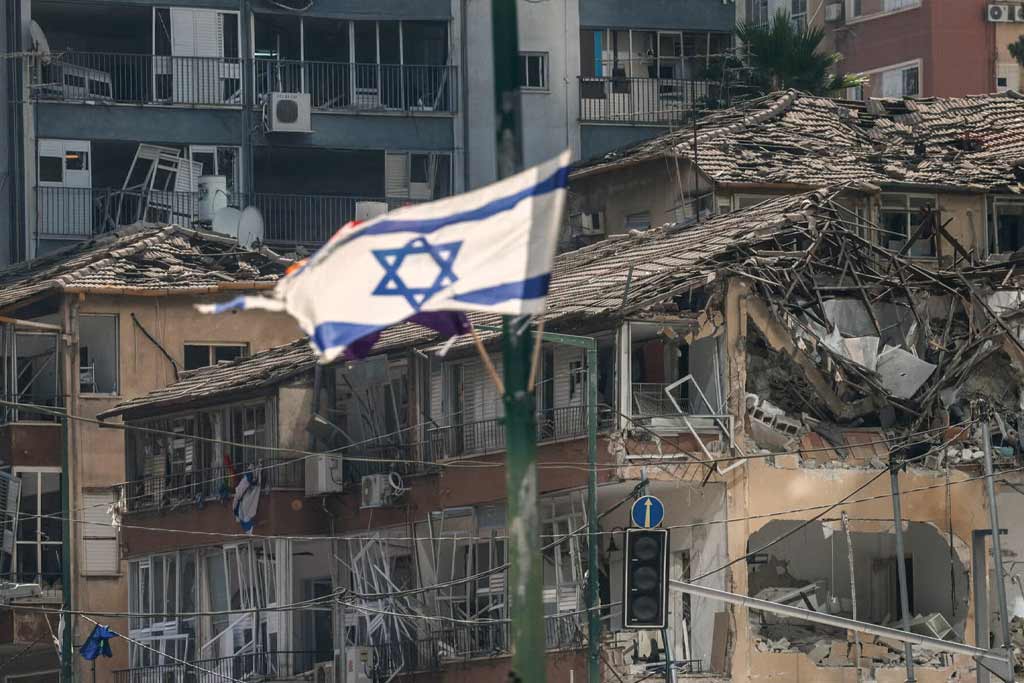
What, then, is the dominant lesson of the October 1973 war? For some Israelis, it is a chastening reminder of Israeli fallibility; for others, it underscores the necessity of bold, unfettered military action. Either way, three decades later, Israel remains beleaguered, with no clear remedy in sight for the plague of terrorism that waxes and wanes but never ends. Three days after the horrific bombing at the Hillel café in Jerusalem's German Colony five minutes' walk from my house, and of course we heard the awful boom Yediot published a poll that asked Israelis to rate Prime Minister Sharon's handling of terrorism. Only 8 percent said he was doing a very good job; more than half said he was doing poorly or not very well. How many thought they could do a better job, the poll didn't say.
The evening after that same bombing, my son he's almost 14 now told me that he heard that people would be gathering at the site on Emek Refaim Street at 8 p.m., in remembrance of those who were killed, and he wanted to go. The moment we got there I wondered if this had been a good idea. So unspeakable was the crime of the night before, so bottomless the capacity for evil of those who had orchestrated it, that I could not banish from my mind the worry that someone with a backpack might easily, despite the presence of police, slip into the crowd and again push a deadly button.
Many of the people who had gathered had brought with them pocket-sized books of Psalms, and someone began calling out chapter numbers, and men took turns leading the chanting. Among the Psalms was the familiar 23rd, The Lord is My Shepherd, a beautiful poem of consolation, and some of the Psalms that were picked spoke of the mighty, martial God who smashes Israel's foes. This was understandable, of course; but it unsettled me, nonetheless, and raised perennial questions for which I have no answers. Have we no other way but the sword?
Less than a week later I found myself in a taxi in New York City during an evening rainstorm. Suddenly there was a huge boom, far louder than thunder, and the sky blazed white over Central Park. It took me a second to recall that this was the 150th anniversary of the park, and these were fireworks. Surely there were many New Yorkers whose first reaction took them back two years, to Sept. 11, 2001. But for Israelis, the sounds of deadly explosion have become part of normal life. A few days thereafter, on a glorious Indian-summer morning, I strolled around Boston's Faneuil Hall and Quincy Market, feeling something of a stranger among the carefree crowd. What must it be like, I wondered, to enjoy the public spaces of one's home city without a trace of fear? After 15 years in Israel, I don't really remember.
So this, friends, is a bit of a window into one Jew's restless soul, a glimpse of the meandering heshbon nefesh I undertake in this difficult year. Will my unborn grandchildren and yours too, for that matter have a better Jewish future in Israel, or in America? I take out my mental pencil and try to do the math, but the solution never quite adds up. May we all have a healthy New Year.
Content Rating