JUF and You

Subscribe to JUF's
e-mail newsletters:

The Guide
The Guide to Jewish Living in Chicago
offers a comprehensive, up-to-date listing of Chicago-area Jewish organizations, resources, products, and services.
Memorials & Celebrations
Celebrating, rejoicing or sending love to a friend in need? JUF has a card or certificate designed just for you.
E-mail this page   E-mail this page      Print this page   Print this page      Bookmark and Share

Visiting Israeli Scholar Program holds inaugural event at UIC featuring Professor Shlomo Shoham

shoham

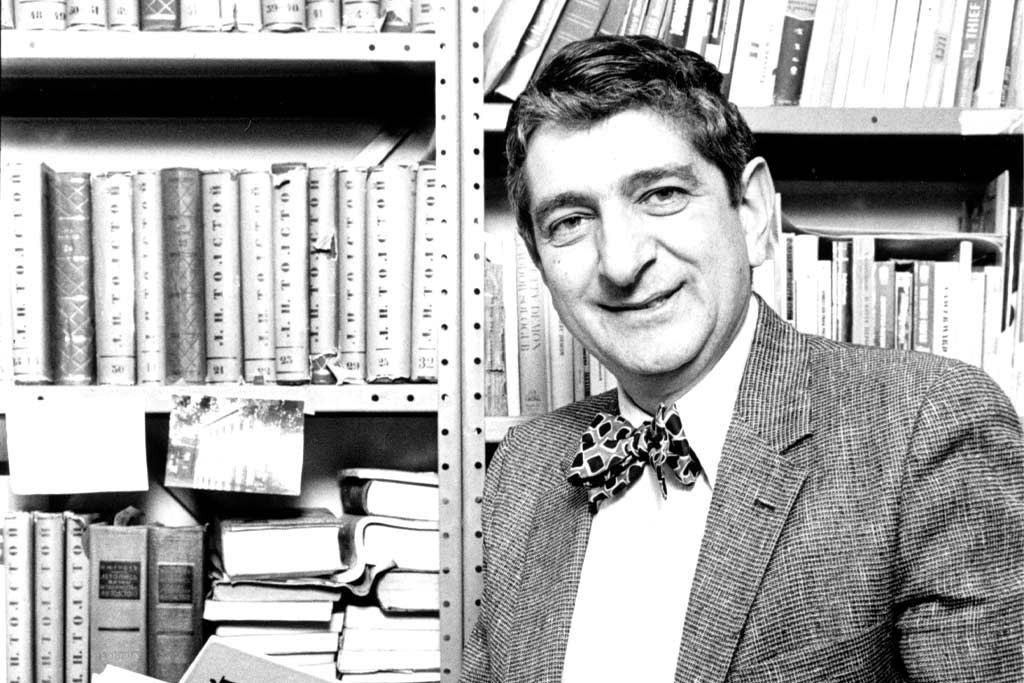
Professor Shlomo Shoham, Israel Studies Visiting Scholar at the University of Illinois at Chicago (UIC) and Professor Emeritus, Tel Aviv University, delivered the keynote address, “International Terrorism: Dynamics and Prevention” at the inaugural event of UIC's new Visiting Israel Scholar Program on the UIC campus  March 5. Supported by the Jewish Federation of Metropolitan Chicago, the program will bring an Israeli scholar to UIC to teach one semester per year for the next three years.

“The main issue right now is after Sept. 11, the whole notion of terrorism changed completely,” Shoham said. “After Sept. 11 it became universal in such a way that terrorism is right now the scourge of Occidental culture—It’s a war declared by fundamentalist Islam against Occidental culture and right now we don’t have any ways to cope with international terrorism, of trying to diagnose what is going on, because it's everywhere.

“Terrorism, fundamentalism is here to stay because it is effective and it is cheap,” he said, citing the low prices of bomb belts and the primitive nature of the Qassam rockets that are being fired into Israel from Gaza by Hamas.

Ranging between a variety of texts, often cited in the language of the original, and personal experiences, Shoham tackled three focal concerns he said are important in the context of international terrorism because they have been relatively neglected by many scholars: culture conflict, mythology and social entropy.

“Culture conflict has been kind of neglected because (scholars) didn’t realize that the ethos of the Middle East, as related to the social characters of the people over there, is in complete contradiction to the Occidental social character,” Shoham said.

Citing examples of differences in architecture and in the relationship between musical performers and their audiences, he concluded that individuals in the Arab world can tend to view the Occidental world as barbarian and without culture, and be unwilling to compromise.

In the Arab and Muslim world, myths generally considered to hold no historical veracity are “believed as gospel,” Shoham said, a reality that is of great concern.  Iranian president Mahmoud Ahmadinejad, for instance, believes in the myth of the Elders of Zion.

“In the Middle East it is believed as gospel that each year the Elders of Zion meet and decide what to do with the world this year," Shoham said. Ahmadinejad, he said, believes he is actually defending himself against this conspiracy.

A myth believed as truth in the Arab world includes the conviction that 4,000 Jews left the twin towers of the World Trade Center just before it was bombed. Such myths, though completely contrary to historical fact, drive the education of the youth in much of the Middle East, Shoham said.

Shoham discussed social entropy in the context of the relationship between the large oil companies and the Middle Eastern proletariat.

“The infrastructure of the Middle East does not have the ability to cope with this carnivorous kind of aggression,” Shoham said. “This kind of clash between high entropy and low entropy causes a kind of strengthening of fundamentalist Islam.”

For citizens who find they have no way out economically and socially, joining fundamentalist Islam is a way to exist, and drive away what are seen as their enemies, the U.S. and Israel, Shoham said.

Last but not least, Shoham touched on the current situation in Israel, noting that in Hebrew, the words for violence and silence stem from the same source.

“You cannot speak if you don’t have the dialogue—the alternative is violence,” he said. “As Martin Buber said it’s either an I-Thou or an I-it. In Gaza right now, and this is beyond doubt, Hamas is trained by the Syrians, by the Iranians, and Mahmoud Abbas himself said that al Qaeda controls Gaza strip. So there is no way out. But we’ll talk with Mahmoud Abbas, we’ll talk with Fatah, we’ll have a Palestinan state, and eventually we’ll have to organize a kind of buffer zone like the one in southern Lebanon.

“This is a possible, viable solution to the Gaza Strip,” he said. “I know that Ehud Olmert has this kind of vision. Nothing is certain in the Middle East but if we’re talking about the viability for the immediate future, I think this is a possibility.”

Following Shoham’s remarks, a response was delivered by Matthew Lippman, UIC professor of criminal justice and leading legal expert on the Holocaust.

In addition to UIC faculty and students from a variety of departments, Shoham’s lecture was attended by members of the larger community including members of the medical community, Jewish community and people affiliated with Hillel.

Winner of the Israel Prize, Shoham is a world-renowned scholar and a widely published author on criminology, deviance, philosophy, religion, psychology, and the interdisciplinarity of the human personality. He lectures world-wide, and has recently been resident at the universities of Harvard, Oxford, and The Sorbonne.

Posted: 3/6/2008 3:05:44 PM

Content Rating

  Average 0 out of 5