The prayer was recited over the designation of a fourth matzah from the late 1960s to 1990.
3/1/2010 3:08:20 PM
We are in the Book of Shemot, the Book of Names.
2/3/2010 3:22:19 PM
Initial experiences are formative. That is why the Yerach D’vash, or honeymoon, in a marriage is so important.
12/28/2009 12:45:04 PM
Joseph has to interpret dreams. First he has to interpret his dreams.
11/27/2009 11:18:43 AM
Yehiel Poupko He (God) said (to Abraham), “Take your son, your only son, the one you love, Isaac, and walk yourself to the land of Moriah and offer him up as a whole
11/11/2009 9:46:21 AM
It is now the Jewish year 5770 since creation.
10/1/2009 2:01:08 PM
We are entering the season of words, huge numbers of words, hours and hours of words.
9/1/2009 10:31:07 AM
And there did Moses, the servant of God, die in the land of Moav by the ‘kiss’ of God.
7/30/2009 10:23:34 AM
Please try this year to remember their names: Mahlah, Noah, Hoglah, Milcah, and Tirzah
7/8/2009 10:56:00 AM
Thinking Torah Rabbi Yehiel E. Poupko The Book of Bamidbar will be read in the synagogue from Shabbat of May 23 through Shabbat of July 18. This is the book in which Israel wanders in the desert until it
6/15/2009 10:13:49 AM
We are in the season when the Torah reading brings to conclusion the third book, Vayikra-Leviticus.
5/5/2009 11:02:12 AM
To some degree the popularity and the enduring success of the annual Passover family Seder is indebted to McDonald’s and to Martha Stewart.
4/7/2009 1:32:34 PM
Thinking Torah Rabbi Yehiel E. Poupko The Book of Shemot has the two most glorious narratives of the entire Torah and the single most painful one as well. Indeed these three narratives determine the structure of the Book of
3/16/2009 9:59:44 AM
In the Book of Shemot-Exodus, there is an enormous amount of action by God on the visible stage of history, with Israel right there in the drama alongside Him.
1/28/2009 11:51:34 AM
Rabbi Yehiel Poupko One of the organizing principles of the Book of B’reisheet Genesis is the role of woman as the custodian of transition from one generation to the next. B’reisheet,
1/5/2009 11:15:46 AM
From beginning to end, the Book of B’reisheet-Genesis is dominated by one organizing principle:
12/8/2008 11:04:13 AM
We are in the Book of B’reisheet-Genesis, whose chapters 12-36 are the narrative of the Patriarchs and Matriarchs, Abraham, Isaac, and Jacob, and Sarah, Rebecca, Rachel, and Leah.
11/10/2008 11:52:12 AM
If someone has not seen the festivities and rejoicing at the place of the water drawing they have never seen festivity and rejoicing in their lives.
10/20/2008 10:30:37 AM
Jewish history moves from origin to origin, from beginning to beginning. Each of these moments of origin and beginning emerge when all seems at an end, and then a great renewal takes place.
9/8/2008 10:05:40 AM
We have now arrived at the fifth book of the Torah. We are currently reading and learning and celebrating the Book of Devarim Deuteronomy. The book itself covers a short, but intense period of
8/5/2008 10:45:04 AM
The reading of the Book of the Desert-the Book of Bamidbar will conclude on 23 Tammuz-July 23, 2008. The book reports on the 40 years that the Jewish people spent in the desert. Its literature is the stuff of high drama, filled with personal and national rebellion, and the fateful decree that the generation of slavery will wander in the desert for 40 years, and will not enter the Promised Land.
7/7/2008 1:38:38 PM
The Book of Bamidbar- the Book of the Desert.
5/29/2008 2:14:59 PM
We are coming to the end of the Book of Vayikra-Leviticus. This, the third book of the Torah, has only two brief narratives.
5/2/2008 8:56:33 AM
Torah Commentary Rabbi Yehiel E. Poupko Everyone knows the purpose of the seder. It is sipur yetsiat mitsrayim, to tell the tale of the Exodus from Egypt. What is not always clear is that the seder is also “The
4/8/2008 9:13:18 AM
The Torah has five books, that is why in Hebrew it is called Chumash, literally “composed of five.”
3/18/2008 2:27:58 PM
The covenants of the Torah build upon each other, with later covenants emerging out of earlier ones, each blossoming into a covenant of more beauty and greater detail.
2/5/2008 10:12:21 AM
Slavery, family, liberation, rescue, and revelation.
12/26/2007 2:16:50 PM
Why are food and meals so essential to the Jewish experience?
11/26/2007 12:09:20 PM
Was there ever a child born after so much discussion, so many difficult and complex conversations?
11/1/2007 12:50:56 PM
The Rosh Hashanah and Yom Kippur prayers focus our thinking on the Patriarchs and Matriarchs, and on Adam and on Noah.
10/8/2007 10:26:01 AM
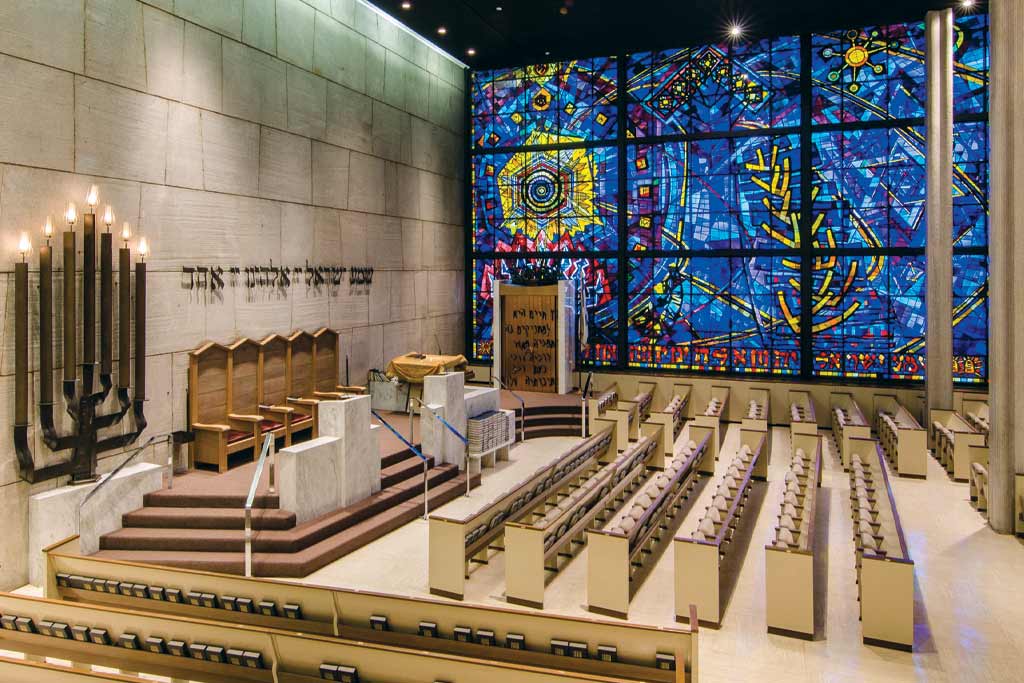
Synagogues and their prayer rooms are too often and too easily taken for granted.
8/29/2007 11:09:43 AM
The Book of Devarim-Deuteronomy, which takes place during the last few weeks in the life of Moshe, covers the shortest time span of any of the books of the Torah.
8/6/2007 9:58:36 AM
The last 11 chapters of The Book of Bamidbar, the Book of the Desert, in which the Jewish people move from Mt. Sinai to the Promised Land, are spent on the plains of Moab overlooking the Jordan River, with the Jewish people poised to enter the Promised Land.
6/29/2007 10:29:55 AM
Torah Commentary Rabbi Yehiel E. Poupko The JUF News with this essay reaches you in the middle of the Book of Bammidbar Numbers, which begins with the promise of our ancestors leaving Mt. Sinai for the Promised Land. They
6/6/2007 12:28:20 PM
Torah Commentary Rabbi Yehiel Poupko We are about to conclude the annual reading of the Book of Vayikra on Shabbat May 11, 12. How does Vayikra (Leviticus) advance the Torah’s narrative? The Exodus from Egypt has taken place, followed
5/3/2007 4:23:01 PM
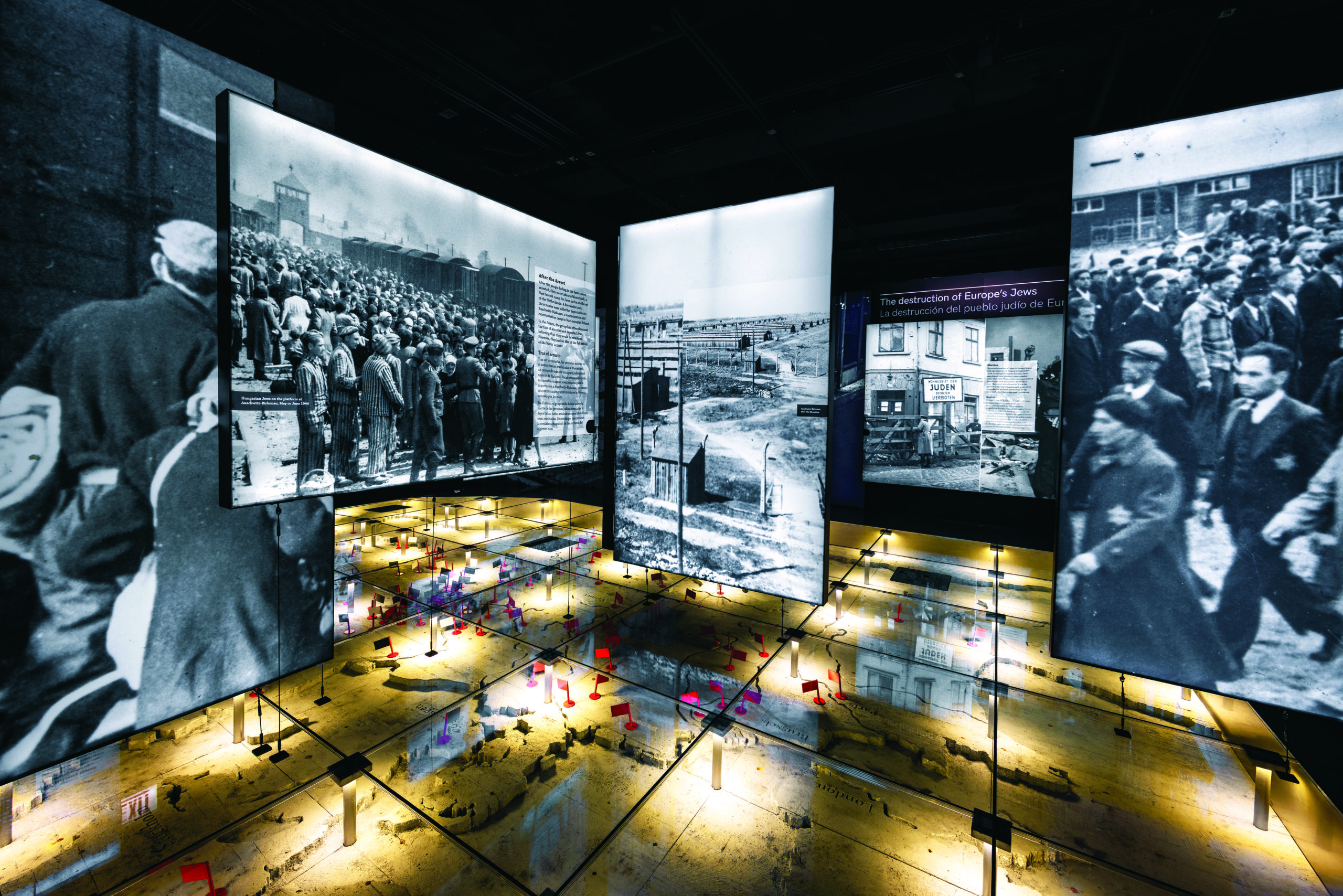
After World War II, and the destruction of European Jewry, many survivors looked for a place to bury their dead, to give their friends and relatives who had been desecrated in life an honorable burial and a last resting place. There was a problem. There were no bodies to bury. Friends, family and shtetl neighbors had been reduced to ashes. Almost all of the survivors left, many to Israel, some to Western Europe and North America.
4/25/2007 2:44:04 PM
This monthly essay is meant to cover a month's worth of weekly Torah portions, and it usually does. In this case, that ought to be from the beginning of the narratives about the life of Abraham and Sarah in B'reisheet-Genesis 12 through the life stories of Isaac and Rebecca in Chapter 28. This essay will not do that. It will focus on only one episode in the lives of Abraham, Sarah, Isaac and Rebecca.
4/25/2007 2:40:24 PM
Hearing the word of God, the name of being
4/25/2007 2:40:19 PM
This issue of the JUF News arrives in your homes during the transition from the first book of the Torah, B'reisheet-Genesis to Shemot-Exodus. The Book of Shemot, which has three sections, is really quite simple. In Section 1, Chapter 1 through Chapter 18, God and Israel meet and get to know each other and fall in love. In Section 2, Chapter 19 through Chapter 24, God and Israel enter into a Covenant at Sinai; that is to say, they make an eternal commitment to each other, marriage, if you will. In Section 3, Chapter 25 through Chapter 40, they move into a common residence, in this case the Mishkan, the portable temple in the desert. Each of these three sections has its own purpose and its own organizing principle.
4/25/2007 2:40:14 PM
Each of the five books of the Torah can be divided into three sections. The three sections of the book of B'reisheet are, first, Chapters 1-11, focused on the narratives of creation, Adam and Eve, Noah and the flood, the Tower of Babel—in short, the history that precedes the patriarchs and matriarchs. The second section, Chapters 12-26, is the narrative of Abraham, Sarah, Isaac and Rebecca, Jacob and Rachel, Leah, Bilha and Zilpa. The third section, the closing section, the fulfillment section of the Book of B'reisheet is Chapters 37-50, the narrative of Joseph.
4/25/2007 2:40:04 PM
The earliest mention of the soul in Greek literature is Homer's morbid picture of the unhappy shadowy existence of the Trojan War heroes in Hades. Later Greek literature accepts the existence of souls. As in Plato it views the soul as very lofty and sacred, but sees the body as the soul's gross earthly prison.
4/11/2007 10:17:55 AM
Torah Commentary
Rabbi Yehiel Poupko
We find ourselves in the second of the three sections of the Book of Shmot. In Section One, God and Israel meet and fall in love, Chapters 1-18; Section Two, God and Israel enter into a marriage-like covenant, Chapters 19-24; Section Three, God and Israel
4/11/2007 10:13:50 AM
Ten Shabbats, ten weeks of preparation for Rosh Hashanah
2/4/2007 1:03:00 PM