There seemed no reason during a recent visit to doubt an estimate as high as 17 million for the population of Istanbul: clogged freeways, endless urban sprawl, poor air quality, and the pervasive feeling that too much growth had occurred too rapidly, gave the number visceral credibility.
The great city on the Bosporus, which radiates from its historic core westward to Europe and eastward to Asia, still exudes the gravitas of an imperial capital, even though the Ottoman Empire that once ruled from there no longer exists. (Ankara, the capital of the Turkish Republic, lies more than 200 miles to the east.)
Istanbul, like everywhere in Turkey, seems poised between a glorious past and an ambitious if unpredictable future, as it struggles with an explosive present. And who but the Jews should be sitting on the precipice, as Turkey determines which of its bridges are most critical to cross—those to the East or those to the West?
Numbering some 20,000 people—more than four-fifths of Turkey’s total Jewish population (about 100,000 Jews of Turkish origin live in Israel)—the community in Istanbul and environs has been feeling the strain lately as a government that many see as Islamist and neo-Ottoman builds bridges to Damascus, Tehran, Gaza, and Khartoum.
Of course Turkish Jews, like their fellow Muslim and Christian citizens, welcome efforts by their government to bring stability to relations with Turkey’s neighbors. And those efforts hardly begin or end with other Muslim-majority nations: Greece, Armenia, Bulgaria, Georgia—all of Turkey’s neighbors, including those with deeply troubled histories with the crescent and the star—have been playing to the overtures of Prime Minister Recep Tayyip Erdogan and Foreign Minister Ahmet Davutoglu.
The ruling AKP (Justice and Development Party) seeks a “no problems” foreign policy that projects Turkish “soft power” as a strategy for the nation to become—once again—a major world power.
The problem, it seems to me, is that the government appears to be building better relations with Islamic neighbors on the back of a strategy of de-legitimization of Israel, fueling—inadvertently or not—a resurgent anti-Semitism. That in turn, said Jewish community leaders, is creating anxiety and concern about the future of Turkish Jewry.
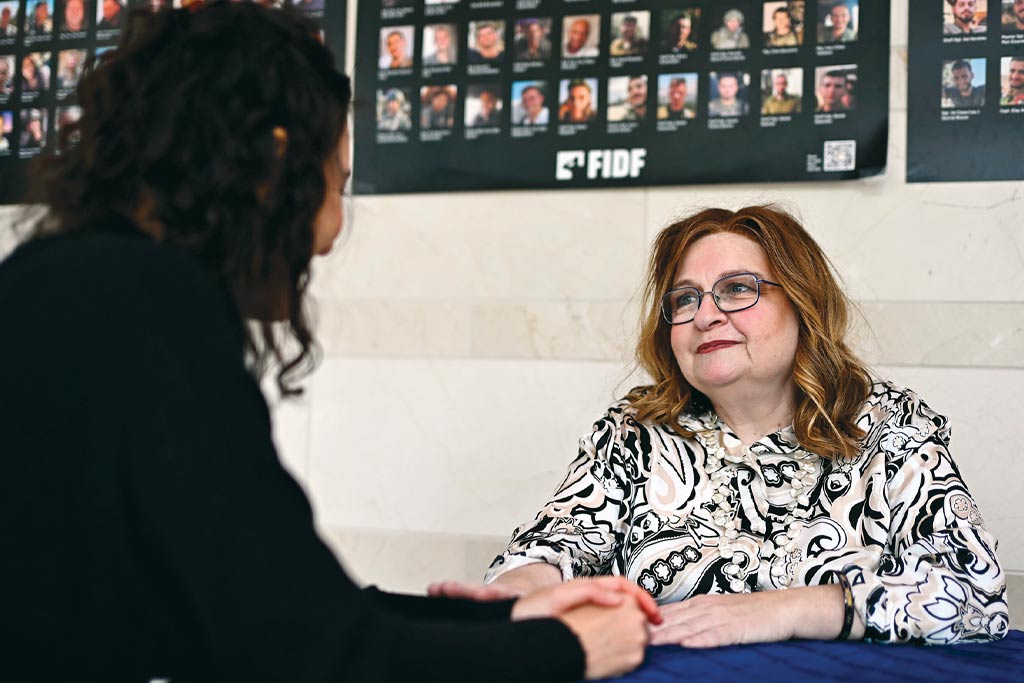
During a recent visit to Turkey I held several warm meetings with members of the Musevi Cemaati (Jewish Community of Turkey) held behind triple blast doors. Tellingly, they spoke carefully and on condition of anonymity.
“Starting with the Gaza war in 2008 the relationship between Turkey and Israel has deteriorated completely. Sometimes the government issues an anti-Israel statement almost every day,” one community member said. “The government's anti-Israel rhetoric and actions make people very worried about their security and their future, especially the young people. They were raised in a very friendly atmosphere outside the Jewish world, they have excellent friends among the Muslim population, and all of a sudden they see a lot of people who make no differentiation between Israel and ‘the Jews’.”
“The environment that this government has created is one of lack of trust. Phones are tapped; people are afraid to speak,” said another community member. “Nevertheless we believe that we need to speak up and say what is wrong.”
The stakes are high. Hate speech and anti-Semitic imagery in the popular press can open the door to violence, fear community members. This past Nov. 15 marked the sixth anniversary of attacks on Istanbul’s Neve Shalom and Beth Israel synagogues, which killed 27 people, six of them Jews. In 1986, an attack on Neve Shalom left 23 community members dead. (An attack in 1992 fortunately resulted in no casualties.)
“Police are very vigilant about security; they are always helpful. Our communal life takes place in well-secured, police-supervised environments. The authorities do not wish to face another terror attack. At the same time the perception of the authorities and some of the population vis-à-vis Jews is that of the Ottoman culture, a pseudo-patronizing, ‘Jews are our guests, we have to take care of them’ attitude,” a community member said.
“There is an identity change, with the constant indoctrination about Islam, and people are starting to think in a different way, not so much as Turkish, but as Muslims first,” he said.
On the one hand, Erdogan foments anti-Semitism with incessant attacks against Israel; on the other hand, he warns the Turkish public against attacking Turkish Jews, reminding them that the Ottoman Sultan welcomed the Jews in 1492. Neither approach sits well with members of the Jewish community.
“We do not want to be a millet [a protected Ottoman minority], we are equal citizens and want the legislations to be applied in a balanced manner. We want equality in front of the law,” said a community member. “That’s something our country needs to work to correct in order to deal with increasing nationalism. The definitions of hate crimes are there, but the applications are not sufficient. Hate crimes are not punished by law; hate speech—which is becoming increasingly banal—is not punished when it is against Jews and other minorities.”
As one who has long been enthralled by Turkey and Turkish culture, it pained me to hear about the repercussions on Jews of the country’s increasing Islamization and repositioning in the Middle East. I asked community members if they thought Americans—and American Jews—might help.
“America has a simplistic view about democracy in this country,” a community member said. “There is a lot of manipulation of power, and a deterioration of the system of checks and balances.” He suggested that American friends of Turkey continue to remind their Turkish associates of the prerequisite for a healthy democracy, that the full weight of the law be applied whenever there are cases of racism no matter whether the victim is a Muslim or a non-Muslim.
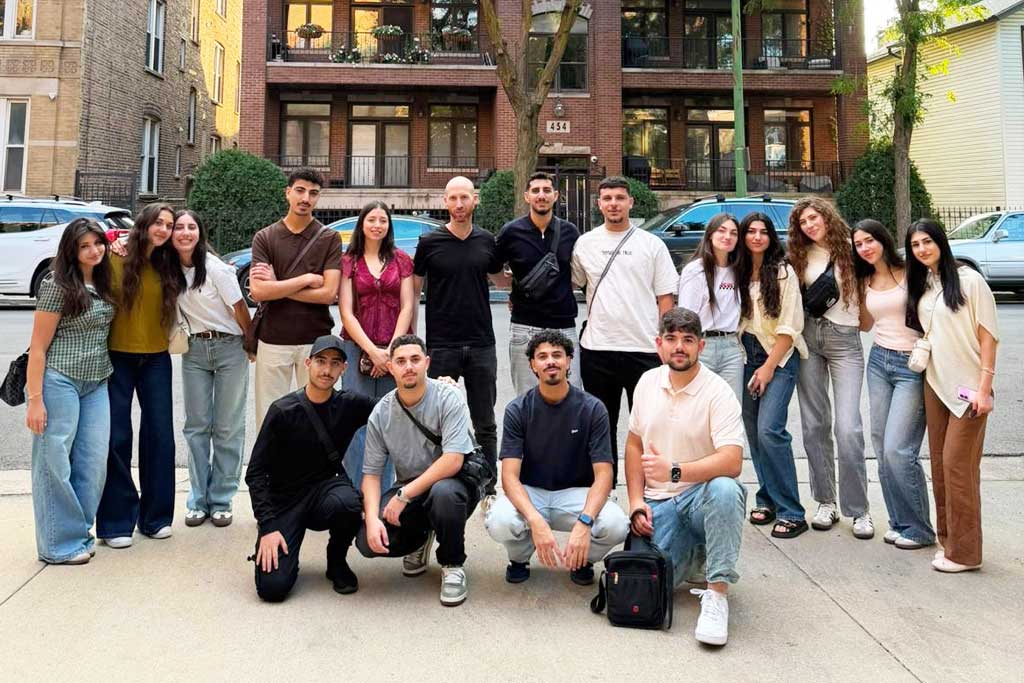
During a two-week, interfaith visit to Turkey sponsored by Chicago’s Niagara Foundation (an Islamic values-oriented organization affiliated with Turkey’s Fethullah Gulen Movement), it struck me how much Turkey’s neo-Ottomans celebrate the legacy of the empire’s religious and national diversity. Their ascendant vision for Turkey rests in part on the foundations of a rich heritage of multiculturalism, Ottoman style. In their romanticized worldview, Turkey’s tiny Jewish and Christian communities have an important place and role to play: their existence lends credibility and validity to the Islamists’ intentions—democratic, they insist—to supersede the Republic’s militantly secular order.
When it comes to winning hearts and minds in America, especially among American Jews, the new Ottomans will discover that validation can only come if and when the values of liberty, equality, fraternity, and diversity receive more than lip service. It will come only when our Turkish Jewish family members no longer hear messages that instill fear. It will come when the triple blast doors come down from the synagogues, and when community members feel safe enough to be quoted directly. It will come when Israel no longer is subject to a double-standard foreign policy.
“In the long run we hope that the Turkish people will find the best way to allow our democratic and much-valued secular system to continue, and for the legislative system to become equally vigilant against any hate language; otherwise we don't know how things will develop,” one community member said.
Meanwhile traffic traveling both east and west clogs the Bosporus bridges, and an ascendant Turkey searching for its future and its past leaves me wondering and in awe.
Links: